What reached the Parkes radio telescope, in the early hours of 24 July 2001, in a flash of radio that lasted less than five milliseconds?
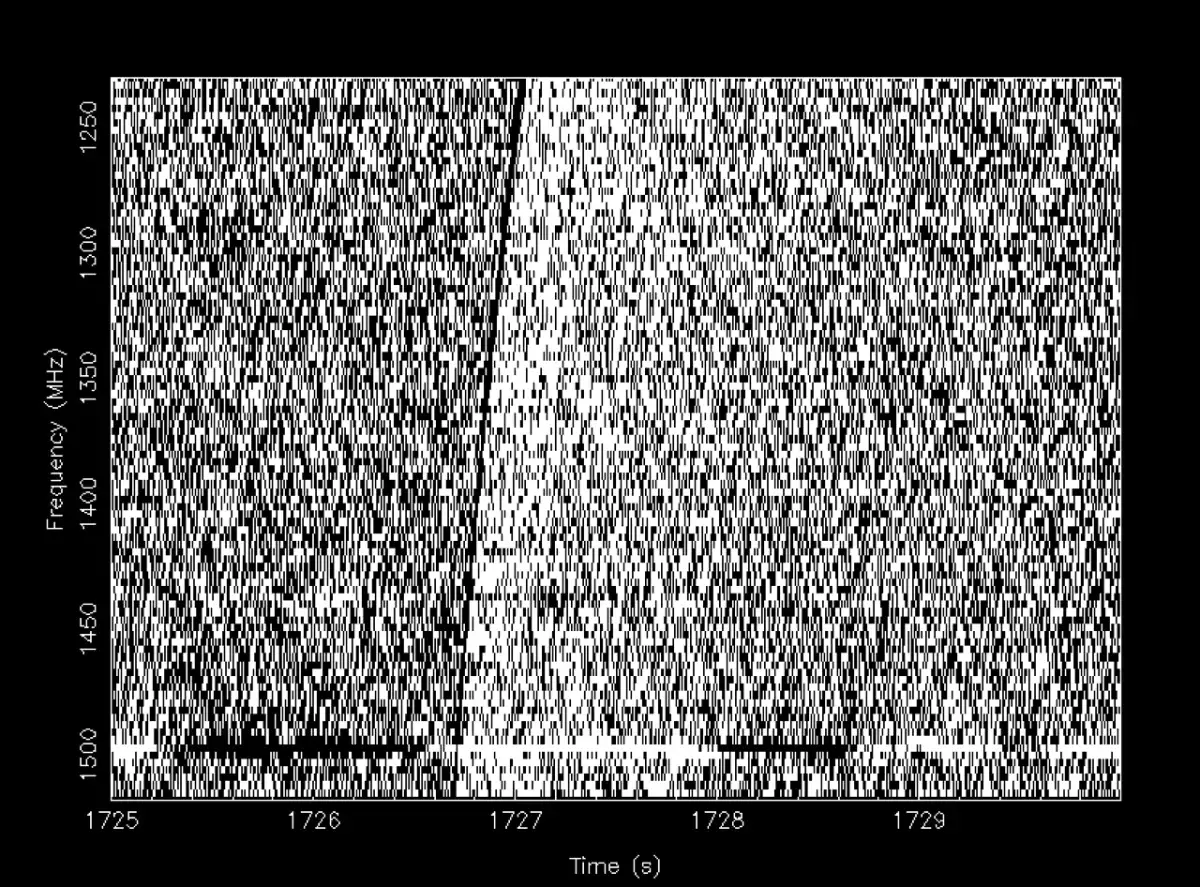
Start with the curve in the 2007 discovery paper. The high radio frequencies arrive first and the low ones trail behind, a sweep a third of a second long across the band. Undo the sweep and the whole flash fits inside five milliseconds. Parkes recorded it, and for nearly six years nobody knew it was there. How far had it come before anyone looked?
Nearly six years in the archive
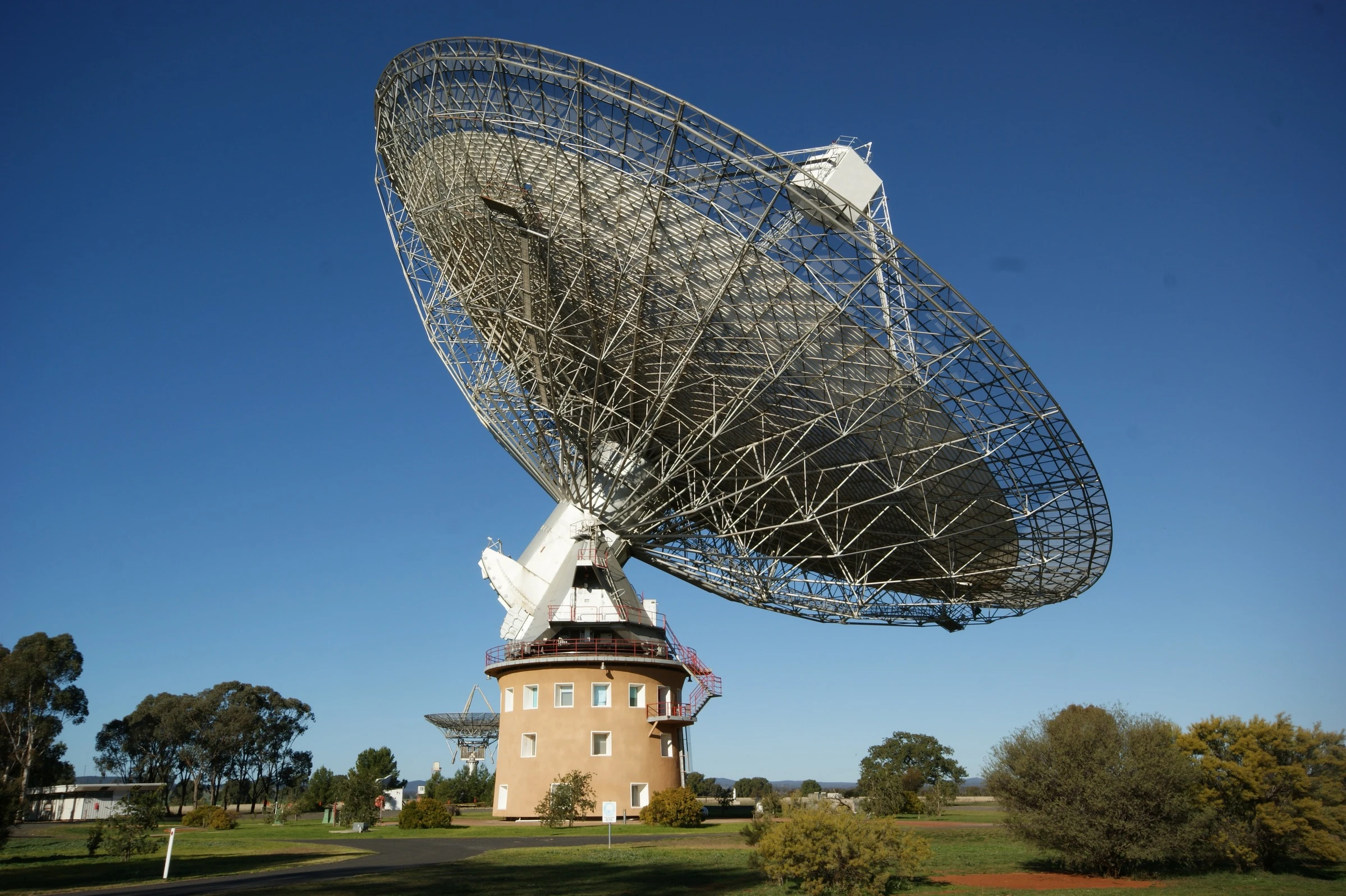
Parkes is a 64 metre dish outside the town of Parkes in central-west New South Wales, run by CSIRO and opened on 31 October 1961. Since 2020 it has also carried the name Murriyang, given by Wiradjuri elders. In 2001 its receiver had thirteen beams, thirteen separate spots on the sky about 28 arcminutes apart, all listening near 1.4 gigahertz at once.
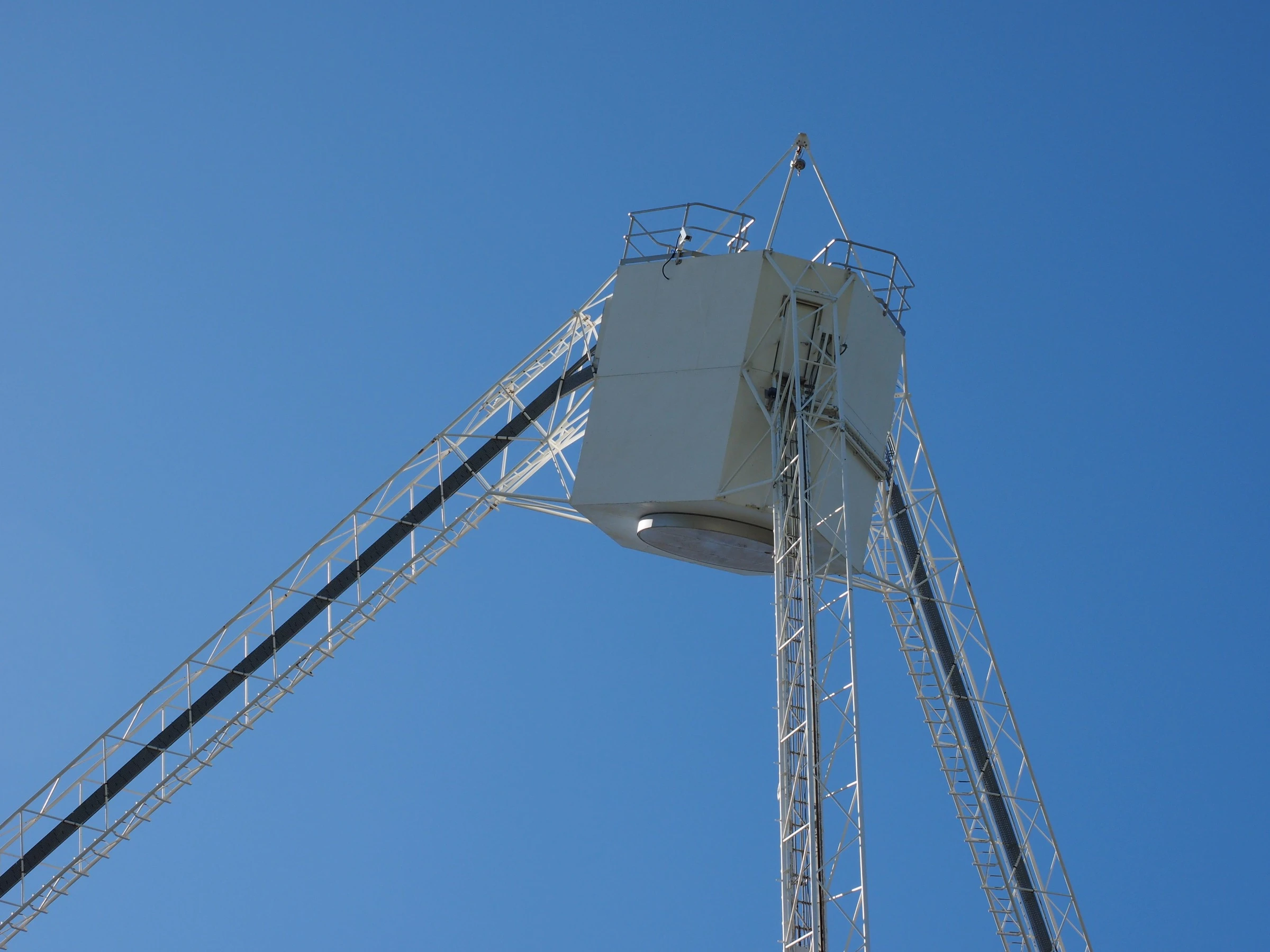
That year it was surveying the Magellanic Clouds for pulsars: 209 pointings of 2.3 hours each, every beam sampled once a millisecond.
In early 2007 an undergraduate at West Virginia University, David Narkevic, was searching that archived survey for single pulses under Duncan Lorimer, who had arrived at the university with Maura McLaughlin the year before. Lorimer and McLaughlin later wrote, in Scientific American, that Narkevic came to them and said, "I've found something that looks quite interesting." The software had flagged the strongest beam as interference. The pulse had saturated it.
Lorimer took it to Matthew Bailes on a visit to Parkes that spring. The 2007 paper reported the flash in three neighbouring beams; later reanalyses found it faintly in a fourth. Its sweep gave a dispersion measure, the count of free electrons along the path, of 375. A model of the Milky Way allowed about 25 in that direction. Pulsars, the spinning stars first found with the first pulsar in 1967, show the same kind of sweep, and the most dispersed of the pulsars in the Small Magellanic Cloud stood at 205.
The paper appeared in Science in 2007, with Lorimer, Bailes, McLaughlin, Narkevic and Fronefield Crawford as authors. Its title said what they thought it was: "A bright millisecond radio burst of extragalactic origin."
A flash from beyond the galaxy
The team made its case in plain sentences. "It is very difficult to attribute this burst to anything but a celestial source," the paper says. The dish had been tilted 60 degrees above the horizon, which made it "virtually impossible for ground-based transmitters to be responsible for a source that was only detected in three adjacent beams." Interference repeats. This was "the only significantly dispersed burst" above a signal-to-noise of 10 in data from almost 3,000 positions.
Then the distance. On the models of the day the electrons put the source under a gigaparsec away, and the team worked with 500 million parsecs. Lorimer and McLaughlin later wrote that it suggested a source "around three billion light-years away". At that range a 30 jansky flash was, in the paper's words, its most intriguing feature: on the 2024 telling by Lorimer, McLaughlin and Bailes, 10 to 12 orders of magnitude brighter than anything known at the time.
"This burst, therefore, represents an entirely new phenomenon," the paper concluded, and it added that "Hundreds of similar events could occur every day." Ninety more hours on the same patch of sky found nothing.
The flash soon had a name: the Lorimer burst.
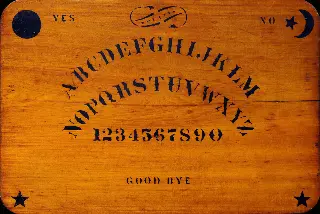
It also had a second reading, ten years later. In 2017 Manasvi Lingam and Avi Loeb of Harvard asked in Astrophysical Journal Letters whether fast radio bursts, as the class came to be called, "originate from the activity of extragalactic civilizations", as beams pushing light sails between the stars. The transmitter they described would be on the scale of a large rocky planet. "That's big enough to carry living passengers across interstellar or even intergalactic distances," Lingam said. Their paper is about the class, not this one flash, and a flash of milliseconds is a different thing from the narrowband signal of about 72 seconds that Big Ear in Ohio recorded in 1977, the Wow! Signal. Loeb's line was that "An artificial origin is worth contemplating and checking."
If one flash crossed that much space
Set aside for a moment what made it. Ask what it would mean if the paper's reading is right.
It would mean that a few milliseconds of radio left its source before there were animals on land, crossed more than a billion light years of thin gas, and arrived at a dish in the farm country of New South Wales while the town slept. Which means the curve on the page is a record of the whole road: every electron between there and here left its mark on the sweep.
It would mean the universe is doing this constantly. If the paper's estimate holds, hundreds of such flashes cross our sky every day, and for all the decades of radio astronomy before 2007 nobody had seen one, or nobody had looked in the right way. The sky we thought we had surveyed would have been flashing the whole time.
It would mean every one of those flashes carries a reading of the space it crossed. The sweep counts the electrons on the way, so each burst would be a thread pulled through the gas between the galaxies, the gas no telescope sees by its own light. The 2007 paper said as much: such bursts could serve as cosmological probes. A five millisecond flash would become a way of weighing the dark between the galaxies.
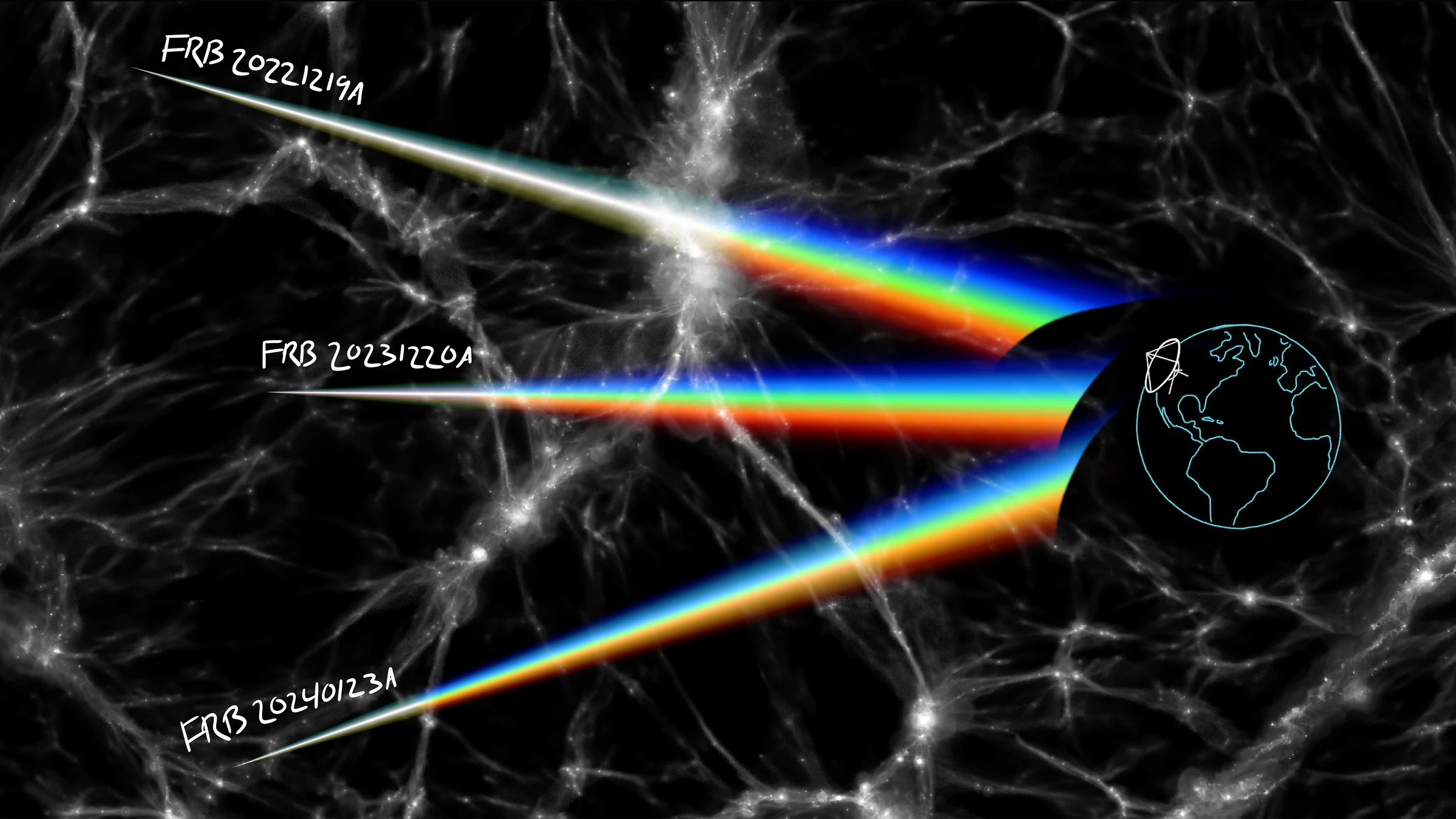
It would mean, on the reading Lingam and Loeb put forward for the class, that some of those flashes could be the exhaust of someone else's engineering: beams strong enough to push a sail, leaking across a galaxy, read by us as a curve on a page. On that reading our species would already hold data from another civilization, filed as astrophysics.
And on any of those readings it is still arriving. The flashes would not have stopped in 2001. On any of those readings, the question in front of us would be how much of it we are keeping.
The standard account
The standard account holds that the Lorimer burst is a fast radio burst from a natural source in a distant galaxy, and that such bursts come from compact objects, at least some of them magnetars.
It took years to get there. In 2011 Sarah Burke-Spolaor and colleagues found sixteen signals at Parkes, which they called perytons, with sweeps close to the burst's, and wrote that they "cast doubt on the extragalactic interpretation of the original burst." In 2013 Daniel Thornton and colleagues reported four more bursts, all far from the plane of the galaxy, at distances of up to three gigaparsecs. In 2015 Emily Petroff's team traced the perytons to microwave ovens on site and concluded that "the evidence in favour of FRB 010724 being a genuine FRB is strong."
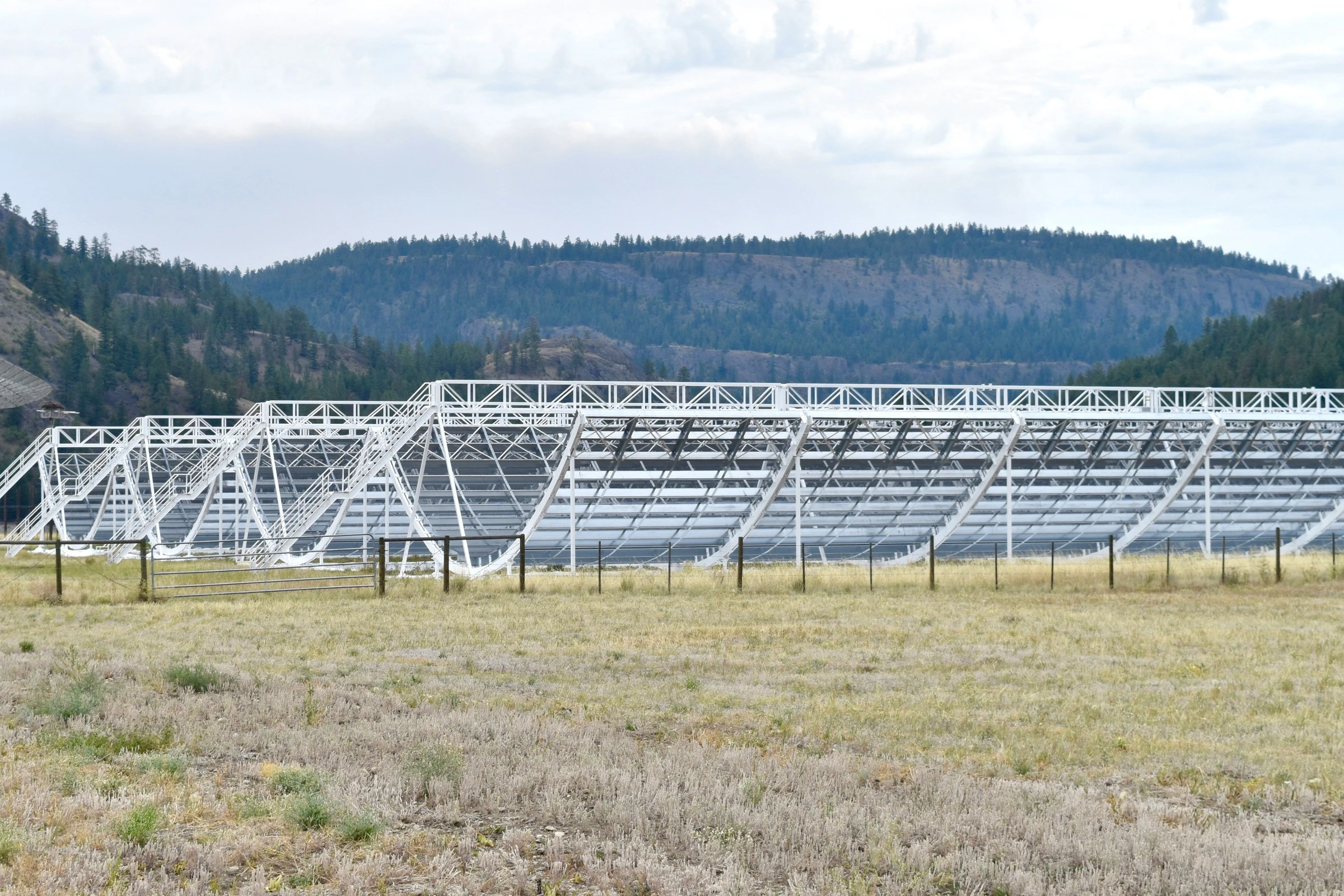
In 2017 Shami Chatterjee and colleagues pinned a repeating burst to a host galaxy. In 2019 Keith Bannister's team at ASKAP placed a single burst in a galaxy at redshift 0.32. And on 28 April 2020 CHIME and STARE2 caught a burst from SGR 1935+2154, a magnetar inside the Milky Way, "strongly supporting the notion that magnetars are the origin of at least some FRBs."
What the magnetar does not reach
The magnetar answers some of the question. Not all of it.
The burst of April 2020 was, in Christopher Bochenek's team's words, "just 40 times less energetic than the weakest extragalactic FRB observed to date", and, they wrote, "arguably drawn from the same population". The limit is the one Lorimer, McLaughlin and Bailes named in 2024: "A simple picture in which all FRBs originate from young magnetars, however, does not seem to be sufficient": one repeating source sits in a globular cluster of the galaxy M81, an old cluster where young magnetars are not expected.
They wrote too that "the origins of these enigmatic sources are currently poorly understood", and that the three of them hold "different opinions about the nature of repeating versus non-repeating FRBs!"
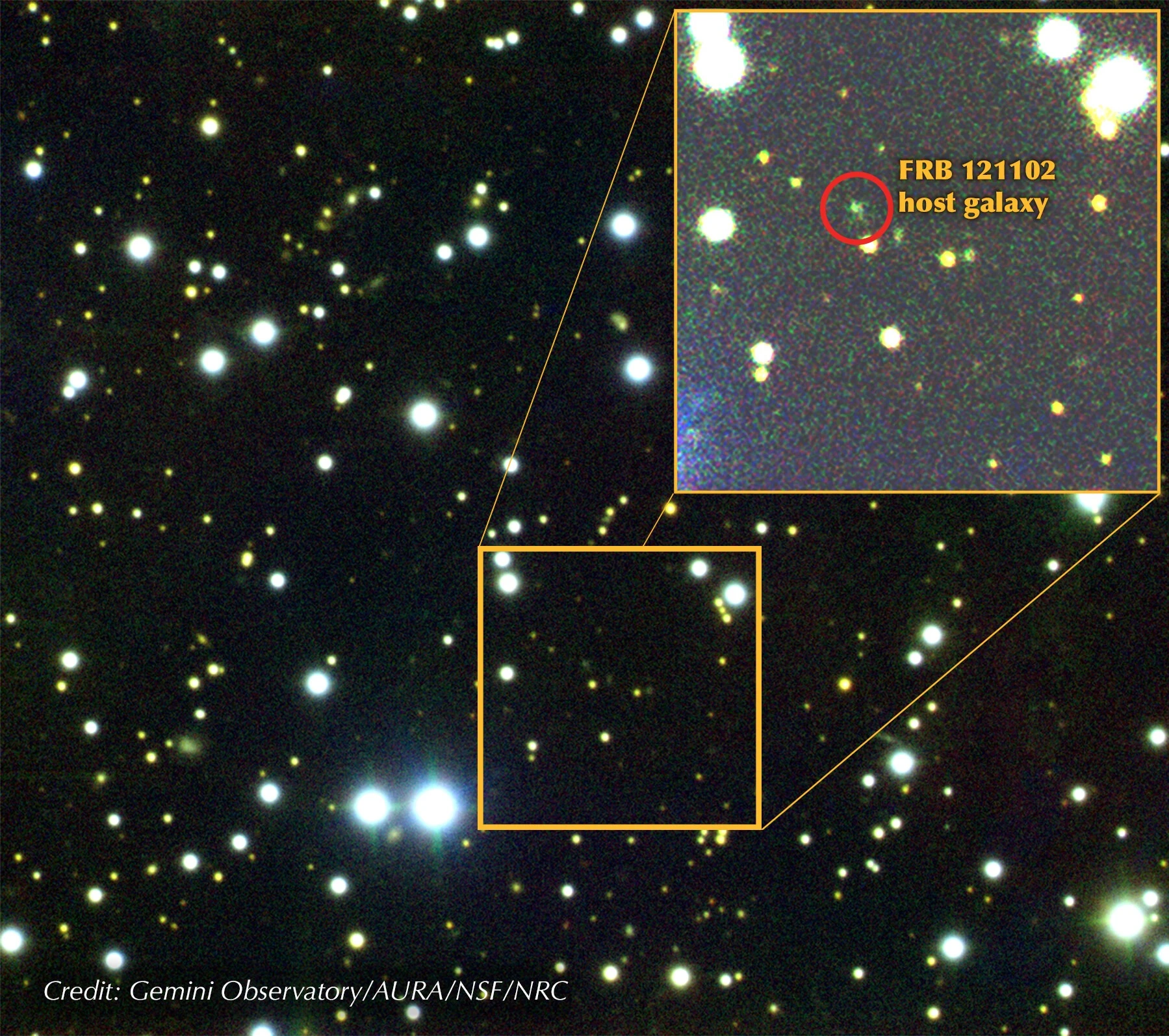
Then there is the first burst itself. In 2019 Vikram Ravi worked out its position again from the four beams that caught it and got a patch of about 50 square arcminutes, far too large to pick out one galaxy. The 2007 paper had looked at the one candidate galaxy nearby and found it did not fit. A gamma-ray search by Cristiano Guidorzi and colleagues in 2019 found "no significant emission." No repeat has been seen. Being the first may itself make it odd: Jean-Pierre Macquart and Ron Ekers argued in 2018, as the 2019 review by Petroff, Jason Hessels and Lorimer records, that it should be left out of counts of the population, because the burst that is found first is subject to discovery bias.
Nobody has found its galaxy.
Which leaves the standard account explaining the class by its best-studied members, while the burst that founded the class sits outside every test that pinned the others down.
The flash in the archive
The class it founded has grown past anything the 2007 paper could count. The second CHIME catalogue, posted in January 2026, lists 4,539 bursts from 3,641 sources. In 2023 Bailes, Lorimer and McLaughlin shared the Shaw Prize in Astronomy for the discovery. In 2019 S.-B. Zhang, George Hobbs and colleagues went back to the same Magellanic survey data and found a second burst in them, FRB 010312, which nobody had seen in 18 years.
The people who found the first one lived through the years when it looked like a mistake. At a conference in 2011, Lorimer and McLaughlin wrote, the audience was asked for a show of hands on whether the Lorimer burst was real, and Lorimer, in the front row, "did not dare to look back". In 2014, before the bursts were pinned to galaxies, he said: "If you asked me to make a bet, I would say it's more likely to be cosmological, but I can't prove that at the moment."
The 2007 paper had said the same in its own way: "The sole event, however, offers little hope of a definitive answer at this stage."
The record of the first one is the same as it was in 2001.
Its name in the catalogues is FRB 010724. Its time is 19:50 UT on 24 July 2001, ten to six in the morning at the dish. Its place is a patch of sky about three degrees south of the Small Magellanic Cloud. Its dispersion measure is 375.
Every one of those numbers is known. The galaxy is not.
The curve is the most exact thing about it, and the curve is a record of the road, not of the place the road began.
Questions This Leaves You With
Is there anything a person actually does with this?
Not in a daily sense, and it is fair to say so. A burst of radio from billions of light years away changes nothing about your week. What it offers is a way of looking: an archive is not finished when the first person has read it. A student searching data nearly six years old found the founding event of a field, and Zhang's team found another in the same data 18 years later. The bigger question, what makes these flashes, belongs to everyone and has no answer yet.
Does this sit against a religious account of the world?
It can be read both ways. Some find in a universe that flashes hundreds of times a day, unseen until 2007, a creation larger and stranger than anyone had pictured. Others find in it physics doing what physics does, with wonder enough in that. Lingam and Loeb's reading would add other minds to the picture, and people of faith have argued on both sides of that too. This site will not tell you which reading to hold. That is yours.
Does it change what a human life is?
Put your own life against the road that flash travelled: billions of years in transit, and five milliseconds on arrival. One reaction is that it makes a life very small. The other is that it makes it rare: of everything that road crossed, the one place it was noticed was an archive searched in West Virginia, read by a student who thought it looked quite interesting. Which did you feel first?
What would change your mind, in either direction?
Name it now, before the next result. Toward a natural source for the Lorimer burst: a host galaxy found for a burst of its kind, or a magnetar caught making a burst as bright as the extragalactic ones. Toward something stranger: a burst that carried a pattern, a repeat with structure no plasma explains, or a sweep that ran the wrong way. Notice that the first burst may never give either. It was one flash, and its recording has nothing more in it.
Where does the open problem actually sit?
Not in whether fast radio bursts are real. Thousands have been caught since, and some have been traced to galaxies. It sits in what makes them, and in the first one. To name its galaxy, a burst needs a position good to an arcsecond or so, which takes an array of dishes recording at once; the Lorimer burst's best patch is about 50 square arcminutes. You are looking at a flash measured to the second and to one unit of dispersion, and still without a home.
More photographs
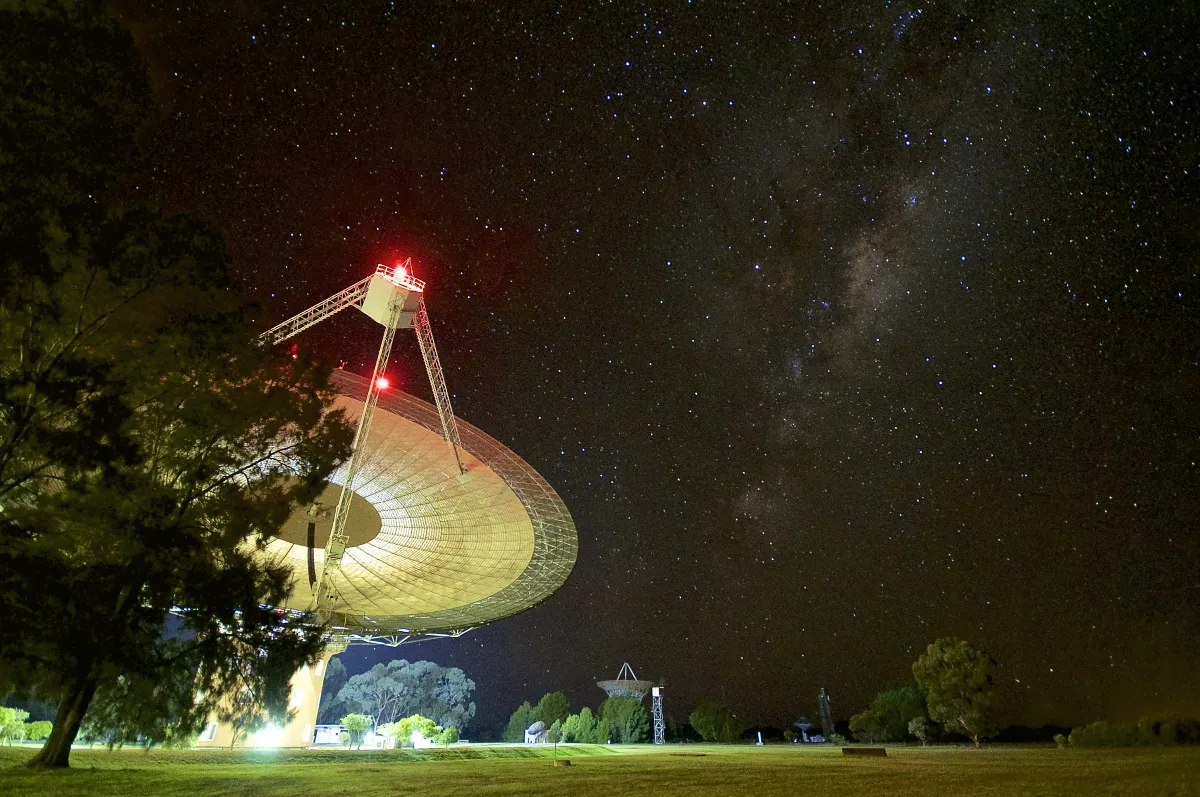
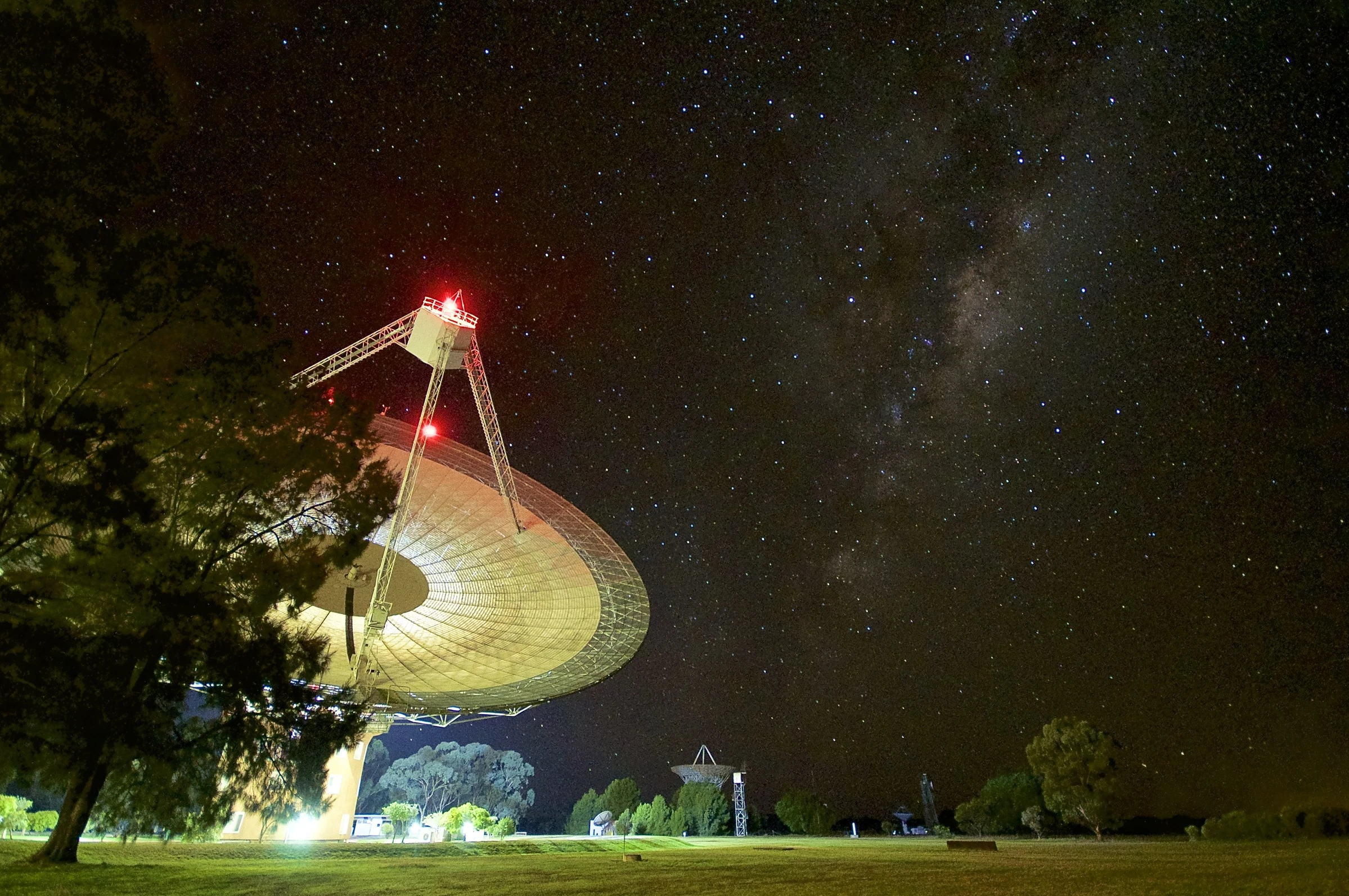
The Parkes dish at night in June 2017, with the Milky Way overhead. Photo: Daniel John Reardon, CC BY-SA 4.0 (creativecommons.org/licenses/by-sa/4.0), via Wikimedia Commons. Resized; this copy is shared under the same licence. 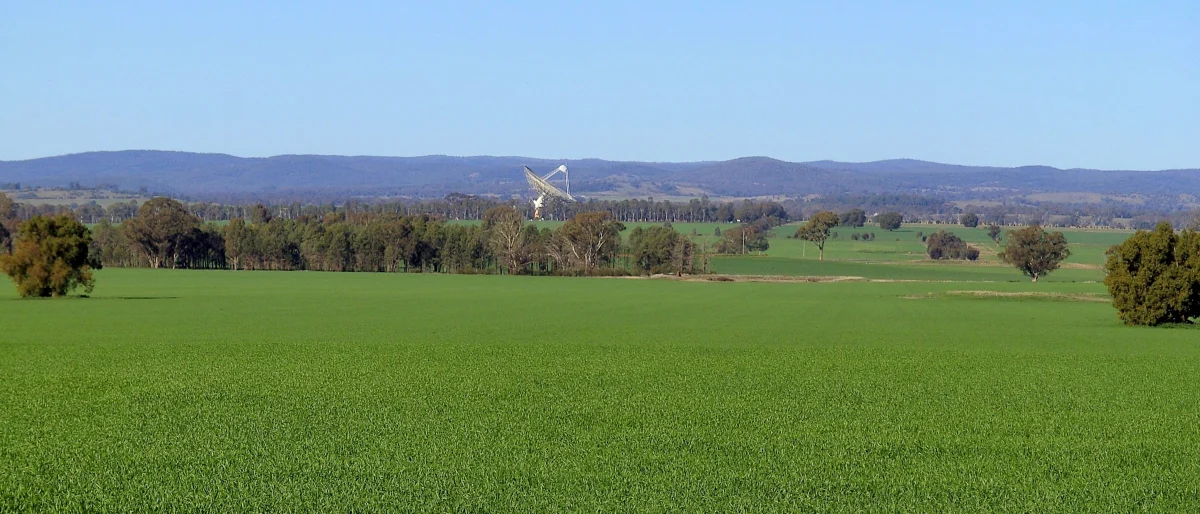
The dish seen across farmland from the Newell Highway, August 2009. Photo: Ian Sutton, CC BY 2.0 (creativecommons.org/licenses/by/2.0), via Wikimedia Commons. Resized. 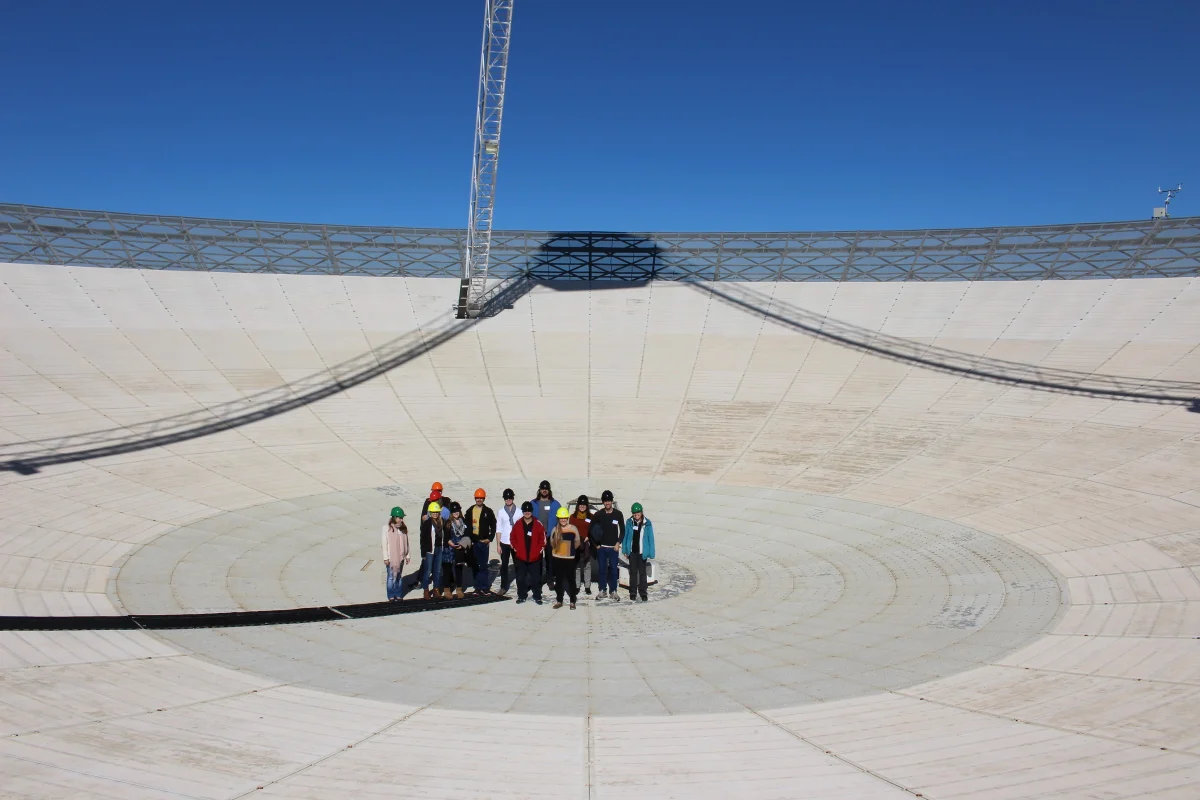
Pulsar astronomers standing in the bowl of the dish in July 2015, which shows its scale. Photo: Benjamin Shaw, CC BY-SA 4.0 (creativecommons.org/licenses/by-sa/4.0), via Wikimedia Commons. Resized; this copy is shared under the same licence. 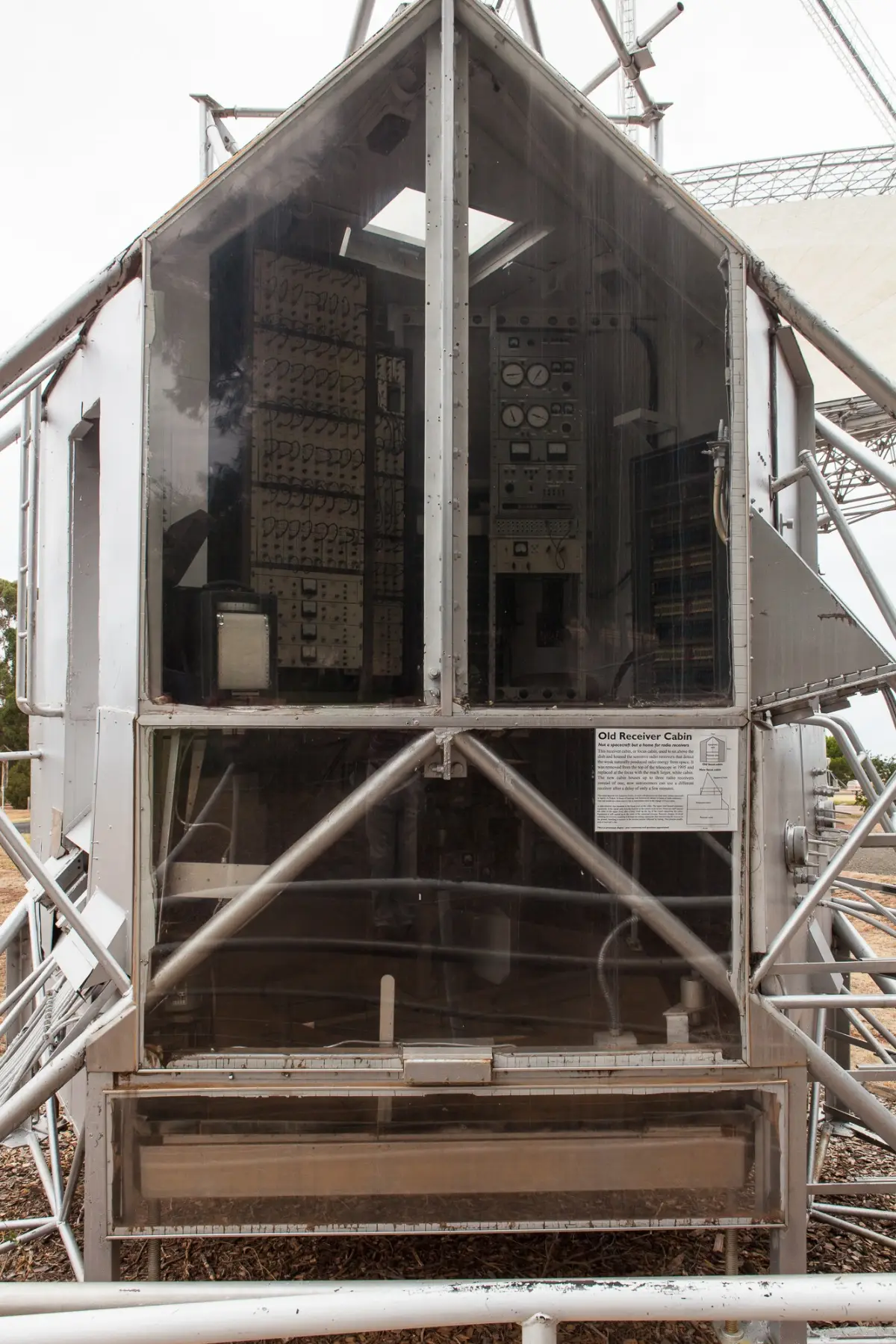
The telescope's old receiver cabin, now on display at the observatory. Photo: Jgb23, CC BY-SA 4.0 (creativecommons.org/licenses/by-sa/4.0), via Wikimedia Commons. Resized; this copy is shared under the same licence. 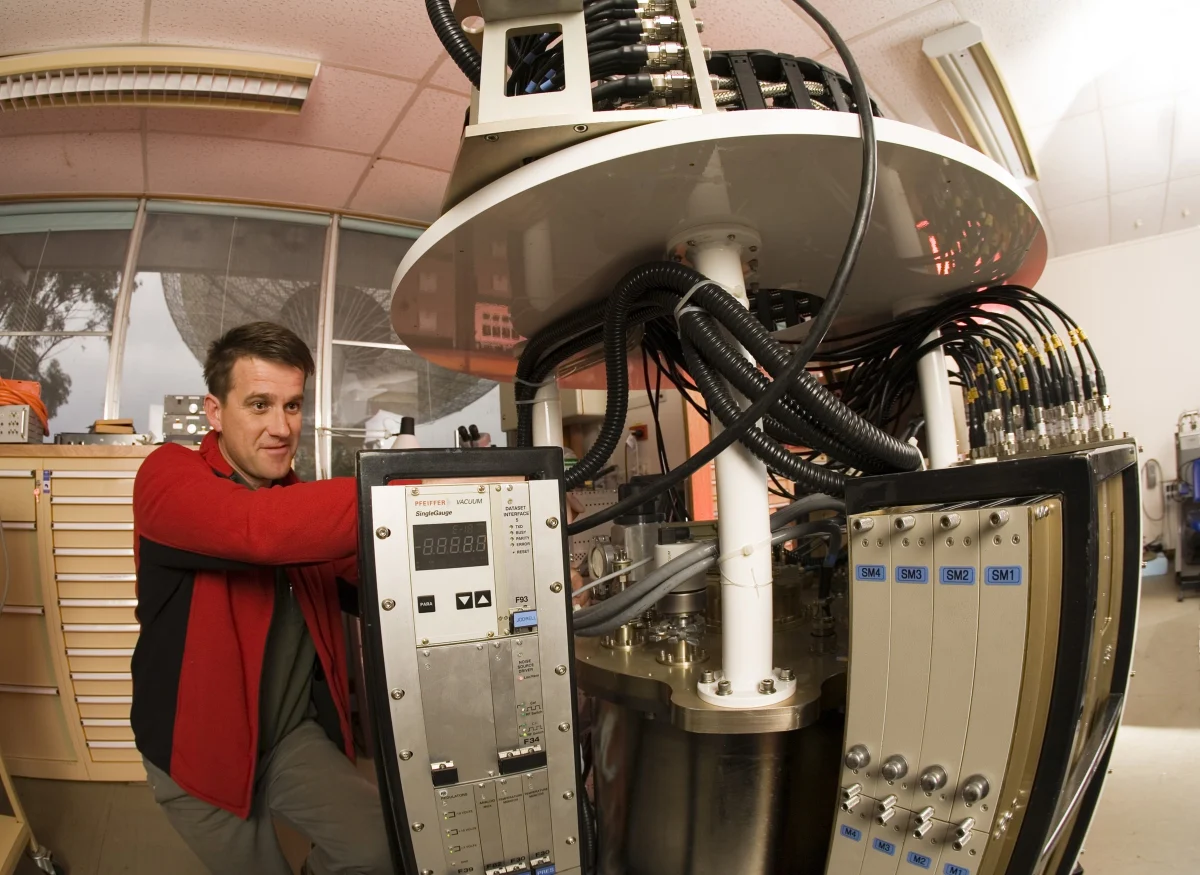
A receiver technician at Parkes in 2007 working on a seven-beam receiver built to observe methanol, a later relative of the thirteen-beam receiver of 2001. Photo: David McClenaghan, CSIRO, CC BY 3.0 (creativecommons.org/licenses/by/3.0), via Wikimedia Commons. Resized. 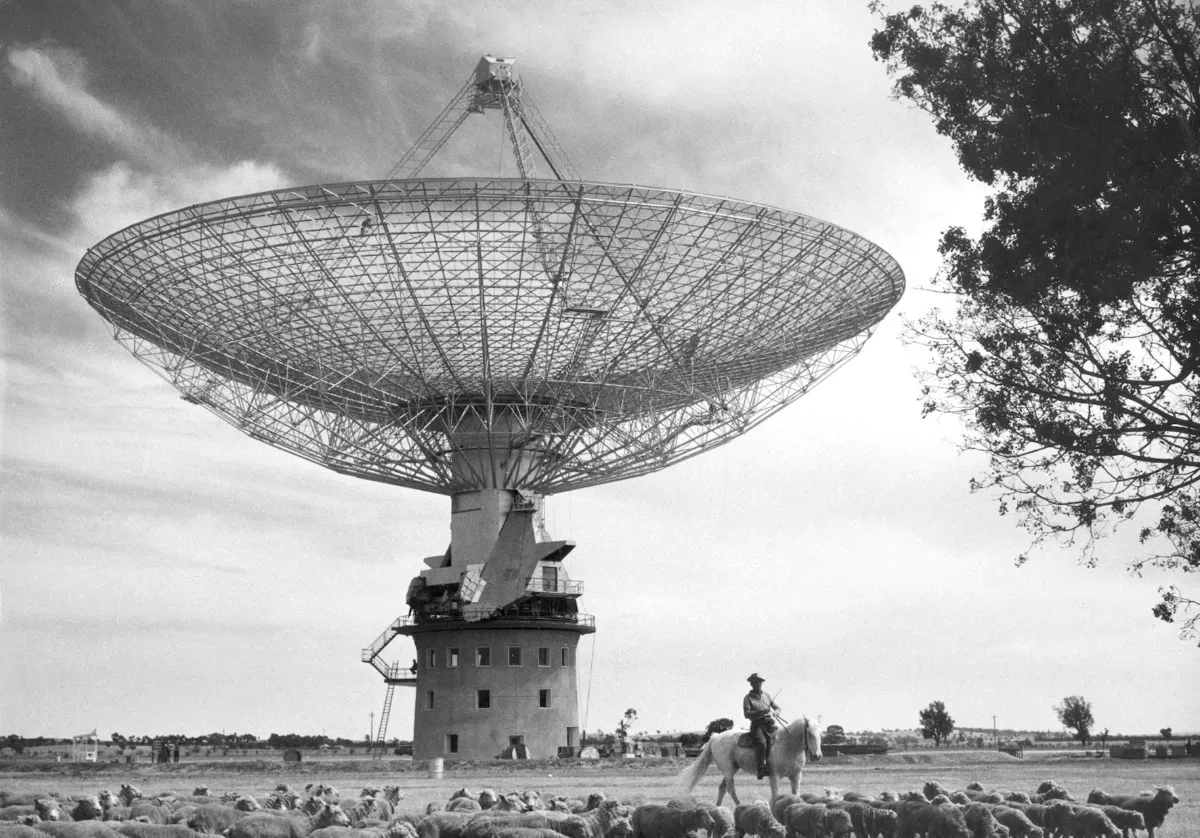
Austie Helm mustering sheep near the Parkes radio telescope: the dish stands in working farm country. Photo: David Moore, CSIRO, CC BY 3.0 (creativecommons.org/licenses/by/3.0), via Wikimedia Commons. Resized. 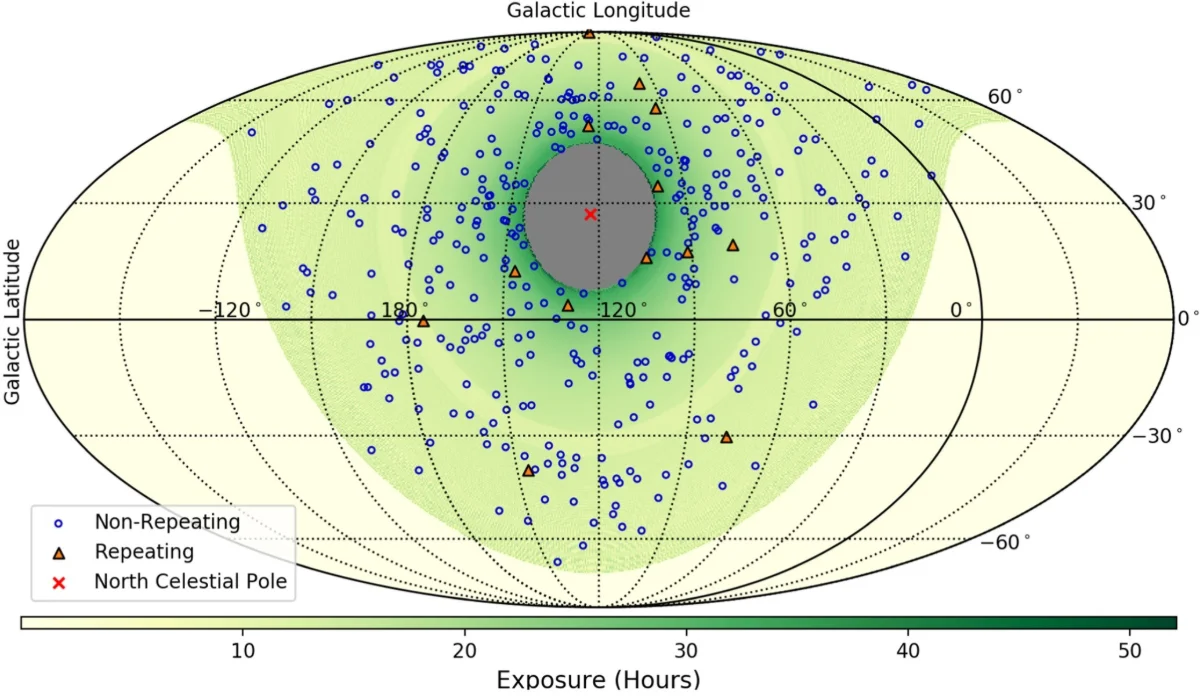
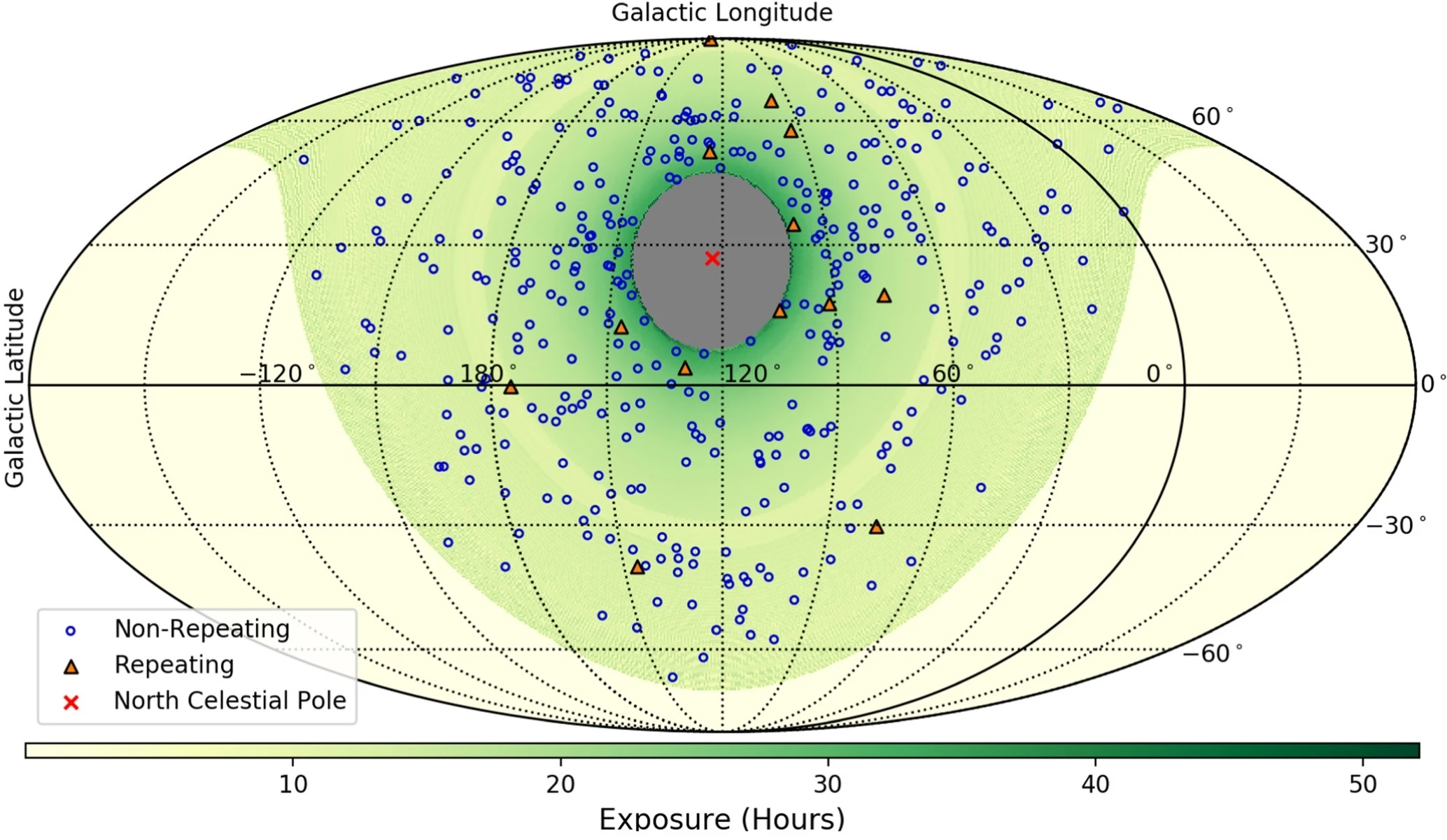
Where the bursts of CHIME's first catalogue came from on the sky, recorded from 2018 to 2019. Figure: CHIME/FRB Collaboration, The First CHIME/FRB Fast Radio Burst Catalog, ApJS 257, 59 (2021), CC BY 4.0 (creativecommons.org/licenses/by/4.0), via Wikimedia Commons. Resized. 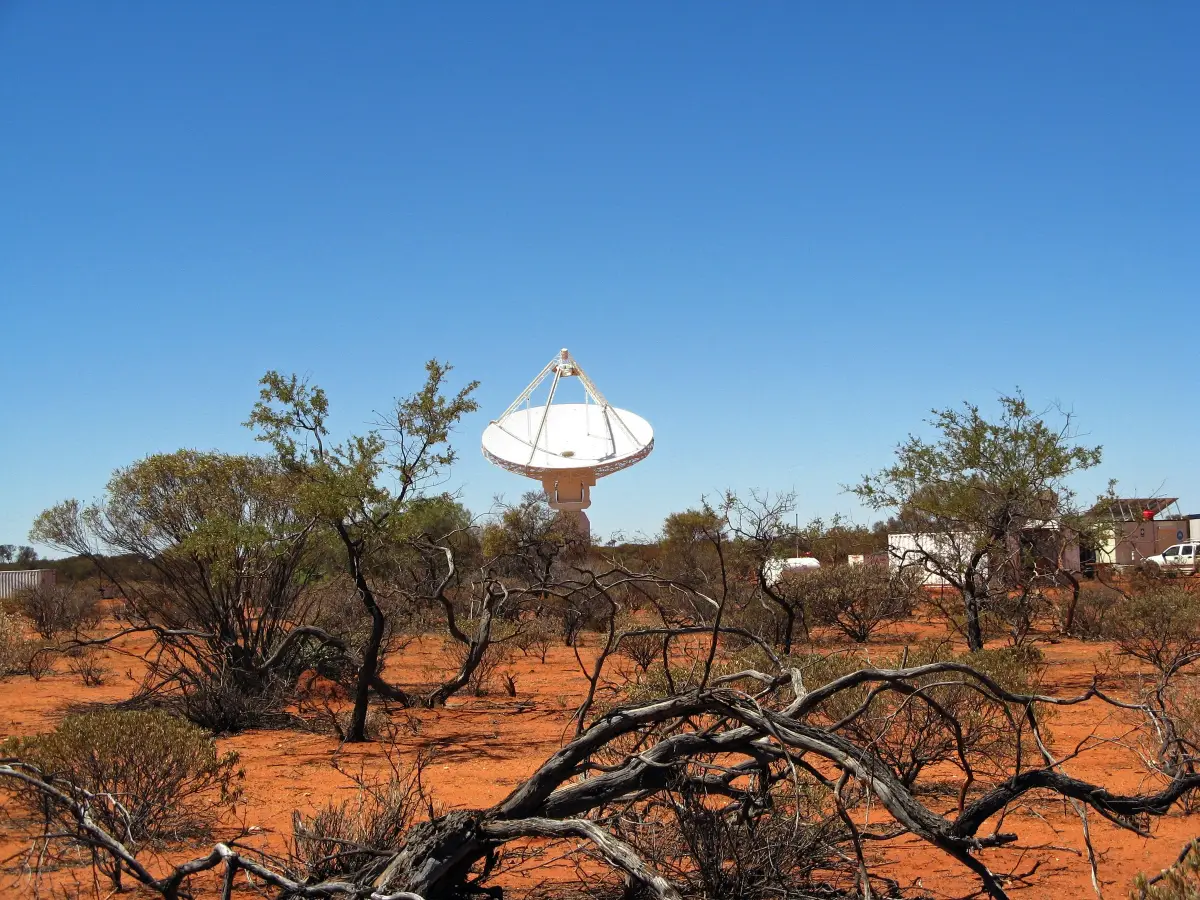
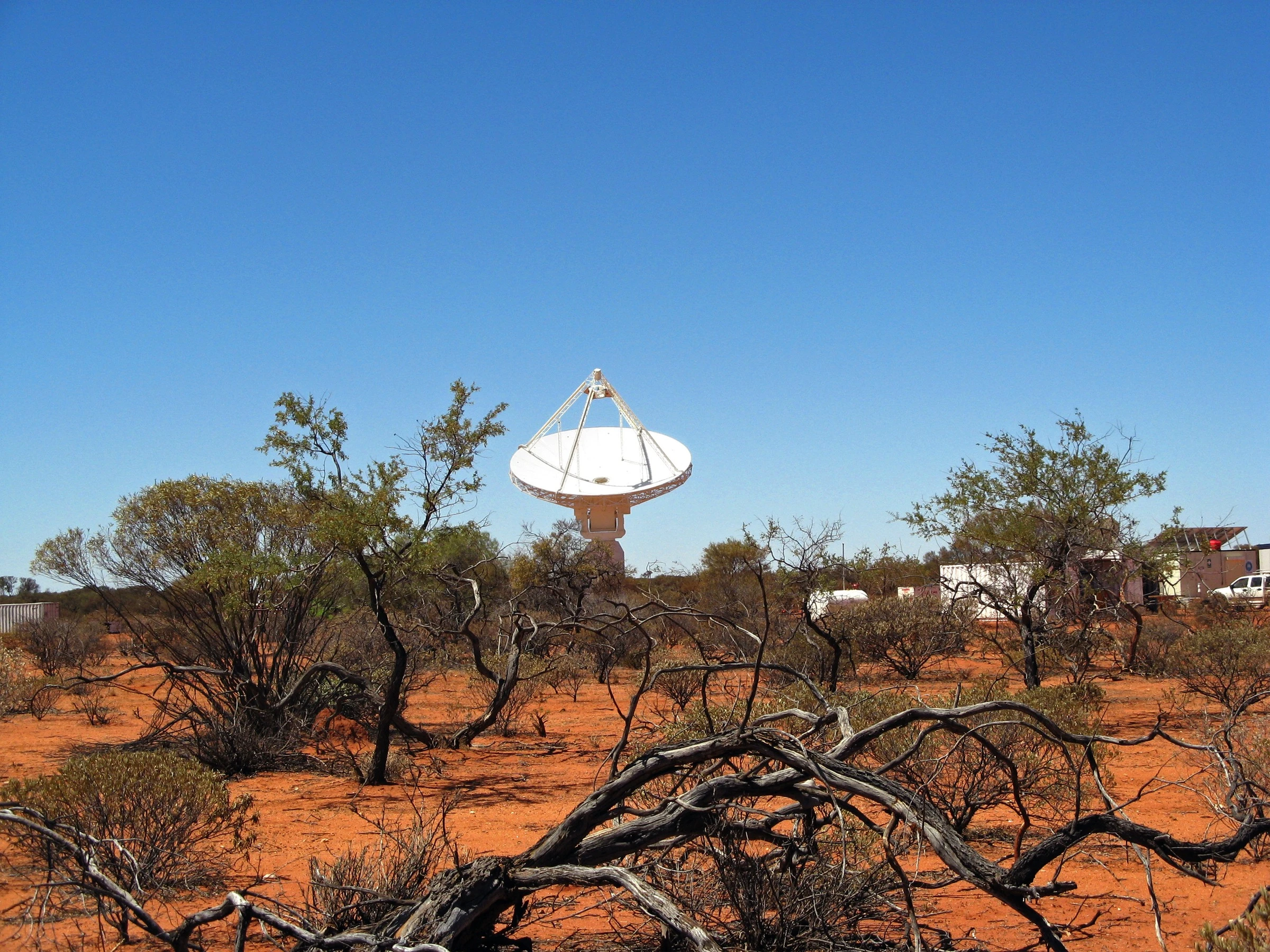
The first antenna of ASKAP, the array that placed a single burst in a distant galaxy in 2019, at the Murchison Radio-astronomy Observatory in Western Australia, 2010. Photo: Dave DeBoer, CSIRO, CC BY 3.0 (creativecommons.org/licenses/by/3.0), via Wikimedia Commons. Resized. 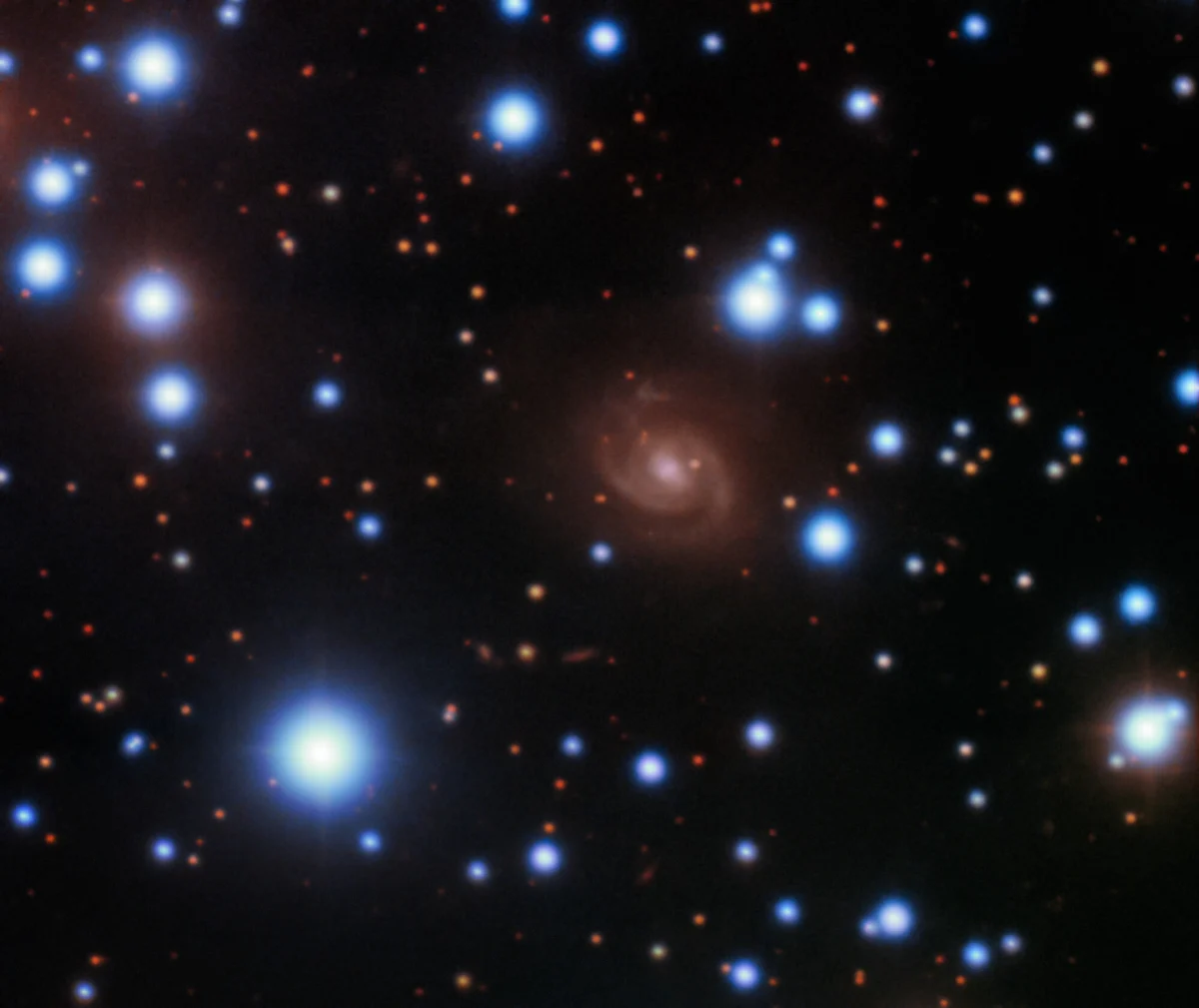
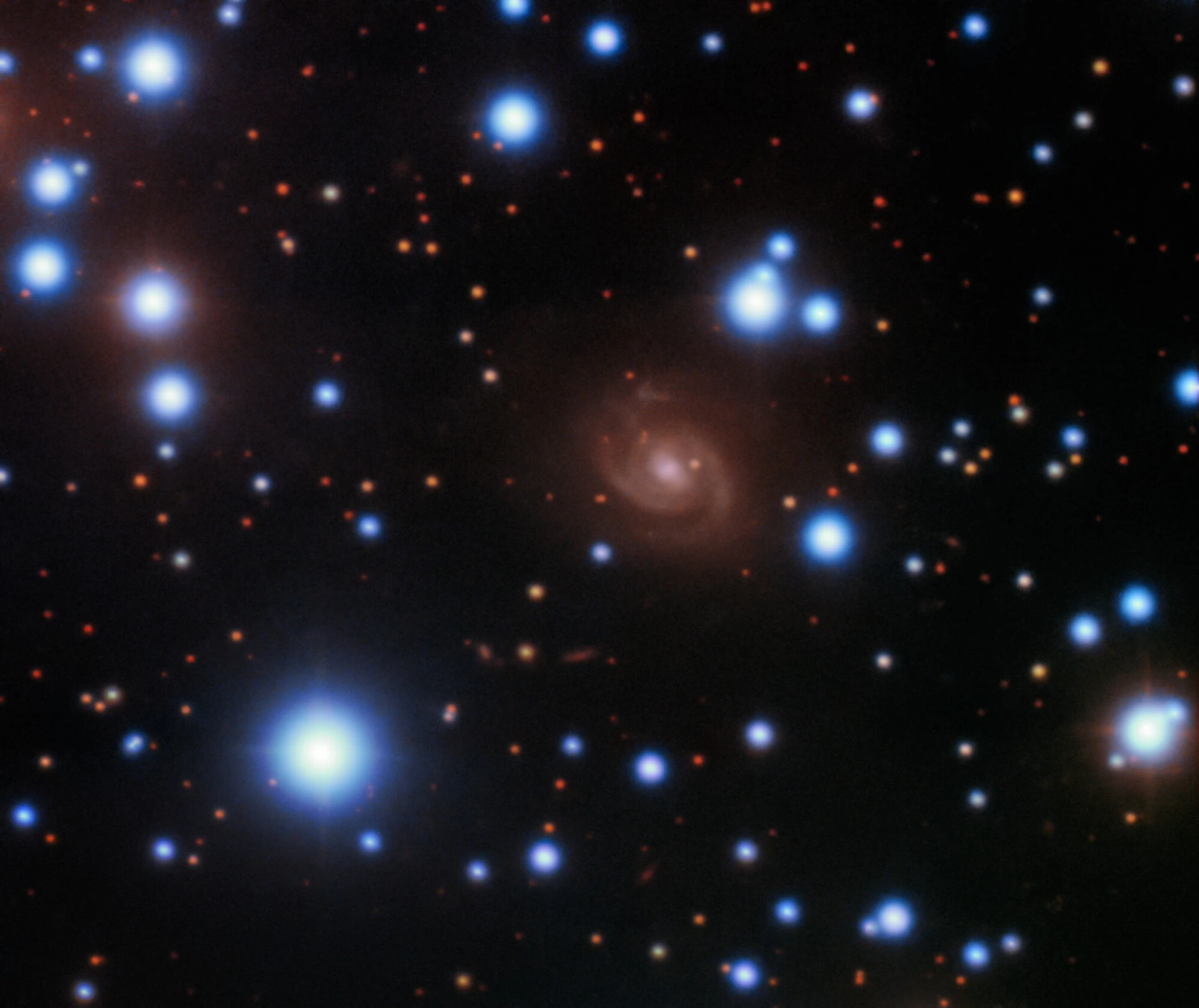
The spiral galaxy that hosts the burst FRB 180916, imaged by the Gemini North telescope. Image: Gemini Observatory/NOIRLab/NSF/AURA, CC BY 4.0 (creativecommons.org/licenses/by/4.0), via Wikimedia Commons. 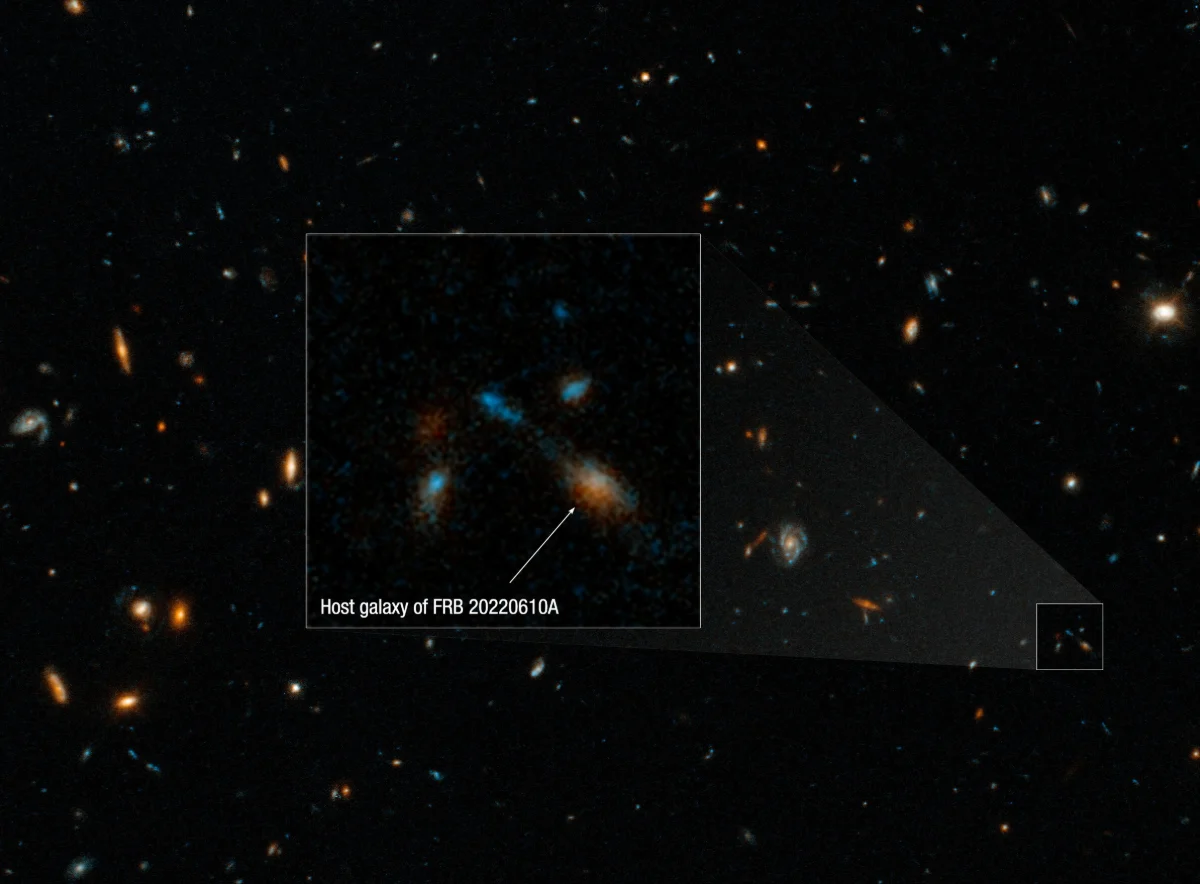
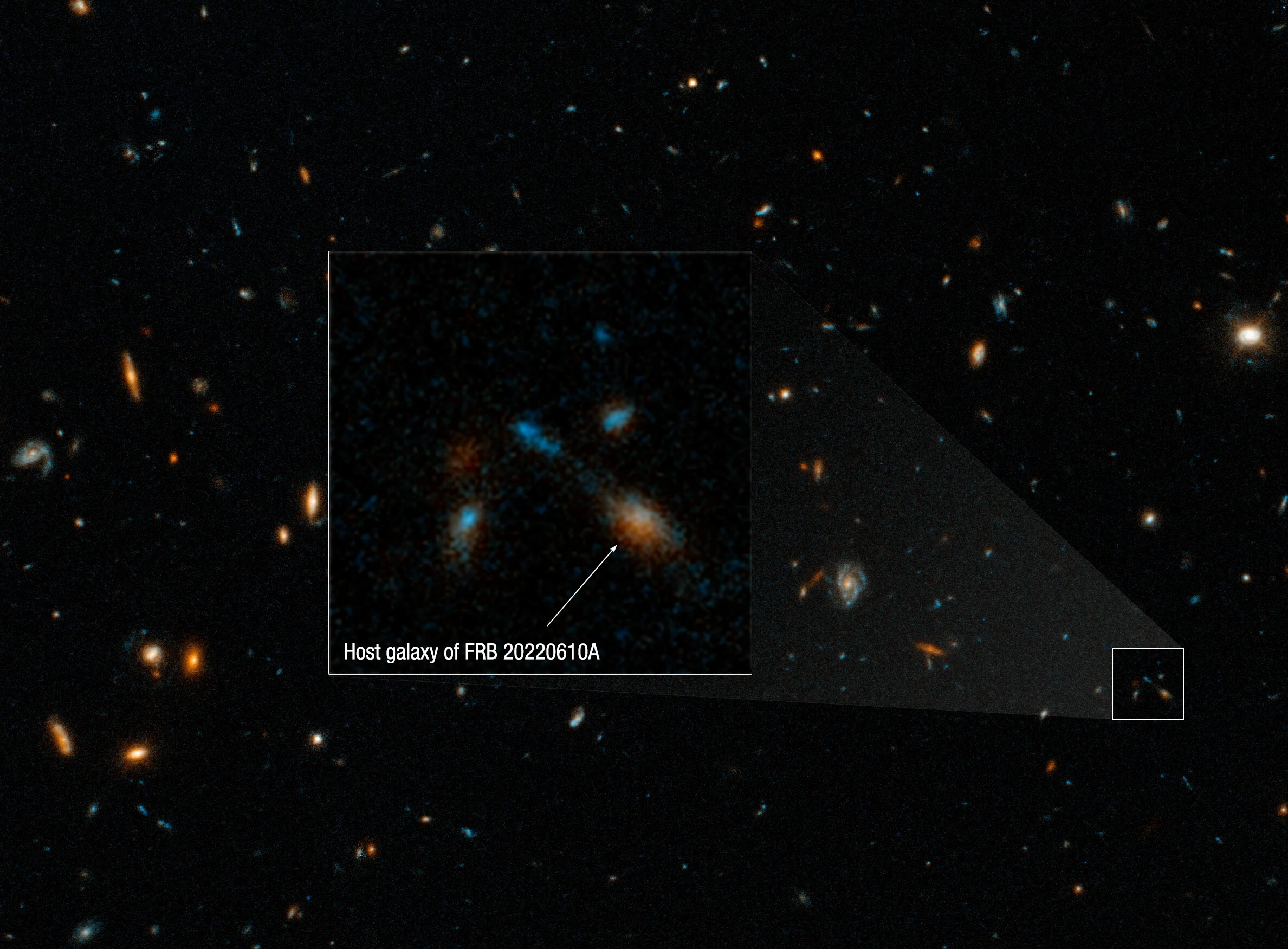
Hubble's image of the compact group of galaxies that hosted the burst FRB 20220610A, one of the most distant bursts placed in a galaxy. Image: NASA, ESA, STScI, Alexa Gordon (Northwestern University), CC BY 4.0 (creativecommons.org/licenses/by/4.0), via ESA/Hubble and Wikimedia Commons. Resized.
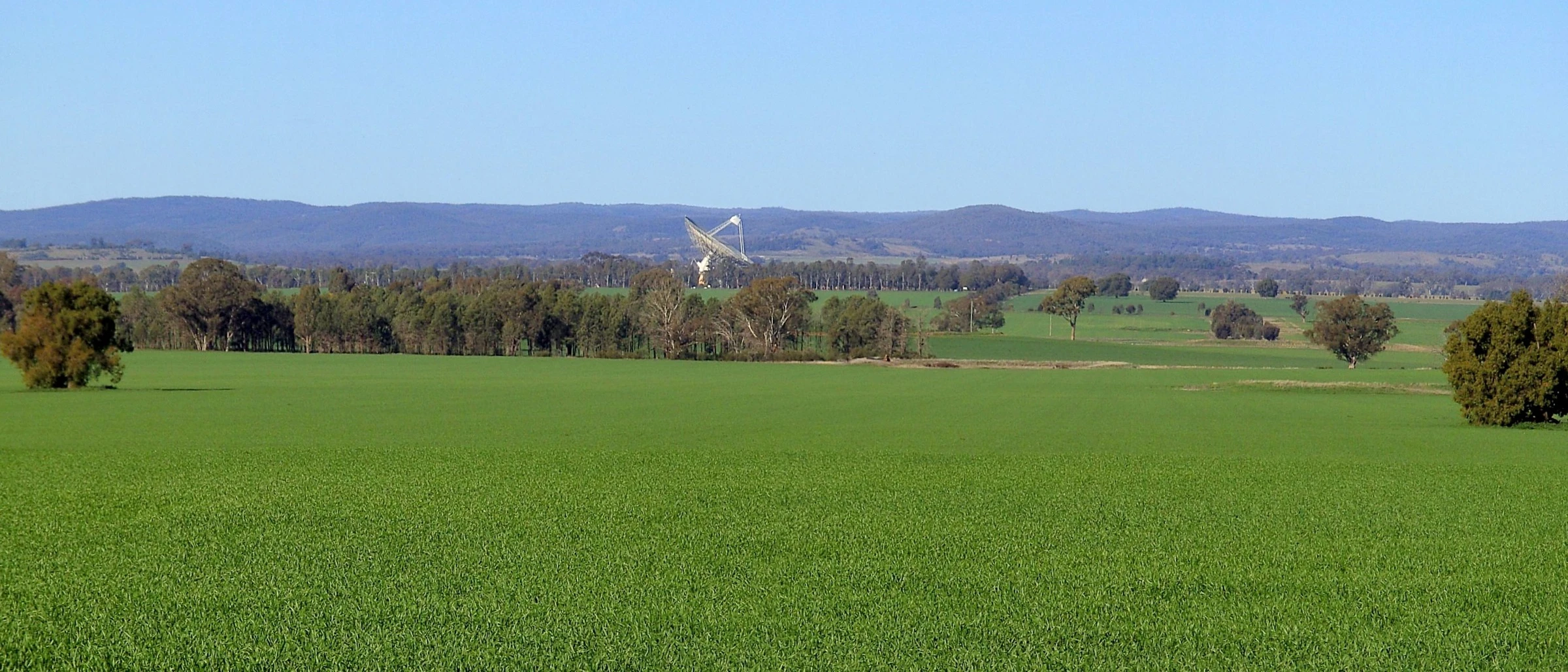
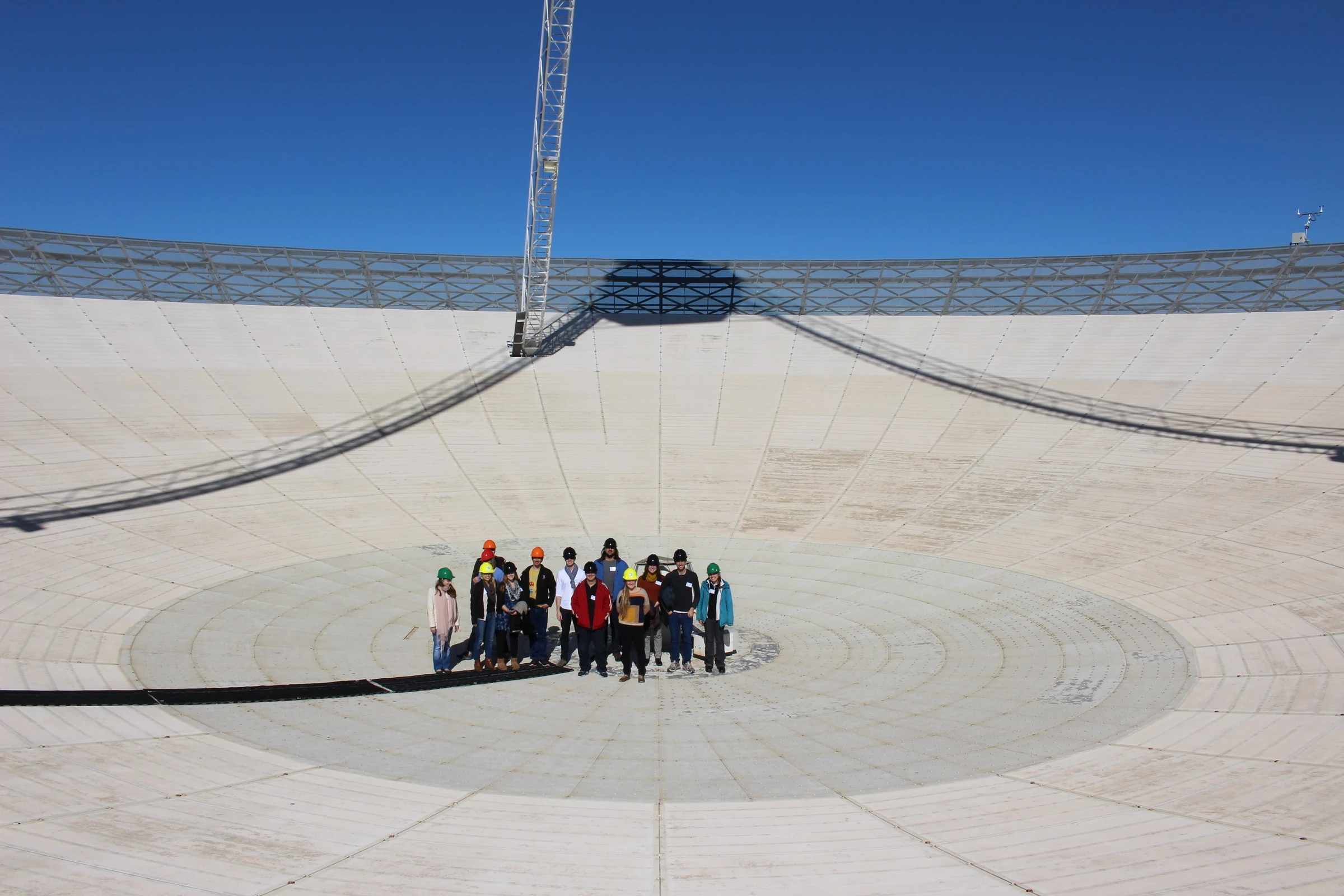
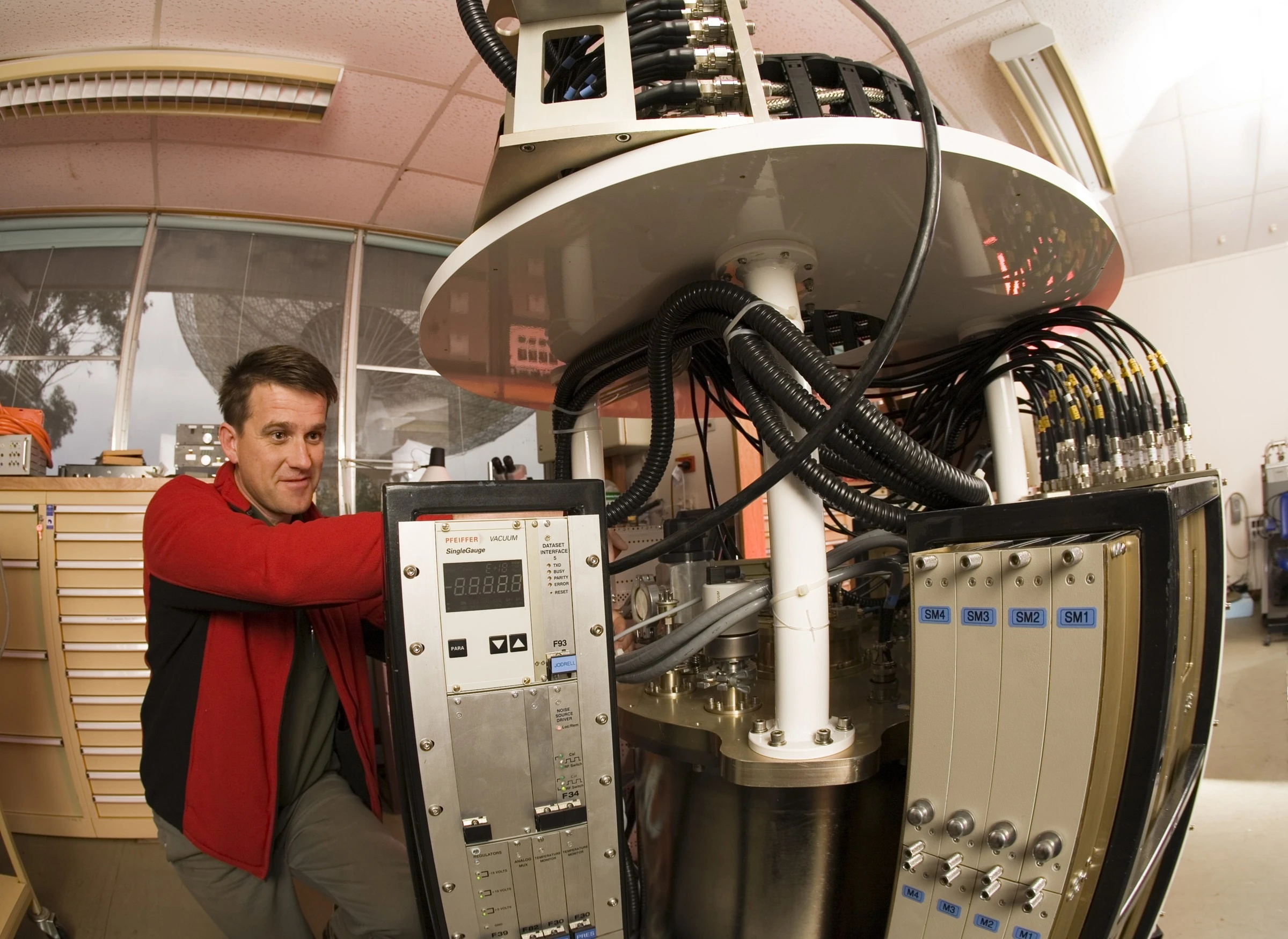
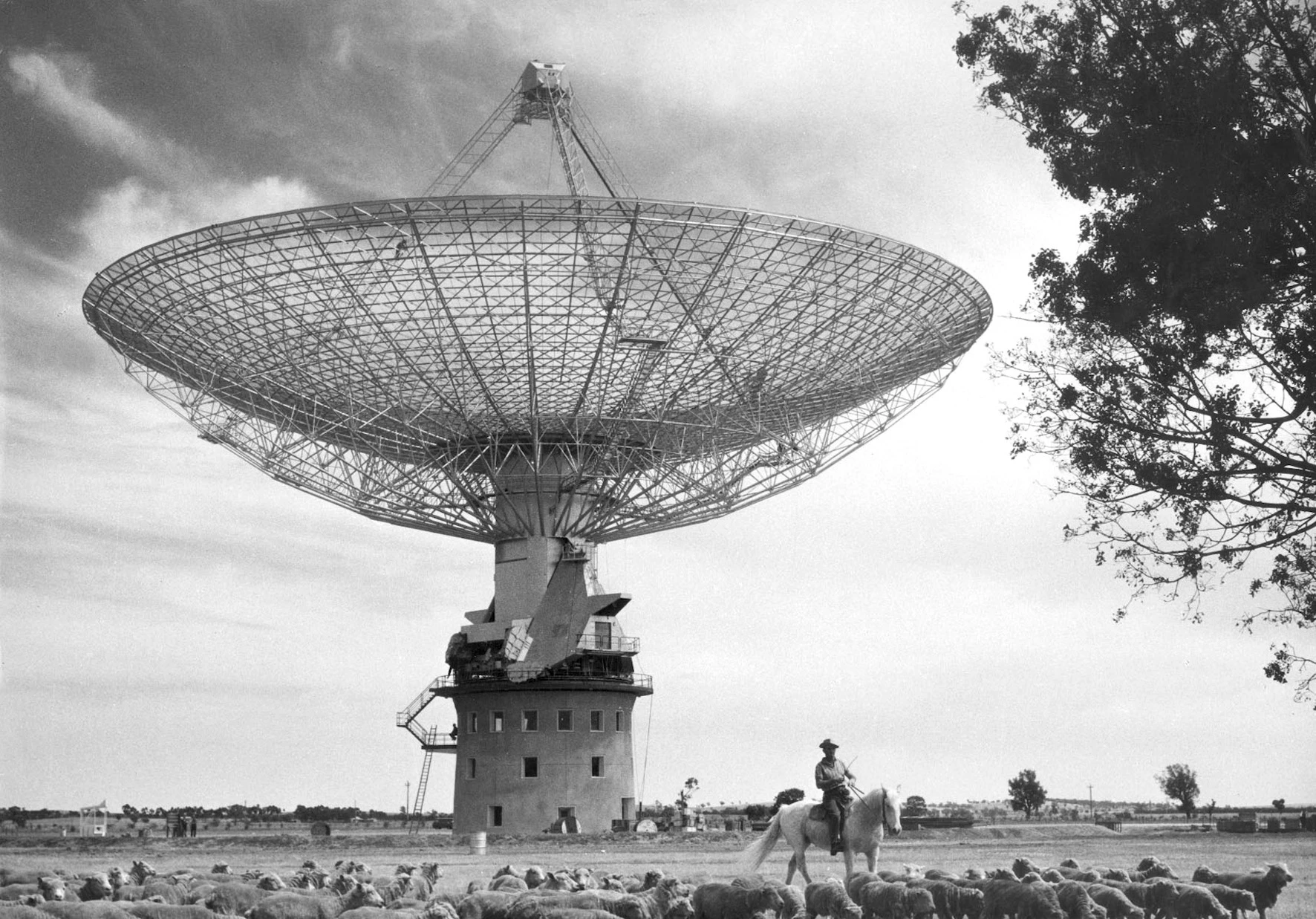
Select a photograph to see it full size, with its caption and credit.
The curve told them how much was in the way. It could not tell them where the flash started. The bursts placed in galaxies since have been placed by arrays and fast-sampling methods that Parkes did not have in 2001.
If another single flash appeared on your screen tonight, what would you want to rule out first? Before you decide, follow the evidence closer to the dish: Could a Microwave Oven Fool the Parkes Radio Telescope?
Sources
- Lorimer, Bailes, McLaughlin, Narkevic and Crawford, A bright millisecond radio burst of extragalactic origin, Science 318, 777 (2007) Science, via arXiv Primary record
- Duncan Lorimer and Maura McLaughlin, Flashes in the Night: The Mystery of Fast Radio Bursts, Scientific American, April 2018 Scientific American Study
- Lorimer, McLaughlin and Bailes, The discovery and significance of fast radio bursts, Astrophysics and Space Science 369, 59 (2024) Springer, via arXiv Primary record
- Parkes radio telescope, Murriyang CSIRO Primary record
- The Parkes multibeam receiver: description (1997) CSIRO Australia Telescope National Facility Primary record
- Zhang, Hobbs, Dai, Toomey, Staveley-Smith, Russell and Wu, A new fast radio burst in the data sets containing the Lorimer burst, MNRAS Letters 484, L147 (2019) Monthly Notices of the RAS, via arXiv Primary record
- Petroff et al., Identifying the source of perytons at the Parkes radio telescope, MNRAS 451, 3933 (2015) Monthly Notices of the RAS, via arXiv Primary record
- Burke-Spolaor, Bailes, Ekers, Macquart and Crawford, Radio Bursts with Extragalactic Spectral Characteristics Show Terrestrial Origins, ApJ 727, 18 (2011) The Astrophysical Journal, via arXiv Primary record
- Thornton et al., A Population of Fast Radio Bursts at Cosmological Distances, Science 341, 53 (2013) Science, via arXiv Primary record
- Lingam and Loeb, Fast Radio Bursts from Extragalactic Light Sails, ApJ Letters (2017) The Astrophysical Journal Letters, via arXiv Primary record
- Could Fast Radio Bursts Be Powering Alien Probes? (9 March 2017) Harvard-Smithsonian Center for Astrophysics Study
- Chatterjee et al., The direct localization of a fast radio burst and its host, Nature (2017) Nature, via arXiv Primary record
- Bannister et al., A single fast radio burst localized to a massive galaxy at cosmological distance, Science (2019) Science, via arXiv Primary record
- CHIME/FRB Collaboration, A bright millisecond-duration radio burst from a Galactic magnetar, Nature (2020) Nature, via arXiv Primary record
- Bochenek et al., A fast radio burst associated with a Galactic magnetar, Nature (2020) Nature, via arXiv Primary record
- Vikram Ravi, The observed properties of fast radio bursts, MNRAS 482 (2019) Monthly Notices of the RAS, via arXiv Primary record
- Guidorzi et al., A search for gamma-ray prompt emission associated with the Lorimer Burst FRB010724, ApJ (2019) The Astrophysical Journal, via arXiv Primary record
- Petroff, Hessels and Lorimer, Fast Radio Bursts, Astronomy and Astrophysics Review (2019) A&A Review, via arXiv Study
- CHIME/FRB Collaboration, The Second CHIME/FRB Catalog of Fast Radio Bursts (January 2026) arXiv Primary record
- Shaw Prize for Astronomy awarded to astronomers for the discovery of fast radio bursts (15 November 2023) CSIRO Australia Telescope National Facility Study
- The international search for fast radio bursts continues where it began at WVU (21 July 2014) West Virginia University Study
- Jerry Ehman, The Big Ear Wow! Signal: What We Know and Don't Know About It After 30 Years (2007, revised 2010) Big Ear Radio Observatory Primary record
- Hewish, Bell, Pilkington, Scott and Collins, Observation of a Rapidly Pulsating Radio Source, Nature 217, 709 (1968) Nature Primary record