Who, or what, was talking in an apartment at 458 West Water Street in Elmira, New York, in the winter of 1963? The Seth books say it was Seth. The woman whose mouth the words came out of, the poet and novelist Jane Roberts, wrote that she did not know.
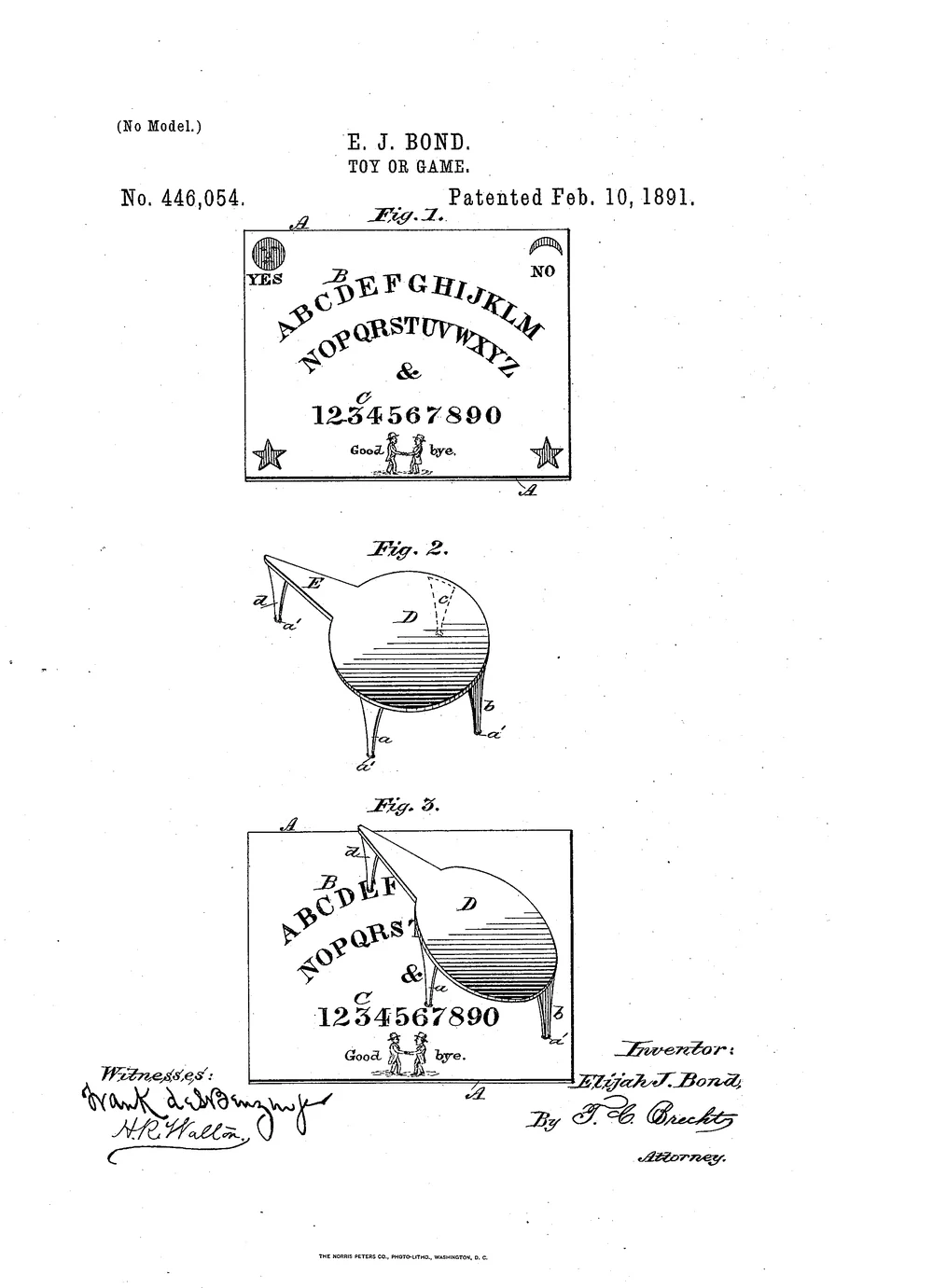
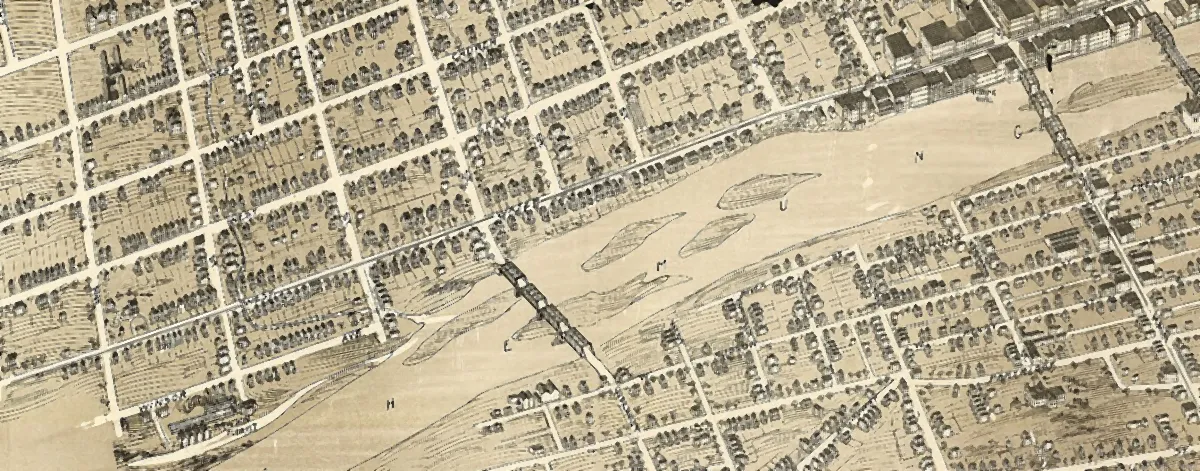
The apartment house stands near the Chemung River, near downtown Elmira. Roberts and her husband, the painter Robert F. Butts, moved in in May 1960. Late in 1963 they tried a Ouija board there. The pointer began to spell. Within a month Roberts was speaking the words aloud, in trance, and Butts was writing them down by hand.
He kept writing until 1984. By July 1982 he counted more than 1,500 sessions. Out of them came The Seth Material, Seth Speaks, The Nature of Personal Reality and a shelf of others, and with them an idea that would travel far beyond Elmira: that each person forms his or her own reality.
In the first chapter of the first book he dictated, Seth described himself.
"An energy personality essence, no longer focused in physical matter."
Frank Withers, Then Seth
It began with poetry. On September 9, 1963, Roberts was writing poems when what she later called an expansion of consciousness came over her and lasted more than two hours. In it she produced, in automatic writing, a manuscript she called The Physical Universe as Idea Construction.
The episode sent her into psychic research. She planned a book on it, and in line with that plan she and Rob tried a Ouija board late in 1963. Butts's notes place a few brief attempts in November. The first numbered session is dated December 2, 1963.
The pointer gave a name: Frank Withers. Then, in the fourth session, on December 8, Frank Withers spelled out that he preferred to be called Seth. "And Seth it's been ever since," Butts wrote.
Neither of them had any psychic background, Roberts wrote. When she began to anticipate the board's replies, she took it for granted that they came from her own subconscious. Soon she felt impelled to say the words aloud, and within a month she was speaking for Seth in trance.
Butts did not use a tape recorder. He took verbatim notes in a shorthand of his own and typed them up later in the week. He wrote down the time as he went, so the record shows how long each passage took. Seth dictated the punctuation too: which words to underline, where the quotation marks and the colons went. One night Butts noted that the delivery had been "quiet but rather fast, considering the modest speed I can attain."
A painter with a pen, at the speed of a voice.
By the time Roberts wrote her introduction to Seth Speaks, the Seth material ran to "over six thousand typewritten pages."
A Book Written Through Someone Else
The strongest case Seth made for himself was the work. He announced a book of his own and dictated it from Session 511, on January 21, 1970, to Session 591, on August 11, 1971. After every break, Roberts wrote, he picked up precisely where he had left off. Reading the finished book, she wrote, was "completely new to me, though each word had been spoken through my lips."
That book was Seth Speaks, published by Prentice-Hall in 1972. Before it came her first book on the sessions (1966), reissued in 1976 as The Coming of Seth, and The Seth Material (1970). After it came The Nature of Personal Reality (1974), The "Unknown" Reality in two volumes (1977 and 1979), The Nature of the Psyche (1979) and The Individual and the Nature of Mass Events (1981).
The couple tried to test it. Between August 1965 and September 1966, by Roberts's count, they held seventy-five tests with a psychologist she called Dr. Instream, "not his real name," and eighty-three envelope tests of their own, a sealed object handed to her in session. Of the psychologist she wrote that, at the very least, he had to admit clairvoyance had occurred. And in 1966 she gave her own reason for doubting her subconscious: it "does not usually work in such a well-ordered, disciplined fashion."
Every Possibility Explored
In the preface to The Nature of Personal Reality, on April 10, 1972, Seth said the book would show "exactly the way in which you form your own reality." Five months later came the rule: "You get what you concentrate upon. There is no other main rule."
On April 18, 1973 he asked for one sentence to be set apart on the page, in larger type, and underlined.
THE PRESENT IS THE POINT OF POWER.
Seth Speaks had gone further. Seth said he spoke "to those who believe in a god, and those who do not." A friend telephones and asks for a meeting at five o'clock. Stay home, go somewhere else, or go. On Seth's telling every one of those has a reality: "every thought is actualized and every possibility explored." Later channelers reached for these probable realities when a predicted date came and went. Behind each person, Seth said, stands the entity, of which a life knows only a small part.
The books found their readers. Darryl Anka, who speaks for Bashar, told the interviewer Rick Archer: "I became familiar with channeling through the Seth material from Jane Roberts." In the late 1970s Barbara Marciniak and her sister Karen read The Seth Material and Seth Speaks; Karen later wrote that Jane Roberts and the Seth material were "a guiding force for Barbara," before Barbara began speaking for the Pleiadians. Jerry Hicks, of the Abraham teachings, found Seth Speaks "high on a shelf" in a Phoenix library and read the Seth books "over and over." Official X found no statement about Seth by Lee Carroll, who speaks for Kryon, so no line is drawn there.
By 1996 the scholar Wouter Hanegraaff called the Seth books "undisputed 'classics' of modern channeling."

If the Voice Was What It Said
Set aside for a moment whether any of it is true. Ask the better question. What kind of world is this, if Seth was what he said he was?
First, the sessions. If Seth was "no longer focused in physical matter," then the typed pages at Yale would not be a writer's drafts. They would be dictation from outside a human body, taken down by hand, punctuation and all. Sessions 1 to 941, numbered and dated.
Then death. Roberts wrote that her own out-of-body states had convinced her that consciousness is not dependent upon physical matter. If Seth was real, she was right, and the line drawn at death by every view that ties the mind to the brain would be drawn in the wrong place. Seth said he had been conscious since before the earth was formed. Which would mean a personality older than the planet.
Then our own lives. On Seth's telling, the evening a person stayed home, a probable self went out at five o'clock. Which means every one of us would be living beside selves who said no, who went somewhere else, who kept the appointment. The life on the record would be one thread of something much larger, the entity, of which we know only a small part.
A life. One road out of three.
And the one consequence still in front of us. If the present is the point of power, and if the only main rule is that each of us gets what we concentrate upon, then the next day would not be waiting somewhere ahead. It would be made now, out of what we believe tonight.
On that reading, belief would be the most practical thing a human being does.
What the Critics Found
The standard explanation was put most plainly by James Alcock in the Skeptical Inquirer in the summer of 1989. He dated the latest wave of channeling to the publication of Seth Speaks in 1972, then set out why the books cannot show where they came from.
The sessions were almost always held without witnesses. There was no tape. Roberts was a practised writer and poet who read widely, and Butts himself said her earlier poetry anticipated Seth's concepts. She was conscious during the sessions and wrote that it was often hard to say where she stopped and Seth began. On that record, Alcock wrote, "we cannot discriminate between fraud and the possibility of unconscious production," and he saw "little need" to consider any supernatural agency. He added that Roberts herself had at one time considered that all of it might have come from her own subconscious.
The tests were never scored by anyone outside the house. The psychologist Paul F. Cunningham, who later went through the record, writes that Roberts ended the Instream series on July 10, 1966, because no word on any result had come from the psychologist since January. The hits that survive in print are the couple's own judgment.
And readers are not a source. Michael F. Brown, in The Channeling Zone in 1997, put the books' sales at more than a million copies. A million copies show how far the books went. They do not show who wrote them.
What the Critics Do Not Reach
Alcock's case rests on what the record cannot tell apart. It is not a finding about what happened in Elmira, and its logic cuts more than one way. If fraud and unconscious production cannot be told apart on this record, neither can an independent Seth.
In the same pages Alcock granted something else: the Seth books "seem, for many people, to stand a league above the other channeled texts."
Cunningham tested eight explanations against the published record, from fraud and cryptomnesia, forgotten reading coming back as new, to dissociative identity disorder and psi. He concluded that the record "suggests that fraud and cryptomnesia are highly improbable explanations." That is one scholar's reading. It narrows the field. It does not close it.
Then the strangest fact in the whole record. The woman at the center never settled it. "You can say that Seth is a dramatization of the unconscious or an independent personality," Roberts wrote. "Personally, I don't see why the statements have to be contradictory." She called it "my opinion at this time," and in the same pages leaned one way: she thought there is "an independent Seth who operates in quite different terms than we do."
In Adventures in Consciousness (1975) she set out a theory of her own, which she called aspect psychology. As Butts later summed it up, Seth would be the personification of an aspect of her own larger source self, and also a personality with an existence of his own at other levels.
What Seth was has not been found. Not by Alcock. Not by Cunningham. Not by Roberts.
Sessions 1 to 941
Roberts was first taken into hospital in February 1982. Her last stay lasted a year and nine months, and Butts went on taking sessions down in shorthand there. She died at 2:08 in the morning on September 5, 1984. She was 55.
The books did not stop at her death. Butts brought out Dreams, "Evolution," and Value Fulfillment in two volumes in 1986, The Magical Approach in 1995 and The Way Toward Health in 1997. With the help of his second wife, Laurel Davies-Butts, he kept what one friend's tribute called his promise to publish all the Seth material: The Early Sessions, nine books from 1997, and The Personal Sessions, seven books from 2004, subtitled "of the Deleted Seth Material," through New Awareness Network, founded in 1988 by Rick Stack. Butts died in Elmira on May 26, 2008.
He gave her papers to Yale in gifts from 1985 on. The Jane Roberts Papers now fill 166.17 linear feet, 501 boxes, in Manuscripts and Archives at Yale University Library, catalogued as MS 1090 and open to research. The session transcripts, numbered 1 to 941. Forty-six deleted sessions. Her journals from 1965. Dream notebooks from October 1963, the month after Idea Construction and before the board. Copying or publishing from most of the unpublished papers needs the permission of Mrs. Robert F. Butts.

Which leaves one test that could still be run. Her poetry and fiction from before the board, the 1963 novel The Rebellers among them, and the dream notebooks begun that October can be set beside the sessions. That could show how much of Seth was already on paper in Roberts's hand before December 1963. It would show where the ideas were first written down. It could not show where they came from.
In the introduction to Seth Speaks, seven years into the sessions, she put the question to herself and answered it: "In what terms? Quite honestly, I don't know."
Questions This Leaves You With
Is there anything a person actually does with this?
Honestly, very little follows for your own life from the question of who Seth was, and nothing here suggests otherwise. The books are what a reader can pick up, and what they say about belief can be read without settling where it came from. The larger question, whether a personality can speak without a body, is not one any single reader can settle, and no session, course or book changes that. The civilizational question underneath belongs to everyone, and it is still open.
Does this sit against a religious account of the world?
It cuts both ways, and both readings have been taken up. Seth spoke to those who believe in a god and to those who do not, and his entity, larger than a single life, can be read as close to a soul or as something no tradition described. Some readers find room for faith in it; others find a replacement for faith. Which way it falls for you is not something this site will tell you. That stays yours, and the books themselves leave it to the reader too.
Does this change what a human life is?
Hold your own life up against the telephone at five o'clock. If Seth was right, the evening you stayed home was not the only evening you had. For some people that makes a life smaller: one thread among many, no single choice final. For others it makes a life larger, because every thread is real and every one of them is yours. Notice which of those you felt first. Nothing here asks you to do anything about it, and nothing should.
What would change your mind, in either direction?
Name it now, before you settle in. Toward an outside source: a session that gave checkable information Roberts could not have known, recorded and scored by someone outside the house before the answer was known. Toward Roberts herself: Seth's ideas turning up, in the same words, in her poems, fiction or dream notebooks from before December 1963; or the dictation's clock times matching her own pace of ordinary composition. Either would count. It is worth deciding in advance which one would move you, because after a reading has settled in, every new fact tends to look like support.
Could the Yale papers show whether Seth was already in Jane Roberts's writing before 1963?
This is the gap. The papers from before the board sit in the same collection as the 941 transcribed sessions, open to research, with copying and publishing by permission of Mrs. Robert F. Butts. A shared theme would prove little: ideas about mind and reality were in many books she could have read. What would count is wording, the same unusual phrase or the same example, dated in her hand before December 1963. Absent that, the comparison would show what a poet was thinking about. It would still leave open what was speaking through her in the sessions.
More photographs
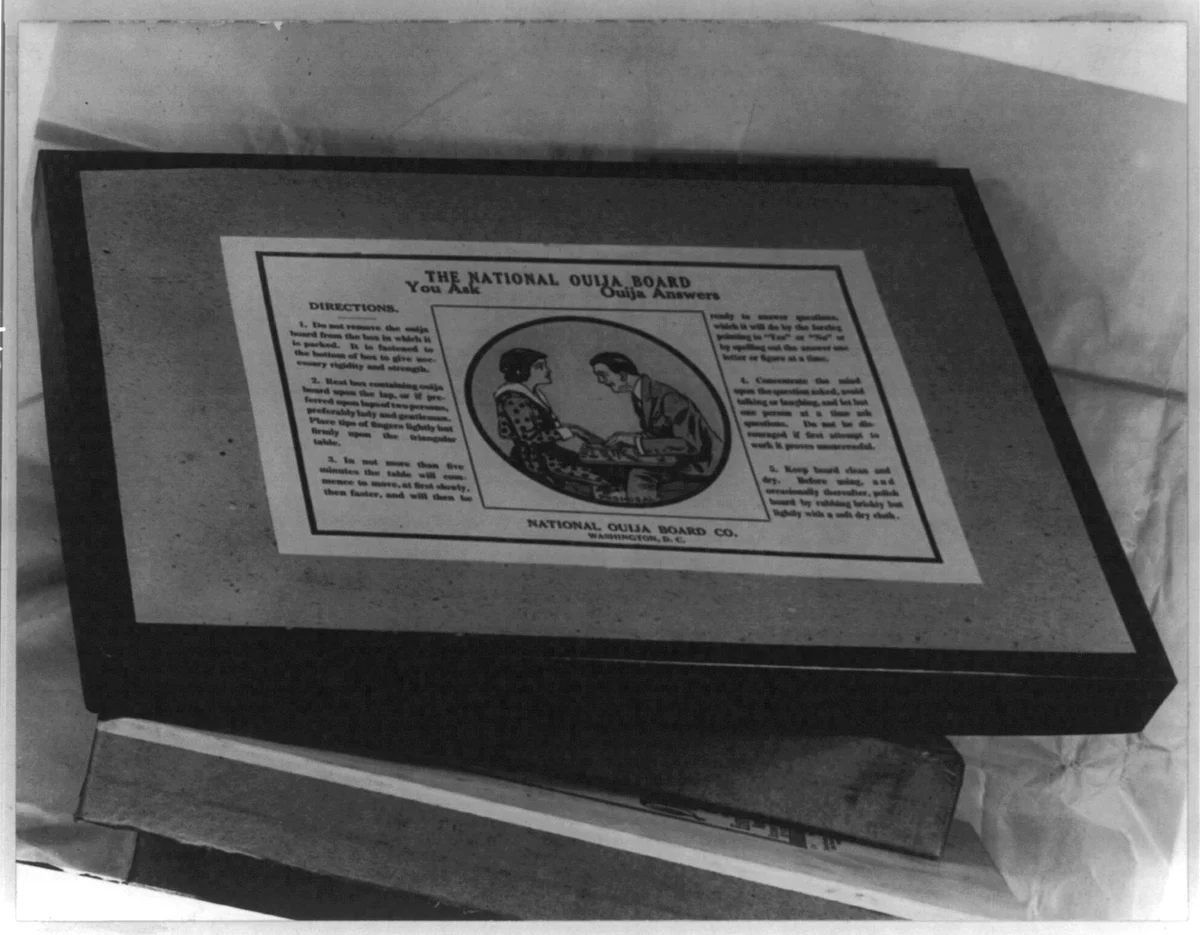
A boxed Ouija board of the National Ouija Board Co., Washington, photographed in 1920. National Photo Company, 1920. Library of Congress, Prints and Photographs Division, via Wikimedia Commons. Public domain. Resized. 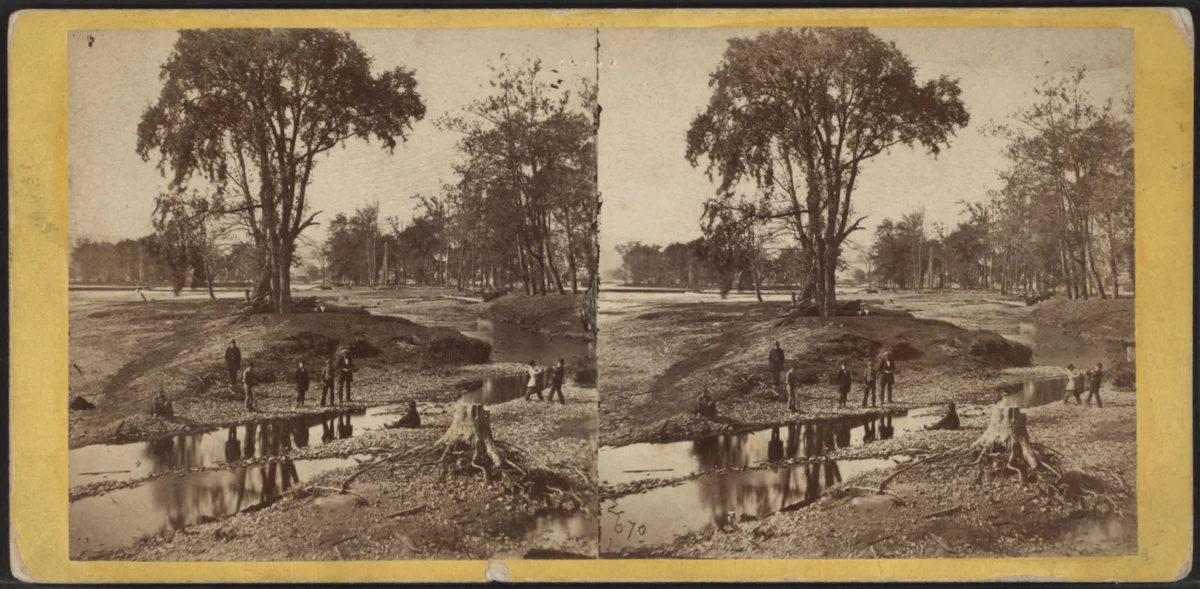
The Chemung River at Elmira in a stereograph of about 1860-1875. E. and H.T. Anthony, View on the Chemung, looking up the River, at Elmira, about 1860-1875. New York Public Library, via Wikimedia Commons. Public domain. Resized. 
The Chemung River looking west from the Lake Street Bridge in Elmira, 2023. Photo: DSKEO, CC BY-SA 4.0 (creativecommons.org/licenses/by-sa/4.0), via Wikimedia Commons. Resized. 
Downtown Elmira: North Main Street, June 2017. Photo: Andre Carrotflower, CC BY-SA 4.0 (creativecommons.org/licenses/by-sa/4.0), via Wikimedia Commons. Resized. 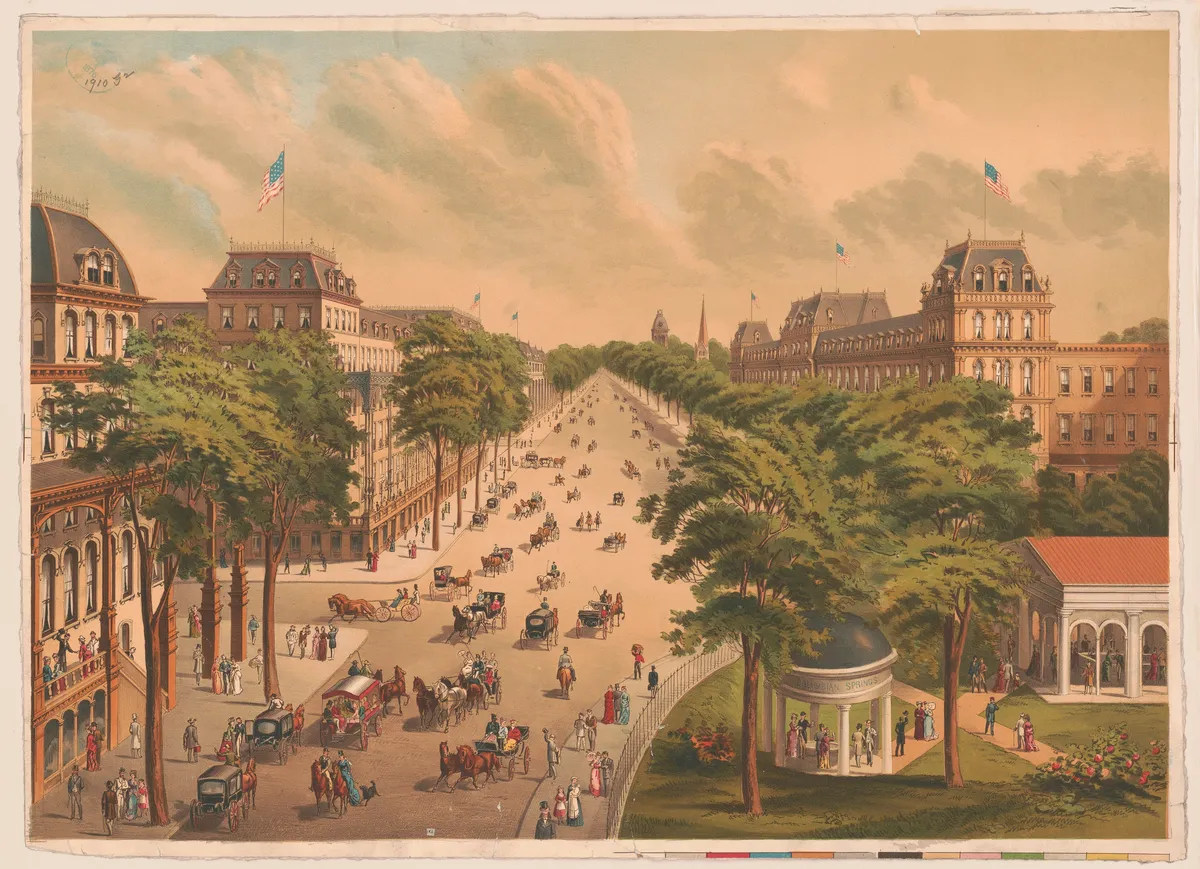
Broadway, Saratoga Springs, in an 1876 print. Jane Roberts grew up in Saratoga Springs. Saratoga Springs, N.Y., 1876. Library of Congress, Prints and Photographs Division, via Wikimedia Commons. Public domain. Resized. 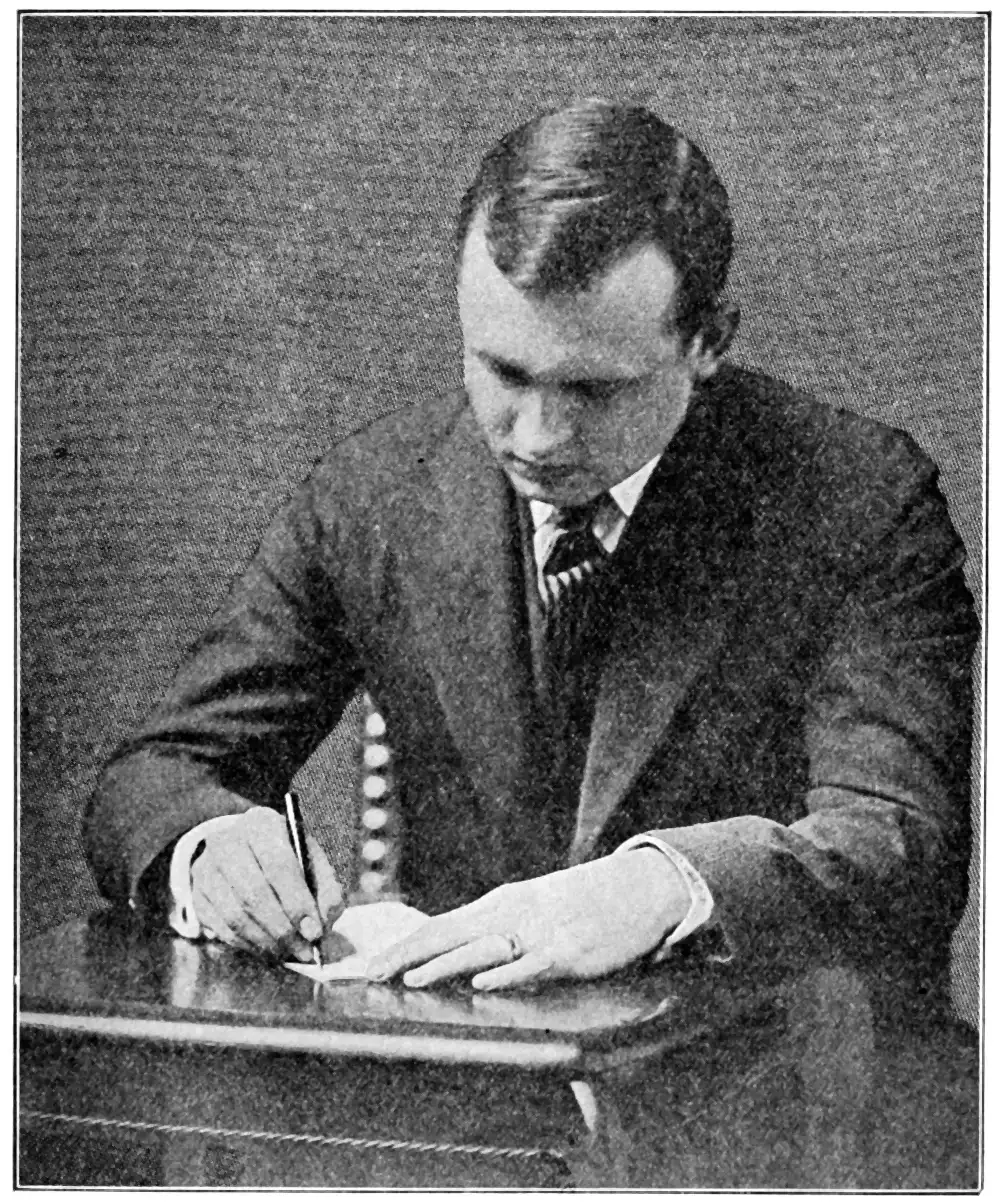
Fast note-taking by hand, in a 1917 shorthand manual. Butts took every session down in a shorthand of his own. From Gregg Speed Studies (Gregg Publishing Company, 1917), via Wikimedia Commons. Public domain. Resized and smoothed. 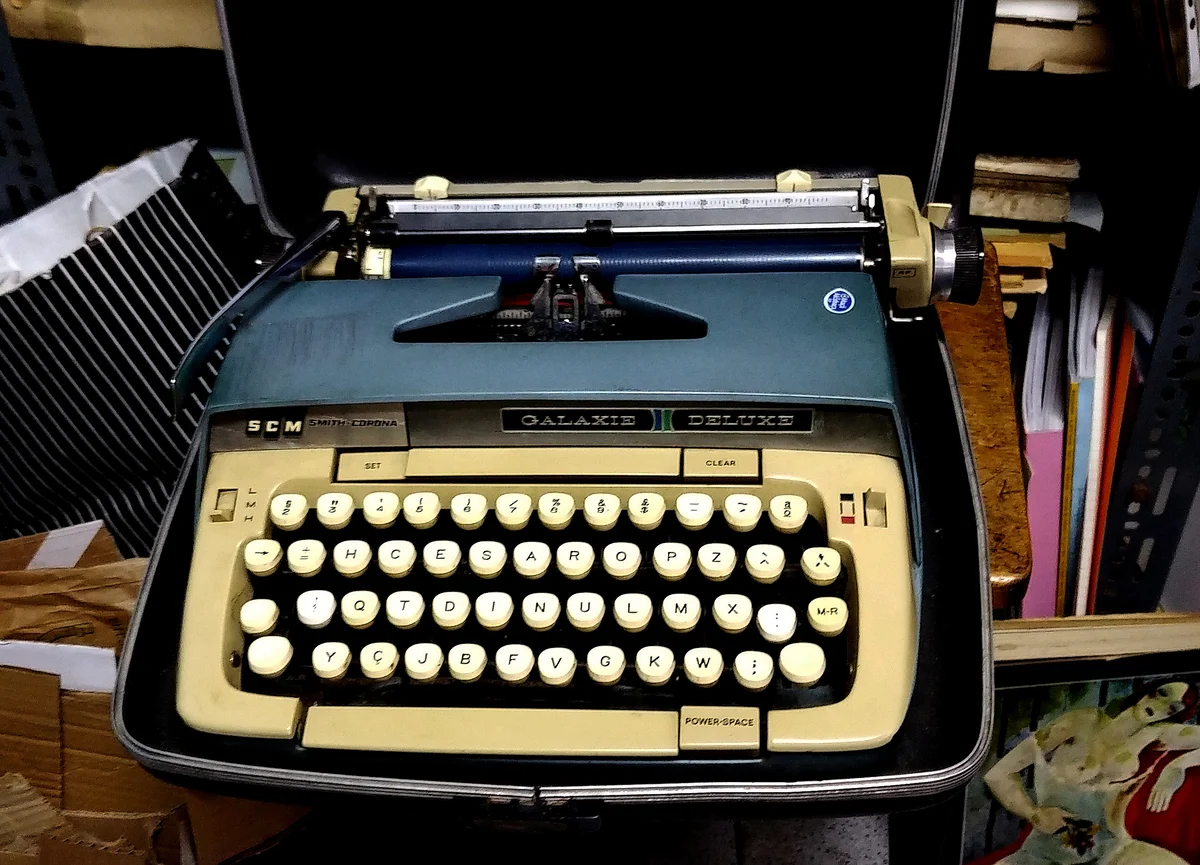
A 1960s portable typewriter. Butts typed up his session notes later in the week. Photo: Ilja.nieuwland (CC0), via Wikimedia Commons. Resized. 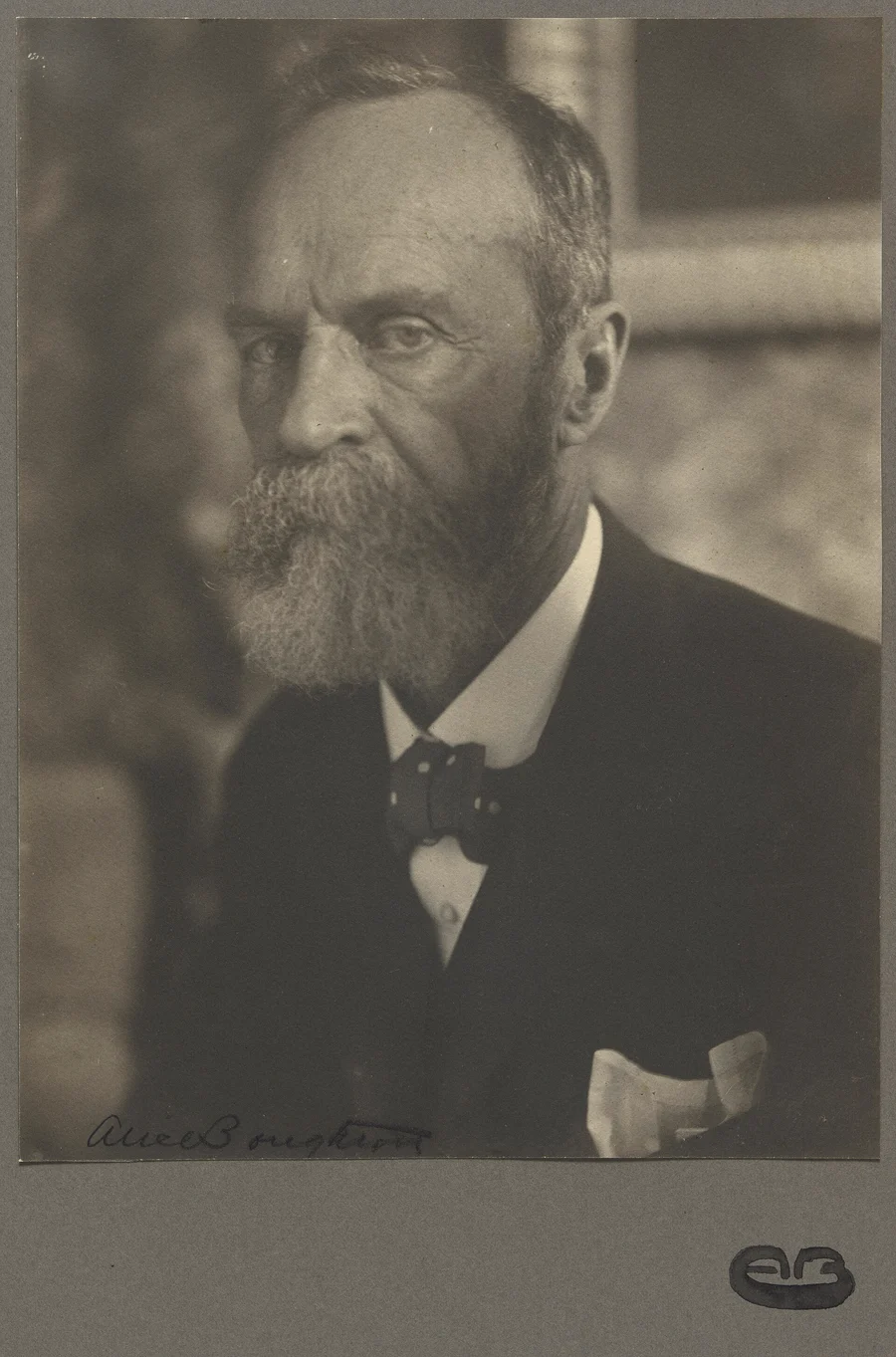
William James (1842-1910), about 1907. Jane Roberts published The Afterdeath Journal of an American Philosopher, a book about James, in 1978. Alice Boughton, William James, about 1907, platinum print. National Portrait Gallery, Smithsonian Institution (CC0), via Wikimedia Commons. Resized. 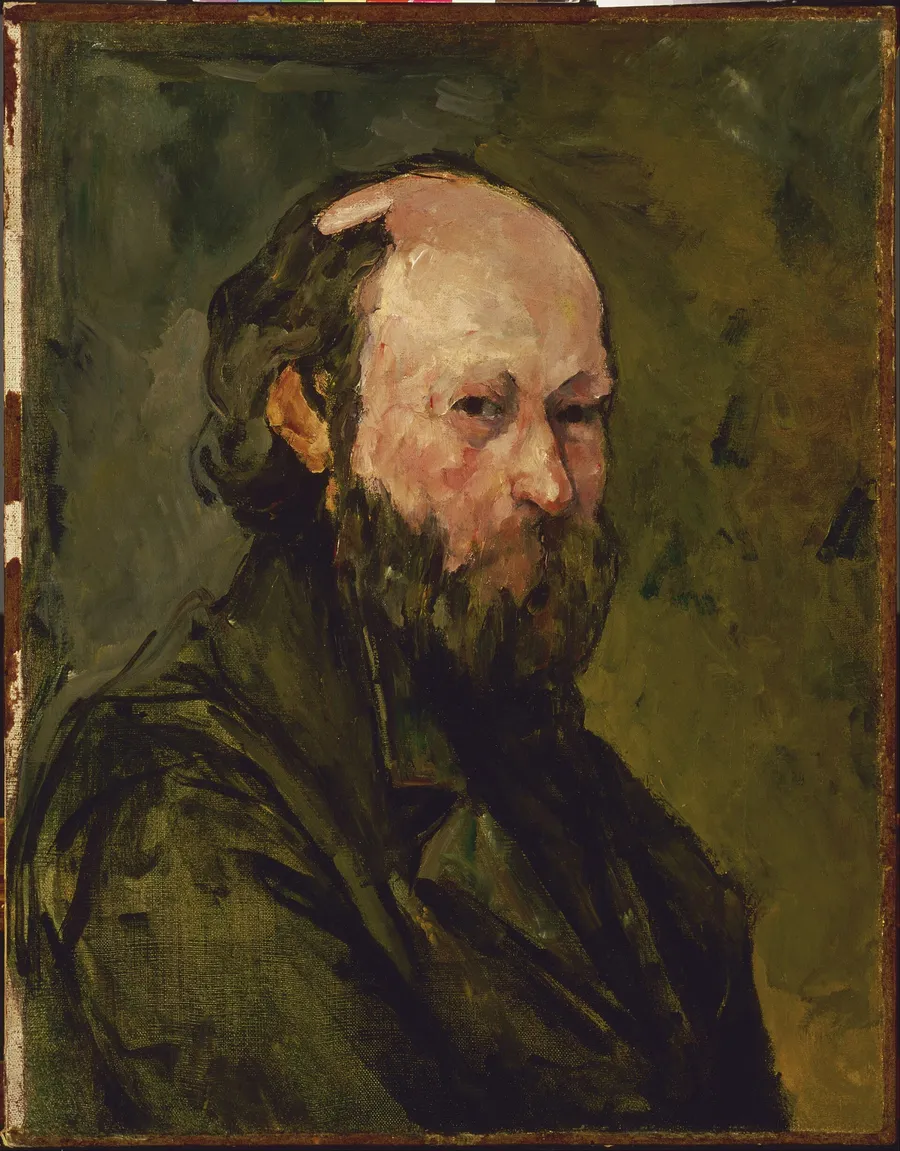
Paul Cezanne, Self-Portrait, 1878-1880. Jane Roberts published The World View of Paul Cezanne in 1977. Paul Cezanne, Self-Portrait, 1878-1880. The Phillips Collection, Washington, via Google Arts and Culture and Wikimedia Commons. Public domain. Resized. 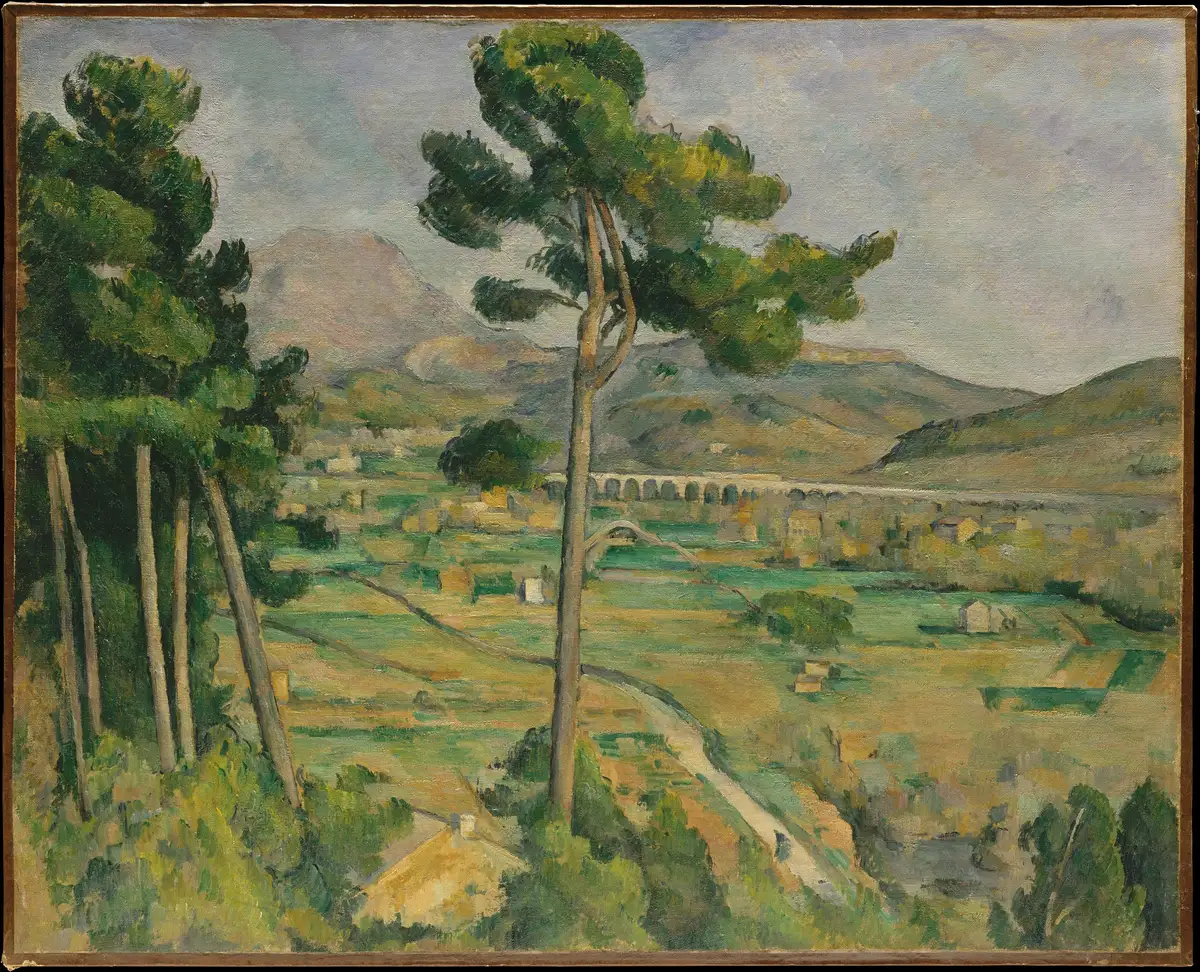
Paul Cezanne, Mont Sainte-Victoire and the Viaduct of the Arc River Valley, 1882-1885. Paul Cezanne, Mont Sainte-Victoire and the Viaduct of the Arc River Valley, 1882-1885. The Metropolitan Museum of Art (CC0), via Wikimedia Commons. Resized.
Select a photograph to see it full size, with its caption and credit.
Sources
- Guide to the Jane Roberts Papers (MS 1090) Manuscripts and Archives, Yale University Library Primary record
- Roberts, Jane, 1929-1984 (name authority record) Library of Congress Study
- Butts, Robert F. (name authority record) Library of Congress Study
- Seth House Inc. (EIN 82-4468358) Charity Navigator Study
- Jane Roberts, The Seth Material, Prentice-Hall, 1970, catalogue record Open Library (Library of Congress record) Primary record
- Jane Roberts, Seth Speaks, Prentice-Hall, 1972, New World Library edition, distributor record Amber-Allen and New World Library Primary record
- Jane Roberts, The Nature of Personal Reality, Prentice-Hall, 1974, bookstore record Amber-Allen and New World Library Primary record
- Jane Roberts, The "Unknown" Reality, vol. 1, Prentice-Hall, 1977, catalogue record Open Library (Library of Congress record) Primary record
- Jane Roberts, The Nature of the Psyche, Prentice-Hall, 1979, catalogue record Open Library (Library of Congress record) Study
- Jane Roberts, The Individual and the Nature of Mass Events, Prentice-Hall, 1981, catalogue record Open Library (Library of Congress record) Study
- Jane Roberts, Adventures in Consciousness, Prentice-Hall, 1975, catalogue record Open Library (Library of Congress record) Study
- Jane Roberts, The God of Jane, Prentice-Hall, 1981, catalogue record Open Library (Library of Congress record) Study
- Library of Congress MARC records, Dreams, "Evolution," and Value Fulfillment, LCCN 86-507, 1986 Library of Congress, via the Internet Archive Study
- Jane Roberts, The Magical Approach, Amber-Allen, 1995, catalogue record Open Library (Library of Congress record) Study
- Jane Roberts, The Way Toward Health, 1997, publisher page Penguin Random House (Tarcher); first published by Amber-Allen Primary record
- Seth books catalogue Seth Center (New Awareness Network) Primary record
- The Personal Sessions, Book 1 of The Deleted Seth Material, New Awareness Network, 2004, catalogue record Open Library Study
- About Seth Center (New Awareness Network) Primary record
- Paul M. Helfrich, In Memoriam Robert F. Butts, 2008 Paul M. Helfrich Study
- James E. Alcock, Channeling: Brief History and Contemporary Context, Skeptical Inquirer 13(4), 1989 Center for Inquiry Study
- Paul F. Cunningham, The Problem of Seth's Origin, about 2010 Rivier University (author's posting) Study
- Darryl Anka interview, Buddha at the Gas Pump, episode 236, transcript Rick Archer, Buddha at the Gas Pump Primary record
- Barbara Marciniak, Earth: Pleiadian Keys to the Living Library, Bear and Company, 1994, catalogue record Open Library Primary record
- Esther and Jerry Hicks, Money, and the Law of Attraction, Hay House, 2008, catalogue record Open Library Primary record
- Wouter J. Hanegraaff, New Age Religion and Western Culture, Brill, 1996, catalogue record Open Library Study
- Jane Roberts, The Coming of Seth, Pocket Books, 1976 (first published 1966 as How to Develop Your ESP Power), catalogue record Open Library (Library of Congress record) Study
- Jane Roberts, The Rebellers, Ace Books, 1963, catalogue record Open Library Study
- Jane Roberts, The Afterdeath Journal of an American Philosopher, Prentice-Hall, 1978, catalogue record Open Library (Library of Congress record) Study
- Jane Roberts, The World View of Paul Cezanne, Prentice-Hall, 1977, catalogue record Open Library (Library of Congress record) Study
- Michael F. Brown, The Channeling Zone, Harvard University Press, 1997, catalogue record Open Library Study