Bashar, the intelligence Darryl Anka channels, presents a connected account of consciousness, simultaneous time and extraterrestrial contact. The teachings and original handouts are available through the official Bashar website. Their central proposition is expansive: the reality experienced from moment to moment is one expression of a much larger existence.
Official video excerpts are available on Bashar Channeled by Darryl Anka on YouTube.
Anka also presents his account in First Contact (2016), a documentary he directed about his reported UFO encounter and his work with Bashar. The distributor catalogue identifies it as a 2016 documentary; the film offers a longer introduction to his account.
The clock advances. A hand moves across a table. One decision becomes part of a life, while another remains something that might have happened. In Bashar's account, all three experiences conceal the same underlying process: consciousness encountering different possibilities in sequence.
That changes the meaning of the future.
If possibilities already exist, the question becomes which possibility is being experienced - and what determines the transition from one moment to the next. Within this teaching, the small choices of an ordinary day belong to the same account of reality as communication with another civilization.
The five-step Formula is where that enormous proposition becomes practical.
Contact is where it becomes collective.
One moment, experienced from many directions
Bashar's published Basic Principles describe human beings as nonphysical consciousness experiencing physical reality. They also state that existence contains one moment, encountered from different points of view, and that past and future arise from the present. These are foundational propositions of the teaching. Basic Principles
The scale of the idea is easy to miss.
An ordinary account begins with a universe in which events occur, leaving a past behind and producing a future ahead. Bashar places consciousness at the centre of the experience of succession. The larger existence is simultaneous; the experience within it unfolds.
His Five Laws of Creation provide the supporting structure: existence, the here and now, the unity of the whole, a relationship between expression and experience, and change. "Laws" is the name given to these premises within the Bashar material. Five Laws of Creation
Together, those premises describe an existence that is both unified and capable of immense variation. The whole remains connected while individual experience changes.
The resulting question is larger than whether tomorrow has already happened.
If everything exists together, what creates the experience of arriving anywhere?
The universe as a sequence of frames
In an interview with Rick Archer, Anka explains Bashar's model through a film-projector analogy. Individual frames are still. Their sequence produces experienced movement. In the Bashar account, consciousness shifts through parallel-reality frames, producing the experience of time, space and change. All the frames coexist from the larger perspective. Original interview
A film offers a useful way to understand the proposal. A scene can contain a door opening, a person crossing a room and a glass falling. Each frame contains a different arrangement. Movement appears when those arrangements are experienced in succession.

Applied to Bashar's teaching, the analogy places the mystery in the succession itself. What seems to be a continuous world changing over time is described as consciousness experiencing successive realities.
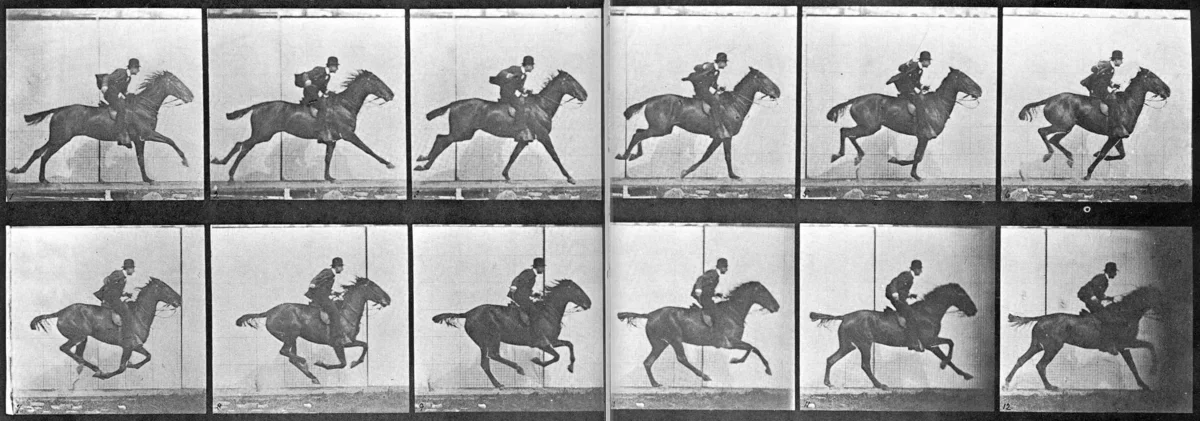
"Shifting" therefore has a broader meaning here than a dramatic jump into an unfamiliar universe. It is part of the proposed explanation for ordinary experience.
The official Parallel Reality Wheel makes the range of possibilities explicit. Its examples include alternative histories in which John F. Kennedy served two terms and the Roman Empire continued into the present. These are illustrations of the teaching's possibilities, not historical records of worlds independently observed. Parallel Reality Wheel
The distinction matters: a different choice and an entirely different history belong to the same conceptual landscape, but they differ enormously in scale.
Bashar's proposal stretches from the next ordinary moment to a different account of civilization.
Why a future visitor would not bring one inevitable future
This model also explains a feature of Bashar's identity that can otherwise sound contradictory.
Anka describes Bashar as a future expression of himself in a parallel reality. In the same interview, he explains predictions as readings of present probabilities rather than reports from one inevitable future. Anka's explanation
Within that account, a connection with a future being would not automatically supply a fixed history of Earth's next chapter. The being's existence would belong to a larger field of possibilities.
That makes the word future do two jobs. It locates an experience relative to a human chronology, while the teaching places that experience within simultaneous existence.
A prediction, on those terms, would identify a direction rather than establish an unavoidable destination.
The implication is striking. Contact with an intelligence associated with another future would not necessarily remove human choice. It could become part of the circumstances through which choices are made.
The conversation itself could influence the direction being discussed.
The 5-Step Formula
The Formula is the practical centre of this worldview. The current official version contains five steps. In paraphrase:
1. Act on your highest passion.
Choose the available action carrying the strongest excitement, interest or enthusiasm. It can begin with an everyday choice.
2. Take it as far as you can.
Pursue it to the extent present ability and circumstances allow, until further action is no longer available.
3. Act with zero insistence on the outcome.
Release the demand that the result arrive through a particular route or take a predetermined form.
4. Stay in a positive state, regardless of what happens.
The official wording specifies a positive state; "positive or neutral" is an interpretive variation.
5. Examine your belief systems.
Continually investigate and replace unwanted, fear-based beliefs that conflict with the person one prefers to be.
These are Bashar's instructions, rather than a guarantee of results. Official five-step Formula
Their relationship to the larger teaching is the important part.
The Basic Principles describe excitement as a physical expression of resonance with a person's core being. Within that framework, excitement carries information: it indicates a relationship between an available action and the person taking it. Basic Principles
Action matters because the Formula involves participation. Releasing insistence matters because the result may differ from the anticipated form. Examining beliefs matters because the process includes discovering assumptions that shape the experience.
The teaching joins those elements. "Follow excitement" by itself leaves out most of the mechanism.
Desire without a demand for one ending
A separate teaching, the Seven Sequential Steps of Manifestation, helps explain the Formula's most challenging feature.
Its sequence moves through vision, desire, belief, acceptance, intention, action and allowance. The official page attributes the material to an August 1995 session. Desire is given a strong role, yet the sequence ends with detachment from a required outcome. Seven Sequential Steps
That creates a deliberate tension: a clear direction, pursued energetically, without a demand that reality deliver one scripted conclusion.
For illustration, an interest in photography might begin with making photographs. One expectation might be a particular job. The activity could instead lead to a different subject, collaboration or form of work. This is an everyday example of the distinction; it does not demonstrate a transition between universes.
Within Bashar's framework, however, that distinction has cosmological significance. The preferred experience may emerge through a route the original expectation did not contain.
The Formula therefore asks more than whether an intention came true. It asks how the person acted, what remained attached to a particular ending, and what beliefs became visible along the way.
What would change if this account were true?
If this model described physical reality, our relationship to possibility would be far more intimate than it ordinarily appears.
Consciousness would participate in the experience of a world at a fundamental level. A human life would be a particular passage through a much larger existence. The sense of continuity that holds a biography together would conceal an extraordinary sequence of transitions.
Our species would face a corresponding change in its understanding of contact.
Another civilization might possess a different understanding of the relationship between consciousness and experience. Communication could involve learning how the participants perceive reality as well as learning what they know.
Then the significance would grow again. Humanity's ability to meet another intelligence might depend partly on how it understands itself: as an isolated observer, as a participant in a connected existence, or as something whose capacities remain incompletely understood.
Those consequences remain conditional.
Their scale explains why the practical teaching and the contact material belong together in Bashar's account. The next available action and the prospect of another civilization are presented as parts of the same transformation.
Contact as a process with many stages
The official Protocols of First Contact handout describes a long progression.
Observation and an assessment of contact potential come first. Sightings, selected communicators and the dissemination of information follow. Responses are observed repeatedly. The sequence advances through preliminary encounters, isolated physical contact, expanded contact and information exchange, eventually reaching membership in an Interstellar Alliance. Protocols of First Contact
The repeated attention to responses is a key feature. In this account, contact develops through interaction and reassessment.
The official Guide to Open Contact reinforces that emphasis. Its selected sessions concern reactions to unfamiliar experiences, the higher self, stages described as the Window, Door and Gate, and becoming a galactic citizen. The catalogue establishes those subjects; it does not, by itself, supply every explanation contained in the recordings. Guide to Open Contact
The more recent Interstellar Alliance Social Experiment brings the process into social life. Its published outline includes changes in attitudes, volunteering, group participation and exploring an identity that encompasses both Earth humanity and a wider community. It also includes a stage devoted to shifting realities. Social Experiment
Bashar's contact narrative thus contains a substantial disclosure about humanity: the encounter is presented as a development in human relationships and identity as well as a meeting with outsiders.
What kind of civilization would enter that relationship?
Watch: The Open Contact Progress Report Day 1 - Highlights (6:33), from the official channel. The excerpt includes sections on open contact, free will and life lessons.
Where the teaching meets the record
The sources establish the structure of Bashar's account. They preserve a worldview, a practical method and a proposed progression toward contact.
They do not supply an independently measured transition between parallel realities.
That boundary can remain clear without replacing the subject with a biography or an argument about the messenger. The concepts themselves raise specific questions.
A useful outcome from following the Formula could be examined through the actions taken and the changes experienced. Establishing the proposed reality-shifting mechanism would require something further: a result that distinguished it from changes in attention, behaviour, interpretation or circumstance.
Likewise, the contact protocol provides a sequence against which statements can be compared. Publishing the sequence does not establish that the described beings are carrying it out.
The unresolved question is therefore precise.
Bashar connects consciousness, choice and contact through one account of reality. Which parts describe a useful way of experiencing life, and which could become observable findings about the universe itself?
Questions This Leaves You With
1. Is the Formula something you can explore without accepting the whole account?
Yes. You can examine an ordinary choice, the action it prompted and the expectation attached to it without first deciding how the universe works. That exploration would concern your experience; it would not automatically establish parallel realities. Anyone selling a date is selling something. The larger question is whether the Formula's proposed mechanism adds an explanation beyond the changes in behaviour and attention its steps encourage. What would you count as a useful personal result, and what separate evidence would persuade you about the cosmology behind it?
2. Would simultaneous time change how you understand faith?
You might find the idea of a larger existence beyond ordinary chronology compatible with your faith. You might find Bashar's particular account of consciousness, identity or choice difficult to reconcile with it. Those are different responses, and neither follows simply from finding the frame analogy interesting. OfficialX will not tell you which religious conclusion to draw. The question is which part of the teaching you are considering: an illustration of experience, a proposition about creation, or an account whose source you would accept as authoritative.
3. If other versions of you exist, what makes this life matter?
You might feel that a multitude of possibilities makes an individual life less distinctive. You might feel the opposite: that this particular experience matters because it is the one being lived. The model leaves a difficult personal question about continuity. What makes the person at the end of a sequence the same person who began it? You need not accept parallel realities to recognize that question. Bashar's account enlarges its setting, placing the experience of one identity within a far greater range of possible expressions.
4. What would distinguish a changed perspective from a changed reality?
A new interpretation can make the same circumstances feel different. A different action can produce a different outcome. Bashar's account proposes a mechanism extending beyond those familiar relationships. What observation would persuade you that the additional mechanism was operating? Conversely, what finding would lead you to prefer an explanation through ordinary choices and circumstances? Naming that distinction before judging an outcome helps preserve both possibilities: that a practice can be valuable, and that its explanation can remain unsettled. Which of those questions interests you most?
5. What would turn contact into a shared human experience?
A private experience can be decisive for its recipient while remaining difficult for someone else to assess. Bashar's staged account moves toward a broader relationship, including information exchange. What would need to cross that boundary for you: a conversation others could examine, knowledge independently checked, or a physical encounter with a record beyond the participants' testimony? Each would answer a different part of the question. The open problem is how an experience described through consciousness becomes something a wider community can investigate together.
Sources
- Official Bashar website Bashar Communications Primary record
- Bashar's Basic Principles Bashar Communications Primary record
- The Five Laws of Creation Bashar Communications Primary record
- Darryl Anka: original interview transcript, episode 236 Buddha at the Gas Pump; Rick Archer and Darryl Anka Primary record
- The Parallel Reality Wheel: official handout Bashar Communications Primary record
- The Follow Your Excitement Formula Bashar Communications Primary record
- Seven Sequential Steps of Manifestation, August 1995 session Bashar Communications Primary record
- Protocols of First Contact, 2016 Darryl Anka; Bashar Communications Primary record
- Bashar's Guide to Open Contact Bashar Communications Primary record
- The Interstellar Alliance Social Experiment Bashar Communications Primary record
- First Contact (2016): distributor catalogue and trailer Indie Rights; The Film Catalogue Primary record
- Watch First Contact (2016) on Tubi Tubi Primary record
- Bashar Channeled by Darryl Anka: official YouTube channel Bashar Communications; YouTube Primary record
- The Open Contact Progress Report Day 1 - Highlights Bashar Channeled by Darryl Anka; YouTube Primary record