
The Simpsons is the American cartoon about a yellow family in a town called Springfield, on Fox since 17 December 1989, and by October 2026 it had run to 813 episodes. Somewhere in that pile sits a joke from 19 March 2000. In an episode called Bart to the Future, a grown Lisa Simpson is President of the United States, and she has inherited "quite a budget crunch from President Trump."
Sixteen years later that name won the White House.
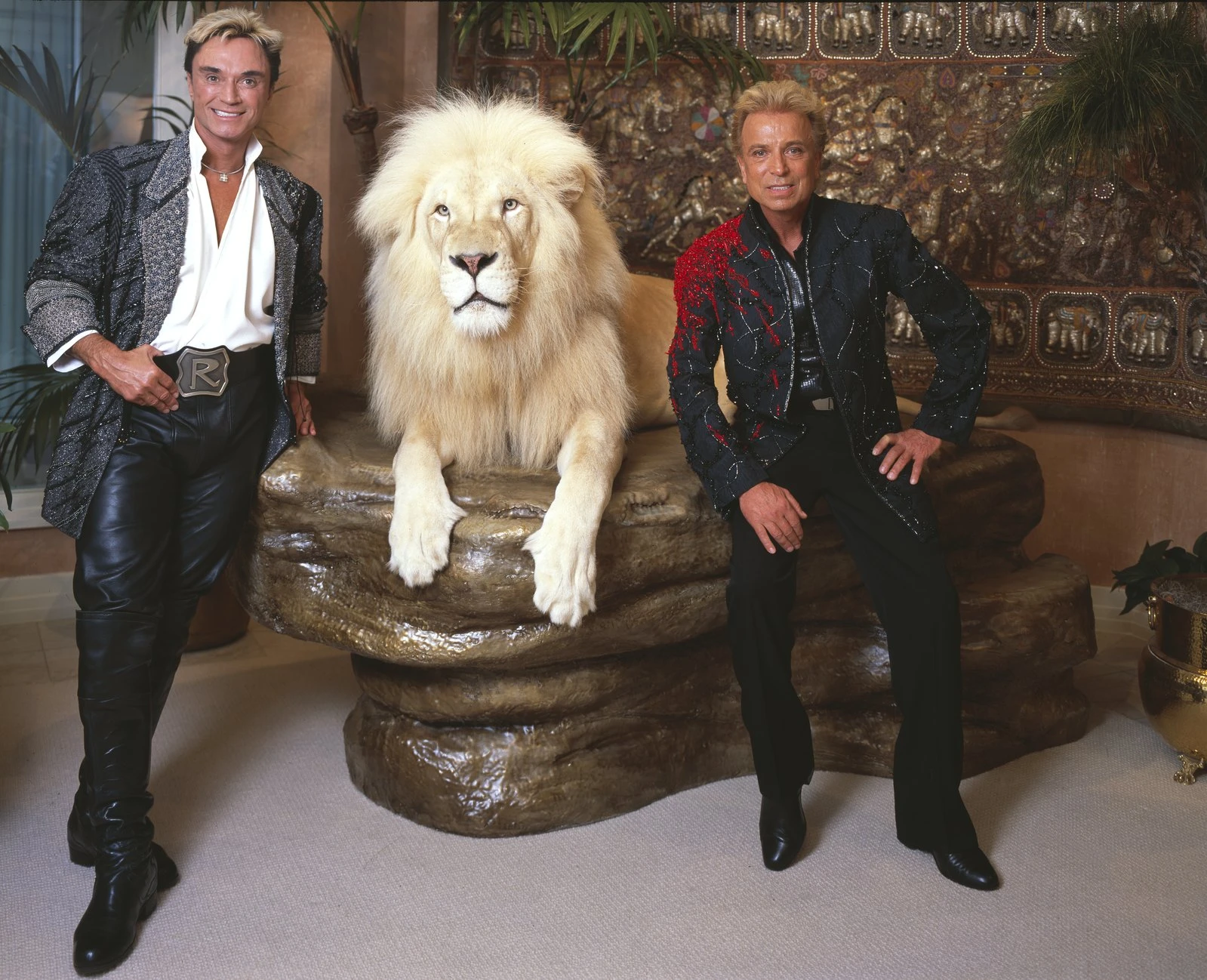
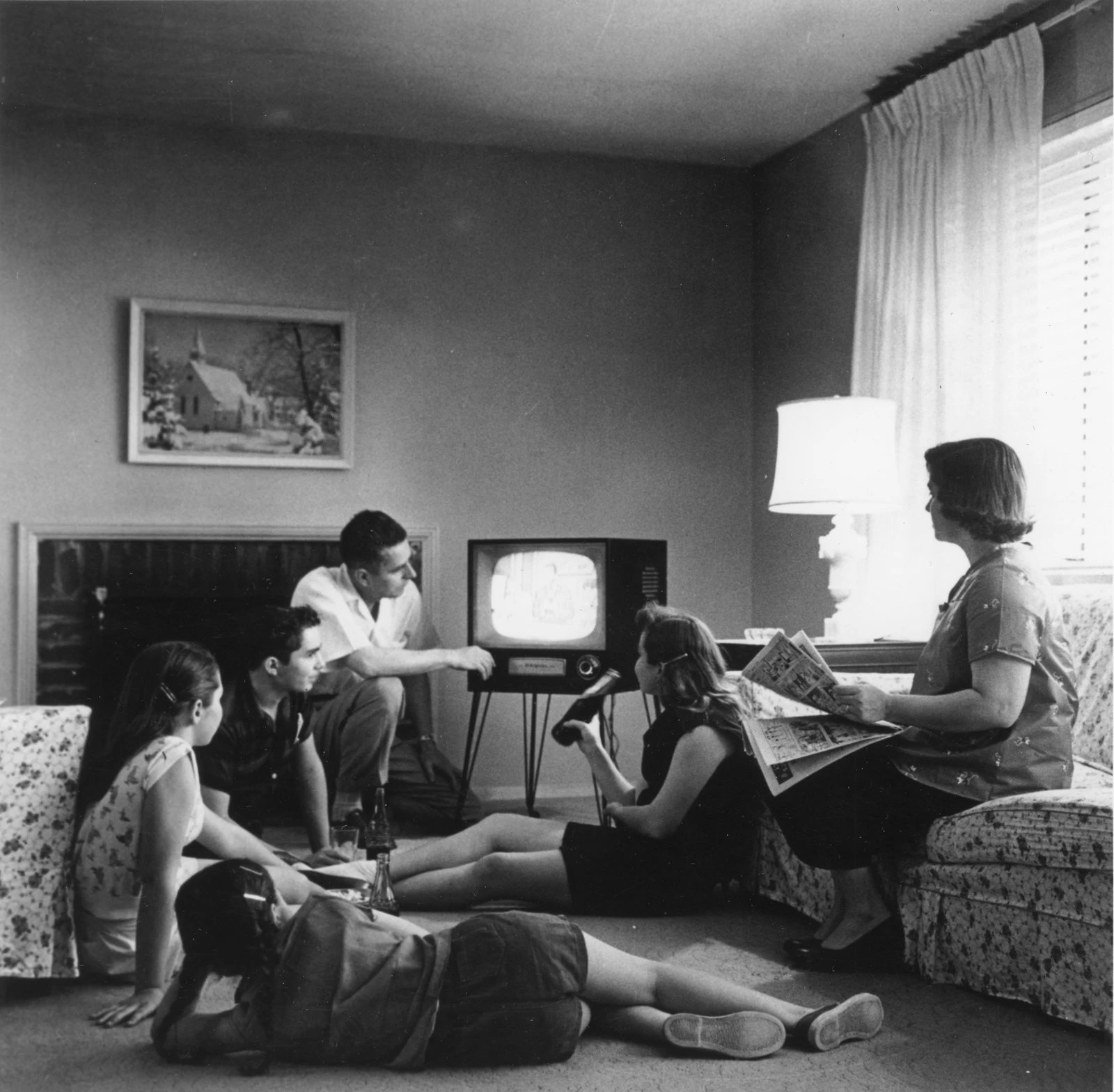
The list only grows. In 1993 a white tiger turns on a pair of Springfield casino magicians, close cousins of Siegfried and Roy, and in October 2003 a white tiger mauls Roy Horn on a Las Vegas stage. In 1998 a sign under the 20th Century Fox logo reads "A Division of Walt Disney Co", and in March 2019 Disney completes its purchase of the studio that makes the show. All of it played first on lit screens in living rooms, a family on a couch watching a family on a couch.
So the question has two ends. At one end a cartoon sees what is coming. At the other a picture put in front of millions does not wait for anything.
It goes first.
The Room Where the Jokes Were Written
Nobody in that room was reading tea leaves. Al Jean took a mathematics degree at Harvard. Ken Keeler holds a doctorate in applied mathematics. Jeff Westbrook came from a Princeton doctorate in computer science. Simon Singh, whose 2013 book went through the show's numbers, counted them among its nerdiest writers.
In 1998 the writer David X. Cohen wanted real science on Homer's blackboard, so he went to a high-school friend, the Columbia astronomer David Schiminovich. The first equation on that board estimates the mass of the Higgs boson, 14 years before CERN announced the particle on 4 July 2012. It comes out at 775 GeV against about 125 measured. Six times too high. Singh still called it "not a bad guess."
The Trump line came from the same kind of table. Dan Greaney wrote the episode. Al Jean told MIT Technology Review in 2025 that the first name pitched was Johnny Depp, and that Trump was funnier. Greaney later called the joke "a warning to America" and "the logical last stop before hitting bottom".
In 2010 Springfield's children bet on the Nobel Prizes and Milhouse picks Bengt Holmstrom, who shared the 2016 prize for economics. In 2014 corrupt soccer officials fill an episode, and in May 2015 came the arrests in Zurich. In 1992 Lisa picks Washington for the Super Bowl, and days later Washington wins. In 2010 the United States beats Sweden for curling gold, and in 2018 it does. MIT Technology Review reported that the lists on the internet run from 17 items to 55.
The Picture Goes First
One answer has a name: predictive programming. The term is credited to Alan Watt, of the site Cutting Through the Matrix, who defines it as "a subtle form of psychological conditioning provided by the media". On his reading, fiction readies the public for what planners already intend. It has a documented cousin: in January 1953 the CIA-convened Robertson Panel, aiming to reduce public interest in UFOs, recommended a campaign using "mass media such as television, motion pictures, and popular articles", the record behind soft disclosure.
A second answer needs no planner at all, and it is the one that makes this show strange. Put a picture in enough heads and it stops being a joke. It becomes something a society can reach for, without remembering where it found it. The research for this article found nobody who argues that full form about The Simpsons. Its parts are old. W. I. and Dorothy Thomas wrote in 1928, "If men define situations as real, they are real in their consequences." In 1948 Robert K. Merton named the self-fulfilling prophecy, with a sound bank destroyed by a rumour of its failure. In 1995 Nick Land coined hyperstition, and called fiction of that kind a "coincidence intensifier". The fit with this show is this article's own.
And here is the strange part. The show has already done it.
In Homerpalooza, on 19 May 1996, Cypress Hill book the London Symphony Orchestra, and the joke is that they were high when they did it. On 10 July 2024 Cypress Hill played the Royal Albert Hall with the London Symphony Orchestra. The band called it "a collaboration only The Simpsons could have predicted." Kathryn McDowell, the orchestra's managing director, wrote: "Many thanks to the creators of The Simpsons for the idea".
Twenty-eight years. Which means, by their own account, one entry on the list happened because people had seen the joke.
It is not alone, though most of the rest were tie-ins. A full-size Simpson house went up in Henderson, Nevada, in 1997 as a prize. Twelve convenience stores became Kwik-E-Marts in July 2007 to sell a film. Duff, a beer invented for a cartoon, is sold in cans. A fan did the purest version: Rob Baur of Oregon grew a real tomato and tobacco graft in 2003 after an episode showed one.

Minds in Common
Carl Jung gave the idea its older language: a collective unconscious below personal memory, and, with the physicist Wolfgang Pauli in 1952, synchronicity, events joined by meaning. The laboratory followed. The Global Consciousness Project ran random number generators at about 70 sites, and its director, Roger Nelson, reports 500 formal tests with odds against chance above a trillion to one. In 2011 Daryl Bem published Feeling the Future, and in 2015 he and colleagues pooled 90 experiments from 33 laboratories in 14 countries and reported a small effect.
What It Would Mean
Set aside for a moment whether it is true. Ask the better question. What kind of world is this if a picture seen by millions helps make what it shows?
It would mean, first, that a comedy room was never only a comedy room. Without knowing it, writers trading jokes would be putting futures into circulation, and the laugh would be the way in.
It would mean that the oldest job in our history, telling people what comes next, was never mainly a matter of seeing. On that reading the people who said what was coming were laying track, and we were the train.
In 1981 Jean Baudrillard wrote of the map that no longer follows the territory but comes before it. The Matrix put his book on screen in 1999, hollowed out, with Neo's contraband hidden inside. In 1977, taking questions after a talk in Metz, Philip K. Dick said, "we are living in a computer-programmed reality." In 2003 Nick Bostrom set out a formal argument with the simulation as one of its three branches. If the shared picture comes first, we would live nearer to those rooms than to the one we think we live in: a world drawn in advance by everyone who has looked at it.
And it would leave one question still in front of us. Somebody is holding the pencil. If pictures pull at events, then every image now made by the billion, by people and by machines, is pulling too. Who would we want drawing?
What the Writers and the Statisticians Say
"If you throw enough darts, you're going to get some bullseyes," Al Jean said, crediting the line to the writer of the Trump episode. To MIT Technology Review he called it "cherry-picking". Matt Selman, a showrunner, said: "We never try to predict anything." Bill Oakley said history repeats itself.
The standard account adds the numbers. In 2018 the mathematician Matt Zaremsky estimated for a Mic reporter about 1,224 explicit predictions in about 120,000 jokes, with perhaps 20 accepted: about 1.6 percent. Persi Diaconis and Frederick Mosteller wrote in 1989, "With a large enough sample, any outrageous thing is likely to happen."
Trump had flirted with running since 1999. Ebola was known in 1997; Jean said, "It's like predicting the Black Death." A computer watch was on sale in 1983, twelve years before Lisa's Wedding.

Official X went through 38 items that circulate as predictions. Nine held. Seventeen were real footage stretched to fit, or were made after the event, as the Trump escalator image was, from a short posted in July 2015. Twelve never aired at all. Snopes says of the doctored ones that they "appear to be more common than actual Simpsons predictions".
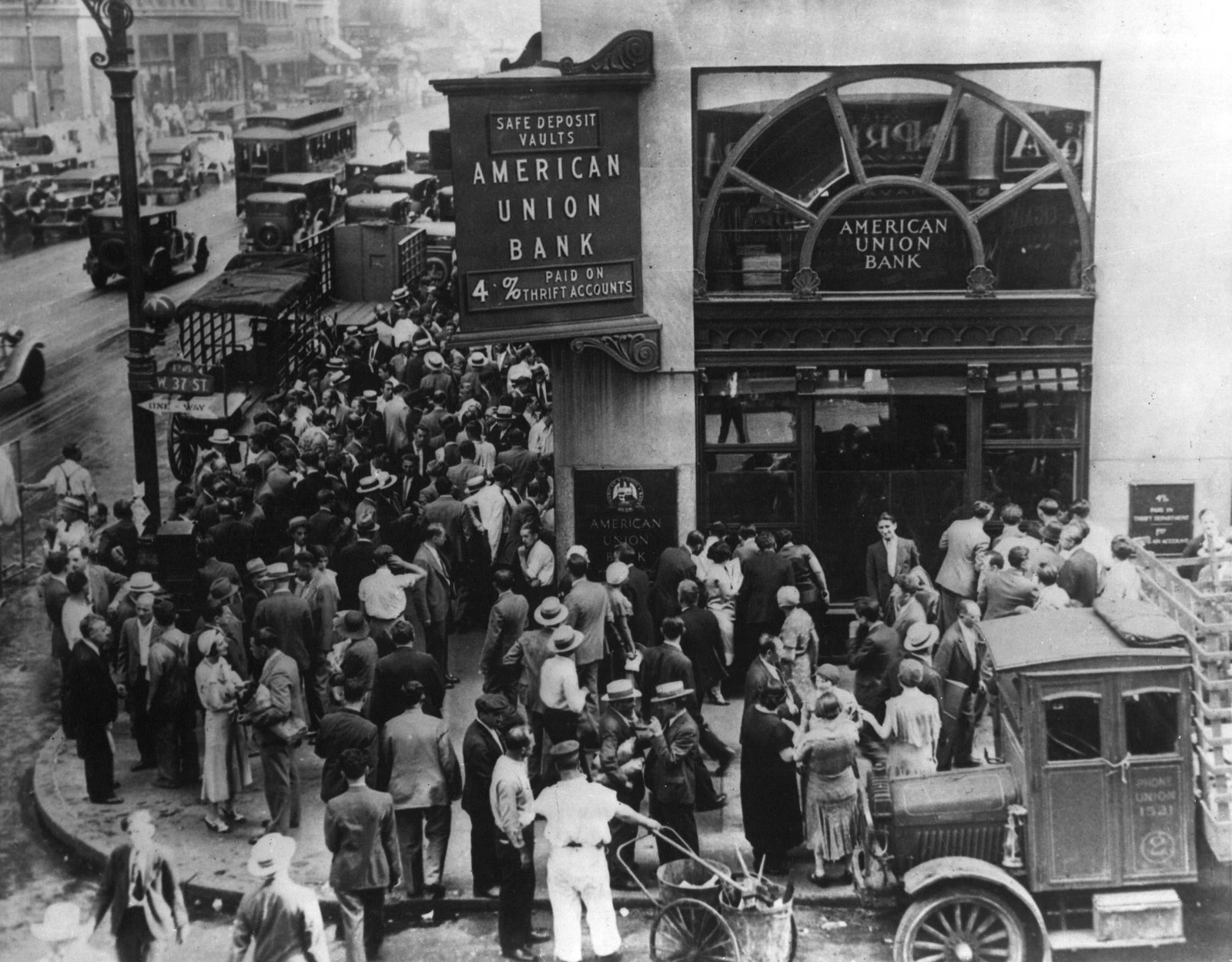
Merton's bank fails because depositors believe the rumour, and nobody took a sitcom gag for a forecast. Jung's synchronicity has no cause in it, and his collective unconscious is inborn, not broadcast.
What the Count Does Not Reach
Chance is an answer to foresight. It is no answer to influence.
A hit rate counts matches. It cannot tell a guessed match from a caused one. Zaremsky's figure is a calculation, not a study, and nobody has set the show against a control such as Family Guy.
Stories do move people. In 2000 Melanie Green and Timothy Brock showed that being absorbed in a narrative shifts beliefs, and that labelling it fiction generally made no difference. A 2020 meta-analysis in the BMJ found suicides rose 13 percent after a celebrity's suicide was reported, which is news, not fiction. Ronald Reagan watched The Day After and wrote in his diary on 10 October 1983, "It's very effective & left me greatly depressed."
It does not all run one way. A famous priming result failed to replicate in 2012, so did Bem's experiments in three attempts that year, and Peter Bancel, who analysed the Global Consciousness data, reads its anomalies as test selection, not a global field.
On the rest of the list the record is silent. No writer says the show caused one of those events, and nobody who acted is on record with a cartoon in mind. It has not been found, and a record could not show a pull nobody noticed.
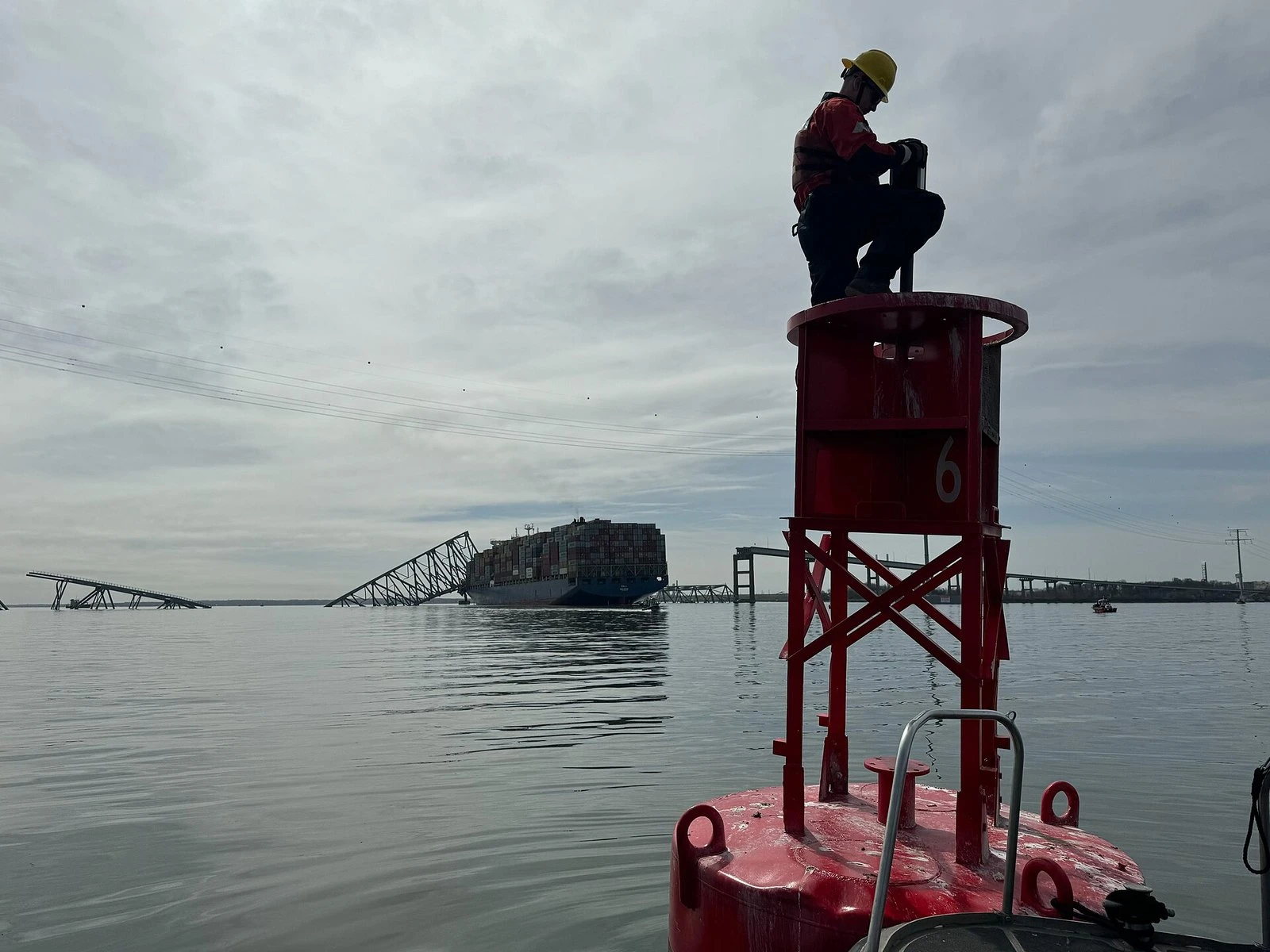
Except that the strongest result points the other way in time. In 2002 Kimberley Wade and colleagues showed people a doctored photograph of a childhood balloon ride, and half reported details of a ride they never took. In 2007 Elizabeth Loftus and colleagues found that altered photographs of Tiananmen Square and Rome made those events larger and more violent in memory. Then came a Simpsons frame of the Baltimore bridge that never aired, and one post of it drew 29 million views. Of such fakes Al Jean said, "It shows you how you can really convince people."
Not the future. The past.
Where the Question Stands
The show is renewed through season 40. On 26 May 2026 Dan Greaney, who wrote the President Trump line, announced a run for president himself. "I was disgusted into action," he told TheWrap.
Foresight can be tested. After the Aberfan disaster the British psychiatrist John Barker set up a Premonitions Bureau to log forecasts in advance. The same could be done here: freeze a sample of episodes, score every statement about the future by a fixed rule, and run a rival cartoon beside it. That could settle chance against foresight. It could not touch influence, because influence lives in the people who acted.
And there the record is thin. Every documented case of the show changing the world, the house, the stores, the beer, the orchestra, was done in the open, by people who said so. Whether a picture also works on those who do not remember it is what the whole idea rests on, and no one has found a way to measure it after the fact.
A joke in 1996. An orchestra in 2024. Somebody remembered.
The writers say they are not trying to predict anything. That was also true in 2000.
Questions This Leaves You With
Is there anything a person actually does with this?
For your own life, nothing follows. No episode tells you what happens next, and anyone selling a date from a cartoon is selling something. The larger question is one a society has to carry. If shared pictures shape what people find thinkable, then the choice of what gets shown, repeated and recommended matters more than it looks. You can notice what you are shown. Whether that notice changes anything is an open matter, and it does not rest on a yellow family being right about anything at all.
Does this sit against a religious account of the world?
It can be read both ways, and people read it both ways. One person finds in it an echo of the old belief that words spoken aloud have power over events, and takes that as support. Another sees a cheapening: prophecy reduced to a comedy writer's luck, or to crowds copying a screen. Neither reading needs the other to be foolish. This site will not tell you how it falls. Whatever you hold about who writes the future, this article has not touched it.
Does this change what a human life is?
Think how many pictures have gone into you since childhood, and how few you chose. One reaction is that this makes a life smaller: your ideas of what could happen were put there by people you never met, for a laugh. The other is that it makes a life larger: you are one of the people a future gets made through, and what you take seriously counts. You may already know which of those you felt first.
What would change your mind, in either direction?
Name it now, before you are committed. Toward influence: someone who took a real decision saying, with a record from the time, that a picture from the show was in mind, or a study following a large audience forward after a story and finding acts that a matched group did not take. Toward chance: a frozen, scored sample in which the show does no better than another cartoon, and a study that looks for influence on the scale of a joke and finds none. A new viral image would move nothing. Check its date first.
Did the picture do anything to those who never knew it was there?
This is the open problem. Researchers can measure a story changing a belief in a laboratory the same afternoon. They can count a rise in deaths after a report. What nobody can yet do is follow one image through a whole population for sixteen years and say what it did, if anything, to the people who forgot it. Every documented case on this list is one where somebody remembered. The space where a forgotten picture would show its work is empty, and it may stay that way, because the method to look there has not been built.
Downloads
- W. I. Thomas and Dorothy Swaine Thomas, The Child in America, Knopf, 1928 (scan: Internet Archive, 'Out of copyright')Official X, from the Internet Archive
Sources
- Amelia Tait, interview with Al Jean on The Simpsons and predictions, 30 October 2025 MIT Technology Review Study
- List of The Simpsons episodes Wikipedia General reference
- The Simpsons Wikipedia General reference
- Bart to the Future Wikipedia General reference
- Did The Simpsons predict Kamala Harris? Snopes Study
- Simpsons writer calls Trump presidency joke a warning, 2016 The A.V. Club Study
- $pringfield (Or, How I Learned to Stop Worrying and Love Legalized Gambling) Wikipedia General reference
- Siegfried and Roy Wikipedia General reference
- When You Dish Upon a Star Wikipedia General reference
- Review of Simon Singh, The Simpsons and Their Mathematical Secrets Harvard Magazine Study
- Simon Singh, The Simpsons and Fermat's Last Theorem, 29 October 2013 Slate Study
- Simon Singh, The Simpsons and Their Mathematical Secrets, Bloomsbury, 2013 (author's site; no lawful free full copy found) Simon Singh Study
- Simpsons episode predicted Holmstrom's Nobel win, 12 October 2016 NPR Study
- 2015 FIFA corruption case Wikipedia General reference
- You Don't Have to Live Like a Referee Wikipedia General reference
- Derrick Broze, Predictive Programming Substack Study
- Alan Watt, Cutting Through the Matrix Alan Watt Primary record
- Robertson Panel Wikipedia General reference
- Thomas theorem Wikipedia General reference
- W. I. Thomas and Dorothy Swaine Thomas, The Child in America, Knopf, 1928 (scan: Internet Archive, 'Out of copyright') Official X, from the Internet Archive Primary record
- Self-fulfilling prophecy Wikipedia General reference
- Commentary on Merton's The Self-Fulfilling Prophecy, Sociologica, 2022 Sociologica Study
- Hyperstition Wikipedia General reference
- Homerpalooza Wikipedia General reference
- Cypress Hill to perform with the London Symphony Orchestra, recreating Simpsons cameo DJ Mag Study
- The Simpsons house Wikipedia General reference
- Kwik-E-Mart Wikipedia General reference
- Duff Beer Wikipedia General reference
- Products produced from The Simpsons Wikipedia General reference
- D'oh! Wikipedia General reference
- Synchronicity Wikipedia General reference
- Collective unconscious Wikipedia General reference
- Global Consciousness Project Psi Encyclopedia Study
- Peter Bancel Psi Encyclopedia Study
- Daryl Bem Wikipedia General reference
- Bem, Tressoldi, Rabeyron and Duggan, Feeling the future: a meta-analysis of 90 experiments, F1000Research, 2015 F1000Research Primary record
- Ritchie, Wiseman and French, Failing the Future, PLOS ONE, 2012 PLOS ONE Primary record
- Simulacra and Simulation Wikipedia General reference
- Jean Baudrillard, Simulacra and Simulation, trans. Sheila Faria Glaser, University of Michigan Press, 1994 (publisher's page; no lawful free full copy found) University of Michigan Press Primary record
- Even Neo Can't Log Off, 2021 Jacobin Study
- If You Find This World Bad, You Should See Some of the Others Wikipedia General reference
- Nick Bostrom, Are You Living in a Computer Simulation?, Philosophical Quarterly 53(211), 2003 Nick Bostrom Primary record
- Did The Simpsons predict 9/11? Snopes Study
- Simpsons showrunner explains how they keep predicting the future, 18 December 2024 iHeart Study
- Did The Simpsons predict the Titan submersible? Snopes Study
- Here's how The Simpsons keeps predicting the future, 2018 Mic Study
- Persi Diaconis and Frederick Mosteller, Methods for Studying Coincidences, Journal of the American Statistical Association 84(408), 853-861, 1989 JASA; Berkeley course copy Primary record
- Donald Trump 2000 presidential campaign Wikipedia General reference
- Lisa's Sax Wikipedia General reference
- Did The Simpsons predict the smartwatch? Snopes Study
- Did The Simpsons predict Trump? Snopes Study
- Did The Simpsons predict the Notre-Dame fire? Snopes Study
- Melanie Green and Timothy Brock, The role of transportation in the persuasiveness of public narratives, JPSP 79(5), 701-721, 2000 PubMed Primary record
- Niederkrotenthaler et al., Association between suicide reporting in the media and suicide, BMJ 368, m575, 2020 BMJ Primary record
- Ronald Reagan, White House diary, 10 October 1983 Ronald Reagan Presidential Foundation Primary record
- Doyen et al., Behavioral priming: it's all in the mind, but whose mind?, PLOS ONE, 2012 PLOS ONE Primary record
- Garry and Wade, Actually, a picture is worth less than 45 words, Psychonomic Bulletin and Review, 2005 Springer Primary record
- Researchers find memory can be manipulated by photos, 20 November 2007 UC Irvine Study
- Did The Simpsons predict the Baltimore bridge collapse? Snopes Study
- The Simpsons writer who predicted Trump presidency announces his own 2028 run, May 2026 TheWrap Study
- The Premonitions Bureau History UK Study
- Kwik-E-Mart Gas, photograph by sylvar, 8 July 2007 Wikimedia Commons Primary record
- Key Bridge response, photograph by Paul Dragin, U.S. Coast Guard, March 2024 Wikimedia Commons Primary record