
The Simpsons, the Fox cartoon on the air since 1989, has a shadow catalogue: frames of the show predicting a disaster or a death that no episode ever contained. Trump in a coffin. Notre-Dame burning. The Francis Scott Key Bridge in Baltimore falling into the water. They look like the show. They arrive close behind the news. They are believed by millions.
No frame of those scenes exists in any episode.
The pictures came after the events, and they are dressed as if they came before. A picture of the past, made in the present.
Which makes them the strangest evidence in the whole question of what a picture can do.
The Ones That Never Aired
The main investigation goes through the frames that held, and the stretched list goes through the real frames pulled to fit. This is the third group. Official X counted 13 items that never aired. Ten are set out here. The other three are a Coldplay kiss cam joke, a Trump heart attack story, and a drawing of George Floyd by an Instagram artist, made after his death as protest art and later passed around as a prediction.
In February 2017 a picture of Trump in a coffin appeared on 4chan, Snopes traced it there, and it returned after the shooting of July 2024 and again in 2025. Matt Selman, a showrunner, said: "It is doctored."
On 15 April 2019 Notre-Dame burned in Paris. A Simpsons still showing it soon followed. Snopes found an edited frame from an episode called Husbands and Knives.
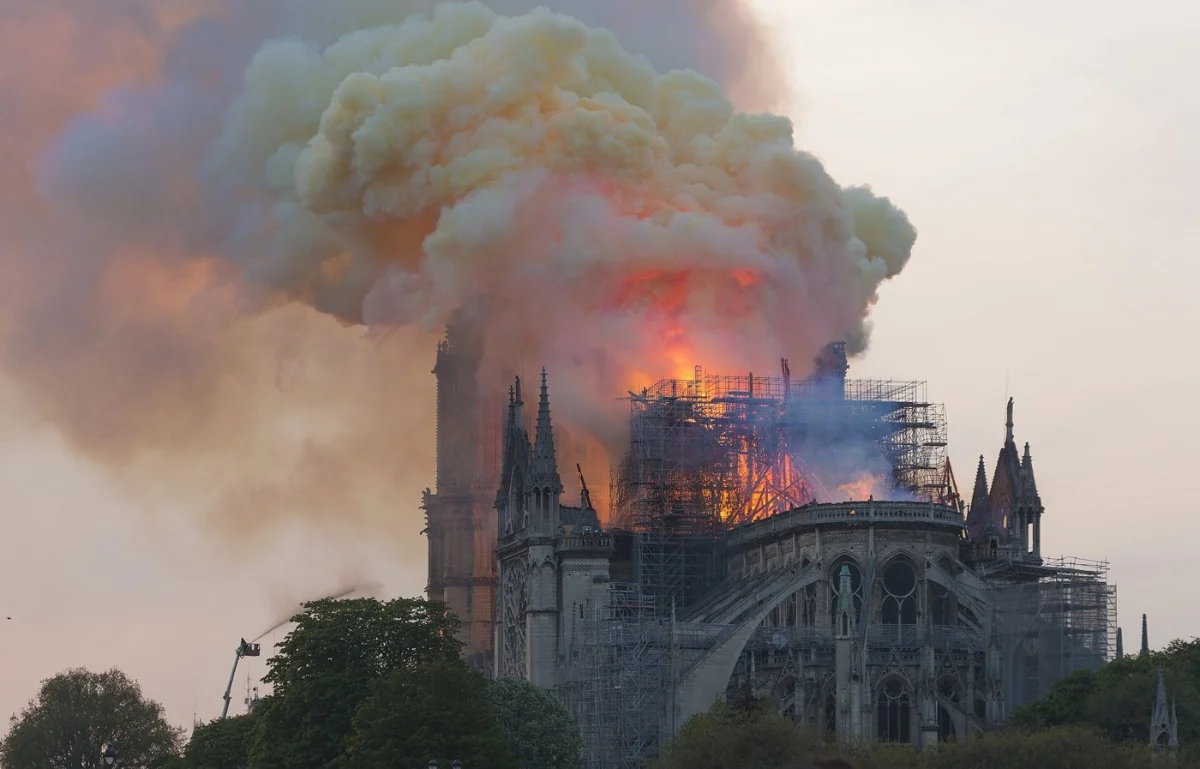
In March 2024 the Francis Scott Key Bridge fell after a container ship struck it. A Simpsons picture of the collapse spread at once, and one post of it drew 29 million views. Snopes called it "entirely AI-generated", and pointed to Lisa's hair: ten spikes, where the character has eight.
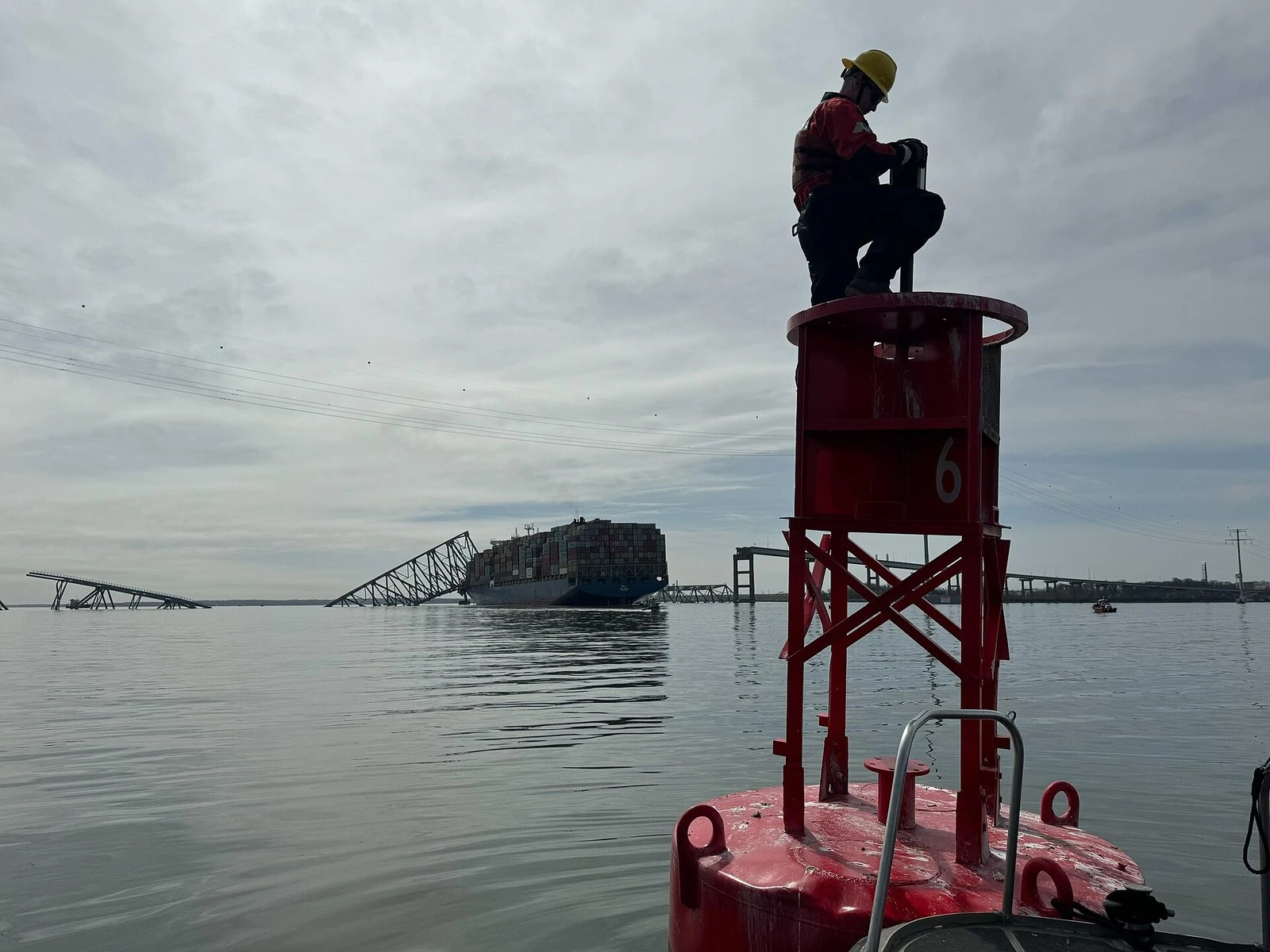
The list goes on. A Super Bowl score was altered onto real stills in 2022. Two unrelated clips were spliced for the Beirut explosion of 2020. PolitiFact rated a Pope Francis prediction Pants on Fire, and found the same for the Los Angeles fires of January 2025, with a show spokesperson, Antonia Coffman, saying the images were not authentic. The fact-checkers at Correctiv found no such episode for Charlie Kirk in September 2025. Selman called a Sean Combs image an "AI fake". And one needed no picture at all: in August 2019 Senator Chris Murphy tweeted that a headline on Trump buying Greenland was word for word from a 1995 episode. Snopes searched the show's subtitles and rated it false.
Real Frames, Wrong Dates
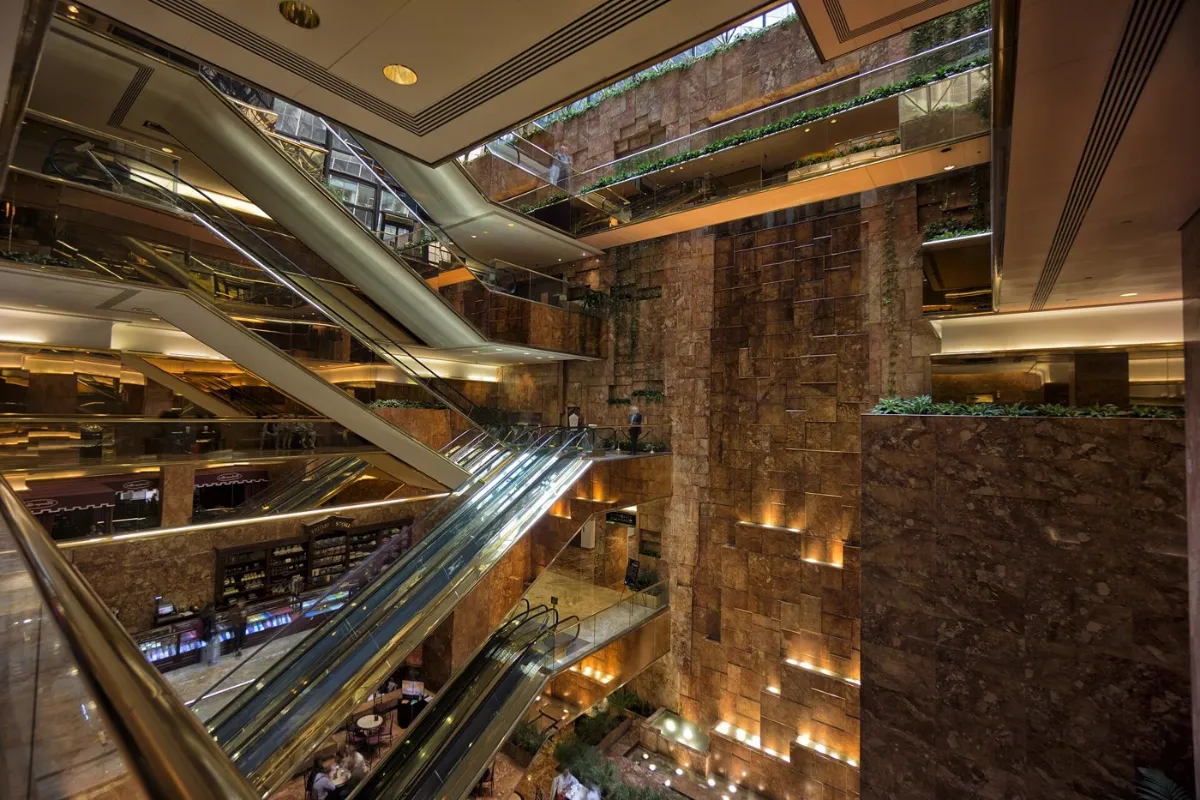
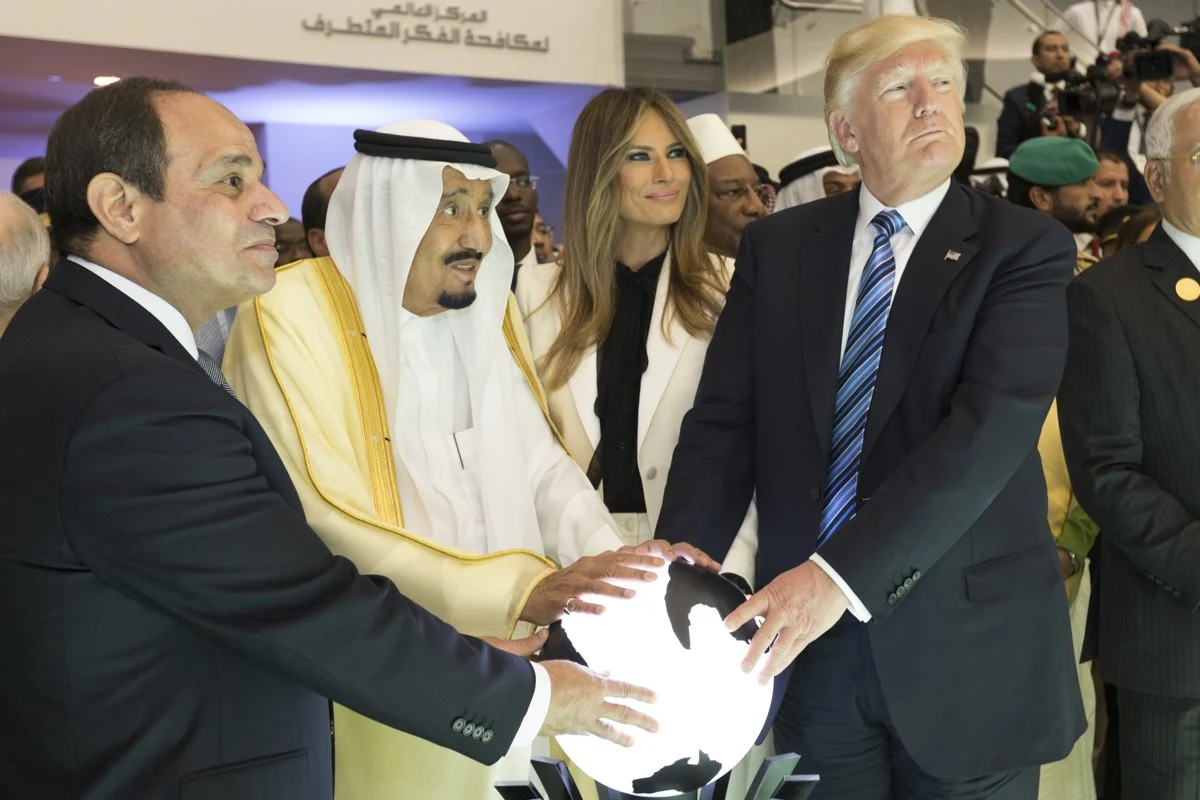
A second kind is harder to catch, because the art is genuine. The famous Trump on the escalator comes from a short posted on 7 July 2015, after he had already ridden that escalator to announce. It circulates dated 2000. The picture of Trump with his hands on a glowing orb comes from a video posted on 26 May 2017, after the Riyadh photograph of that month. It circulates dated 2002. A Tesla Cybertruck in a Treehouse of Horror aired in October 2022, three years after the real truck was shown.
The art is real. The date is false. The event came first, and the show was commenting on it.
The Picture Goes Backward
The people who study memory have an account of this, and it is the strongest evidence in the entire subject that a picture can reach into what a person takes to be real.
In 2002 Kimberley Wade, Maryanne Garry, Don Read and Stephen Lindsay gave people a doctored photograph of a childhood hot-air balloon ride. Half came to report details of a ride they never took.
In 2007 Dario Sacchi, Franca Agnoli and Elizabeth Loftus showed 299 people doctored photographs of the 1989 Tiananmen Square protest and a 2003 protest in Rome. Those who saw the altered pictures remembered the events as bigger and more violent.
A picture did not predict anything. It changed what had already happened, inside the people who saw it.
Now put that beside a Simpsons fake. If the effect carries over, someone who sees it the day of a disaster could come away, a month later, with a simple memory: The Simpsons predicted that. And the correction has the harder road. Al Jean said so himself: "Our small denial doesn't get as much attention."
What It Would Mean
Set aside for a moment why anyone makes these. Ask the better question. If a false picture can install a past, what is the past?
It would mean that the record each of us carries is open to edits by strangers. On that reading, we do not hold memories so much as receive them.
It would mean that a whole public can come to share something that never happened. If these pictures stick, millions carry a Simpsons episode that does not exist. We have a name for the shared recollection of a thing that was never so, and we tend to enjoy it as a curiosity, without asking how far it reaches.
It would mean that the Matrix of the film has it the wrong way round. The fear was a false world laid over the real one by machines. What has arrived is smaller and stranger: a false memory laid over the real one, by anybody, for fun.
And it would leave one question in front of us. Every tool that makes a picture is now cheap and quick. When any frame of any past can be made in seconds, what will count as having seen something?
The Standard Account
The standard account is plainer. The fakes exist because a Simpsons prediction is a proven way to get attention. Selman said, "Any goofball can whip up an AI image." Snopes wrote that the doctored images "appear to be more common than actual Simpsons predictions", and it has run some 70 articles on the show. Tom's Guide tied the recent rise to image generators in 2025. Nobody needs to believe a fake for it to spread: people share a surprising picture because it is surprising.
Al Jean's own explanation is about the people, not the pictures. He said it "slightly satisfies a yearning people have for meaning". Selman put it shorter: "People really want magic to be real, right?"
The memory research has its limits too. Maryanne Garry and Kimberley Wade reported in 2005 that a written narrative produced more false memories than a doctored photograph did. A balloon ride in a laboratory is not a meme on a phone.
What the Correction Does Not Reach
A fact check settles that a frame is fake. It does not settle what the frame did.
Nobody has measured how many people who saw the Baltimore image still believe it, or how the belief lasts after a correction. No study of Simpsons fakes as such was found. The research that exists uses other pictures in other settings. They did not test this.
And the fakes keep a real kernel that makes them work. The show did joke about a pope dying, on 29 September 2019, with no name and no year. PolitiFact found that kernel under the fake. A real frame sits near enough to a false one that a reader cannot tell where one stops.
Where the Question Stands
The tests are simple and the tools are public. Lisa's hair can be counted. A frame can be searched against the indexed episodes. A date can be checked. None of that reaches the person who saw the picture once, on the day, and moved on.
The show is renewed through season 40. Each new disaster will arrive with its picture of the show foreseeing it, and more of those pictures will be machine-made than the last time.
The false frame needs no one to remember it. It needs only to be seen.
Questions This Leaves You With
Is there anything a person actually does with this?
Yes, and it is small. Before passing on a frame that claims to foresee an event, find the episode. If no one can name the title and the air date, assume the frame is new. Anyone selling a date from a cartoon is selling something. The larger question is what a society does when pictures cannot be trusted by looking at them, and that belongs to everyone who publishes, shares or builds the tools.
Does this sit against a religious account of the world?
It can be read both ways. Faith traditions have long warned against false witness, and some will hear that warning here. Others hold that belief in anything unseen is already the same habit the fakes exploit, and they hear the warning differently. Both positions have serious people behind them. This site will not tell you how it falls. A manufactured picture of a cartoon does not touch what you hold about what is true beyond it.
Does this change what a human life is?
Think of your earliest memory, and whether a photograph is holding it up. One reaction is that this makes a life smaller: your own past is a story you were handed. The other is that it makes a life larger: you hold on to a self while the record moves, and that is work you have been doing all along. You may already know which of those you felt first. Nothing here asks you to doubt the people you love.
What would change your mind, in either direction?
Name it now, before you are committed. Toward the fakes being a serious force: a study following people who saw such an image and finding they still recall it as real after a correction, on a large scale. Toward a passing joke: the same study finding that most viewers never believed it, or forgot it. Check what you believe already. Did you see The Simpsons predict something you can no longer name the episode of?
How much of what a public remembers can be installed?
This is the open problem. Laboratories have shown a doctored picture changing a memory in a small group of volunteers. Nobody has measured the same thing across a population, from a picture passed around on phones, over years. The tools that would make such pictures have arrived before the instruments that would measure what they do. That is a genuine gap, and it is widening. A study of it would need a real image, a real audience and years of patience, and no one has yet set it up.
Sources
- The Simpsons Predictions: Seeing the Future, or Helping to Make It? Official X Study
- Did The Simpsons predict Trump's death? Snopes Study
- Simpsons showrunner on the Trump image, July 2024 Daily Wire Study
- Trump assassination not predicted by The Simpsons, July 2024 Lead Stories Study
- Did The Simpsons predict the Notre-Dame fire? Snopes Study
- Did The Simpsons predict the Baltimore bridge collapse? Snopes Study
- Did The Simpsons predict the 2022 Super Bowl? Snopes Study
- Did The Simpsons predict the Beirut explosion? Snopes Study
- The Simpsons did not predict Pope Francis would die in 2025 PolitiFact Study
- No, The Simpsons did not predict the Los Angeles fires PolitiFact Study
- No such episode: Charlie Kirk, 30 September 2025 Correctiv Study
- Simpsons showrunner on the Combs image, May 2024 TMZ Study
- Did The Simpsons predict Trump? Snopes Study
- Did The Simpsons predict Trump and the orb? Snopes Study
- Did The Simpsons predict the Cybertruck? Snopes Study
- Garry and Wade, Actually, a picture is worth less than 45 words, Psychonomic Bulletin and Review, 2005 Springer Primary record
- Researchers find memory can be manipulated by photos, 20 November 2007 UC Irvine Study
- Amelia Tait, interview with Al Jean on The Simpsons and predictions, 30 October 2025 MIT Technology Review Study
- Simpsons showrunner explains how they keep predicting the future, 18 December 2024 iHeart Study
- No, The Simpsons did not predict that, July 2025 Tom's Guide Study
- Did The Simpsons predict George Floyd? Snopes Study
- Did The Simpsons predict the Coldplay kiss cam? Snopes Study
- Fact check: The Simpsons did not predict a Trump heart attack, 2025 Lead Stories via Yahoo Study
- Did The Simpsons predict Trump buying Greenland? Snopes Study
- The Simpsons predicted Kamala Harris's presidency?, 2024 Snopes Study