
The Simpsons, the Fox cartoon that has run since 1989, is credited on the internet with foreseeing dozens of events. Some of those frames are real and the match is close. This investigation is about the others: real frames from real episodes that were stretched to fit what happened later, set here beside the event they are said to have foretold. A book held up for a moment. A brochure. An oil drum in a school kitchen.
Each one is on the screen in some form. That is what makes them hold.
A frame does not lie. The caption under it does.
Twenty-One Frames
The main investigation sets out the frames that held. These are the rest, read one at a time, with the subtitles running.
On 19 October 1997, in Lisa's Sax, Marge asks: "Bart, would you like to read a book?" She holds up Curious George and the Ebola Virus. In 2014 Ebola tore through West Africa and reached the United States. Al Jean, who wrote the episode, had seen the film Outbreak. "It's like predicting the Black Death," he said.
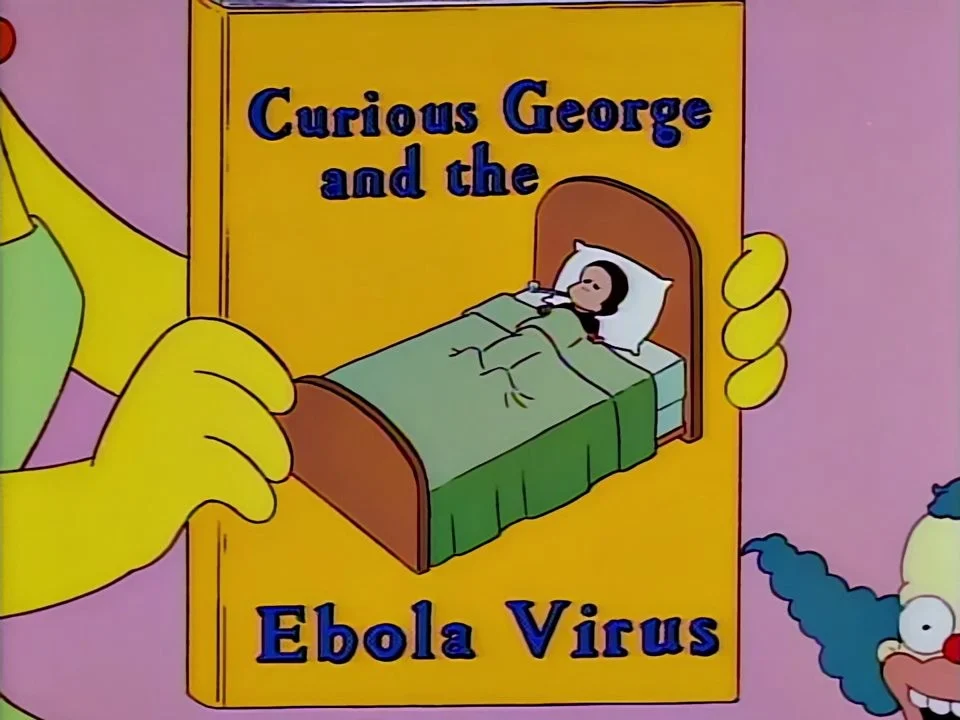
Lisa's Sax, 1997: Curious George and the Ebola Virus. Frame from The Simpsons, Lisa's Sax (S09E03, 19 October 1997). Copyright Disney. Reproduced for commentary and criticism. 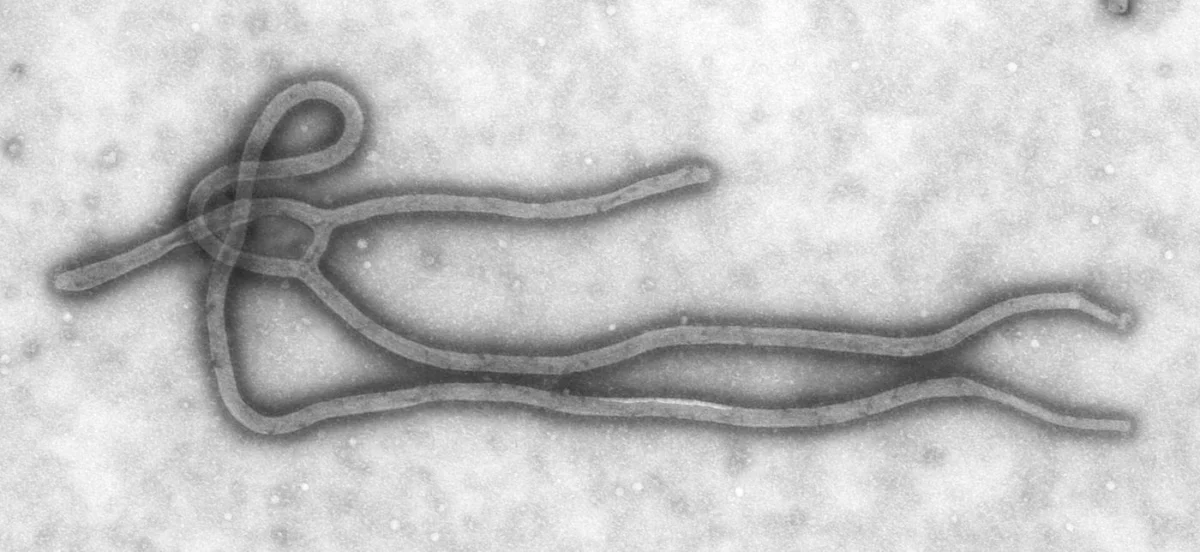
The Ebola virus under an electron microscope. CDC / Cynthia Goldsmith, public domain, via Wikimedia Commons. Resized.
On 19 March 1995, in Lisa's Wedding, set in 2010, Hugh Parkfield bends to a chunky device on his wrist and speaks into it. The smartwatch reached the public about 2014. Snopes rates the claim false: Seiko sold a computer watch in 1983, and Dick Tracy talked to his wrist in 1946. The same episode has a London skyline, and low on the horizon beside Tower Bridge stands a thin dark spike. Nothing names it. The Shard was finished in 2012. The spike is really there, and it is a spike.
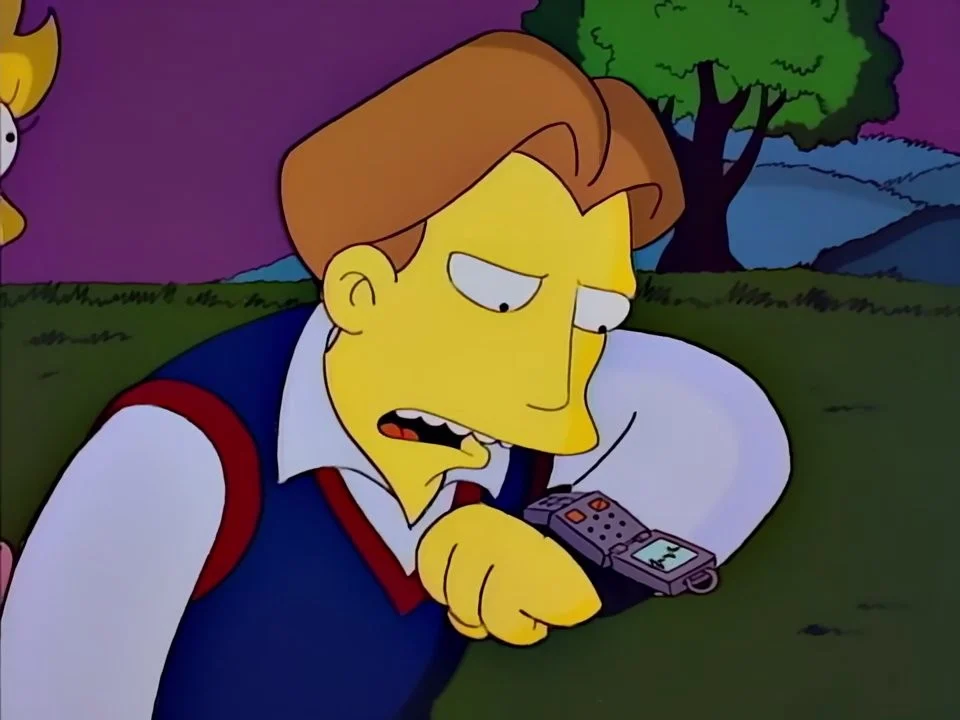
Lisa's Wedding, 1995: Hugh Parkfield speaks into a device on his wrist. Frame from The Simpsons, Lisa's Wedding (S06E19, 19 March 1995). Copyright Disney. Reproduced for commentary and criticism. 
The Seiko Data-2000 computer watch with its docking station, about 1983, twelve years before the episode. Photo: Joe Haupt, CC BY-SA 2.0, via Wikimedia Commons. Resized.

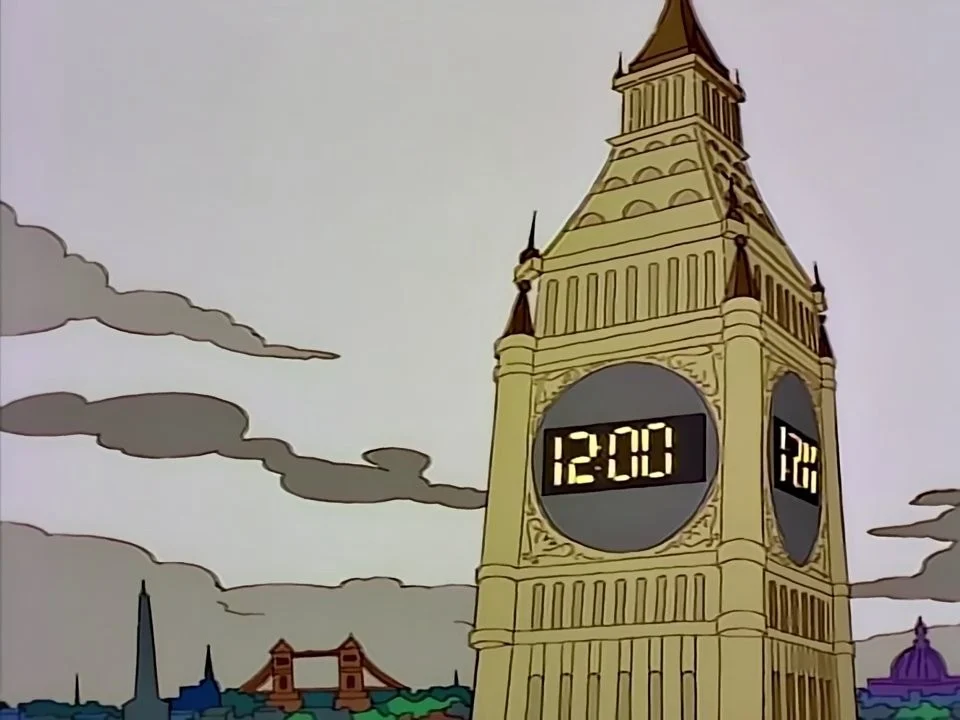
Lisa's Wedding, 1995: a dark spike on the London horizon, left of Tower Bridge. Nothing in the episode names it. Frame from The Simpsons, Lisa's Wedding (S06E19, 19 March 1995). Copyright Disney. Reproduced for commentary and criticism. 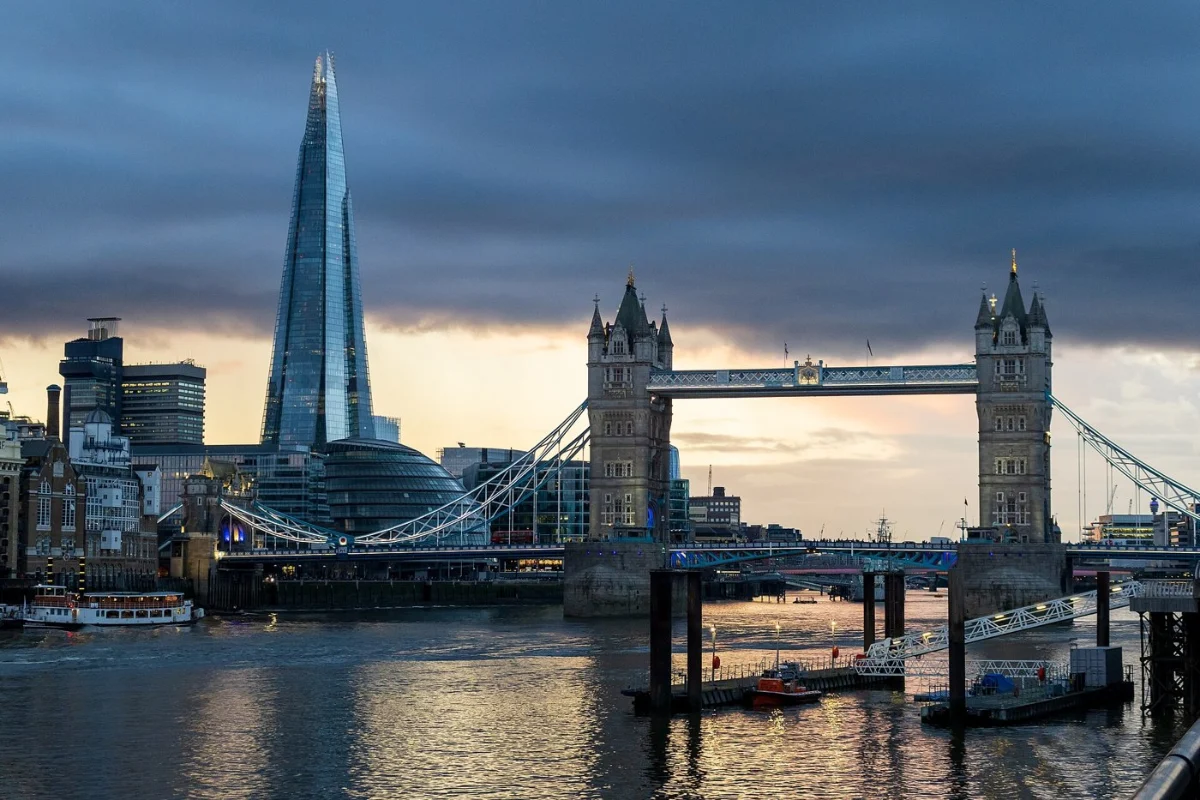
The Shard behind Tower Bridge, 2023. Photo: The wub, CC BY-SA 4.0, via Wikimedia Commons. Resized.
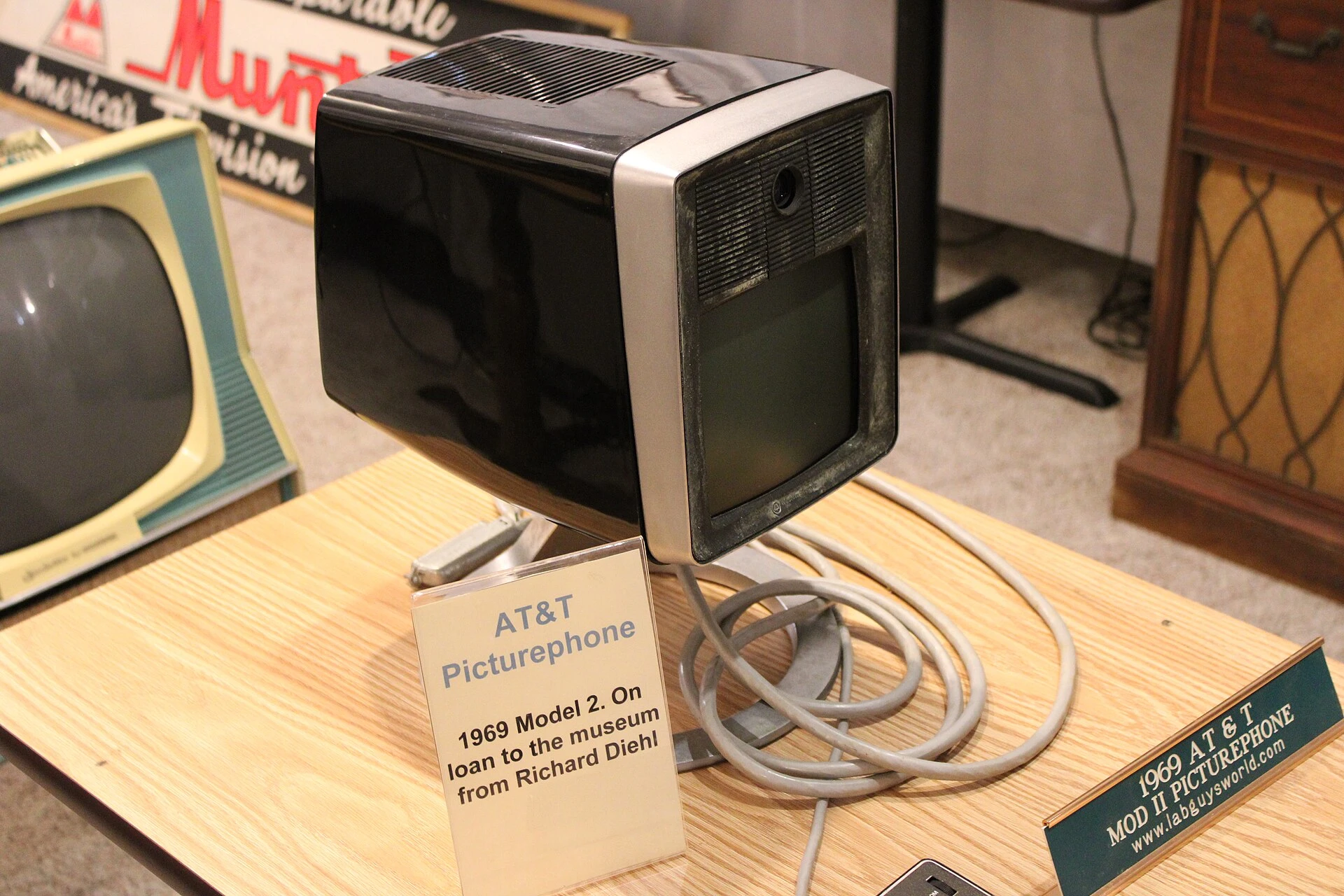
The same episode gives Lisa a desk phone with a screen and a rotary dial. "Mom, it's a picture phone," she says, while Marge holds up crossed fingers on the screen. AT&T showed a Picturephone in 1964. FaceTime arrived in 2010, the year the episode is set in, which is what makes the date look neat.
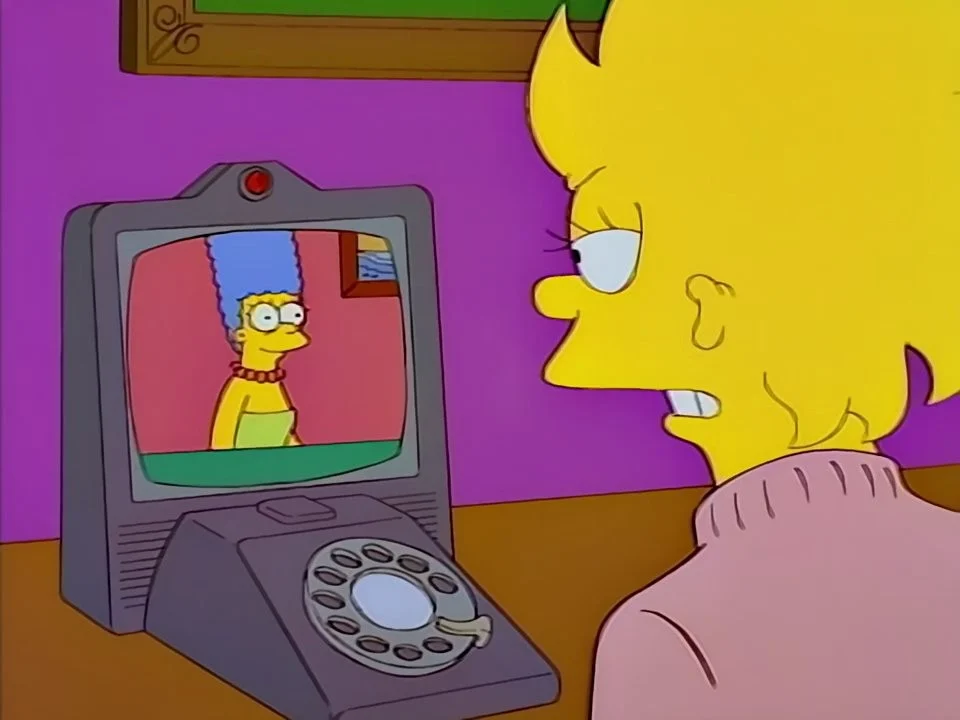
Lisa's Wedding, 1995: the picture phone, with a rotary dial. Frame from The Simpsons, Lisa's Wedding (S06E19, 19 March 1995). Copyright Disney. Reproduced for commentary and criticism. 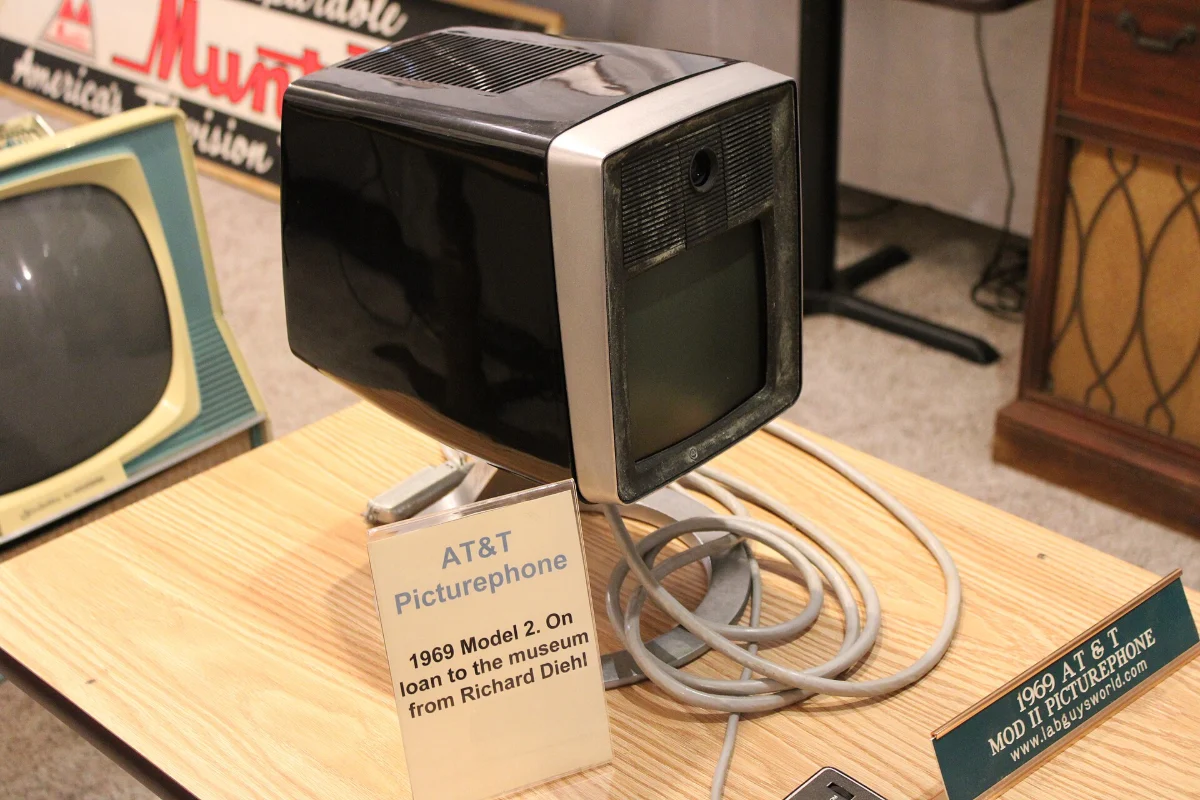
An AT&T Picturephone of 1969, at the Early Television Museum. Photo: DogsRNice, CC BY-SA 4.0, via Wikimedia Commons. Resized.
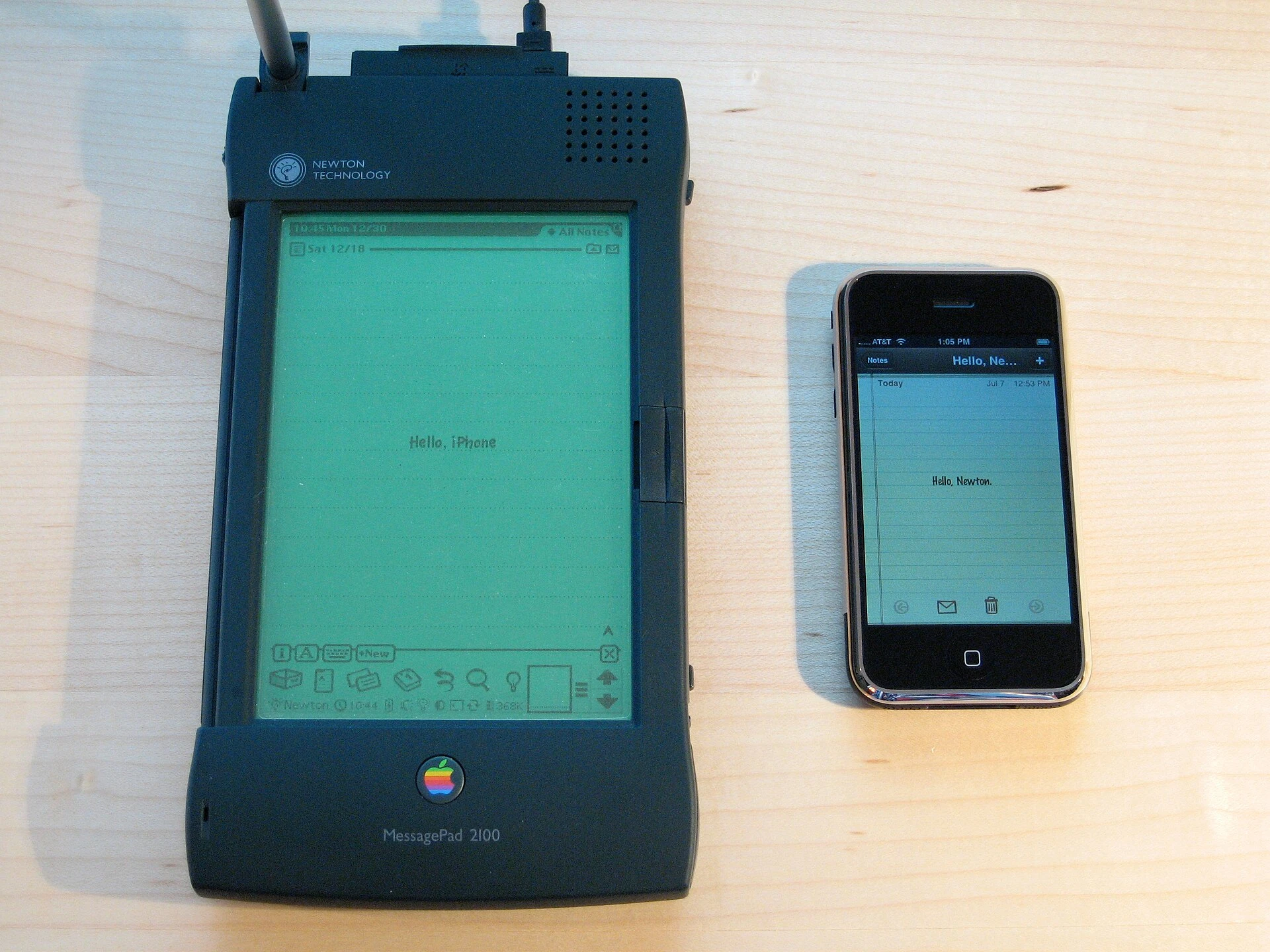
On 13 November 1994, in Lisa on Ice, a bully writes "Beat up Martin" on an Apple Newton, and the screen reads "Eat up Martha". Snopes rates the autocorrect claim false: the joke was about the Newton's real handwriting trouble, and Word 6 advertised AutoCorrect in 1993. Here the influence may run the other way. Nitin Ganatra, a former Apple director of engineering for iOS, said engineers building the iPhone keyboard kept saying "Eat Up Martha".
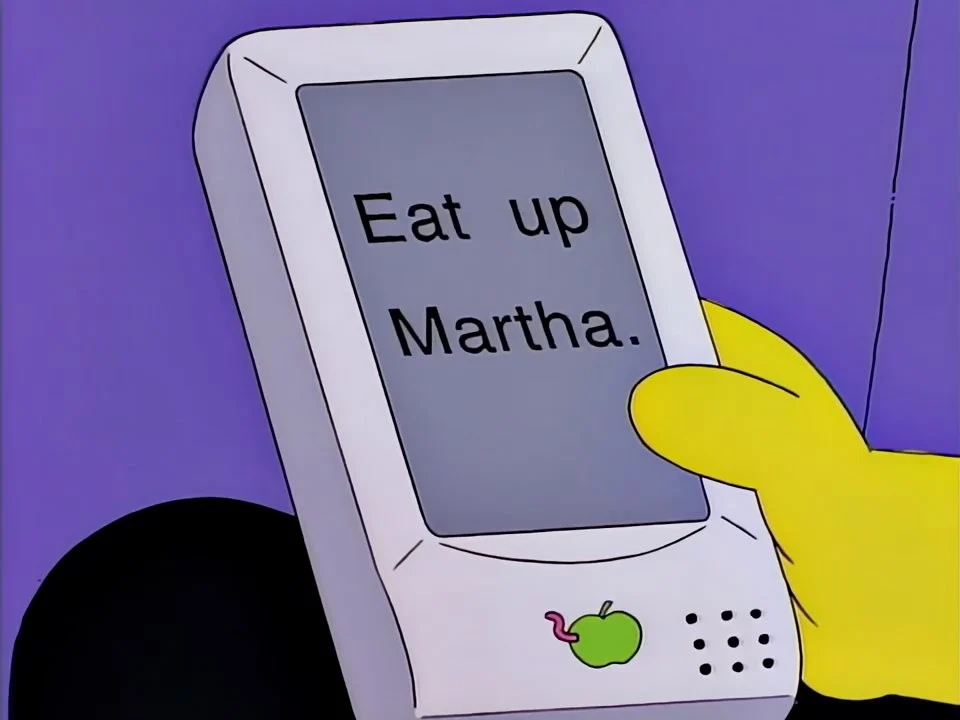
Lisa on Ice, 1994: "Beat up Martin" comes out as "Eat up Martha". Frame from The Simpsons, Lisa on Ice (S06E08, 13 November 1994). Copyright Disney. Reproduced for commentary and criticism. 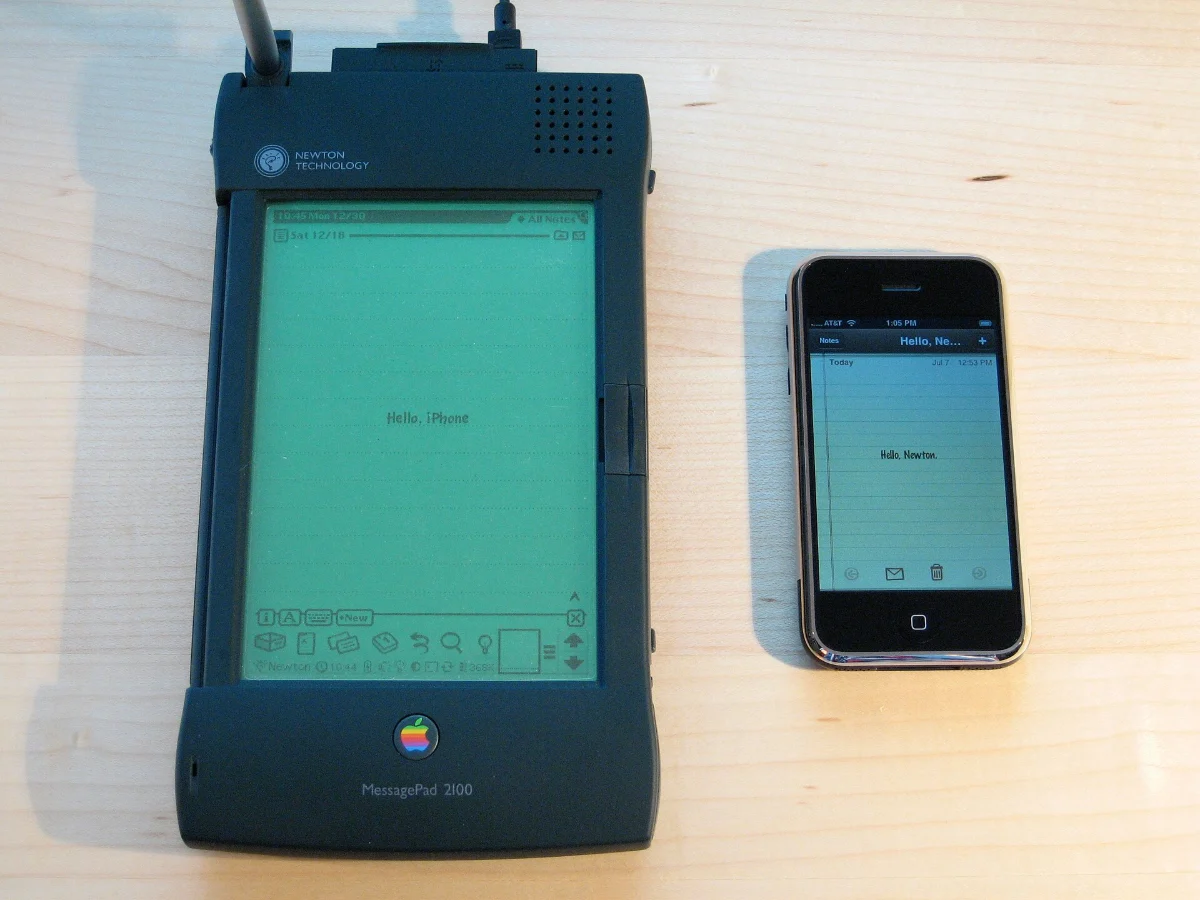
An Apple Newton beside an iPhone, 2007. Photo: Blake Patterson, CC BY 2.0, via Wikimedia Commons. Resized.
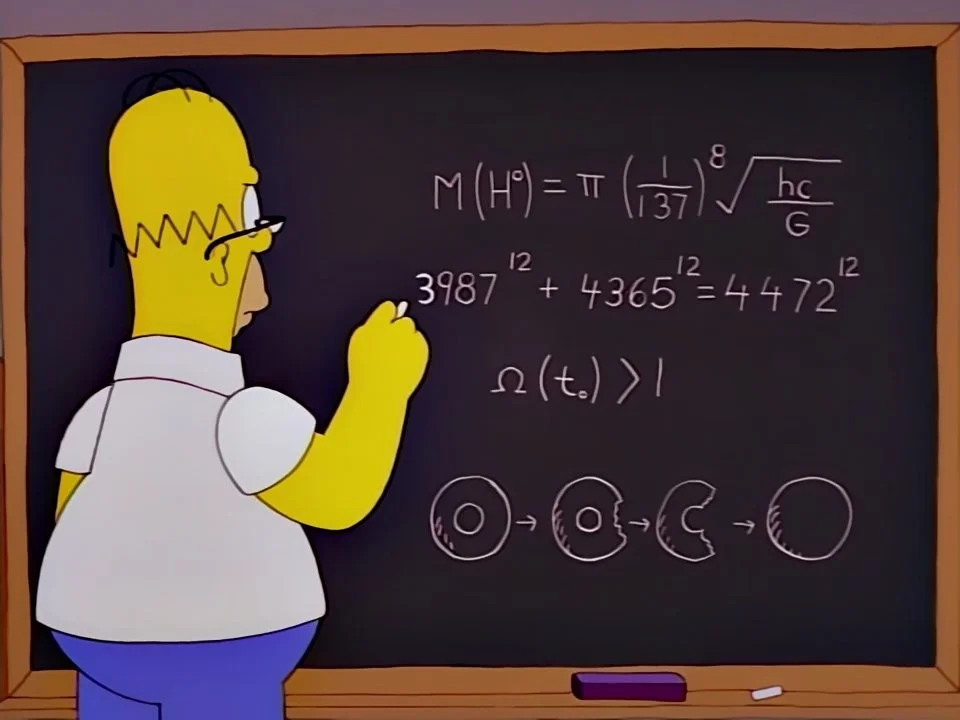
On 20 September 1998, in The Wizard of Evergreen Terrace, Homer stands at a blackboard in a silent montage. The first line estimates the mass of the Higgs boson, 14 years before CERN announced the particle. David X. Cohen wanted real science on that board and went to a high-school friend, the Columbia astronomer David Schiminovich. It comes out at 775 GeV against about 125 measured. Six times too high. Simon Singh still called it "not a bad guess." The next line reads 3987^12 + 4365^12 = 4472^12, an apparent break in Fermat's Last Theorem. A pocket calculator agrees. The sum is false.
On 21 September 1997, in The City of New York vs. Homer Simpson, Lisa holds up a bus company leaflet: "New York", "$9", with two dark towers standing just right of the 9. The claim is that the 9 and the towers read as 9/11. Snopes rates it false as a prediction. Al Jean said, "It still sends chills down me."
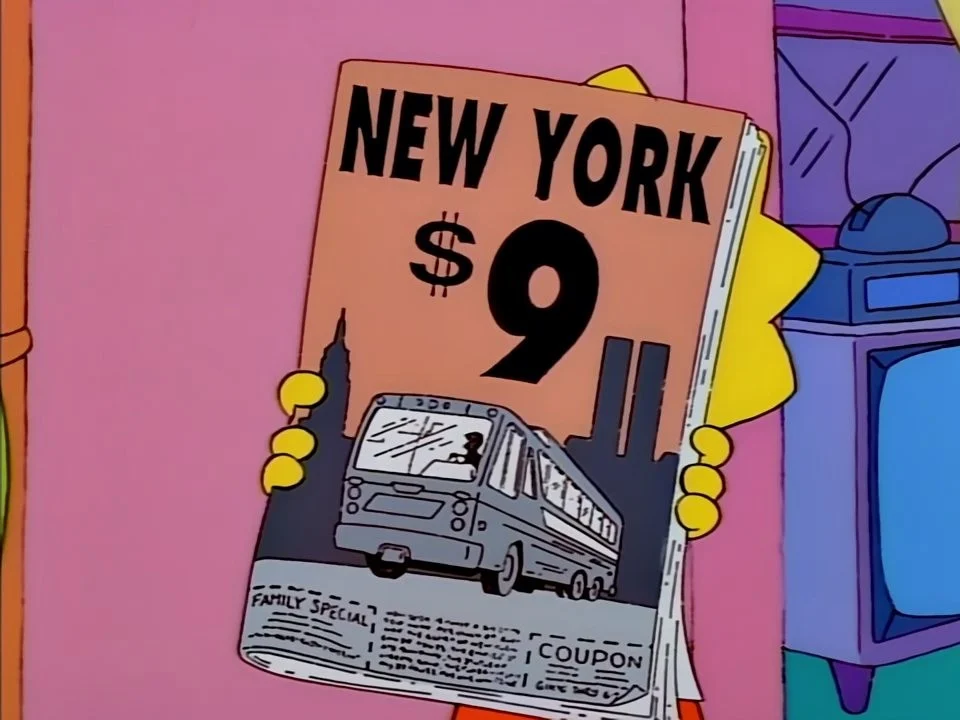
The City of New York vs. Homer Simpson, 1997: the bus leaflet, with two towers just right of the 9. Frame from The Simpsons, The City of New York vs. Homer Simpson (S09E01, 21 September 1997). Copyright Disney. Reproduced for commentary and criticism. 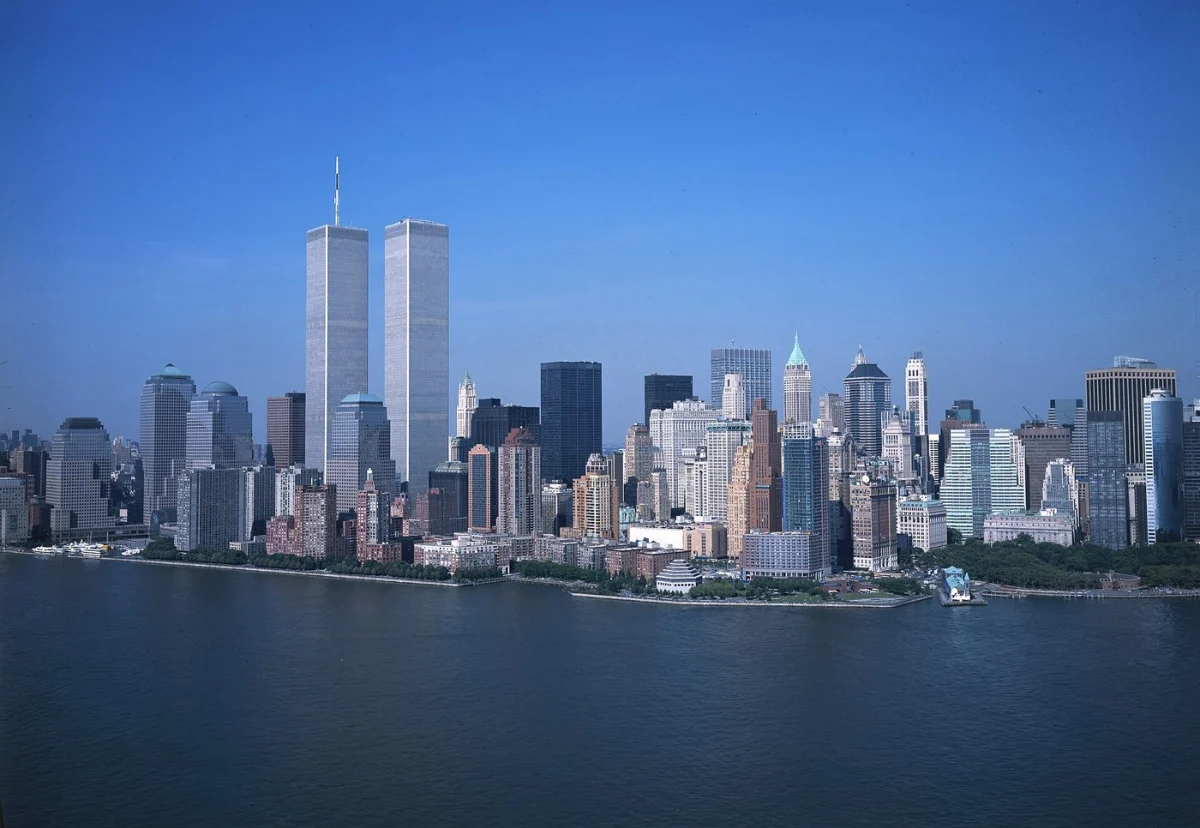
The twin towers of the World Trade Center, 2001. Photo: Carol M. Highsmith, Carol M. Highsmith Archive, Library of Congress, public domain. Resized.
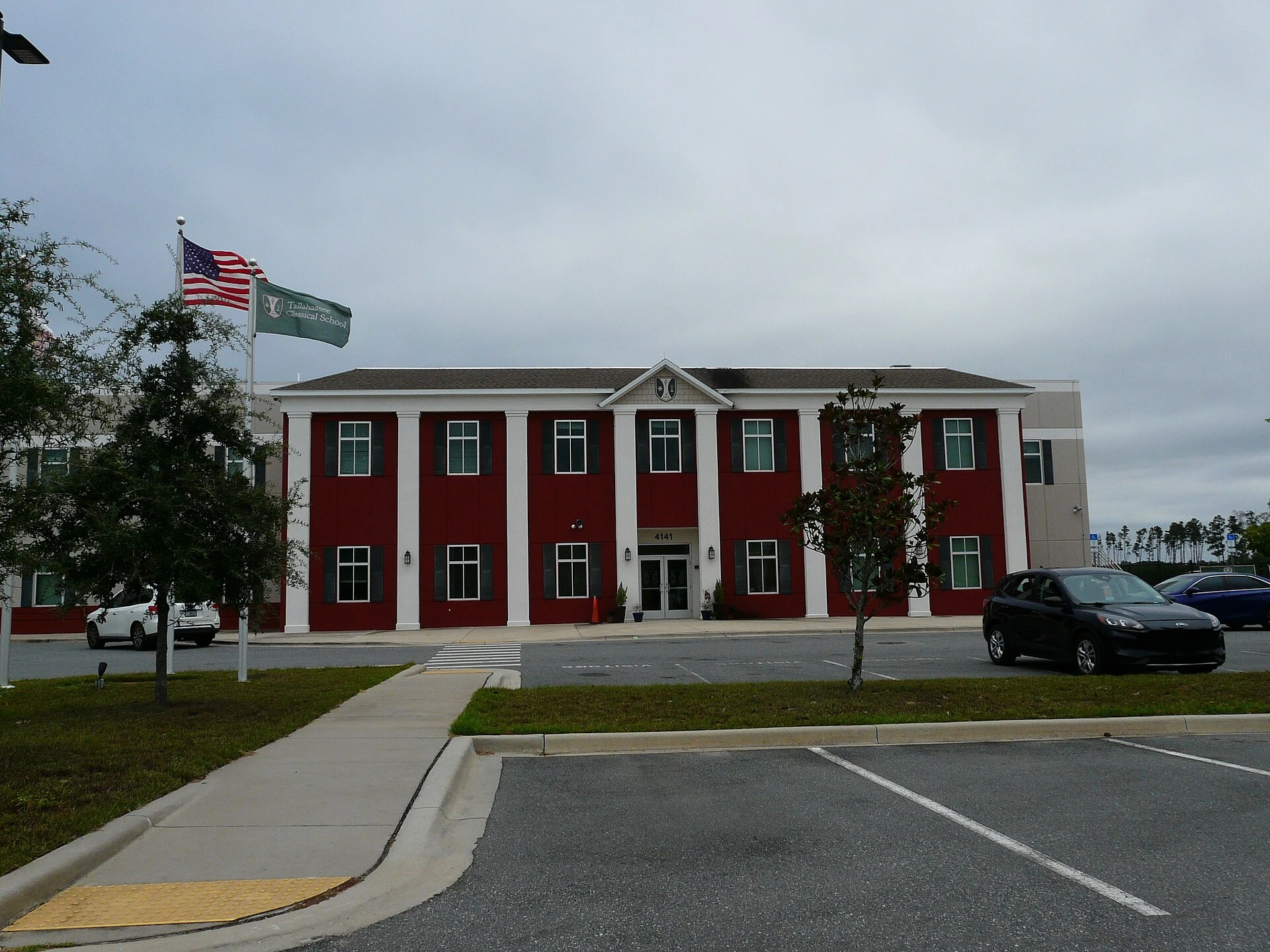
On 20 December 1990, in Itchy & Scratchy & Marge, placards crowd Marge's front door: "Kancel David", "Stop Renaissance art now!". The town is picketing Michelangelo's statue on tour. In March 2023 the principal of Tallahassee Classical School in Florida left after parents complained that sixth graders saw David in an art lesson, and the board chair said there were other issues. Fig leaves were hung on the statue soon after 1504. Snopes rated the claim a mixture in 2019, more than three years before Tallahassee. An old fight, not a forecast.

Itchy & Scratchy & Marge, 1990: the placards at Marge's door. Frame from The Simpsons, Itchy & Scratchy & Marge (S02E09, 20 December 1990). Copyright Disney. Reproduced for commentary and criticism. 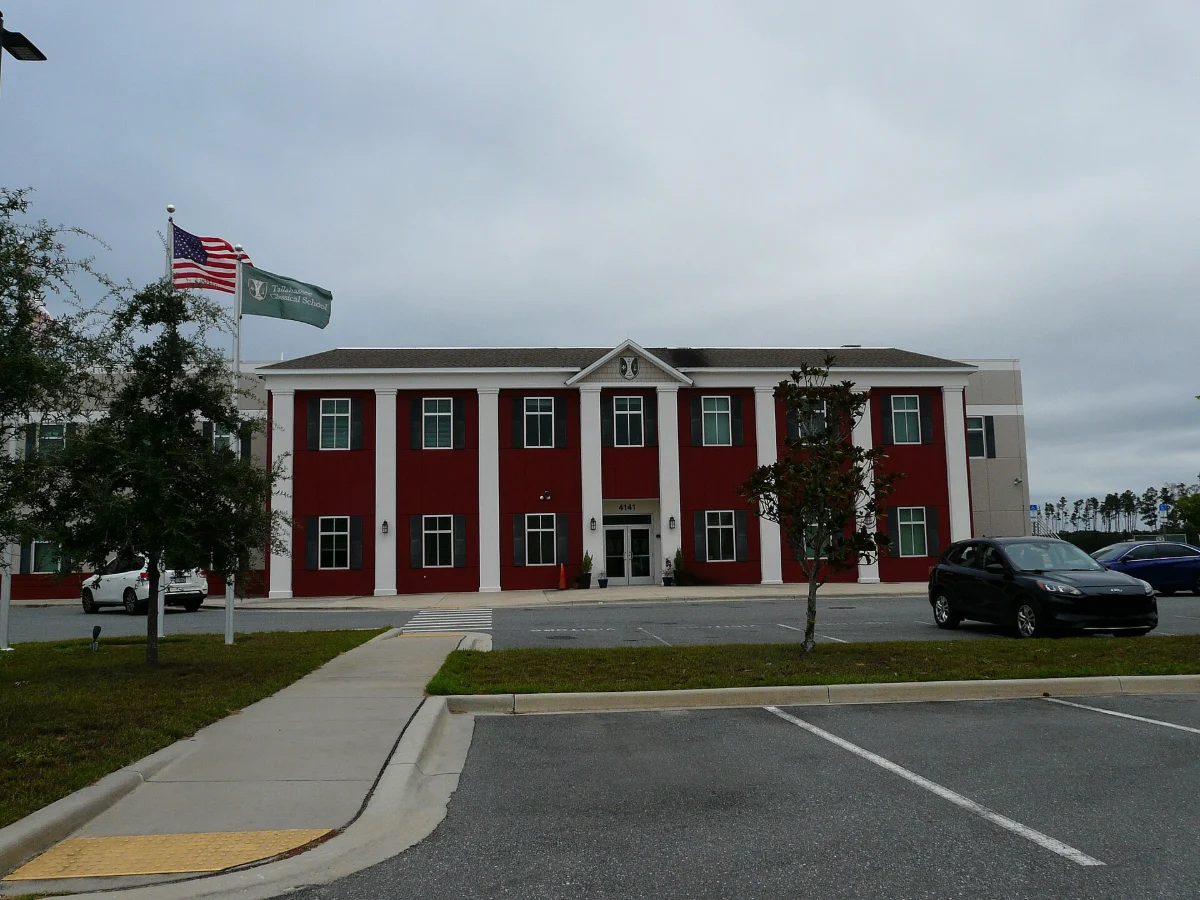
Tallahassee Classical School, Florida, in 2025. Photo: The Bushranger, CC BY-SA 4.0, via Wikimedia Commons. Resized.
On 2 November 2008, in Treehouse of Horror XIX, Homer presses Obama and the machine lights McCain: "One vote for McCain. Thank you." On 6 November 2012 a video from Perry County, Pennsylvania, showed a machine marking Romney when Obama was pressed. It was rectified when the machine was reset. The gag was already an old fear.
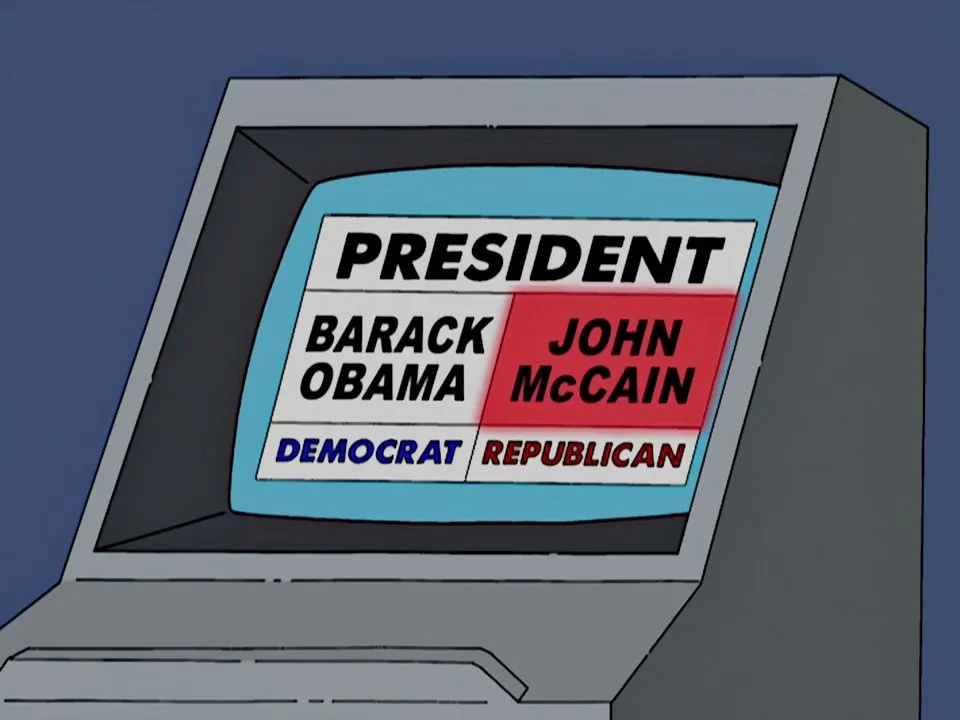
Treehouse of Horror XIX, 2008: Homer presses Obama and the McCain box lights. Frame from The Simpsons, Treehouse of Horror XIX (S20E04, 2 November 2008). Copyright Disney. Reproduced for commentary and criticism. 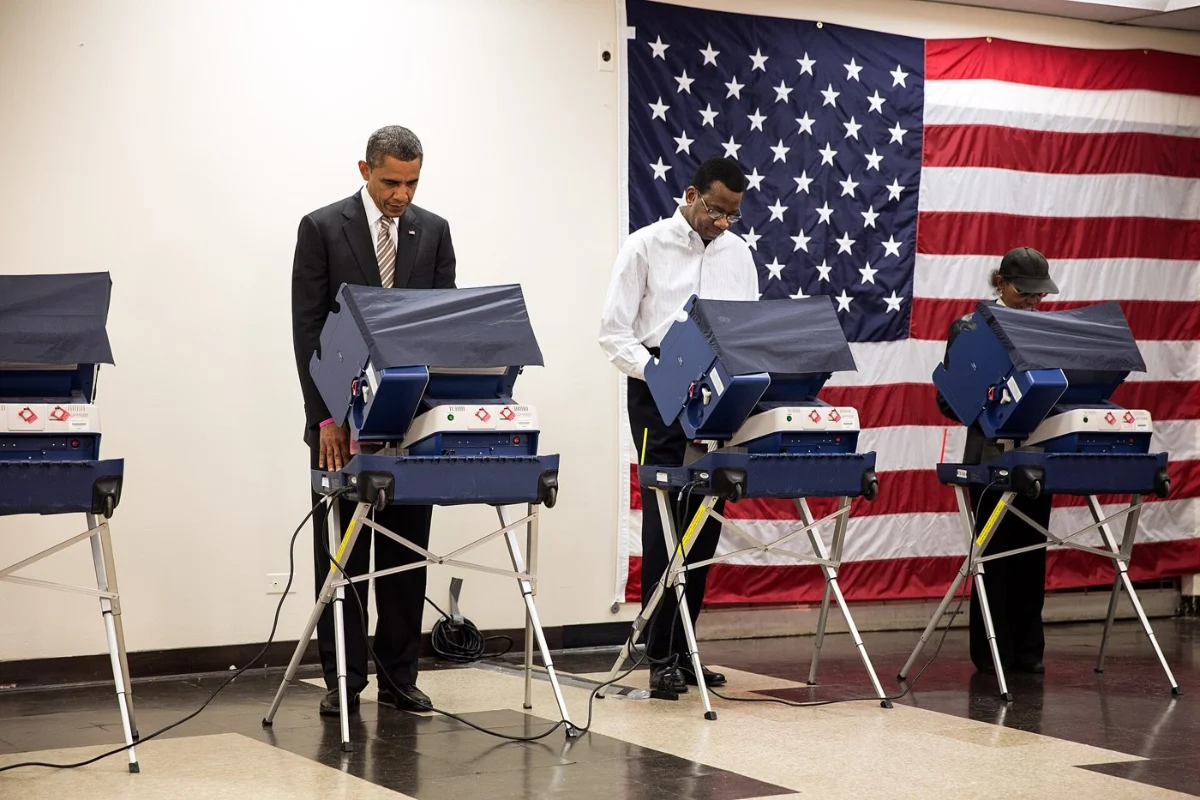
A real electronic voting machine in the 2012 election, in Chicago. This is not the Pennsylvania machine, of which no free photograph was found. Official White House Photo by Pete Souza, public domain, via Wikimedia Commons. Resized.
On 1 November 1990 the show introduced Blinky, the three-eyed fish from the water by the Springfield plant. In October 2011 a three-eyed fish was caught in a reservoir fed by the Embalse nuclear plant in Cordoba, Argentina. No test result tying it to radiation has been found.
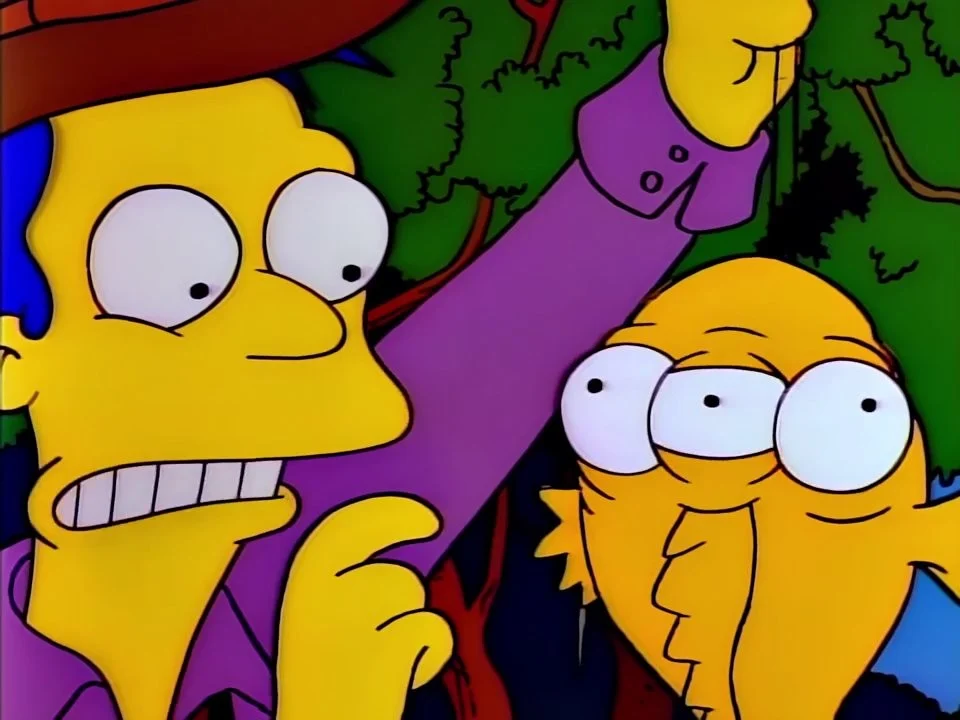
Two Cars in Every Garage and Three Eyes on Every Fish, 1990: Blinky. Frame from The Simpsons, Two Cars in Every Garage and Three Eyes on Every Fish (S02E04, 1 November 1990). Copyright Disney. Reproduced for commentary and criticism. 
The Embalse nuclear plant beside its reservoir in Cordoba, Argentina. No free photograph of the 2011 fish was found. Photo: Mrcukilo, CC BY-SA 3.0, via Wikimedia Commons. Resized.
On 28 April 1994, in Sweet Seymour Skinner's Baadasssss Song, Lunchlady Doris reaches into a drum in the school kitchen marked "Assorted horse parts. Now with more testicles." In 2013 horse meat turned up in beef products across Europe.
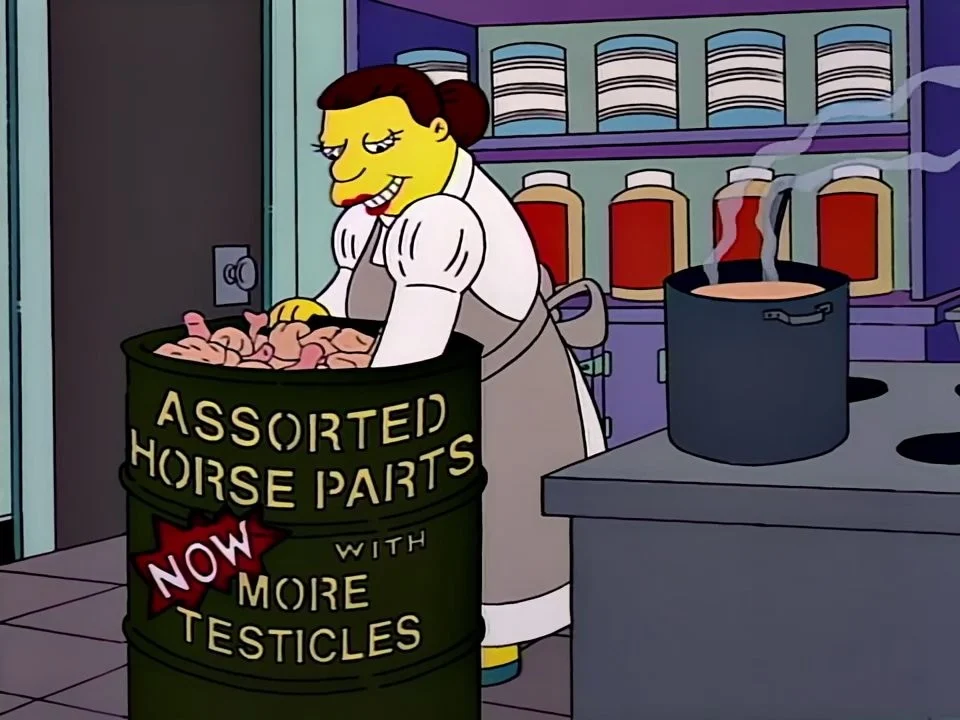
Sweet Seymour Skinner's Baadasssss Song, 1994: Lunchlady Doris and the drum. Frame from The Simpsons, Sweet Seymour Skinner's Baadasssss Song (S05E19, 28 April 1994). Copyright Disney. Reproduced for commentary and criticism. 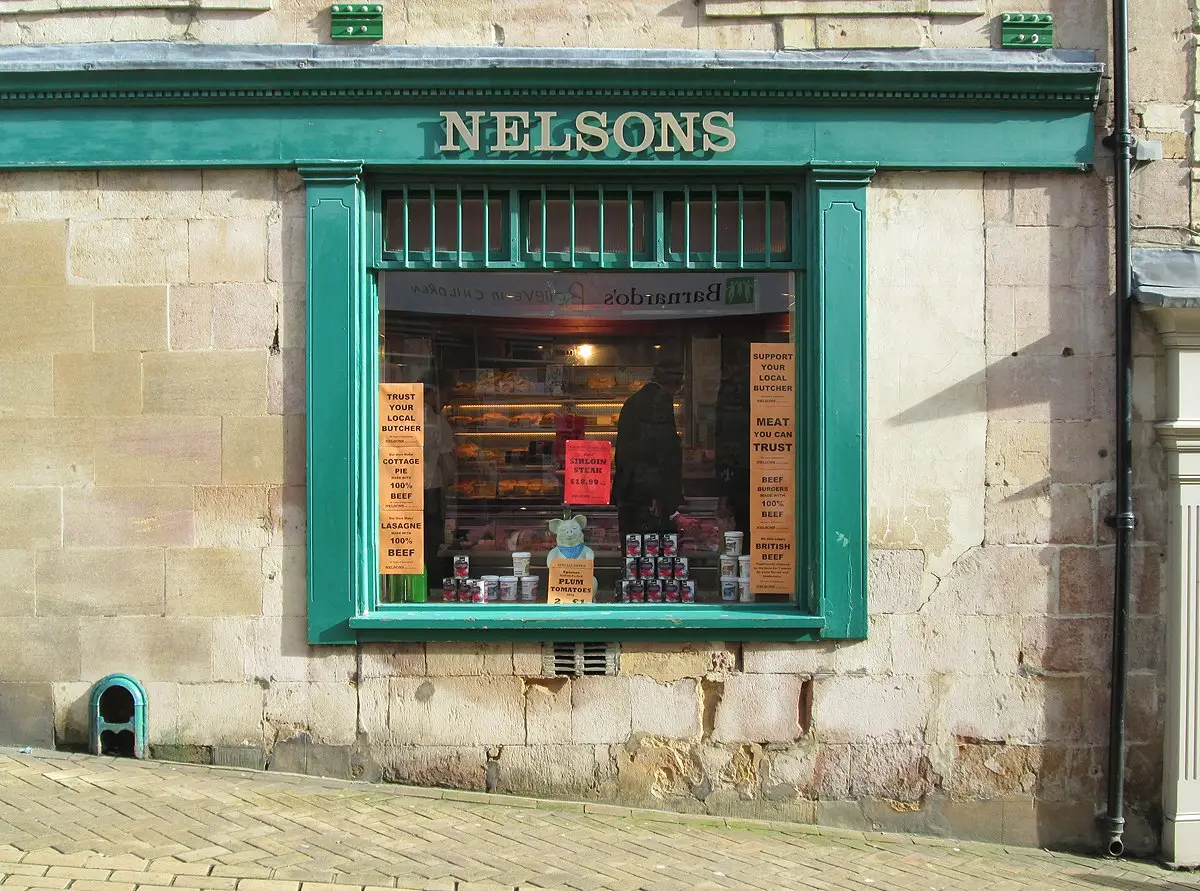
A butcher's window in Stamford, England, February 2013, answering the horse meat scandal. Stamford: response to the horsemeat scandal by John Sutton, CC BY-SA 2.0, via Wikimedia Commons.
On 8 January 2012, in Politically Inept, with Homer Simpson, a news ticker runs a dozen jokes, among them "Europe puts Greece on eBay". Greece defaulted to the IMF in 2015. In January 2012 its crisis was already the news.
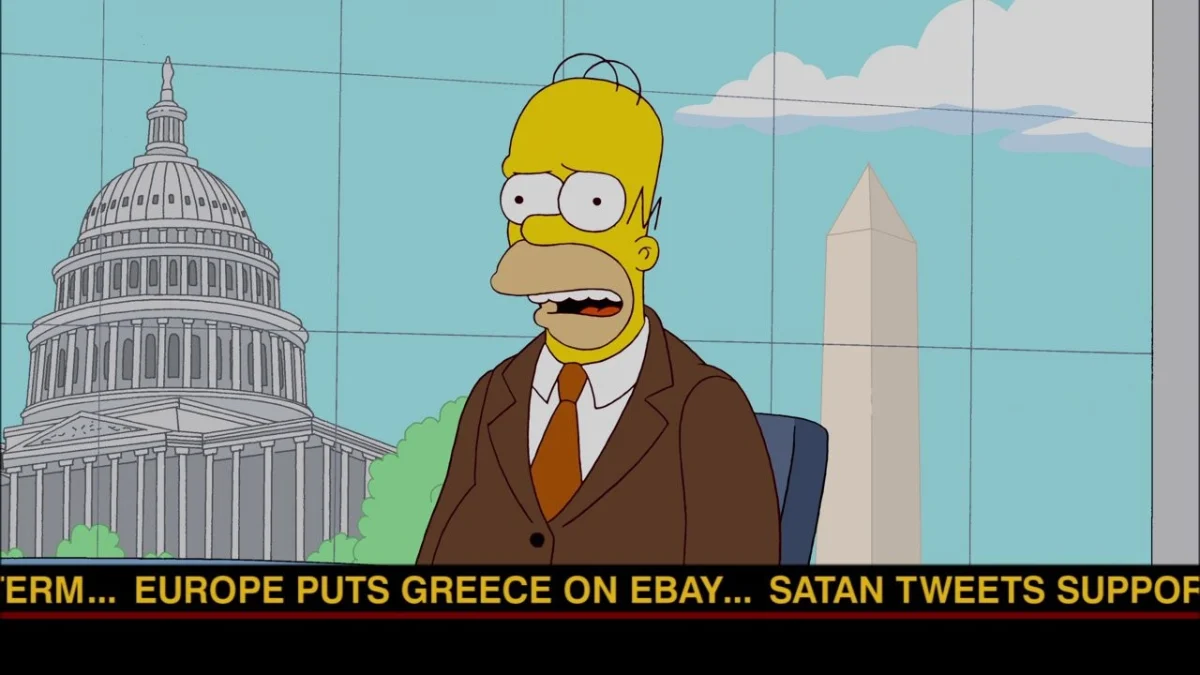
Politically Inept, with Homer Simpson, 2012: the ticker along the foot of the screen. Frame from The Simpsons, Politically Inept, with Homer Simpson (S23E10, 8 January 2012). Copyright Disney. Reproduced for commentary and criticism. 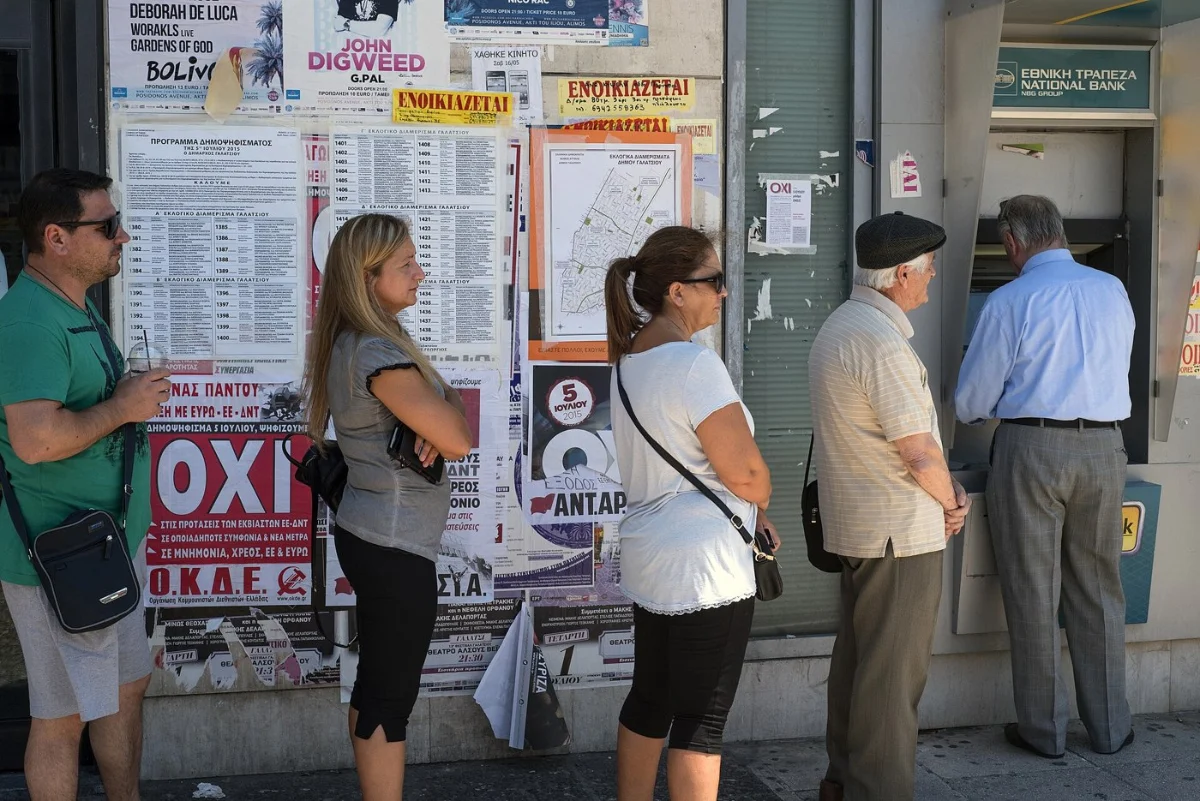
A queue at a cash machine in Athens on the day of the referendum, 5 July 2015. Photo: Ggia, CC BY-SA 4.0, via Wikimedia Commons. Resized.
On 6 May 1993, in Marge in Chains, an inset reads "Osaka Flu", and a crowd tips a truck and a crate marked "Danger: Killer Bees" breaks open. These frames returned in 2020, shared beside coronavirus and "murder hornets". Bill Oakley says it was based on the Hong Kong flu of 1968.
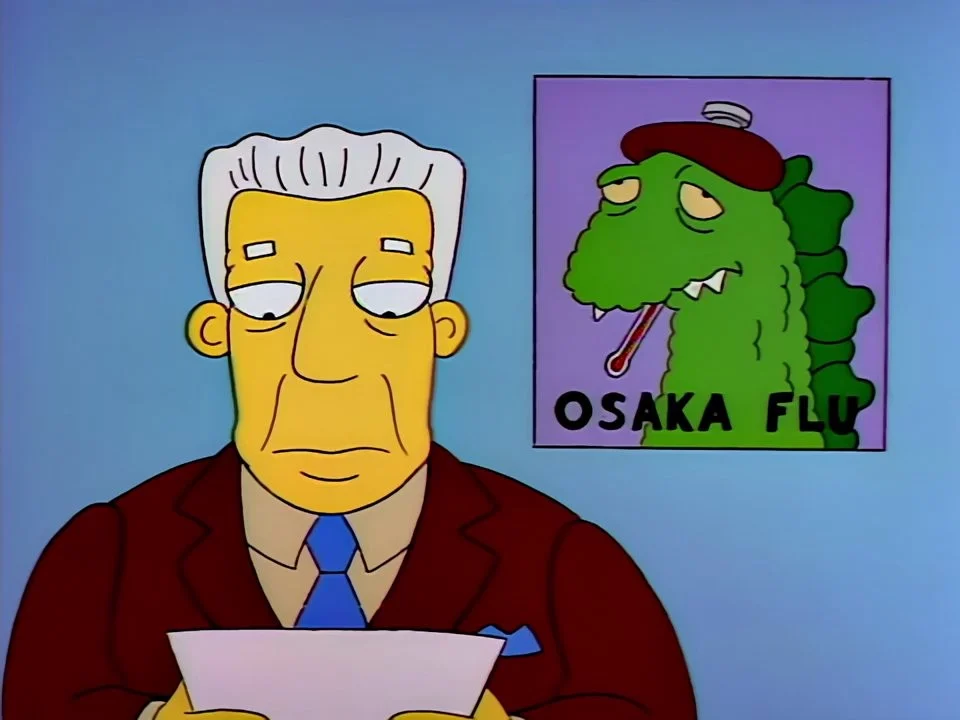
Marge in Chains, 1993: the Osaka flu on the news. Frame from The Simpsons, Marge in Chains (S04E21, 6 May 1993). Copyright Disney. Reproduced for commentary and criticism. 
The crate from the truck: "Danger: Killer Bees". Frame from The Simpsons, Marge in Chains (S04E21, 6 May 1993). Copyright Disney. Reproduced for commentary and criticism. 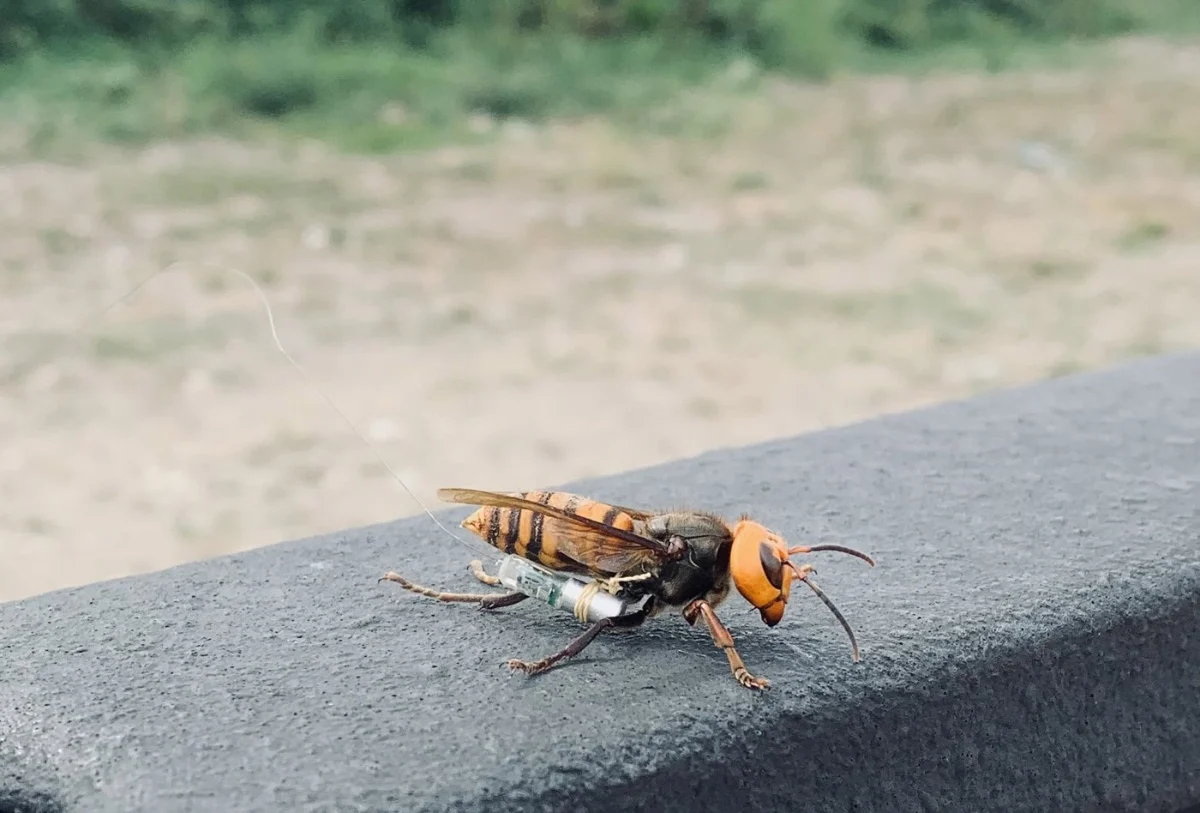
An Asian giant hornet tagged in Washington State, 2021. The episode's insects are bees. USDA Photo by Stacy Herron, public domain, via Wikimedia Commons. Resized.
On 8 January 2006, in Homer's Paternity Coot, Homer sits alone in a one-man submersible, and a red panel reads "Oxygen gone". In June 2023 OceanGate's Titan was lost on a dive to the Titanic. Snopes rates it false: Homer is alone, on a treasure hunt, and nowhere near the Titanic.
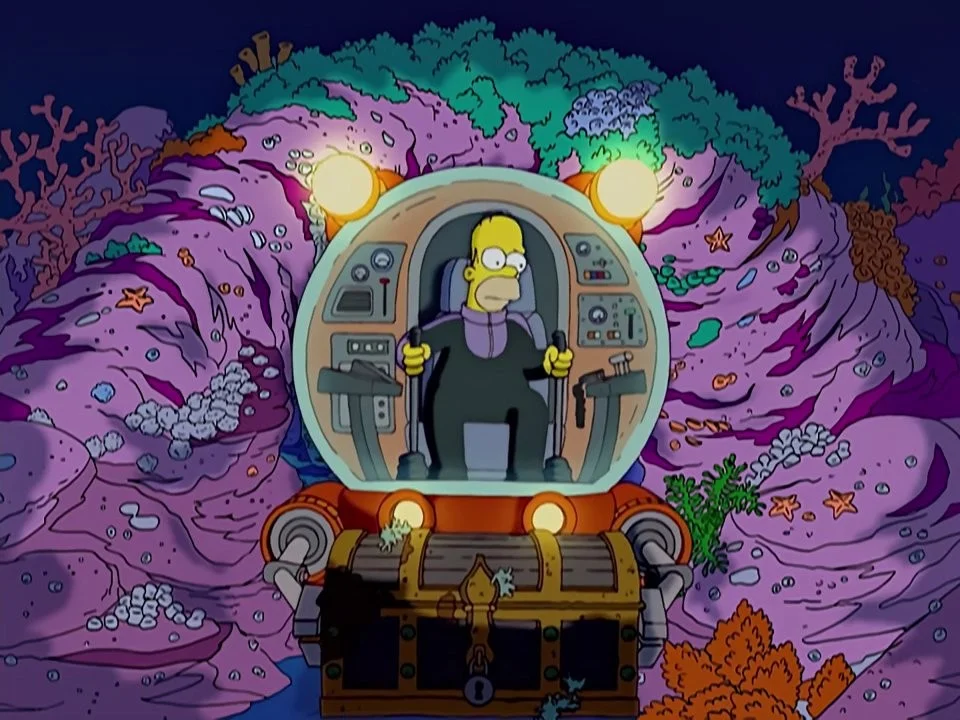
Homer's Paternity Coot, 2006: Homer alone in a one-man submersible, on a treasure hunt. Frame from The Simpsons, Homer's Paternity Coot (S17E10, 8 January 2006). Copyright Disney. Reproduced for commentary and criticism. 
A Coast Guard aircrew on the search for the submersible Titan, 21 June 2023. U.S. Coast Guard photo by Petty Officer 1st Class Amber Howie, public domain, via Wikimedia Commons. Resized.
On 20 May 2012, in Lisa Goes Gaga, Lady Gaga rises from a dome in a cloud of hummingbirds and floats above her train. On 5 February 2017 the real Gaga began her Super Bowl halftime show on the stadium roof and dropped to the stage on cables. In the frames read for this article the setting is a rail platform. Snopes rates the set of Super Bowl claims a mixture, and says one scene appeared to predict her show.
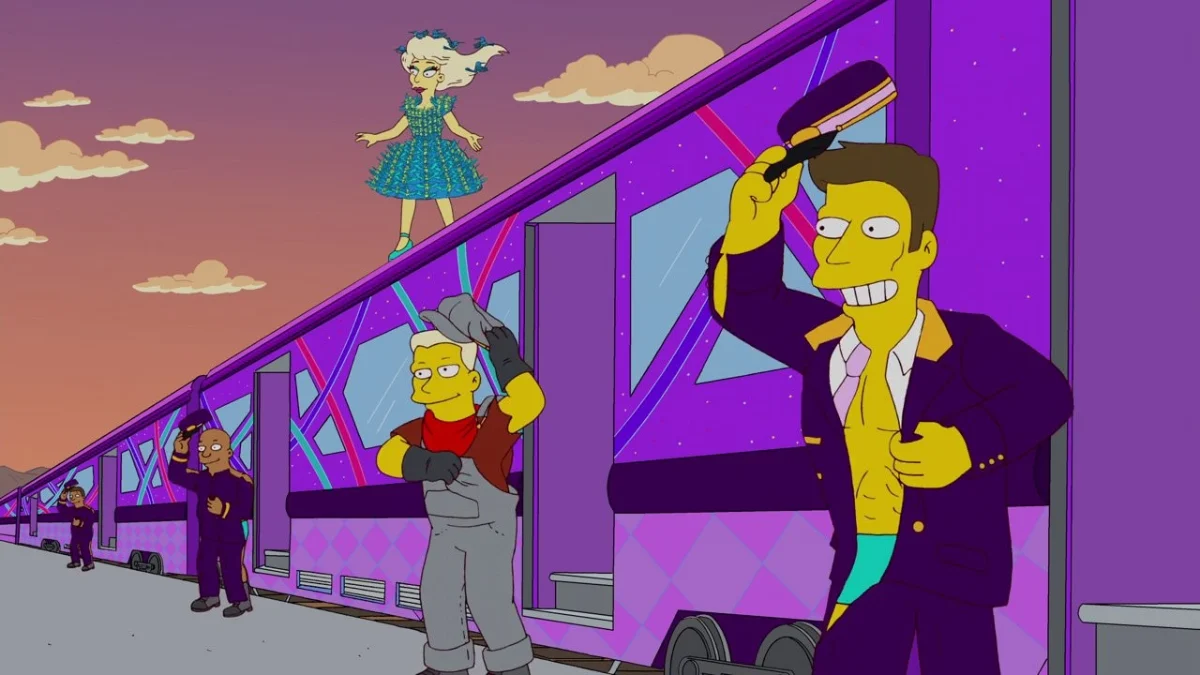
Lisa Goes Gaga, 2012: Gaga in a dress of hummingbirds above her train. Frame from The Simpsons, Lisa Goes Gaga (S23E22, 20 May 2012). Copyright Disney. Reproduced for commentary and criticism. 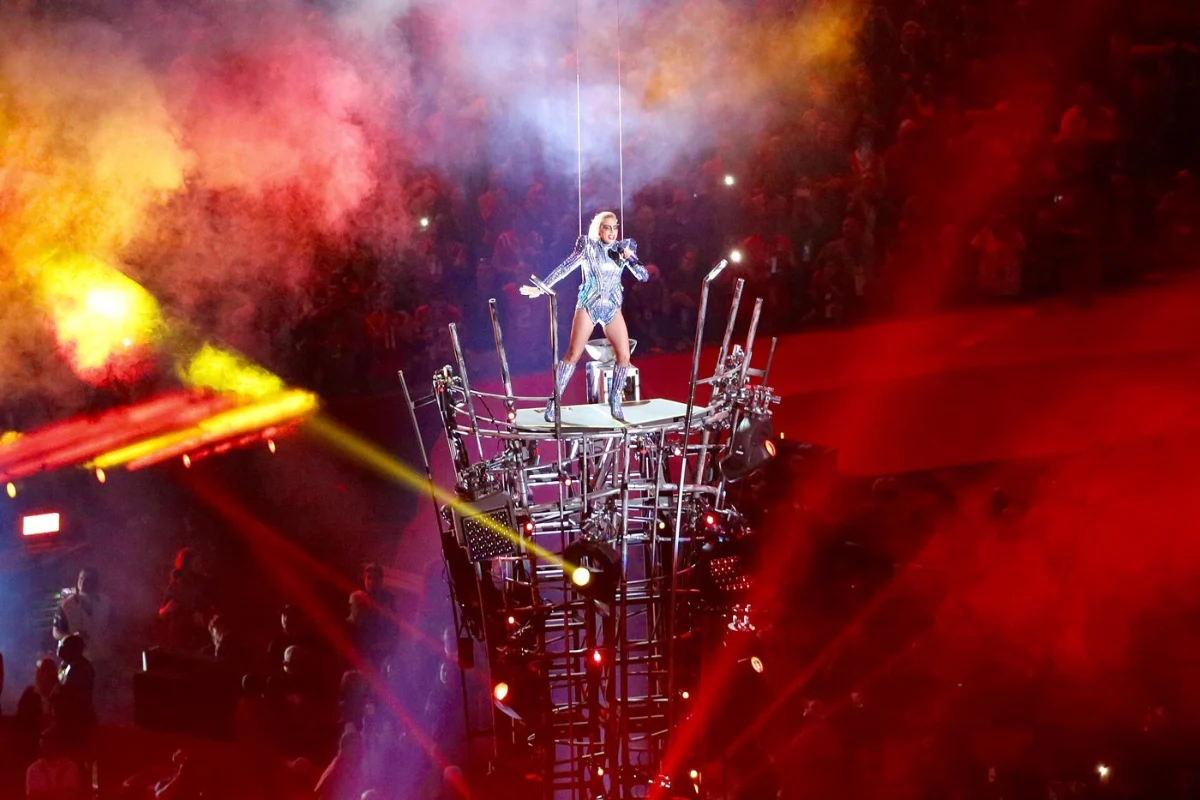
Lady Gaga at the Super Bowl LI halftime show, 5 February 2017. Photo: Brian Allen/Voice of America, public domain, via Wikimedia Commons. Resized.
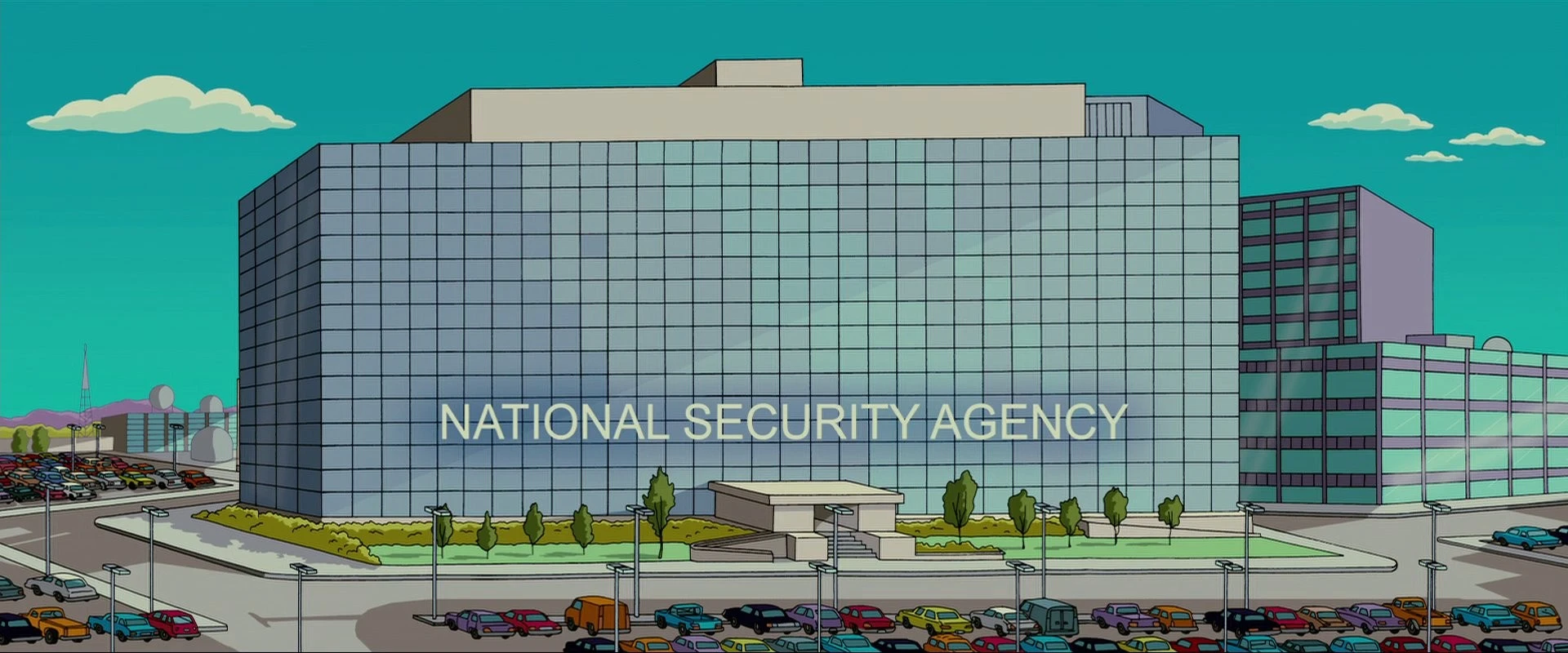
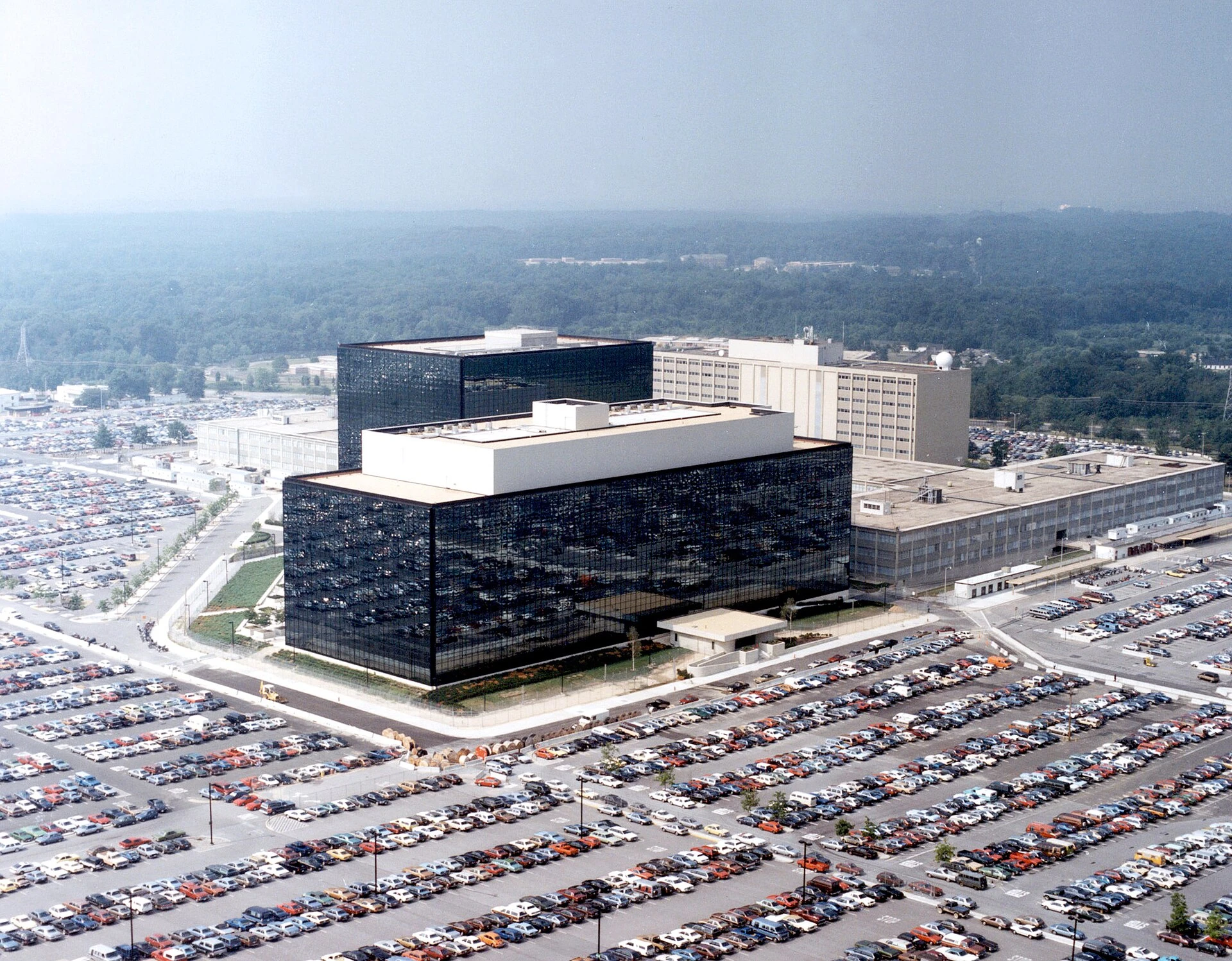
On 27 July 2007, in The Simpsons Movie, Marge says, "it's not like the government is listening to everybody's conversation", and the film cuts to a National Security Agency hall of consoles running to the horizon. Edward Snowden's documents appeared in June 2013. The New York Times had reported warrantless surveillance on 16 December 2005, 19 months before the film. In 2011 Benjamin Wittes reported that an NSA lawyer, Patrick Reynolds, liked the scene for showing how absurd the idea was.
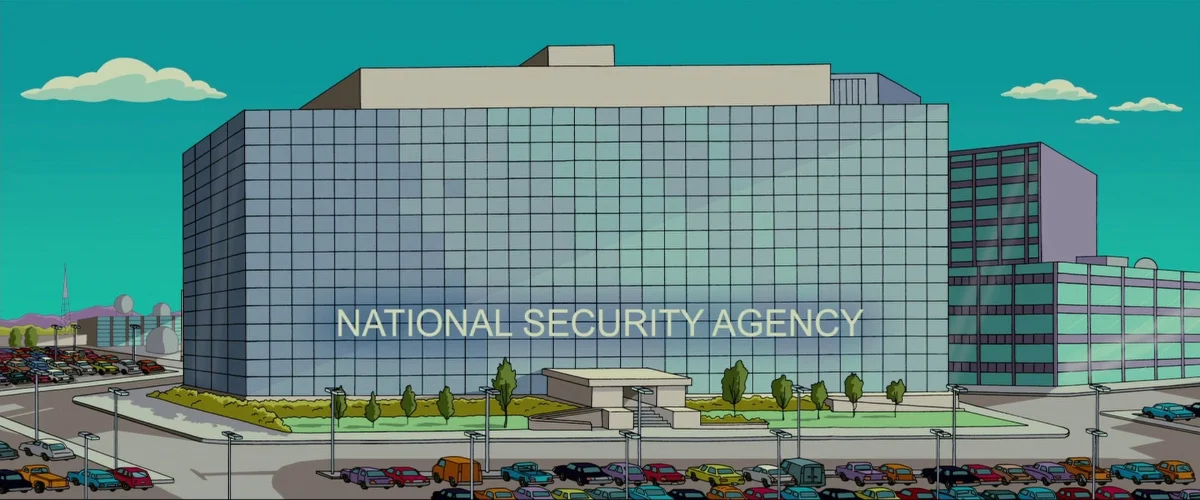
The Simpsons Movie, 2007: the National Security Agency, as the film draws it. Frame from The Simpsons, The Simpsons Movie (S00E01, 27 July 2007). Copyright Disney. Reproduced for commentary and criticism. 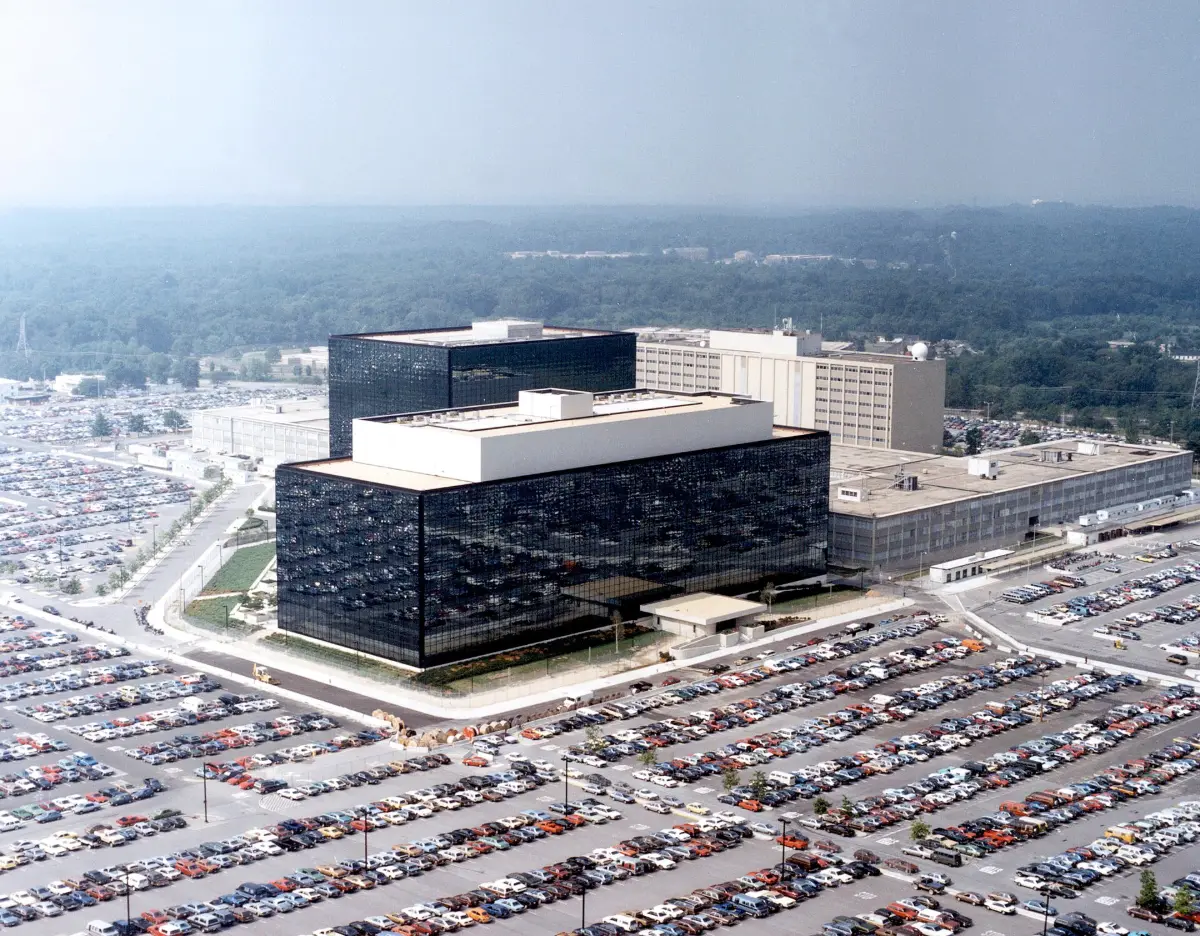
The real National Security Agency headquarters at Fort Meade, Maryland. National Security Agency, public domain, via Wikimedia Commons. Resized.
On 23 March 2014, in The War of Art, a man drawn as Richard Branson floats in a spacecraft cabin beside a painting. He is never named. On 11 July 2021 Branson flew on VSS Unity. By May 2013 he had already said he would be on the first public flight.
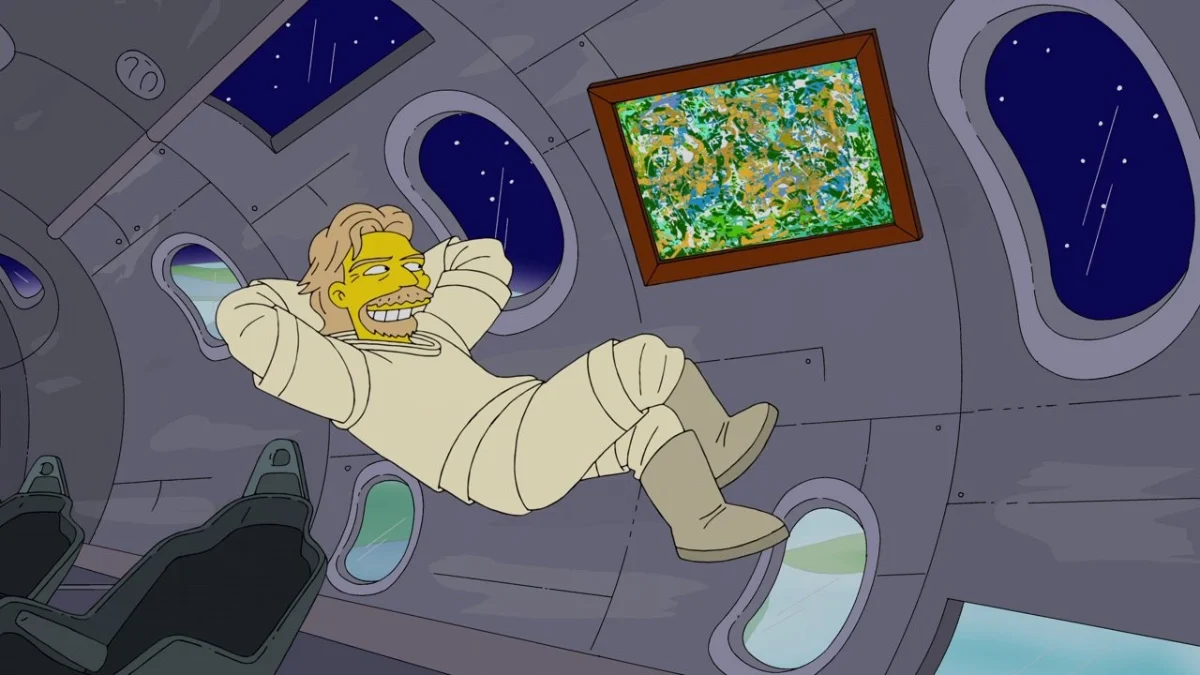
The War of Art, 2014: a man drawn as Richard Branson in a spacecraft cabin. He is never named. Frame from The Simpsons, The War of Art (S25E15, 23 March 2014). Copyright Disney. Reproduced for commentary and criticism. 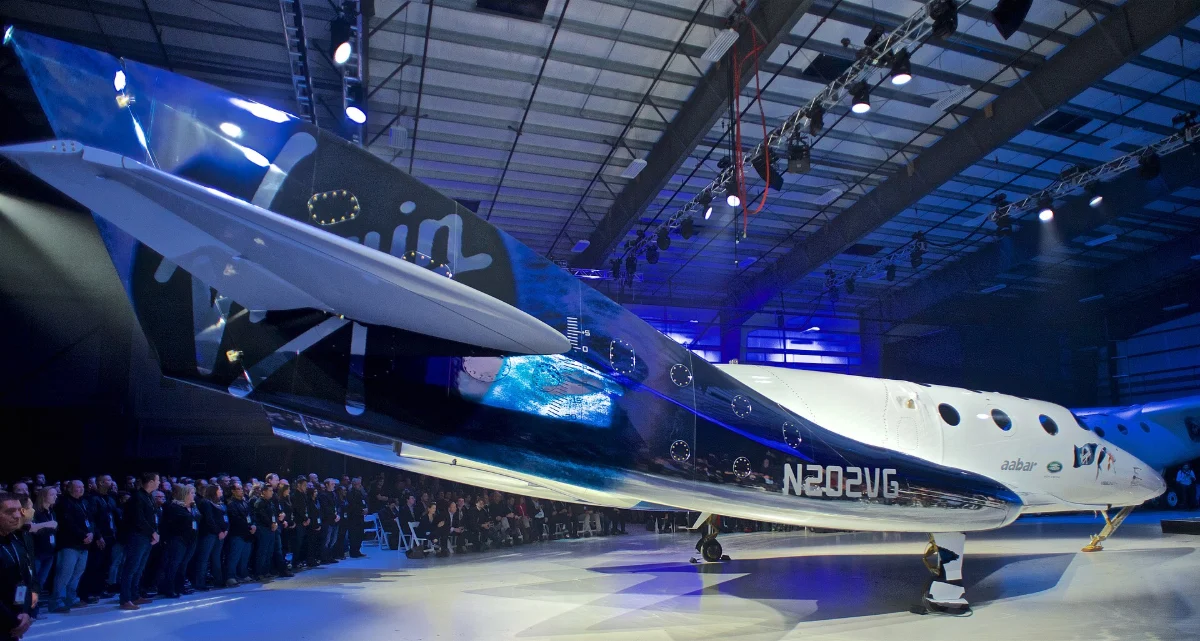
VSS Unity at its rollout in Mojave, California, 2016. No free photograph of the 2021 flight was found. Photo: Ronrosano, CC BY-SA 3.0, via Wikimedia Commons. Resized.
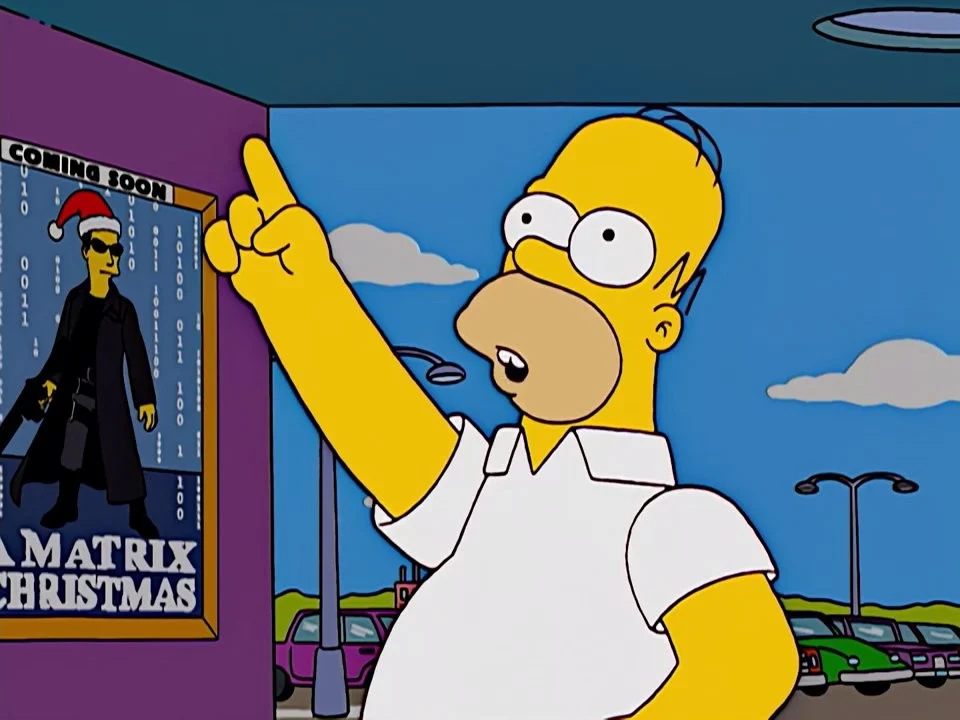
On 14 March 2004, in The Ziff Who Came to Dinner, a poster behind Homer at the cinema reads "Coming soon" and "A Matrix Christmas". The Matrix Resurrections opened on 22 December 2021, after the pandemic reshuffled its dates. Only the month matches.
Lisa's purple suit and pearls in Bart to the Future drew the eye again on 20 January 2021, when Kamala Harris took the oath in a purple coat. Snopes rates it false. Al Jean played along in 2024 and called it a "prediction" he was proud of.
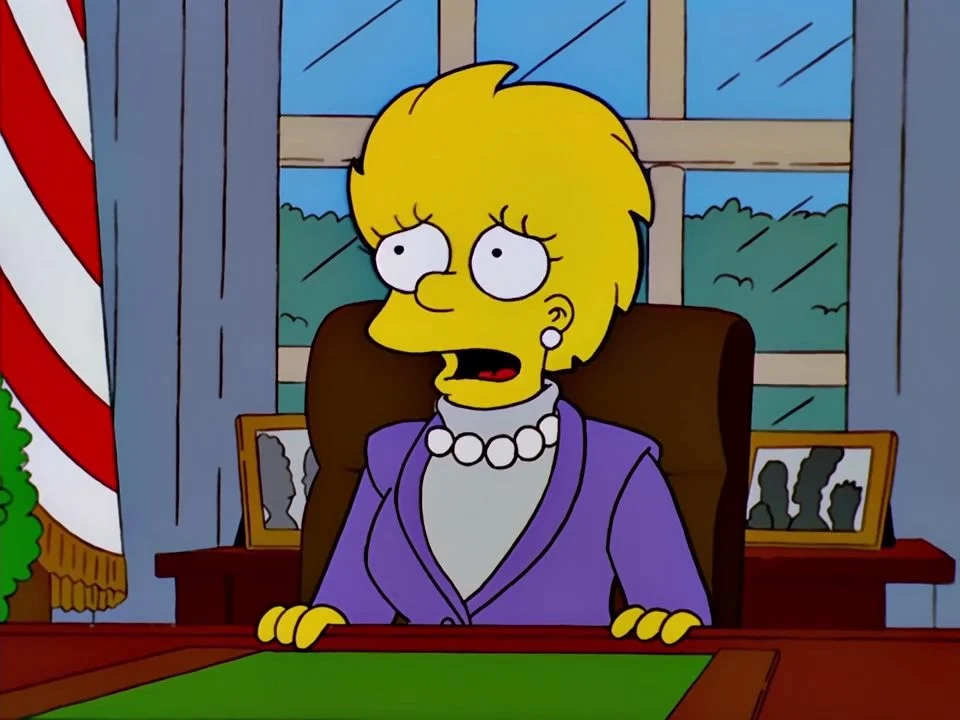
Bart to the Future, 2000: President Lisa Simpson in purple. Frame from The Simpsons, Bart to the Future (S11E17, 19 March 2000). Copyright Disney. Reproduced for commentary and criticism. 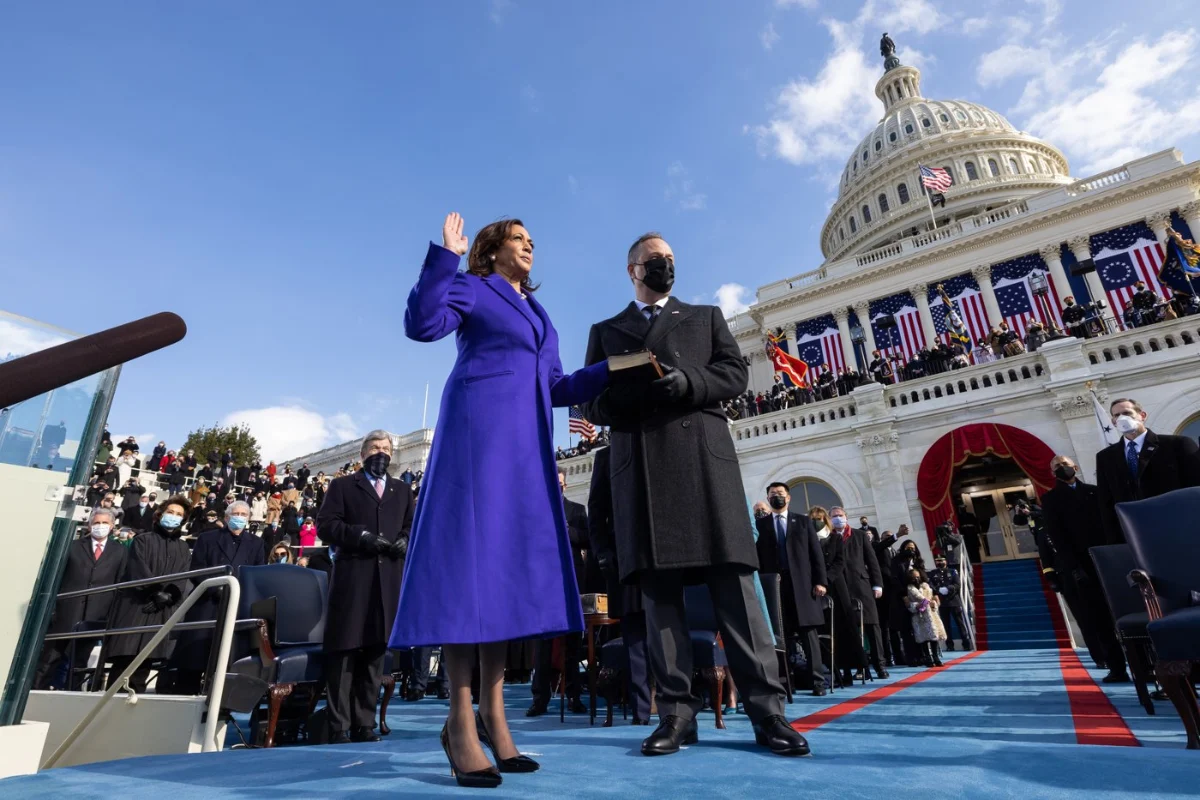
Kamala Harris takes the oath of office as Vice President, 20 January 2021. Official White House Photo by Chuck Kennedy, public domain, via Wikimedia Commons. Resized.
On 23 January 1992, in Lisa the Greek, Lisa says: "I think Washington is a mortal lock." Then: "If I still love you, Washington. If I don't, Buffalo." Washington won Super Bowl XXVI three days after the episode aired. On 14 February 2010, in Boy Meets Curl, Homer, Marge and the Skinners take "Demonstration Gold" in mixed curling, ahead of Sweden. In 2018 the American men beat Sweden for the real thing.
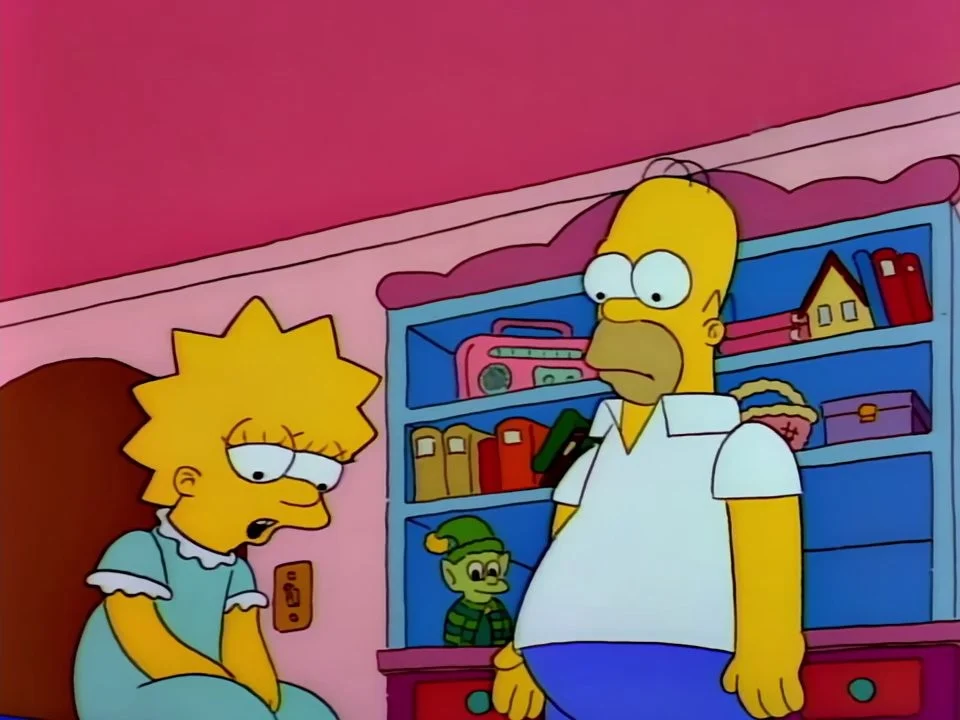
Lisa the Greek, 1992: "I think Washington is a mortal lock." Frame from The Simpsons, Lisa the Greek (S03E14, 23 January 1992). Copyright Disney. Reproduced for commentary and criticism. 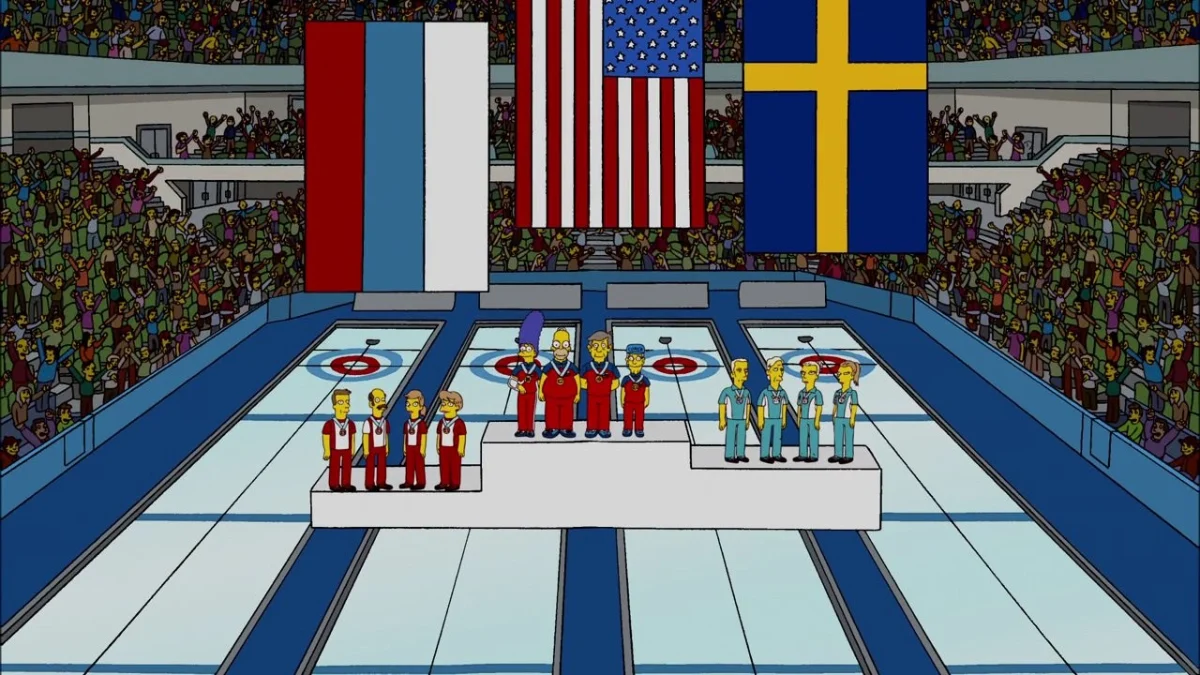
Boy Meets Curl, 2010: Demonstration Gold in mixed curling, Sweden second. Frame from The Simpsons, Boy Meets Curl (S21E12, 14 February 2010). Copyright Disney. Reproduced for commentary and criticism.
Why Stretched Frames Hold
The case for these frames is not foolish. Stand them next to the event, and the eye does the rest. Together they make a list of disasters, deaths and scandals that seems to know something. Those who hold that the screen prepares the public can read the sheer run of them as design.
And the show's subjects are not random. Nuclear accidents, plague, rigged votes, corrupt officials, a stock of meat of unknown origin: these are what a satirical writers' room reaches for because they are what the world keeps doing. A show that has joked about every recurring human failure for 37 years has, by now, a frame ready for most of them.
What It Would Mean
Set aside for a moment whether any of it is foresight. Ask the better question. If frames like these do something to us, what are they doing?
It would mean that a joke made in passing does not expire. A book held up for two seconds in 1997 could wait 17 years for its moment and then spread around the world in an afternoon.
It would mean that we are the ones completing the pattern. On that reading, the prediction is made by the viewer who remembers the frame, not by the writer who forgot it. We would be reading our own fears back off the screen, and calling it prophecy.
And it would leave a question in front of us. Each new disaster sends millions of people looking for the frame that saw it coming. What do we lose when the first response to something terrible is to look for a cartoon?
What the Frames Themselves Show
Reading the frames has its own record to report. The Gaga on screen, in the scenes read, seems carried by hummingbirds at a rail platform. Lisa's pick is hedged in the next breath. The curling is a demonstration event. The blackboard is a montage nobody hears explained. Snopes, which rated many of these, sums the genre up as "edited footage, faulty logic, or minor coincidences".
Diaconis and Mosteller named the mechanism in 1989: multiplicity of endpoints. A near match gets counted as a match, because anything close will do. A list of hits never records how many things could have counted. Mike Reiss said of the writers' method, "We are not that predictive."
What the Fact Checks Do Not Reach
Some of these leave a real residue. The spike is on the London horizon. The blackboard line came from a real astronomer, for a particle not yet found, though Singh calls it a playful combination of constants. The "$9" is drawn right beside the towers. A fact check can say it means nothing. It cannot make it stop looking like what it looks like.
No published study counts how often the show's frames fail to match. Matt Zaremsky's estimate of 1.6 percent is the nearest thing, a calculation for a reporter, and it was never run against another show. The rate at which a rival cartoon produces frames this good is not known. It has not been measured.
Where the Question Stands
Each of these can be tested by one rule: what was on the screen, on what date, and what was already known that day. Most fail on the last. Ebola was named in 1976. Computer watches were on sale. Greece was in the news.
The frames do not fade. The next disaster will find one.
Questions This Leaves You With
Is there anything a person actually does with this?
When a frame arrives with a claim attached, you can ask three things: what date it aired, what was already known then, and what the same list leaves out. That takes minutes, and it is about all that follows for your own life. Anyone selling a date from a cartoon is selling something. The larger question is whether a society that meets each disaster with a screenshot is learning anything from the disaster, and that one has no quick answer. It is worth asking anyway, because the screenshot arrives before the facts do.
Does this sit against a religious account of the world?
It can be read both ways. Some will see a warning in the way old fears return, and take that as support for a moral order in events. Others will see the very opposite: meaning read into noise, the same habit that a careful faith warns against. People of faith and people of none have both written on the human hunger for signs. This site will not tell you how it falls. A cartoon does not settle it either way.
Does this change what a human life is?
Think of what you were afraid of ten years ago, and whether it came. Most fears are never collected on, and the ones that come feel foretold. One reaction is that this makes a life smaller: you are a pattern-seeking animal fooled by a drum of horse parts. The other is that it makes a life larger: you can look at a frame, know what your mind is doing with it, and hold both at once. You may already know which of those you felt.
What would change your mind, in either direction?
Name it now, before you are committed. Toward something more than chance: a frame that named a date, a person and a place no one could have inferred, recorded before the event, with a hit rate above another show's under the same rule. Toward chance alone: a scored count showing a rival cartoon matches as often. Another striking screenshot would not move it. Check the air date first, and then check whether the frame exists at all.
How often does any show do this?
This is the open problem. There is no published count of how many frames from a long-running satire match later events, for The Simpsons or for anything else. A fair comparison would freeze the episodes of two or three shows, write the scoring rule first, and let strangers do the matching. Until then the claim that The Simpsons is unusual rests on no number, in either direction. It would take a season's worth of patient, dull scoring, and nobody has done it. The space where that number should be is empty.
Sources
- Frinkiac, searchable frames and subtitles of The Simpsons Frinkiac Primary record
- Amelia Tait, interview with Al Jean on The Simpsons and predictions, 30 October 2025 MIT Technology Review Study
- Did The Simpsons predict the smartwatch? Snopes Study
- Lisa's Wedding Wikipedia General reference
- The Shard Wikipedia General reference
- Simon Singh, The Simpsons and Fermat's Last Theorem, 29 October 2013 Slate Study
- Did The Simpsons predict 9/11? Snopes Study
- Report on the Pennsylvania voting machine video, November 2012 Mother Jones Study
- Report on the Pennsylvania voting machine, 2012 Philadelphia Magazine Study
- Great, we have three-eyed fish now, 28 October 2011 Grist Study
- 2013 horse meat scandal Wikipedia General reference
- Politically Inept, with Homer Simpson Wikipedia General reference
- Did The Simpsons predict 2020 in 1993? Snopes Study
- The Simpsons deny coronavirus theories, 2020 Gulf News Study
- Did The Simpsons predict the Titan submersible? Snopes Study
- Did The Simpsons predict Lady Gaga's Super Bowl show? Snopes Study
- Did The Simpsons predict Kamala Harris? Snopes Study
- Al Jean on the Kamala Harris suit, 2024 CBS News Study
- Super Bowl XXVI Wikipedia General reference
- Curling at the 2018 Winter Olympics, men's tournament Wikipedia General reference
- Derrick Broze, Predictive Programming Substack Study
- Did The Simpsons predict the Beirut explosion? Snopes Study
- Persi Diaconis and Frederick Mosteller, Methods for Studying Coincidences, JASA 84(408), 1989 JASA; Berkeley course copy Primary record
- Mike Reiss on predicting Trump as president, 2017 Variety Study
- Here's how The Simpsons keeps predicting the future, 2018 Mic Study
- Ebola Wikipedia General reference
- Did The Simpsons predict the David censors? Snopes Study
- Florida principal resigns after complaints about David, 2023 CBS News Study
- Did The Simpsons predict autocorrect? Snopes Study
- Picturephone Wikipedia General reference
- FaceTime Wikipedia General reference
- NSA warrantless surveillance (2001-2007) Wikipedia General reference
- 2010s global surveillance disclosures Wikipedia General reference
- Benjamin Wittes on the NSA and The Simpsons Movie, 15 April 2011 Hoover Institution Study
- Virgin Galactic Wikipedia General reference
- The Matrix Resurrections Wikipedia General reference
- The Simpsons Predictions: Seeing the Future, or Helping to Make It? Official X Study