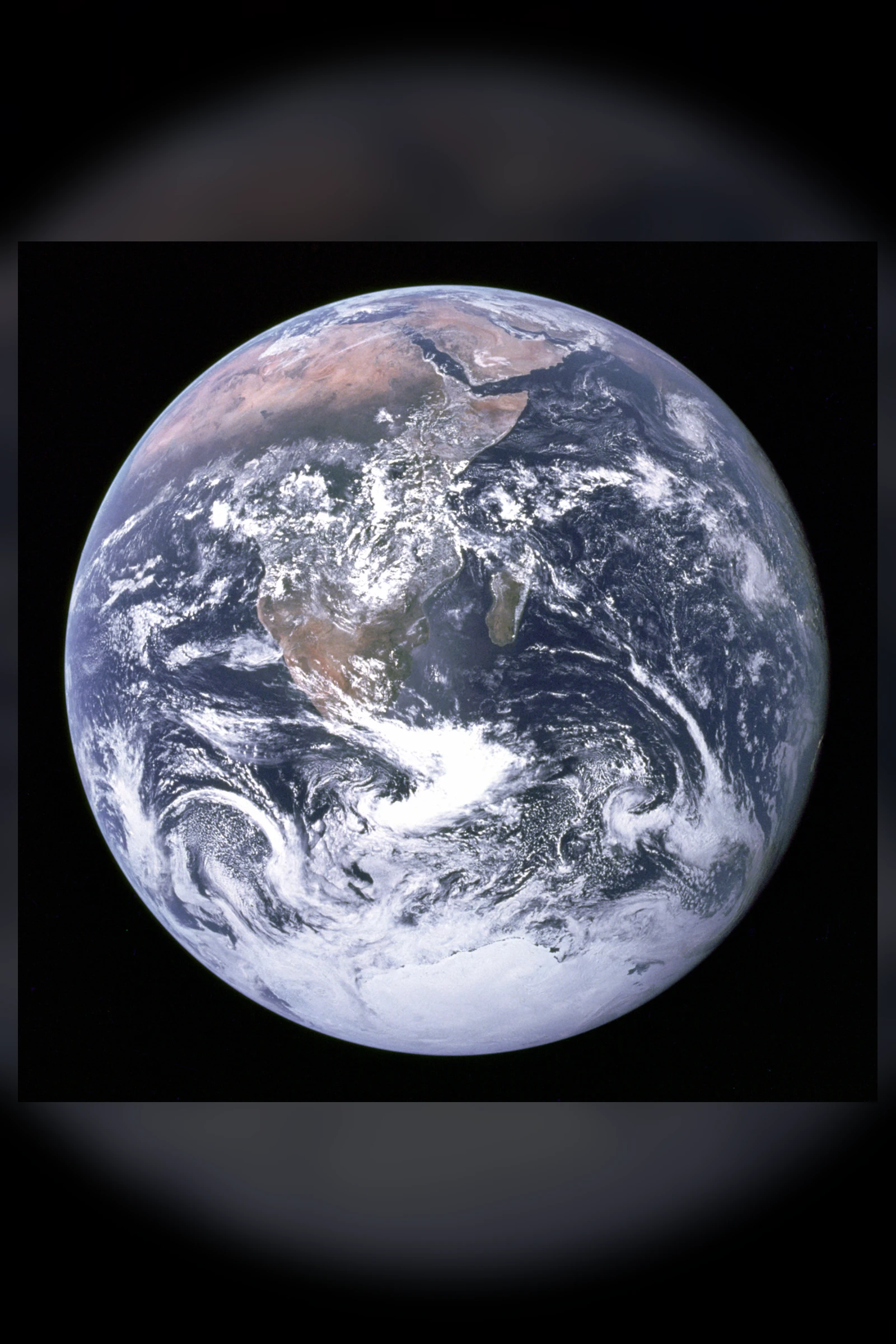
Gaia is one word doing three jobs. It is Gaia, Inc., a Nasdaq company in Louisville, Colorado, streaming more than 10,000 titles on yoga, healing, consciousness and what its annual report calls "an alternative to mainstream media." It is the Earth: the Greek goddess, and the hypothesis James Lovelock and Lynn Margulis named after her. And it is a voice, in print since 2005, in which the planet says "I."
April 2010. In under seven weeks the ground has moved under Haiti and under Chile. Readers send their questions to a channel named Pepper Lewis, and the answer comes back in the first person, from the ground itself. An apology, it says, "is not entirely in order." Then:
"Please know that I am careful, concerned and deliberate in my movements."
Those words were posted on April 5, 2010, on a website, by a woman, in the voice of a planet of six sextillion tonnes.
The company has a 300-person studio where channels perform live. The scientists have 3.5 billion years of air. And each of the three has put the same strange thing in writing. The 1999 prospectus: "the Earth is a living entity." The 1974 paper: the biosphere can act "as a single entity." The channels: "I."
Only one of them files with the SEC.
A Walk in Bowerchalke
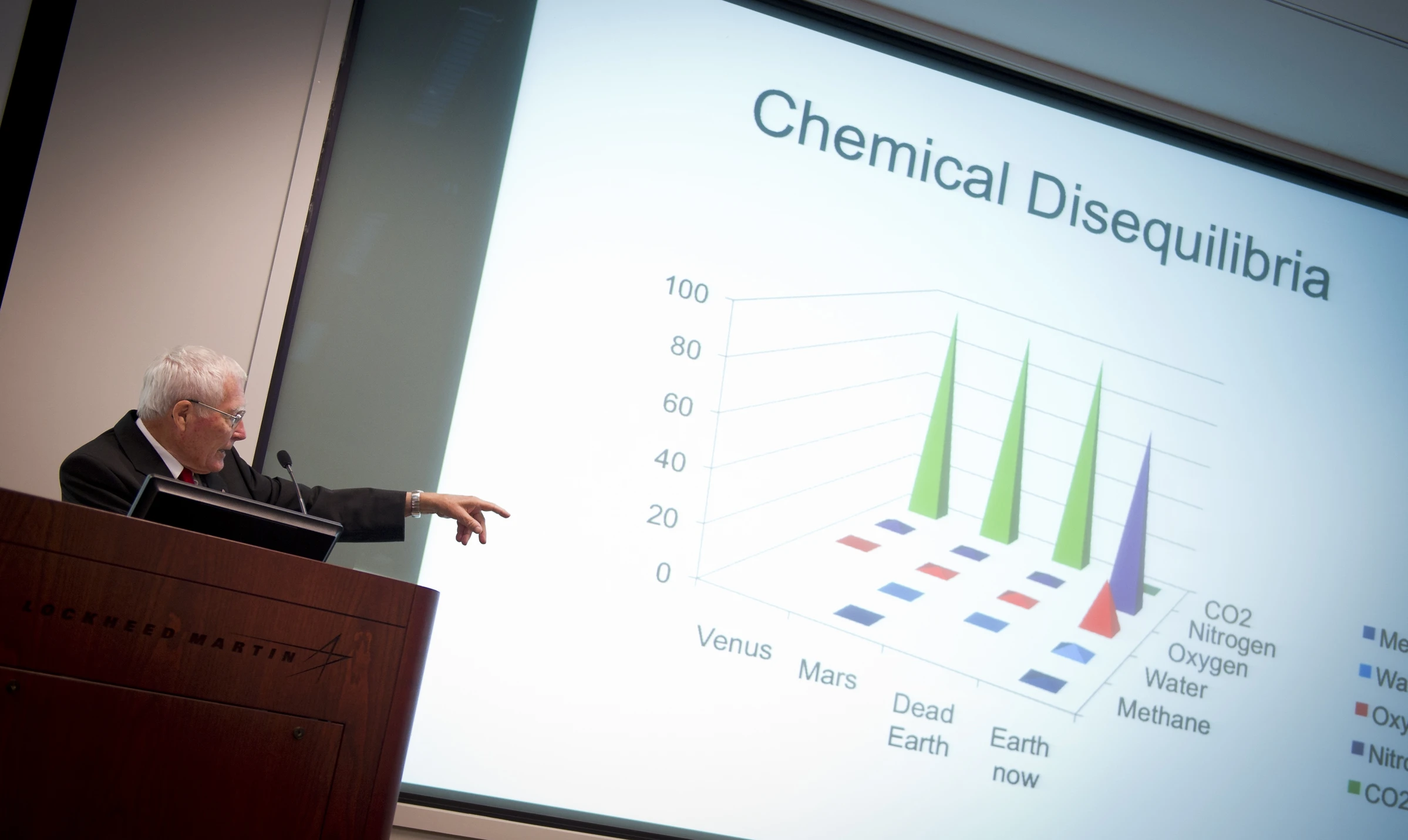
The word starts in the ground. In Hesiod's Theogony, Chaos comes first, "but next wide-bosomed Earth." The Greek name is Gaia. She bears the sky and the Titans, and when the sky hides her children inside her, she makes a sickle of grey flint and hands it to her son. A Homeric hymn calls her "mother of all, eldest of all beings." Aeschylus opens the Eumenides at Delphi with a priestess praying first to "the first prophet, Earth."
The first prophet. Before Apollo, on that telling, the seat belonged to the planet.
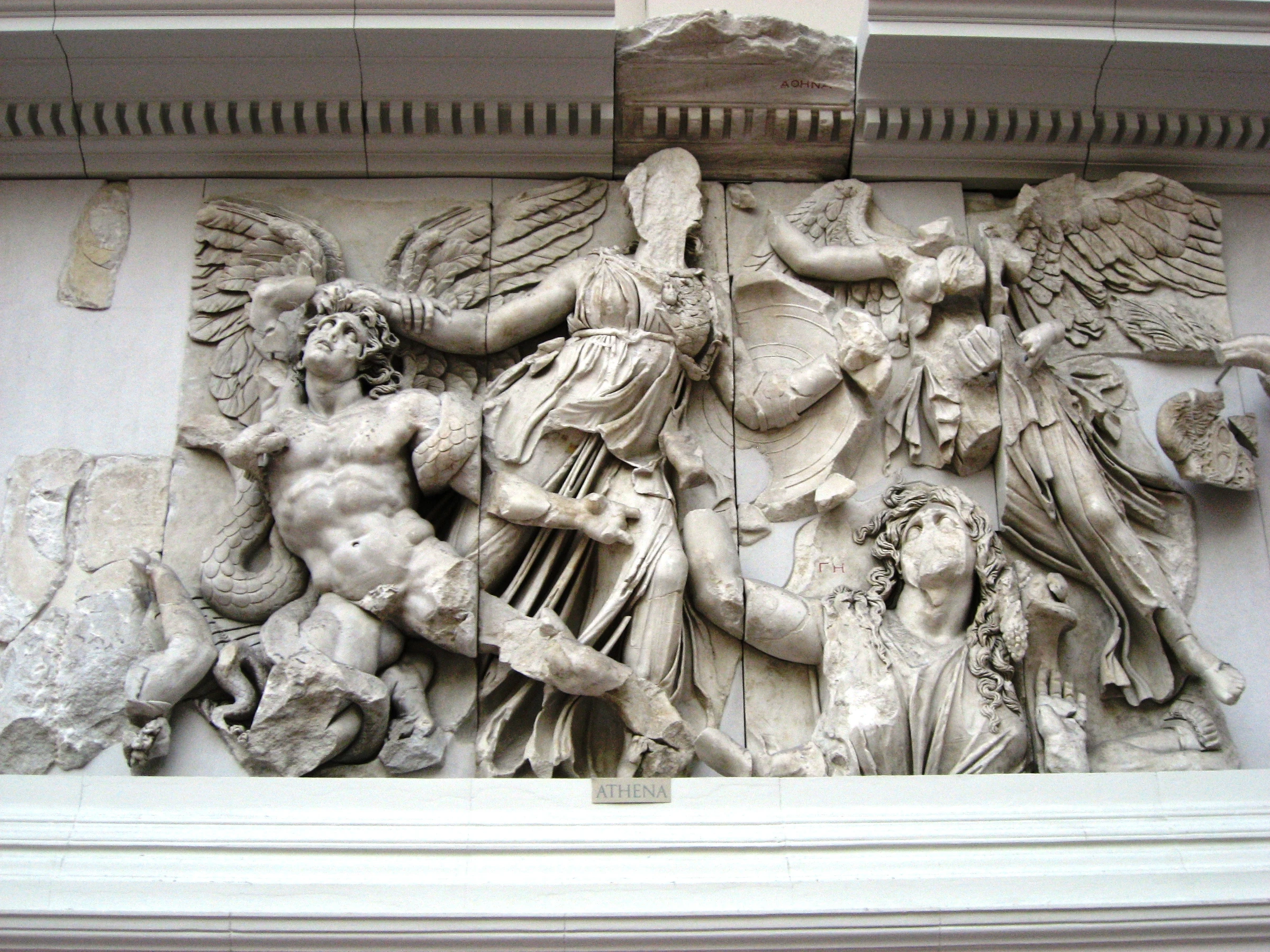
In 1967 Dian Hitchcock of Hamilton Standard and James Lovelock of the Jet Propulsion Laboratory asked how to find life on another world without landing. Read the air. Earth's holds methane at 1.5 parts per million beside oxygen, two gases that destroy each other. Something has to keep making them.
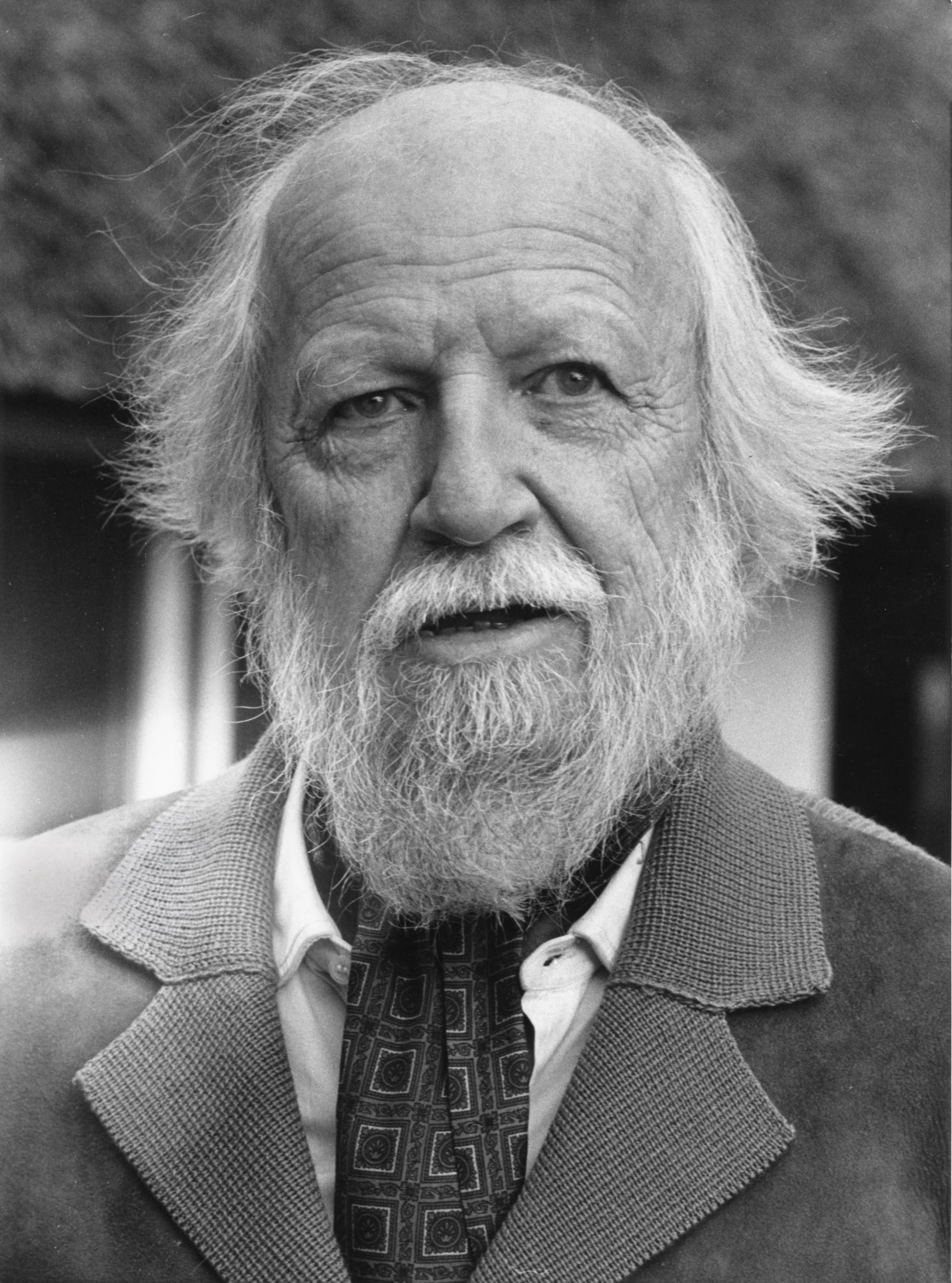
Lovelock lived in the village of Bowerchalke, and a near neighbour was the novelist William Golding. "He said I'd call it Gaia, and for twenty minutes we walked on," Lovelock recalled. He had heard "G-Y-R-E." Then: "no, no, no, I meant 'G-A-I-A'."
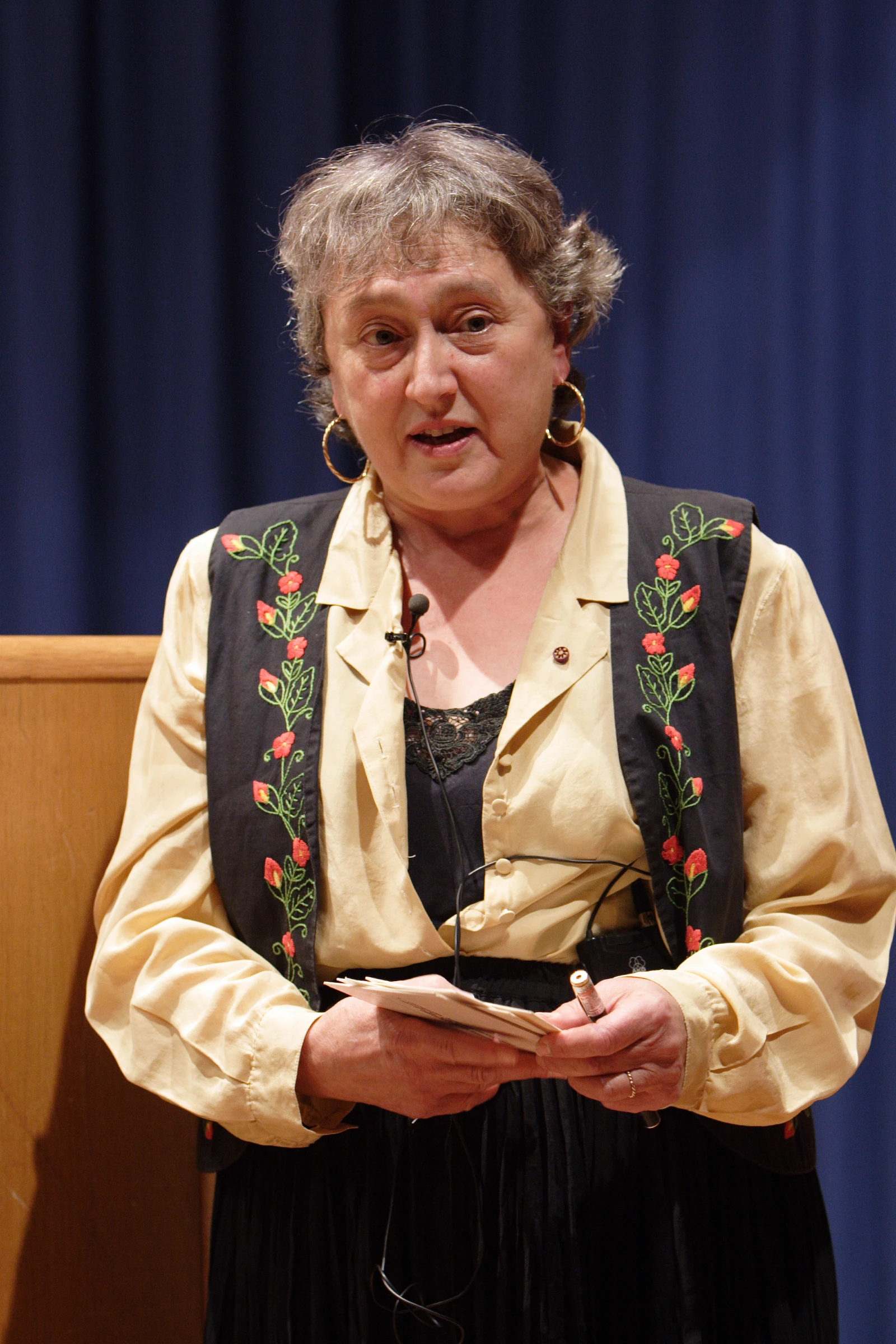
In 1974, in the journal Tellus, Lovelock and Margulis offered the hypothesis "at least for entertainment and for the induction of new questions about the Earth."
A Fusion of the Words
Jirka Rysavy left Czechoslovakia in 1984 and took a job at a Boulder print shop for $3.35 an hour. On July 7, 1988, he incorporated a Colorado company that began as a recycled-paper catalog. The prospectus for its 1999 share offering explains the name: "Our name, Gaiam, is a fusion of the words "Gaia" and "I am."" It goes on to "this ancient philosophy that the Earth is a living entity." Which puts the living Earth in a federal offering document.
In 2016 Gaiam sold its brand business for about $167 million, and the contract required it to "cease operating under the name Gaiam, Inc." and become "Gaia, Inc." By the company's own etymology, the buyers walked off with the "I am." What the contract left it was the goddess.
Today it reports 112 full-time employees, $99.0 million in 2025 revenue and a founder with about 74 percent of the vote: "no change of control can occur without Mr. Rysavy's consent." Darryl Anka brings Bashar to its screens. And in one 11-minute meditation episode, in the company's words, "author Sarah McCrum channels the voice of Gaia."
Gaia streams Gaia.
What Lovelock and Margulis Put on the Table
The Sun, the 1974 paper says, has brightened by "at least 30 %" since life began. A planet of rock and weather should have changed with it. Earth's surface, Lovelock argued, stayed between ten and twenty degrees centigrade for more than three billion years.
The air holds 21 percent oxygen. Above 25 percent, the paper warns, "even trees in rain forests might be in hazard from fire." By Lovelock's figures the rivers would salt the sea to its present 3.4 percent in about 80 million years. The sea is far older than that. Six percent is lethal. It sits at 3.4.
Their reading: "early after life began it acquired control of the planetary environment and that this homeostasis by and for the biosphere has persisted ever since."
Not life fitted to the Earth. On their reading, the Earth fitted to life.
In 1983 Lovelock and Andrew Watson built a toy to show that no foresight was needed: an imaginary world of black and white daisies under a brightening sun. "Regardless of the details of the interaction, the effect of the daisies is to stabilize the temperature."
The Planet in the First Person
Lovelock himself went past his papers. The Ages of Gaia, in 1988, has a chapter called God and Gaia, where he wonders whether Mary might be another name for her.
By 2010 Light Technology Publishing had four Gaia Speaks titles out through Pepper Lewis, who warns that "my role as a channel is not that of a news reporter." Her Gaia softens nothing. "Earthquakes are not natural disasters as much as they are human disasters." A tremor, she says, is a shrug: "What do you feel when you shrug, or curl your toes, or crack your knuckles?" Her Gaia has the Andes rising in eight thrusts, "observed and recorded by beings much like yourselves who resided on Mars at the time."
Tom T. Moore, a film distribution executive in Plano, Texas, puts questions in meditation to what he calls the soul of the Earth, and in 2025 published two volumes of Conversations with Gaia. A Vesuvius eruption, he reports, sits with Gaia "waiting for the approval of the souls living there." In the Netherlands, Pamela Kribbe says she began receiving Earth in 2007. "I am the voice of Earth, and I salute you in joy." She reports seeing a young woman in a light-colored dress.
These are their claims, in a long American and European line of people relaying a distant voice, from George Adamski to Nancy Lieder's Zetas. This voice has an unusual address. It calls from underfoot.
If the Ground Is Listening
Set aside for a moment whether any of it is true. Ask the better question. What kind of world are we standing on if it is?
If Lovelock and Margulis are right, the air is not a setting. It is a product, the way a coral reef is a product. Every breath we take would be an output of something that has been running for 3.5 billion years without once being switched off.
If that holds, the long story of life changes shape. It would stop being a list of survivors and become the story of a planet that kept itself survivable under a Sun growing steadily hotter. Which would mean the thing that has lasted longest on Earth is no species at all. It is the arrangement.
Then us. On that reading our species would be neither its crown nor its guest. We would be a new part of it, burning buried carbon and changing the air. Timothy Lenton and Bruno Latour put it as a question in Science in 2018: "Could humans add some level of self-awareness to Earth's self-regulation?"
And if the voices are right, it has already been looking back. The questions sent to Pepper Lewis in 2010 would have reached the crust, and the crust would have replied. We would be living on a listener, one that tells us it is deliberate, that it does not feel fear or pain "in the grand scheme," that it never asked us to build our cities where we built them.
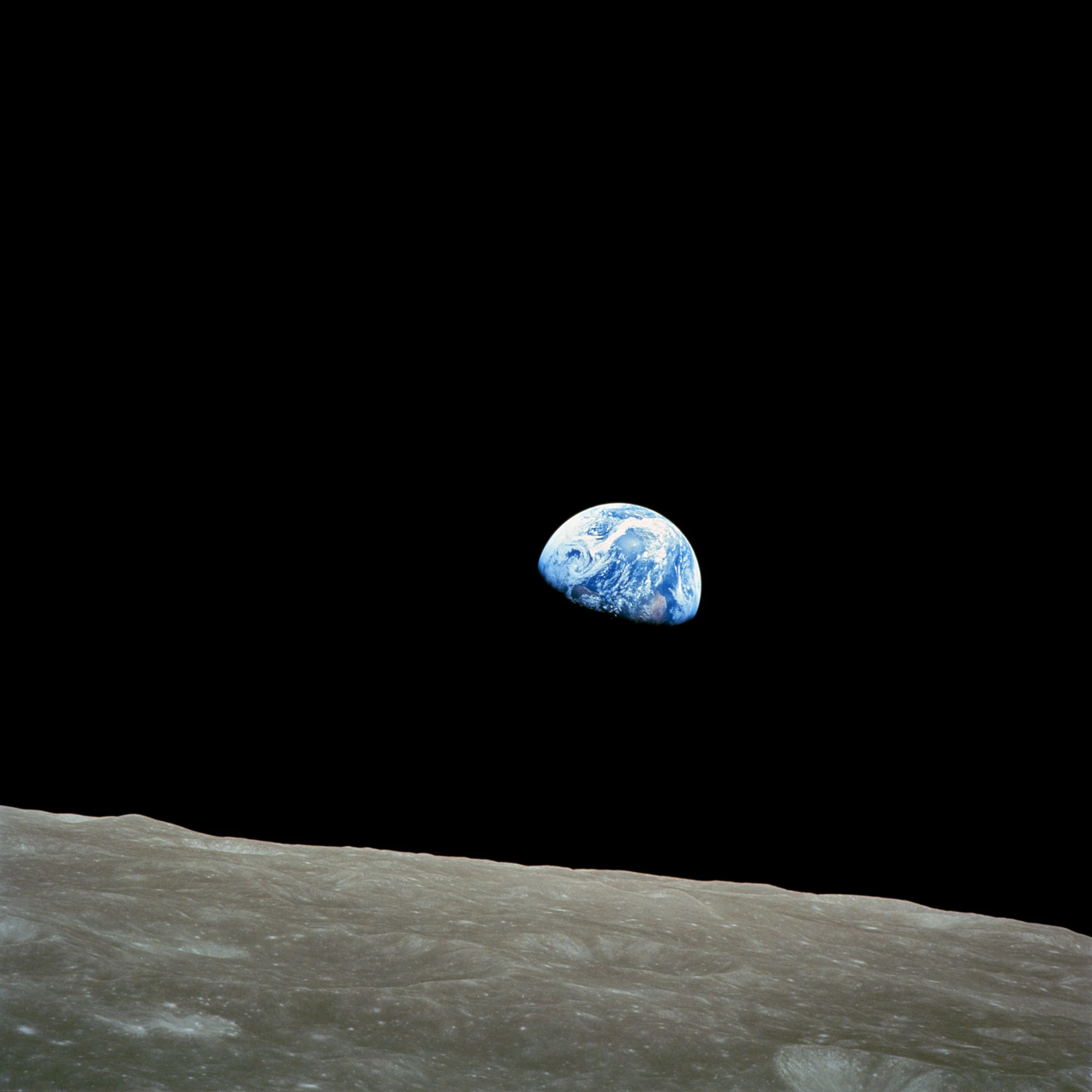
The question still in front of us is the plainest one. If a planet can be spoken for, who gets to do the speaking?
What the Specialists Did With It
The standard account in biology starts with W. Ford Doolittle in 1981. The magazine that ran his review put the objection in one line above his name: "How does a species of one evolve? There's nothing for natural selection to select among." His own charge was "the impossibility of imagining any evolutionary mechanisms" for the loops: how, he asked, does Gaia know her oceans are getting too salty? Richard Dawkins in 1982: "The Universe would have to be full of dead planets whose homeostatic regulation systems had failed." Stephen Jay Gould in 1988: "Gaia strikes me as a metaphor, not a mechanism." James Kirchner in 2002 called the whole "a mixture of fact, theory, metaphor, and wishful thinking." Toby Tyrrell's On Gaia concludes, in its publisher's words, that "the evidence doesn't stack up."
Margulis parted from Lovelock too. "Lovelock would say that Earth is an organism. I disagree with this phraseology." Those who want "an Earth goddess for a cuddly, furry human environment," she said, "find no solace in it." Any recovery, as she saw it, might come "in a world devoid of people."
On the voices, the record is what can be checked. In September 2011 Moore's Gaia put a magnitude 8 quake in Japan early in 2012 at 92 percent. The largest there in 2012 was a 7.3. An eruption of Vesuvius in 2012 stood at 60 percent. It last erupted in 1944. Lewis's Gaia said instruments would come to give six weeks' warning of major quakes; the U.S. Geological Survey says no scientist has ever predicted one, and it does not expect to know how "any time in the foreseeable future." Moore himself calls such forecasts "hit and miss."
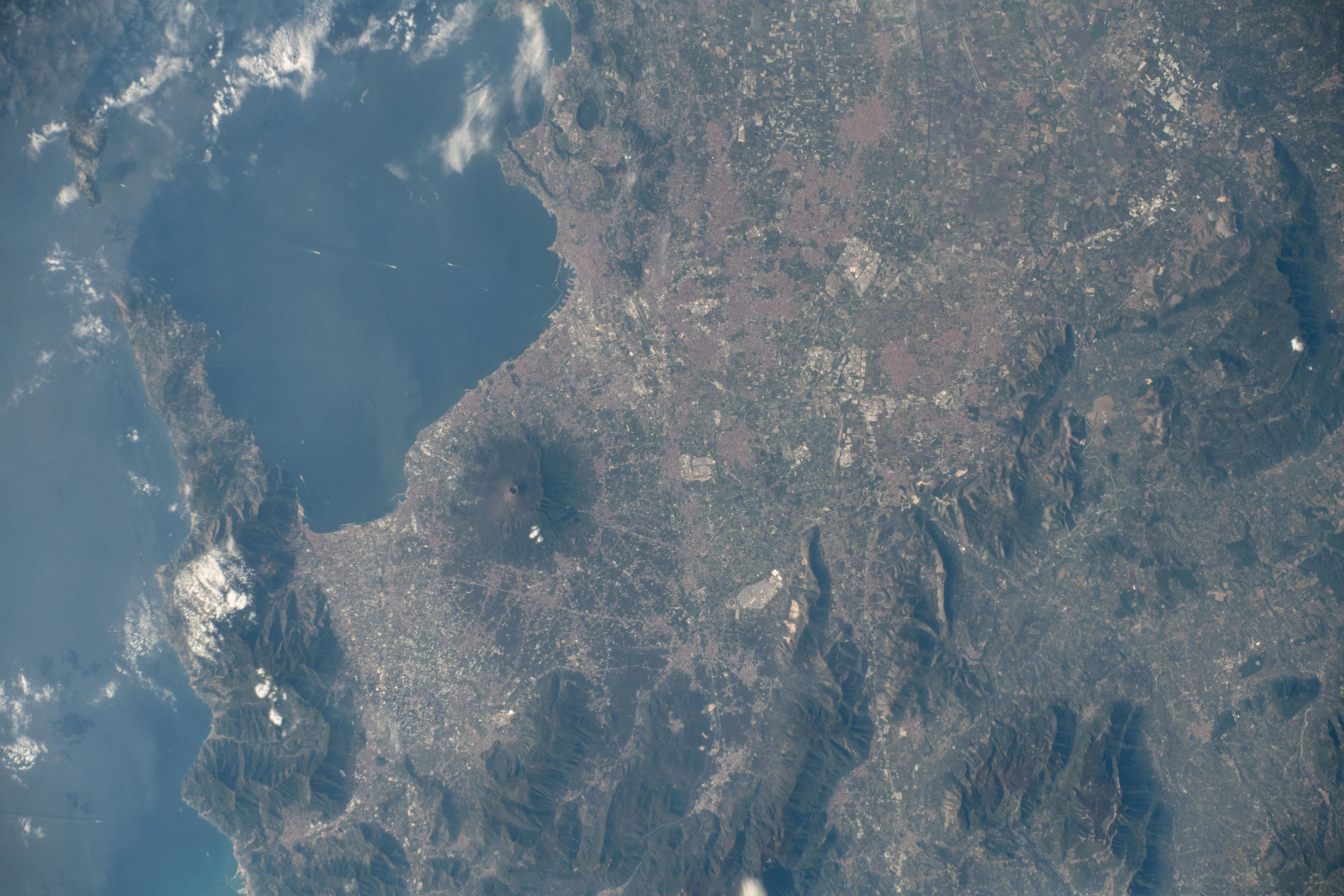
And the company's name, on the record, is a contract term.
What That Does Not Reach
The sharpest critic moved. "I've warmed to Gaia over the years," Doolittle wrote in Aeon in 2020, after five years spent trying to "Darwinise" it. In 2018 Lenton and colleagues proposed a route: "sequential selection," in which "systems that destabilize their environment are short-lived," so that what lasts on an old planet is what stabilized. And in 2001 four global research programmes signed the Amsterdam Declaration: "The Earth System behaves as a single, self-regulating system."
It never names Gaia. It does not say life is in charge. Which leaves a self-regulating Earth in a statement of mainstream science, with the goddess taken out.
Dawkins's dead planets cannot be counted from here. Nobody has yet seen a second living world, or a failed one. Peter Ward's Medea reading, that life is in the end suicidal, waits on the same count. And any world old enough to hold an observer will look stable to that observer: Kirchner's Douglas Adams puddle, admiring how well its hole fits.
The voices hold one thing back from the forecasts. Lewis's Gaia said in 2010 there was no "real or incremental increase" in earthquakes, and the USGS says the same: more instruments, not more quakes. Kribbe warns that "every message is filtered through the human mind." A 2012 PLoS ONE study scanned ten Brazilian mediums during automatic writing and found lower activity in several brain regions in the experienced ones. Its authors called it preliminary, and it says nothing about a source outside the writer. A 2022 preprint by Helane Wahbeh and colleagues put ten science questions to channelers and reported "low correspondence for each question across channelers."
And the voices are not strangers. Light Technology published Lewis and sells Moore. Lee Carroll shared the 2010 Weiser anthology Transition Now with Lewis, endorsed Moore's books and channeled Kryon on the company's stage in October 2025.
Official X looked for a line from Pepper Lewis to Gaia, Inc. It did not find one. The company's own 2024 explainer, What Does Gaia Mean?, walks through the goddess and the hypothesis and never says why the company carries the name.
One Planet, No Control
The company has stopped publishing the count: from 2026, its chief executive said, total subscribers are no longer a primary metric. Revenue grew 11 percent in 2025, then fell 5 percent to $23.3 million in the second quarter of 2026. In 2023 it paid the SEC $2 million, without admitting or denying the findings, over matters that included an overstated count of 562,000 paying subscribers. Its fight with a former Cosmic Disclosure host, Corey Goode, was still open in June 2026, after a bankruptcy judge ruled by default that the company's contract claims against him could not be discharged. In the 2024 order that cut Goode's own suit to one contract claim, Judge Daniel Domenico, reciting his story, allowed himself one aside: "It's not clear which is in the role of P.T. Barnum here, but it's apparent there is a lucrative market for all this."
The older word keeps spreading on its own: "Nature, or Pacha Mama" in Ecuador's 2008 constitution, International Mother Earth Day at the UN in 2009, a Bolivian law of 2010 calling her sacred.
A 2025 paper by Richard Boyle in Philosophical Transactions narrows the science to one test. A real Gaia must predict that any sustained life elsewhere comes with "an analogous system."
Which returns the whole thing to 1967, and to reading a stranger's air from a long way off. Methane beside oxygen on a world around another star would be the first entry in a second column.
Until then the sample is one planet. Several people say it has answered.
Questions This Leaves You With
Is there anything I can actually do with this?
Honestly, very little. The science runs on a clock of billions of years, and nothing in it tells you what to do on Tuesday. If you subscribe to the streaming service, you are buying a video library, not a position on the planet. If you read the channeled books, Kribbe offers a filter of her own: a message that is "judgmental, frightening, biased, or very dramatic in tone" gives "reason to seriously doubt its value." The larger question, what a species owes a world it is changing, belongs to everyone. Anyone selling you a date is selling something.
Does this sit against my faith?
It can cut either way, and serious people have argued both. A Reformed Christian magazine attacked Lovelock's God and Gaia chapter in 1991, quoting it line by line. Bolivia's law speaks from an Andean tradition of its own, not a borrowing from an English chemist. A Greek hymn had "mother of all" long before either. Official X will not tell you which way this falls for you.
Does this change what a human life is?
Hold your life against 3.5 billion years and it barely registers: one breath in a process that took no notice of you and will take none. That is one reaction. The other is that you are made of the arrangement, that the oxygen in your blood was put there by living things, and that you belong to the one part of it known to wonder about the rest. Margulis would not have flattered you on either count. You may find that small, or rare. Either is an honest place to stand.
What would change your mind, in either direction?
Name it now, before you are committed. Toward the voices: a dated, specific, surprising statement about the Earth, published before the event, from channels who have not read each other. High correspondence on blind questions, where Wahbeh's preprint found low, would count. Against: more forecasts missing at stated odds. Toward Gaia: living worlds with stable air, in numbers. Against: living worlds that keep ruining themselves, as Ward's Medea predicts. And decide now what you would accept as a miss.
How could a planet evolve at all?
This is the empty space, and it is real. Natural selection needs a population, and there is one Earth. Lenton's group names the problem flatly: "Selection amongst a population of interacting biospheres is not plausible." Survival alone may be enough. Or the stability may be the puddle's illusion, seen only because only a stable world could hold anyone to see it. Nobody has shown which it is, because nobody has a second planet to ask.
More photographs
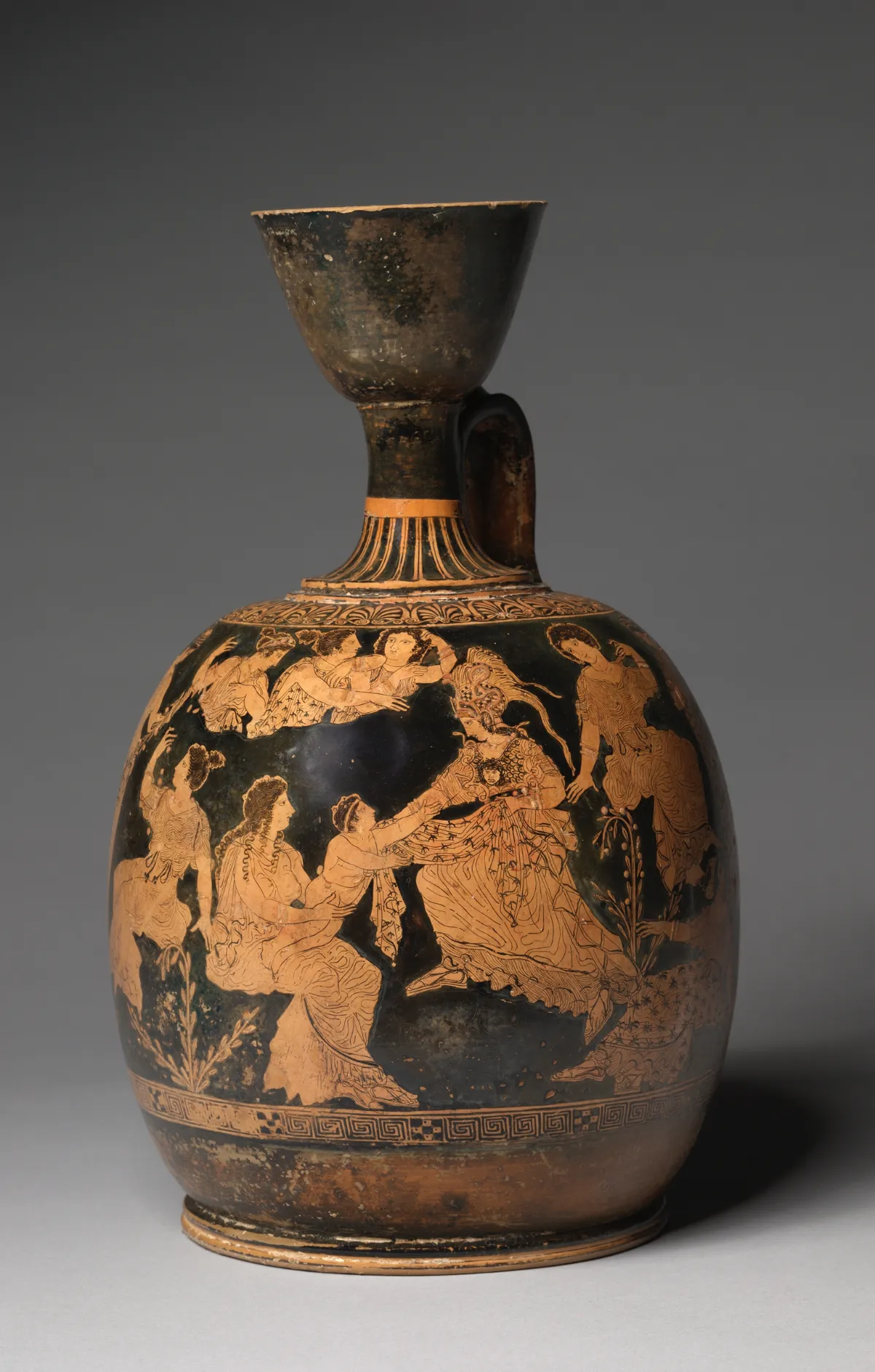
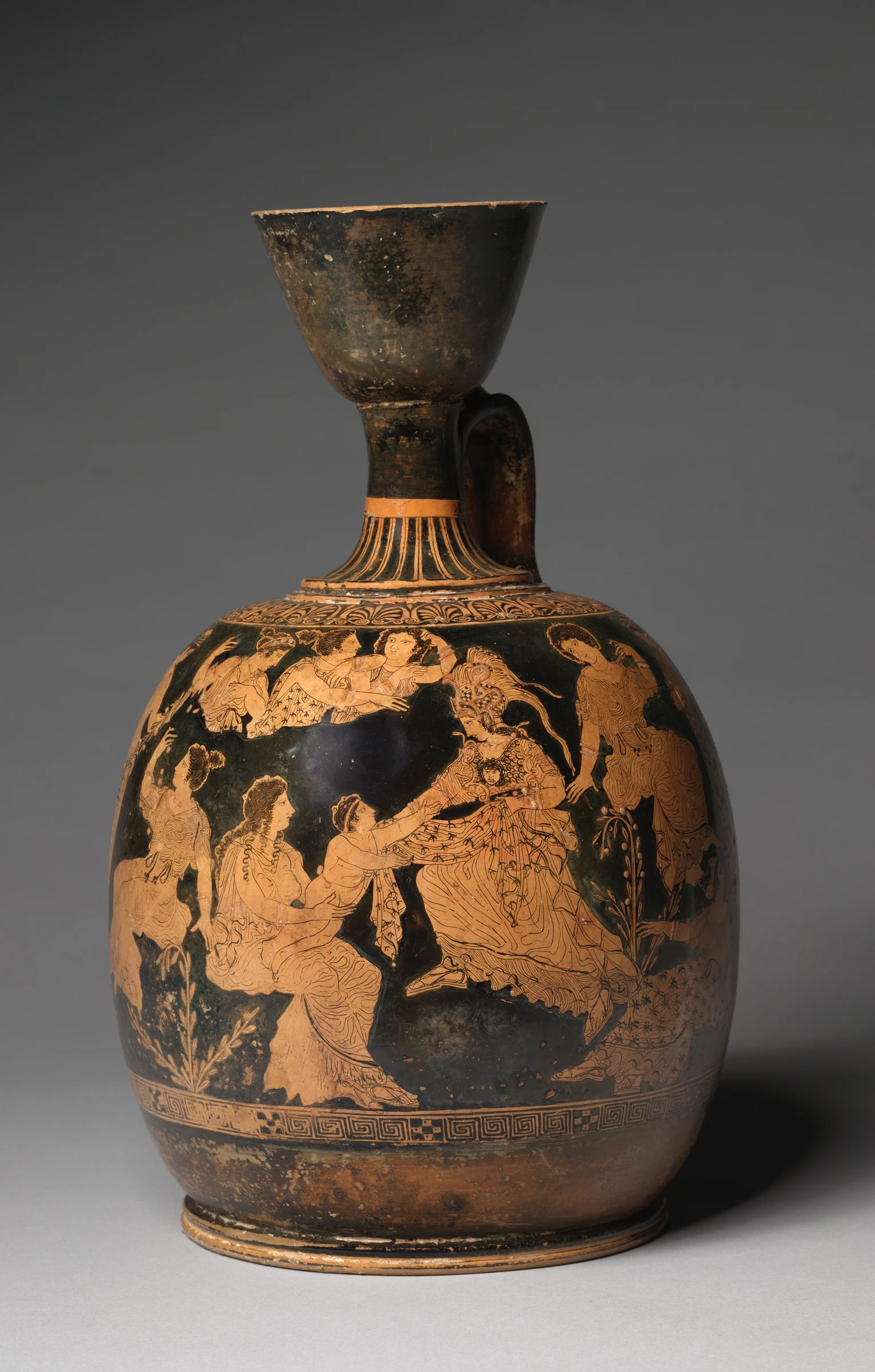
Ge, the earth goddess, hands the infant Erichthonios to Athena on an Athenian oil vessel, about 420-410 BCE. Attributed to the Meidias Painter, Cleveland Museum of Art, 1982.142, CC0. 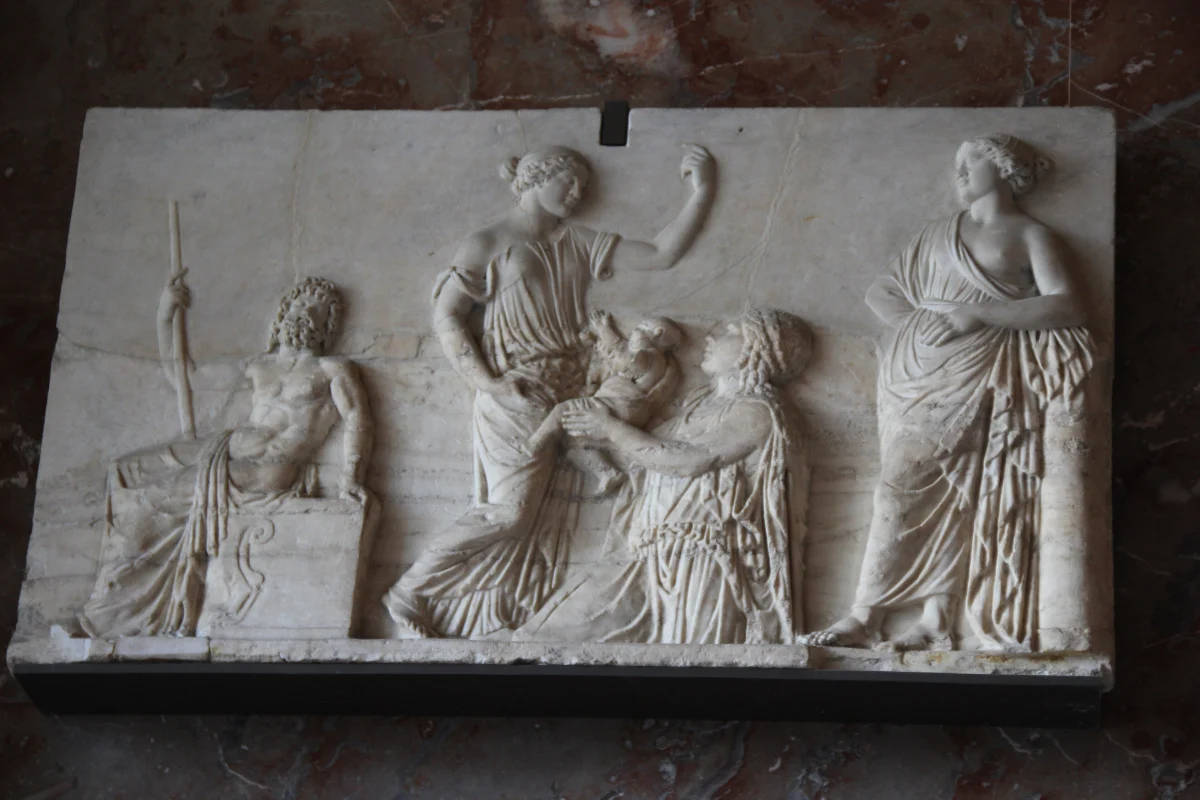
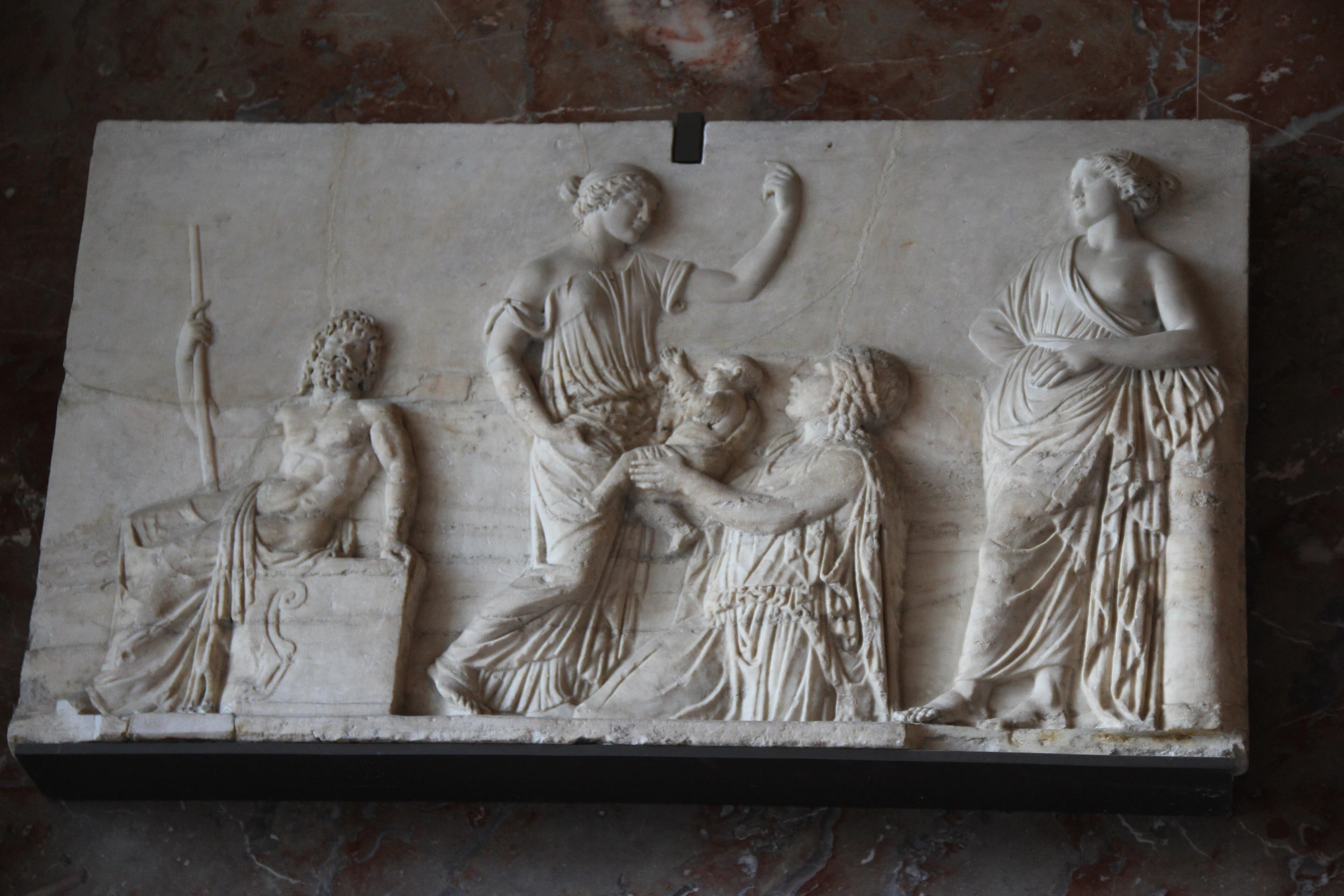
Marble relief of Gaia giving Erichthonios to Athena, about 100-150 CE, Louvre Ma 579. Photo: Gary Todd, CC0, via Wikimedia Commons. 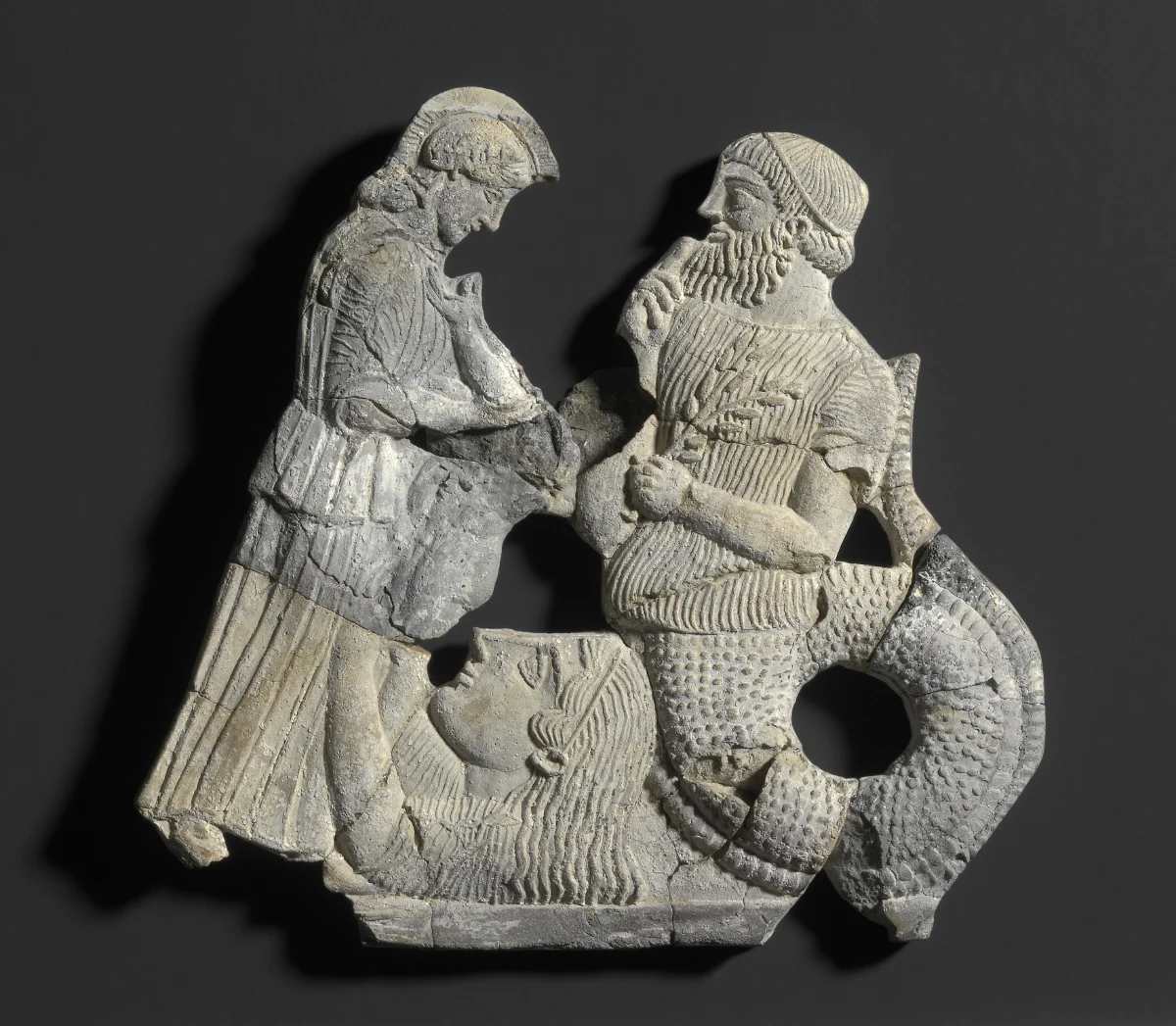
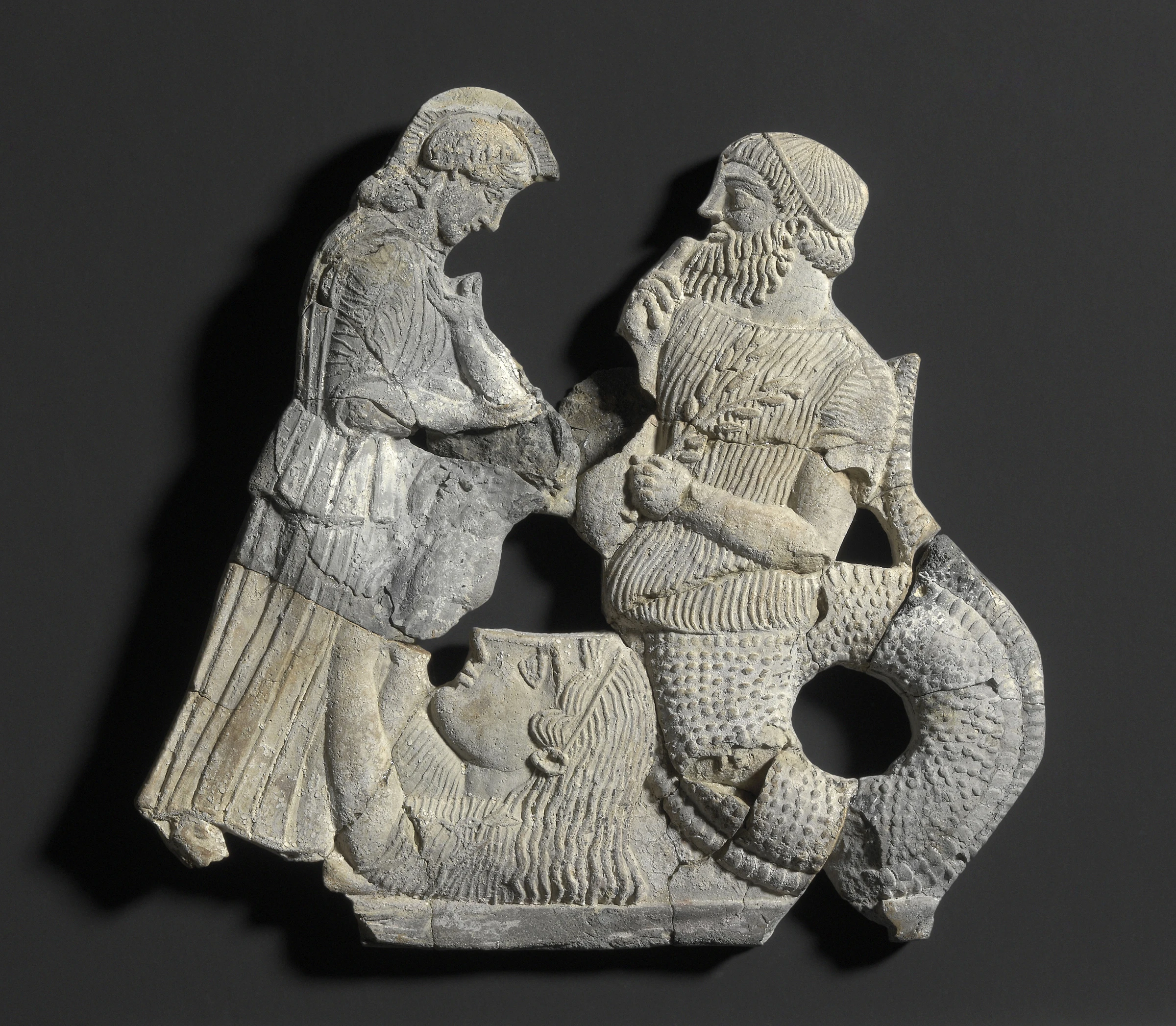
Terracotta relief of Ge lifting the child Erichthonios to Athena, first half of the 5th century BCE, 11 cm high, Berlin. Staatliche Museen zu Berlin, Antikensammlung, CC BY-SA 4.0 (creativecommons.org/licenses/by-sa/4.0), via Wikimedia Commons. Resized. 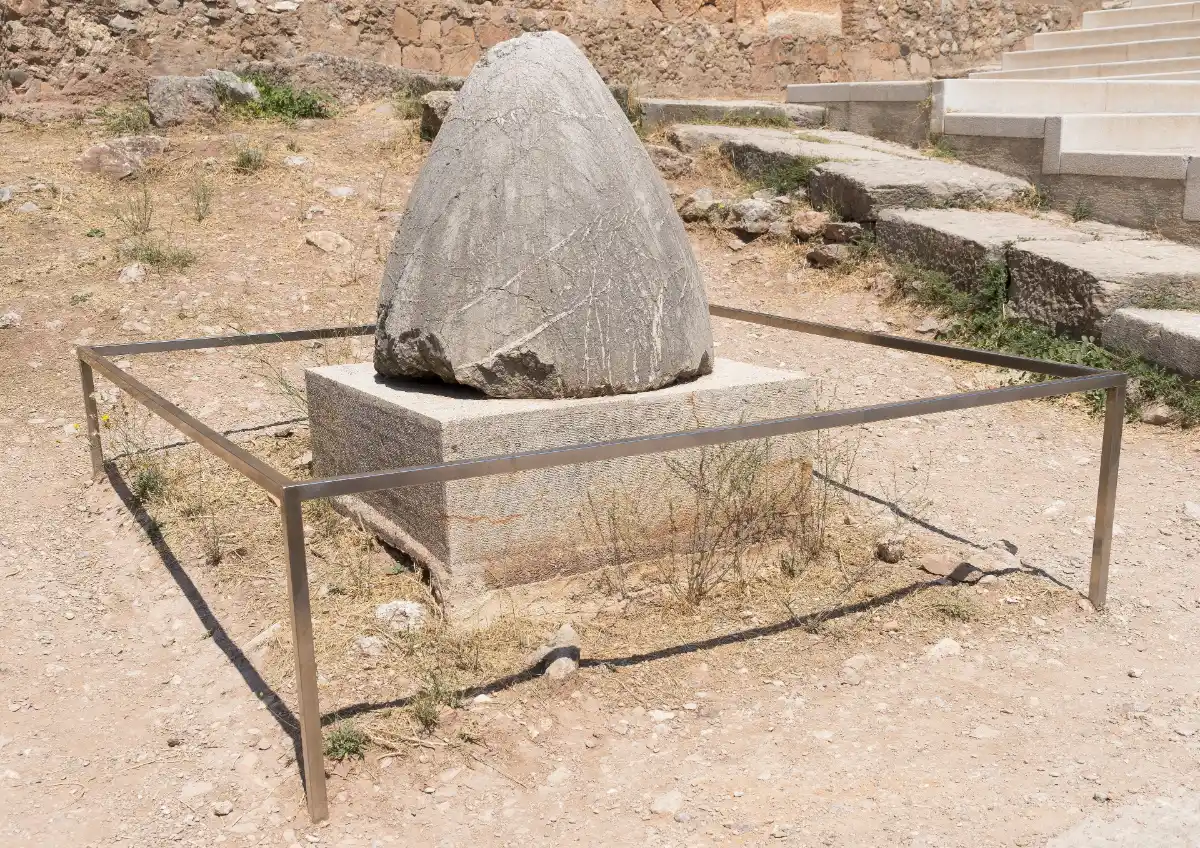
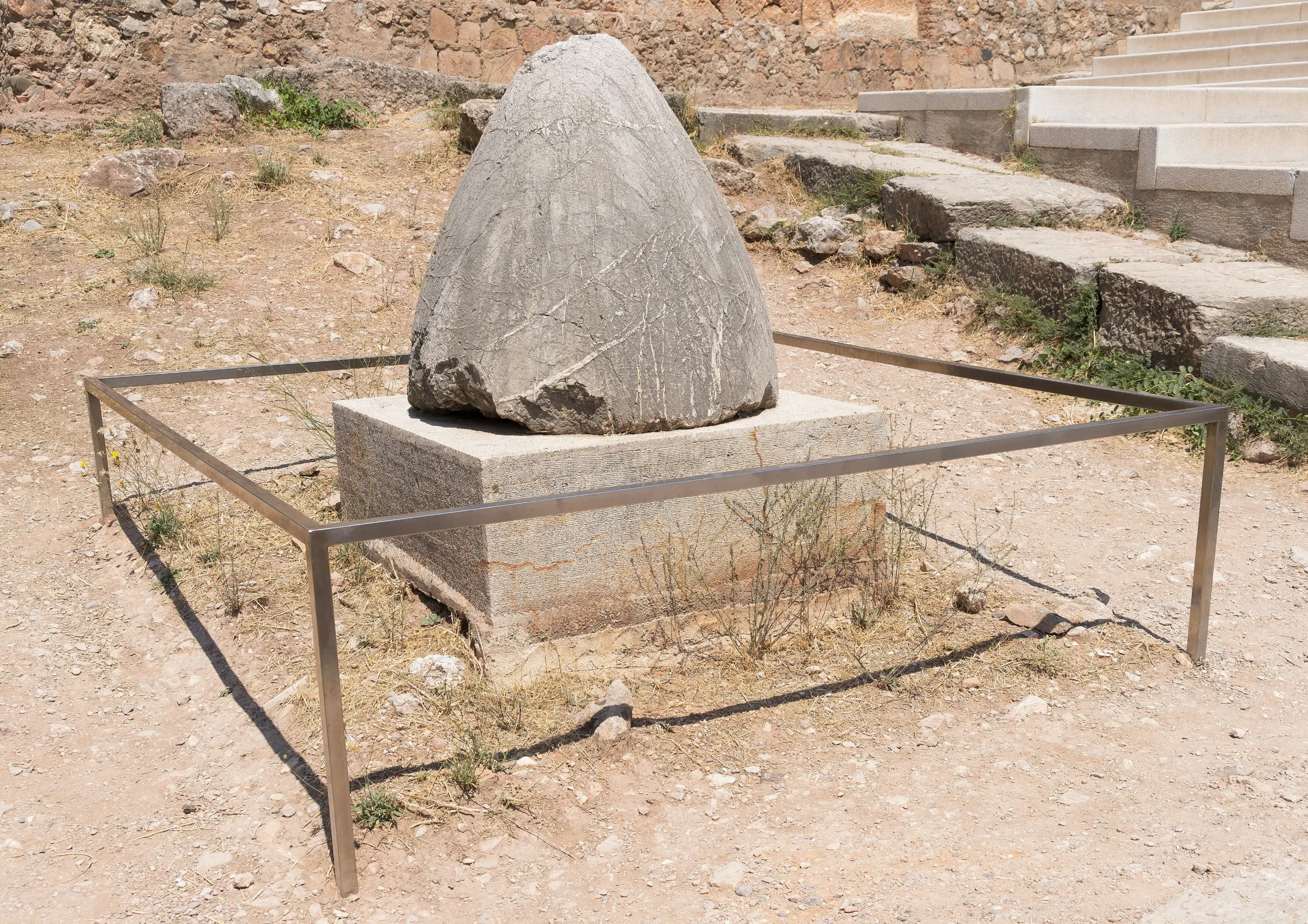
The omphalos stone on the Sacred Way at Delphi, in Greek myth the centre of the world. Photo: Jebulon, CC0, via Wikimedia Commons. 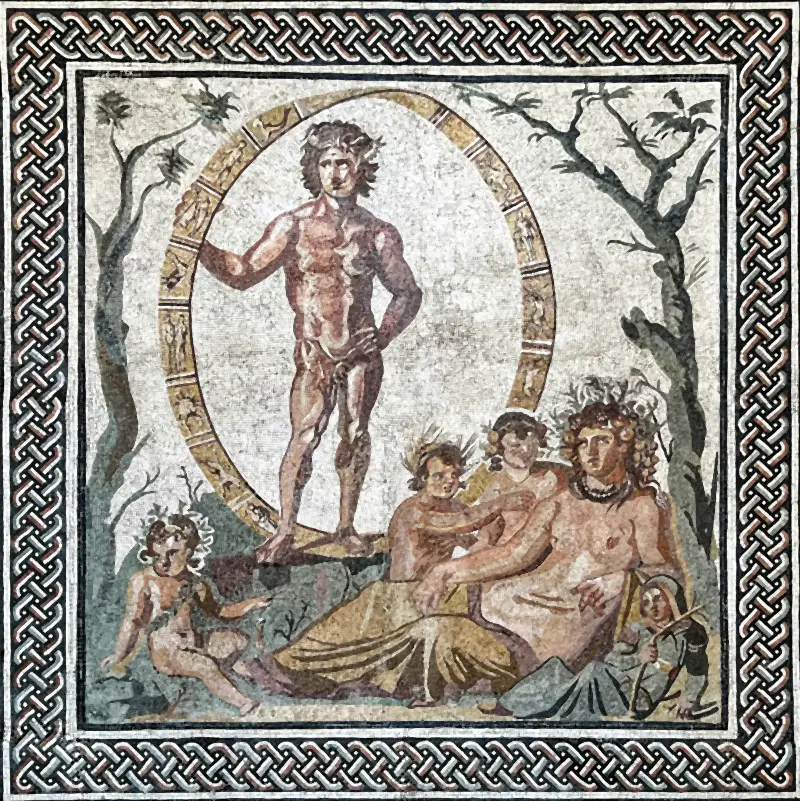
Tellus, the Roman earth mother, beneath the zodiac with four children for the seasons: a floor mosaic from Sentinum, about 200-250 CE, now in Munich. Photo: Burkhard Muecke, CC BY 4.0 (creativecommons.org/licenses/by/4.0), via Wikimedia Commons. Resized and smoothed. 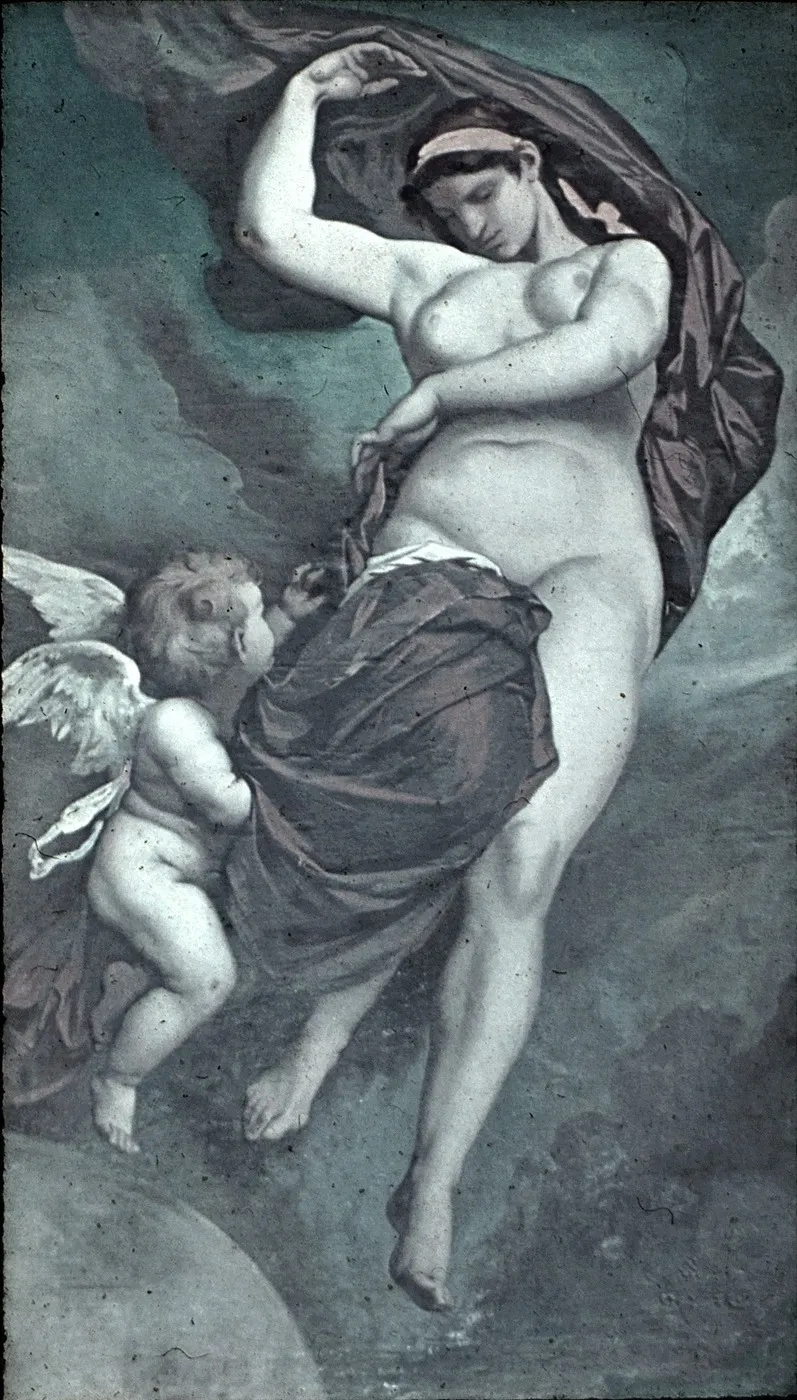
Anselm Feuerbach's Gaea, 1875, a ceiling painting for the Academy of Fine Arts Vienna. Anselm Feuerbach, 1875, Academy of Fine Arts Vienna, public domain, via Wikimedia Commons. 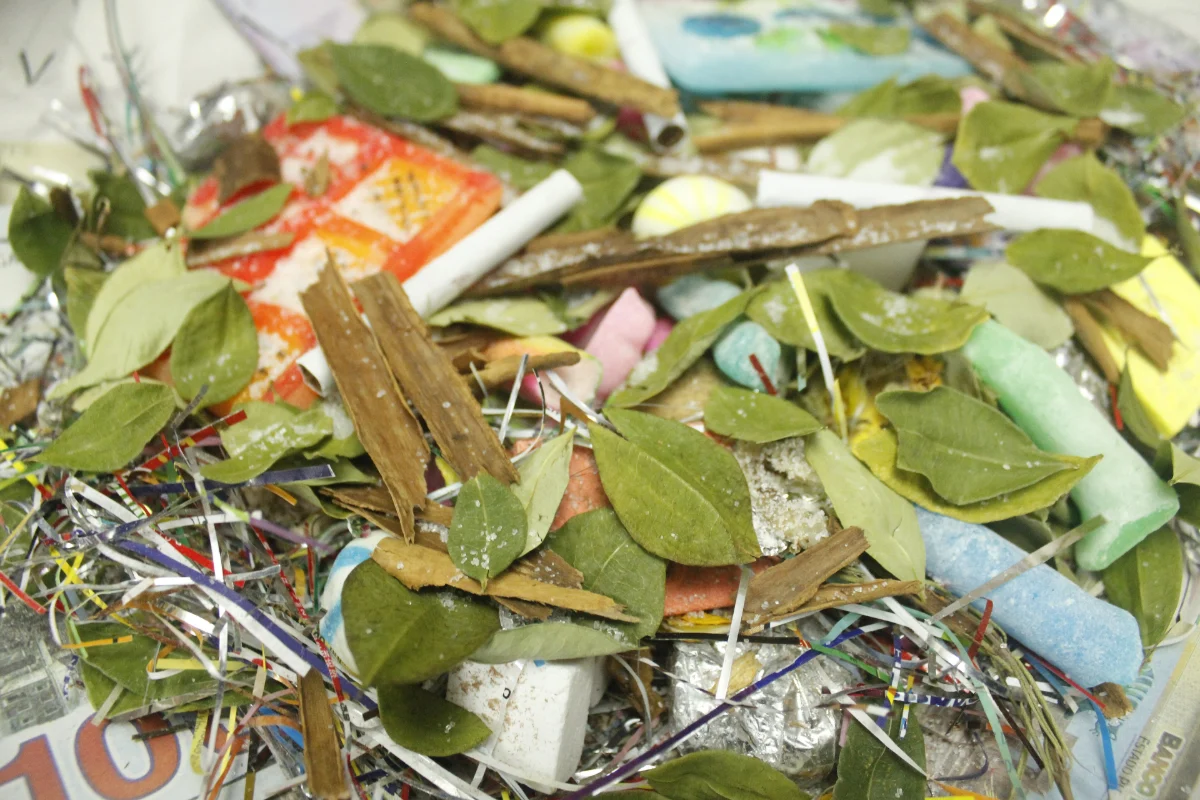
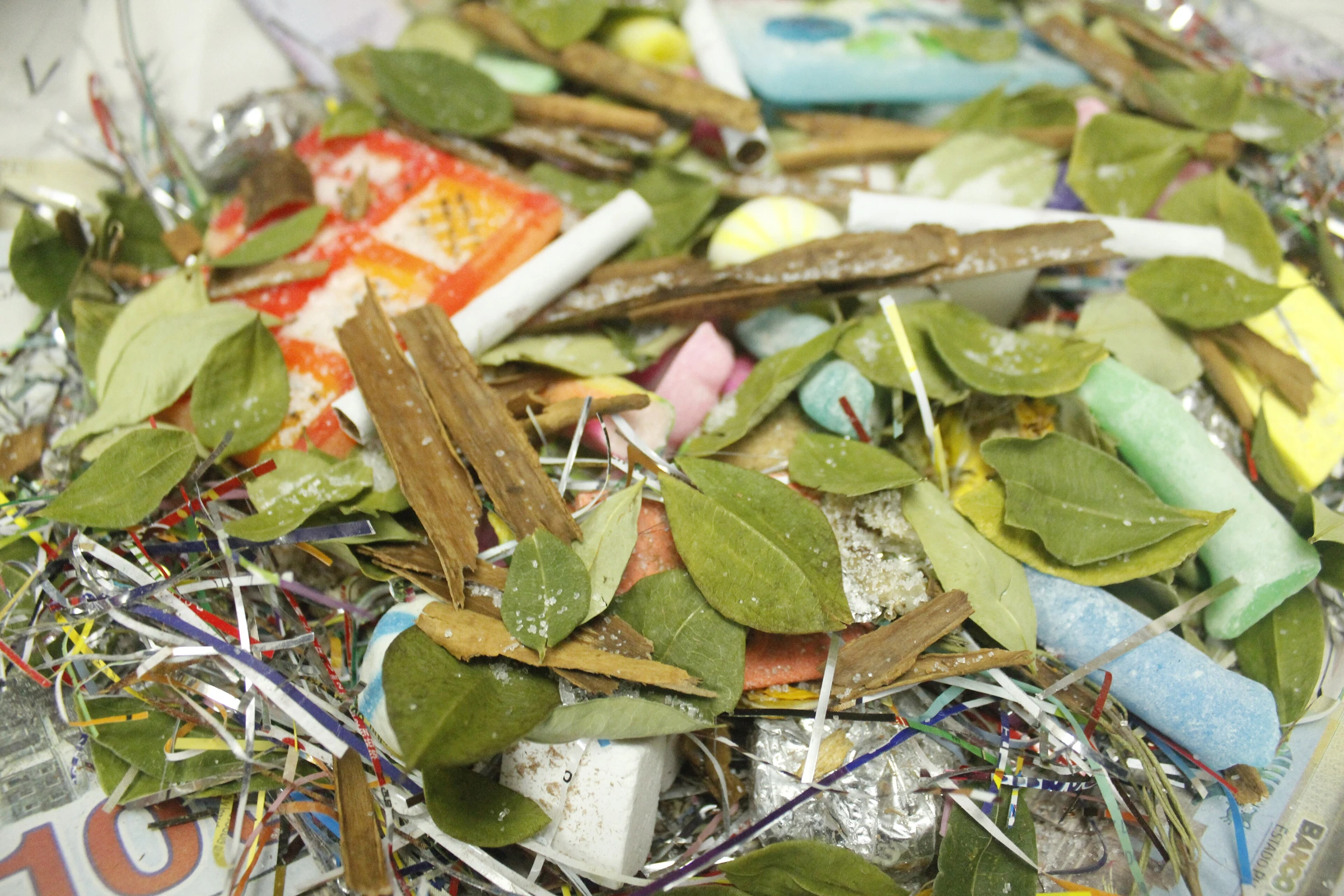
Sweets, coca and spices set out to be offered to Pachamama, 2023. Photo: Casi metro y medio, CC BY-SA 4.0 (creativecommons.org/licenses/by-sa/4.0), via Wikimedia Commons. Resized. 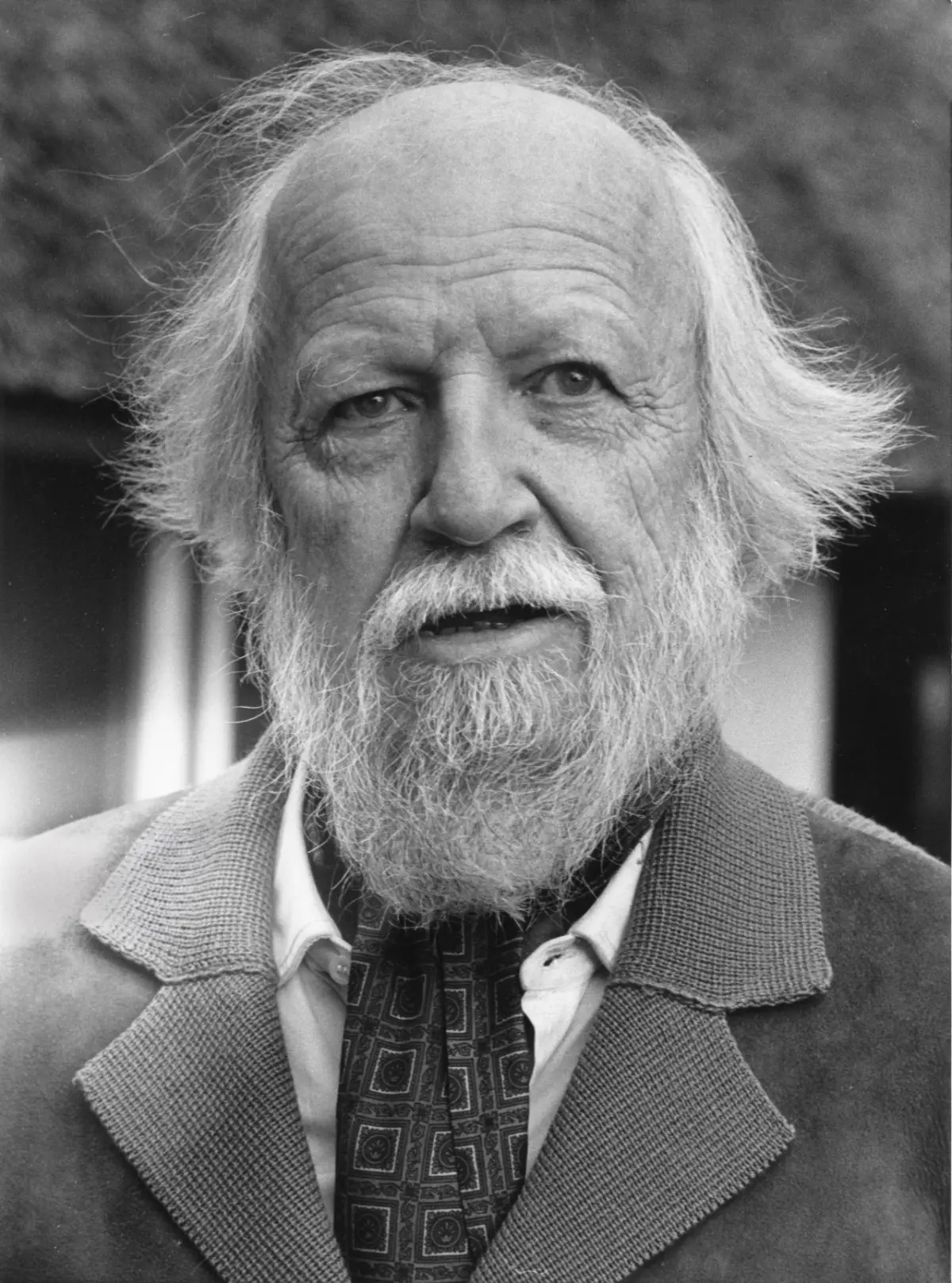
The novelist William Golding, 6 October 1983. He gave Lovelock the name. Unknown photographer, ANEFO, Nationaal Archief, CC BY-SA 3.0 NL (creativecommons.org/licenses/by-sa/3.0/nl), via Wikimedia Commons. Resized. 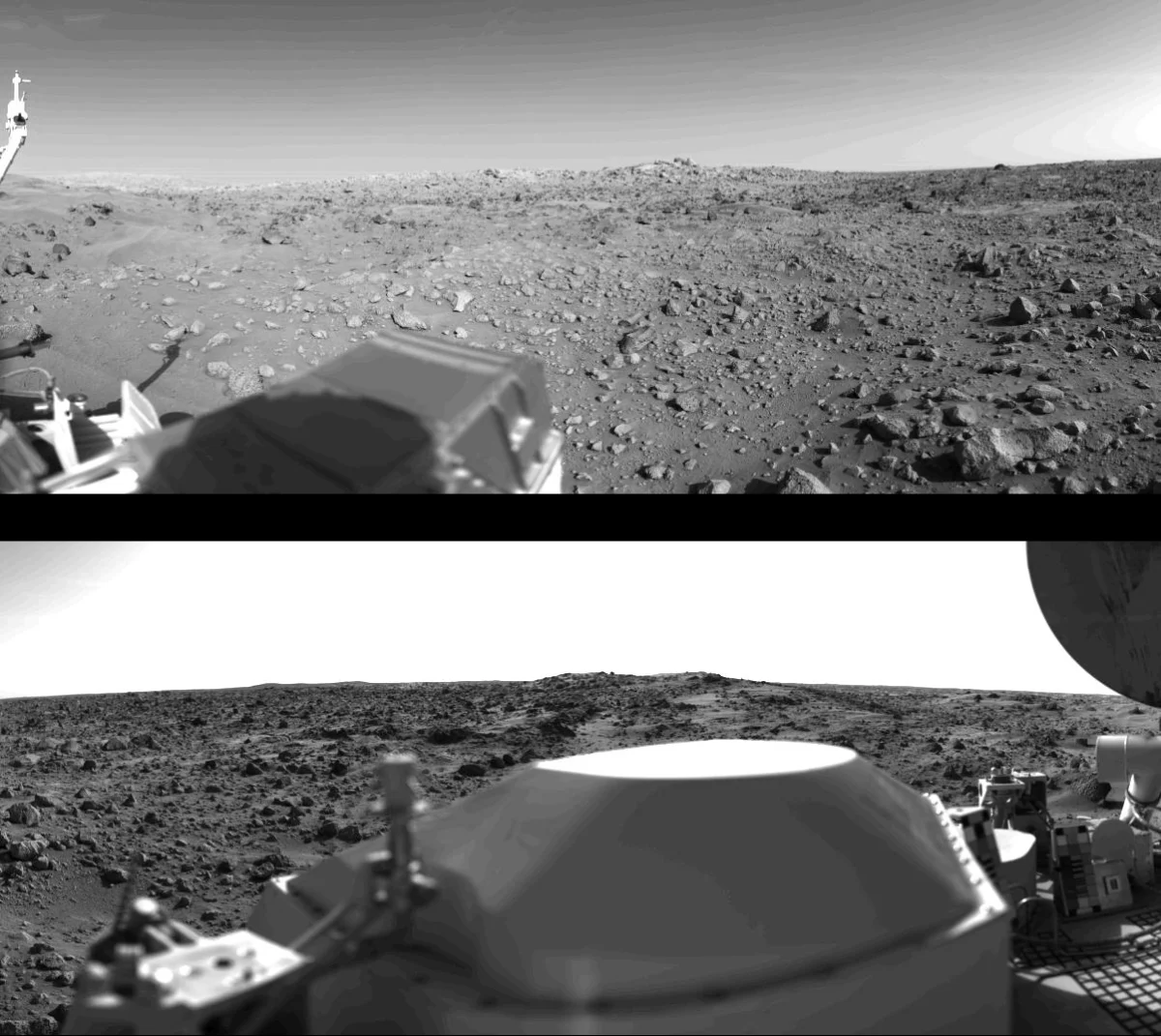
Viking 1's first panoramic view from the surface of Mars, 1976. NASA/JPL, Viking 1, 1976, public domain. 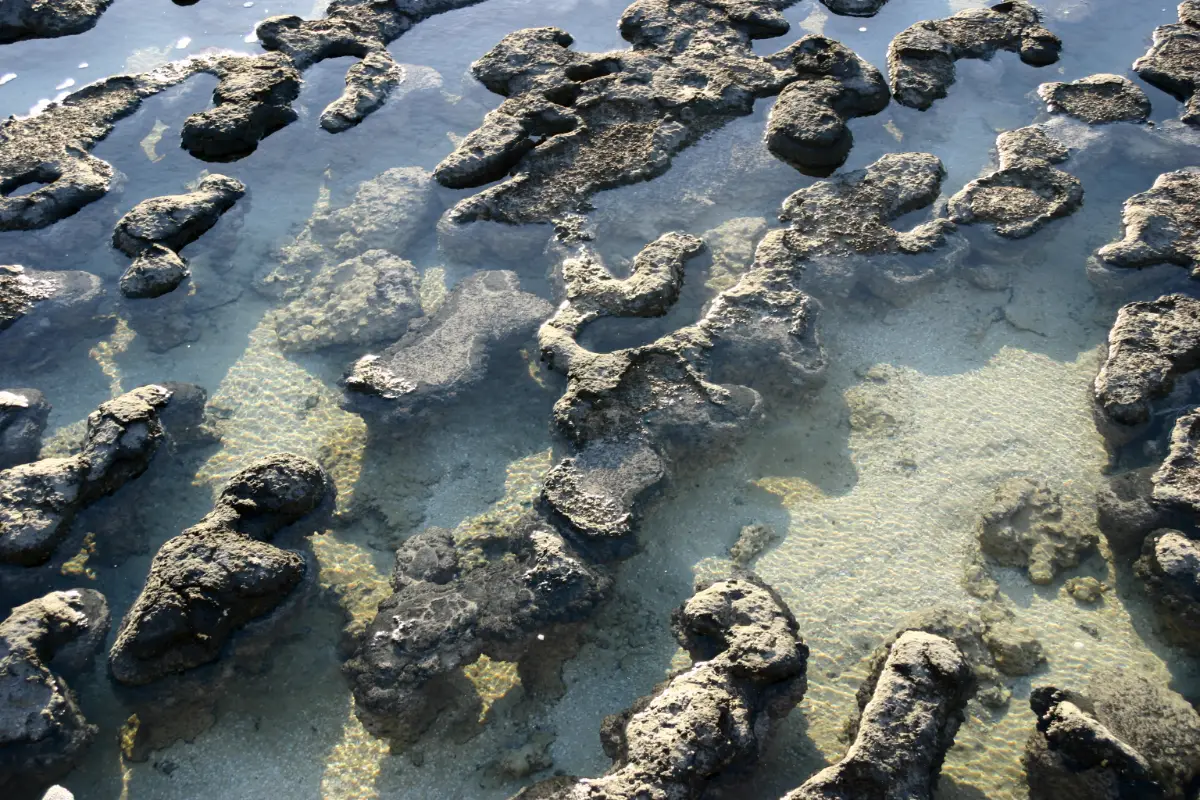
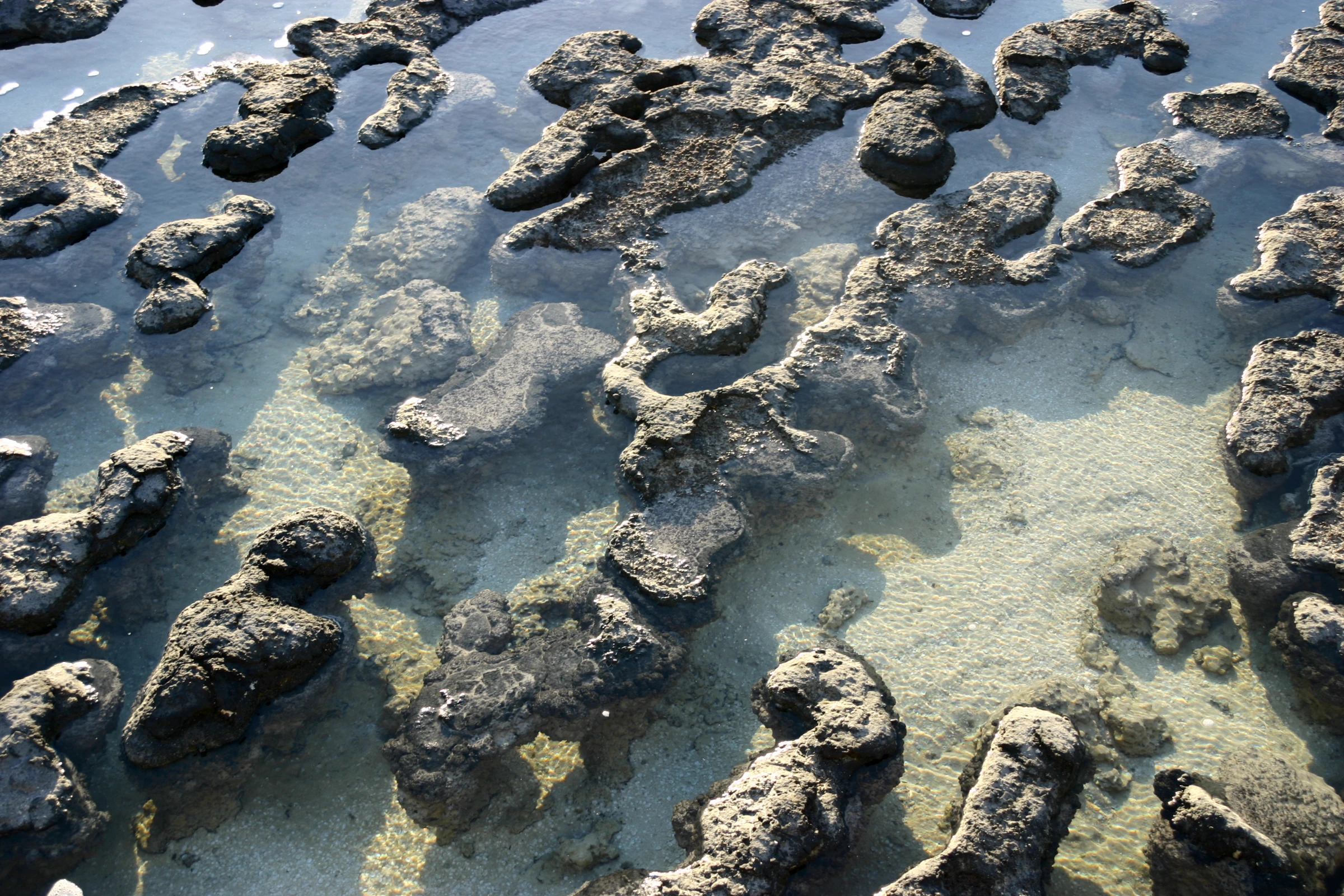
Living stromatolites at Hamelin Pool, Shark Bay, Western Australia. Photo: Martin Kraft, CC BY-SA 3.0 (creativecommons.org/licenses/by-sa/3.0), via Wikimedia Commons. Resized. 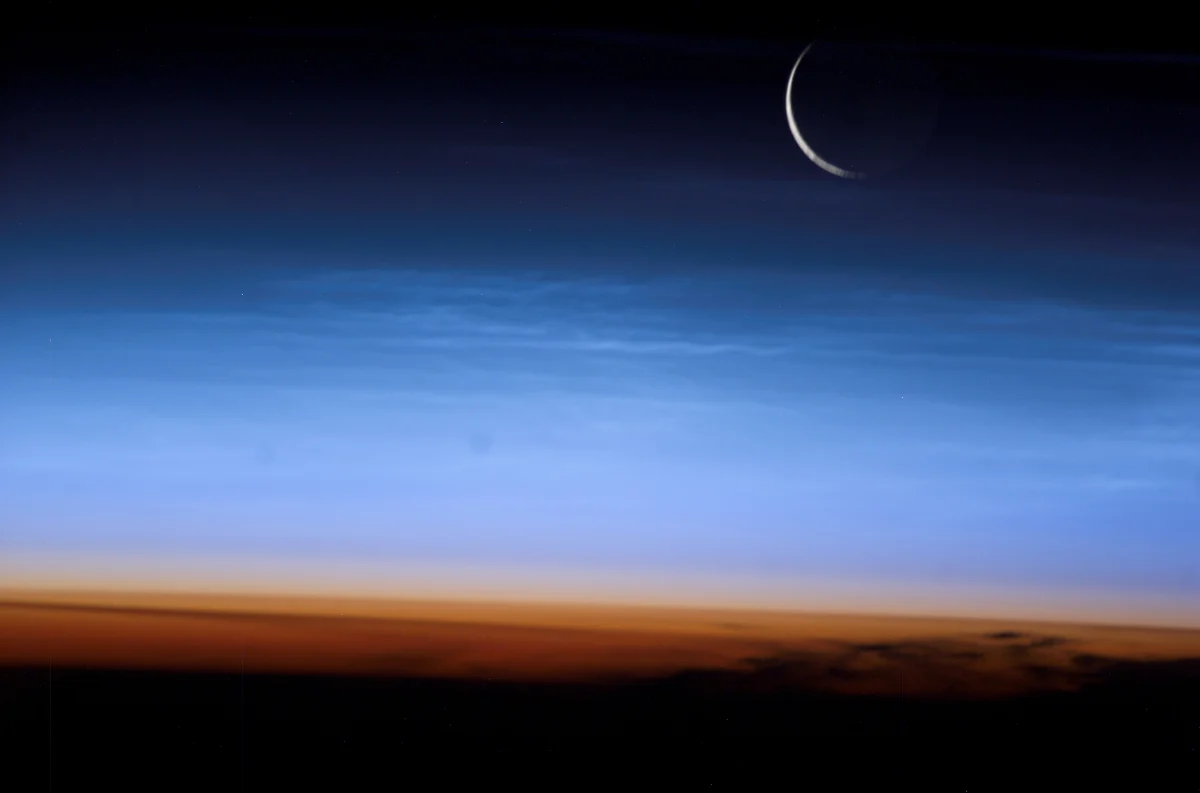
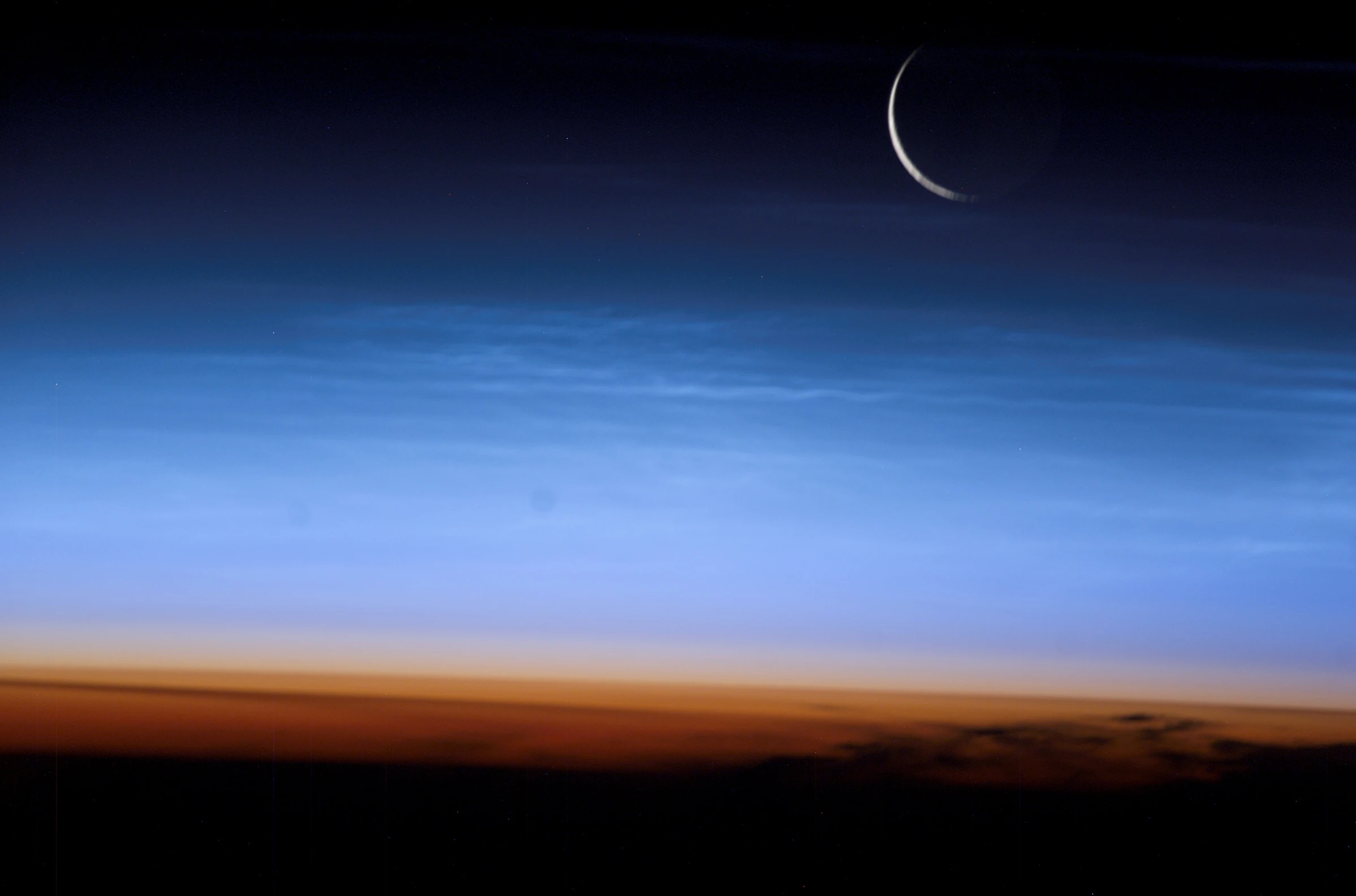
Earth's thin atmosphere edge-on from the International Space Station, 27 July 2003, with a crescent Moon above. NASA, ISS007-E-10974, 27 July 2003, public domain. Cropped. 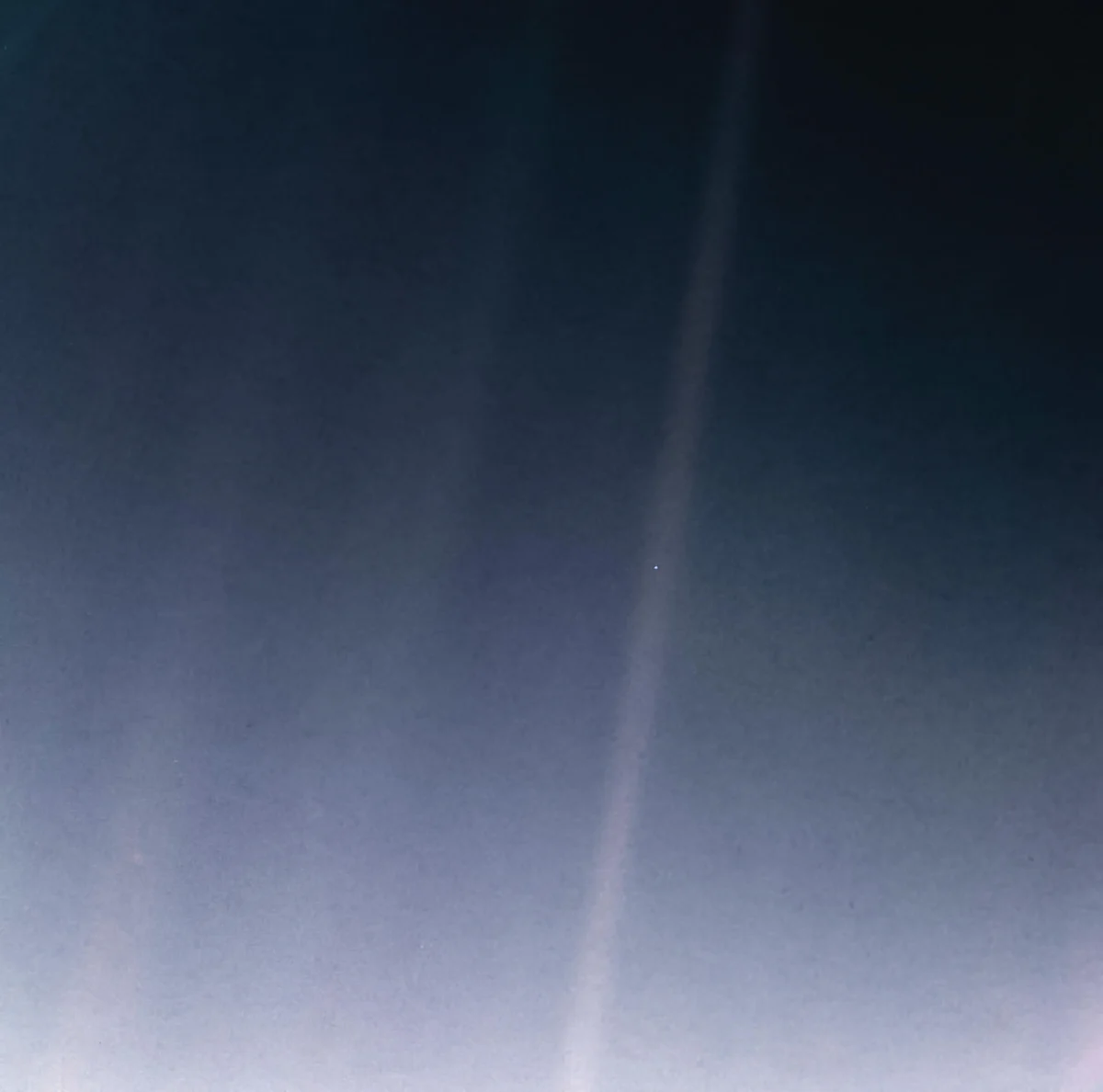
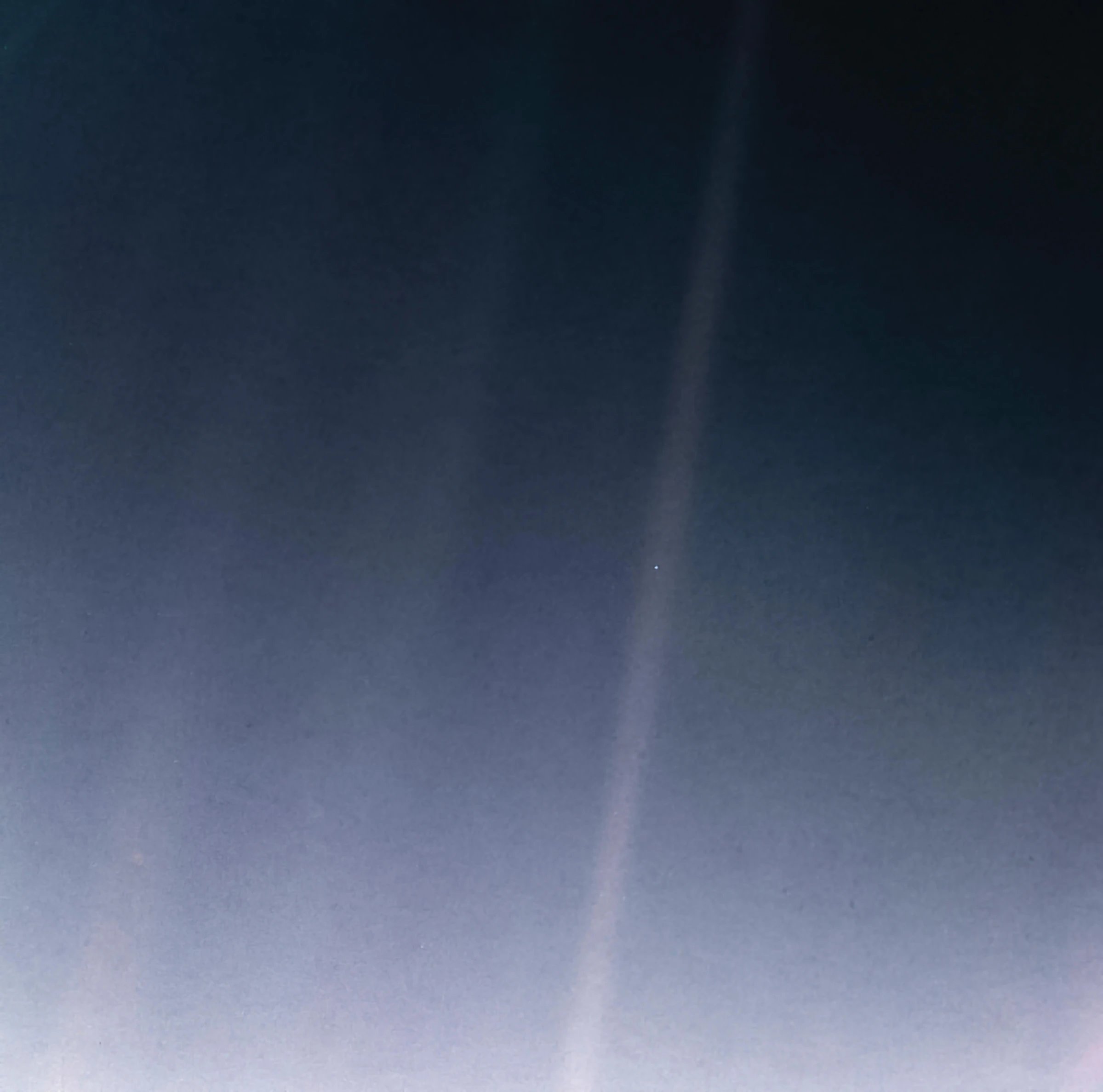
Earth as a speck in a sunbeam, photographed by Voyager 1 on 14 February 1990, reprocessed in 2020. NASA/JPL-Caltech, PIA23645, Voyager 1, 1990, reprocessed 2020, public domain.
Select a photograph to see it full size, with its caption and credit.
Downloads
- Hesiod, the Homeric Hymns and Homerica, translated by Hugh G. Evelyn-White, 1914Loeb Classical Library, 1914; public domain, full scan from the University of Toronto copy at the Internet Archive
- James E. Lovelock and Lynn Margulis, Atmospheric homeostasis by and for the biosphere: the gaia hypothesis, Tellus 26, 2-10, 1974Tellus, Stockholm University Press, CC BY 4.0
Sources
- Gaia, Inc., Form 10-K for 2025, filed March 6, 2026 U.S. Securities and Exchange Commission Primary record
- Gaia Reports Fourth Quarter and Full Year 2025 Results, March 2, 2026 Gaia, Inc., via the SEC Primary record
- Gaia Reports Second Quarter 2026 Results, August 10, 2026 Gaia, Inc., via the SEC Primary record
- Gaia Q4 2025 earnings results and call summary, March 2, 2026 MarketBeat Study
- Gaiam, Inc., prospectus, October 29, 1999 U.S. Securities and Exchange Commission Primary record
- Gaiam, Inc., Form 8-K, May 10, 2016 U.S. Securities and Exchange Commission Primary record
- Gaia, Inc., Form 10-K for 2016 U.S. Securities and Exchange Commission Primary record
- Gaiam, Inc., International Directory of Company Histories Encyclopedia.com General reference
- In the Matter of Gaia, Inc. and Paul C. Tarell Jr., Release 33-11196, May 23, 2023 U.S. Securities and Exchange Commission Primary record
- Goode v. Gaia, Inc., No. 20-cv-00742, Order on Motions to Dismiss, March 31, 2024 U.S. District Court for the District of Colorado Primary record
- Order on default judgment, Adv. 26-01007, June 1, 2026 U.S. Bankruptcy Court for the District of Colorado Primary record
- Messages from Bashar the Extraterrestrial Gaia Primary record
- Gaia Speaks: A Message From Our Mother, Islands of Inner Peace S2 E8 Gaia Primary record
- Gaia's Channeling Conference Sold Out, press release, October 9, 2025 Gaia, via PR Newswire in The Gazette Primary record
- What Does Gaia Mean?, August 6, 2024 Gaia Primary record
- About Gaia Gaia Primary record
- Hesiod, the Homeric Hymns and Homerica, translated by Hugh G. Evelyn-White, 1914 Loeb Classical Library, 1914; public domain, full scan from the University of Toronto copy at the Internet Archive Primary record
- Aeschylus, Eumenides, lines 1 to 8, translated by Herbert Weir Smyth, 1926 Perseus Digital Library Primary record
- Red-Figure Squat Lekythos, Cleveland Museum of Art 1982.142 Cleveland Museum of Art Primary record
- Dian R. Hitchcock and James E. Lovelock, Life detection by atmospheric analysis, Icarus 7, 149-159, 1967 Academic Press; reprint on James Lovelock's site Primary record
- Daisyworld: James Lovelock and Gaia, transcript, course S269 The Open University Primary record
- James E. Lovelock and Lynn Margulis, Atmospheric homeostasis by and for the biosphere: the gaia hypothesis, Tellus 26, 2-10, 1974 Tellus, Stockholm University Press, CC BY 4.0 Primary record
- Lovelock and Margulis 1974, journal page Tellus Primary record
- W. Ford Doolittle, Is Nature Really Motherly?, CoEvolution Quarterly 29, Spring 1981, contents page Whole Earth Index Primary record
- Andrew J. Watson and James E. Lovelock, Biological homeostasis of the global environment: the parable of Daisyworld, Tellus 35B, 284-289, 1983 Reprint on James Lovelock's site Primary record
- James Lovelock, curriculum vitae, listing The Ages of Gaia, W. W. Norton, 1988 James Lovelock's site Primary record
- Margaret Helder, Reformed Perspective, 1991 Christian Study Library Study
- Mother Earth/Gaia channeled by Pepper Lewis, Earth Changes Update, posted April 5, 2010 Spirit Library, from The Peaceful Planet Primary record
- Earth/Gaia books Light Technology Publishing Primary record
- Gaia Speaks, Volume Two, 2007 Light Technology Publishing Primary record
- Gaia Speaks: Sacred Earth Wisdom, 2005, catalogue record Google Books General reference
- Tom T. Moore, Conversations with Gaia: The Soul of the Earth Flint Hills Publishing Primary record
- Transition Now: Redefining Duality, 2012 and Beyond, March 2010 Weiser Books Primary record
- Tom T. Moore, author page Flint Hills Publishing Primary record
- Tom T. Moore, Probabilities and Predictions, written September 2011 The Gentle Way book site Primary record
- Pamela Kribbe, Earth Speaks, 2021 BookLocker Primary record
- What Does Pepper Ask Gaia?, May 12, 2022 Spirit Library Primary record
- USGS earthquake catalogue search, queried October 31, 2026 U.S. Geological Survey Primary record
- Can you predict earthquakes? U.S. Geological Survey Primary record
- Why are we having so many earthquakes? U.S. Geological Survey Primary record
- Vesuvius Global Volcanism Program, Smithsonian Institution Primary record
- Earth Fact Sheet NASA Primary record
- Richard Dawkins, The Extended Phenotype, 1982, publisher page Oxford University Press Study
- Stephen Jay Gould, Kropotkin Was No Crackpot, Natural History 97(7), 1988, transcription Marxists Internet Archive Study
- James W. Kirchner, The Gaia Hypothesis: Fact, Theory, and Wishful Thinking, Climatic Change 52, 391-408, 2002 Kluwer Primary record
- Toby Tyrrell, On Gaia, 2013 Princeton University Press Study
- Lynn Margulis, Gaia Is a Tough Bitch, The Third Culture, 1995 Edge Primary record
- W. Ford Doolittle, Is the Earth an organism?, December 3, 2020 Aeon Primary record
- Timothy M. Lenton and others, Selection for Gaia across multiple scales, Trends in Ecology and Evolution, 2018 Elsevier Primary record
- Timothy M. Lenton and Bruno Latour, Gaia 2.0, Science 361, 1066-1068, 2018 AAAS Primary record
- Amsterdam Declaration, July 13, 2001 IGBP, IHDP, WCRP and DIVERSITAS; copy at APN Primary record
- Julio Fernando Peres and others, Neuroimaging during Trance State, PLoS ONE 7(11), e49360, 2012 PLoS ONE Primary record
- Helane Wahbeh and others, scientific information and channeling, 2022 preprint, abstract Institute of Noetic Sciences Primary record
- Jon Turney, review of Peter Ward, The Medea Hypothesis, September 24, 2009 Times Higher Education Study
- Richard Boyle, Overlapping attempts to falsify and Darwinize the Gaia hypothesis, Philosophical Transactions of the Royal Society B 380, 20240087, 2025 Royal Society, CC BY 4.0 Primary record
- International Mother Earth Day, A/RES/63/278, April 22, 2009 United Nations General Assembly Primary record
- Constitution of Ecuador, 2008, articles 71 to 74, bilingual extract Earth Law Center Primary record
- Bolivia, Ley 071, Derechos de la Madre Tierra, December 21, 2010 Gaceta Oficial, FAOLEX copy Primary record