
Since January 1995 a body of text has been growing on the web under the name ZetaTalk. It is written, its author says, by beings called the Zetas, and relayed through one woman in Wisconsin, Nancy Lieder. At its centre is a planet: a massive body on a long orbit around the Sun, the one the rest of the world now calls Nibiru.
The planet in ZetaTalk is not small and not far. It outweighs the Earth some 23 times. It comes, the Zetas say, from the direction of Orion, the constellation of red Betelgeuse and the three stars of the belt. As it nears, the pages say, a reddish glow comes with it.
Thirty years of answers sit behind that picture, page after page dated one by one, many written in public in reply to whoever asked.
A planet. A date. And a woman who kept writing.
A girl in the woods, a forum in 1995
The account of where it began is Nancy Lieder's own. Born in Wisconsin, she returned as a girl to her grandparent's homestead, and there, her biography says, "she first met the Zetas in the woods as a young girl." She "became aware of her contactee status in 1993."
The public record starts on a date. "ZetaTalk began on January 19, 1995 in Michael Lindemann's ISCNI chat group," the biography says, and later that year it went on the web. "By late 1996 the Zetas were debating with astronomers on the sci.astro Usenet." Several pages are still dated to those debates.
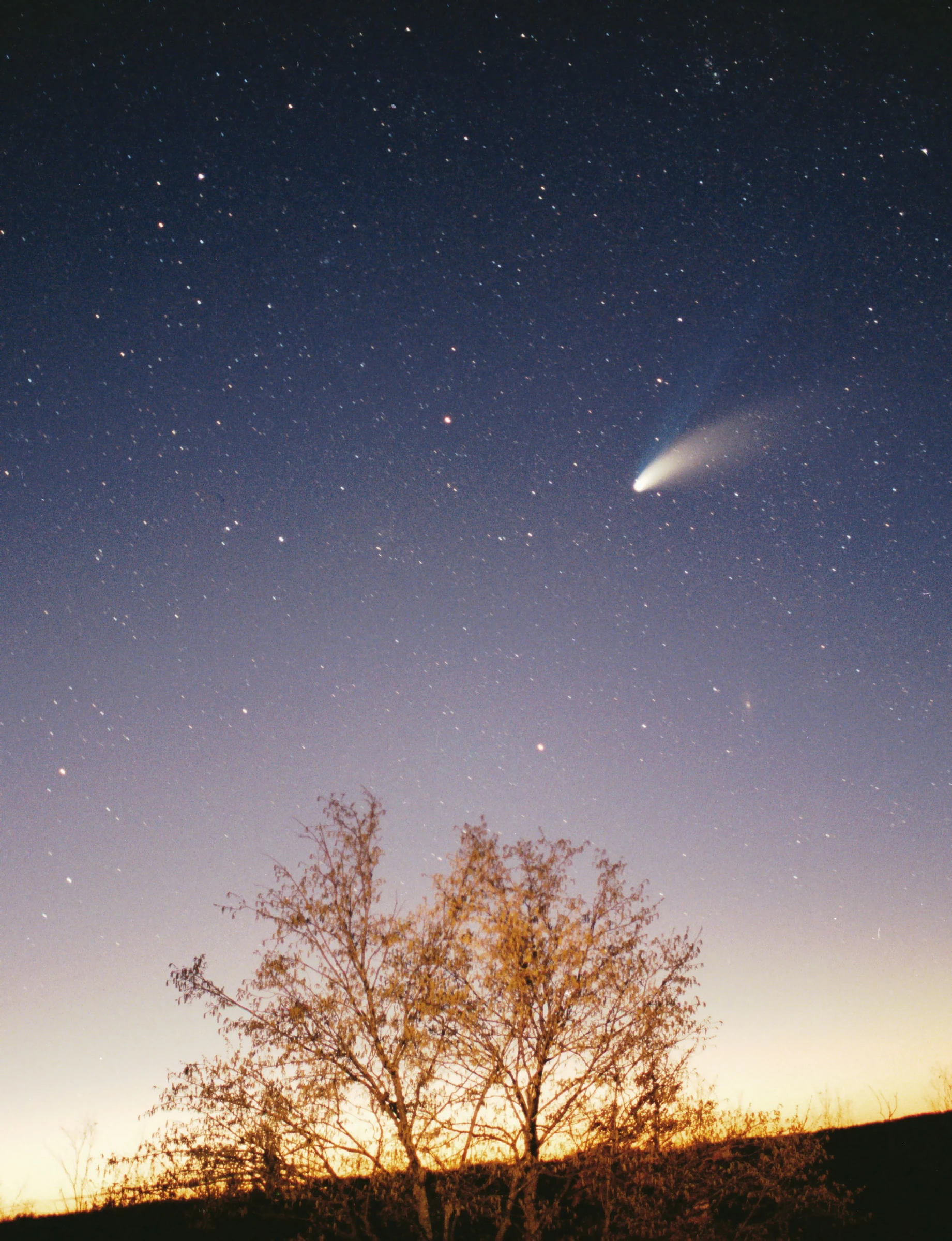
The first public test came early. In August 1995, with Comet Hale-Bopp on its way in and the press beginning to watch it, the Zetas said the comet would draw no closer, and that the real visitor would come from Orion: "The 12th Planet, a true messenger of death, will not even get the attention the fraudulent Hale-Bopp is getting today."
The work grew in the open: a ZetaTalk book in 1998, radio on Jeff Rense's Sightings and on Coast to Coast AM, live IRC sessions from November 2001, a weekly newsletter from late 2006, translations into almost two dozen languages. In 1996 readers formed Troubled Times to work out how ordinary people could get through what the pages described.
She quit a professional job in California in 1999 and moved back to Wisconsin. In her biography's words, to "walk the talk."
The planet in the Zetas' words
The core of the account is old. On pages marked "written prior to July 15, 1995," the body is "a giant comet, which is in fact a planet of your Solar System," with a mass that surpasses Earth's. "It outweighs the Earth by some 23 times," one says, though it is not 23 times the size, and side by side "the Earth would look to the 12th Planet as the Moon does to the Earth." It returns "on average each 3,657 years." It does not hit the Earth: "No collision is possible, as the orbits do not intersect." What it does is pass. Its pull stops the Earth's rotation, and the crust moves over the core, "taking place in what seems to be minutes to humans involved in the drama, but which actually takes place during the better part of an hour." At closest, the 1995 estimate put it within 14 million miles.
The details kept arriving, each with its date. In 1996: "The 12th Planet approaches from Orion." In 2001, a brown dwarf with a reddish glow, which "will take on the appearance that the ancients described as a fire dragon in the sky." In May 2002, the approach from the south. In April 2003, the second sun: "Egyptian plowmen working their fields under the red cross of Planet X in the daytime sky."
And the name. A ZetaTalk page on Zecharia Sitchin, dated 15 August 1995, gives him real credit for reading in Sumerian records "a traveling planet that visits Earth's solar system approximately every 3,600 years or so," and parts from him on who made mankind. Sitchin's book, The 12th Planet, had come out from Stein and Day in 1976, and his name for the planet came with it. Over the years ZetaTalk came to use it freely: "the inbound Nibiru (aka Planet X)." The site's account of Sitchin and the twelfth planet follows that book.
May 2003, in the account's own record
ZetaTalk has always said why it handled dates the way it did. In November 2001 it wrote that an exact date would be used by "the establishment and those groups who would take advantage of good hearted folk" to "better entrap and enslave and ensure their own survival at the expense of the good hearted." The timing of the passage was kept, from the start, as something to be protected.
The time frame itself was in the oldest layer. Nancy Lieder's vision, written before July 1995, says: "I am told this will occur in the late spring or early summer of the year 2003. The earth will be hot and still." The Zetas added, "This cannot be pinned down to the day." In ZetaTalk's words the time frame was always "shortly after May 15, 2003."
ZetaTalk's notes record the body becoming visible to the naked eye on 26 March 2003. On 16 May 2003, on the Lou Gentile show, a precise date was given, 27 May. Then, on 23 May, a page titled "White Lie." The dates, it said, had been "an acknowledged white lie on our part," aimed at those "in the US and Indonesian governments who would murder their citizens by the hundreds of millions." Its last line: "thus we decline to give any dates."
In October 2003 the Zetas explained the choice. May 15 was picked because in the months around it "the path of Planet X would be so close to the Sun that it would be difficult to determine if it was behind, beside, or in front of the Sun." They pointed to a detail in their own record: the body was to "dive 32 degrees below the Ecliptic prior to passage," and on 15 May it had dropped only to 7. "All was designed to fool the establishment."
The account went on. "Planet X certainly arrived in 2003!" says the review that December. By 2005 the body was described as held in the inner solar system, near the Sun. From 2009 they named no date at all: "We are not allowed to give a date, nor any clue as to the timeline."
If the Zetas are right
Set aside for a moment whether it is true. Ask the better question. What kind of world is this if it is?
It would mean the solar system has a member nobody has listed. Not a speck at the edge of the dark. A body big enough to make the Earth look like a moon beside it, on an orbit long enough to pass unseen through whole civilizations.
Which would mean the old records are reports. The fire dragon, the red cross in the sky, the winged globe, the planet the Sumerians were said to know: on ZetaTalk's reading these are not symbols but witnesses, people who looked up during an earlier passage and wrote down what they saw. Human history, on that reading, has a rhythm, a passage on average every 3,657 years, and our oldest stories of flood and fire are its memory. A clock in the sky is not a new idea to astronomers either: a rhythm of about 26 million years in the fossil record drove the search for a companion star called Nemesis.
It would mean we are not alone, and have not been for some time. The Zetas, in their own account, are not distant observers. They speak through a woman in Wisconsin, they have watched the Earth for a long time, and they say they are telling what they observe.
And it would mean the ground under our species can move in the better part of an hour. Every city, every coastline, every map is drawn on a crust that, on this account, rides loose over the core and waits for a pull from outside.
Since 2009 the account has given no date at all. The question it leaves is larger than any date.
What does a species do with a sky that has a next?

What the astronomers answered
The standard account, held by NASA and the survey astronomers, is that no such body is there.
Up to 2012 the NASA Astrobiology Institute's "Ask an Astrobiologist" service, run by David Morrison of NASA's Ames Research Center, received thousands of questions about Nibiru and posted more than 500 answers. NASA's own question-and-answer page of November 2012 gave the core of the case: if such a body were real and headed for an encounter with the Earth, "astronomers would have been tracking it for at least the past decade, and it would be visible by now to the naked eye." Morrison read the widely shared photographs of a second body beside the Sun as lens flare, "false images of the Sun caused by internal reflections in the lens." NASA added that a reversal of the Earth's rotation is impossible. And a body that massive, Morrison wrote, would already have shown itself through its gravitational influence on the orbits of the planets, especially Mars and the Earth.
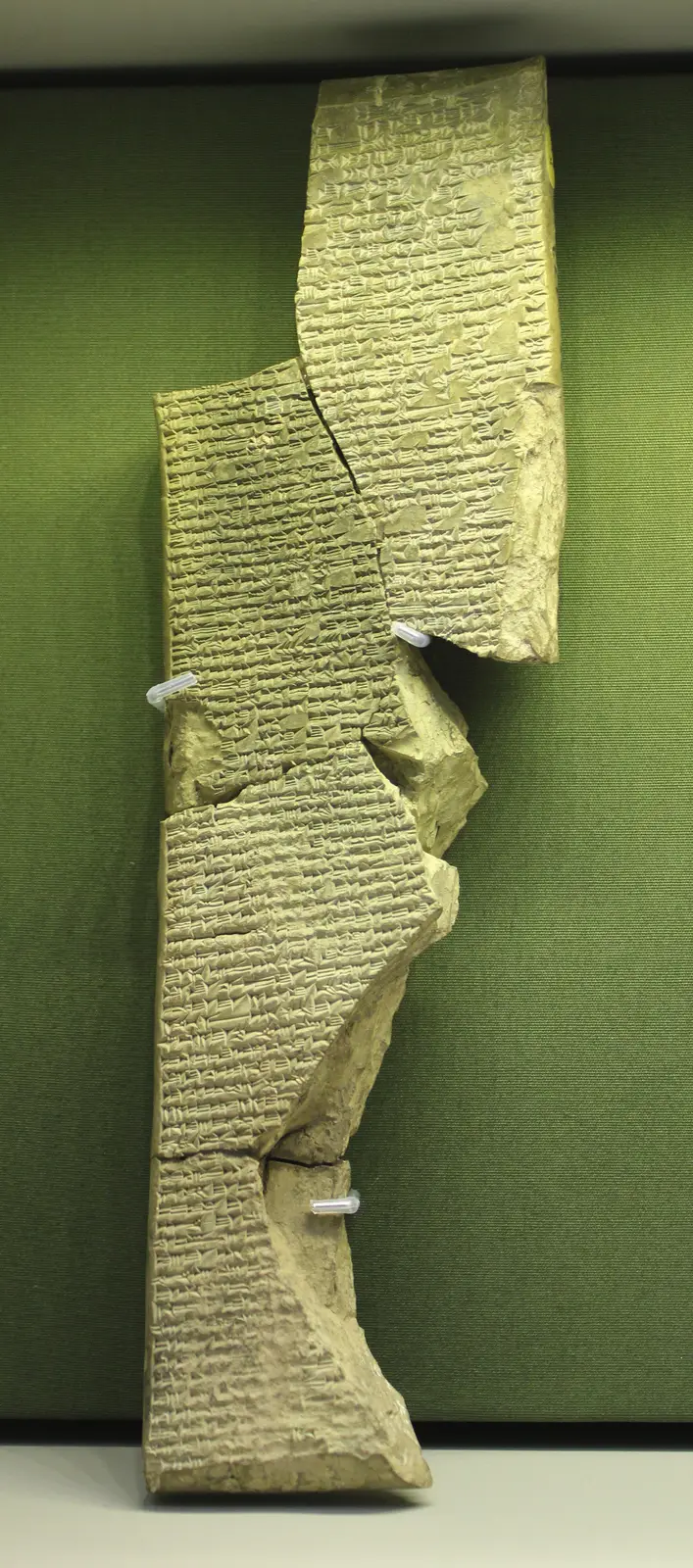
On the name, Morrison's answer was that Nibiru is a name in Babylonian astrology sometimes associated with the god Marduk, and that it appears in the Babylonian creation poem, the Enuma Elish, as recorded in the library of the Assyrian king Ashurbanipal.
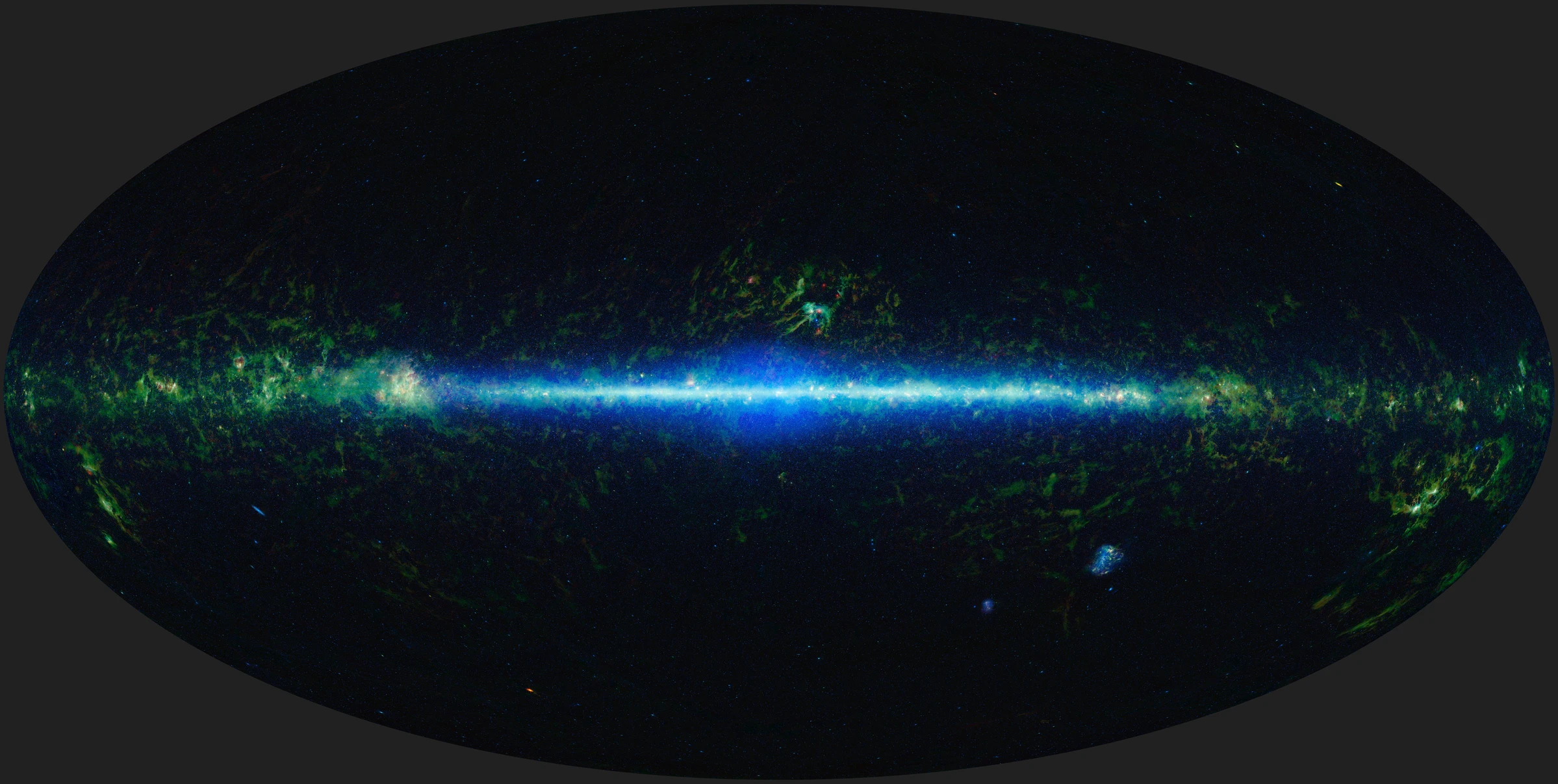
Then the infrared. An earlier survey, IRAS in 1983, had already been read for a hidden planet once, a story told in the 1983 infrared survey that became Planet X. NASA's Wide-field Infrared Survey Explorer, WISE, mapped the whole sky twice in 2010 and 2011. In January 2014 Kevin Luhman of Penn State published his search of its data in the Astrophysical Journal and found no such object, setting limits for a body the size of Saturn out to 28,000 astronomical units and for a Jupiter-mass brown dwarf out to 26,000. NASA's announcement of 7 March 2014 put it more cautiously: no Saturn-sized object within 10,000 astronomical units. "The outer solar system probably does not contain a large gas-giant planet, or a small companion star," Luhman said.
On the date, NASA's summary was that the story moved forward from May 2003 to December 2012.
Where the surveys looked, and where the planet is said to be
WISE looked outward. Its limits are written in thousands of astronomical units, at the cold edge of the solar system, where a brown dwarf would glow in the infrared against the dark. That is where it did not find one.
The ZetaTalk account puts the body somewhere else. Since 2003 the pages describe it in the inner solar system, close to the Sun, in the glare, a part of the sky a survey of distant, faint objects is not built to search. For that region the astronomers' case rests on a different argument, the pull on the planets' orbits, and that is the argument everything near the Sun turns on. The instruments that do look into the glare are the coronagraphs on solar observatories, the ones that block the Sun's disc, and those are the frames ZetaTalk has pointed to since 2009, when it wrote that "Planet X was captured on March 27, 2009 on SOHO." It appeared, the page says, "briefly as the Winged Globe of legend," in the frame at 3:18, and not in the frames before and after it.
There is a second gap, in the physics. ZetaTalk's account of why the body is hard to see rests on its own description of light near a massive body: red light bending, a glow ahead of the body itself. The surveys were designed for an object that shines and moves the way ordinary celestial mechanics predicts. ZetaTalk describes effects of light that it says change what an instrument sees.
And there is the date. NASA's pages say the doomsday date was moved to December 2012. ZetaTalk's record says otherwise. Its Mayan Calendar page of December 1995 gave 2003 and said "All other dates are incorrect." Its newsletter of December 2011, "2012 Revisited," asked where in the Mayan material it says 2012, and answered: "It doesn't." Its copyright page says plainly that ZetaTalk did not predict December 21, 2012. The standard summary does not reach that part of the record.
The mission teams have not published a reading of that 2009 frame. The standard reading of such shapes is reflection inside the instrument. That frame stands as ZetaTalk's evidence, and the reading of it is where the two accounts part.
A body of work still being written
The account did not stop in 2003, or in 2012. In 2014 and 2015 the Nibiru Daily page collected webcam captures from Italy, "a genuine capture of Nibiru," per the Zetas. Nancy Lieder still answers questions, as she has since a chat room in January 1995, and the pages still carry their dates.
The sky has new eyes too. The Vera C. Rubin Observatory in Chile began its ten-year survey of the southern sky in June 2026. Like WISE, it looks away from the Sun, into the night. It can find faint, slow, distant things. It cannot stare into the glare where ZetaTalk says the body stands.
So the question narrows to one place in the sky.
Close to the Sun, the two accounts point at the same patch of glare and describe two different skies.
What the record holds is plain on each side. ZetaTalk is a public, dated body of work, kept for thirty years. The astronomers have found no such body in survey data and measured no pull from one on the planets. What would move the question is specific: a position held against the stars across days, seen by a second, independent instrument, or a measured tug on a planet or a spacecraft that no known body explains.
The account is still being written. The sky is still being watched.
Questions This Leaves You With
Is there anything a person actually does with this?
The honest answer starts with time. No date comes with this. ZetaTalk has given none since 2003, and the Zetas say they are not allowed to; and a date offered for sale, by anyone, is a sales pitch rather than a forecast. So nothing in this asks you to change what you do tomorrow. What remains is the larger question, the one that is not about you at all: whether a civilization that maps every rock near the Earth has really looked at every part of its own sky, including the part next to the Sun. That question has no deadline, and no product attached to it.
Does this sit against a religious account of the world?
It cuts both ways, and serious people have argued each. ZetaTalk draws on old texts, among them the Book of Enoch, and frames its own message as one of service to others, which some readers find close to faith. Others read the same events, a sky with a messenger in it and a judgment on the Earth, as the opposite of any scripture they know. This site will not tell you which way it falls for you. The texts are there to read in their own words, and so is ZetaTalk.
Does this change what a human life is?
Put a life against a 3,657-year orbit and it is a sliver: one passage covers more than a hundred lifetimes end to end. Read that way, a life is small, a moment in a long rhythm nobody chose. Read the other way, it is rare: most lives in that rhythm fall between passages, and a life that might stand near one stands near something almost nobody in history saw. Both readings are honest. Which one did you have when you read the stakes?
What would change your mind, in either direction?
Name it now, before you are committed. In one direction: a frame from an independent solar observatory showing an object that keeps its place against the stars across days, confirmed by a second instrument and published by its own team; or a measured tug on a spacecraft's path that no known body explains. In the other: a careful study of the frames ZetaTalk has cited, showing each feature at the same spot in the optics on images where nothing else is present, or the ones that move, moving with the camera.
What does the 27 March 2009 frame show?
ZetaTalk reads the shape in that SOHO frame as the Winged Globe, present at 3:18 and absent before and after. The standard reading of such shapes is a reflection inside the instrument. The frames are public and archived. A careful comparison of that frame with its neighbours, and with what other instruments saw that day, would answer the narrow question of the optics. It could not, on its own, prove or rule out a planet: that needs a body followed across days. No such independent study of that frame has been published. The question is open.
Sources
- Nancy Lieder's Bio ZetaTalk
- About ZetaTalk ZetaTalk
- Copyright ZetaTalk
- IRC Sessions ZetaTalk
- Hale-Bopp (written 15 August 1995) ZetaTalk
- ZetaTalk: Zeta Vision (written before 15 July 1995) ZetaTalk
- ZetaTalk: Time Frame (written before 15 July 1995) ZetaTalk
- ZetaTalk: Stop Rotation (1995, 2002 addition) ZetaTalk
- ZetaTalk: Pole Shift (written before 15 July 1995) ZetaTalk
- ZetaTalk: From Orion (written 15 February 1996) ZetaTalk
- ZetaTalk: Periodic Passage (15 December 2001) ZetaTalk
- ZetaTalk: Not a Star (15 September 2001, sci.astro debates) ZetaTalk
- ZetaTalk: Second Sun (19 April 2003) ZetaTalk
- ZetaTalk: Planet X Personas (16 November 2003) ZetaTalk
- ZetaTalk: Sitchin (written 15 August 1995) ZetaTalk
- ZetaTalk: Mayan Calendar (15 December 1995) ZetaTalk
- Pole Shift Date of May 15, 2003 ZetaTalk
- Pole Shift Date of May 27, 2003 ZetaTalk
- ZetaTalk: White Lie (23 May 2003) ZetaTalk
- ZetaTalk: Why May 15? (17 October 2003) ZetaTalk
- Pole Shift in 2003 Date ZetaTalk
- ZetaTalk: Where is Planet X? (5 February 2005) ZetaTalk
- ZetaTalk: Pole Shift Timeline (12 September 2009) ZetaTalk
- ZetaTalk: SOHO Says So (5 December 2009) ZetaTalk
- ZetaTalk Newsletter Issue 271, 2012 Revisited (11 December 2011) ZetaTalk
- Nibiru Daily (2014-2015) ZetaTalk
- Nibiru and Doomsday 2012: Questions and Answers (updated 19 September 2012) NASA Astrobiology, David Morrison (Wayback Machine copy)
- Beyond 2012: Why the World Won't End (13 November 2012) NASA (Wayback Machine copy)
- WISE satellite finds no evidence of Planet X in survey of sky (7 March 2014) Penn State News
- Luhman, A Search for a Distant Companion to the Sun with WISE, ApJ 781:4 (2014) Penn State research record
- Rubin Observatory finds a new dwarf planet candidate (27 October 2026) University of Washington News