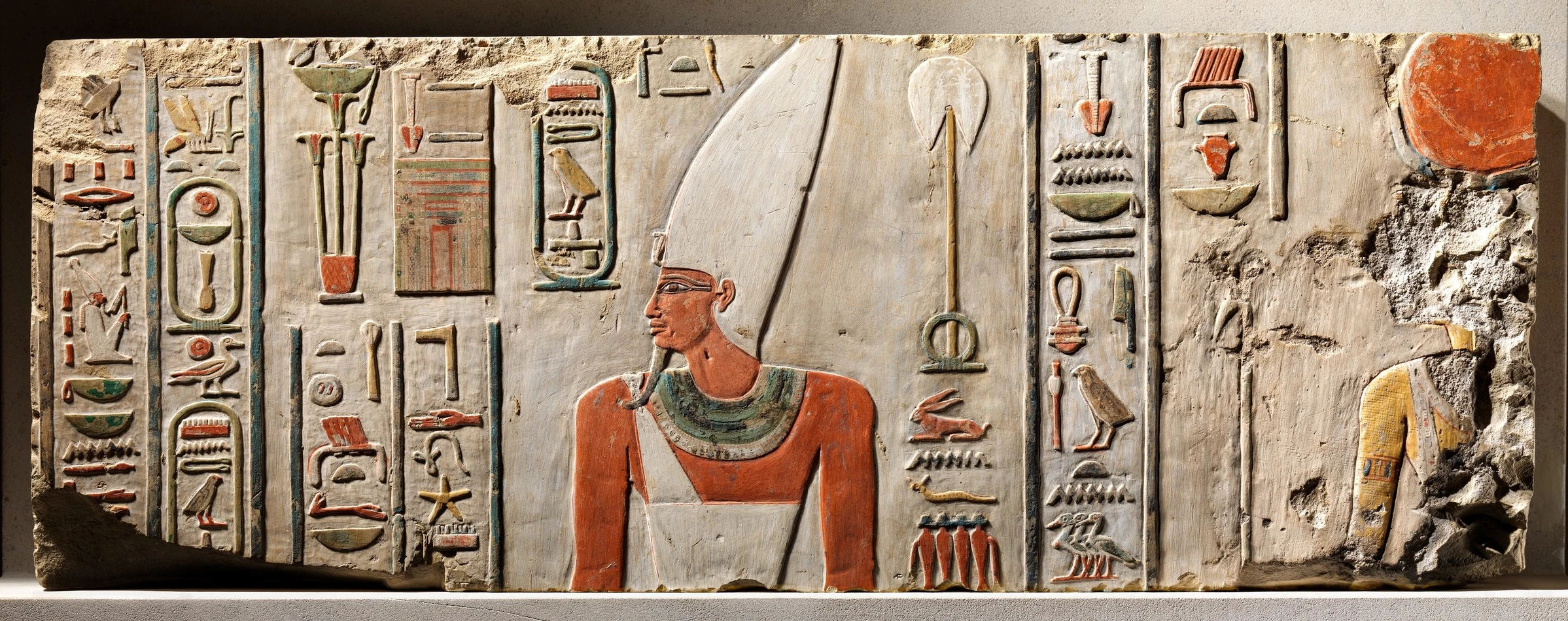
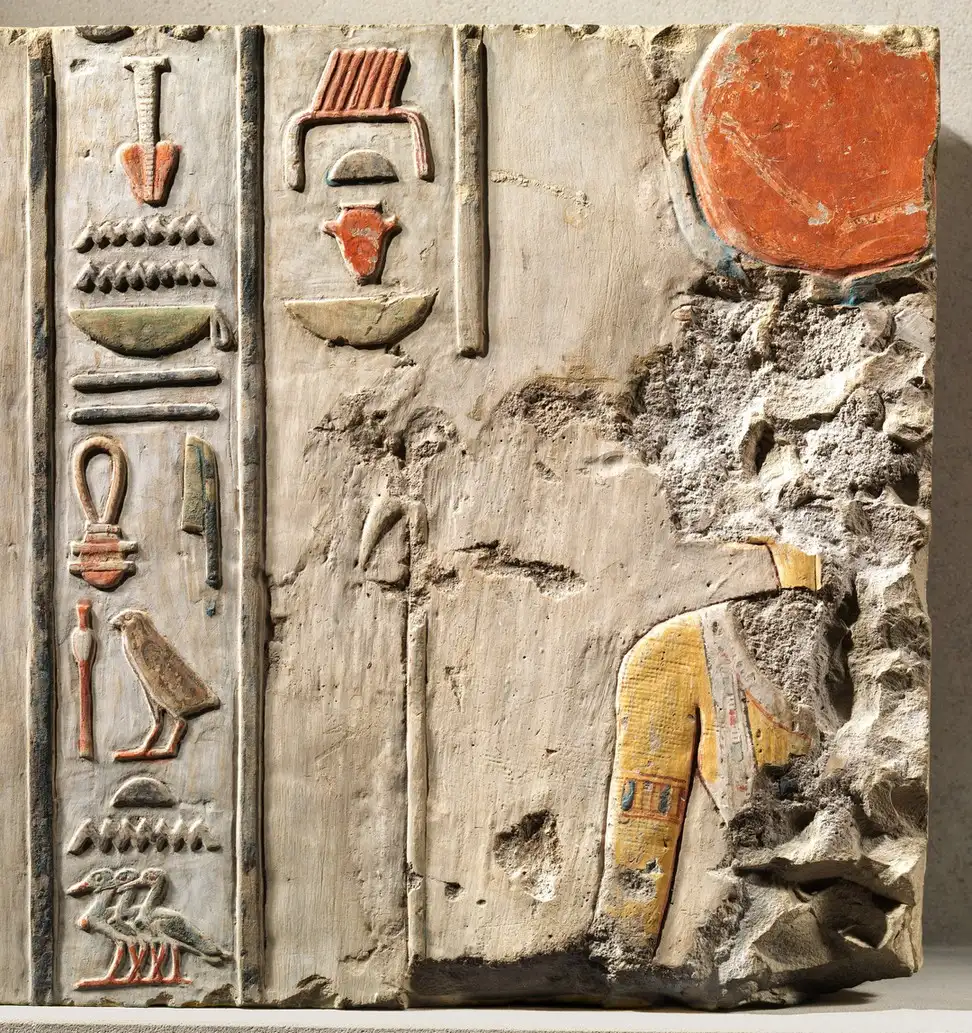
Did the white crown of Egypt's pharaohs, with the cobra rising at its brow, begin as a picture of something in the sky? The crown is the hedjet, the crown of Upper Egypt, and one of the finest pictures of it is cut into a block of limestone in New York. On it King Mentuhotep II stands in profile, about 2010 to 2000 BC, carved for his temple at Deir el-Bahri in western Thebes.
The block is a little over three feet long. The king's skin is painted red-brown, his collar green and blue, a false beard under the chin. Above him the crown rises white and smooth, taller than his head, swelling as it climbs and closing in a rounded knob. At its brow sits one small coiled cobra.
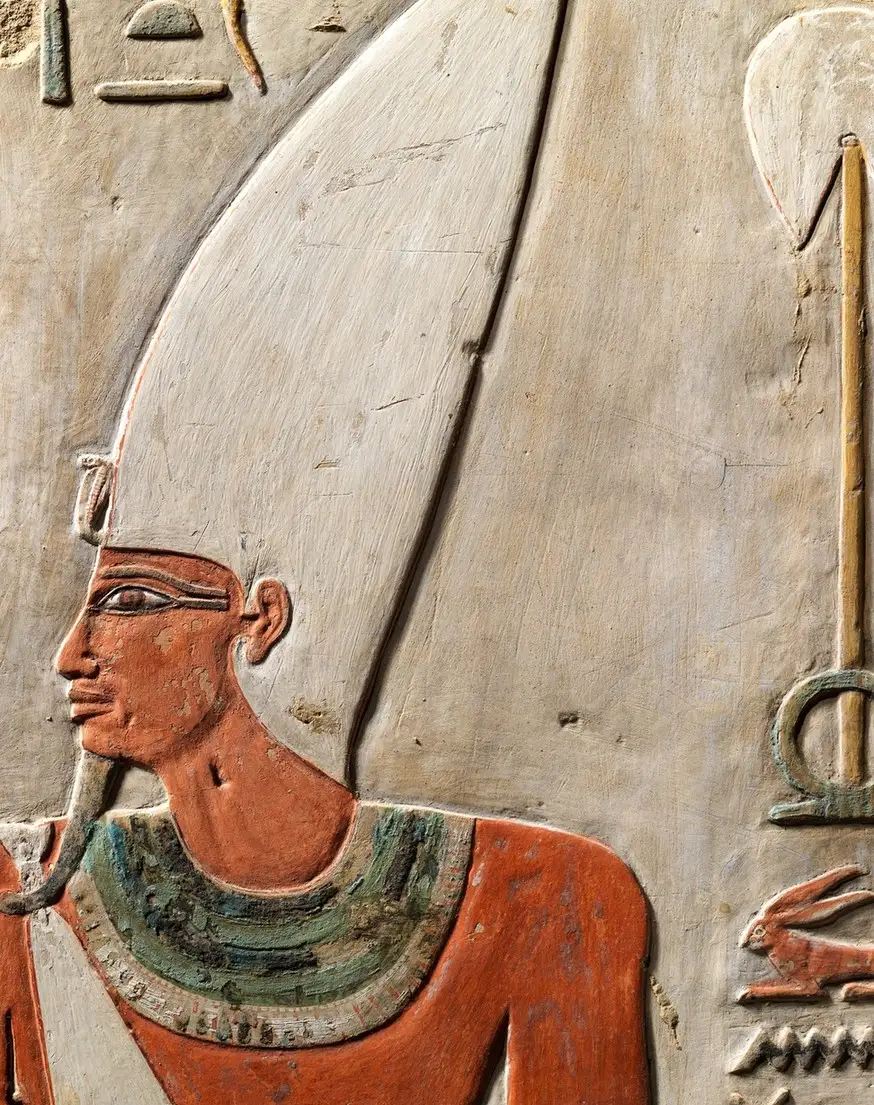
Four thousand years of paint and plaster. One white crown.
In October 2026 a photographer in Idaho set that crown beside his photographs of the Sun. A crown, a cobra, and a pale light below the Sun.
Idaho, October 14, 2026
The pictures went up at 1:50 in the morning of October 15, 2026, as a comment on Nibiru Visibility and Debris, a running page on the Pole Shift Ning, the forum where Nancy Lieder answers questions for ZetaTalk. The man posting them signs as James of Idaho, from Idaho Falls, and stamps his pictures James Coon, Zeta Photographer. ZetaTalk's own newsletter counts him among "the ZetaTalk photographers."
His title for the night was short: "Oct. 14th-2026- Idaho signs and symbols and those in power."
The photographs are the Sun from Idaho on October 13 and 14. Under the Sun in several sits a pale, rounded light, labelled Nibiru. In one, curved streaks hook round the Sun, labelled "Double helix in retrograde motion."
Beside the photographs he set three pictures of power. A Pope's mitre. A crown screenshotted from a social-media video posted by an account called Tutankh Amon: white, banded down the front in inlaid gold, a gold cobra at the brow and two more gold serpents twisting round its base. And a crop of the Met relief of Mentuhotep II, the king in the white crown.
The habit is not new. On February 4, 2024 he photographed what he called the cobra shape of Nibiru, and wrote of "how it relates to Pharoah's War crown," the blue crown of the pharaohs. On July 12, 2026 ZetaTalk confirmed his latest set of pictures as "the Double Helix set in motion by the two Dominant Moons on either side of Nibiru."
Two years of the same Sun. And now a crown.
The Planet on the King's Head
James Coon's reading is written on the pictures themselves. The pharaoh's crown, his caption says, is "resembling the double helix in retrograde motion spiraling back towards the Sun." Then, on the crown from the video, the key to it: "the Cobra is Nibiru with the 2 twisted snakes being the double helix tail." A crown, on that reading, is a drawing of the planet and its tail, worn as "a symbol of power and authority on Earth."
In May 2024 he had written where the authority came from: "Pharaohs kingship is given by the rulers of Nibiru."
The reading stands inside a larger account, and that account is Nancy Lieder's. ZetaTalk, her site since 1995, describes Nibiru, the planet it also calls Planet X, making a passage "approximately every 3,657 years." Its people, the Annunaki of Zecharia Sitchin's twelfth planet, were "in Egypt, building the Great Pyramids," ZetaTalk said in 2014. The gods of ancient Egypt were, "almost to a one," in its words, "particular individuals from the 12th Planet royalty." And the winged globe of Egyptian temples is, for ZetaTalk, a symbol "for this traveling planet."
The tail has its own history in that account. "When Nibiru first arrived in the inner Solar System in 2003," the December 2025 newsletter says, "it was an orb with a double helix twisting behind." Now, it says, Nibiru sits below the Sun "but has a retrograde (clockwise) rotation." Which puts a twisting tail at the heart of ZetaTalk's sky since 2003, and a retrograde turn beside the Sun since December 2025, before the crown was set beside them.
ZetaTalk also gives a reason the planet is missing from public pictures. Its newsletter of July 2026 says "The Nibiru coverup regularly wipes any evidence of Nibiru from images provided to the public," and asks how the cover-up will "escape the anger and blame the public will release when they learn the establishment knew about the pending Nibiru Passage all along." James Coon's own title, "signs and symbols and those in power," sets the pharaoh's crown beside a Pope's mitre: two emblems of power, worn four thousand years apart.
If the Crown Was an Observation
Set aside for a moment whether it is true. Ask the better question. What kind of history are we living in if it is?
It would mean one of the oldest emblems of Egyptian kingship is an observation. Not a hat. A record. Somebody on the Nile would have watched a body hang beside the Sun with its tail turning back on itself, and fixed that shape on a king's head in white, with the cobra where the planet was.
It would mean kingship itself came down from the sky. The Sumerian King List opens with the line Sitchin built on: "After the kingship descended from heaven." On this reading the Nile said the same thing in a different language, with a crown instead of a list. Every king who put on the white crown would have been wearing the sky's own portrait, and every crown since, mitre included, would be a copy of a copy of it.
It would reach us too. Our record of power, the thrones and headdresses we put in museum cases, would be a memory of something seen overhead, kept long after the seeing stopped. A species that forgot what its own emblems were for would have forgotten more than one thing.
And it would leave a question in front of us. If the shape is in the sky again, then the original of the emblem is overhead now, and a man with a camera in Idaho could photograph it, as he says he does. What would we make of a crown, if the thing it copied came back to be compared with it?
Nekhbet's Crown
The hedjet was the crown of Upper Egypt, the south; its partner was the red crown of the north, and kings wore either, or both together. Its goddess was Nekhbet, the vulture of Hierakonpolis, and the Met's block names her on its own surface: "The white one of Hierakonpolis." The crown is older than Mentuhotep by a thousand years. A man in "the tall White Crown of Upper Egypt" hoes the ground on the Scorpion macehead, dated about 3200 to 3000 BC, and Narmer wears it on his palette, smiting an enemy.
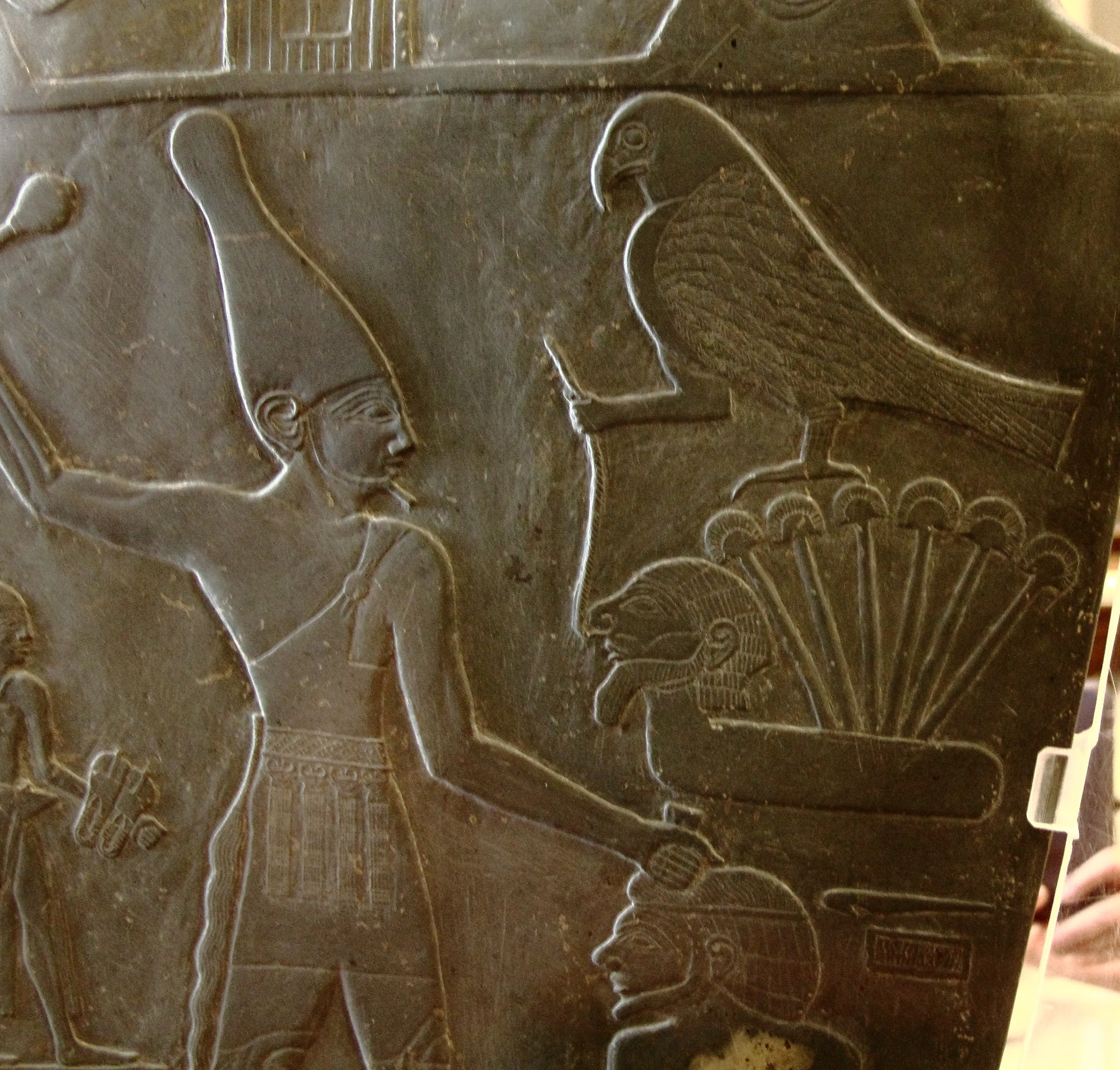
The crown on the relief is smooth. It carries one cobra, the uraeus, which, the Met writes, "could magically spit fire at the enemies of Egypt from its perch on the king's forehead." Two cobras at the brow do exist in Egyptian art, worn by royal wives and mothers of the 18th Dynasty, some five centuries after this block, and by Kushite kings of the 25th, more than a thousand years after it. In those sources the two cobras rear at the brow; none shows serpents coiled round a crown's base. "No crowns of the pharaohs have been found by archaeologists," the Egypt Exploration Society writes. Official X could not trace the crown in the clip to any museum.
As for the light below the Sun, the radio astronomers of NRAO answer a reader who saw planets beside the Sun in a photograph: a "lens flare" caused by "internal reflections in the optics" of the camera. Computer-vision researchers writing for CVPR 2023, Dai and colleagues, describe such a reflection as always symmetrical with the light source around the lens's optical center. And the WISE all-sky search of 2014 found no object the size of Saturn out to 10,000 astronomical units.

The Eye Rising in the East
None of that touches an older link between the white crown and the Sun, because that link is Egyptian.
A papyrus of hymns to the king's crown, written about the seventeenth century BC, was sung in the cult of the crocodile god Sobek. Adolf Erman, who published it in Berlin in 1911, thought a priest of Sobek in the Fayum had taken it to his grave. One hymn is headed praise of the White. In Erman's German, put into English here, it hails the crown as "Eye of Horus, white and great, over whose beauty the Ennead rejoices when it rises in the eastern horizon." Erman's comment is flat: the first two stanzas "identify the white crown of Upper Egypt with the Sun."
The cobra goes the same way. The ruler's snake, Erman wrote, has its heavenly model with the sun god, round whose head "or round his sun disk it coils, to spit fire against his enemies." The fire-spitting cobra beside the Sun is in Egypt's own hymns.
Which leaves the relief itself. The crop in Idaho shows the king. The whole block runs on to the right, to the goddess Hathor, chiselled away under Akhenaten and repaired in plaster in the early 19th Dynasty. Above her, at the end of the stone, is a red disk, the sun disk of her headdress, just past where the crop stops.
And the crown itself is missing. No crown of a pharaoh has been found. Nobody can say what the white crown was made of; experts, the Society writes, believe it was "probably made from fabric, leather, or woven fibres such as papyrus."
The WISE search, for its part, mapped the dark outer reaches of the solar system. ZetaTalk places Nibiru "at the orbit of Venus," below the Sun. The two statements are not about the same stretch of sky.
Where the Crown Stands Now
On October 31, 2026, on the same running page, Nancy Lieder posted new photographs: "Unenhanced photos show Nibiru and its two dominant Moons / Helix now HUGE." ZetaTalk's newsletter of July 2026 expects a passage in February 2027. No confirmation of the crown reading by ZetaTalk was found.
The block came to New York in 1907, the Met's share of Edouard Naville's dig for the Egypt Exploration Fund. Naville and Somers Clarke put it on plate 5 of the second volume on the temple in 1910: a "Block of sculpture remarkable for its fine colour, now at the museum in New York."
The photographs could be tested. A reflection inside a lens moves when the camera moves, staying mirrored through the center of the frame; a body in the sky keeps its place beside the Sun however the camera is turned. The same camera, the same afternoon, the Sun set in two corners of the frame, would say which kind of light sits below it. It would not say what the crown meant to the people who first put it on.
That question rests on the crown.
What survives are its pictures, carved and painted for more than two thousand five hundred years, and one hymn on a papyrus Erman traced to the Fayum that calls it the Eye of Horus, white and great, rising in the eastern horizon. Erman read that eye as the Sun.
Whether anyone on the Nile ever saw a second light beside it, the hymn does not say.
Questions This Leaves You With
Is there anything a person actually does with this?
The honest answer first: nothing in this changes what anyone does tomorrow. The relief is four thousand years old, the crown older still, and its meaning will not be settled by next week's photographs. What is left is a larger question. Did the first kings of Egypt take their emblems from the sky, and if they did, from which part of it? That question belongs to everyone who has ever looked at a crown in a museum case.
Does this sit against a religious account of the world?
It can be read both ways. One reading takes the crown as proof that kingship was handed down from above by beings with a planet of their own, which unsettles the idea that rulers answer to God alone. Another reads the same hymns as the Egyptians' own faith, a crown made holy by the Sun they worshipped, and finds nothing foreign in it. Serious people have read ancient religion both ways. Which way it falls is your call, and this site will not make it for you.
Does this change what a human life is?
Put your own line against it. If the crown is an observation, then people four thousand years ago watched the sky so closely that one shape in it became the sign of a king, and you are their heir. That can make a life feel small, one more face under a returning planet. It can also make it rarer: you are one of the few generations that can photograph the Sun and compare. Which reaction did you have?
What would change your mind, in either direction?
Name it now, before you settle. Toward the crown as an observation: an Egyptian text that describes a second body beside the Sun in the shape of the crown; a light below the Sun that stays put when the camera is turned; the same shape in photographs from many places on the same day. Against it: the light below the Sun moving with the lens; the same shape turning up in the same place in photographs of a bright lamp; the crown's shape traced, step by step, to its material and its making. Which of these would you accept, and which would you explain away?
Why did no real crown survive?
The white crown is on king after king, in stone, on slate and in paint, across more than two thousand five hundred years of pictures. Yet no crown of a pharaoh has come out of the ground. Not the white crown, not the red, not the blue. Was the crown never buried with its king, because it belonged to the office and not to the man? Was it made of something that did not last? Or is there a crown somewhere, in a tomb not yet opened, that would show at last what the pictures could not? Nobody knows. The space where it should be is empty.
More photographs
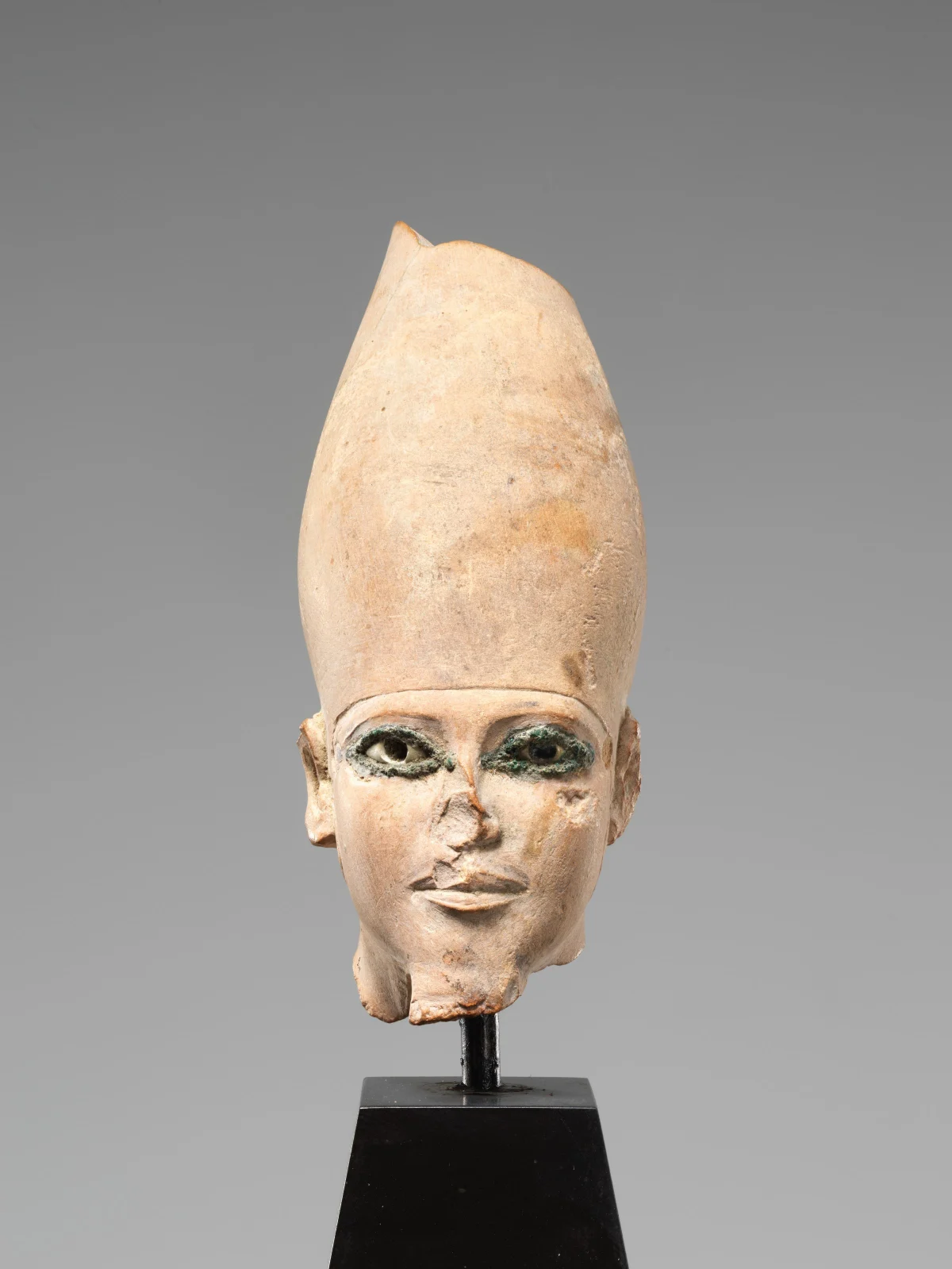
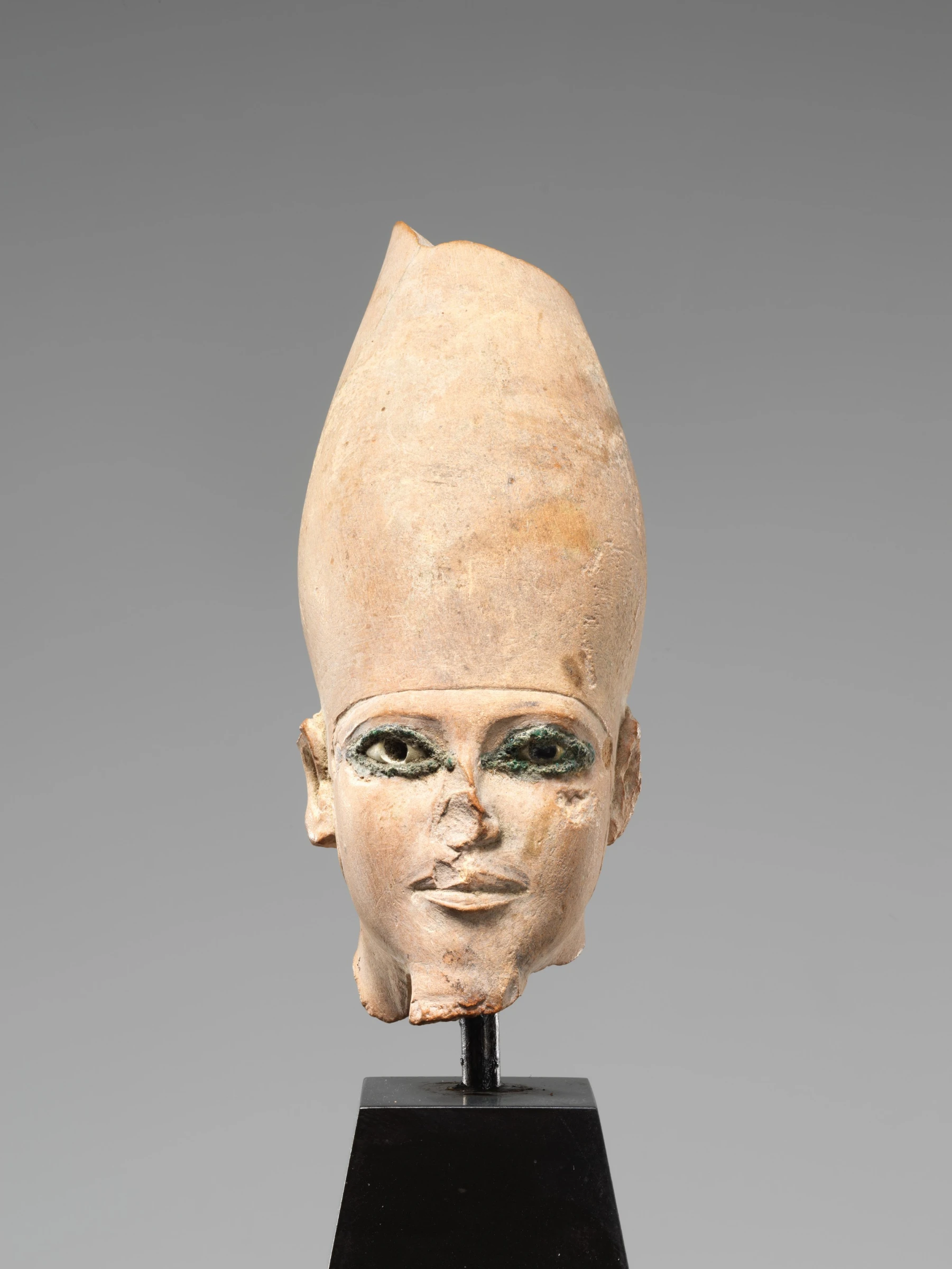
A king of the pyramid age in the white crown, probably Khafre, Dynasty 4, about 2520 to 2494 BC. Limestone with inlaid eyes. The Metropolitan Museum of Art, Bequest of Nanette B. Kelekian, 2020 (2021.41.80). Public domain (CC0). 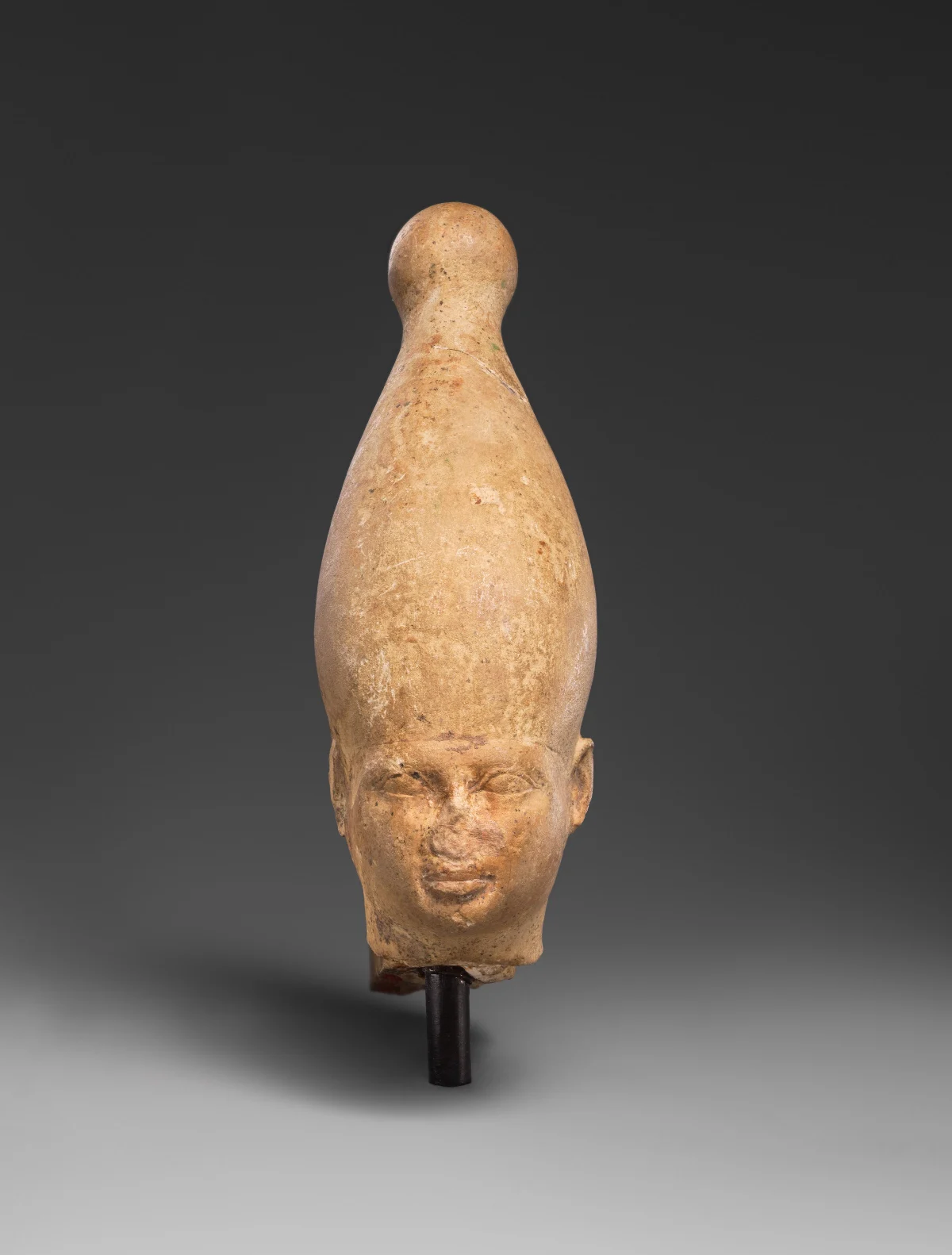
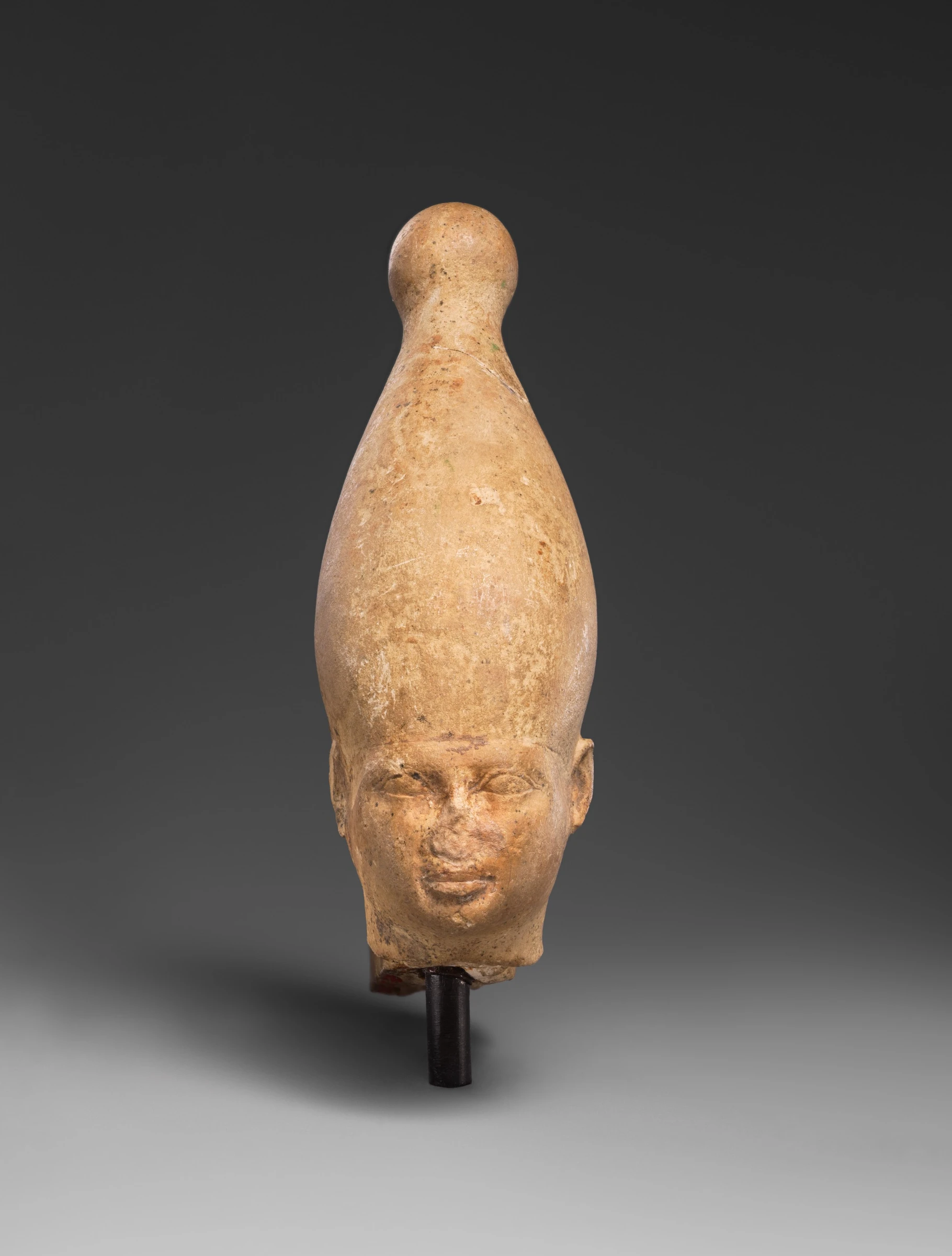
Another king of Dynasty 4 in the white crown, about 2575 to 2465 BC. Limestone with traces of paint. The Metropolitan Museum of Art, Bequest of Nanette B. Kelekian, 2020 (2021.41.89). Public domain (CC0). 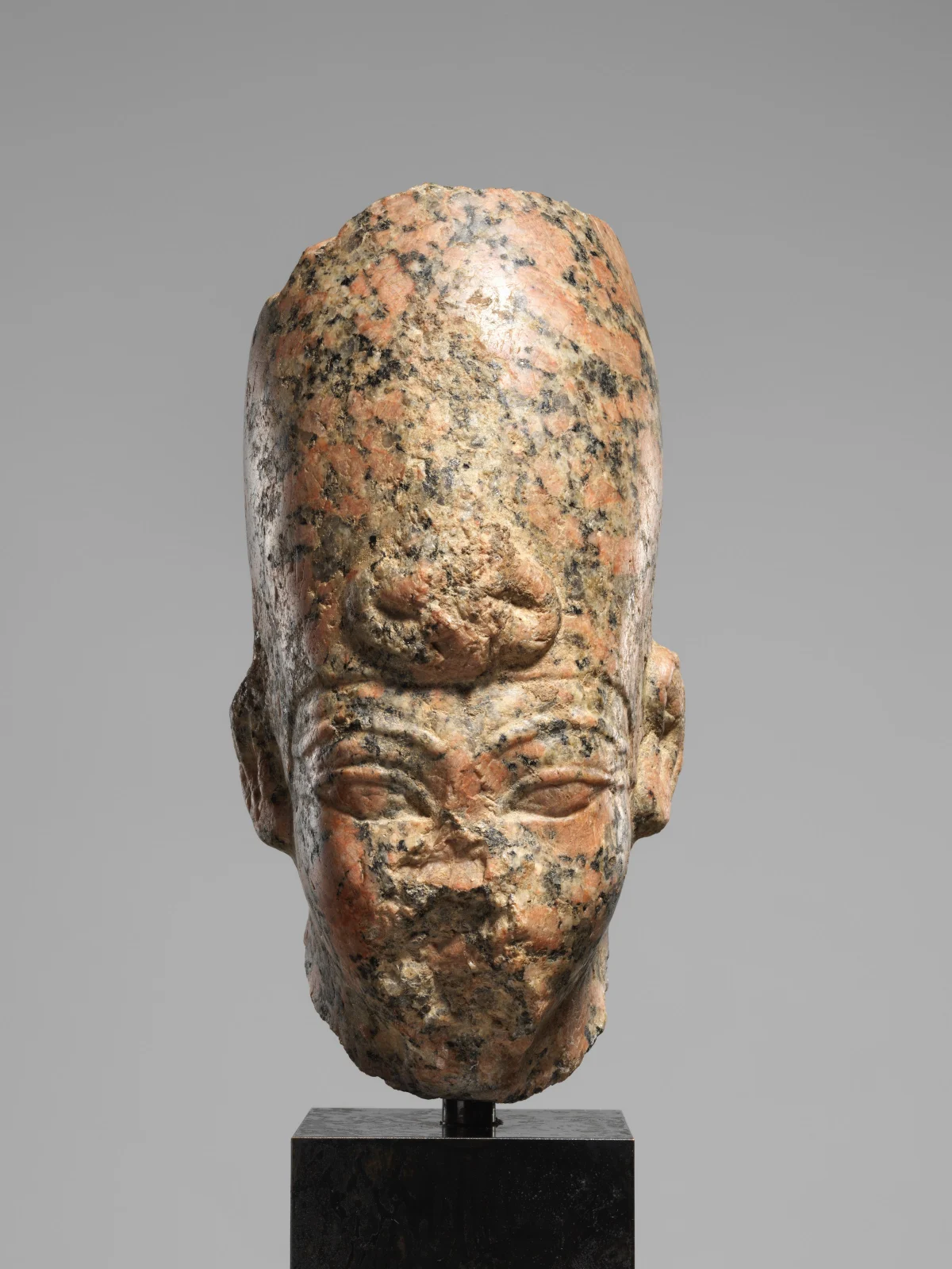
Amenhotep III in the white crown, with the cobra at its brow, Dynasty 18, about 1386 to 1347 BC. Granite. The Metropolitan Museum of Art, Bequest of Nanette B. Kelekian, 2020 (2021.41.127). Public domain (CC0). 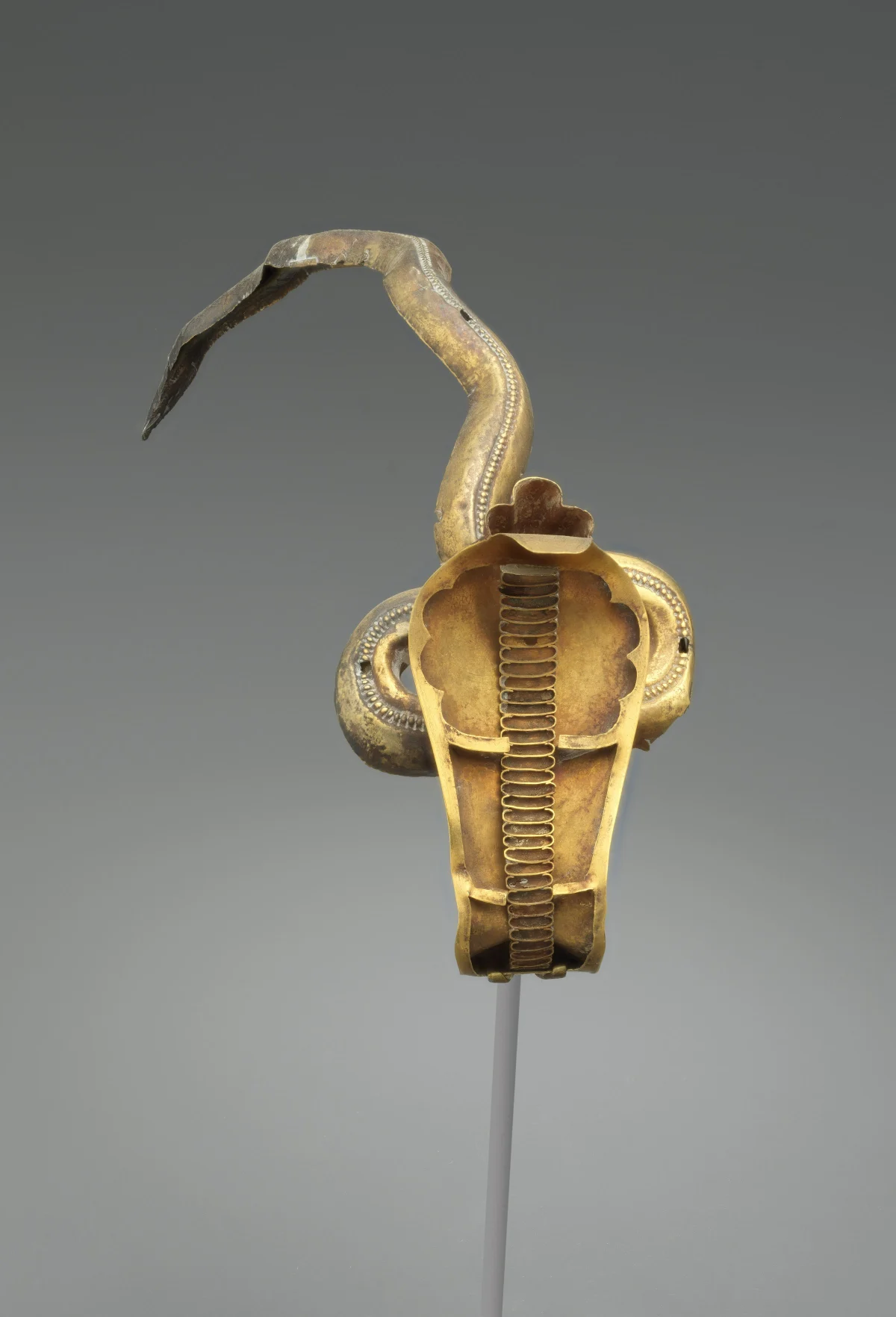
A uraeus in gold and electrum, Dynasty 22, about 945 to 721 BC: the rearing cobra that sat at a king's brow. The Metropolitan Museum of Art, Purchase, Joseph Pulitzer Bequest, 1950 (50.198.3). Public domain (CC0). 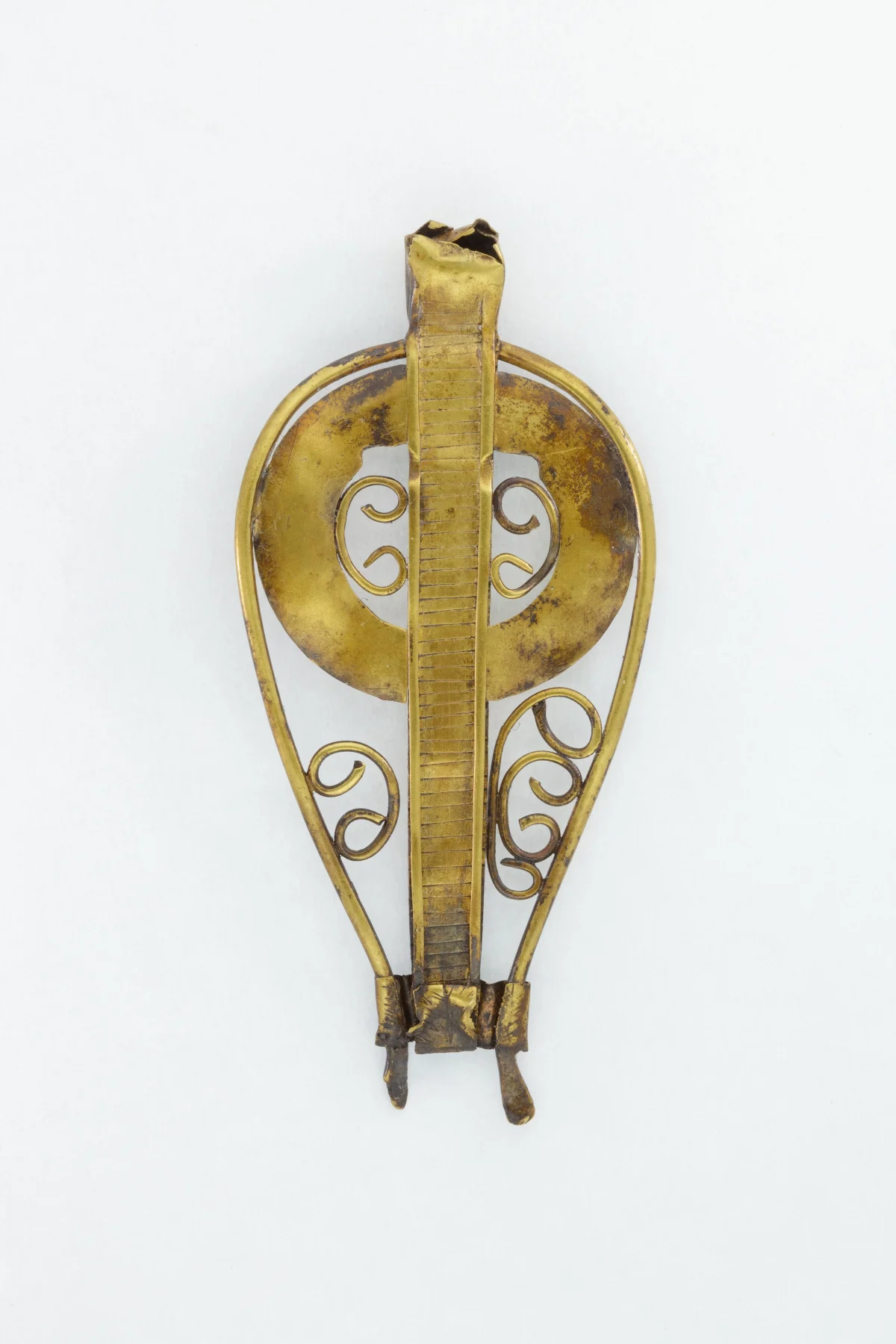
An electrum pendant in the shape of a uraeus, 2030 to 1650 BC. The Met: the cobra could magically spit fire at the enemies of Egypt from the king's forehead. The Metropolitan Museum of Art, Anonymous Gift, 1923 (26.8.81). Public domain (CC0). 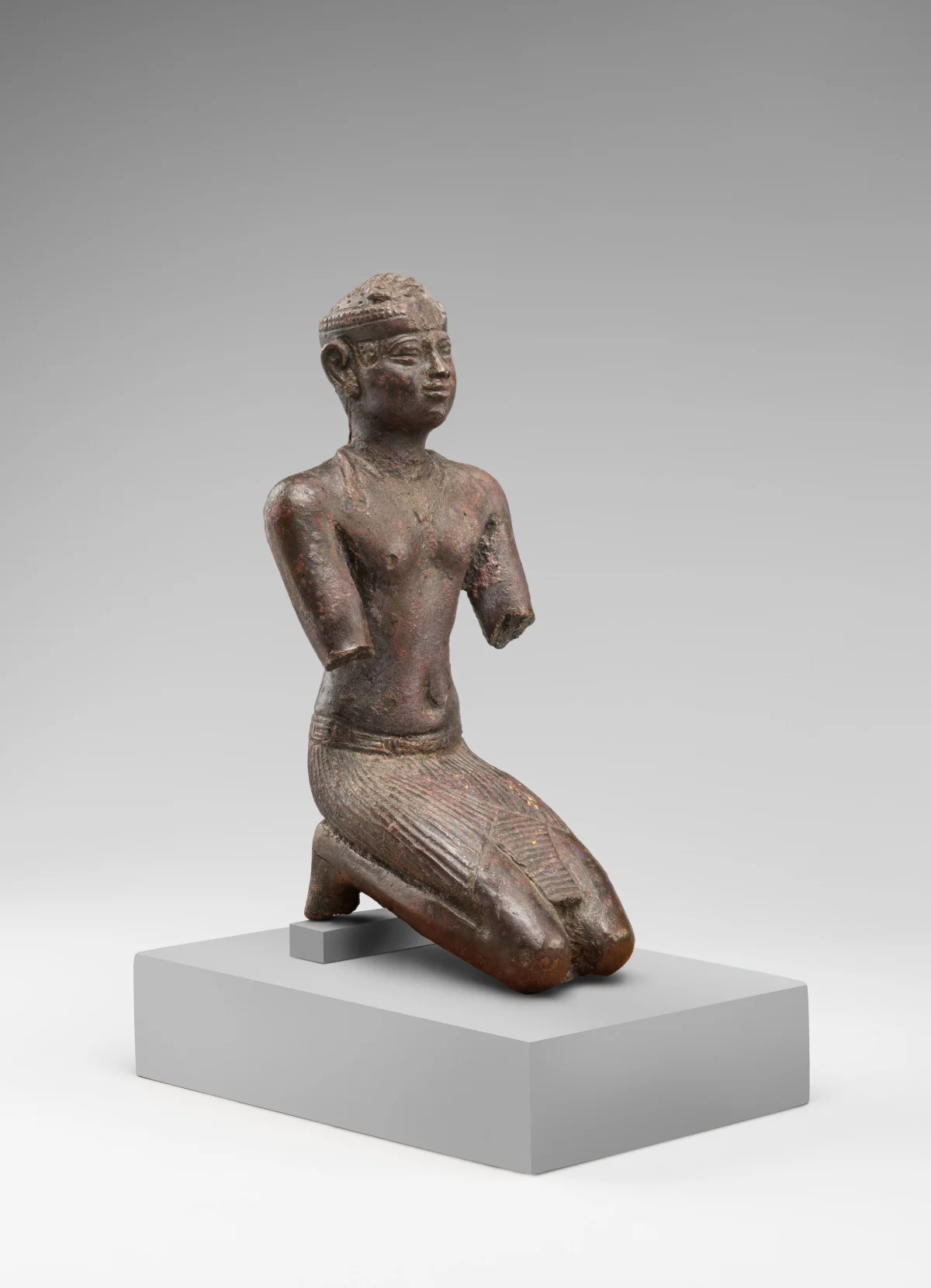
A kneeling Kushite king in bronze, Dynasty 25, about 721 to 664 BC. The Met: his double uraei were later corrected to one by a Saite king. The Metropolitan Museum of Art, Purchase, Lila Acheson Wallace Gift and Anne and John V. Hansen Egyptian Purchase Fund, 2002 (2002.8). Public domain (CC0). 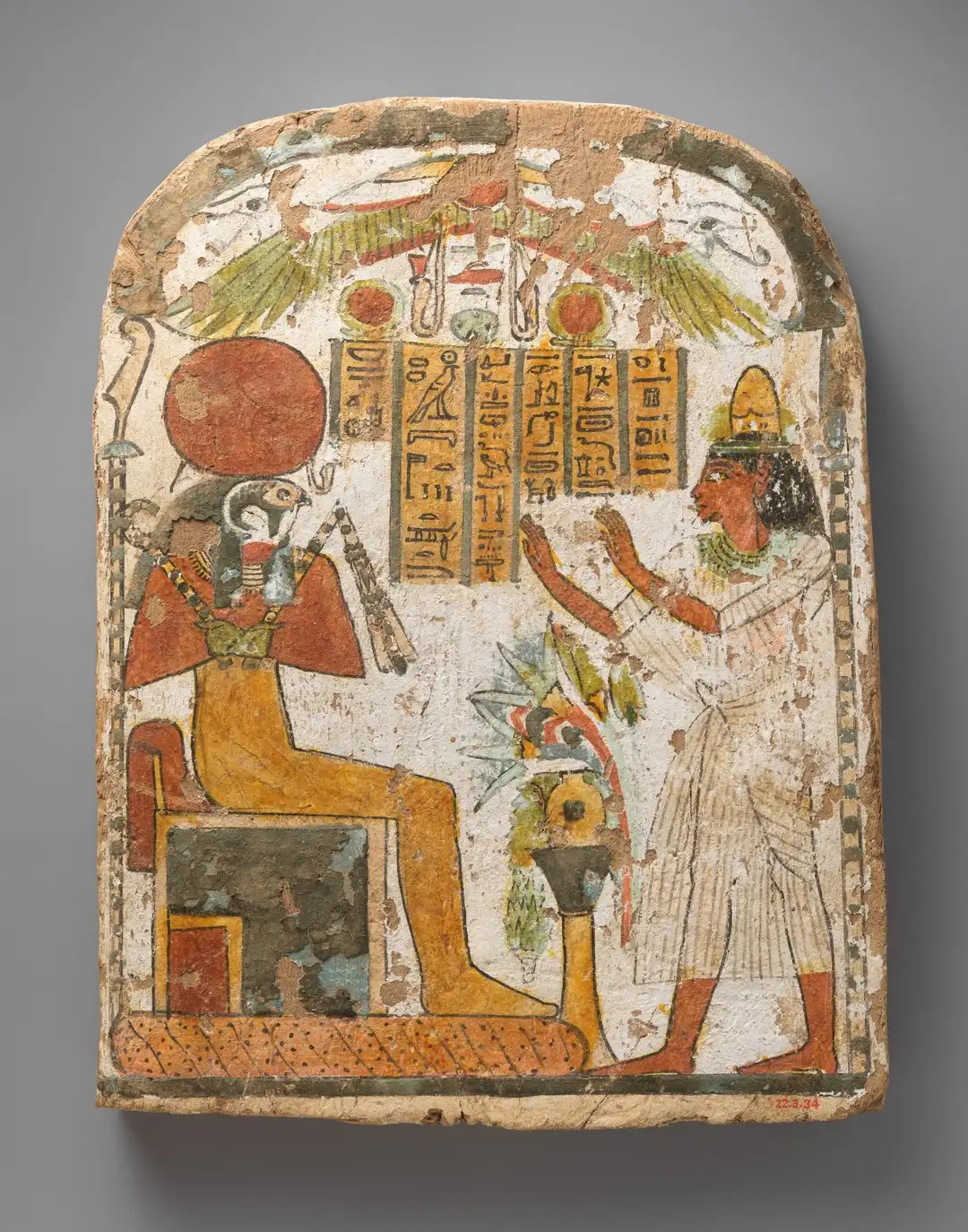
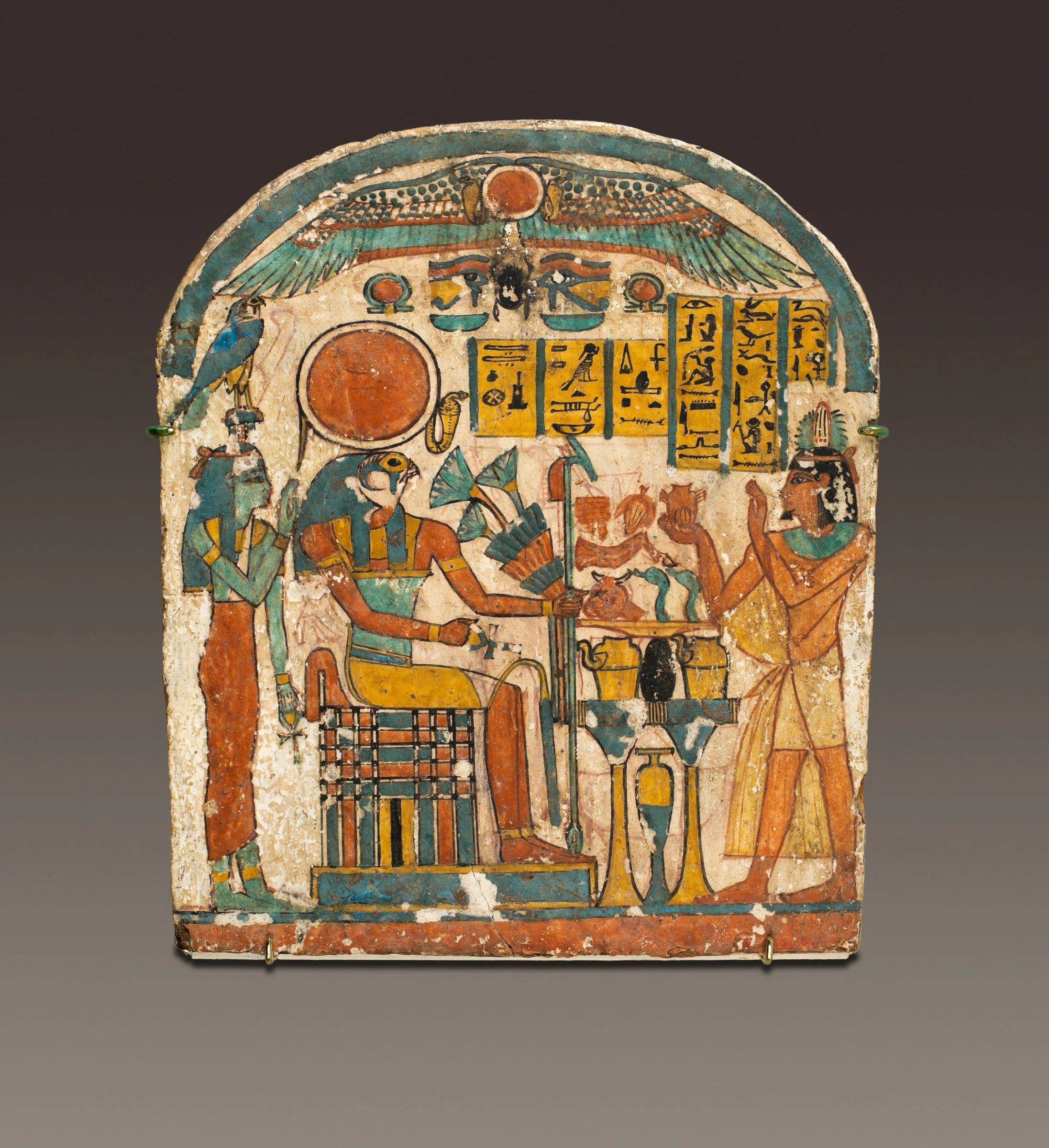
Under a winged sun disk, Djedbastet adores the falcon-headed sun god Re-Harakhty-Atum, who wears the sun disk on his head. Painted wood, Dynasty 22, about 945 to 721 BC. The Metropolitan Museum of Art, Rogers Fund and Edward S. Harkness Gift, 1922 (22.3.34). Public domain (CC0). 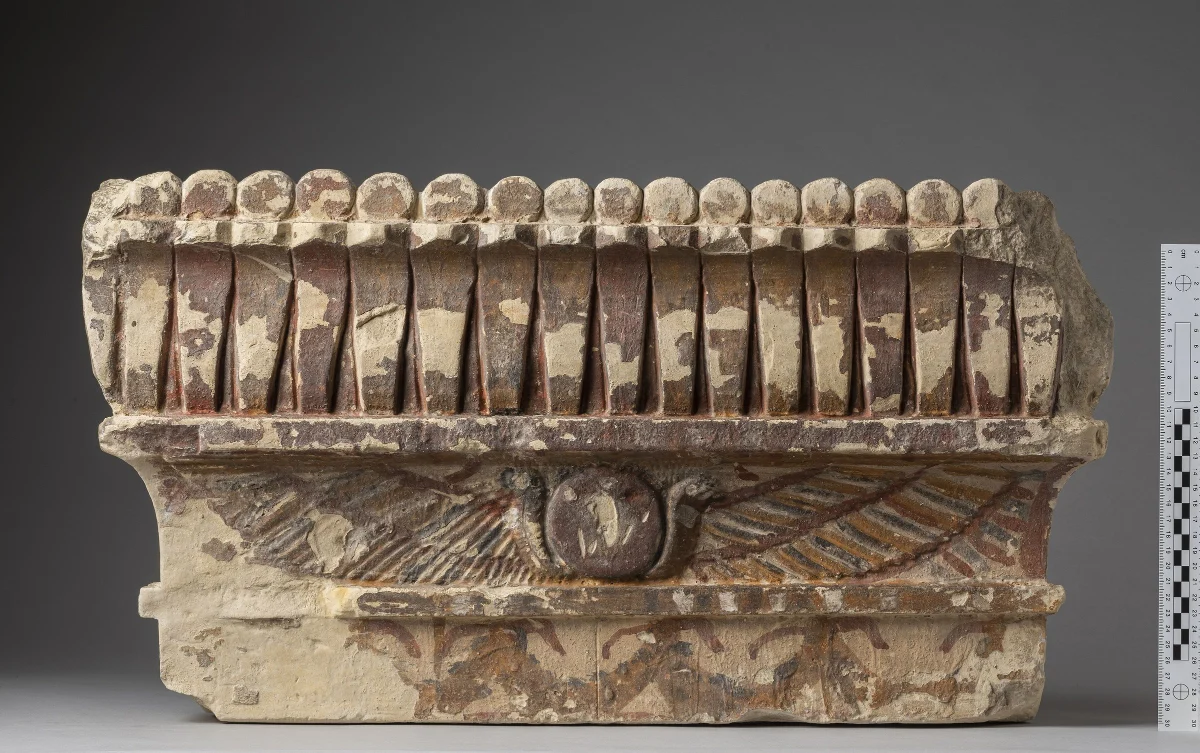
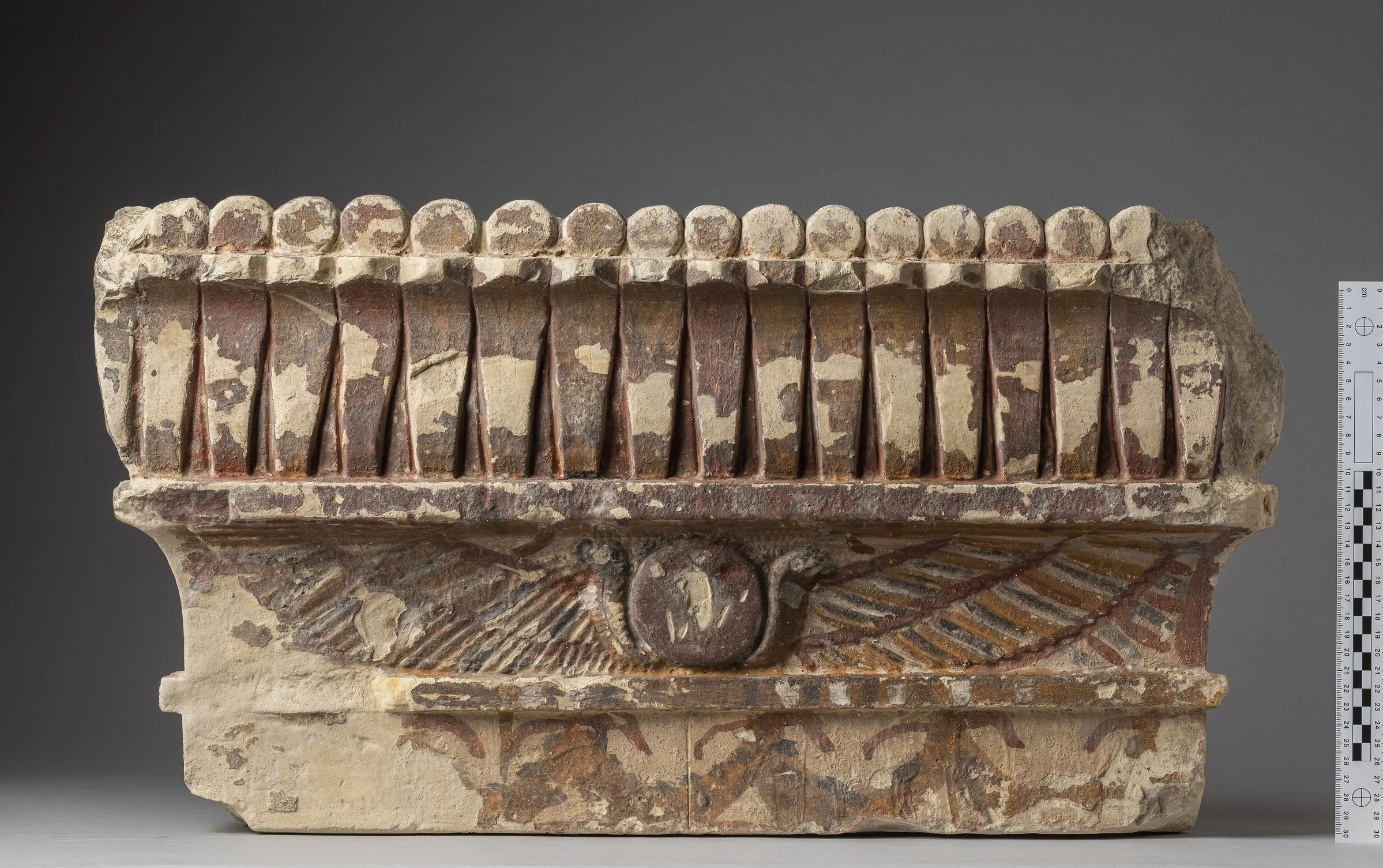
Cobras and the winged sun together, as they crowned Egyptian temple doors: a limestone cornice in the Museo Egizio, Turin. Museo Egizio, Turin (S 19701), CC0, via Wikimedia Commons. Resized. 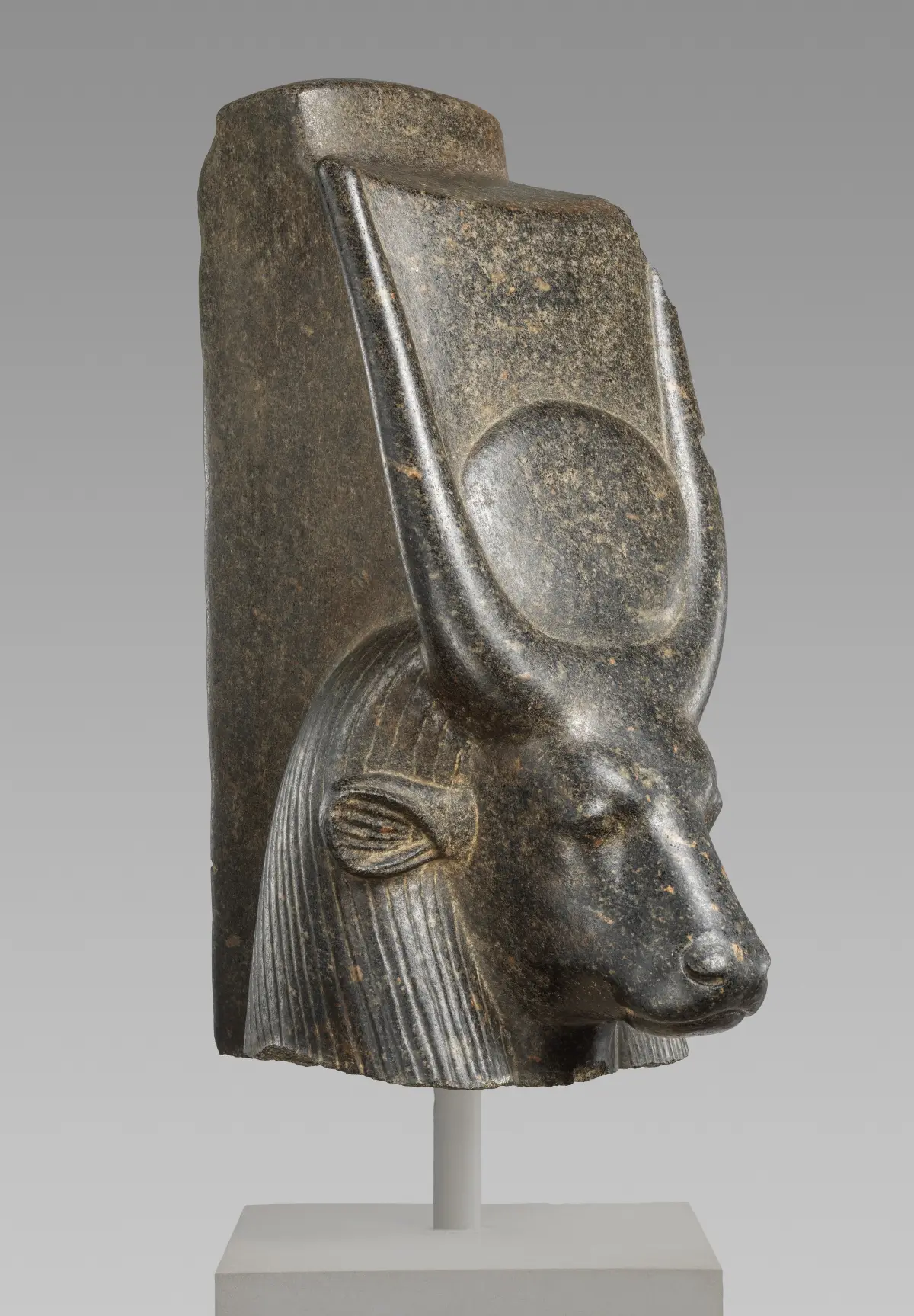
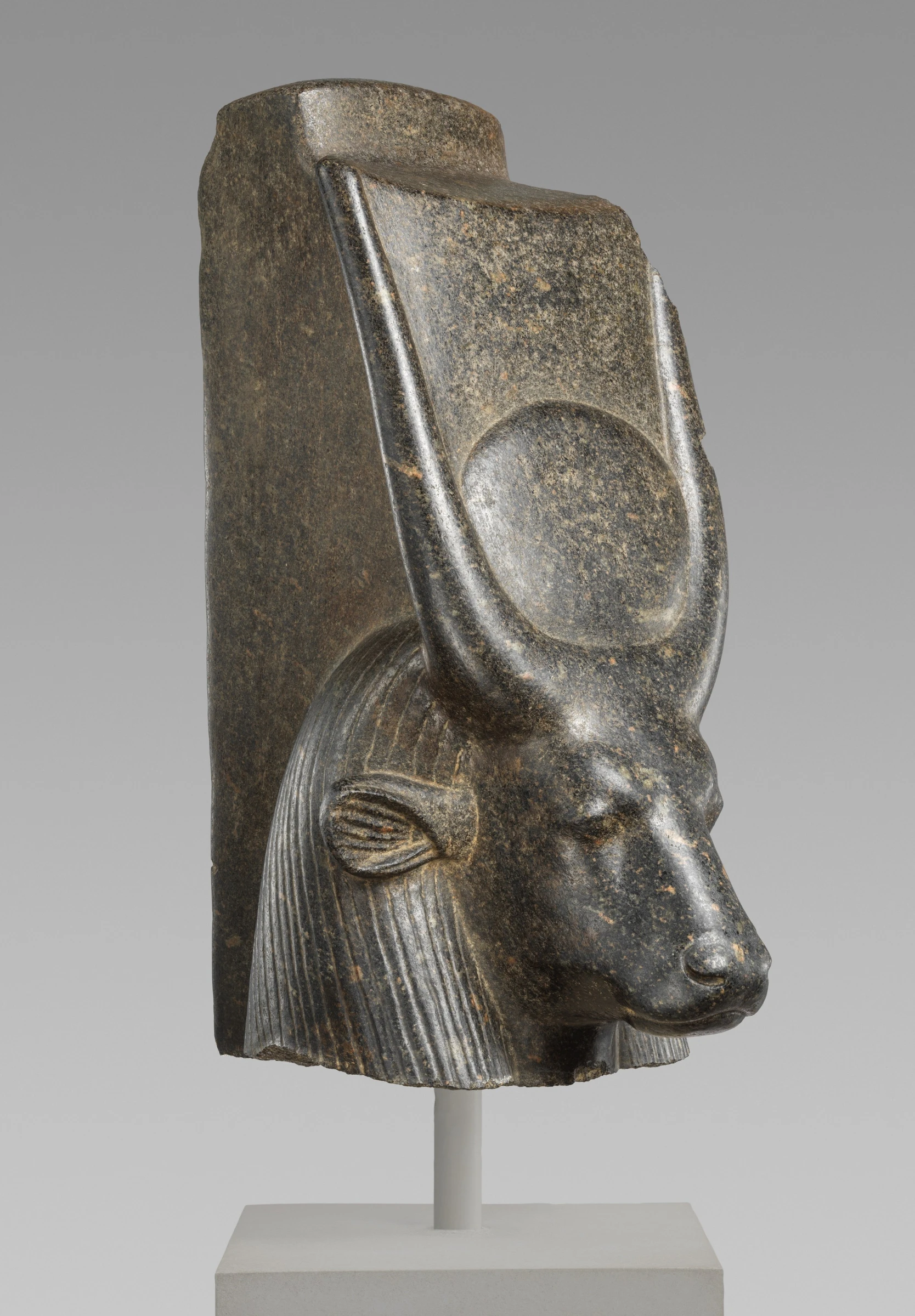
A cow goddess with the sun disk between her horns, Dynasty 19 to 20. The Met names Hathor as the most likely subject, and Mehet-weret as another. The Metropolitan Museum of Art, Rogers Fund, 1919 (19.2.5). Public domain (CC0). 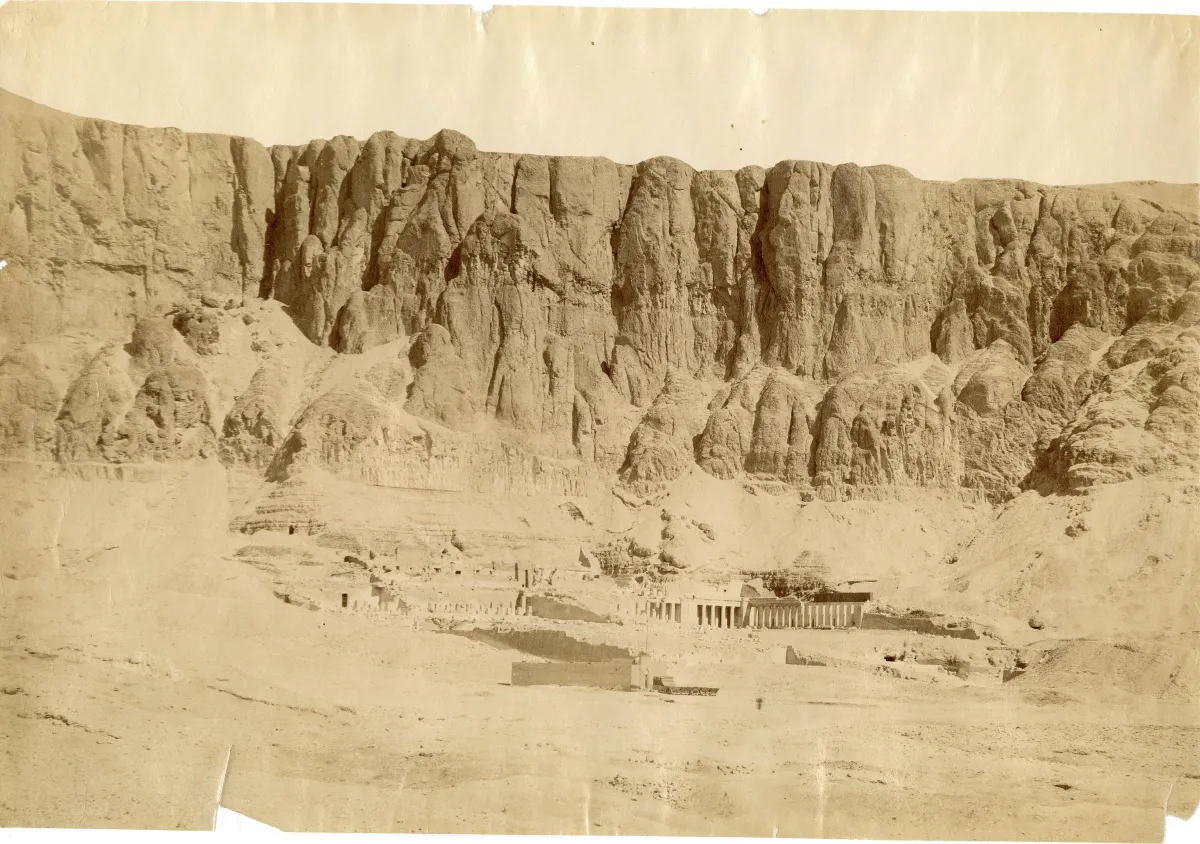
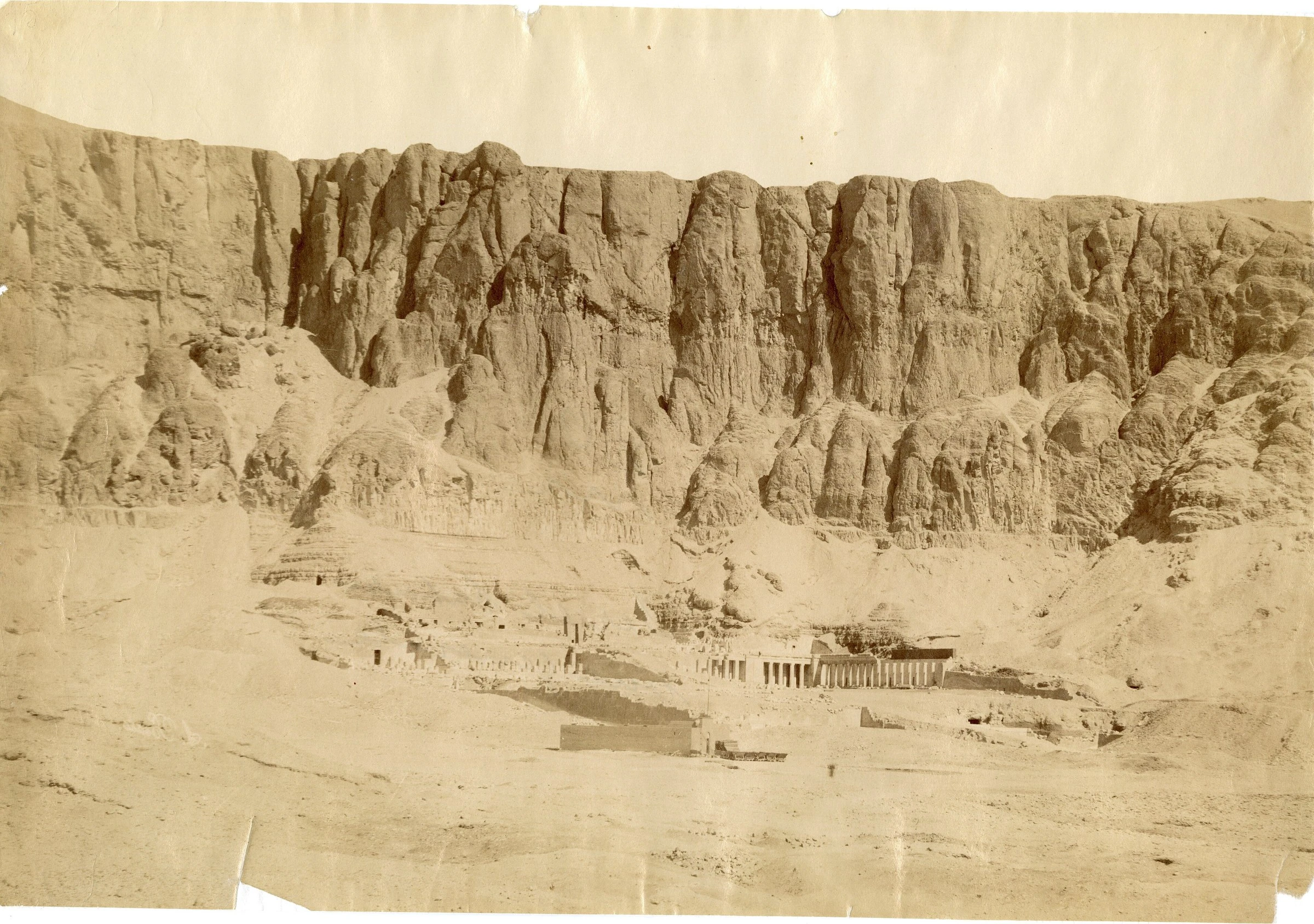
Deir el-Bahri photographed by Antonio Beato between 1870 and 1888, before Naville dug out the temple of Mentuhotep II at the foot of these cliffs. Antonio Beato, 1870-1888. Archivio fotografico Museo Egizio, Turin, CC0, via Wikimedia Commons. Resized. 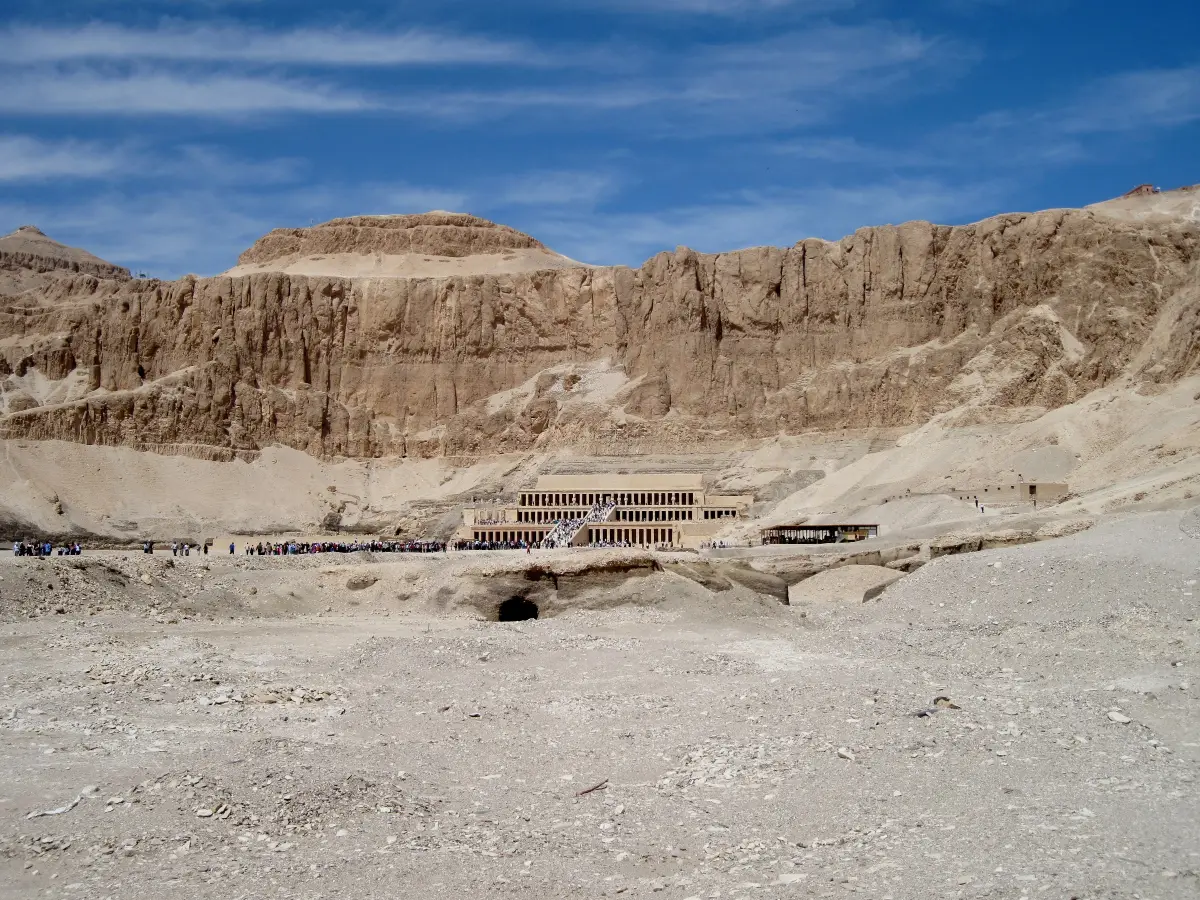
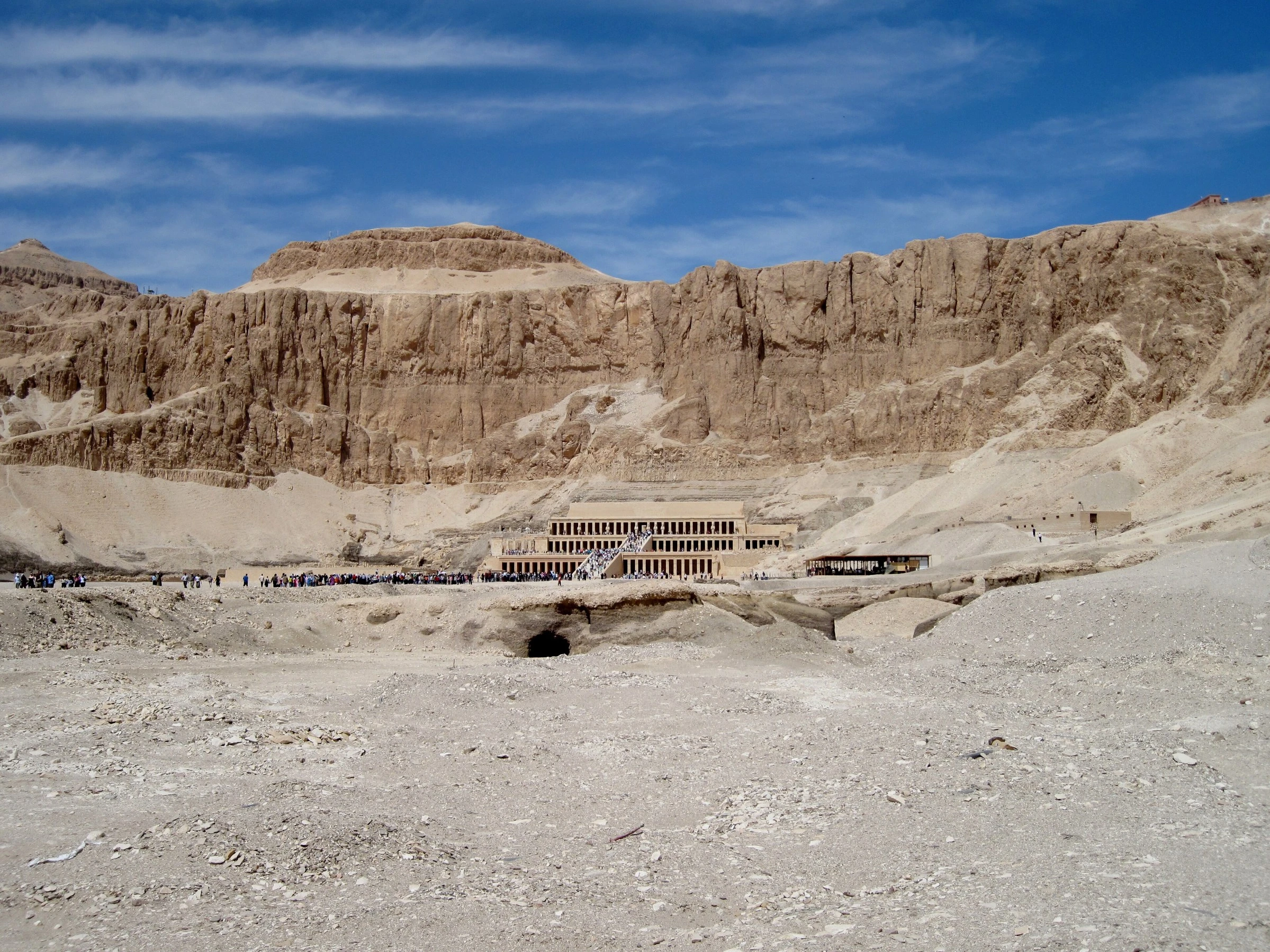
Deir el-Bahri today: the terraced temple of Hatshepsut, with the remains of Mentuhotep II's older temple beside it. Photo: Olaf Tausch, CC BY 3.0, via Wikimedia Commons. Resized.
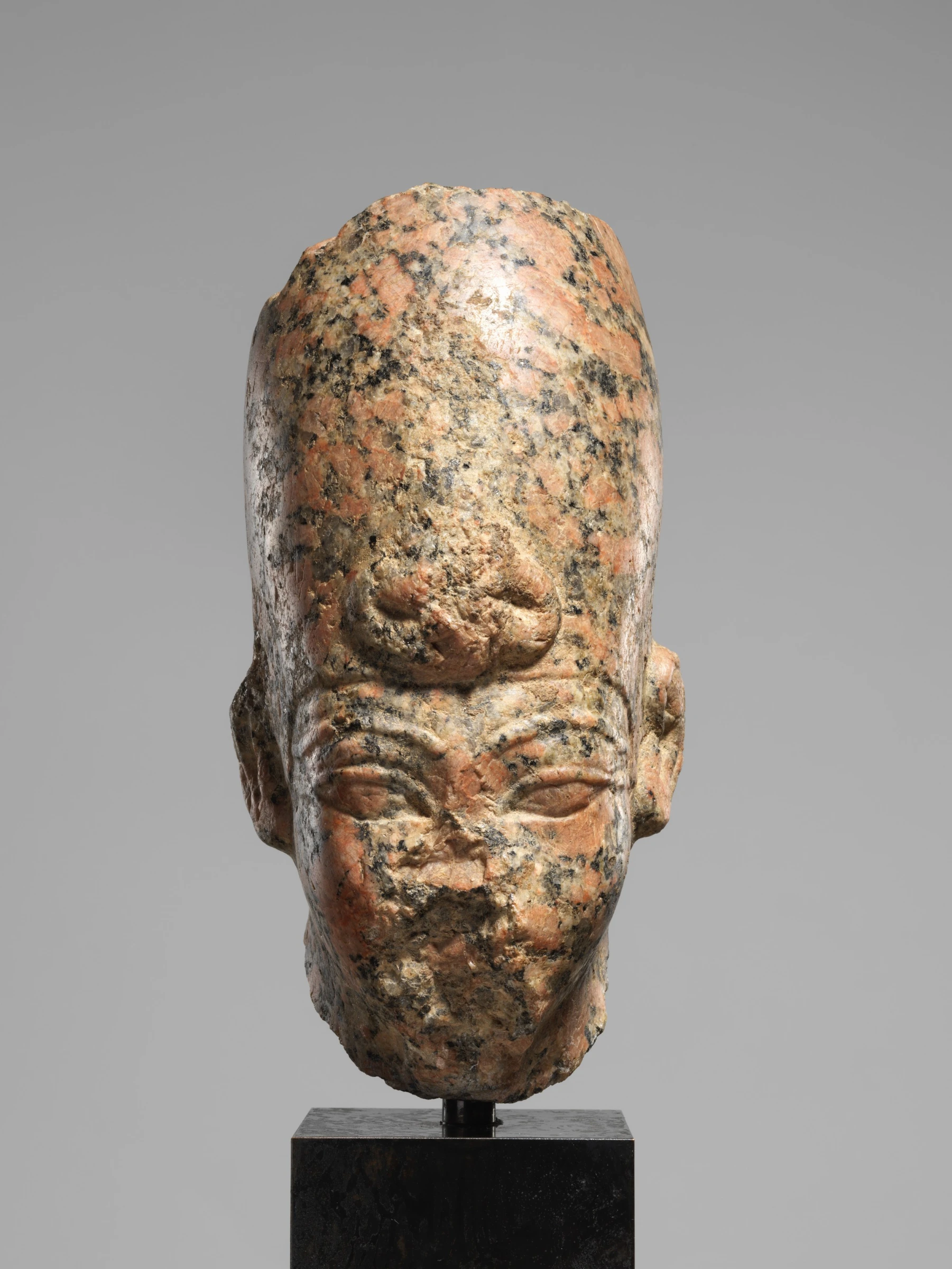
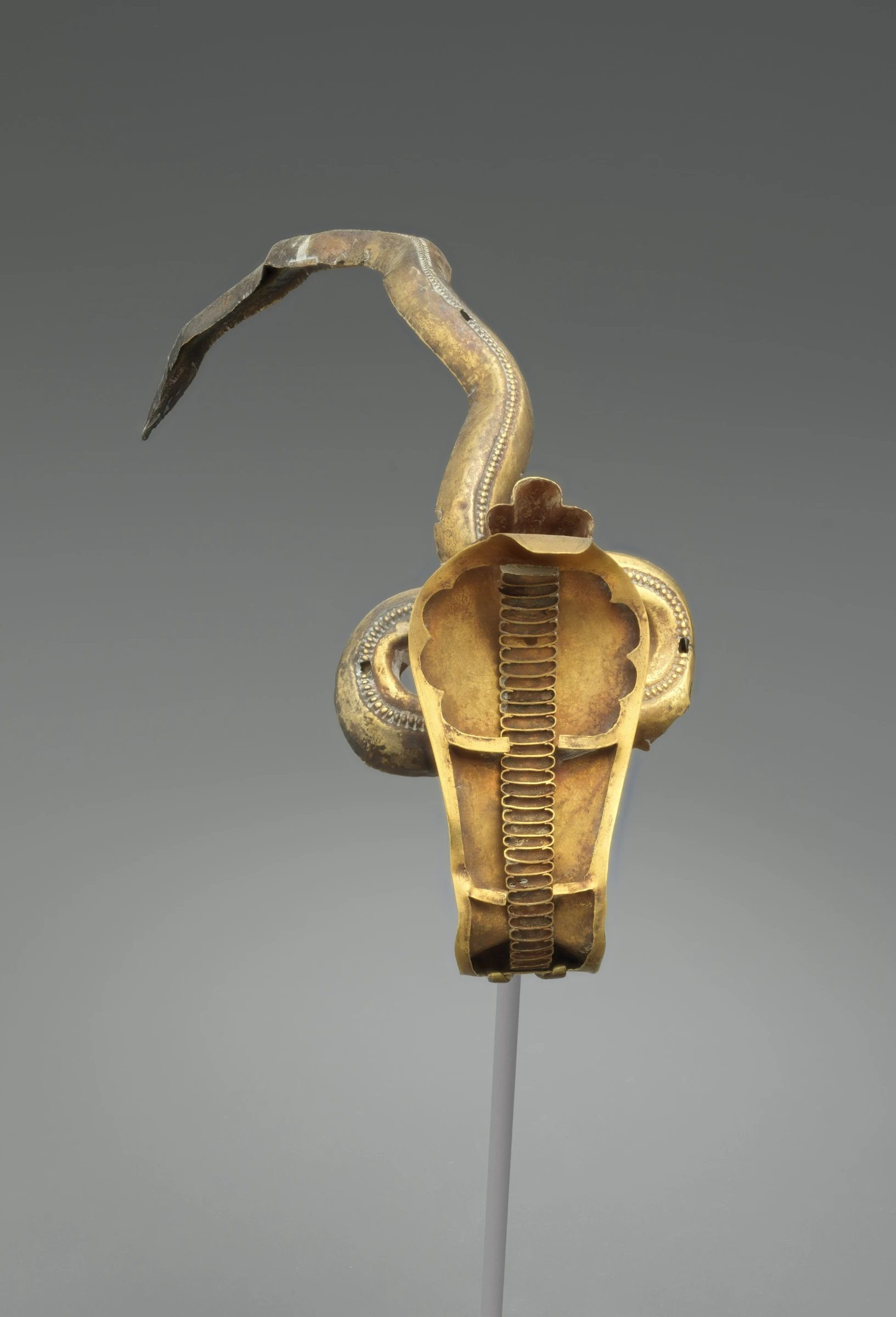
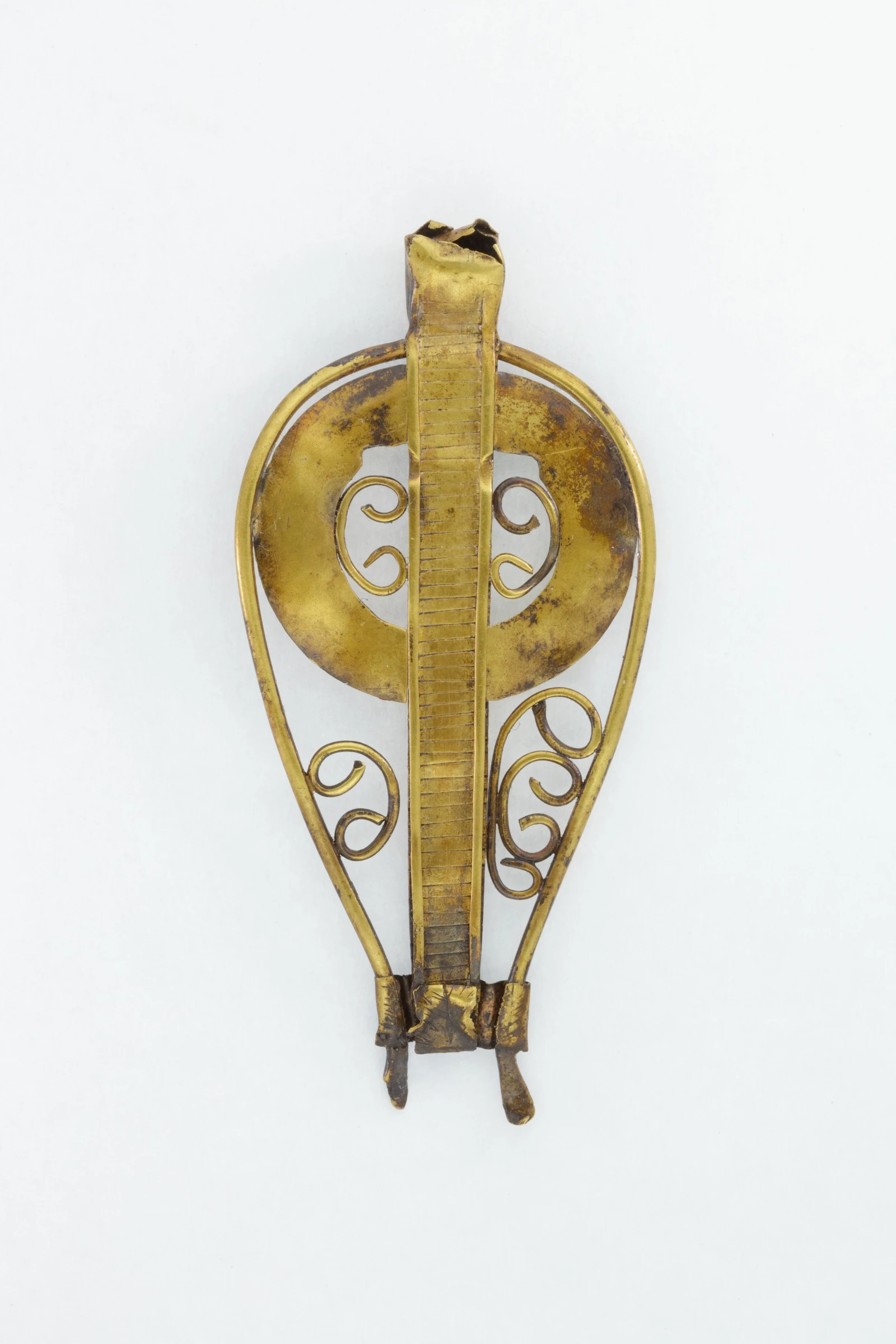
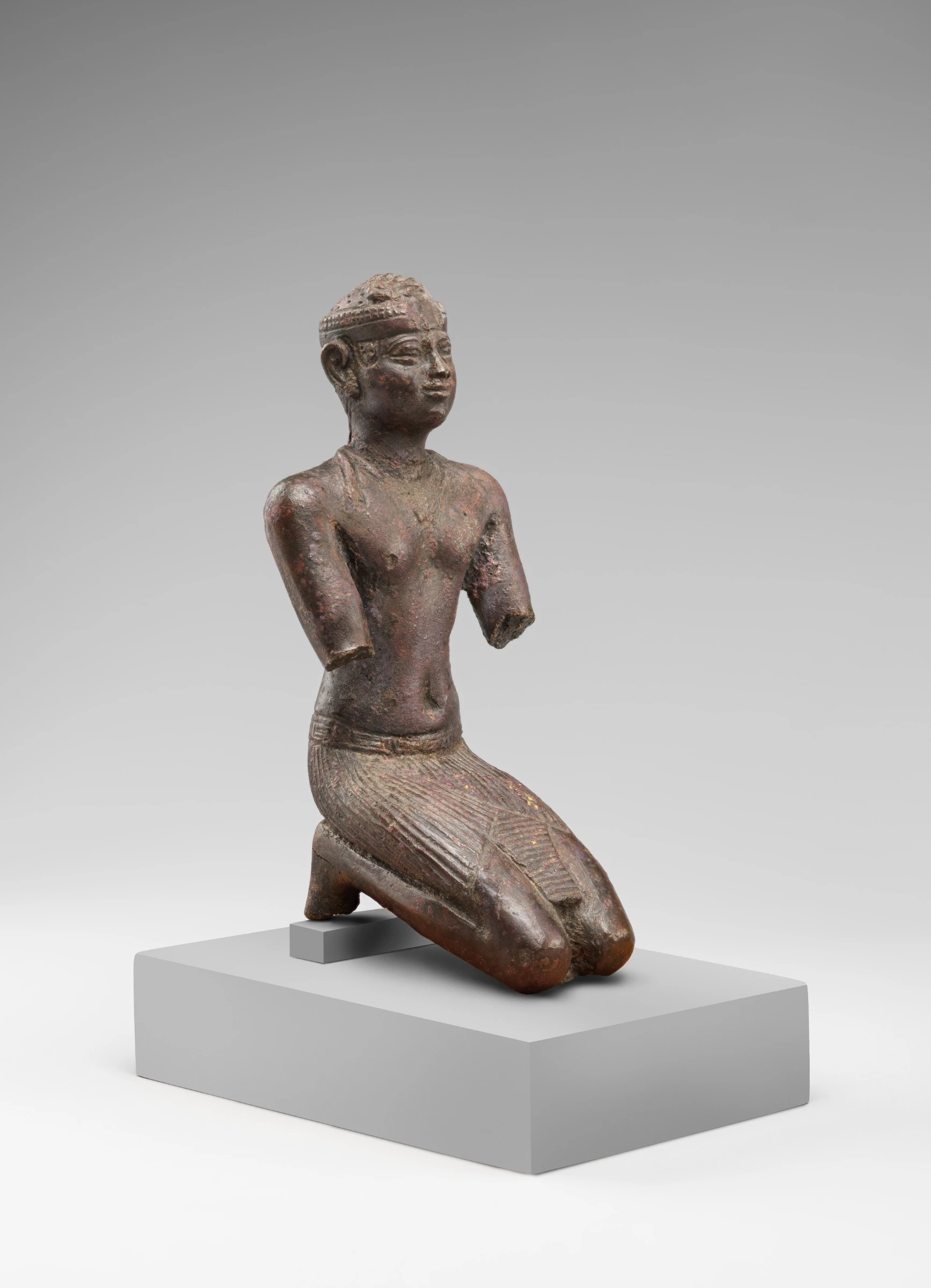
Select a photograph to see it full size, with its caption and credit.
Downloads
- Edouard Naville and Somers Clarke, The XIth Dynasty Temple at Deir el-Bahari, Part II, 1910Egypt Exploration Fund, Memoir 30; public domain (Smithsonian Libraries scan at the Internet Archive, xithdynastytemp2navi)
- Adolf Erman, Hymnen an das Diadem der Pharaonen, 1911Abhandlungen der Preussischen Akademie der Wissenschaften 1911, Abh. 1; Public Domain Mark (Internet Archive)
Sources
- Relief of Nebhepetre Mentuhotep II and the Goddess Hathor, ca. 2010-2000 B.C. (07.230.2) The Metropolitan Museum of Art Primary record
- Edouard Naville and Somers Clarke, The XIth Dynasty Temple at Deir el-Bahari, Part II, 1910 Egypt Exploration Fund, Memoir 30; public domain (Smithsonian Libraries scan at the Internet Archive, xithdynastytemp2navi) Primary record
- Adolf Erman, Hymnen an das Diadem der Pharaonen, 1911 Abhandlungen der Preussischen Akademie der Wissenschaften 1911, Abh. 1; Public Domain Mark (Internet Archive) Primary record
- James of Idaho (James Coon), comment of October 15, 2026, 1:50am: Oct. 14th-2026- Idaho signs and symbols and those in power Earth Changes and the Pole Shift (Pole Shift Ning), blog Nibiru Visibility and Debris Primary record
- James of Idaho, comment of May 11, 2024: May 10th, 2024-Idaho- The EYE OF HORUS Pole Shift Ning Primary record
- James of Idaho, comment of February 5, 2024 Pole Shift Ning Primary record
- Nibiru Visibility and Debris, running blog page Pole Shift Ning Primary record
- James of Idaho, member profile Pole Shift Ning General reference
- ZetaTalk Newsletter Issue 1006, Nibiru's New Face, December 28, 2025 ZetaTalk Primary record
- ZetaTalk Newsletter Issue 1024, July 19, 2026 ZetaTalk Primary record
- ZetaTalk, GodlikeProduction Live Q&A ZetaTalk Primary record
- ZetaTalk Chat, December 20, 2014 ZetaTalk Primary record
- ZetaTalk, The Annunaki, Ancient Gods ZetaTalk Primary record
- ZetaTalk, Winged Globe ZetaTalk Primary record
- The Sumerian king list: translation Electronic Text Corpus of Sumerian Literature, University of Oxford Primary record
- The royal crowns of Egypt, 2019 Egypt Exploration Society Study
- White crown (glossary) Global Egyptian Museum General reference
- Susan Allen, Kings and Queens of Egypt, 2004 The Metropolitan Museum of Art, Heilbrunn Timeline of Art History Study
- King Scorpion's macehead: ritual and power at the dawn of Egyptian kingship The Past Study
- Pendant in the Shape of an Uraeus, 26.8.81 The Metropolitan Museum of Art Study
- Head of a Kushite King, 2021.41.88 The Metropolitan Museum of Art Study
- Silke Roth, Queen, UCLA Encyclopedia of Egyptology, 2009 UCLA Study
- Bright Objects in Photos Taken of the Sun National Radio Astronomy Observatory Study
- Dai, Luo, Zhou, Li and Loy, Nighttime Smartphone Reflective Flare Removal Using Optical Center Symmetry Prior, CVPR 2023 arXiv Primary record
- NASA's WISE Survey Finds Thousands of New Stars, But No 'Planet X', March 7, 2014 NASA Jet Propulsion Laboratory Primary record