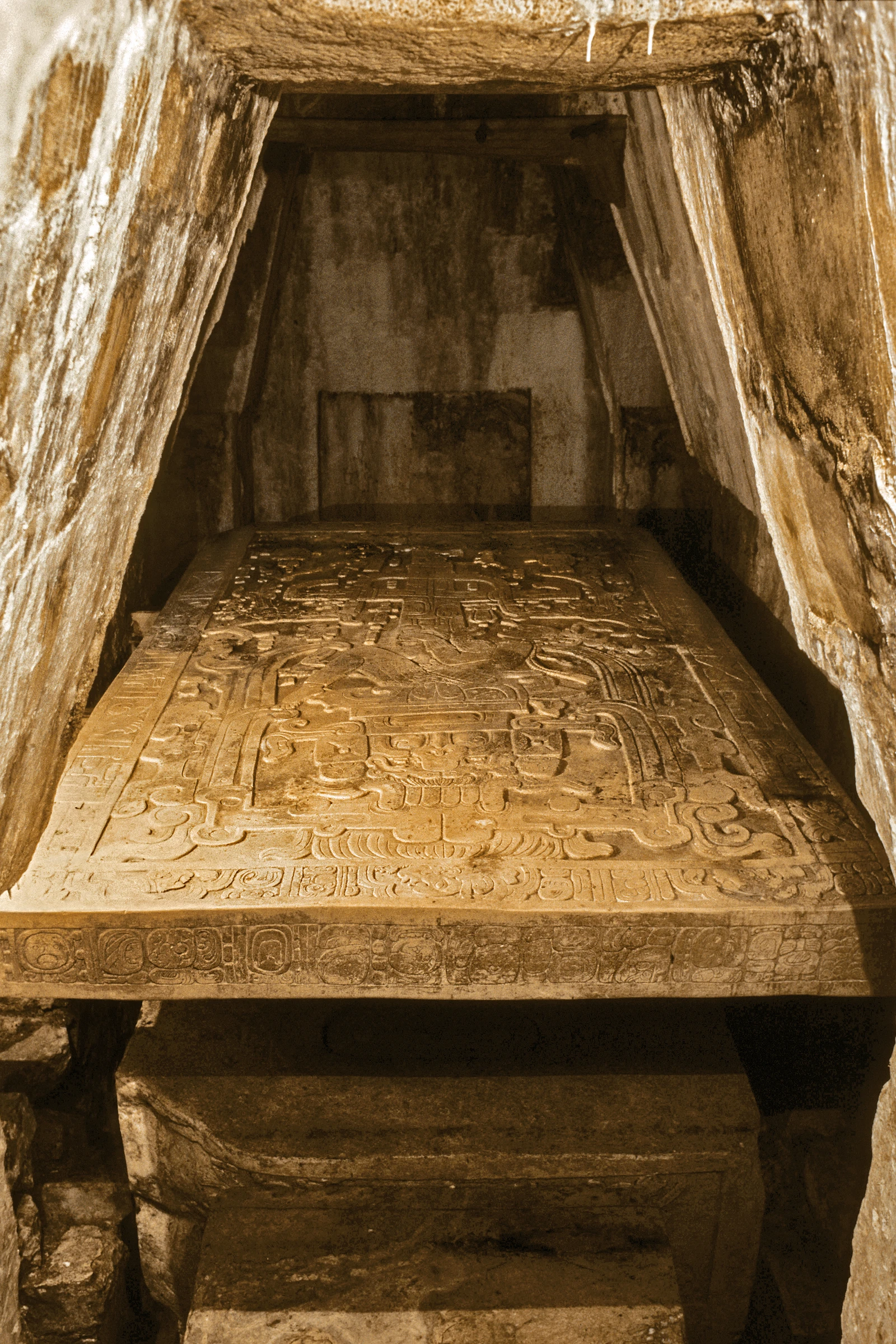
Deep inside the Temple of the Inscriptions at Palenque, in the rainforest of Chiapas in southern Mexico, a stone lid lies over a stone coffin. It is about 3.8 metres long and 2.2 wide, a quarter of a metre thick, and every inch of its face is carved. Since 1968 it has stood at the centre of the argument over ancient visitors.
The crypt that holds it sits almost 20 metres below the temple floor. The vault rises in stepped stone over a chamber the coffin almost fills.
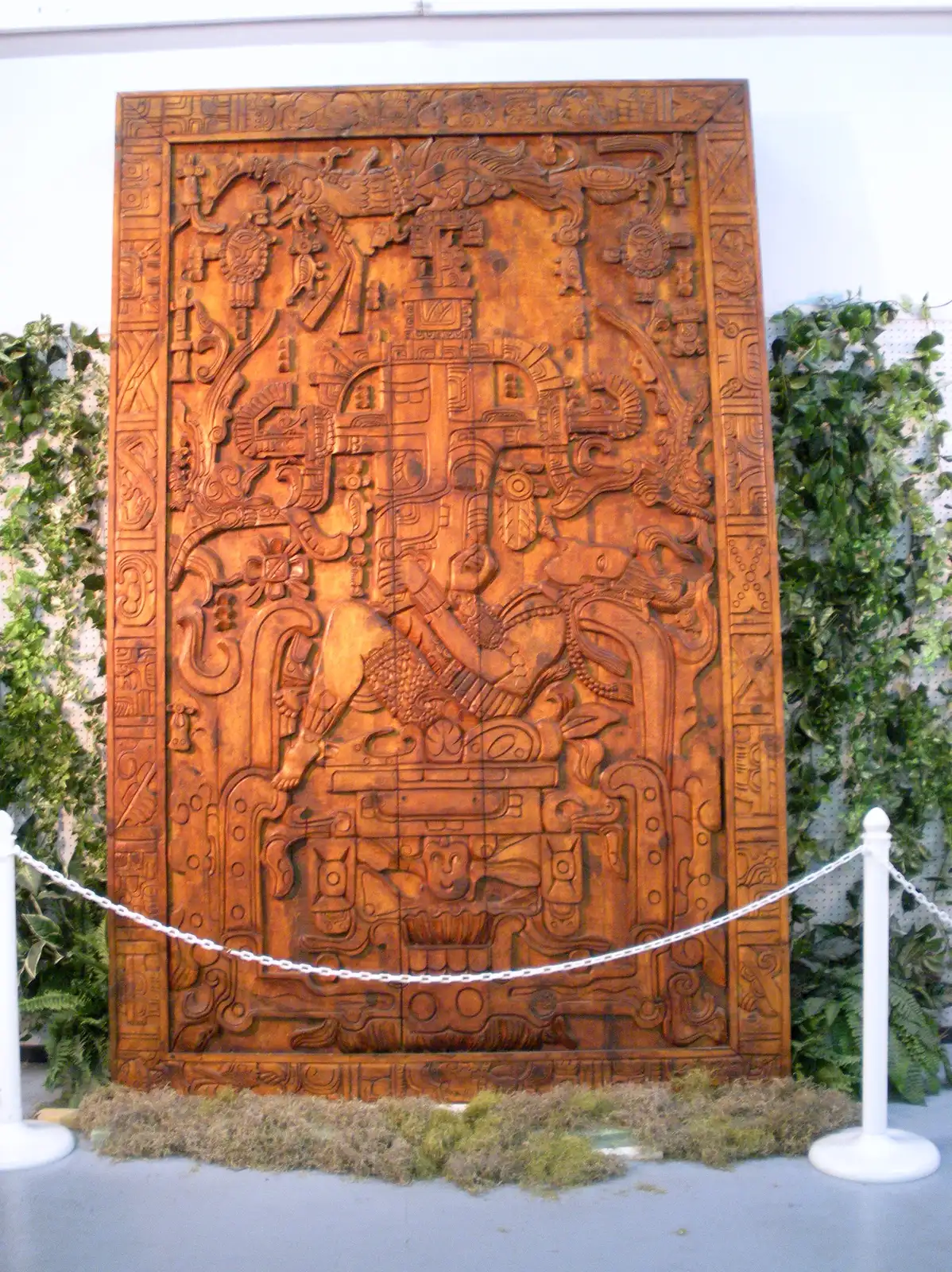
On the lid a man half lies, half sits, knees drawn up, leaning, his hands raised before him. Around and above him rises a towering structure of carved forms, and at the very top a bird. Below him, open jaws. Round the edges runs a band of glyphs, writing that has been read.
The king inside died in 683.
The argument about what he is doing reached millions in 1968.
The stair under the floor
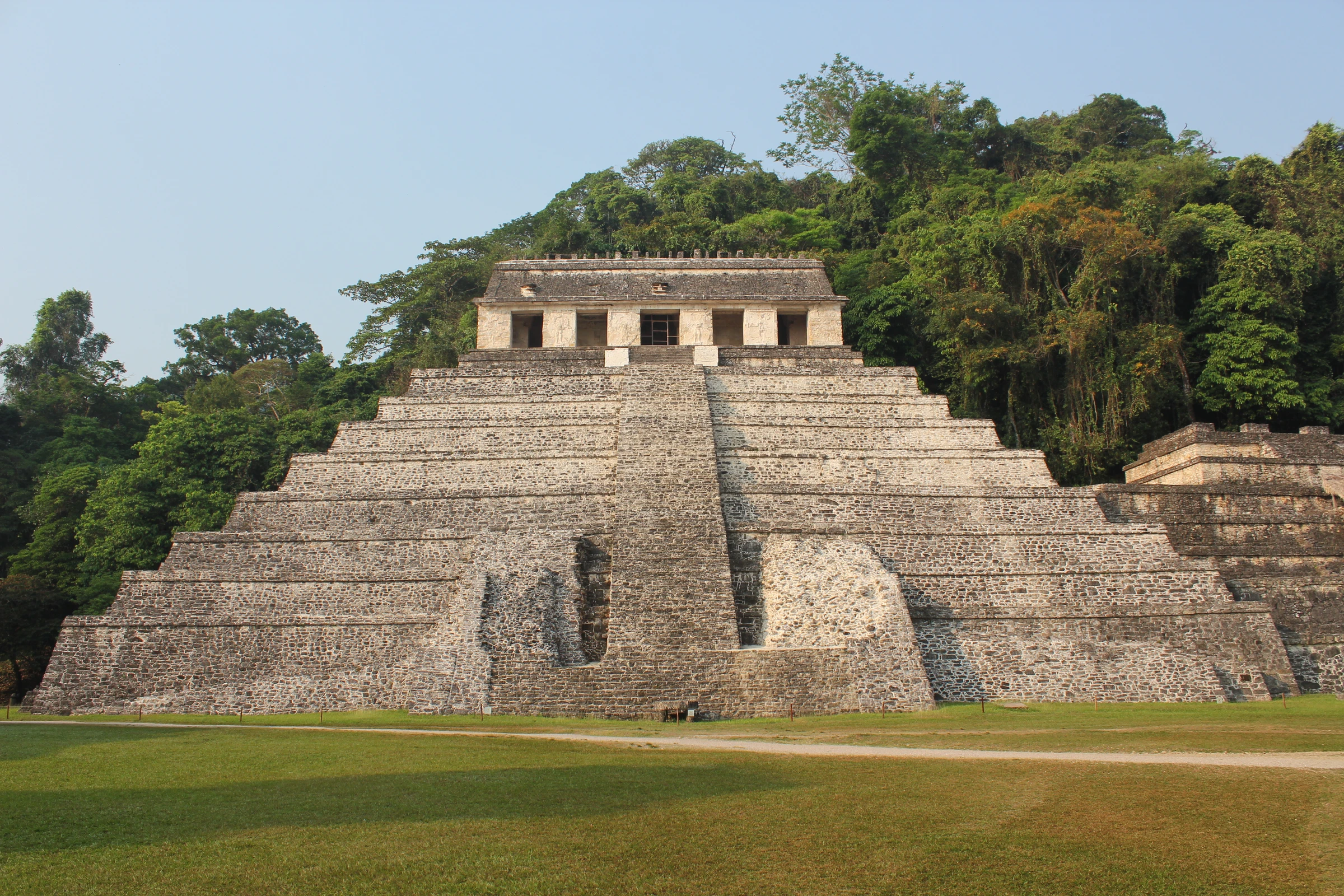
Alberto Ruz Lhuillier began digging inside the temple in 1949. In its floor he found a slab that could be lifted, and under it a stairway packed solid with rubble. His crew spent four seasons, by one account four "swelteringly hot" ones, clearing it, flight after flight, down into the body of the pyramid.
On 15 June 1952, according to Mexico's National Institute of Anthropology and History, INAH, the team freed a triangular stone at the foot of the stair and found the crypt behind it, almost 20 metres below the temple floor. The chamber is about 7 metres long and 3.75 wide. Nine figures in stucco stand on its walls. The carved coffin fills almost all of it.
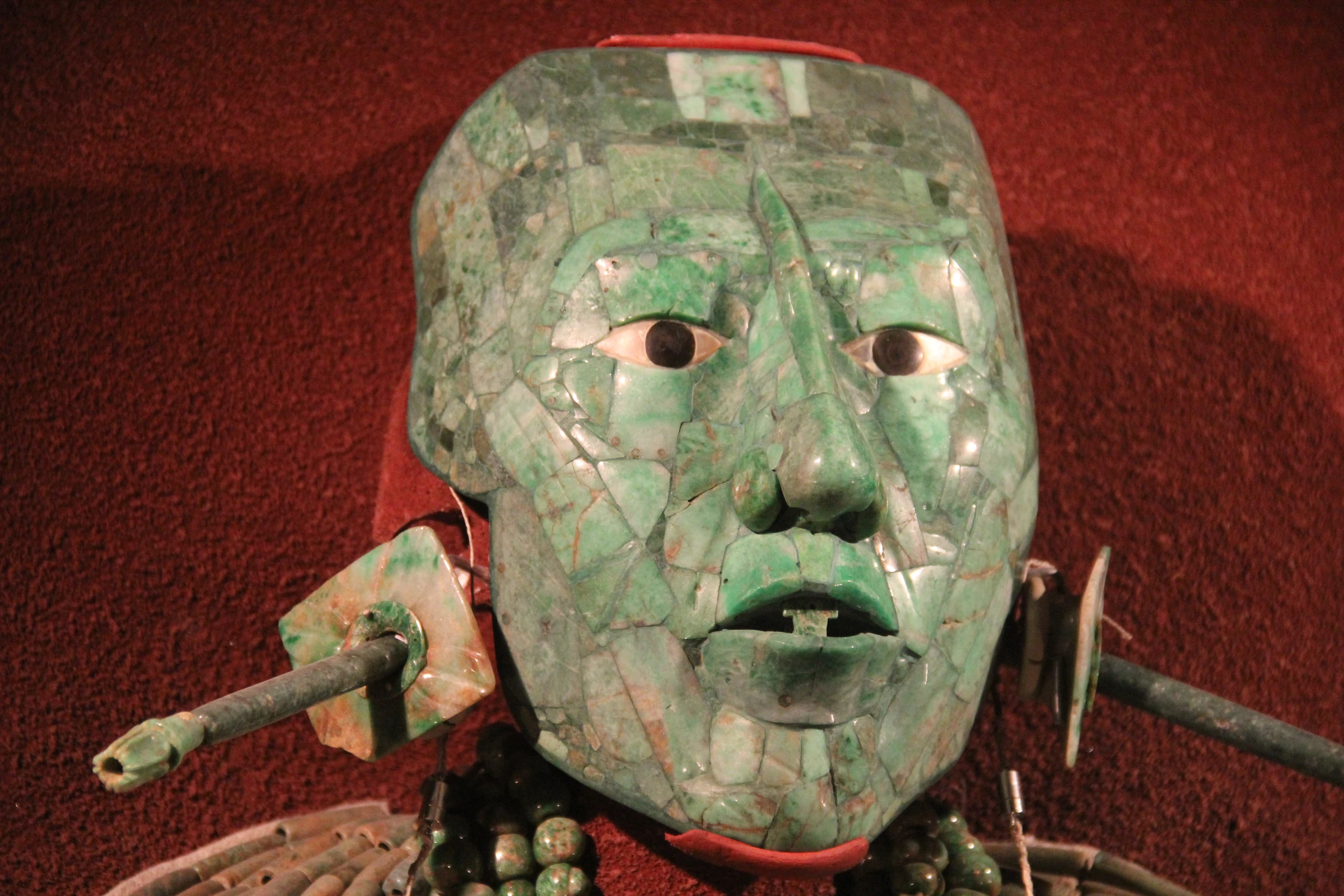
On 27 November 1952 they raised the lid with truck jacks and tree trunks. Inside lay the remains of a man in lime and red cinnabar, and a death mask of jade.
The inscriptions in the temple and on the coffin name him. K'inich Janaab Pakal, born in 603, king of Palenque from 615 until his death in August 683, a reign of 68 years. Stanley Guenter, writing for Mesoweb, dates the start of work on the temple to about 677 or 678 from the dates on its eaves, and has it finished by Pakal's son, K'inich Kan Bahlam II.
A rocket in the rainforest
Erich von Daniken was managing a hotel in Davos, in the Swiss Alps, when he began to write. He had taken the post in 1964. More than twenty publishers turned down the manuscript, according to a 2015 profile in the Swiss magazine Beobachter, and when Econ-Verlag brought out Erinnerungen an die Zukunft in 1968, the first printing was 3,000 copies. In English it became Chariots of the Gods?, from Souvenir Press in 1969 and Putnam in 1970. The film made from it was nominated for the Academy Award for documentary feature at the 1971 ceremony. By the time he died, on 10 January 2026, aged 90, his books had sold almost 70 million copies, by the count reported by Swiss public broadcasting.
The Palenque stone is the centre of his Maya chapter. He described a human figure bent forward "like a racing motorcyclist," seated in a vehicle "any child would identify" as a rocket: pointed at the front, ending in "a darting flame." The figure, he wrote, works "indefinable controls," rests a heel on "a kind of pedal," and looks at "an apparatus hanging in front of his face." Its headgear carries "something like antennae."
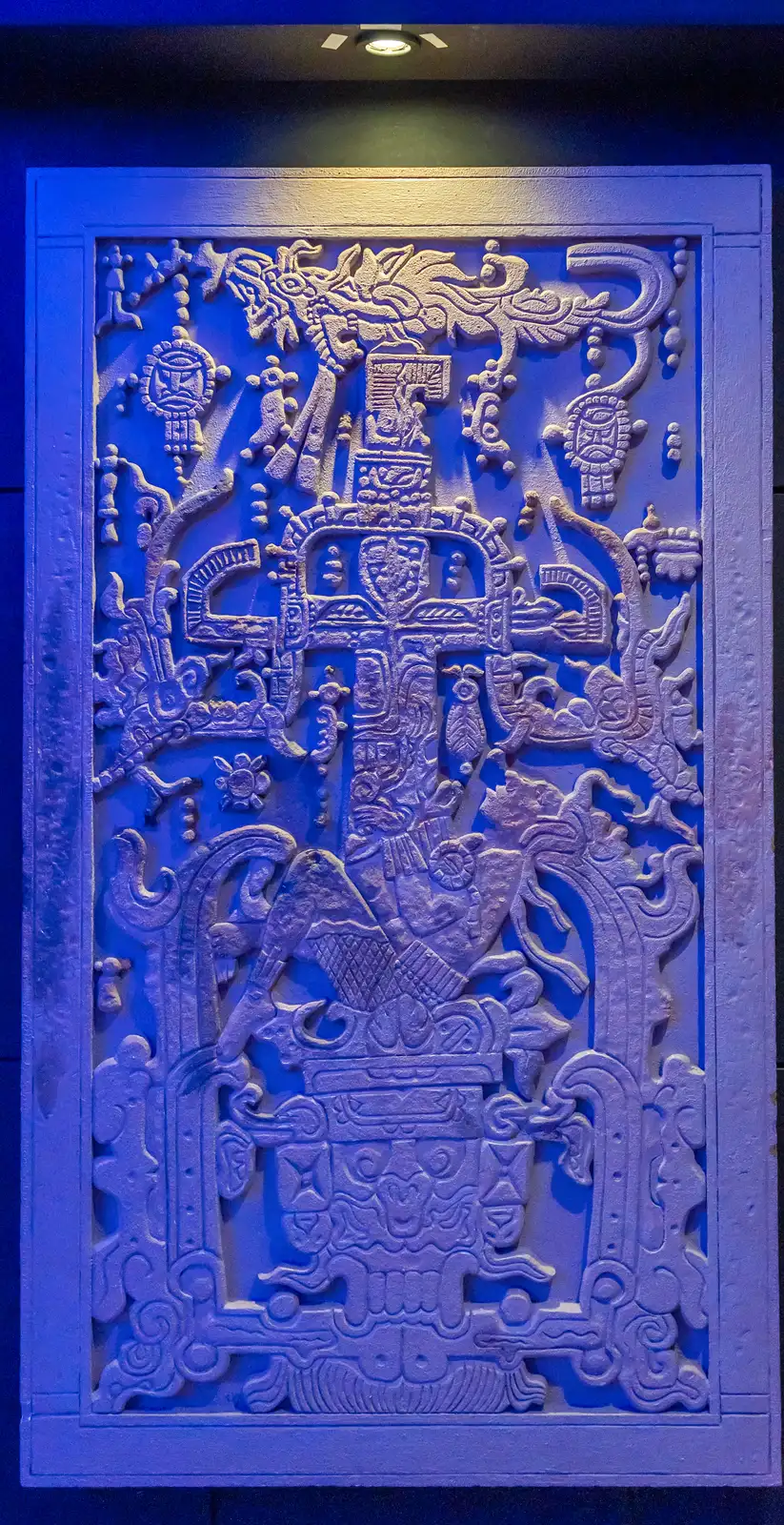
He asked the question twice more in the same book, once in plain words: "What does the stone relief of the rocket-driving god at Palenque mean?"
He was not the first to write it down. The writer Jason Colavito traces the rocket reading back through Peter Kolosimo's Not of This World of 1968, which credits Guy Tarade and Andre Millou, writing in October 1966 in the Italian journal Clypeus. Colavito's view is that von Daniken took it from Kolosimo or from Kolosimo's source.
And it lasted. Von Daniken came back to the stone in 2017, in Astronaut Gods of the Maya, under a chapter titled "King Pakal's Ascension." Full-size copies of the lid now hang in the national aeronautics and space museum in Santiago de Chile and stand in the International UFO Museum in Roswell, New Mexico.
If the carver saw a machine
Set aside for a moment whether it is true. Ask the better question. What kind of history are we living in if it is?
It would mean the sculptors of Palenque, in the seventh century, carved a vehicle from life or from memory: a seat, a pilot, controls, a flame. Not a symbol. A record.
Which would mean someone at Palenque had seen flight, powered flight, more than a thousand years before the first aircraft. On von Daniken's reading the king's tomb is a witness statement, cut in limestone and sealed under 20 metres of rubble so that it would last.
It would mean our species did not grow up alone. The stories of gods who came from the sky, on this reading, are not poetry but reporting, and the oldest monuments carry the evidence in plain sight, waiting for eyes that know what a cockpit looks like.
And the record would still be open. The Maya carved thousands of monuments, many unexcavated, many unread in full. If one king was shown at the controls, what else is waiting under the floors?
What the Maya wrote on it
The standard account, held by the Mayanists who have recorded and read the lid, is that it shows the king at the moment of death and rebirth, and that its own text says so.
The band of glyphs round the edges, read in the order a visitor entering the tomb first sees them, records the deaths of Pakal, of his parents and of the lords of Palenque before him. Its first passage gives his birth and his death dates in the Maya calendar. The next names the making of "the sarcophagus of the Maize God." Merle Greene Robertson recorded the carving in rubbings and drawings, and her 1983 volume The Sculpture of Palenque is the record Guenter and others work from.
On Guenter's reading, the face shows Pakal "ascending out of the maws of the underworld," the open jaws at the bottom of the scene. He rises from a skeletal offering bowl with flames, dressed as a baby god, Unen K'awiil. What rises behind him is the World Tree of Maya cosmology, and its name and creatures match the tree named on the temple's own tablets. The bird at the top belongs to that tree. INAH's own summary is the same in outline: the lid tells of Pakal's life and ancestors and of his rebirth and ascent, dressed as the maize god, from the jaws of the Earth Monster.
On that account the "rocket" is the tree and the bowl, the "flame" the bowl's fire, and the "controls" the gestures of a reborn king.
What the readings still argue about
The Mayanists have not always read it one way. In 1986, in The Blood of Kings, Schele and Miller described Pakal "falling backward into the jaws of the underworld." The newer readings have him rising. The same carving, read by specialists, has been a descent and an ascent within one generation.
The body argued too. Ruz held that the bones were those of a man in his forties or fifties, some forty years younger than the inscriptions said. In 2003 a team including Vera Tiesler reported to the Society for American Archaeology that he "died at an advanced age, which could well correspond to the age of eighty."
The tomb holds a surprise of its own. In July 2016 the INAH archaeologist Arnoldo Gonzalez Cruz presented a stone water channel, about 17 metres long, laid on the bedrock under the temple, apparently before the pyramid rose over it. His team read it as a way of recreating Pakal's passage into the waters of the underworld.
What came out of the coffin in 1952 was a body, cinnabar and jade. The case for the machine rests on the carving itself, not on any object in the tomb.
The stone in the dark
The crypt is still there, under the same stair. In recent years INAH, with help from the US Ambassadors Fund, has conserved it and installed instruments to track its humidity, temperature and carbon dioxide. Visitors see replicas of the tomb in the National Museum of Anthropology in Mexico City and in the site museum at Palenque that bears Ruz's name. The man who made the stone famous died in January 2026.
The pilot's reading lives on in the replicas: in a space museum in Chile, in a UFO museum in New Mexico, a carved wooden lid behind a rope. Other ancient work on this site has been read the same two ways, among them the Dendera reliefs in Egypt and the Mesopotamian tablets behind Sitchin's twelfth planet.
And the stone itself stays where it is, on six blocks, under the vault.
A man, leaning, hands raised. Open jaws below him, a tree and a bird above. Glyphs round the edge that name him and his ancestors and call the coffin the Maize God's.
The carving has not changed since 683. Its readings have moved: a king falling, a king rising, a pilot at the controls.
Questions This Leaves You With
Is there anything a person actually does with this?
Not with your life tomorrow: the stone was carved some 1,350 years ago and asks nothing of anyone now. What it does ask is a question about the whole human past, and that one is open to everyone. You can stand in front of a full-size copy in Mexico City and look at the lines yourself. No book or tour is needed to do that, and anyone selling a certainty about it, in either direction, is selling something.
Does this sit against a religious account of the world?
It cuts both ways, and serious people have argued each. On the Mayanist reading the lid is itself a religious document, a king's rebirth carved by people for whom it was sacred. On von Daniken's, the gods of many traditions were visitors, which some readers find a threat to faith and others find no threat at all. This site will not tell you which way it falls for you. The Maya's own words are on the edge of the stone, and they are worth reading before deciding what anyone else's words mean.
Does this change what a human life is?
Pakal reigned for 68 years and was buried under a pyramid his son finished. Read one way, that is a life made tiny by the scale of the sky it was carved against, a king leaning into the jaws of the underworld. Read the other way, it is a life made enormous, one person whose death was worth a mountain of stone and a text that still names him. Both are honest readings of the same stone. Which did you feel when you read the stakes?
What would change your mind, in either direction?
Name it now, before you are committed. Toward the machine: a carving whose own inscription describes a vehicle, or an object from a Maya site whose material or making the period cannot explain, examined by a laboratory. Toward the king's rebirth: the same pose, tree and jaws on other Maya monuments whose texts name a death and a god, or an early drawing of the World Tree with the same creatures in the same places.
Which drawing of the stone did the rocket reading start from?
Tarade and Millou wrote in 1966, Kolosimo and von Daniken in 1968. Von Daniken's own book set a drawing beside American astronauts with their hands on their controls, and its caption placed that drawing in a temple at Copan, not Palenque. Which drawing of the lid each writer worked from, and how it was turned on the page, shapes what a reader sees in it. Official X could not establish which drawing came first. Whether it would change the argument is itself an open question.
Sources
- Boletin 372: 71 years since the discovery of Pakal's tomb (2023) Instituto Nacional de Antropologia e Historia
- Orea Magana, La conservacion de la tumba de K'inich Janaab' Pakal de Palenque Lakamha', INAH
- Stanley Guenter, The Tomb of K'inich Janaab Pakal: The Temple of the Inscriptions at Palenque (c. 2002) Mesoweb
- Elaine Day Schele, Gazing at the Death Face (2022) Institute of Maya Studies
- Water Tunnel Discovered at Mexico's Temple of Inscriptions (2016) Archaeology magazine
- Abida Ventura, Hallan sistema hidraulico en Palenque (25 July 2016) El Universal
- Erich von Daniken, Chariots of the Gods? Unsolved Mysteries of the Past, Bantam edition 1971 (orig. 1968), library lending copy Internet Archive lending library
- Stephen M. Epstein, Scholars Will Call it Nonsense: The Structure of Erich von Daniken's Argument, Expedition 29(2) (1987) Penn Museum
- Susanne Loacker, Der Ausserirdische (2015) Beobachter
- Erich von Daniken, Swiss writer, dies at 90 (11 January 2026) AP via NBC News
- Im Alter von 90 Jahren: Erich von Daniken ist tot (2026) SRF
- The 43rd Academy Awards (1971) Academy of Motion Picture Arts and Sciences
- Jason Colavito, Review of Peter Kolosimo's Not of This World, part 2 (2014) Jason Colavito
- Astronaut Gods of the Maya (2017), publisher listing Booktopia
- The Sarcophagus Lid Revealed Tulane University Latin American Library
- Joel Skidmore, The Identity of Pakal Mesoweb Reports
- Lapida del sarcofago de Pakal (replica, Santiago de Chile, 2023) Wikimedia Commons, Rjcastillo
- Roswell UFO Museum, replica of the sarcophagus lid of Pacal the Great (2011) Wikimedia Commons, mr_t_77

