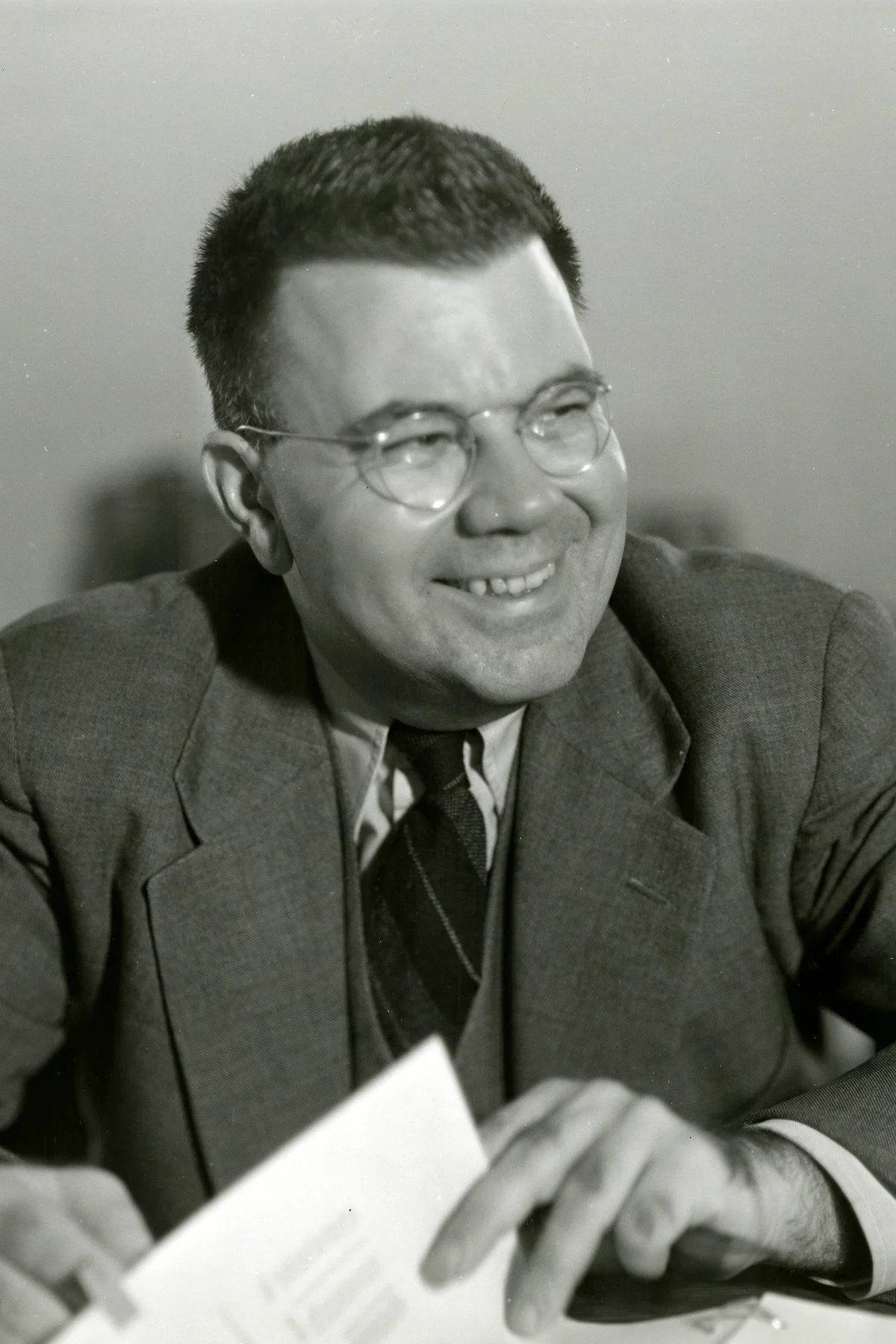
The Condon Committee was the University of Colorado's study of unidentified flying objects, paid for by the United States Air Force and run from the autumn of 1966 by the physicist Edward U. Condon. Its final report, Scientific Study of Unidentified Flying Objects, went to the Secretary of the Air Force on 31 October 1968 and reached the public in January 1969. Within a year it was the first reason the Air Force gave for closing Project Blue Book.
Inside the report sit fifty-nine numbered case studies. In front of them sits one paragraph by Condon himself, and it says that nothing has come from 21 years of UFO study "that has added to scientific knowledge."
Two years before that paragraph was printed, before the contract was even announced, an administrator on the same campus wrote down how the project ought to look.
The word he used was trick.
A Folder Marked Air Force Contract and Background
In early 1966 an Air Force advisory committee under Brian O'Brien reviewed Blue Book and recommended a university study. The contract with the Air Force Office of Scientific Research was announced on 7 October 1966: $313,000, by the report's own account, for the first 15 months.
Condon was a professor of physics at Boulder and a former director of the National Bureau of Standards. The project coordinator was Robert J. Low, an assistant dean of the Graduate School. On the staff were David R. Saunders, a professor of psychology and a principal investigator, and Norman E. Levine, a research associate.
According to John G. Fuller's account in Look, a senior member of the staff, preparing a speech to a teachers association, was pointed to an open file labelled "AIR FORCE CONTRACT AND BACKGROUND." In it was a memo from Low to university officials, dated 9 August 1966 and titled "Some Thoughts on the UFO Project." Levine read it and was disturbed by one word.
The sentence, as Look printed it: "The trick would be, I think, to describe the project so that, to the public, it would appear a totally objective study". The Washington Evening Star of 1 May 1968 printed the rest of it: "but, to the scientific community, would present the image of a group of non-believers trying their best to be objective ... but having an almost zero expectation of finding a saucer". Look also gave an earlier line: "Our study would be conducted almost exclusively by non-believers".
The words are given here as those two publications printed them.
Ruined Professionally
On 12 December 1967, at an informal meeting in Denver, Saunders and Levine sat down with James E. McDonald, an atmospheric physicist at the University of Arizona, and J. Allen Hynek, the astronomer who was Blue Book's scientific consultant. McDonald learned of the memo there. Levine later said he was present when it was handed to McDonald. McDonald then quoted the "trick" passage back to Low in a long letter, which Low did not read until 6 February 1968.
On 7 February Condon called Saunders to his office. "For an act like that," he told him, by Fuller's account, "you ought to be ruined professionally." He questioned Levine too, and told an administrative assistant, Mary Louise Armstrong, that he would fire them both the next day.
He did.
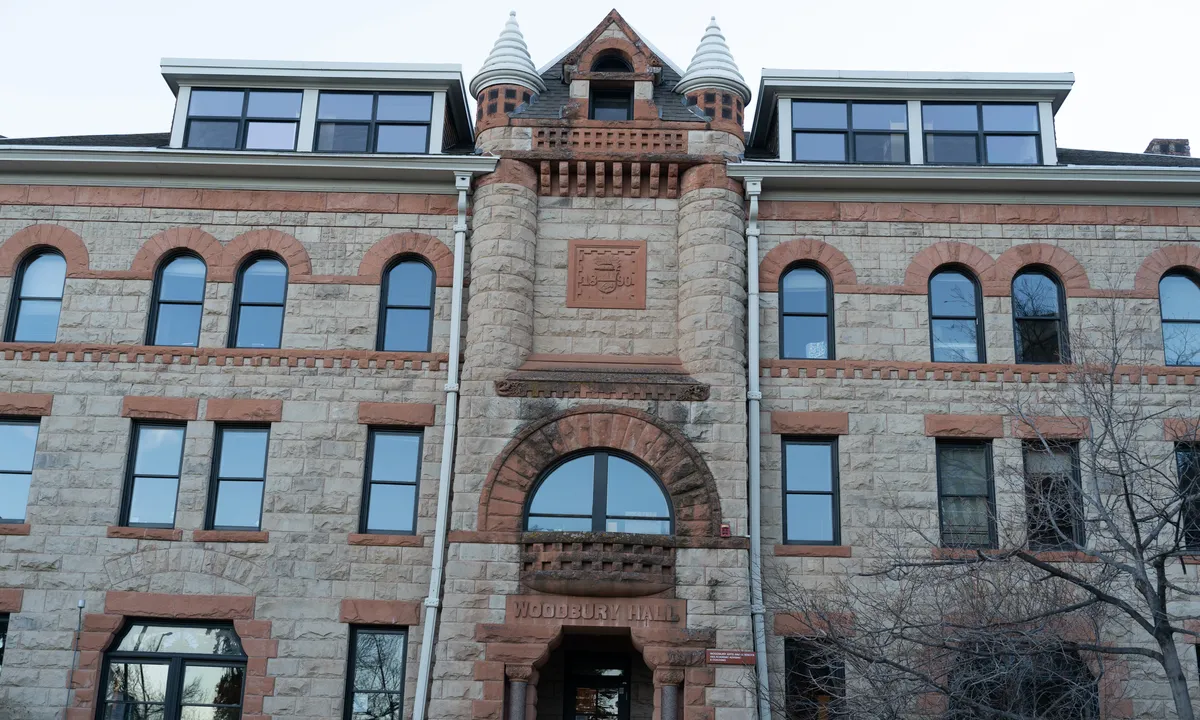
Fuller wrote that the two men cleared their desks at Woodbury Hall.
Condon's own words were already in the press. To a chapter of Sigma Xi in Elmira, New York, he said: "My attitude right now is that there's nothing to it," adding, "but I'm not supposed to reach a conclusion for another year". To the Rocky Mountain News on 27 September 1967: "I'm almost inclined to think such studies ought to be discontinued unless someone comes up with a new idea on how to approach the problem."
The Half-Million-Dollar Trick
On 1 May 1968 the Evening Star quoted the memo through Donald Keyhoe of the National Investigations Committee on Aerial Phenomena, and named its addressee as the university's vice president, Thurston Manning. On 14 May Look ran Fuller's "Flying Saucer Fiasco", subtitled with the half-million-dollar "trick". The study, Fuller wrote, had "already cost the taxpayer over half a million dollars". His last line: "All that seems to be left is the $500,000 trick."
Saunders answered with a book, written with R. Roger Harkins: UFOs? Yes! Where the Condon Committee Went Wrong (1968).
On Fuller's reading, and Saunders's, the conclusion came first and the study came after. A project built to look open to the public and closed to the scientists. Which would mean the verdict was in the drawer before the first case file was opened.
If the Trick Worked
Set aside, for a moment, whether the memo describes what the committee did. Ask what it would mean if it does.
It would mean that the university study the Air Force paid for started from its answer. On that reading, the fifty-nine cases were not the evidence for the conclusion.
They were its decoration.
It would reach past one report. The Air Force closed Blue Book on 17 December 1969 on the strength of the Colorado study and the National Academy of Sciences review that endorsed it. If the study was framed, two decades of files were shut on a finding settled before anyone looked, and what we were told our skies contained would rest on a sentence about presentation.
And if even one of the cases the committee could not explain is what its witnesses said it was, the consequence is larger still. Something silvery and metallic, tens of meters across, would have crossed an Oregon farm in 1950, and our species would have turned away from it on the authority of its own best science. We would have looked at the evidence of company and filed it.
The last consequence is still in front of us. The Pentagon's 2024 review of the historical record, ordered by Congress in 2022 and published after David Grusch's sworn testimony of 2023, summarised the Condon report as part of that record. If the old study was built to close a door, every later study that stands on it inherits the door, and whether we can ask the question without it has no date on it.
The Committee's Defence
The standard account holds that the study was what it said it was. The memo was written by an administrator, two months before the contract was announced, to university officials, not to the scientists who did the case work. The photographic cases went to an astronomer, William K. Hartmann. The University of Colorado's president, J. R. Smiley, sending the report to Secretary of the Air Force Harold Brown on 31 October 1968, wrote that there had "never been the slightest suggestion of any effort on the part of the Air Force to influence" the investigation or the report.
The National Academy of Sciences appointed eleven scientists under the Yale astronomer Gerald M. Clemence, who met to conclude on 6 January 1969. It called the report "a very creditable effort to apply objectively the relevant techniques of science to the solution of the UFO problem" and found that "the scope of the study was adequate to its purpose". It added: "On the basis of present knowledge the least likely explanation of UFOs is the hypothesis of extraterrestrial visitations by intelligent beings."
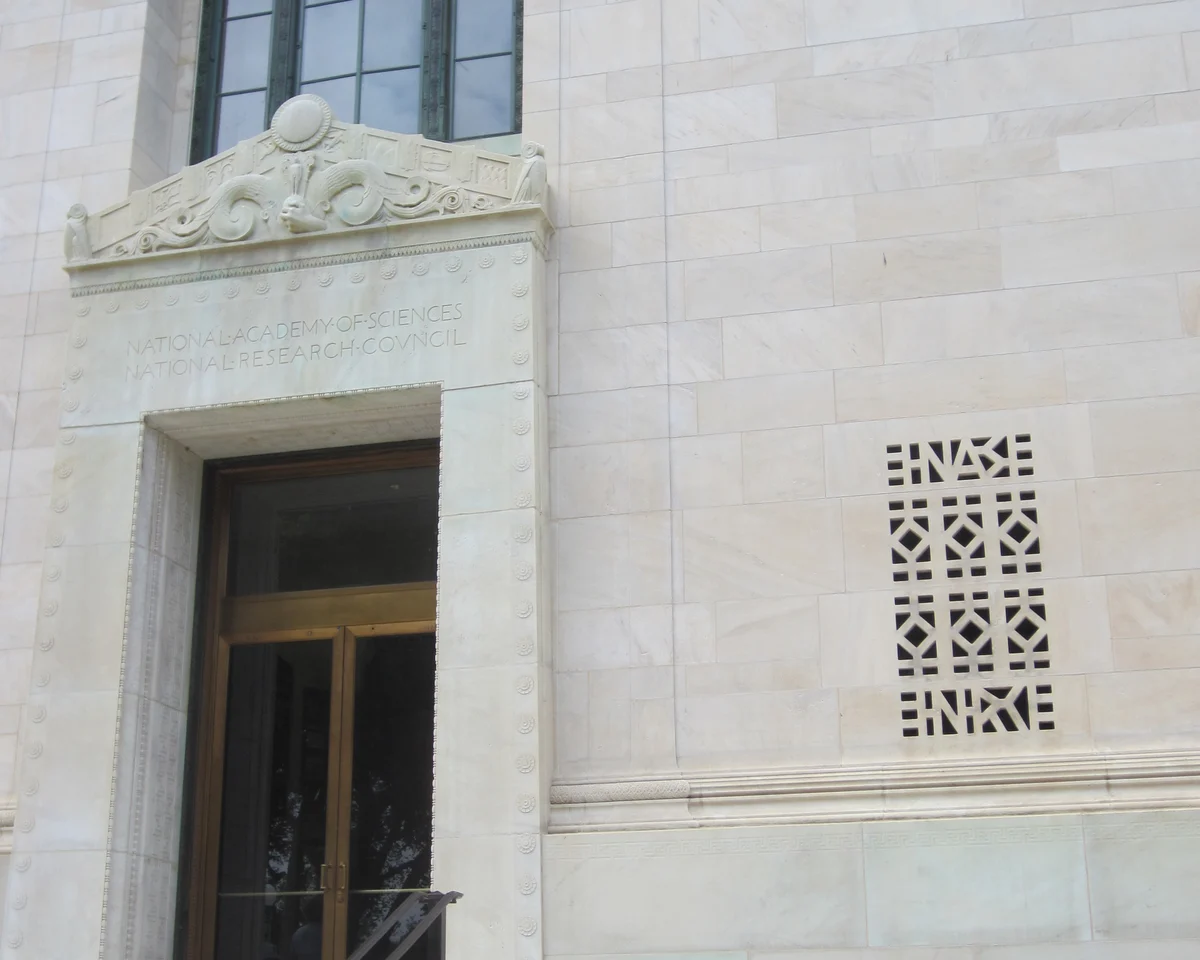
Condon's own conclusion, in full: "Our general conclusion is that nothing has come from the study of UFOs in the past 21 years that has added to scientific knowledge. Careful consideration of the record as it is available to us leads us to conclude that further extensive study of UFOs probably cannot be justified in the expectation that science will be advanced thereby."
What the Summary Leaves Behind
The defence answers the charge about motive. The cases are another matter.
Case 46 is a pair of photographs taken by Paul Trent near McMinnville, Oregon, on 11 May 1950, the year of the FBI's Hottel memo, examined by Hartmann. His conclusion: "This is one of the few UFO reports in which all factors investigated, geometric, psychological, and physical appear to be consistent with the assertion that an extraordinary flying object, silvery, metallic, disk-shaped, tens of meters in diameter, and evidently artificial, flew within sight of two witnesses."
Case 2 is a radar and visual sighting involving the United States Air Force and the Royal Air Force in the summer of 1956. Its conclusion: "although conventional or natural explanations certainly cannot be ruled out, the probability of such seems low in this case and the probability that at least one genuine UFO was involved appears to be fairly high."
A third, an RB-47 crew followed by an object for more than 700 miles over the south-central United States on 17 July 1957, the report said "must be listed as unidentified" if accurately reported.
On 12 February 1969 McDonald told an audience in Wilmington, Delaware: "I believe that the contents of the Condon Report fail dismally to support the strong negative recommendations". The unexplained cases, he said, "appear to have been casually ignored by Condon". Hynek, in the Bulletin of the Atomic Scientists that April, found in the report "the same strange, inexplicable residue of unknowns", and judged that "the percentage of "unknowns" in the Condon report appears to be even higher than in the Air Force investigation".
A CIA history of 1997 adds help the report never named: the agency's photographic interpretation center assisted from February 1967, on condition that its work not be formally acknowledged.
Official X has not found the full text of the memo in print.
Only the passages two newspapers quoted.
Fifty-Nine Cases and One Photograph
The argument did not end with the Academy. The American Institute of Aeronautics and Astronautics set up a UFO subcommittee under Joachim P. Kuettner, which published "UFO: An Appraisal of the Problem" in Astronautics and Aeronautics in November 1970 and pledged "to give the members of this society an opportunity to form their own opinions." In July 1971 it chose the RB-47 case as its first sample, and McDonald wrote it up at the subcommittee's request.
Hynek founded the Center for UFO Studies in 1973 and directed it until his death in 1986.
All of it narrows to the paragraph Hartmann wrote about two frames of film.
"It appears significant that the simplest, most direct interpretation of the photographs confirms precisely what the witnesses said they saw." In the next breath he wrote that the object hangs "beneath the same part of the overhead wire in both photos", which "can be used as an argument favoring a suspended model." He did not rule out a fabrication, and rested part of his judgement on photometric measures of the original negatives. Any new measurement of them could test the distance estimates; it could not, on its own, say what was in the sky.
The report that closed the question still carries the case that would not close.
Questions This Leaves You With
Is there anything a person actually does with a report like this?
For your own life, almost nothing follows, and that is worth saying plainly. The Condon report is nearly sixty years old, and nothing in it points to a date or a danger; anyone who sells you one drawn from it is selling something. The larger question is not personal. It is whether a government that pays for a study of an awkward subject can also make sure the study is free to find what it finds. That is a civic question, still open, and it applies as much to the studies of today as to one from 1968. You can carry it without doing anything about it at all.
Does an Oregon photograph sit against a religious account of the world?
It cuts both ways, and serious people have argued each side. Some read the possibility of other makers in the sky as a widening of creation, more minds under one maker. Others read it as pressure on the special place a faith gives to human beings. Two photographs of a disk over a farm cannot decide that, even on their strongest reading. Which way it falls for you is not something this site will tell you, and it is not something the record can settle either.
Does it change how you see your own place in things?
Hold your own life up against the scale of the stakes: a species that may have been shown something and chose to file it. For some readers that makes a life smaller, one more mind that looked away. For others it makes a life rarer and so larger, lived in the first generation that could put the question to instruments, committees and signed reports. You probably felt one of those before you got here. Which one was it?
What would change your mind, in either direction?
Name it now, before the next documentary names it for you. Toward the critics: the full Low memo surfacing with drafts or replies showing the conclusion agreed before the work; the university's or the Air Force's files from 1966 showing the same; a fresh analysis of the McMinnville negatives confirming a large, distant object. Toward the committee: the same negatives showing a small object near the wire; the staff's own notes showing the cases weighed on their merits; a count of the report's unknowns that comes out lower than Hynek thought.
How many of the fifty-nine cases does the report itself leave unexplained?
It sounds like the easiest question in the file, and it has no settled answer. The answer lives in the last sentence of each case, and those sentences run from firm identifications to "fairly high" odds of something genuine. Hynek wrote that its share of unknowns looked higher than Blue Book's; others have put figures on it, and those figures have not been checked here. A careful count, case by case, using the investigators' own final sentences, would be a small piece of work with a large result. That count would settle the size of the residue, not its nature, and until someone publishes it, the number at the heart of the argument is empty.
Sources
- Edward U. Condon, Section I: Recommendations and Conclusions, in Scientific Study of Unidentified Flying Objects, University of Colorado, 1968 (NCAS Internet edition, 1999) University of Colorado / National Capital Area Skeptics Primary record
- Section II: Summary of the Study, in Scientific Study of Unidentified Flying Objects, University of Colorado, 1968 (NCAS Internet edition, 1999) University of Colorado / National Capital Area Skeptics Primary record
- Contents, Preface and Appendix X (staff), Scientific Study of Unidentified Flying Objects, University of Colorado, 1968 (NCAS Internet edition, 1999) University of Colorado / National Capital Area Skeptics Primary record
- William K. Hartmann, Case 46: McMinnville, Oregon, 11 May 1950, in Scientific Study of Unidentified Flying Objects, 1968 (NCAS Internet edition) University of Colorado / National Capital Area Skeptics Primary record
- Case 2: USAF/RAF Radar Sighting, Summer 1956, in Scientific Study of Unidentified Flying Objects, 1968 (NCAS Internet edition) University of Colorado / National Capital Area Skeptics Primary record
- J. R. Smiley to Harold Brown, Secretary of the Air Force, letter of transmittal, 31 October 1968 (NCAS Internet edition) University of Colorado / National Capital Area Skeptics Primary record
- John G. Fuller, Flying Saucer Fiasco, Look, 14 May 1968 (reproduced by Sign Historical Group) Look / Sign Historical Group Study
- John Lannan, UFO Inquiry Is Attacked as Nonscientific, Washington Evening Star, 1 May 1968 (transcription, Patrick Gross) Washington Evening Star / Patrick Gross Study
- Review of the University of Colorado Report on Unidentified Flying Objects by a Panel of the National Academy of Sciences, 1969 (Sign Historical Group transcription) National Academy of Sciences / Sign Historical Group Primary record
- Department of Defense News Release No. 1077-69, Air Force to Terminate Project Blue Book, 17 December 1969 (scan) Office of the Assistant Secretary of Defense (Public Affairs) Primary record
- James E. McDonald, talk on the Condon Report to the RESA Dupont Chapter, Wilmington, Delaware, 12 February 1969 (Patrick Gross) Patrick Gross Study
- J. Allen Hynek, The Condon Report and UFOs, Bulletin of the Atomic Scientists, April 1969, pp. 39-42 (transcription, Patrick Gross) Bulletin of the Atomic Scientists / Patrick Gross Study
- UFO Encounter 1: Air Force Observations of an Unidentified Object in the South-Central U.S., July 17, 1957, Astronautics and Aeronautics, July 1971, pp. 66-69 (Patrick Gross) AIAA / Patrick Gross Study
- Gerald K. Haines, CIA's Role in the Study of UFOs, 1947-90, Studies in Intelligence, 1997 Central Intelligence Agency Study
- Center for UFO Studies, About Us Center for UFO Studies Study
- Brig. Gen. C. H. Bolender, staff paper on Unidentified Flying Objects, 20 October 1969 (NICAP transcription) NICAP Study
- All-domain Anomaly Resolution Office, Report on the Historical Record of U.S. Government Involvement with Unidentified Anomalous Phenomena, Volume I, March 2024 (Black Vault copy) US Department of Defense Primary record
- Wikimedia Commons, UFO picture taken by Paul Trent in McMinnville, Oregon (file page) Wikimedia Commons General reference