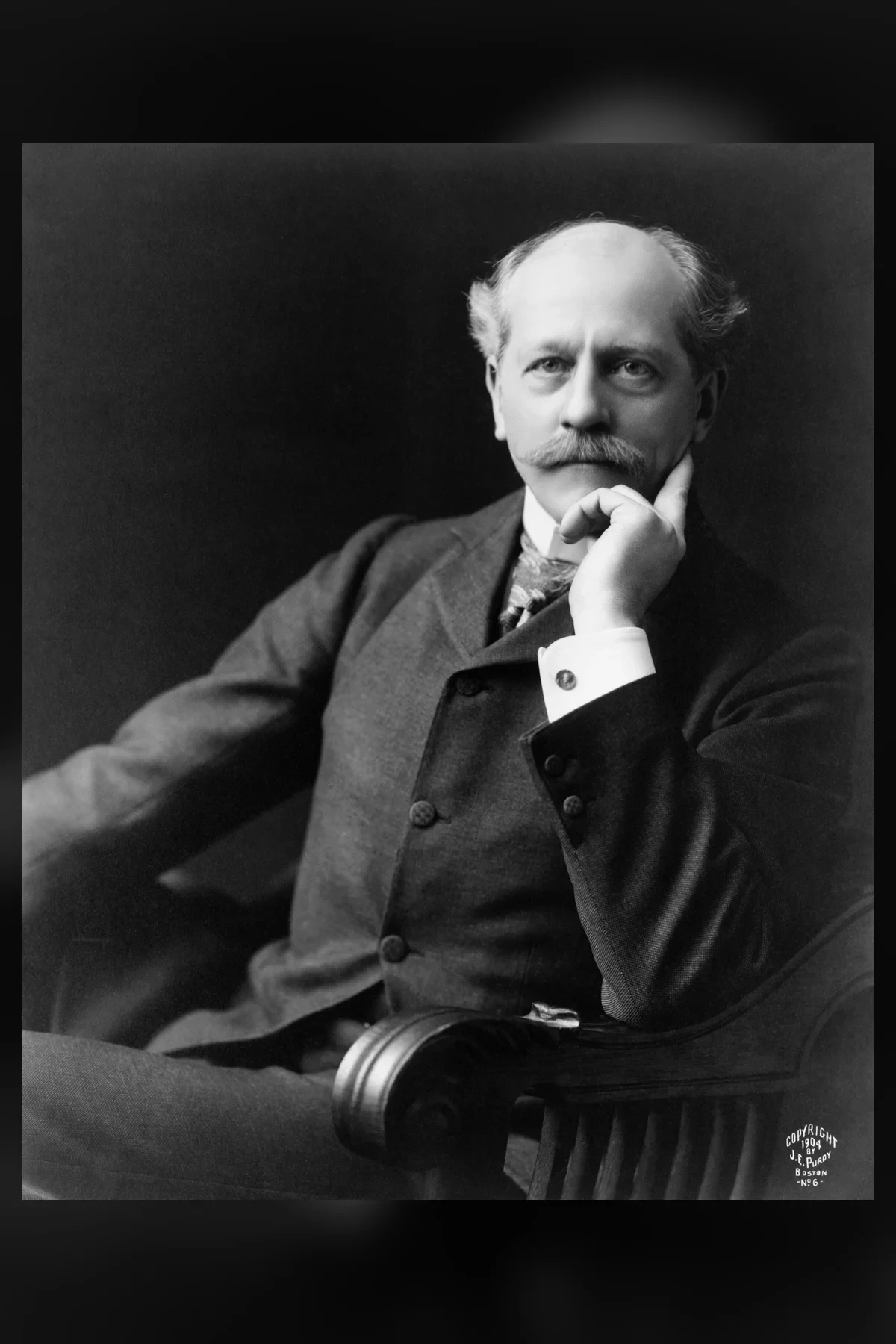
Planet X was Percival Lowell's planet before it was anyone else's. Lowell, who built his own observatory at Flagstaff, Arizona, in 1894, became convinced in the first years of the twentieth century that something beyond Neptune was tugging on Uranus, and that arithmetic could say where. He called it Planet X. He spent the last decade of his life, and a great deal of his fortune, looking for it.
He died in 1916 without seeing it.
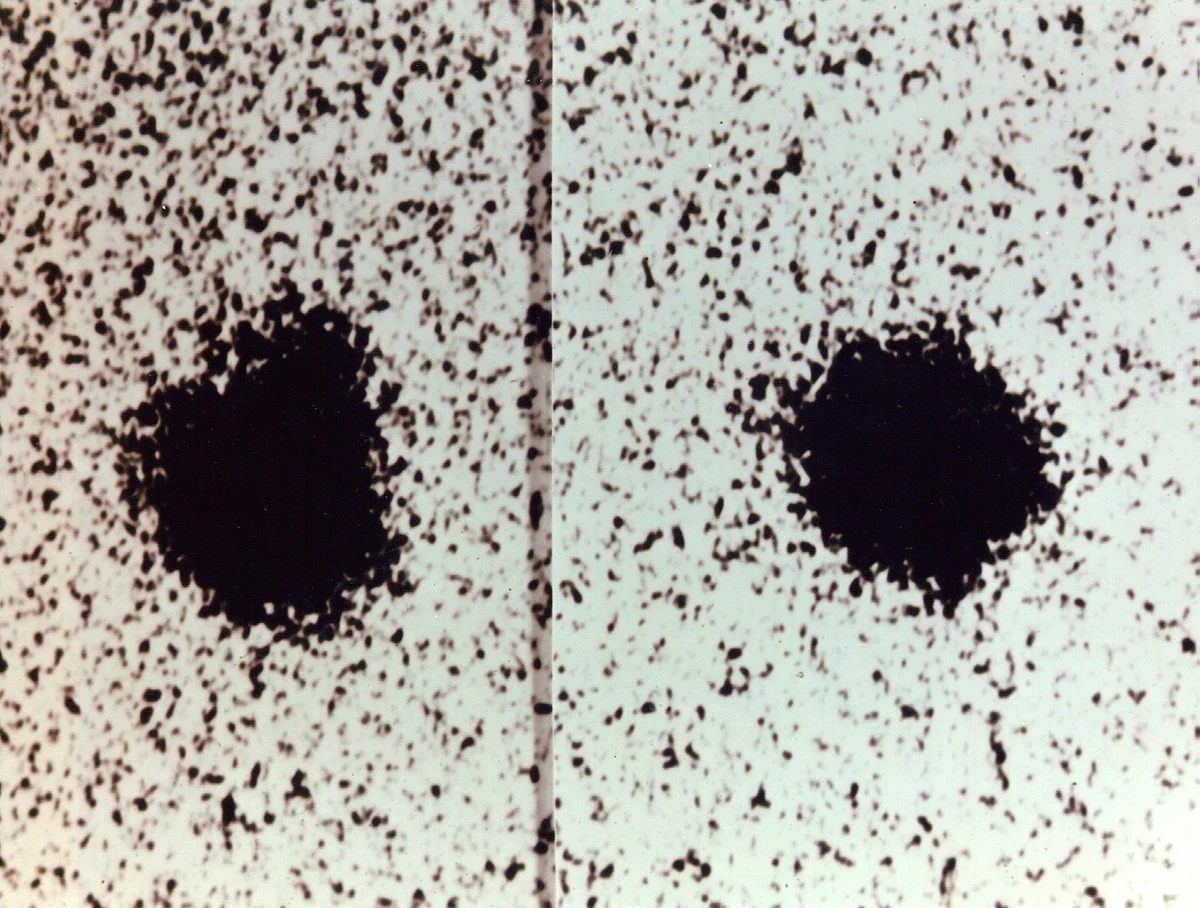
Fourteen years later, on two glass plates exposed six nights apart in January 1930, a speck of light moved against several hundred stars that did not. The young man hired to do the looking saw it jump.
The plates are fourteen by seventeen inches. The speck is fainter than anything Lowell expected. It sat a few degrees from one of the two places in the sky he had named.
Prediction, or luck?
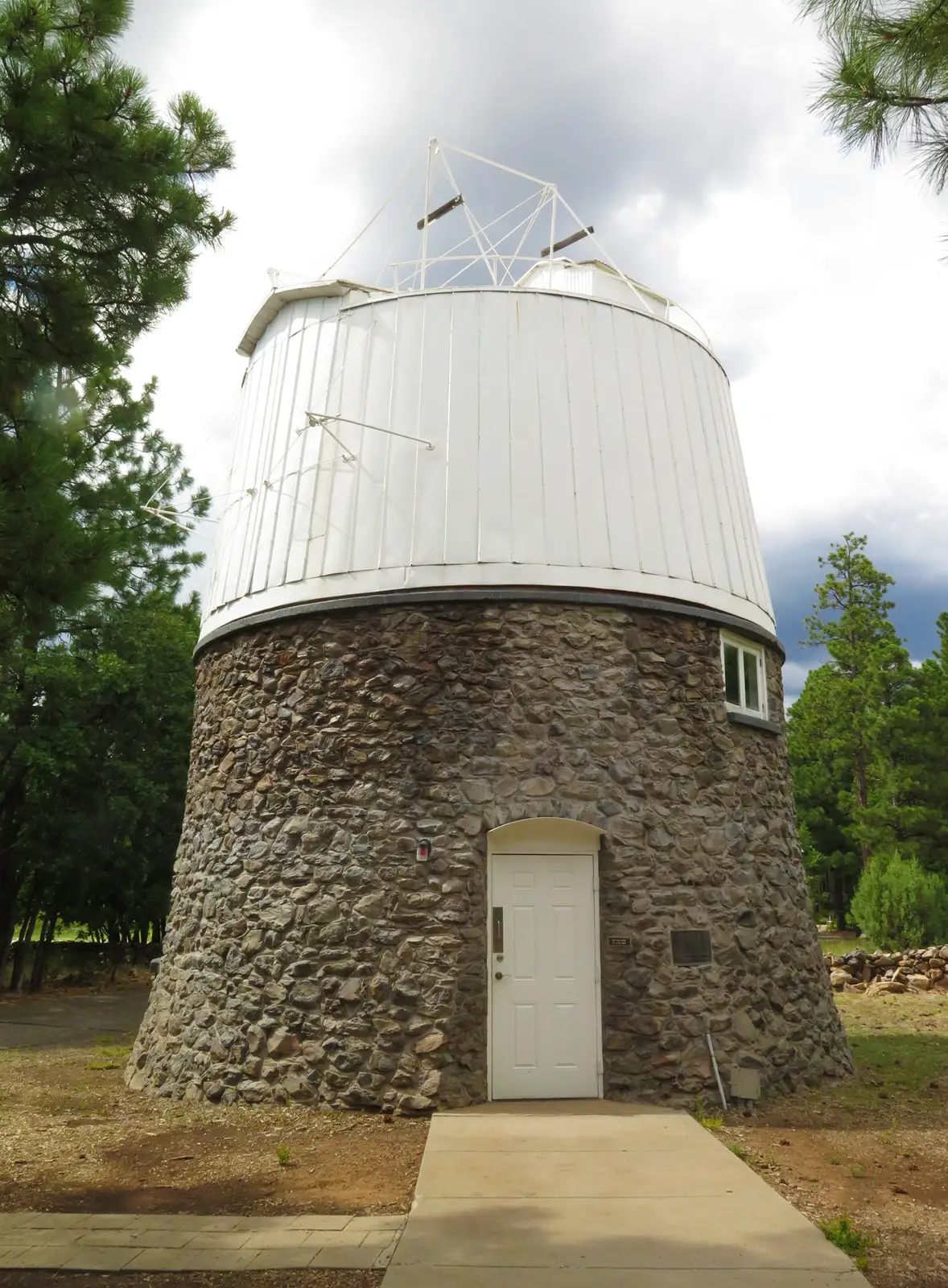
The hunt Lowell built
Lowell first argued for a planet beyond Neptune in lectures at the Massachusetts Institute of Technology in December 1902. Uranus was not moving quite where Newton's laws said it should, even after Neptune's pull was allowed for, and a similar wobble had led to the discovery of Neptune itself in 1846. Lowell set out to do it again.
The work was done by hand. From 1905 a team of human "computers" at his observatory, led by Elizabeth Williams, worked through the perturbations of Uranus on paper and later on a calculating machine called the Millionaire, according to the observatory's historian Kevin Schindler. Lowell bought a camera, borrowed a telescope from Swarthmore College, and in 1911 acquired a blink comparator from Germany: a device that lets one eye flick between two photographs of the same patch of sky, so that anything that has moved appears to jump.
He was racing. In 1910 the astronomer William Pickering had published his own predicted orbit. In 1915 Lowell answered with a book, Memoir on a Trans-Neptunian Planet. As the astronomer Henry Norris Russell summarised it in 1930, it gave two possible positions, 180 degrees apart, at longitudes of 84 or 262.8 degrees; a mass between the Earth's and Neptune's; and a brightness of twelfth or thirteenth magnitude.
That same year Thomas Gill took plates of the sky at Lowell Observatory that, unknown to him, recorded the planet.
Nobody saw it on them. Lowell died on 12 November 1916, and his widow, Constance, went to court over his will. The search stopped. The case ran for about ten years, and the search did not start again until 1927.
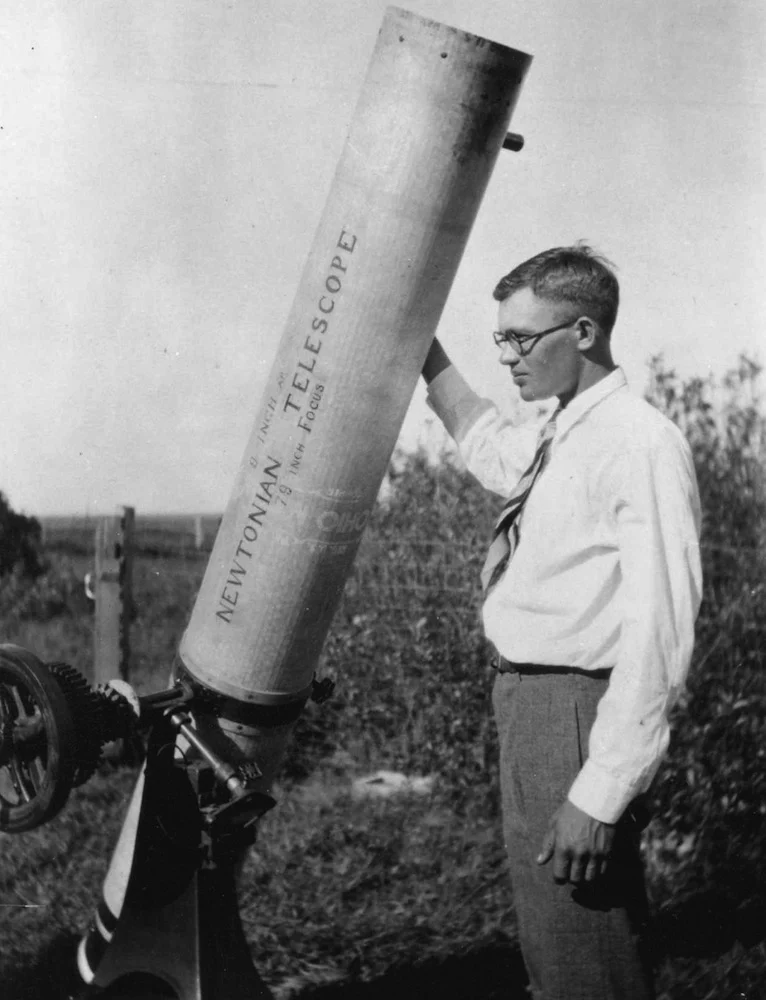
In 1929 a new telescope arrived in Flagstaff, a 13-inch camera paid for with $10,000 from Lowell's brother, Abbott Lawrence Lowell, the president of Harvard. With it came Clyde Tombaugh, who had sent the observatory drawings of Jupiter and Mars made with a telescope he had built himself.
On 18 February 1930, blinking his plates of 23 and 29 January in the constellation Gemini, Tombaugh "suddenly spied a 15th magnitude image", by his own account. "That's it," he told himself. And to the director, Vesto Slipher: "Dr. Slipher, I have found your Planet X."
The prediction that came true
The case that Lowell found Pluto, by the hand of a man he never met, is the case his observatory made in 1930, and it is not a weak one.
The planet was where the plan said to look. It was beyond Neptune, close to the plane of the planets, and about six degrees from one of Lowell's two predicted heliocentric longitudes, by the reckoning of the historian Jordan Ellis in his account of the 1930 debate. A near miss, on that measure, is a resemblance to a hit, and its weight depends on how wide the target was. It was found with an instrument bought for the purpose, by a man hired for the purpose, using a method Lowell had set up. Slipher said so in April 1930: "[On] March 13 ... we believed [the object] to be the ninth member of the planetary family and so stated."
The observatory chose its moment. The discovery was announced on 13 March 1930, the day Lowell would have turned 75 and the 149th anniversary of William Herschel's discovery of Uranus. Tombaugh labelled the envelope of his plates: "Planet 'X' (Pluto) at last found!!!"
The name came next, from an eleven-year-old in Oxford. Venetia Burney suggested Pluto at breakfast on 14 March, NASA records; her grandfather passed it to the Oxford astronomer Herbert Hall Turner, who cabled Flagstaff. The observatory adopted it in May. Its symbol is a P joined to an L, Lowell's initials.
Pickering, too, claimed a share. His Planet O, he argued, had come closer to Pluto than Lowell's X. Plates taken in 1919 in a search for Planet O turned out to show Pluto, four times.
Two predictions. Two sets of plates that caught it unseen. One planet, roughly where the numbers pointed.
If the arithmetic found it
Set aside, for a moment, whether it is true. Ask the larger question. What kind of solar system is it, if Lowell was right?
It would mean the method that found Neptune in 1846 worked twice: that a mind in an office, with pencils and a calculating machine, could feel a world it could not see by the way the known worlds moved, and point to it.
It would mean the outer solar system was a place that could be mapped from the inside out, one perturbation at a time. Every unexplained wobble in an orbit would be a planet waiting at the end of a calculation, and the sky beyond Neptune would be readable by arithmetic before any telescope reached it.
It would mean something about us. A species that can find a world by its pull, from the third planet out, has a reach longer than its eyesight. We would be the kind of creature that discovers by inference, and is right.
And it would leave one question in front of us, open still. If Lowell's method was sound, the residuals he used should point on to whatever else is out there. Every later hunt for a Planet X, the infrared source of 1983, the WISE survey of 2014, Planet Nine, inherits that hope.
Too small to have been the cause
The standard account began within weeks of the announcement.
Tombaugh's planet was fainter than predicted by 2.5 magnitudes, about ten times, and when Slipher looked at it through the observatory's 24-inch refractor, he told Tombaugh, "I've got it ... but I don't see any disk." In April 1930 the astronomer Harold Alden told The New York Times that the object was "too small to create the disturbance". Ernest Brown of Yale went through Lowell's analysis and concluded, as the St Andrews historians of mathematics put it, that there was no way Lowell could have made the correct prediction from the data he had. Russell wrote: "There seems no escape from the conclusion that this is a matter of chance."
The mass settled it. On 22 June 1978 James Christy and Robert Harrington of the US Naval Observatory found a moon of Pluto, Charon. A moon's orbit weighs its planet, and the system came out at about one 140-millionth of the Sun's mass, a few thousandths of the Earth's. Far too little to move Uranus.
And by the 1990s the wobble itself was gone. The residuals Lowell had chased came from a mass of Neptune that was slightly wrong, corrected after Voyager 2 flew past Neptune in 1989.
What the chance reading leaves standing
Pluto did not pull on Uranus. That much is measured.
But "chance" is a verdict on the cause, not on the search, and the search is the part the counter does not reach. Lowell did not only compute a position. He built an observatory around the question, bought the camera and the blink comparator, set the method, and left money and a plan that outlived him. The planet was found by the machine he made for finding it. The search that found Pluto existed because of the prediction.
And here is the strange part. Lowell's own observatory had photographed Pluto in 1915, the year of the Memoir, and nobody saw it. Pickering's search had caught it in 1919. The planet was in the photographs twice before anyone was looking at the right speck. Whatever the arithmetic was worth, the plates were there to be found.
There is also the matter of two predictors. Lowell and Pickering, working from the same flawed residuals, disagreed about where to look, and plates from both searches caught Pluto. Pluto moves slowly, so any plates of that part of the sky would have recorded it. Whether two predictions landing near it was more than that is a question the sources here leave open.
Hoyt, in the 1980 history Planets X and Pluto that Ellis draws on, judged that Tombaugh's systematic search had "substantially enhanced" the odds of a find. No published calculation of how unlikely a six-degree miss would be turned up in the sources for this article; a real test would need the Memoir's own numbers, the area the searches covered, and a count of how many bodies that bright lie beyond Neptune. Lowell gave two positions, half a sky apart, and the search covered the band of the zodiac, which widens what counts as near.
The letter X
Where it stands now: Pluto is a dwarf planet, reclassified in 2006, and visited by New Horizons in July 2015. NASA's own page on the subject notes that the term Planet X "has been in use for more than a century", and that the X is the letter, the unknown, not a Roman numeral.
The 1915 plates are in the Lowell Observatory Archives. So are the discovery plates of 1930, and Tombaugh's envelope. Official X has not reproduced the plates here: the archives ask for written permission for any public use of their copies.
The girl who named the planet lived to see the spacecraft sent to it. In 2006 the student-built dust counter on New Horizons was named the Venetia Burney Student Dust Counter, NASA records. She died in 2009, six years before it passed Pluto in July 2015.
What is left is a single number nobody has pinned down: the odds. A man predicted a planet from residuals later traced to a wrong Neptune mass, and a planet was found a few degrees from his mark by the search he had paid for. Astronomers since 1930 have called it chance, and the masses say they are right about the cause.
Whether it was only chance that the search found what it found where it found it is a different question, and a smaller one. It is still a good one.
Questions This Leaves You With
Is there anything a person actually does with this?
Nothing that changes this week. What the story offers is a habit of mind: the difference between being right about a result and being right about its cause. Lowell may have been one without the other. Anyone selling a date for Planet X is selling something; Lowell was selling a calculation, and paying for it himself.
Does this sit against a religious account of the world?
It can be read in two directions, and both have serious voices behind them. One sees in Pluto's discovery a cosmos so ordered that even a flawed reading of it leads somewhere true. Another sees a reminder that human reasoning finds what it is looking for by routes it does not understand. Neither is an astronomer's question, and the story does not settle it. This site will not tell you which way it falls.
Does this change what a human life is?
Lowell did not live to see his planet. Tombaugh did, and lived until 1997; he missed by nine years the vote that made it a dwarf planet, and by eighteen the spacecraft that reached it. A life's work can land after the life, or land in a different shape than intended. On one reading that makes a single life feel small against a search that takes decades. On another it makes it larger: a thread that someone else picks up. Which did you feel?
What would change your mind, in either direction?
Name it before you settle. Toward a real prediction: a published calculation, made with the data Lowell had, showing his method would have put Pluto near the right longitude more often than chance. Toward pure luck: a re-run of Lowell's own figures showing his two positions could have fallen anywhere in a wide band with almost equal right. A statistician could make either case with the Memoir in hand. Neither turned up in the sources for this article. The same goes for the 1915 plates: a measurement of where Pluto sat on them, against where the Memoir pointed that year, would show how close Lowell's own instruments came to his own prediction.
How lucky was Lowell?
This is the open problem, and it is small and genuine. The odds that a planet beyond Neptune would turn up within six degrees of one of two predicted positions depend on how many such bodies there are, how bright, and where the search could look. In 1930 nobody knew what else was out there. Since 1992, when a second body was found beyond Neptune, the region has been filling up with discoveries. No source found for this article does the sum with what is known now, for Lowell's Planet X or for Pickering's Planet O, which would need the same test. Until someone does, "chance" is a judgement about the cause, carried over to the result.
Sources
- Clyde Tombaugh, The Discovery of Pluto (Mercury, 1986), reprinted in Astronomy Beat 23 (2009) Astronomical Society of the Pacific Primary record
- Kevin Schindler, Percival Lowell's three early searches for Planet X (2015) Astronomy Study
- Kevin Schindler, Discovering Pluto (2025) Origins, Ohio State University Study
- The Discovery (Pluto exhibit) Lowell Observatory Archives Primary record
- 1915 Pluto Plates Lowell Observatory Archives Primary record
- David DeVorkin, Finding Pluto With the Blink Comparator (2015) National Air and Space Museum Study
- Amir Alexander, The Discovery of a Planet, Part 3: Planet X (2005) The Planetary Society Study
- Jordan Ellis, The People's Planet: Reactions to the Discovery of Pluto (Yale University, 2007) Yale University, History of Science and Medicine Study
- Honorary Member: Percival Lowell Royal Astronomical Society of Canada Study
- J J O'Connor and E F Robertson, Neptune and Pluto (1996) MacTutor, University of St Andrews Study
- Venetia Burney Phair NASA Science Primary record
- William B. Ashworth Jr., Scientist of the Day: William Henry Pickering (2023) Linda Hall Library Study
- IAU Circular 3241 (7 July 1978) Central Bureau for Astronomical Telegrams Primary record
- Charon at 40: Four Decades of Discovery on Pluto's Largest Moon (2018) NASA Primary record
- Hypothetical Planet X NASA Science Primary record
- New Planet Found in the Outer Solar System (ESO press release eso9214, 2 October 1992) European Southern Observatory Primary record