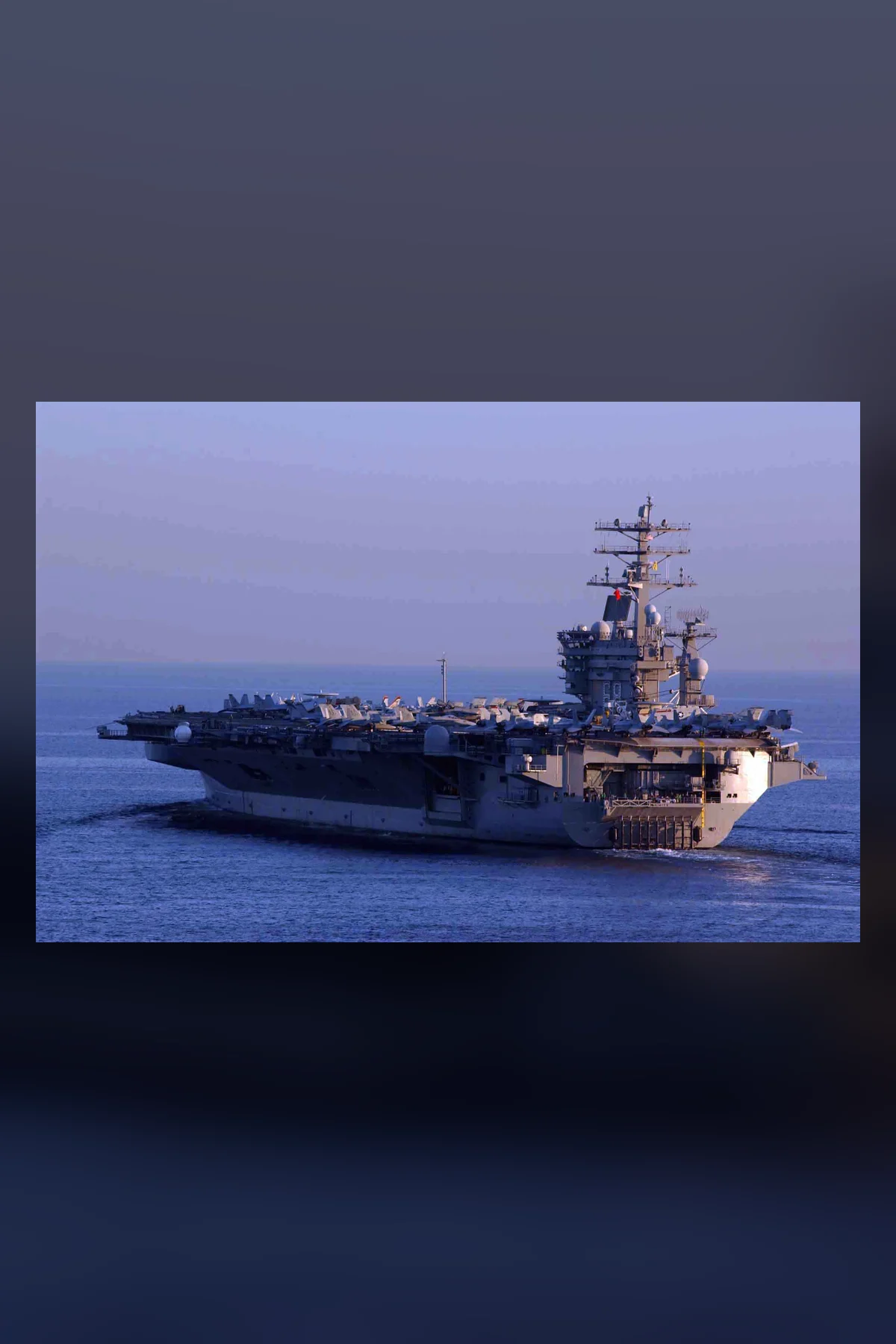
In November 2004 the USS Nimitz Carrier Strike Group was working up for deployment off southern California: the carrier, the guided-missile cruiser USS Princeton, the submarine USS Louisville and the jets of Carrier Air Wing 11. On 14 November two F/A-18F Super Hornets were pulled off a training fight and sent toward a contact the Princeton had been watching. Four aviators looked down at the Pacific. What they saw there has been called, ever since, the Tic Tac.
The weather that day, by Commander David Fravor's account, was close to perfect. Clear skies. Light winds. No whitecaps. A patch of churning whitewater in a flat blue ocean, and above it a white shape with no wings, moving, as he later told Congress under oath, "very abruptly over the water like a ping pong ball." One jet went down to meet it.
Then it was gone. Then, by the controller's call from the Princeton, it was somewhere else.
Sixty miles somewhere else.
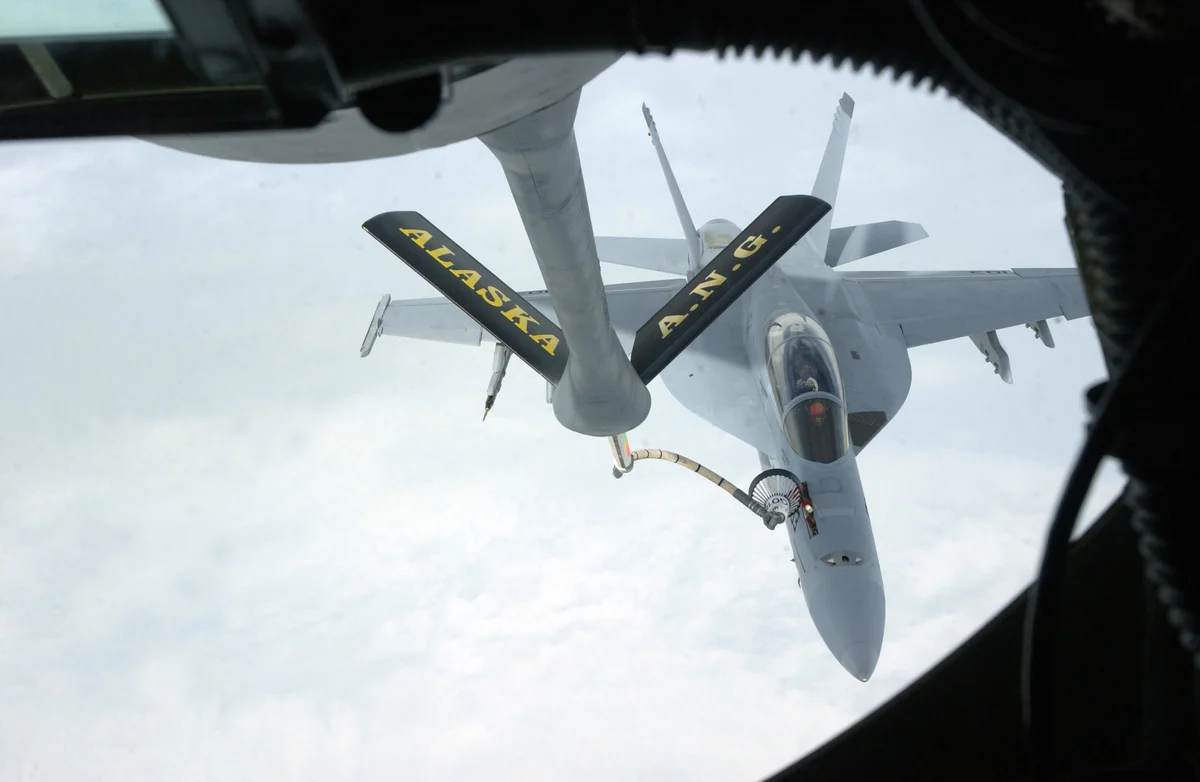
A Cruiser Watching the Sky
The record starts on the cruiser. An undated report of thirteen pages, published in May 2018 by George Knapp's investigative team at KLAS-TV in Las Vegas, says that "during the period of approximately 10-16 November 2004" the Princeton "on several occasions detected multiple AAVs," its term for anomalous aerial vehicles, three separate times during the week. The AN/SPY-1 radar was set to handle air intercept of conventional aircraft, the report says, so it never held an accurate track. A senior chief with seventeen years in Aegis fire control told its authors the returns "exhibited Ballistic Missile Characteristics."
On the 14th, Fravor commanded Strike Fighter Squadron 41, the Black Aces. He and his wingman launched for a two-versus-two exercise with the Princeton as control. The training was suspended. The flight was sent west, toward a position the report gives as about 70 nautical miles south of the border and 30 off the Baja coast.
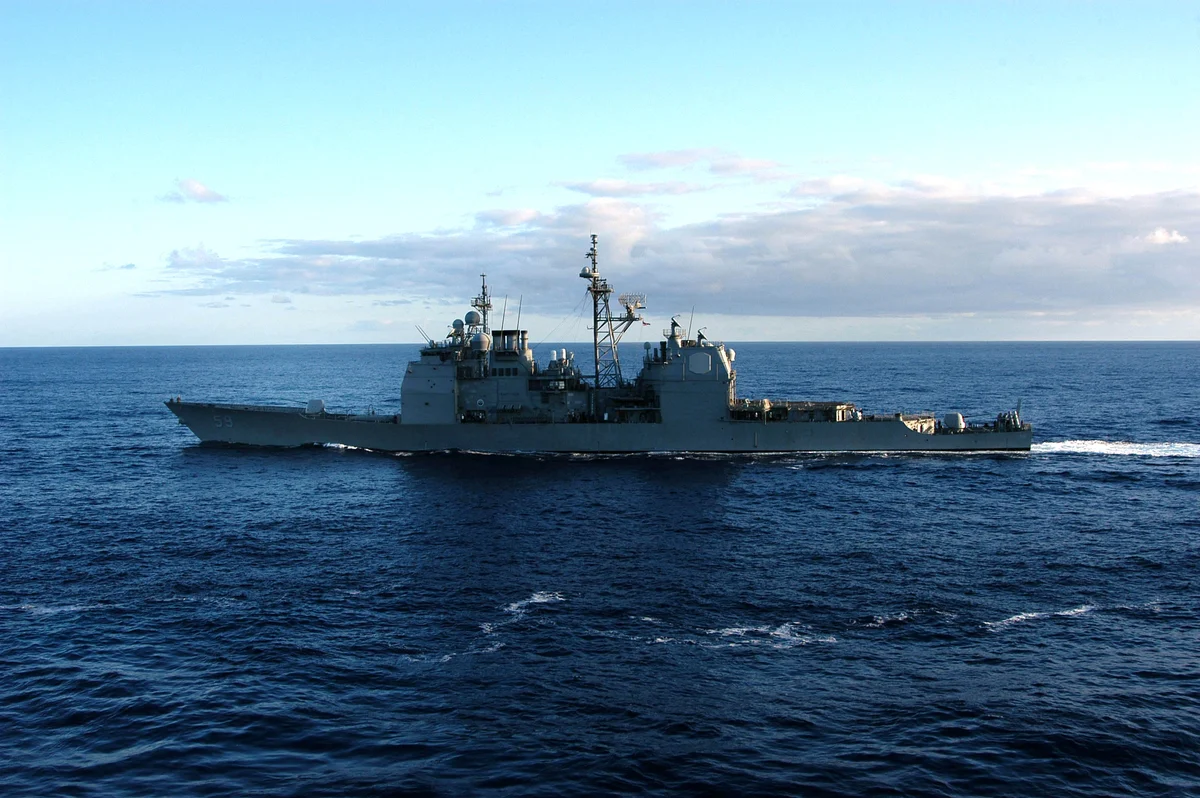
At the merge the aviators saw whitewater. Fravor took his jet down while the other Super Hornet, flown by the pilot he names as Alex Dietrich, stayed high to watch. The object, by Fravor's account, turned its long axis toward his aircraft and began to climb. At about half a mile it "rapidly accelerated in front of us and disappeared."
Back aboard, Fravor briefed one of his crews before it launched. About 1500 local time that second section picked up a contact on its radar, found an object with its targeting pod and recorded it.
Three Heights, One Descent
The accounts of the descent differ, and each belongs to its owner.
Fravor, under oath before a House Oversight subcommittee on 26 July 2023, said the controller told his flight the objects had been seen for over two weeks "coming down from over 80,000 feet, rapidly descending to 20,000 feet, hanging out for hours and then going straight back up." The leaked report puts it at "approximately 60,000 feet down to approximately 50 feet in a matter of seconds." Chad Underwood, named in later coverage as the aviator who filmed the clip, told New York magazine in December 2019, in paraphrase, that it went from about 50,000 feet to a hundred feet in seconds. CBS's 60 Minutes, in May 2021, narrated "descending eighty-thousand feet in less than a second."
The size is steadier.
The report gives "approximately 46 feet in length," and a 2020 briefing slide from the UAP Task Force to NASA, as quoted by The Black Vault, gives approximately 46 feet as well. Dietrich told 60 Minutes: "No predictable movement, no predictable trajectory." Fravor told the subcommittee: "There were no rotors, no rotor wash, or any sign of visible control surfaces like wings."
Then the line that made the case. As the jets turned back, the controller reported the object at their combat air patrol point, "roughly 60 miles away in less than a minute."
The leaked report's first key assessment reads: "The Anomalous Aerial Vehicle (AAV) was no known aircraft or air vehicle currently in the inventory of the United States or any foreign nation."
The public first heard of it on 16 December 2017, when the New York Times, in reporting by Helene Cooper, Ralph Blumenthal and Leslie Kean, published Fravor's account; the targeting-pod clip went public the same day. In September 2019 the Navy, through its spokesman Joseph Gradisher, called the objects "unidentified aerial phenomena." On 27 April 2020 the Department of Defense released the clip, known as FLIR1, with two others, adding that the phenomena "remain characterized as 'unidentified.'" That August the Pentagon set up its Unidentified Aerial Phenomena Task Force. On 26 July 2023 Fravor testified alongside David Grusch and repeated his account under oath.
If the Tic Tac Was Real
Set aside whether the object was what Fravor describes. Ask what it would mean if it was.
For the Navy, it would mean a strike group's radar and four trained aviators met something that ignored every airframe's limits, and the event closed as a story told in a ready room.
For physics, a body with no wings and no visible exhaust, crossing sixty miles in under a minute, would mean propulsion and lift from something not yet written down. Astronomers met a far quieter version of the same question in 2018, when the path of the interstellar visitor 'Oumuamua showed a push gravity alone could not account for. That was an orbit, measured over weeks. This, if the accounts hold, was a manoeuvre, seen from half a mile.
For our species, it would mean we have been sharing the sky over our own coasts with a craft whose makers we cannot name. And if something was under that whitewater, as Fravor told Congress ("There was something there to cause the whitewater"), it would mean the sea is no barrier to it either.
Our oldest frontier and our newest, crossed by the same thing.
And there is the consequence still in front of us. If it was a machine, somebody built it. Which means somebody, somewhere, flew it past a carrier group and left without a word, and whatever learned to do that in 2004 has had two decades since.
The Standard Account
The standard account rests on the video, and on what the video can and cannot show.
Mick West, an analyst who opened a thread on the FLIR1 clip at the Metabunk forum on 23 October 2017, read it as "consistent with a distant (>50 miles away) plane flying away from the camera." He pointed to the clip's zoom: "A sudden jump between 1x and 2x zoom makes this look vastly more dramatic than it actually is." The rapid movement down and to the right at the end, he wrote on 23 December 2017, "is clearly a camera movement." His summary: "the entire incident likely consisted of dodgy radar returns and a distant plane not on the radar."
The leaked report records its own ordinary readings. The Princeton's meteorological officer briefed on high-altitude ice crystals that the SPY-1 can detect. The strike group's intelligence officer thought the activity part of a counterdrug operation. The FLIR crew's weapons officer, the report says, "couldn't confirm that it was the same object as described by FASTEAGLE flight," the callsign of Fravor's flight, and never saw it except through the pod.
On 31 October 2023 Sean Kirkpatrick, then director of the Pentagon's All-domain Anomaly Resolution Office, told reporters of the 2004 video: "There's no other data behind it." Understanding it from that one video, he said, was unlikely. AARO's first historical report, of February 2024, a study of claimed government involvement with such phenomena, does not mention the Nimitz.
What the Video Does Not Cover
The analysis of FLIR1 is an analysis of FLIR1. Fravor's flight carried no pod. Nothing in the clip records what four aviators saw at half a mile, or the whitewater, or the radar picture the Princeton passed to them. Which means the strongest skeptical reading of the video leaves the morning intercept where it was.
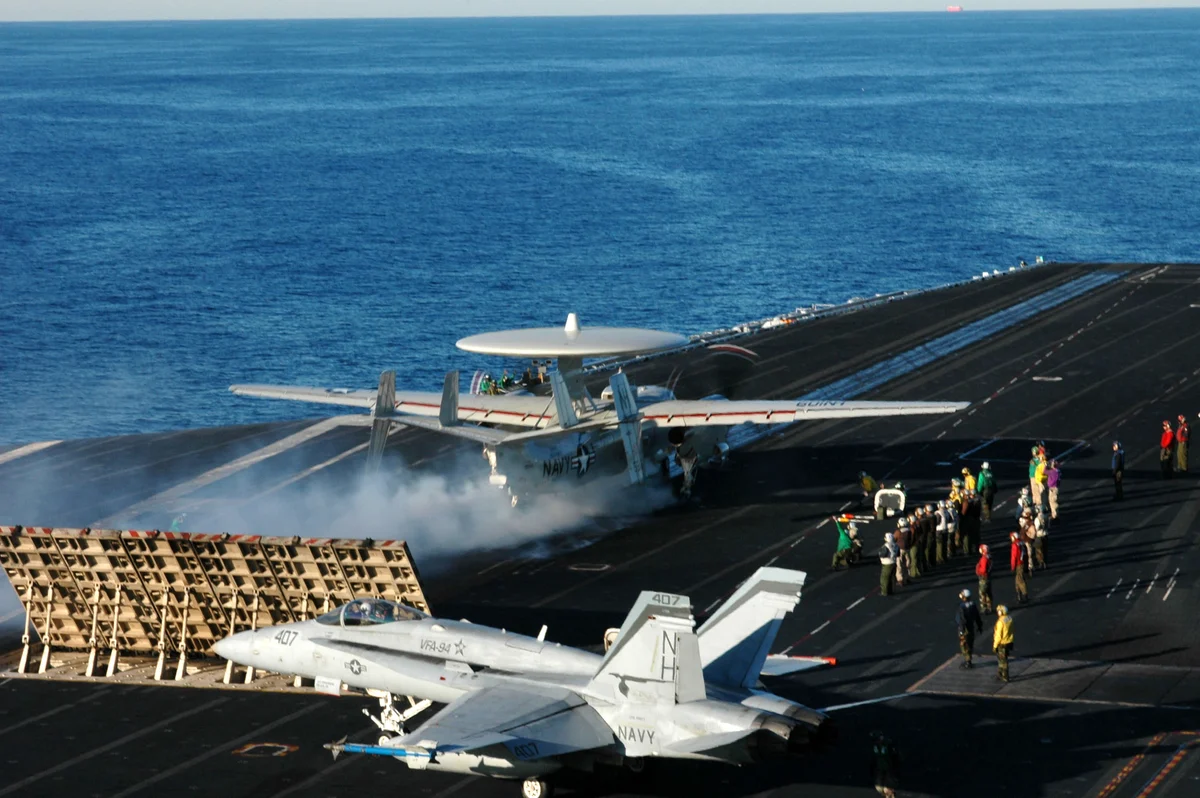
The commanding officer of Marine squadron VMFA-232, flying an F/A-18C that day, reported a disturbance in the water "50 to 100 meters in diameter and close to round," and no vessel. The submarine Louisville, the report says, heard nothing: "there were no unidentified sonar contacts in the vicinity." The E-2C Hawkeye, it says, made no recording.
And then the tapes. Fravor told the subcommittee of "the radar tape that was never released, and we do not know where it is at," and said none of his crew was ever questioned. The report says the FLIR crew's weapons officer refused when the intelligence centre tried to collect his tapes; copies were then made, with "a set being turned into the intelligence section." The Princeton's SPY-1 recordings for that week have never been published; The Black Vault reports them as classified, if they survive.
Even the report is an orphan.
It carries no date, no letterhead and no author. KLAS says it was compiled in 2009; its map carries a Google Earth credit of 2009. It is commonly attributed to Bigelow Aerospace Advanced Space Studies, the private contractor on the Pentagon's AAWSAP program; The Black Vault's John Greenewald writes only that this "is possible." No record Official X could open proves who wrote it.
Two accounts of that second flight differ on its radar. Fravor told the subcommittee the crew "experienced significant jamming to the APG-73 radar." The leaked report says its weapons officer, when asked, reported "no jamming cues."
The radar record behind the encounter has not been found in any public archive.
Where It Stands
The case now sits between two silences. AARO's director said in 2023 that one video, alone, could not be resolved. Fravor told Congress that what the video does not show is the radar tape. In June 2021 the Director of National Intelligence's preliminary assessment described a dataset of reports "occurring from November 2004 to March 2021," without naming any incident at its start.
The government's paper trail on unknown craft and military radar runs back at least to an FBI memo of March 1950 about three saucers in New Mexico. This one has a sworn witness, a named ship and a date.
The paper keeps surfacing. In June 2025 a much longer document, also attributed to Bigelow Aerospace Advanced Space Studies, was posted for discussion on the Metabunk forum; its provenance is unconfirmed. The thirteen pages of 2018 say the Princeton's radar never held an accurate track at all.
What would settle it, or come close, is specific. The Princeton's SPY-1 data for that week would give altitude, speed and the sixty-mile jump as numbers rather than memories. The full targeting-pod tape would show more than the 76 seconds released. Neither would show what the aviators saw with their eyes.
One week of radar. Somewhere, or nowhere.
Questions This Leaves You With
Is there anything a person actually does with this?
Honestly, nothing in your own week changes. The encounter is twenty years old, it ended with the jets back on the deck, and no date, warning or instruction follows from it for anyone. Anyone selling a date is selling something. The question that is left is a civic one, and it is genuinely open: who decides whether military sensor data about an unknown object belongs to the public, and on what timetable? That is a question about records law and oversight committees, and it can be asked by anyone, in public, without believing anything about the Tic Tac.
Does this sit against a religious account of the world?
It can be read either way, and serious people have read it both ways. Some see in any non-human craft a cosmos busier than old cosmologies allowed; others see nothing that touches what a faith actually claims, since a machine, however strange, is still a made thing inside creation. Official X will not tell you which way it falls for you. The aviators' own accounts, in the record cited here, describe it in the language of aircraft: rotors, control surfaces, radar. What it means beyond that is a question they leave to you.
Does this change what a human life is?
Put your own life beside the scale the accounts describe: an object that, if the controller was right, crossed sixty miles while you would be reading this paragraph. One reaction is to feel smaller, a passenger under a sky that is not entirely yours. The other is the reverse: if anything else up there is watching coastlines, then the small, local, ordinary business of a human life is something rare enough to be worth watching. You probably felt one of those before you finished the sentence.
What would change your mind, in either direction?
Name it now, before the next headline does it for you. Toward the extraordinary reading: the Princeton's raw SPY-1 tracks released and showing the descents and the sixty-mile jump with timestamps; the full ATFLIR tape matching Fravor's position; a second sensor, such as the E-2C's data link, agreeing. Toward the ordinary one: the same tracks showing radar artefacts or ice; flight logs placing a known aircraft where the pod was looking. Either way, raw data with its chain of custody would weigh more than any new interview.
Where did the tapes go?
Here is the empty space, plainly, and it is a question about storage rather than about the sky. The leaked report says copies of the targeting-pod tapes went to the intelligence section. Fravor says the radar tape was never released and nobody knows where it is. The Princeton's recordings for that week have never been produced in public; The Black Vault reports them as classified, and their survival as uncertain. The report adds that an email misreport went to the 3rd Fleet's intelligence staff, "not likely archived but deleted at some point later." Nobody has yet answered the question underneath it: whether the rest of the record survived 2004, and who holds it if it did.
Sources
- House Oversight Subcommittee on National Security, the Border, and Foreign Affairs, Unidentified Anomalous Phenomena: Implications on National Security, Public Safety, and Government Transparency, hearing of 26 July 2023, GPO (CHRG-118hhrg53022) U.S. Government Publishing Office Primary record
- David Fravor, Written statement for the House Oversight Committee, July 2023 U.S. House Committee on Oversight and Accountability Primary record
- Unsigned, undated 13-page report on the November 2004 Nimitz CSG incidents (KLAS file name 'Tic Tac UFO Executive Report'), mirrored by The Black Vault KLAS-TV via The Black Vault Primary record
- George Knapp, I-Team Exclusive: Confidential report analyzes Tic Tac UFO incidents, KLAS 8 News Now, May 2018 KLAS-TV 8 News Now Study
- John Greenewald Jr., The Vault Files: The Tic Tac Incident, November 14, 2004, The Black Vault, 2025 The Black Vault Study
- Helene Cooper, Ralph Blumenthal and Leslie Kean, reporting on two Navy airmen and the 2004 object, The New York Times, 16 Dec 2017 The New York Times Study
- John Greenewald Jr., U.S. Navy confirms videos depict unidentified aerial phenomena, The Black Vault, September 2019 The Black Vault Study
- Department of Defense statement of 27 April 2020 on the release of three Navy videos, reproduced by The Black Vault The Black Vault (DoD statement) Primary record
- Jacquelyn DiNick, Navy pilots recall 'unsettling' 2004 UAP sighting, CBS News 60 Minutes, 16 May 2021 CBS News Study
- Jennings Brown, Navy pilot who filmed UFO describes the moment it stopped, Gizmodo, 19 Dec 2019 (quoting New York magazine) Gizmodo Study
- Mick West, 2004 USS Nimitz Tic Tac UFO FLIR footage (FLIR1), Metabunk thread opened 23 Oct 2017 Metabunk Study
- Patrick Tucker, The Pentagon may never get to the bottom of that famous UFO video, Government Executive, 3 Nov 2023 Government Executive Study
- AARO, Report on the Historical Record of U.S. Government Involvement with UAP, Volume I, February 2024 (Black Vault copy) Department of Defense, AARO Primary record
- Office of the Director of National Intelligence, Preliminary Assessment: Unidentified Aerial Phenomena, 25 June 2021 ODNI Primary record
- jarlrmai, The BAASS Nimitz Tic Tac analysis, Metabunk thread, 1 June 2025 Metabunk General reference