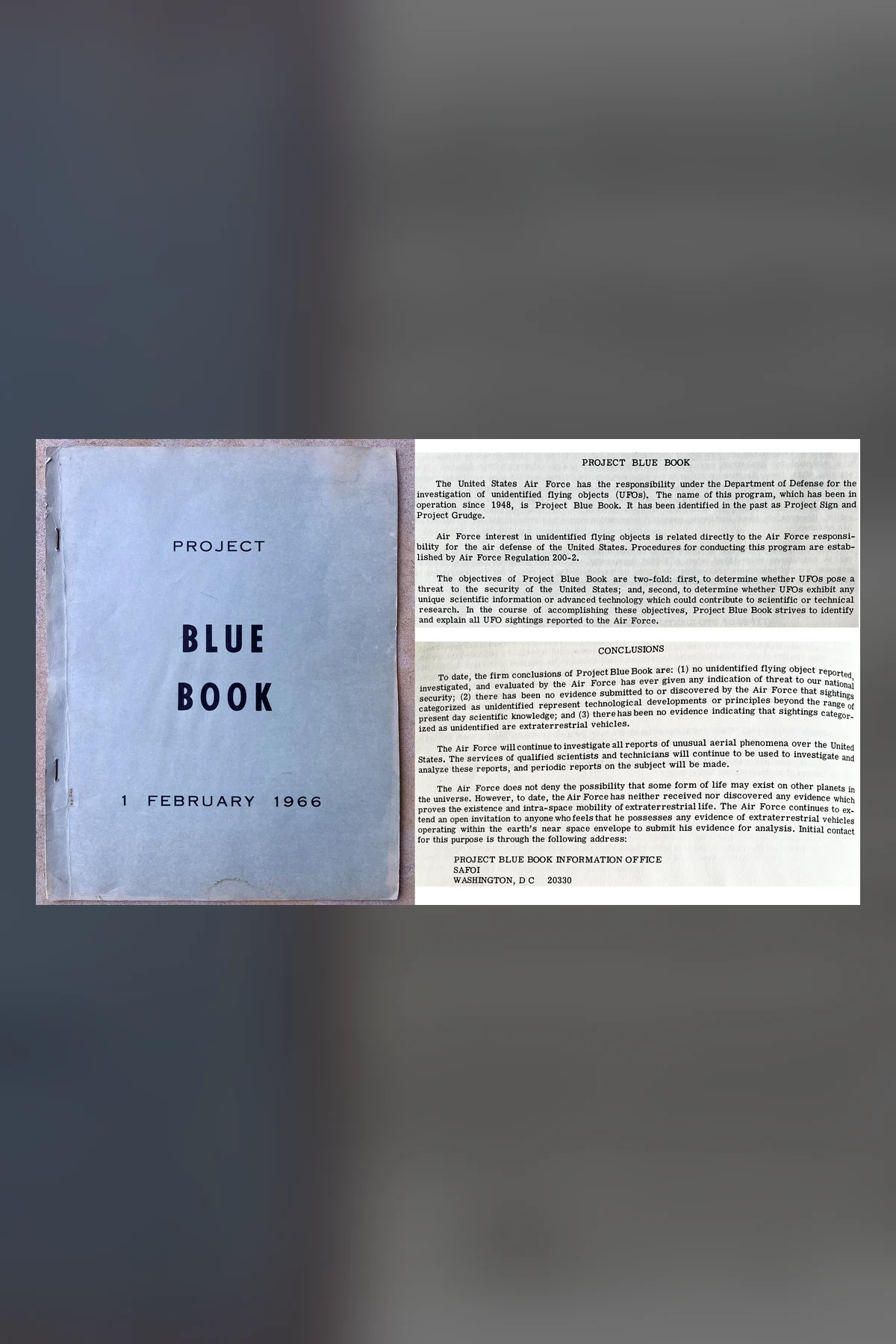
Project Blue Book was the United States Air Force's investigation of unidentified flying objects, run from Wright-Patterson Air Force Base, outside Dayton, Ohio, from March 1952 until the Secretary of the Air Force closed it on 17 December 1969. Before it came Project Sign and Project Grudge. Between them they took in the country's saucer reports for more than two decades, and gave nearly every one an answer.
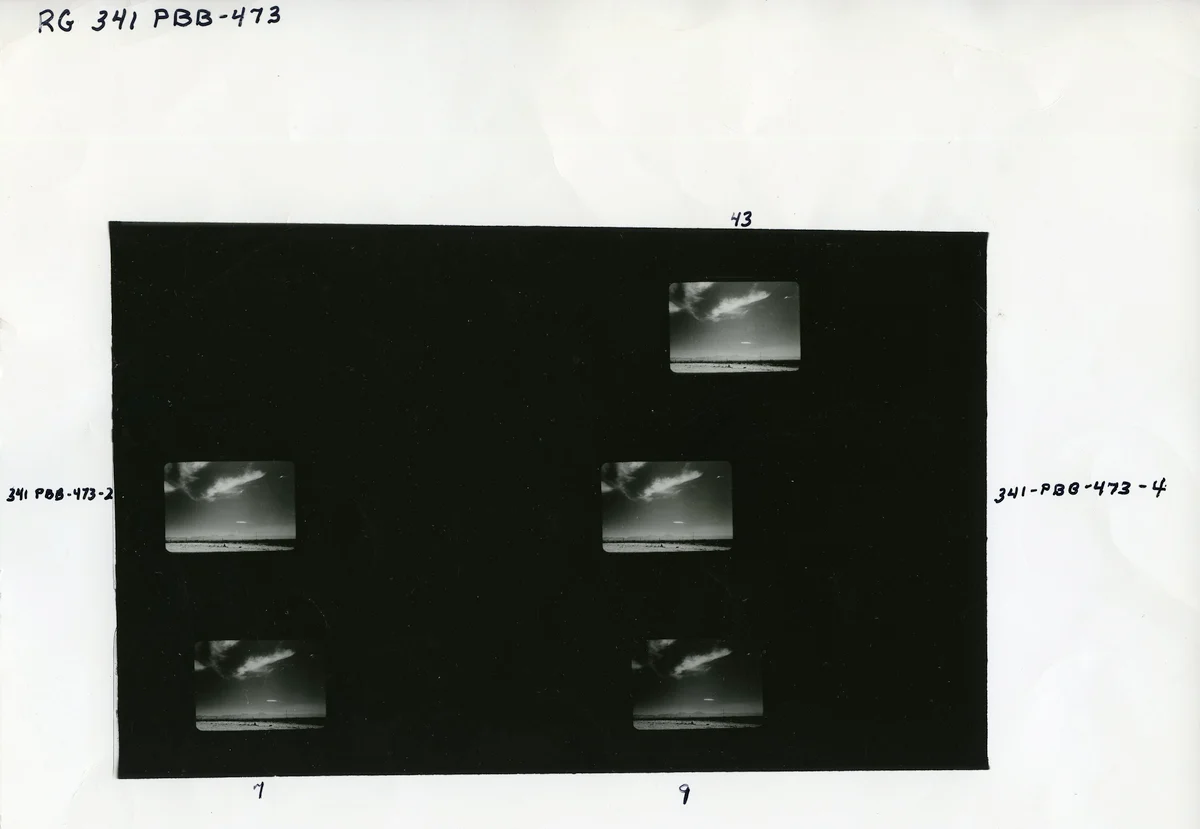
What is left of it fits in a drawer of film. Ninety-four rolls of 35 mm microfilm at the National Archives, publication T-1206, with the photographs filmed separately on the last two rolls. Thousands of case files. Forms, sketches, teletypes, and contact prints of a bright speck over a desert.
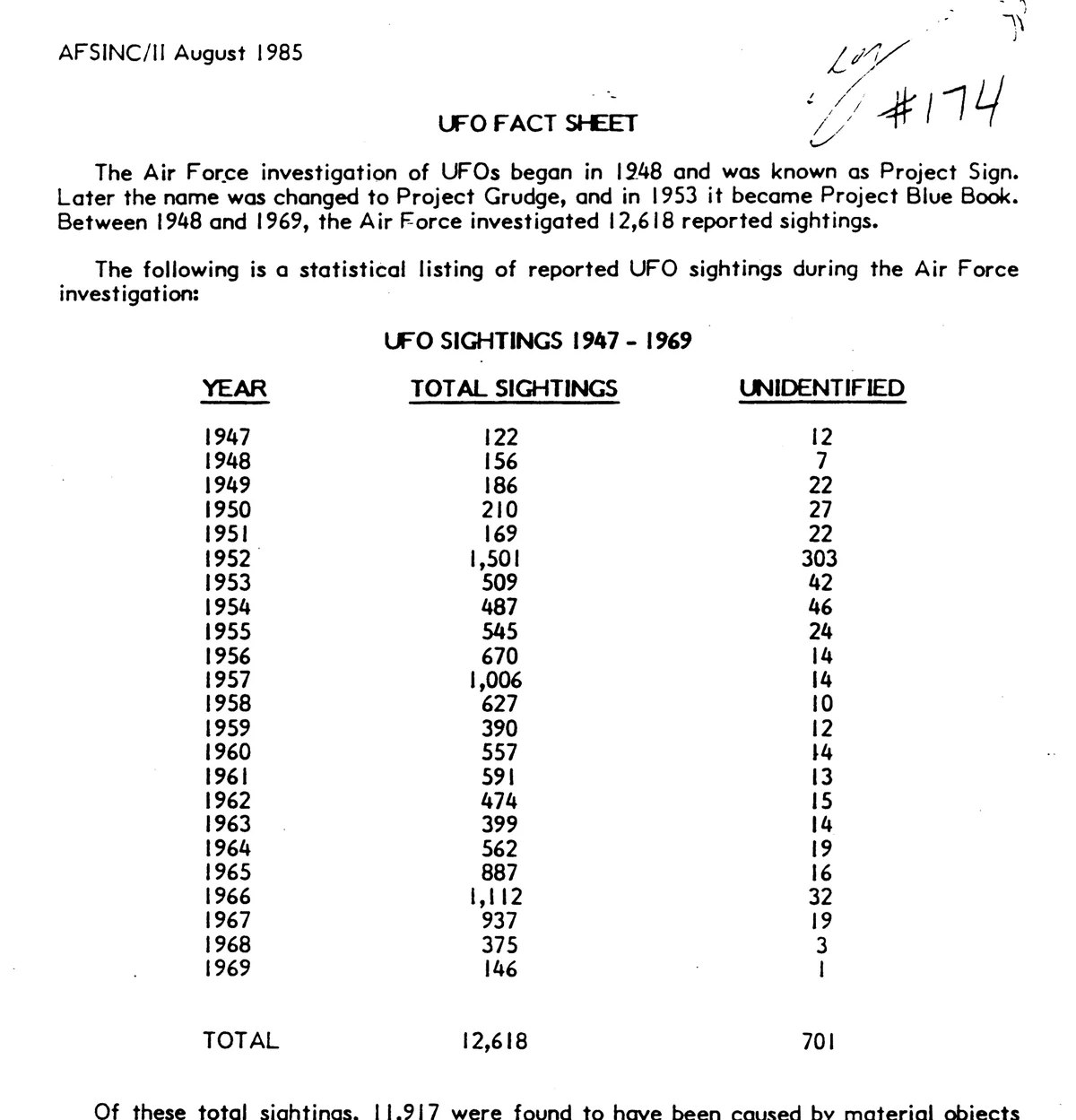
The final count is on a one-page Air Force fact sheet. Of a total of 12,618 sightings reported to Project Blue Book, it says, 701 remained "unidentified."
Seven hundred and one.
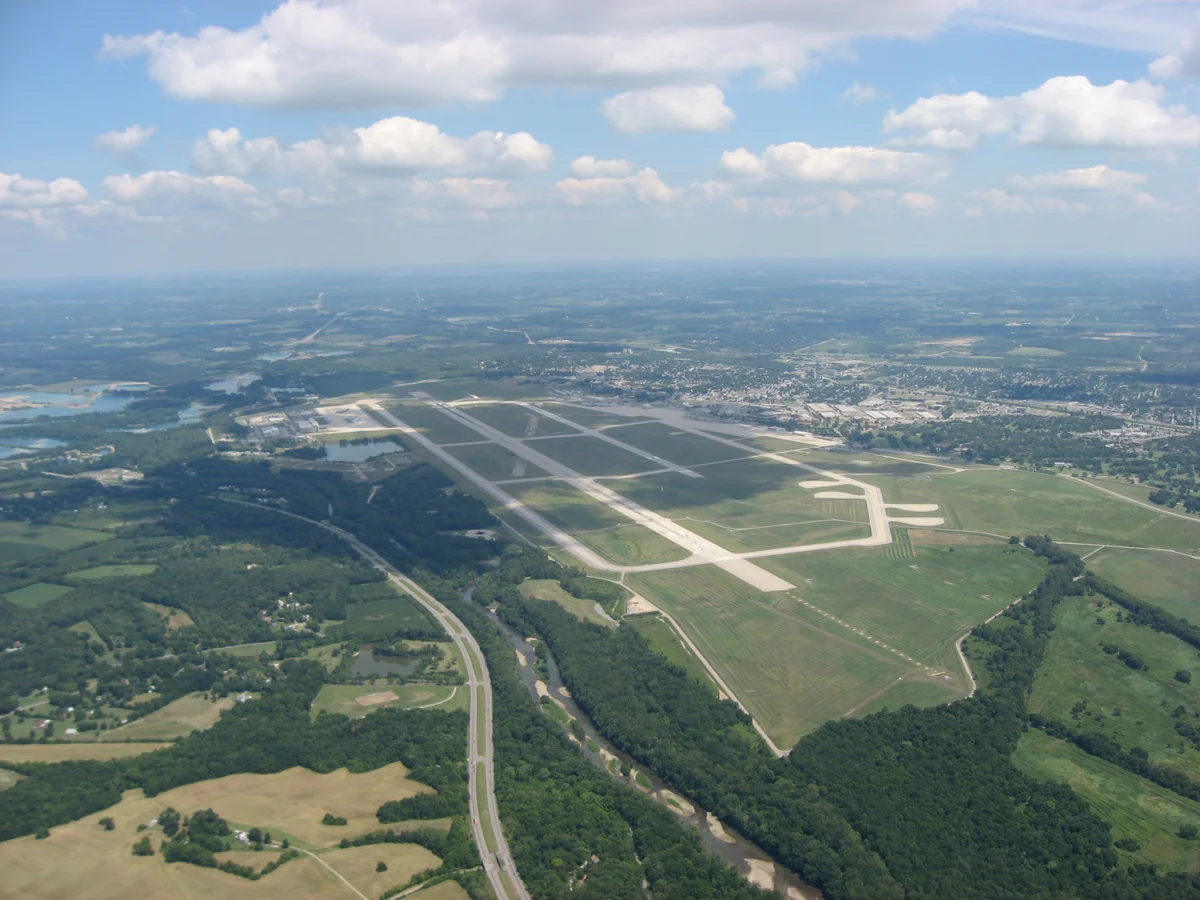
Ninety-Four Rolls in College Park
It started with a letter. On 23 September 1947 an Air Force letter concluded that "the reported phenomena were real", by the account of Captain Edward J. Ruppelt, who later ran the project and wrote The Report on Unidentified Flying Objects (1956). Project Sign was set up in January 1948, on 23 January according to the Pentagon's All-domain Anomaly Resolution Office, and Ruppelt wrote that it was given a 2A priority. On 11 February 1949 an order changed the name to Project Grudge.
Grudge closed on 27 December 1949. In that gap, with no Air Force project open, the FBI's Washington office filed the Hottel memo of 22 March 1950 on saucers said to be recovered in New Mexico. Grudge was re-established in October 1951 under Ruppelt. By March 1952 it was a separate organization, the Aerial Phenomena Group, and soon after the code name became Blue Book, from the blue books of college examinations. Ruppelt also called UFO "the official term" he had created to replace "flying saucers."
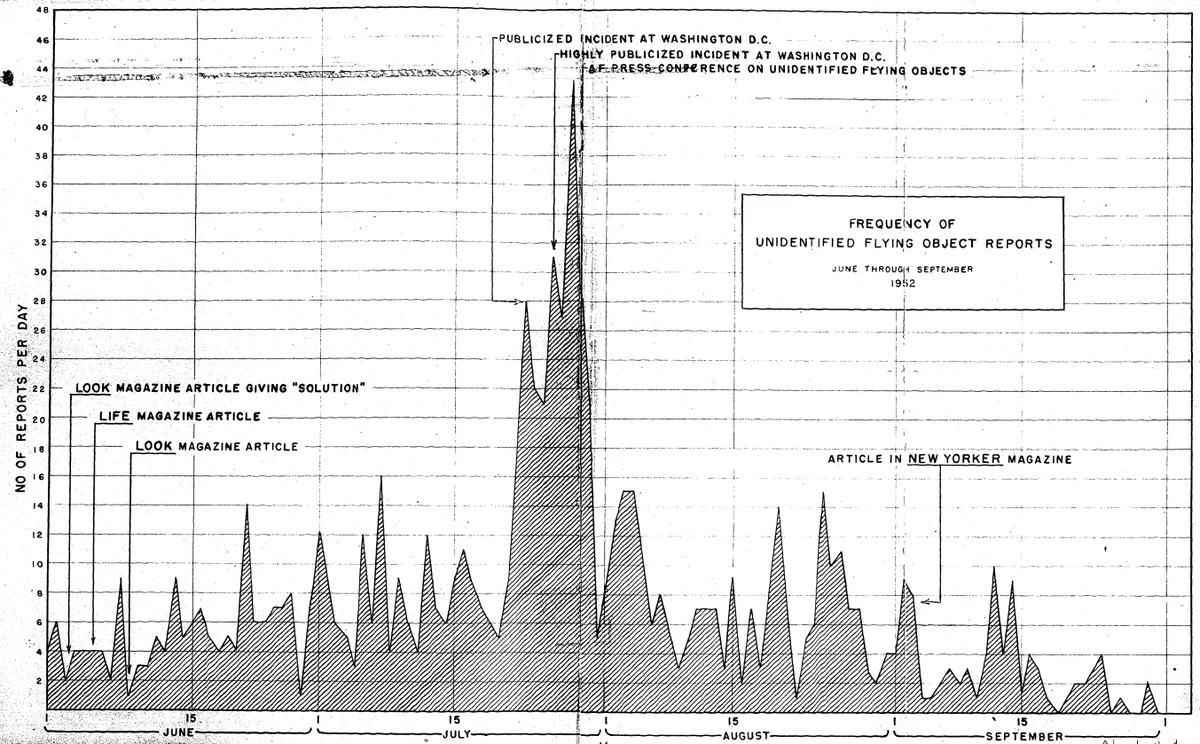
After Ruppelt came Captain Charles Hardin, Captain George T. Gregory, Lieutenant Colonel Friend and, from 1963 to the end, Lieutenant Colonel Hector Quintanilla Jr. The astronomer J. Allen Hynek, first of Ohio State University and later of Northwestern, was the scientific consultant until 1 July 1969.
Its files went first to the USAF Archives at Maxwell Air Force Base, Alabama, then to the National Archives: 42 cubic feet, about 84,000 pages, by a 2013 archives blog. In 2024 the Pentagon's anomaly office reported that it and the Archives had reviewed 7,252 Blue Book files, 65,778 digital records.
The Residue With Full Data
The word that matters is "unidentified", and Blue Book defined it. In the CIA journal Studies in Intelligence, Fall 1966, Quintanilla set out the categories. "An Insufficient Data category takes care of those in which one or more elements of information essential for the evaluation are missing". Another, labelled Other, took "missiles, reflections, mirages, searchlights, birds, kites, spurious radar indications", fakes, fireworks and flares.
And then the last one. A sighting was unidentified, Quintanilla wrote, "when a report apparently contains all the data necessary to suggest a valid hypothesis but its description cannot be correlated with any known object or phenomenon."
Which means the 701 were not, by Blue Book's own rule, the thin reports. Those went somewhere else. On the project's own reading, the 701 had what an evaluation needed.
Quintanilla called 1964 "a fairly average year": 562 reports, 142 filed as insufficient data, 19 unidentified. One of the nineteen came from Socorro, New Mexico, on 24 April 1964, where a police officer, Lonnie Zamora, reported an object that frightened him. Quintanilla filed it under "Unsolved" and wrote: "He is puzzled by what he saw, and frankly, so are we. This is the best-documented case on record, and still we have been unable, in spite of thorough investigation, to find the vehicle or other stimulus that scared Zamora to the point of panic."
That is the head of Project Blue Book, in a CIA journal, two years after the fact.
The critics' case starts inside the project too. Ruppelt wrote that Grudge "had a two-phase program of UFO annihilation". Hynek said later that the Air Force had expected him to dismiss reports, as the 2024 Pentagon review summarises him.
The Paper Dated 20 October 1969
A draft staff paper headed "Unidentified Flying Objects (UFO)", dated 20 October 1969 and signed by Brigadier General C. H. Bolender, Deputy Director of Development on the Air Staff, laid out the case for closing Blue Book. Robert Todd obtained its release in January 1979. NICAP, the civilian UFO group whose website carries a transcription, labels this signed draft "The Bolender Draft (Not Memo)".
In that transcription the paper cites the 1953 Robertson Panel, a CIA-convened group of scientists that found no direct threat, and then says this: "reports of unidentified flying objects which could affect national security are made in accordance with JANAP 146 or Air Force Manual 55-11, and are not part of the Blue Book system."
Not part of the Blue Book system.
On the reading of those who cite the paper, the 12,618 were the public's reports. The military's own, the ones that could touch national security, ran down another channel the whole time, and the paper's sixth paragraph says they "would continue to be handled through the standard Air Force procedures designed for this purpose."
If the Count Was Never the Whole Count
Set aside for a moment what any of the 701 were. Ask what kind of record the world holds if the people who wrote the closing paper meant what they wrote.
It would mean the best-known government count of UFO reports was always a partial count.
Not the whole count. The open one.
It would mean the cases most likely to involve aircraft, radar and restricted airspace, the ones a pilot or a base commander would file, were sorted out of the open file before they reached it. On that reading the 701 are the residue of the residue: what stayed unexplained even among the reports the Air Force was willing to discuss.
It would mean the long public argument over Blue Book was conducted over the wrong pile of paper. Every number either side quoted would describe the open channel, and the closed one would have no number at all.
And it would leave a question in front of us now. If our governments have kept two kinds of record of the sky, one for the public and one for defence, then every modern review that starts from the public archive starts with only part of what our own species has reported seeing. The open question would not be what the 701 were. It would be how many others there are, and where.
Seamans, Condon and the Fact Sheet
The standard account is the Air Force's. Defense Department News Release No. 1077-69 says Secretary of the Air Force Robert C. Seamans Jr. told the Chief of Staff, General John D. Ryan, that "the continuation of Project Blue Book cannot be justified either on the ground of national security or in the interest of science."
The release names four grounds: an evaluation of the University of Colorado's report, Scientific Study of Unidentified Flying Objects, directed by Edward U. Condon and released in January 1969; a review of it by a National Academy of Sciences panel, which wrote that "the least likely explanation of UFOs is the hypothesis of extraterrestrial visitations by intelligent beings"; past UFO studies, among them the Robertson Panel and a committee chaired by Dr. Brian O'Brien in February and March 1966; and the Air Force's own two decades of investigating reports.

The Air Force's Fact Sheet 95-03 states three conclusions: no UFO it investigated "was ever an indication of threat to our national security"; nothing showed that "unidentified" sightings "represented technological developments or principles beyond the range of modern scientific knowledge"; and nothing showed they "were extraterrestrial vehicles." Its 1985 version traces 11,917 sightings to balloons, satellites, aircraft, weather, astronomical objects and fakes. It also rests on Air Force Regulation 200-2 of August 1954, which sent units' electrical UFO reports, airborne sightings included, to the Air Technical Intelligence Center at Wright-Patterson, Blue Book's parent: on that account the open file held military reports too. In 2024 the Pentagon's review found no evidence of an Air Force policy to cover up extraterrestrial knowledge.
What the Three Conclusions Do Not Say
The Fact Sheet's conclusions about the 701 are conclusions about evidence. None of the three says what Socorro was. Quintanilla's definition, and his own words on Zamora, leave those cases where Blue Book put them: unexplained.
The numbers moved, too: 10,147 reports through 1965 by Quintanilla's count, 646 unexplained by a National Archives blog, 701 at the end. The CIA historian Gerald K. Haines recorded the unexplained share falling to 5.9 percent in 1955 and 4 percent in 1956, the years when, he wrote, Blue Book investigators who knew of the secret U-2 flights tried to explain such sightings away as ice crystals and temperature inversions, without revealing the true cause. Haines wrote of "misleading and deceptive statements to the public" made to protect the reconnaissance flights.
Then the channel. The Condon study and the Academy reviewed the open system. The Bolender paper, as NICAP transcribes it, says the reports that could affect national security are not part of it. A note by the researcher Brad Sparks on NICAP's page says the paper had sixteen attachments, several never released; Official X opened NICAP's transcription, not a scan of the paper, so its wording here stands on that transcription.
Where the JANAP 146 and Manual 55-11 reports went, and how many there were, is not on the T-1206 film.
One more record is missing at the root. Ruppelt wrote that Project Sign drew up an "Estimate of the Situation" and that General Hoyt Vandenberg rejected it. The 2024 Pentagon review says it "has been unable to verify his claim or locate the document."
It has not been found.
The Attachments Still Missing
The open file is open. T-1206 can be read roll by roll, and in 2024 the Pentagon's historians worked through it again.
What the open file does not hold is the other channel. Reports made under JANAP 146 and Air Force Manual 55-11 were military reporting, outside the project. No inventory of them as UFO reports turned up in the records opened for this article, and the Bolender paper's own attachments are incomplete in release.
So the thing that has not gone away is not a light over Socorro. It is a sentence, written two months before the end, that places the reports which could affect national security outside the project it was written to close.
A scan of the paper with all sixteen attachments would settle what the Air Force wrote. It would not settle what the other channel held. That would take the reports themselves.
The Air Force's closing release said where the Blue Book records would go. It said nothing about the others.
Questions This Leaves You With
Is there anything I can actually do with Project Blue Book's files?
More than with most mysteries. The T-1206 microfilm is public, its finding aids are on roll 1, and copies of many individual case files circulate online. You can read a case from the first report to the final card and see for yourself how an officer in 1957 or 1964 weighed it. What you cannot do is turn a file into a date or a forecast. Anyone selling a date is selling something. The larger question, what the government keeps and how it decides, belongs to everyone, and the files are where that question starts.
Does an unexplained light in the sky sit against a religious account of the world?
Both directions have been argued in print. Some readers take other life as one more sign of a generous creation, others as a challenge to humanity's place in it, and some see no bearing at all because an unidentified object is not yet an inhabited one. The Air Force's 1966 booklet itself said it did not deny that life might exist on other planets. Which way any of this falls for your own faith is not something this site will tell you. That is yours to weigh, with your own tradition's teachers.
Should seventeen years of unexplained reports change how I think about my own life?
Probably not in any practical way, and nothing here asks it to. But you can hold it at two sizes. In one, a few hundred unexplained reports out of twelve thousand are noise, and your life is the same size it was. In the other, ordinary people kept seeing something they could not name and wrote it down carefully, and that care makes each witness, and you, part of a record still being read. Which of those did you feel first?
What would change your mind about the 701, in either direction?
Name it now, before you settle. Toward the Air Force reading: a released set of JANAP 146 messages from the same years that matched ordinary aircraft and balloons, or a re-analysis of Socorro that found its stimulus. Toward something stranger: those same messages showing the hard cases the open file lacked, with radar and multiple witnesses; or the missing Bolender attachments describing a reporting effort larger than Blue Book. Archivists test claims like these by provenance first: who filed the paper, under what rule, and whether the copy can be traced to the original.
Where are the reports that were never part of the Blue Book system?
This is the gap, and it is real. The paper Bolender signed in October 1969 says that reports which could affect national security are made under JANAP 146 or Air Force Manual 55-11, and "are not part of the Blue Book system." It does not say how many there were, which commands kept them, or how long they were kept. It does not say whether any of them were among the records retired with Blue Book. No published count of them was found for this article, in any archive opened for it. The space where that count would be is empty.
Sources
- National Archives, Project BLUE BOOK - Unidentified Flying Objects, archives.gov (undated) US National Archives and Records Administration Primary record
- US Air Force, Fact Sheet 95-03, Unidentified Flying Objects and Air Force Project Blue Book (June 1995), Project Gutenberg eBook 25674 US Air Force (via Project Gutenberg) Primary record
- Office of the Assistant Secretary of Defense (Public Affairs), News Release No. 1077-69, Air Force to Terminate Project Blue Book, 17 December 1969 (scan) US Department of Defense (scan hosted by Patrick Gross) Primary record
- Edward J. Ruppelt, The Report on Unidentified Flying Objects, Doubleday, 1956 (Project Gutenberg 17346) Doubleday / Project Gutenberg Primary record
- All-domain Anomaly Resolution Office, Report on the Historical Record of U.S. Government Involvement with Unidentified Anomalous Phenomena, Volume I, March 2024 (Black Vault copy) US Department of Defense Primary record
- Hector Quintanilla Jr., The Investigation of UFO's, Studies in Intelligence vol. 10 no. 4 (Fall 1966), pp. 95-110 Central Intelligence Agency Primary record
- NICAP (Fran Ridge, text from Brad Sparks and Barry Greenwood), The Bolender Draft (Not Memo), 20 Oct 1969, transcription, 2006, updated 2016 NICAP Study
- Gerald K. Haines, CIA's Role in the Study of UFOs, 1947-90, Studies in Intelligence vol. 40 no. 5 (1997) Central Intelligence Agency Study
- National Archives, The Unwritten Record, Project Blue Book: Spotting UFOs in the Film Record, 30 September 2013 US National Archives and Records Administration Study
- Center for UFO Studies, About Us, cufos.org Center for UFO Studies Study
- US Air Force, UFO Fact Sheet, AFSINC/II, August 1985, page 1 (Wikimedia Commons, from the DoD FOIA reading room) US Air Force Primary record
- Steve Jurvetson, photograph of the US Air Force booklet Project Blue Book, 1 February 1966 (Wikimedia Commons, CC BY 2.0) Wikimedia Commons Primary record
- Official X, The Hottel memo, 22 March 1950 Official X General reference
- US Air Force, Air Force Regulation 200-2, Unidentified Flying Objects Reporting, 12 August 1954 (Wikisource) US Air Force (via Wikisource) Primary record