
This is the case that Hollywood's films about visitors from space are more than stories. Its names are soft disclosure, acclimation and predictive programming, and it can start with a poster. The Day the Earth Stood Still, from Twentieth Century-Fox in 1951: a giant green robot, a beam from its visor, a woman limp in its arm, troops and tanks along the bottom. The claim holds that pictures like this one, and Close Encounters of the Third Kind, and E.T., and Steven Spielberg's Disclosure Day, have been preparing the public for something.
Under the posters runs a paper trail. Studio requests. Script notes. Refusal letters. A president's diary.
And a typed memorandum from February 1953, written for the Central Intelligence Agency, in which a list of psychologists, an entertainer and a navy training centre arrives, just past the middle of a page, at a name every child in the country knew.
Walt Disney, Inc.
A Line on Page Twenty-One
The page belongs to the Robertson Panel, five scientists the CIA's Office of Scientific Intelligence gathered from 14 to 17 January 1953 to weigh the saucer reports. Their signed report asked for "public education". On 16 February 1953 Frederick C. Durant of Arthur D. Little, Inc., an associate member, sent the Assistant Director for Scientific Intelligence a memorandum whose Part II held the panel members' comments and suggestions, the ones they believed "were inappropriate for inclusion in the formal report".
Part II proposes an educational programme that "should have two major aims: training and 'debunking.'" The second aim "would result in reduction in public interest in 'flying saucers' which today evokes a strong psychological reaction." It "could be accomplished by mass media such as television, motion pictures, and popular articles." The reasoning comes from the stage: "As in the case of conjuring tricks, there is much less stimulation if the 'secret' is known."
Then the names. Hadley Cantril of Princeton, who studied the panic after Orson Welles's 1938 broadcast. The entertainer Arthur Godfrey, "a valuable channel of communication reaching a mass audience of certain levels." And then the sentence, on the page the scan numbers 21: "The Jam Handy Co. which made World War II training films (motion picture and slide strips) was also suggested, as well as Walt Disney, Inc. animated cartoons."
The next sentence belongs to the astronomer J. Allen Hynek, who "suggested that the amateur astronomers in the U. S. might be a potential source of enthusiastic talent 'to spread the gospel'."
Hold that name.
Two Readings of One Reel
Two opposite theories grew from that page. The older belongs to Bruce Rux, whose Hollywood vs. the Aliens: The Motion Picture Industry's Participation in UFO Disinformation (1998) argues, in its publisher's description, that the "film industry has long collaborated with a government disinformation campaign about UFOs", along the line the Robertson memo drew.
The newer theory turns the reel around: the films prepare people to accept. The British researcher Robbie Graham, who died in February 2023, put it as a question in a post titled "Steven Spielberg's Close Encounters: Official Government Acclimation?" The phrase "predictive programming" is credited to Alan Watt, who called it "a subtle form of psychological conditioning provided by the media".
The machinery the claim points to is real.
Phil Strub, head of the Pentagon's entertainment liaison office from 1989 by most accounts until 2018, reviewed scripts and recommended which productions got aircraft, bases and troops. In 2017 Matthew Alford of the University of Bath and the FOIA researcher Tom Secker reported, from about 4,000 new pages of Pentagon and CIA documents, that US security agencies had worked on "over 800 major movies and more than 1,000 TV titles". In 1996 the CIA hired its own Hollywood liaison, Chase Brandon.

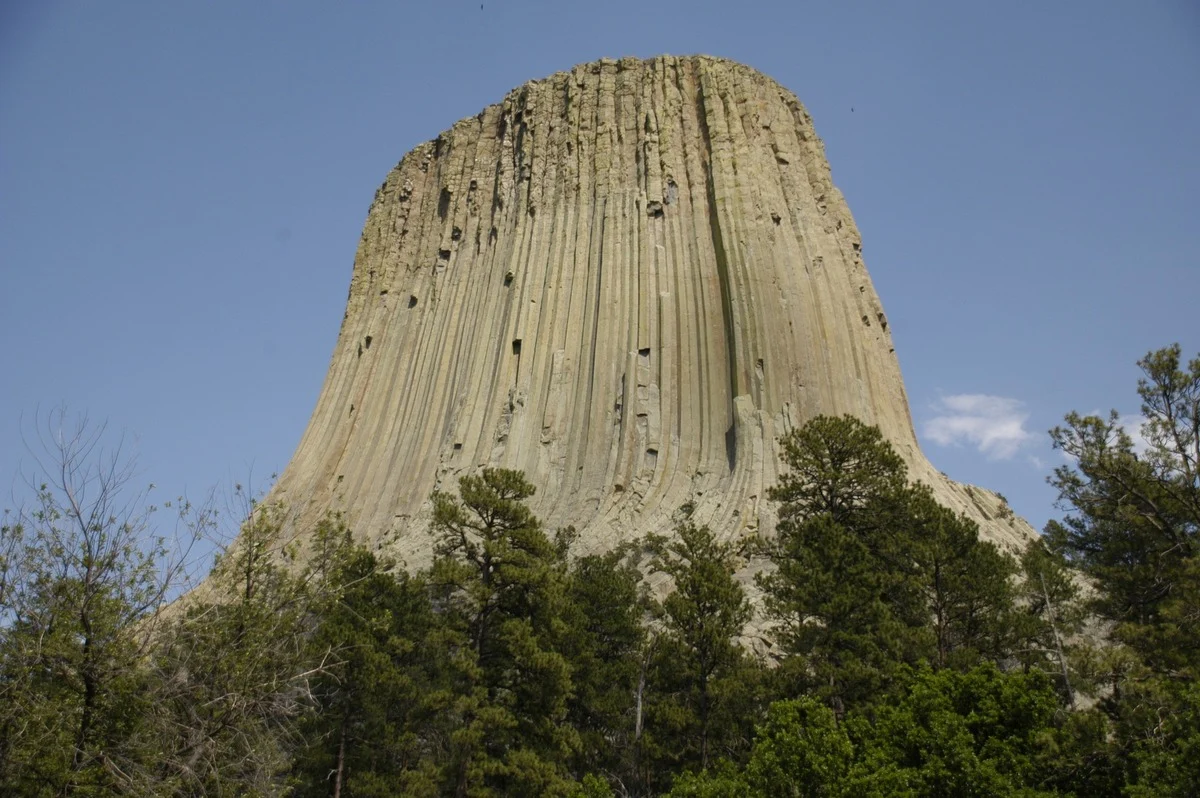
Hynek turns up again in 1977. Spielberg paid him $1,000 to use his term "close encounters of the third kind", and he appears on screen, pipe in hand, among the scientists at the finale. The man who in 1953 offered amateur astronomers to spread the panel's gospel stood inside the film that took its title from him.
Then the White House. On 27 June 1982 Ronald Reagan wrote in his diary that about 30 people were coming to dinner and to "Spielberg's movie, 'E.T.'" That evening, in the account of the Reagan aide Mark Weinberg, the president said: "And there are a number of people in this room who know that everything on that screen is absolutely true."
And in June 2026 came Disclosure Day, which the AP reported was inspired by the 2023 House hearing at which David Grusch testified. Spielberg told the AP it would be "considered science fiction" and that he did not consider it so; he said the circumstantial evidence was "overwhelming". Secker, who published the Close Encounters refusal, reads the later record as a turn: the military went "from denying that aliens even exist to helping film-makers portray the aliens coming to Earth and posing a threat". "Today, they want us to believe aliens exist," he wrote, an argument about militarising space rather than about disclosure.
If the Screen Is a Briefing
Set aside for a moment whether any of it is true. Ask the better question. What kind of world are we living in if it is?
It would mean the films are documents. A robot on a 1951 poster, a night at Devils Tower, a screening in the White House: on the acclimation reading, each would be a page of a state communication written in the only language a whole population reads at once.
It would mean the 1953 decision turned around. A government that set out, in its own unofficial notes, to drain the wonder out of the subject would later, on this reading, be pouring it back in, film by film, until the idea of visitors felt like a memory rather than a shock.
It would mean something about us. Our species would be learning the largest fact it has ever faced the way children learn the shape of the world, through stories. The line between what we are told and what we are shown would be the line that mattered.
And one consequence would still be ahead of us. If the pattern is real, a film whose own director says it is not science fiction would not be the end of the sequence. It would be a late chapter. What follows a late chapter, on that reading, is the one scene no studio would film.
What the Files Show
The standard account starts from the same documents and reads them the other way. The Robertson memo asked for less public interest, not more, and the formal report asked that UFOs be stripped of their "special status" and that the agencies set policies on "intelligence, training, and public education". The Pentagon's film office works under rules now set out in 32 CFR Part 238: help goes to productions that give "a reasonably realistic depiction of the Military Services" or may help recruiting.
Where saucers appear in these files, the government says no. In May 1976 the Close Encounters producers asked the National Guard Bureau for trucks, ambulances and a Huey helicopter at Devils Tower. The refusal cites a 1969 Air Force study, from the year Project Blue Book closed, as having found no evidence that UFOs exist. The letter, from files Graham obtained for his book Silver Screen Saucers, says the film "leaves the distinct impression that UFOs, in fact, do exist" and "involves the government and military in a big cover up", two points it called "counter to Air Force and DOD policy". For Independence Day (1996), a Pentagon memo on the revised script read "Area 51 - no way, fictional agency or not." The Pentagon refused, and Area 51 stayed in the film.
Graham's own verdict on the genre: "In Hollywood's UFO movies, broadly speaking, art imitates life." On the standard account the films follow the reports rather than lead them: Earth vs. the Flying Saucers (1956) was, says the AFI Catalog, suggested by Donald Keyhoe's 1953 book Flying Saucers from Outer Space. Where a film seems to anticipate something later, that account calls it a resemblance, not a forecast.
Where the Files Stop
That account rests on the files that exist, and they have edges. The Pentagon office sees only productions that ask it for help.
The Disney line has the same edge. The memorandum suggests; it does not commission. Official X found no record, in the files it searched, that any programme was ever made with Disney or Jam Handy. AARO's 2024 historical report called it "at least one USG proposal" meant "to steer the public away from reporting UFOs". The follow-up has not been found.
One account runs the other way. The Disney animator Ward Kimball recalled, in interviews Jim Korkis gathered for MousePlanet in 2011, that Douglas Aircraft executives and the head of the Office of Naval Research wanted a UFO show from the studio in the 1950s. Walt wanted convincing footage; an officer from Wright-Patterson said the Air Force had "all sorts of film" it could not show. The show was dropped: "We ran into a brick wall, dressed in khaki uniforms." It is testimony.
Other pieces rest on one voice. Spielberg told Cinema Papers in 1978 that if NASA had taken the time to write him a 20-page letter, there "must be something happening", and that the government's opposition gave him his faith. No copy of the letter has surfaced. The Reagan line has a second half: in the version Spielberg told Ain't It Cool News in 2011, as the British researcher David Clarke relayed it, the room erupted into laughter. A sharper version, with a head count in it, circulates on the strength of a single web page that could not be opened for this article.
And the refusal cuts both ways: policy to the standard account, the tell to Spielberg. One sheet of paper supports both readings, and settles neither.
The Line Nobody Followed Up
Disclosure Day opened on 12 June 2026 and took $44.5 million in its first North American weekend. Its director told the AP he had been a believer since making Close Encounters, yet he will not "categorically state that life from out there has come here" until he sees a craft with his own eyes. A director who says his film is not fiction, and who still has not seen the thing it is about.
It narrows to one typed sentence.
In February 1953 a memorandum for the CIA named a cartoon studio for a programme to lower public interest in flying saucers. The scan is public, stamped for release on 7 August 2001. The sentence is plain. What happened after it, a meeting, a refusal, a film, or nothing at all, is not on the page, and no later file opened so far says.
A studio that drew mice was named, on paper, to help a country stop looking up.
Questions This Leaves You With
Should any of this change how you watch a film like Disclosure Day?
Honestly, probably not much. Nothing in the record tells you what to expect on any date, and anyone selling you a date is selling something. The personal question is small: enjoy the film or don't. The larger one is a civic question with no answer yet. A government office reviews scripts in exchange for equipment, under published rules, and most viewers never learn which films went through it. Whether a free public should be told, in the credits, when its entertainment was shaped that way is a question you can hold on to long after the lights come up.
Does a story about visitors sit against your faith?
It can be read either way, and thoughtful people have read it both ways. Some find that a populated universe makes creation larger and stranger than any single world could. Others find that it unsettles an account in which this world is the centre of the story. Both readings have been argued by people who took the question seriously, and neither needed a film to start the argument. This site will not tell you which way it falls for you, and it would be overstepping if it tried.
Does it bother you that you might be shaped by stories without knowing it?
There are two ways to feel about that. One makes a person smaller: tastes and fears handed down from a studio or an office, a mind partly furnished by others. The other makes a person rarer: every culture has taught its largest ideas through stories, and a person who can notice the teaching and still choose what to believe is doing something no film can do for them. You may already know which of the two you felt when you read about the Disney line.
What would change your mind, in either direction?
Decide now, before the next headline. Toward the claim: a dated CIA or Air Force file showing the 1953 programme was commissioned, or a liaison memo asking a studio to make visitors look friendly or real rather than to keep them off military screens. A copy of Spielberg's 20-page NASA letter would count too. Against it: the full Secker and Alford document sets read end to end with no such request in them, or a record showing the Disney suggestion was dropped in 1953. Either kind of file can be asked for under the Freedom of Information Act.
What became of the Disney line?
This is the gap at the centre of the whole subject. The suggestion exists, typed and later released. The panel thought such a programme might take a year and a half to two years. After that the trail goes blank in every file this article could reach: no contract, no script, no letter of refusal from the studio. A blank can mean the idea died in a meeting, or that the paperwork sits in a box nobody has requested. No file opened so far shows which. The space between that sentence and whatever came next is still empty.
Sources
- F. C. Durant, memorandum to the Assistant Director for Scientific Intelligence, Report of Meetings of the OSI Scientific Advisory Panel on Unidentified Flying Objects (with Tab A, the panel report), 16 February 1953, CIA-RDP81R00560R000100030027-0, released 2001 Central Intelligence Agency (scan via Wikimedia Commons) Primary record
- Condon Report Appendix U, Report of Meetings of Scientific Advisory Panel on Unidentified Flying Objects (Robertson Panel), NCAS Internet edition, 1999 National Capital Area Skeptics / University of Colorado Primary record
- All-domain Anomaly Resolution Office, Report on the Historical Record of U.S. Government Involvement with Unidentified Anomalous Phenomena, Volume I, 2024 US Department of Defense (copy via The Black Vault) Primary record
- Bruce Rux, Hollywood vs. the Aliens: The Motion Picture Industry's Participation in UFO Disinformation, Frog, 1998 (listing) Goodreads General reference
- Robbie Graham, Steven Spielberg's Close Encounters: Official Government Acclimation? (repost by Michael Heiser, 10 January 2014) drmsh.com Study
- Jason Colavito, UFO Writer Robbie Graham Disputes Claim Hollywood Shapes Perceptions of Aliens, 28 March 2018 JasonColavito.com Study
- Anomaly Archives eNews, 23 February 2023 Anomaly Archives Study
- Rupendra Brahambhatt, Predictive programming: how books and TV predict the future, 3 January 2022 Interesting Engineering Study
- Laura Bennett, The Pentagon's Man in Hollywood: I'm a Eunuch, 21 December 2012 The New Republic Study
- 32 CFR 238.4, DoD Assistance to Non-Government, Entertainment-Oriented Media Productions Legal Information Institute, Cornell Law School Primary record
- Tom Secker and Matthew Alford, Exclusive: documents expose how Hollywood promotes war on behalf of the Pentagon, CIA and NSA, Insurge Intelligence, July 2017 (repost) Insurge Intelligence Study
- Arun Rath, A history of the CIA in Hollywood movies, 15 August 2013 PRX The World Study
- Max Evry, The man who inspired Steven Spielberg's UFO obsession, 27 July 2026 Den of Geek Study
- Ronald Reagan, White House diary entry, 27 June 1982 Ronald Reagan Presidential Foundation Primary record
- Mark Weinberg, excerpt from Movie Nights with the Reagans (Simon & Schuster, 2018), 14 September 2018 Washington Examiner Study
- David Clarke, Only joking folks, 18 June 2011 drdavidclarke.co.uk Study
- Metabunk thread transcribing Spielberg's interview in Cinema Papers no. 16, April-June 1978 Metabunk Study
- Tom Secker, Close Encounters of the Third Kind was 'Counter to Air Force and DOD policy' Spyculture.com Study
- Tom Secker, ClandesTime 250 - Independence Day vs The Pentagon Spyculture.com Study
- Earth vs. the Flying Saucers (1956), AFI Catalog of Feature Films American Film Institute General reference
- Associated Press interview with Steven Spielberg on Disclosure Day, 3 June 2026 (AP text as carried by Breitbart) Associated Press Study
- Screen Daily, Disclosure Day tops North American box office in $44.5m bow, 14 June 2026 Screen Daily Study
- Jim Korkis, Ward Kimball and UFOs, 24 August 2011 MousePlanet Study