
IM1 is the name given to a small fireball that burned through the sky north of Manus Island, Papua New Guinea, on 8 January 2014. US government sensors recorded it, and NASA's catalogue gave its speed as 44.8 kilometres a second. In 2019 the Harvard astronomers Amir Siraj and Avi Loeb argued that speed meant it came from outside the solar system: the first interstellar meteor. In June 2023 Loeb went to sea to find what was left of it.
The catalogue entry is a single row. A date, 2014-01-08. A time, 17:05:33 UTC. A position, 1.2 degrees south, 147.1 east. An altitude, 18.7 kilometres. A speed.
The rock was perhaps half a metre across. It flared over the Bismarck Sea and was gone.
Nine years later a ship towed a sled of magnets along the sea floor two kilometres down, under the place the row pointed to, and brought up beads of metal smaller than a grain of sand.
About seven hundred of them.
A row in a catalogue
The fireball went into the catalogue that NASA's Center for Near Earth Object Studies keeps of events detected by US government sensors, satellites and other instruments whose details are classified. The catalogue gives a time, a place, an energy and, for some events, a speed and direction. Its own page warns that the values are revised when better information arrives and that it "does not independently verify or reanalyze these events."
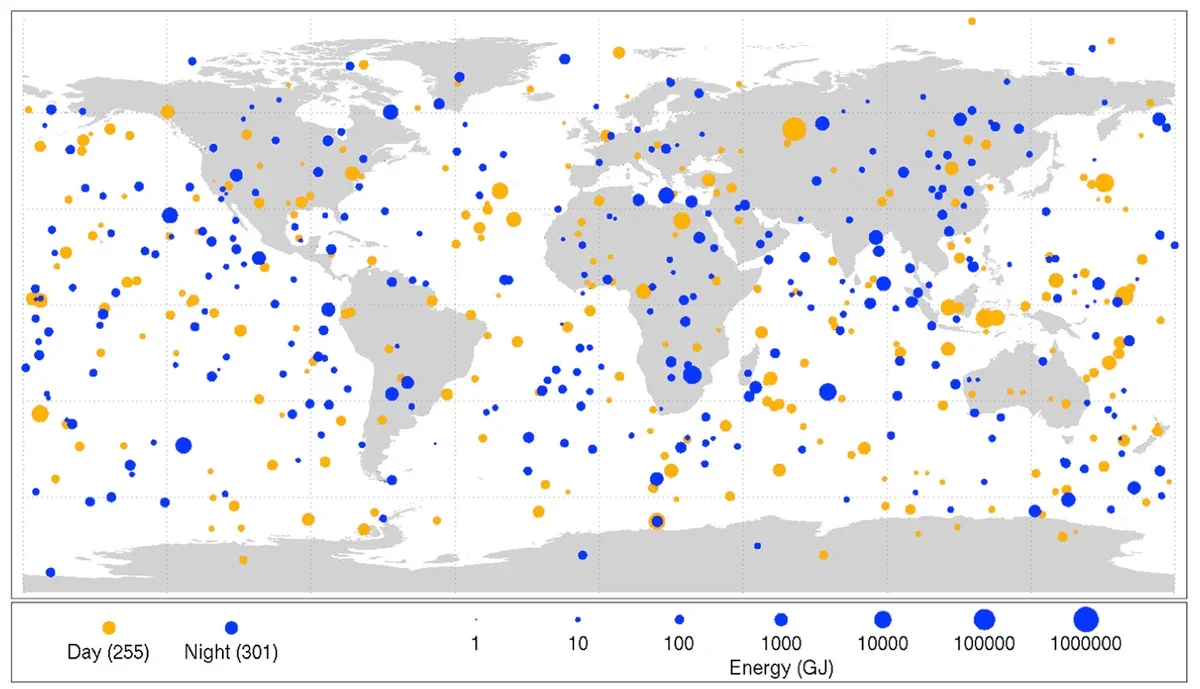
In April 2019 Amir Siraj, then a Harvard undergraduate, and Avi Loeb, Harvard's Frank B. Baird Jr. Professor of Science, posted a paper titled Discovery of a Meteor of Interstellar Origin. They had been looking through the catalogue after their work on 'Oumuamua, the first known interstellar object, and this event stood out: on its reported speed and direction it was moving too fast to be bound to the Sun. They put the confidence that its orbit was unbound at 99.999 per cent.

A journal at first would not accept it. The sensors' error margins are classified, and no one outside government could check them.
On 1 March 2022, Lieutenant General John E. Shaw, deputy commander of US Space Command, wrote to NASA's science chief. As NPR quoted it in April 2022, when Space Command made the memo public, the velocity estimate "is sufficiently accurate to indicate an interstellar trajectory." The paper was published in The Astrophysical Journal in November 2022 under the title A Meteor of Apparent Interstellar Origin in the CNEOS Fireball Catalog.
The beads from the sea floor
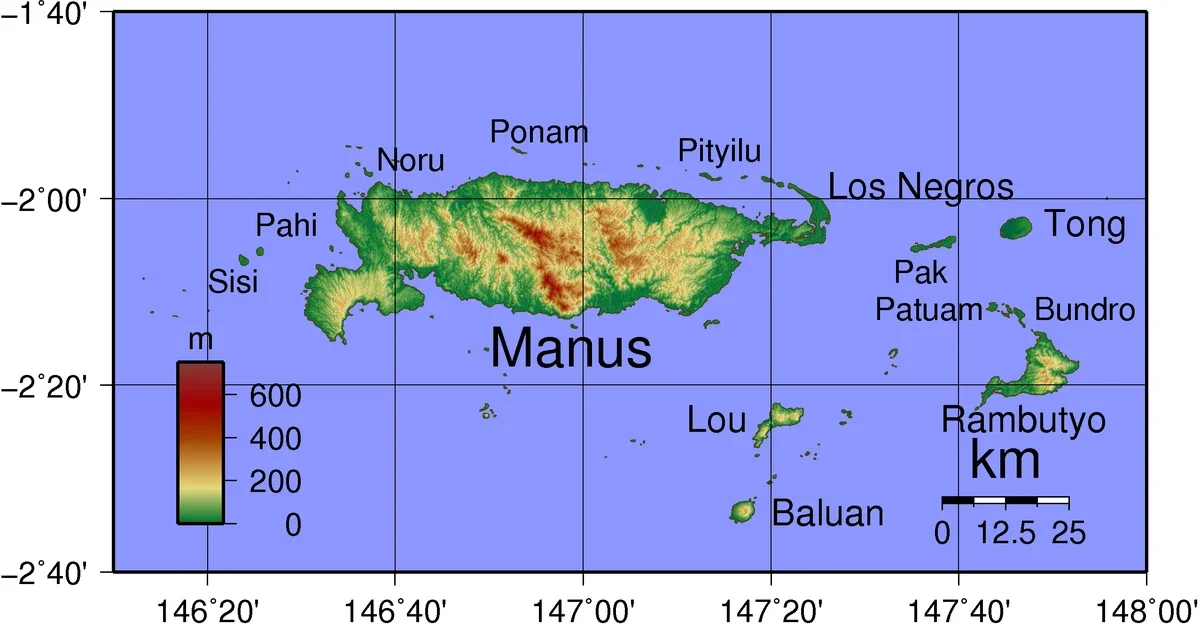
Loeb set out to find the pieces. The entrepreneur Charles Hoskinson, founder of the Cardano cryptocurrency, paid for the expedition, $1.5 million by the trade outlet DL News's account. From 14 to 28 June 2023 the ship Silver Star worked the sea floor about 85 kilometres north of Manus Island, towing a magnetic sled across the area the government data pointed to.
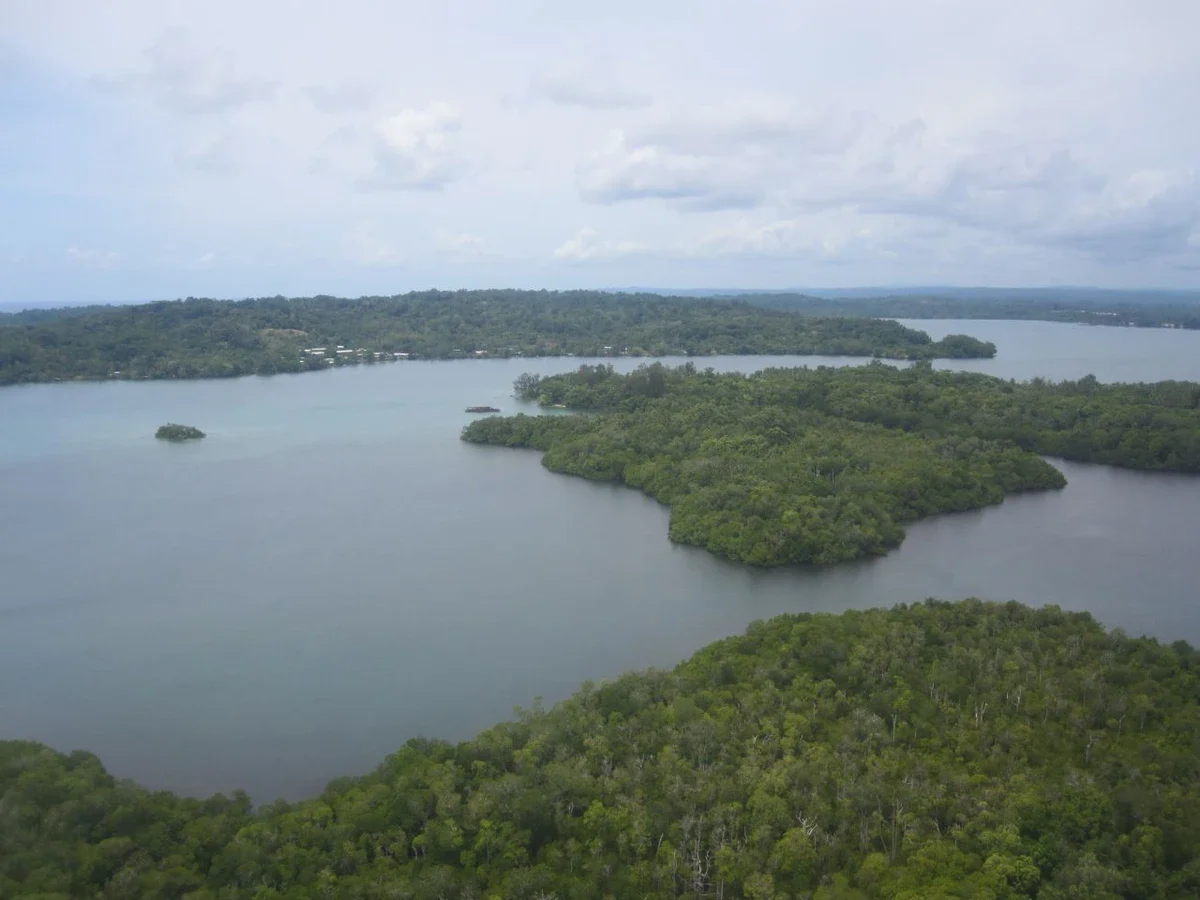
Loeb wrote a diary of the voyage for the website The Debrief. On an early find: "We found a composition of mostly iron with some magnesium and titanium but no nickel. This composition is anomalous compared to human-made alloys, known asteroids, and familiar astrophysical sources."
In August 2023 Loeb and 33 co-authors posted a preprint, not yet peer-reviewed: Discovery of Spherules of Likely Extrasolar Composition in the Pacific Ocean Site of the CNEOS 2014-01-08 (IM1) Bolide. They reported about 700 spherules, 0.05 to 1.3 millimetres across. In five of those analysed, they found a pattern they named "BeLaU", rich in beryllium, lanthanum and uranium, in excess of the solar system's primitive meteorites by up to three orders of magnitude.
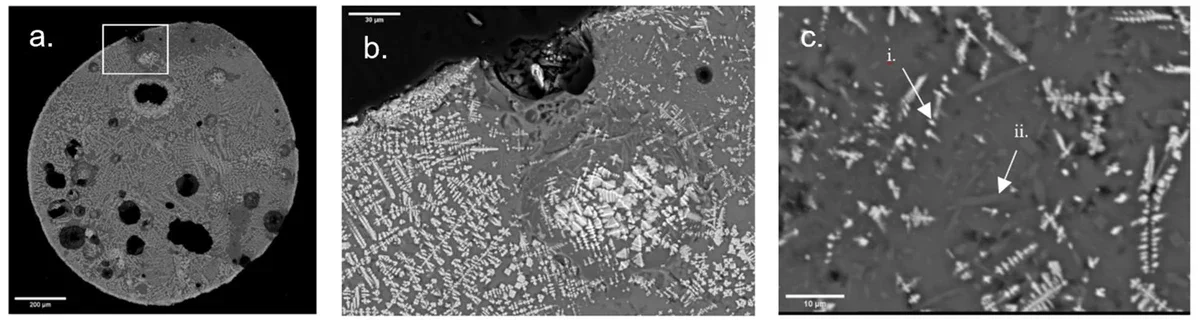
A fuller paper followed in the journal Chemical Geology in 2024. It counted about 850 spherules, sorted them into classes, and described the BeLaU group as "a highly differentiated, extremely evolved composition of an unknown source."
Loeb went further in public. In his diary he asked whether such an object could have been "manufactured by a technological civilization," and wrote that if one were retrieved, "its structure could inform us of its technological purpose and design."
If IM1 came from another star
Set aside for a moment whether it is true. Ask the better question. What kind of universe are we living in, if it is?
It would mean, first, that material from another star system fell into the Pacific in 2014 and lies on the sea floor now, where a ship can reach it.
It would mean that the stuff of other planetary systems is not only light seen through telescopes but matter we can hold, cut open and measure, with a chemistry made somewhere we will never go.
It would mean something larger about our place. If interstellar rocks reach Earth at all, the planet has been gathering pieces of other worlds for all of its history, and some of what is in our oceans, and perhaps our ground, began around other suns.
And it would leave one question in front of us, the one Loeb asked out loud: could any of what falls from between the stars be made rather than formed, and what would we have to find on the sea floor to know?
What the critics found
The answer from other scientists came on every link of the chain.
The speed. Peter Brown of the University of Western Ontario and Jiri Borovicka of the Czech Academy of Sciences compared US government fireball speeds with independent measurements where both existed, and reported in The Astrophysical Journal in 2023 that at high speeds they carried "significant (10-15 km/s) uncertainties," with average direction errors "in excess of ten degrees." Their simplest explanation for IM1 was a speed "substantially overestimated." A 2024 paper in Astronomy and Astrophysics by Maria Hajdukova and colleagues, titled No evidence for interstellar fireballs in the CNEOS database, found that the catalogue's errors leave no event in it, IM1 included, that can be shown to be interstellar.
The place. The expedition had used a seismic signal, recorded on Manus, to narrow the search. Benjamin Fernando and colleagues reported in 2024 that the signal had the characteristics of local road traffic, its direction pointing along a road to a hospital, and that infrasound recordings put the fireball about 170 kilometres from the reported spot. Recovered material, they wrote, was "almost certainly unrelated" to the meteor.
The beads. Steve Desch and Alan Jackson of Arizona State University wrote in a 2023 critique that the spherules' iron isotopes "decisively indicate an origin in our Solar System," and that they "appear to be just like those found around the world." Patricio Gallardo argued in a 2023 research note, Anthropogenic coal ash as a contaminant in a micro-meteoritic underwater search, that the beads could be coal ash, the residue of burned coal; Desch and Jackson called coal ash "a very likely candidate." Desch proposed in 2024 that the BeLaU spherules are microtektites, melted droplets of tropical soil thrown up by a large impact in Southeast Asia some 788,000 years ago.
Cosmic spherules fall everywhere. The 2024 paper itself estimated, as a check on how well the sled collected, that about 900 spherules of half a millimetre and more would fall on the searched area in a decade.
What the critics do not settle
Loeb and his co-authors answered some of these points. On the traffic finding, he told Scientific American in 2024: "If we remove the seismometer data, we would still survey the DOD region, which is what we did." Of the paper itself he said: "What this paper by Fernando is doing is saying, We don't believe the Department of Defense." The 2024 paper set its BeLaU spherules beside a coal fly ash standard and argued that coal ash is far richer in volatile elements than BeLaU.
The sensor error bars are classified. Space Command confirmed the estimate without publishing its uncertainty, and the critics infer the size of the errors from other events. Nobody outside government can give the error bar for this one.
Several of the key critiques, like the BeLaU preprint itself, were posted on arXiv as preprints, without the journal review the velocity papers went through.
The expedition did sample two tracks outside the government's error box, the 2024 paper reports, and Desch and Jackson argued that too few beads were collected off the path to show any difference. No large collection from far off the path has been published as a control.
And the 2024 paper says plainly: "we cannot prove that any of the recovered material can be directly attributed to IM1." Its beads came from the top centimetre of the sea floor, where anything that fell in recent ages lies together.
And the 2024 paper sorted 22 per cent of its spherules into a new "D-type" group. It judged at least five of them to be from Earth, and left the source of the group open.
Where it stands
A second expedition, with a remotely operated vehicle to search the sea floor more closely, was planned in 2024. Loeb's attention turned in 2025 to 3I/ATLAS, the third interstellar object found passing through the solar system.
The spherules sit in laboratories. The row sits in the catalogue, with its warning that it is not independently verified.
Eight hundred and fifty beads. One speed. And an error bar nobody outside government can see.
Questions This Leaves You With
Is there anything a person actually does with this?
Not in a practical sense, and it should be said plainly. Nothing about IM1 threatens anyone or predicts anything, and no date or warning can honestly be read from it. What you can do is look at the record yourself: the CNEOS fireball catalogue is public, the papers on both sides are free on arXiv, and you can read Loeb's case and Desch's answer side by side in an evening. Few current scientific arguments are this open, or this easy to follow from the original papers. You can also watch the fireball catalogue itself: new events are added there every month.
Does this sit against a religious account of the world?
It can be read both ways. A fragment from another star would say nothing directly about God; some readers take a universe full of other systems as a sign of its maker's scale, others as a challenge to humanity's special place. Loeb's question about technology adds another layer, and serious people disagree about what such a find would mean. Where it leaves your own faith is for you to decide. This site will not tell you.
Does this change what a human life is?
A bead smaller than a grain of sand, pulled from two kilometres of water, and a whole argument about whether it came from another star. You might find that diminishing: how small our reach is. Or you might find it the opposite: a species that can ask that question of a speck from the sea floor, and test it. Which did you feel, and does it change if the bead turns out to be coal ash?
What would change your mind, in either direction?
Name it now, before you are committed. Toward an interstellar origin: the classified sensor uncertainties released and small enough to keep the orbit unbound, or isotope ratios in the spherules that no solar-system body can produce, measured by an independent laboratory. Toward the critics: a control collection from far off the path showing the same BeLaU beads, or the same pattern traced to a known volcanic, industrial or impact source. Each of these is a measurement someone could make, and none of them needs a new theory, only more data in the open.
What was IM1?
This is the open problem. A fireball was recorded; that is not in dispute. Whether it came from beyond the solar system rests on a speed whose error nobody outside government can see. Whether anything on the sea floor is from it rests on a search placed partly by a signal now read as passing road traffic, and the 2024 paper itself says it cannot prove the link. Until the error bar or a fragment that is clearly from the fireball turns up, the row in the catalogue is the whole of what is on record.
Sources
- CNEOS fireball data, 2014-01-08 (live API) NASA/JPL Center for Near Earth Object Studies Primary record
- Fireballs NASA/JPL CNEOS Primary record
- Discovery of a Meteor of Interstellar Origin (arXiv 1904.07224, 2019; later versions) Amir Siraj and Abraham Loeb Primary record
- A Meteor of Apparent Interstellar Origin in the CNEOS Fireball Catalog (ApJ 939:53, 2022) Siraj and Loeb, The Astrophysical Journal Primary record
- The first known interstellar meteor hit Earth in 2014, U.S. officials say (14 April 2022) NPR, Jaclyn Diaz Study
- Cardano founder bankrolls Loeb expedition (16 June 2023) DL News, Ekin Genc Study
- Diary of an Interstellar Voyage, Parts 18-20 (21 June 2023) Avi Loeb, The Debrief Primary record
- Discovery of Spherules of Likely Extrasolar Composition in the Pacific Ocean Site of the CNEOS 2014-01-08 (IM1) Bolide (arXiv preprint, August 2023) Loeb et al. (34 authors) Primary record
- Chemical Classification of Spherules Recovered From the Pacific Ocean Site of the CNEOS 2014-01-08 (IM1) Bolide (Chemical Geology 670, 2024; arXiv version, CC BY 4.0) Loeb, Jacobsen, Tagle et al. Primary record
- On the Proposed Interstellar Origin of the USG 20140108 Fireball (ApJ 953:167, 2023) Peter G. Brown and Jiri Borovicka Primary record
- No evidence for interstellar fireballs in the CNEOS database (A&A 691, A8, 2024) Maria Hajdukova et al., Astronomy and Astrophysics Primary record
- Seismic and acoustic signals from the 2014 'Interstellar Meteor' (arXiv, 2024) Benjamin Fernando et al. Primary record
- 'Interstellar' Meteor Signal May Have Been a Truck (19 March 2024) Jonathan O'Callaghan, Scientific American Study
- Critique of arXiv submission 2308.15623 (arXiv preprint, November 2023) Steve Desch and Alan Jackson Primary record
- Anthropogenic coal ash as a contaminant in a micro-meteoritic underwater search (RNAAS 7, 220, 2023) Patricio A. Gallardo Primary record
- Be,La,U-rich spherules as microtektites of terrestrial laterites (arXiv, 2024) Steve Desch Primary record
- 3I/ATLAS (Official X) Official X General reference