
Lovelock Cave is a dry limestone rock shelter in the desert of western Nevada, above the flats where the Humboldt River ends. In 1911 two guano miners began digging out the bat droppings that filled it, and under the guano they found baskets, weapons and the mummified dead. A Paiute story told of a people with reddish hair, enemies who were driven into a cave near the lake and burned in it. In later retellings, the cave became the home of red-haired giants.
The shelter was cut by waves. Thousands of years ago a great lake, Lahontan, stood here, and its water carved a long hollow into the hill. The lake went. The hollow stayed, dry as an attic, its mouth half closed by fallen rock.
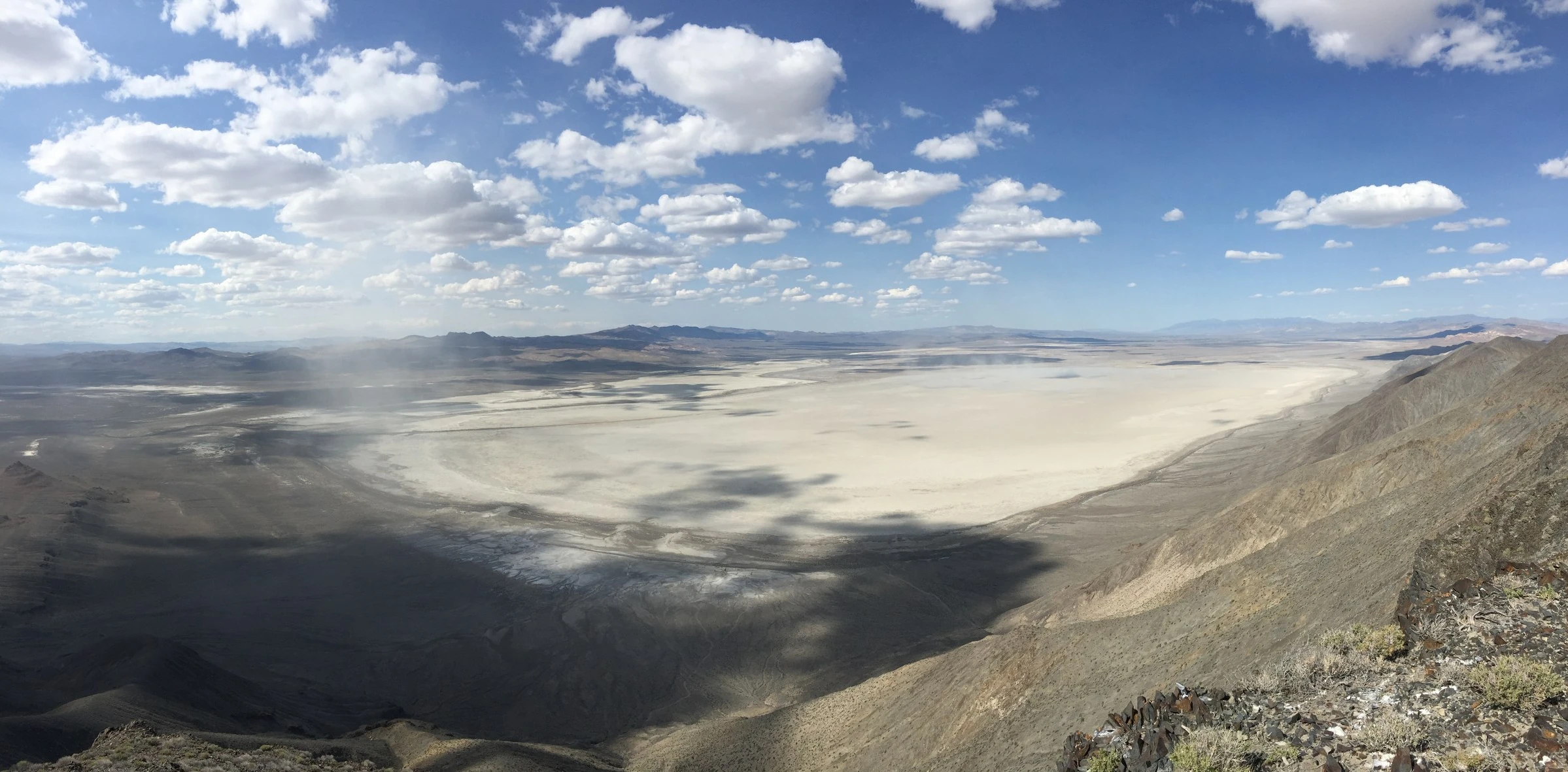
Three to six feet of guano covered the floor. Under it lay the things people had left over thousands of years, preserved by the dry air: matting, nets, sandals, a cache of duck decoys made of rushes.
And bodies. With hair the colour of rust.
The guano miners and the archaeologists
The miner was James H. Hart, working with his partner David Pugh. They filed a claim and, by Hart's account, dug "from the fall of 1911 to the spring of 1912," shipping the guano to a fertiliser company in San Francisco; the report's editors put the total at some 250 tons. Hart wrote to the University of California. The Smithsonian, he recorded, replied that it had no funds for collecting.
The University of California sent Llewellyn Loud. "Between April 1 and August 1, 1912," the later report records, "he obtained, unassisted, 10,000 specimens." Much had already gone. "A perfect spear-thrower, or atlatl, went to a private collector," and "The best specimen of the adult mummies was boiled and destroyed by a local fraternal lodge, which wanted the skeleton for initiation purposes."
In 1924 Loud came back with Mark R. Harrington of the Museum of the American Indian in New York. In pit 12, under a false bottom of mats and basketry, they found "a bulky package wrapped in rush matting" holding "eleven remarkable decoys made of rushes, most of them feathered and painted to represent ducks." Their report, Lovelock Cave, was published by the University of California in 1929.
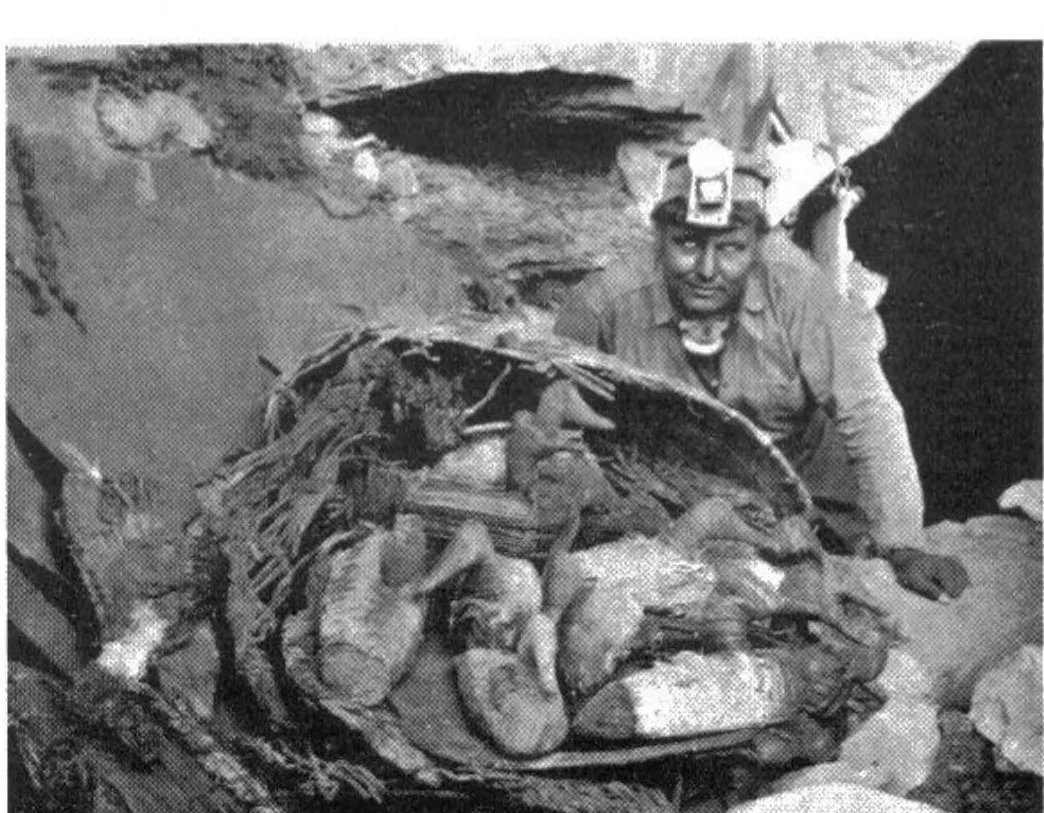
The decoys made the cave famous among archaeologists. Two of them were dated by radiocarbon in the 1980s, and the results, published by Donald Tuohy and L. Kyle Napton in 1986, came back at 2080 and 2250 years before the present, each with a margin of a few hundred years. They are now Nevada's official state artifact. The Bureau of Land Management, which looks after the site, calls it the "Cradle of Great Basin Archaeology," and records human remains there "up to 4,000 years old."
The story of the reddish-haired people
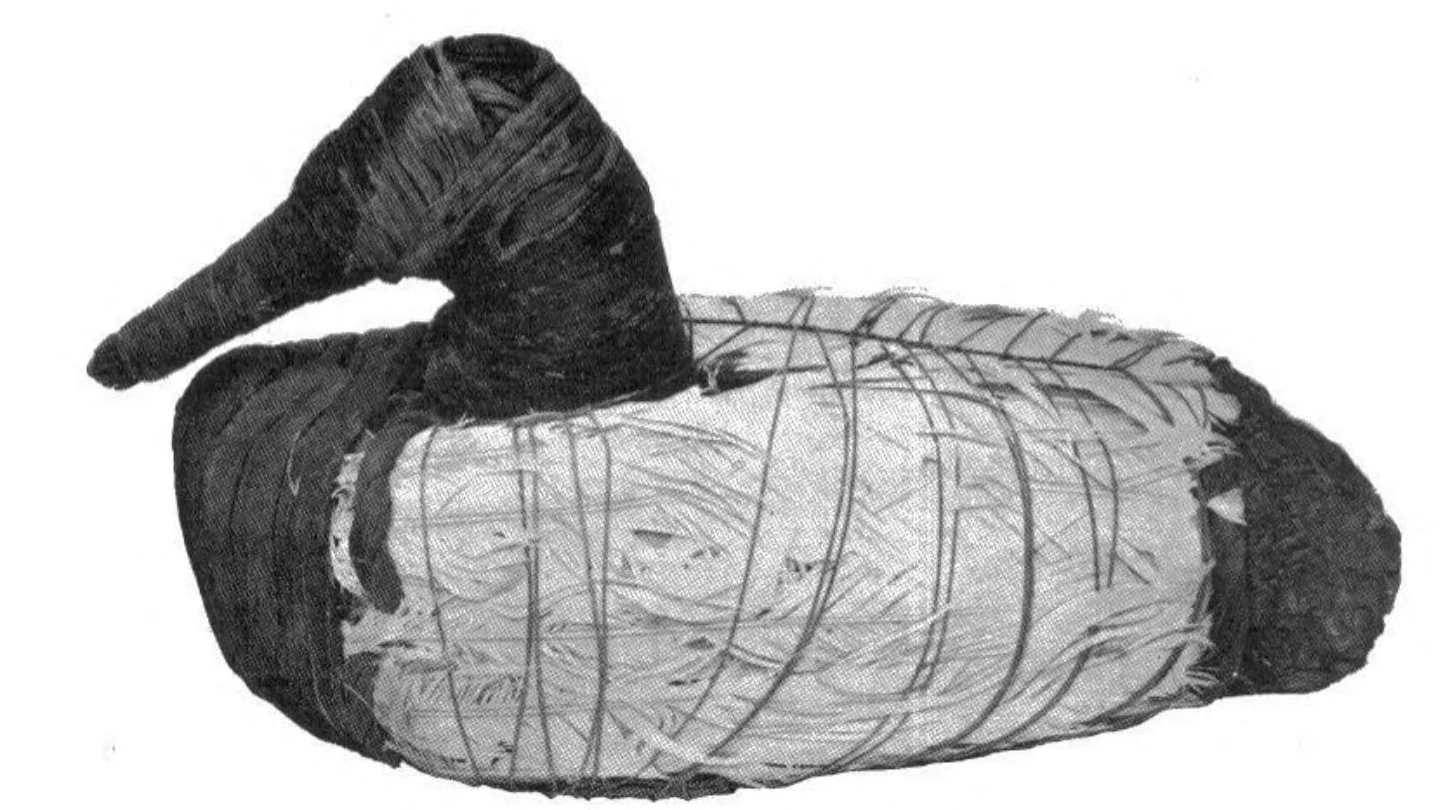
The story that made the cave famous outside archaeology was told in print by Sarah Winnemucca Hopkins, a Northern Paiute writer and the granddaughter of the leader known as Captain Truckee, in her book Life Among the Piutes, published in 1883.
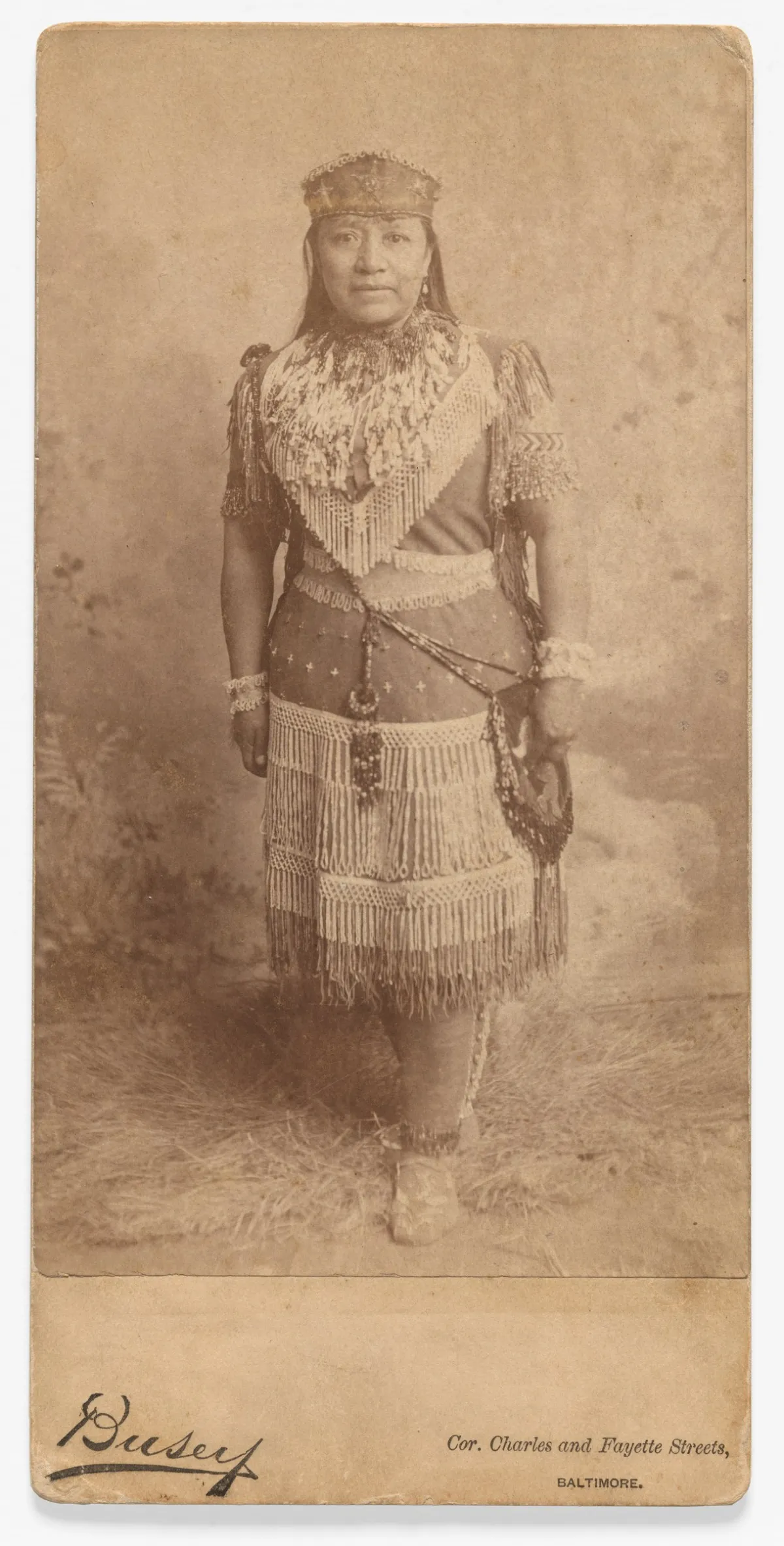
"Among the traditions of our people," she wrote, "is one of a small tribe of barbarians who used to live along the Humboldt River. It was many hundred years ago. They used to waylay my people and kill and eat them." There were about 2,600 of them, she wrote, and the war lasted some three years. "At last one night they all landed on the east side of the lake, and went into a cave near the mountains." The Paiute set the cave on fire and called on them to give up. "No answer came from them."
"My people say that the tribe we exterminated had reddish hair. I have some of their hair, which has been handed down from father to son. I have a dress which has been in our family a great many years, trimmed with this reddish hair."
Her brother, the leader called Natches, told much the same to John T. Reid in the 1880s, as Reid recorded it: that some generations back the Paiute had fought to the end a people "who were redheaded and who spoke their own language." In Reid's record the fight ended at this cave, with burning sagebrush thrown down before its mouth, and Reid concluded that the red-headed people had long occupied the land around it.
Then the miners found the cave, and the dead in it. Hart's own account, printed in the 1929 report, describes "a striking looking body of a man 'six feet six inches tall.' His body was mummified and his hair distinctly red." The other mummies, he said, "all had red hair." The women were small, and Hart explained that the difference was not all shrinkage, "because the man was 'a giant.'"
A cave near the lake. Reddish hair. A tall man. On this reading the story and the cave were the same place.
From there it grew. Later retellings cite a 1931 Nevada newspaper report of lakebed skeletons eight and a half and nearly ten feet long; Official X could not find the report itself. And the name "Si-Te-Cah" spread through popular books and, in recent years, television and the internet. In 2024, as the writer Brian Dunning reported, the New York Post described the people of the legend as up to ten feet tall. On television the writer David Hatcher Childress, at the Humboldt Museum in Winnemucca, called skulls from the area, as the anthropologist Andy White quotes him, "the skulls of giant people," perhaps seven or eight feet tall.
If the red-haired people were giants
Set aside for a moment whether it is true. Ask the better question. What kind of past are we living in, if it is?
It would mean, first, that the Paiute story is history in the plainest sense: a war, a cave and a fire that really happened, remembered for generations and confirmed when miners opened the ground.
It would mean that a people unlike any known Native American population lived in the Great Basin, tall and red-haired, and were wiped out within memory, with only a story and a few strands of hair to say they were there.
It would mean something about the story of our species in the Americas. If a separate people lived here, the record of who came to the continent, and when, would have a missing chapter, and a large one.
And it would leave one question in front of us. Winnemucca's family kept a dress trimmed with the reddish hair. If a thing like that still exists, it could be tested. If the story is right, the answer may already be sitting in a box.
What the excavators reported
The standard account begins with the excavators' own report, and with the words of the Paiute people they asked.
Loud recorded from his Paiute informants a name for the people of the story: sai'i, short for sai-duka'a, "tule-eaters," which he described as "a mythical people formerly living in various parts of Nevada." The spelling "Si-Te-Cah" appears in neither Loud's report nor Winnemucca's book. Winnemucca writes of "a small tribe," not giants; the only "giant" in the report is Hart's word for one tall mummy. Loud's informants described the cave people as cannibals with red hair, and in their telling the people in the cave were attacked with fire-arrows and found gone in the morning. Loud's own conclusion was that the former people of Nevada were "ordinary human beings living an entirely rational human life."
The report offered possible physical explanations for the story's details. "Much of the hair found on the mummies in the cave is reddish," it says. "Similar hair is known from mummies from the Pueblo region, Peru, and elsewhere, the color being due to age or chemical action." Layers of burnt grass and tule in the deposits could suggest a fire. Loud read the tradition as "an attempt by the Northern Paiute to explain the archaeological remains of a cultural period preceding their own."
The measured evidence is ordinary in size. The report records 87 sandals of tule and rush, those measured between 20 and 28 centimetres long, and a child's deerskin sandal of 19. In 2010 the National Park Service published a notice on one individual from the 1924 excavation, dated to about 2500 to 1500 BC, whose remains were consistent with Native American ancestry, and recorded that by at least AD 1500 the cave lay in Northern Paiute territory. None of this measures Hart's tall man, who was gone before the archaeologists arrived. The anthropologist Andy White, examining the Humboldt Museum comparison in 2015, wrote that "The mandibles and skulls of Lovelock Cave are not those of giants."
What the record does not settle
The excavators' account explains the hair, the fire and the size. Some things it does not settle.
The tallest man in the record was never measured by a scientist. Hart's six-foot-six mummy, "a giant" to a miner beside small women, was never examined, and the report does not say whether he was the adult mummy the lodge boiled. Six feet six is tall. It is not ten feet.
The 1931 lakebed skeletons, as later retellings give them, come with no museum and no catalogue number.
And the story itself is not explained by its explanation. The National Park Service notice records that "different groups of people occupied the region over time." Loud read the tradition as an account invented for older remains; it could also be memory, much altered, of real conflict with an earlier people. The two Paiute versions disagree on the ending, fire and death, or escape in the night.
No record has been found of what became of Winnemucca's dress trimmed with reddish hair.
Where it stands
The cave is open to visitors now. The Bureau of Land Management has built a wooden deck at its entrance and has run Lovelock Cave Days with local groups since 2006, and some of what was dug out has been returned to Nevada tribes. The decoy dates of 1986 remain the most quoted modern work on the cave.
In retellings the people of the story have grown to eight and ten feet, sizes no excavation record gives. The site's other giant records are of other kinds: the skeletons in the Smithsonian's 1894 mound report, measured in the field, and the Cardiff Giant, a carving.
What the record holds is smaller and stranger. A cave full of the patient work of people who made decoys of rushes and feathers to bring ducks down to the lake. A family that kept a dress trimmed with hair from a war. A miner's tall red-haired man, gone before anyone measured him.
Six feet six. Reddish hair. One body, and no tape.
Questions This Leaves You With
Is there anything a person actually does with this?
Not in a practical sense, and it should be said plainly. Nothing here predicts anything or asks anything of you. What it offers is a way to read any giant story: go back to the first written record and see what it actually says. Here, the first record says "a small tribe" and "reddish hair," and the only "giant" is a miner's word for a tall man. Whoever adds feet to a story without a source has given you something to check. You can read both primary texts yourself, free, online.
Does this sit against a religious account of the world?
It cuts both ways. The modern giant reading often draws on the giants of Genesis, the Nephilim, and some readers take Lovelock as support for that; others see in it how easily a story is fitted to Scripture. The Paiute story is also a sacred and family history in its own right, kept by the people whose ancestors lived it. Where any of that leaves your own faith is for you to decide. This site will not tell you which way it falls.
Does this change what a human life is?
Winnemucca kept a dress trimmed with hair from a war her people remembered across generations. Whatever the people in the cave were, that is a family carrying a story for centuries and holding what they believed was the hair. You might find the cave a sad place, a war ended in fire. Or you might find it a place of astonishing care: decoys wrapped and hidden, a story kept, a dress kept. Which did you feel?
What would change your mind, in either direction?
Name it now, before you are committed. Toward a separate, tall people: a skeleton from the cave, measured by a scientist, well outside the range of the region's other remains, or ancient DNA from the hair or bones showing a population unrelated to later Native peoples. Toward the excavators' reading: the reddish hair tested and found to be faded dark hair, as the report suggested, or a study tying the cave people securely to the region's known populations. Each would rest on material that may still exist in museum stores.
Who were the people in the cave?
This is the open problem. The archaeology shows people living in and using the cave for thousands of years, and the Park Service notes that different groups occupied the region over time. The Paiute story says one of those groups was an enemy, defeated at a cave near the lake. Whether the story remembers the people whose things lie in Lovelock Cave, or another people, or tells something else, no record yet joins them. The cave holds the objects. The story holds the war. Nothing in between has been found.
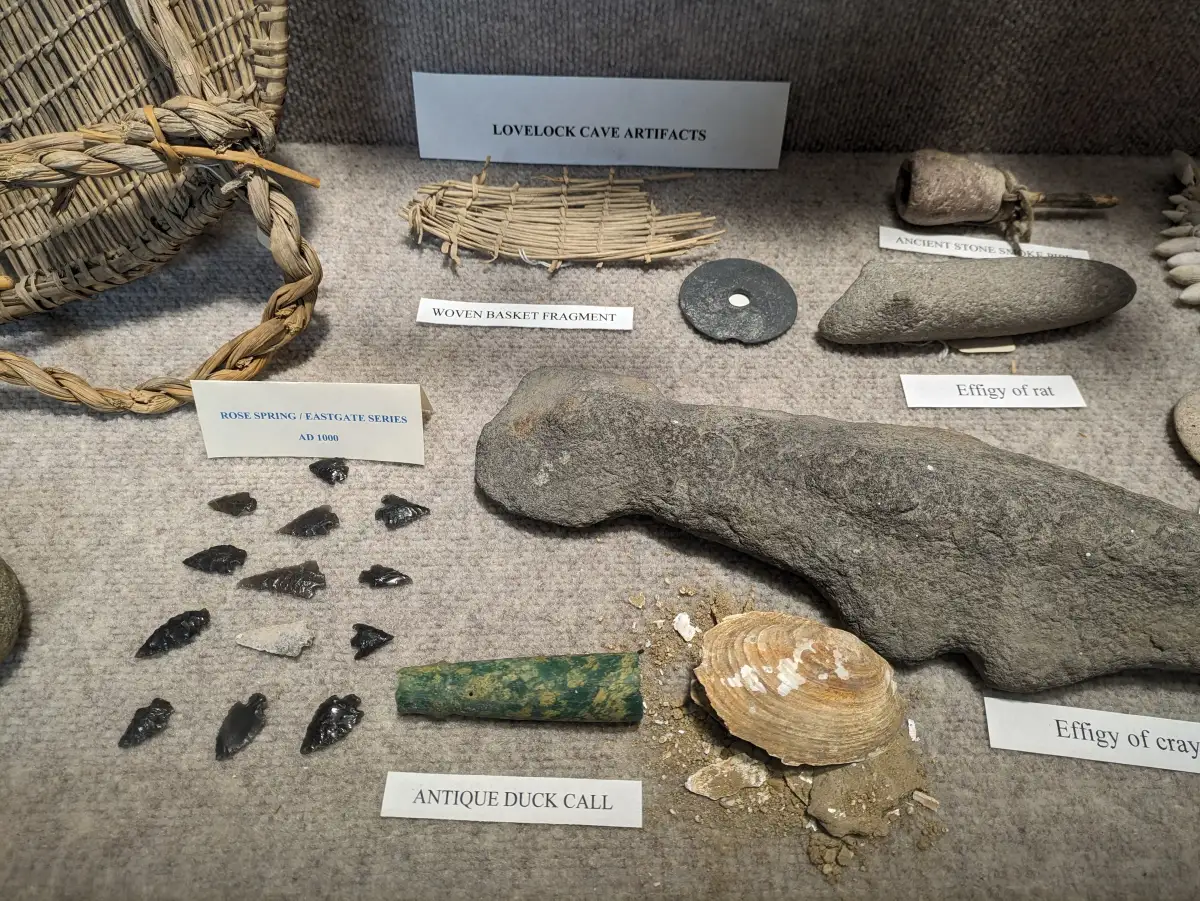
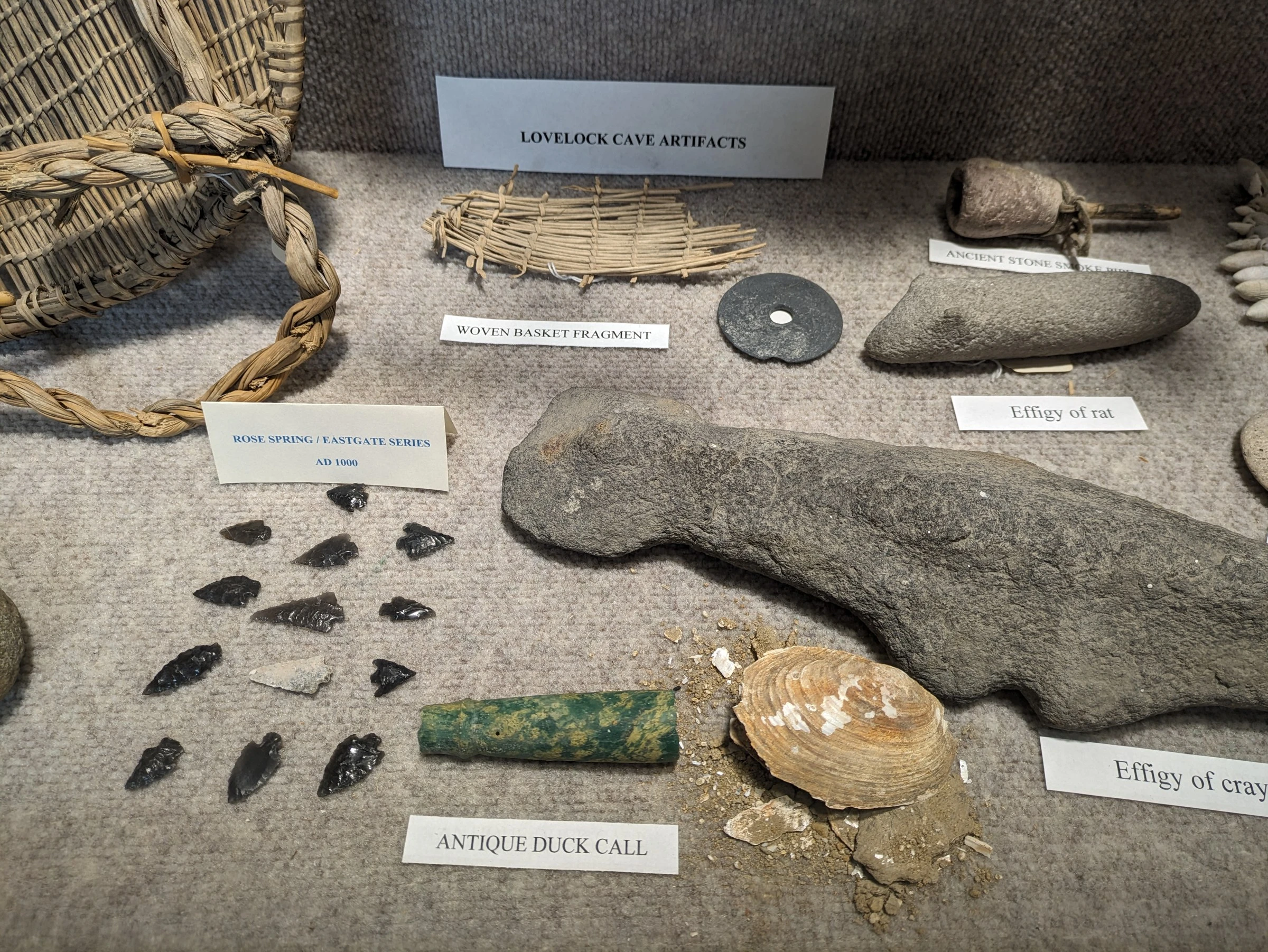
Objects from Lovelock Cave on display at the Humboldt Museum in Winnemucca, Nevada, in 2023. Lovelock Cave artifacts, Humboldt Museum, Winnemucca, 2023. Photo: Mx. Granger, CC0, via Wikimedia Commons. Resized.
Sources
- Lovelock Cave (University of California Publications in American Archaeology and Ethnology 25(1), 1929) Llewellyn L. Loud and M. R. Harrington, University of California Press Primary record
- Life Among the Piutes: Their Wrongs and Claims (1883), ch. IV Sarah Winnemucca Hopkins Primary record
- Duck Decoys from Lovelock Cave, Nevada, Dated by 14C Accelerator Mass Spectrometry (American Antiquity 51(4), 1986) Donald R. Tuohy and L. Kyle Napton Primary record
- NRS 235.085: State artifact Nevada Legislature Primary record
- Lovelock Cave Historic Site Bureau of Land Management Study
- Notice of Inventory Completion (Federal Register 75: 33329, 2010) National Park Service Primary record
- Lovelock Cave and the illusion of a jawbone that slips over that of a large man (2015) Andy White Study
- On the Red-Haired Nephilim of Lovelock (2024) Brian Dunning Study