Hollow earth
In 1818 an American army officer mailed a printed circular to the learned world declaring the earth hollow and open at the poles, and the idea has followed polar exploration ever since.
-
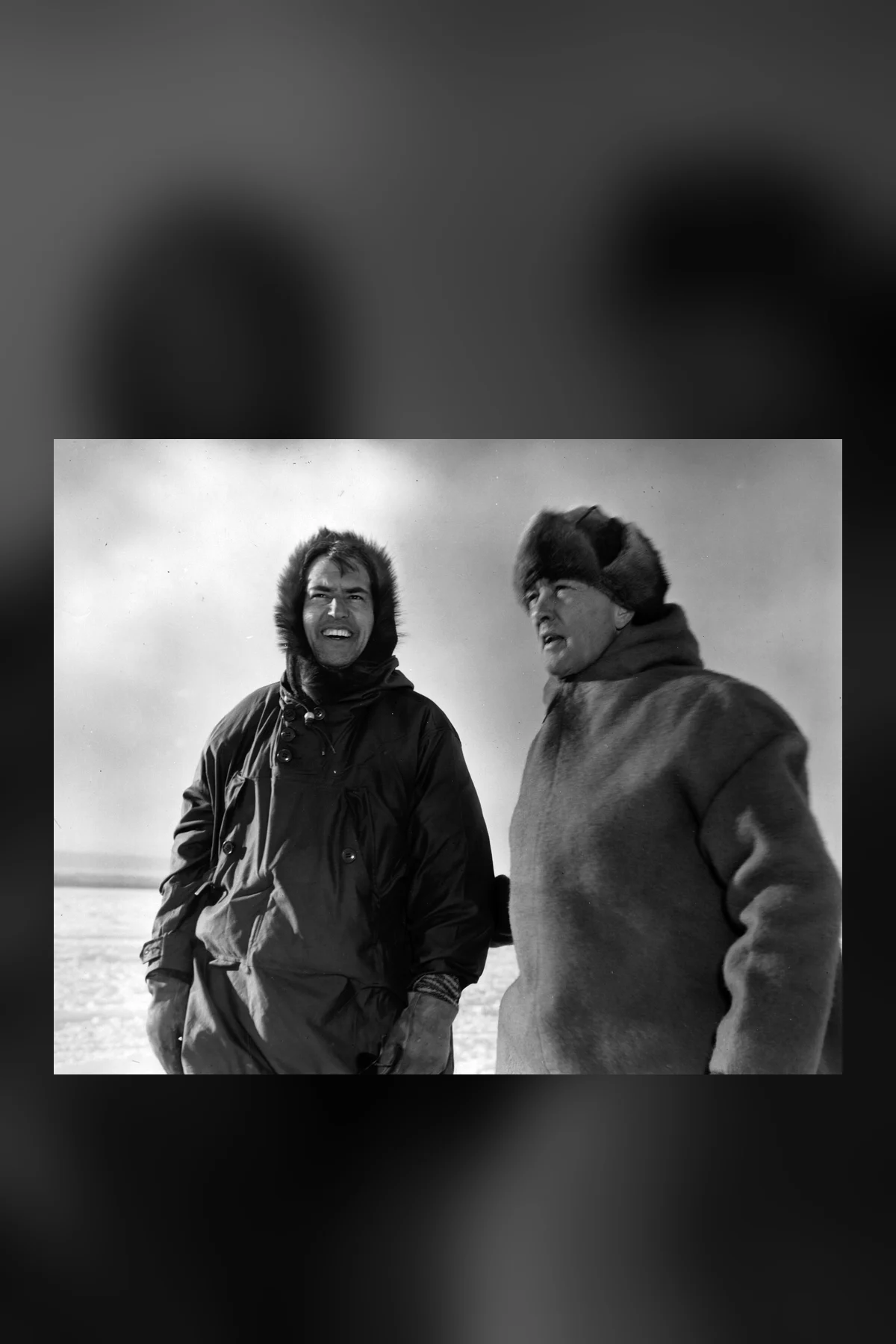
The Byrd Diary and the Week the Newspapers Put Him in Antarctica
The Missing Diary of Admiral Richard E. Byrd describes a flight on 19 February 1947 from an Arctic base, past the North Pole, into a warm inner world ruled by a people called the Arianni. Usually traced to a 1990 book, it was already on sale from a Missouri society by 1978. This investigation reads the text, follows it to its first known seller, sets it beside where Byrd really was that week, and asks who wrote it.
-
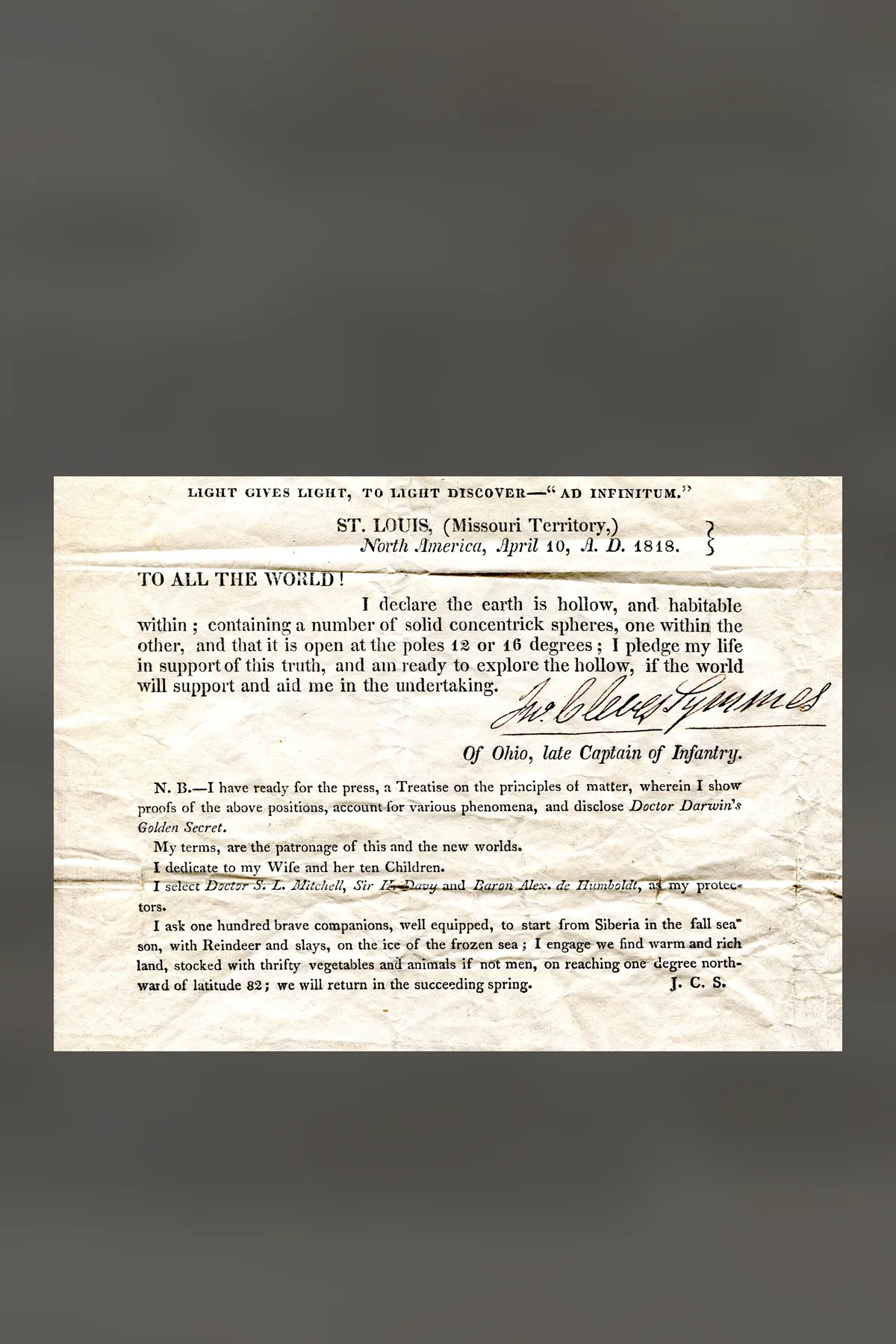
Symmes's Circular and the Holes at the Poles
On 10 April 1818 John Cleves Symmes, a retired army captain in St. Louis, sent a printed circular to the world's learned societies declaring the earth hollow, habitable within and open at the poles. He lectured, petitioned Congress for ships and the idea came to be called Symmes's Hole. This investigation reads the circular, the case he made, what the expeditions he inspired found, and what is still missing from the record.
-
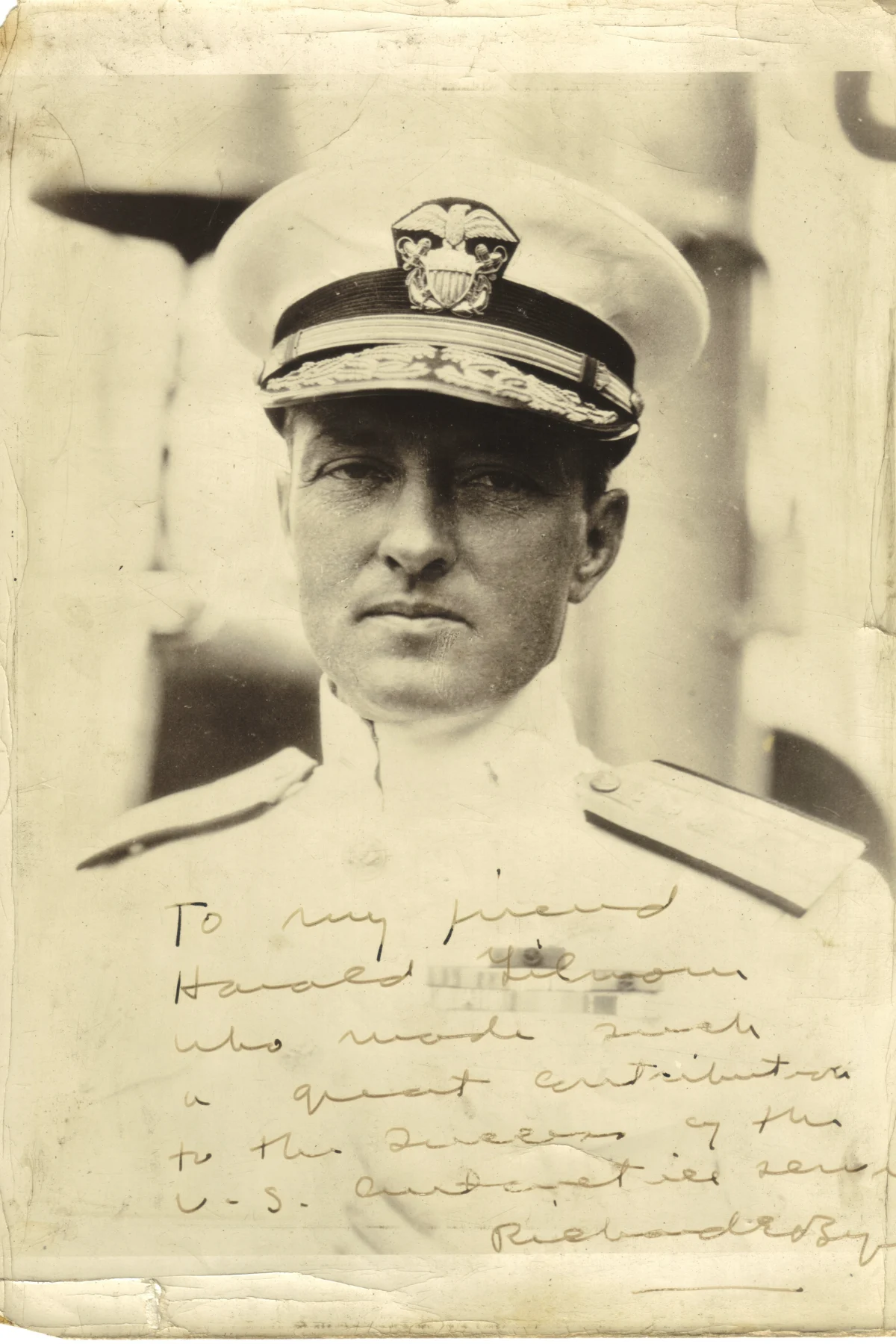
Admiral Byrd, Operation Highjump and the Warning on Page 23
Rear Admiral Richard E. Byrd was officer in charge of Operation Highjump, the US Navy's 1946-47 Antarctic expedition. On 5 March 1947 El Mercurio of Santiago printed an interview with him about attack across the poles. Since a 1975 Toronto book by Ernst Zundel, writing as Mattern and Friedrich, he has been quoted on flying objects travelling pole to pole. This investigation follows his career, the expedition and the Spanish text, and asks where page 23 is.