
A copper tensor ring is a closed loop of twisted copper wire, cut to a length its makers take from ancient measure: 20.6 inches for what they call the Sacred Cubit, 23.49 for the Lost. It has no battery, no switch and no lead going anywhere.
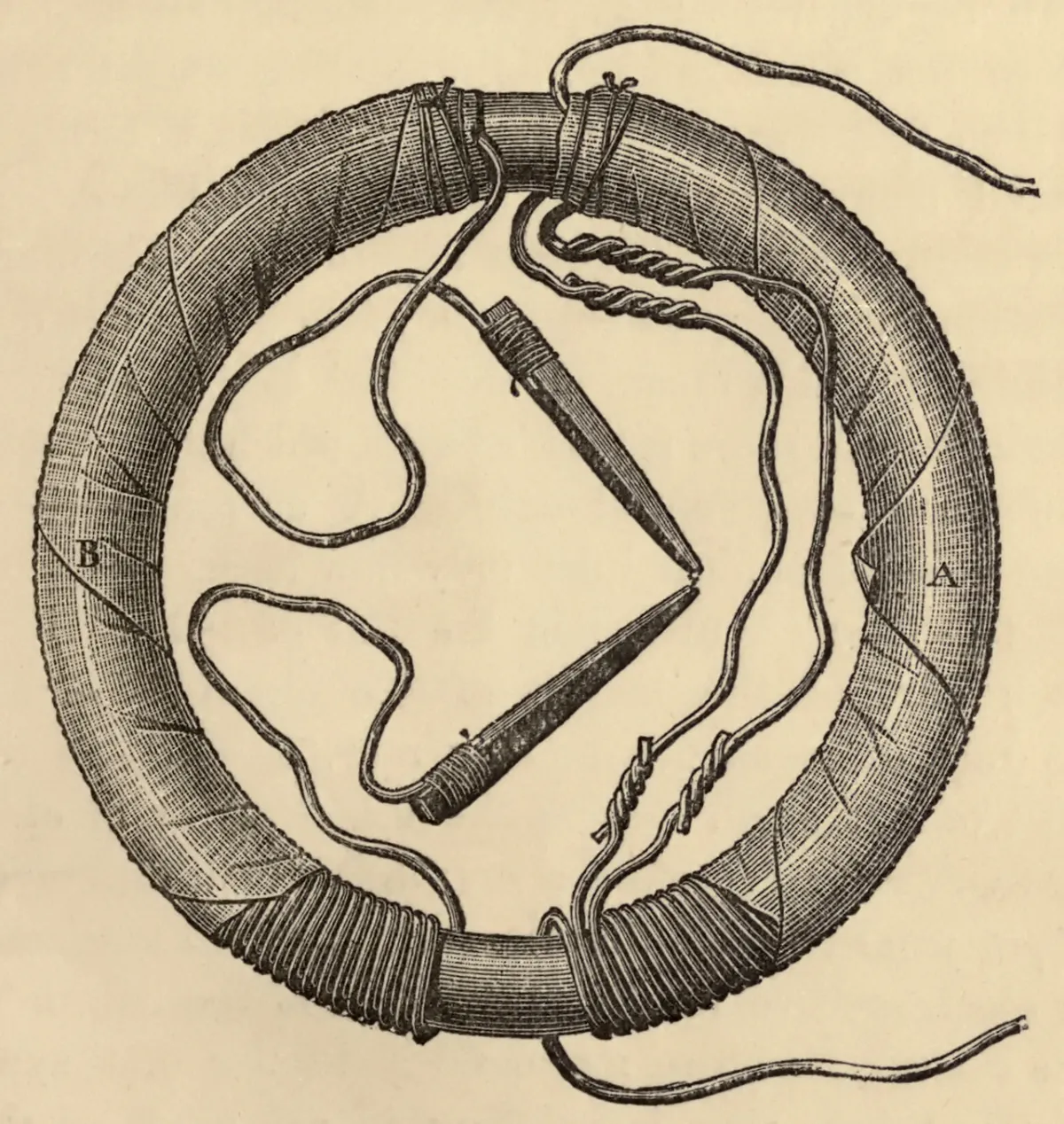
The wire runs doubled, two strands roped together, and the rope bends round until it meets itself and the ends are soldered shut. At the sacred length the circle comes to about six and a half inches across. It sits around a jug of water or a potted plant. A little over half a metre of copper, and a hole.
The hole is the point. Everything claimed for the ring is claimed for the space inside it. A tensor field stands there, on the makers' account, and it works on water, on plants and on people.
So a plain question sits under the whole business. What does a meter read in the middle of it?
The makers' patent filing has a sentence on exactly that.
A Blacksmith and a Dowsing Rod
Slim Spurling was born in 1938 in Aberdeen, South Dakota, took a natural sciences degree at Colorado State University and spent twenty years at the forge. As a boy he had held one end of a dowser's rod and felt it move over water. Years later he remembered that, and in 1970 he took the craft up.
With his friend Bill Reid he turned to alchemy and subtle energy, and in 1991, his memorial site says, that work produced the first Light-Life Ring. The name tensor ring came after. Who first printed it is not in any record opened for this article.
The form came from the bench. One maker's account has Spurling deciding that a wire's two ends carry opposite polarity, so that a plain joined loop has a positive side and a negative side. He folded the wire in half and twisted it.
In August 2008 an application went to the United States patent office from Erie, Colorado. Its title was Rings and Harmonizer. Its inventor line reads Gary Spurling, with Katharina F. Spurling-Kaffl, who married Slim Spurling in 2001, as legal representative, and it cites Slim Spurling's Universe among its sources. It was published on 12 February 2009 as US 2009/0040122 A1. All nine of its claims are to an antenna. Google Patents records it as abandoned in January 2012. It was never granted.
It is the fullest statement of the idea from the people closest to it. Its tenth paragraph holds this sentence:
"There is no detectable EMF or RF signal transmission."
What the Filing Puts in the Hole
That sentence is not a retreat. It is the claim. The filing says the ring takes any frequency, from sound to light, and sends it on as a "transitional scalar wave". One seller says the source inside a ring is "neither electric nor magnetic". A silent gaussmeter, in that telling, is the wrong instrument and nothing more.
"In theory in the center of each ring is formed a tensor plane also called a neutral space," the filing says. That centre "may propagate 144 or 177 megahertz of light". Its authors say they found those frequencies through research, with at least six sub-harmonics "seen on the oscilloscope". The ring "in theory creates a large current of ether at no voltage".
And the idea came with a pedigree. "The basis of the technology is prior art," the filing says, naming Geometrodynamics, by the physicist John Archibald Wheeler: "In this work he described a tensor as being formed by a simple loop of wire." The tensor, it adds, is visible in dim light.
Then come the readings, on Spurling's own research page. Hans Becker, in a private laboratory, used a spectroscopic system and found that water left in the centre of a ring gave off ultraviolet. Boyd Bushman, a senior research scientist at Lockheed Martin in Dallas, took a set of rings and, Spurling writes, confirmed Becker's frequencies. Philip Callahan, a Department of Agriculture entomologist who wrote on paramagnetism in soils, came in with Pete Jackson, and the two "rated the paramagnetism of the rings at 18,000". Oxygen and pink Aswan granite, on the same page, stand at 3000.
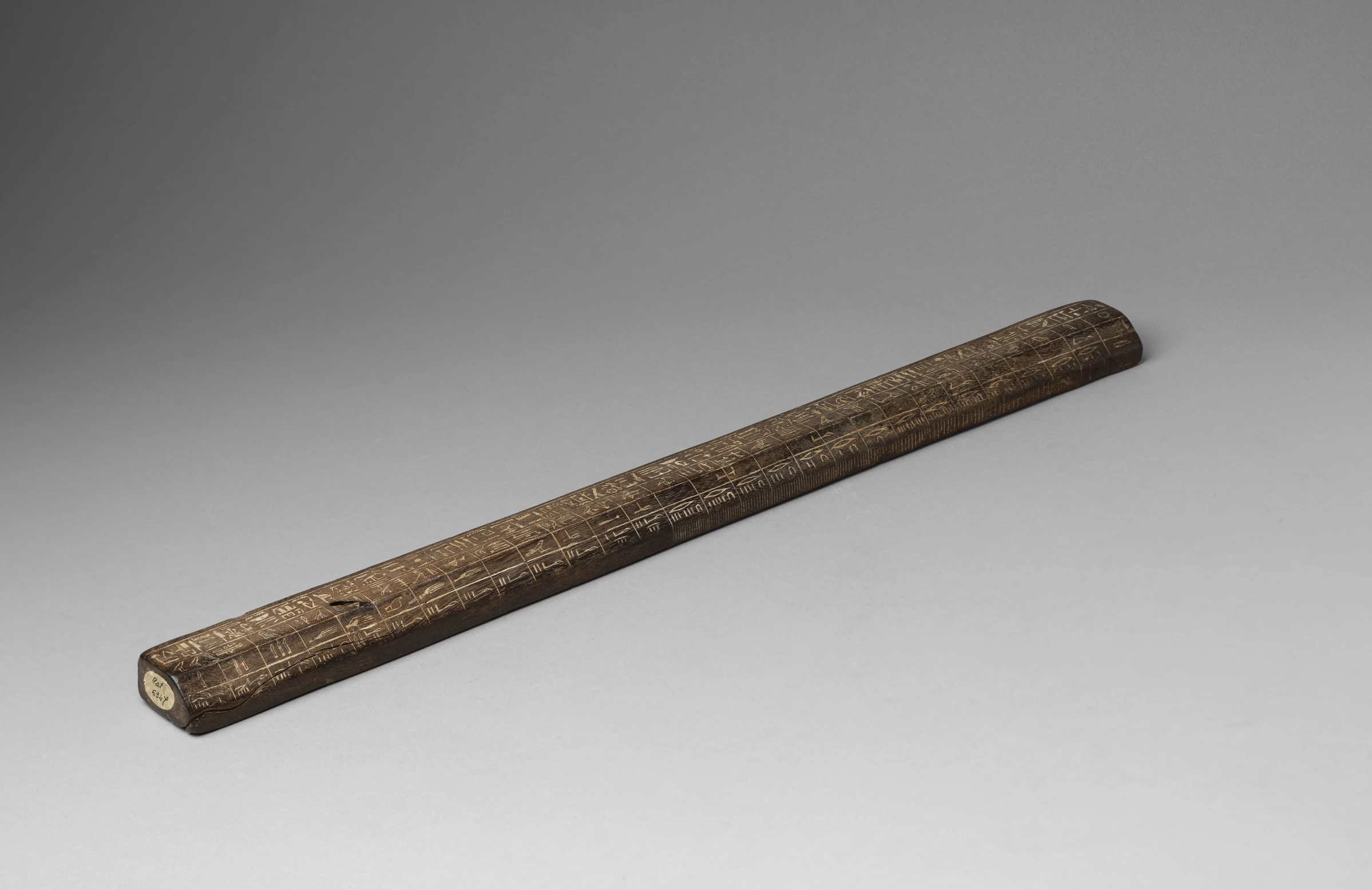
The length has a record behind it too. The rod of Amenemope in the Museo Egizio in Turin, a royal cubit of the reign of Horemheb, is 52.5 centimetres. Accurate rods run 0.523 metres. And 20.6 inches is 523 millimetres. The Sacred Cubit is the real thing, rounded.
The Geranium at the Salpetriere
The ring shops now sell a second copper ring under a second name. Georges Lakhovsky was a Paris engineer who held that living cells are oscillating circuits. In 1924, in Antonin Gosset's surgical clinic at the Salpetriere, he and three colleagues gave geraniums the tumour crown gall and put three under a two-metre radio wave. Those three appeared to be cured. Sixteen controls kept their tumours.
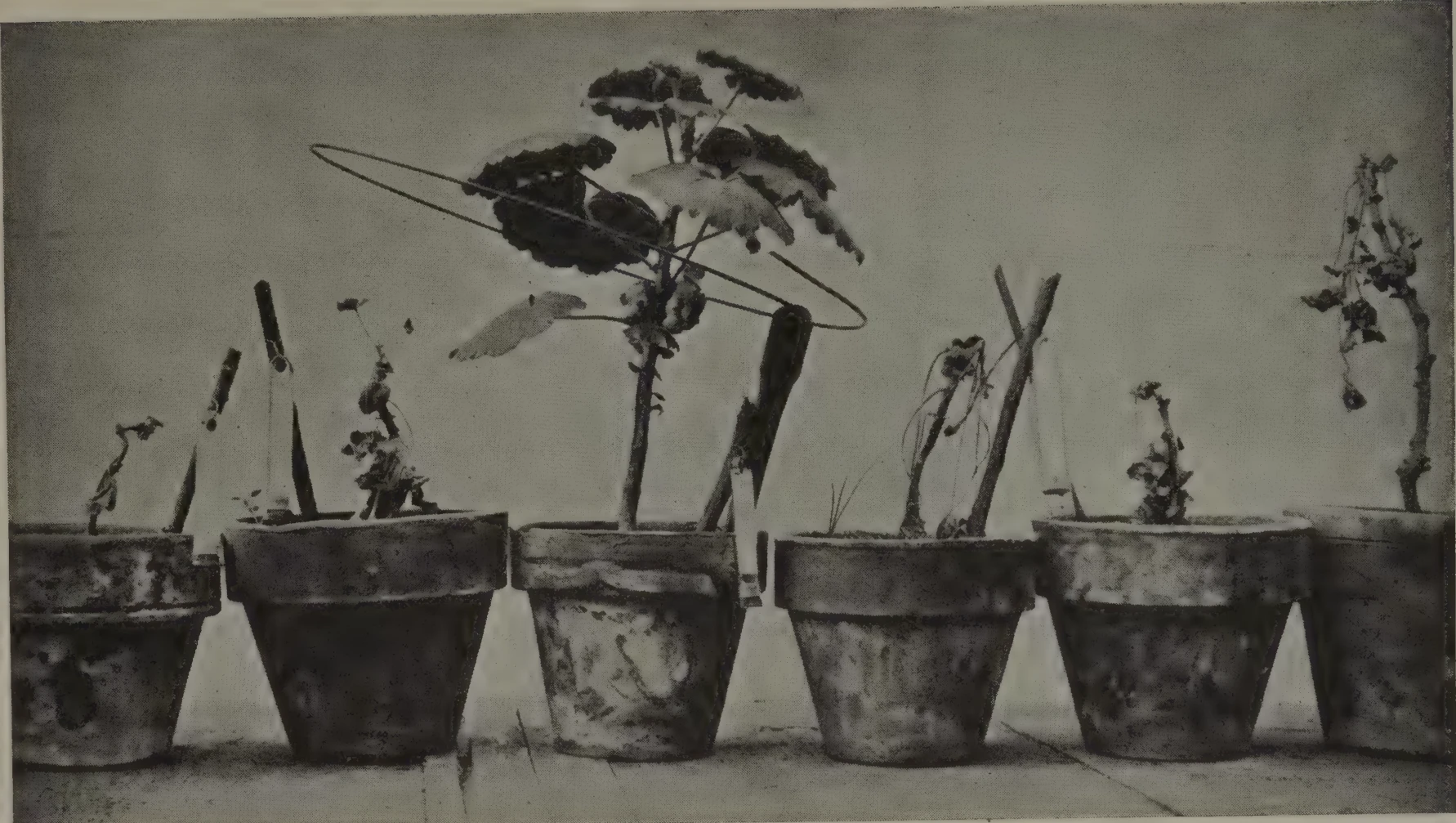
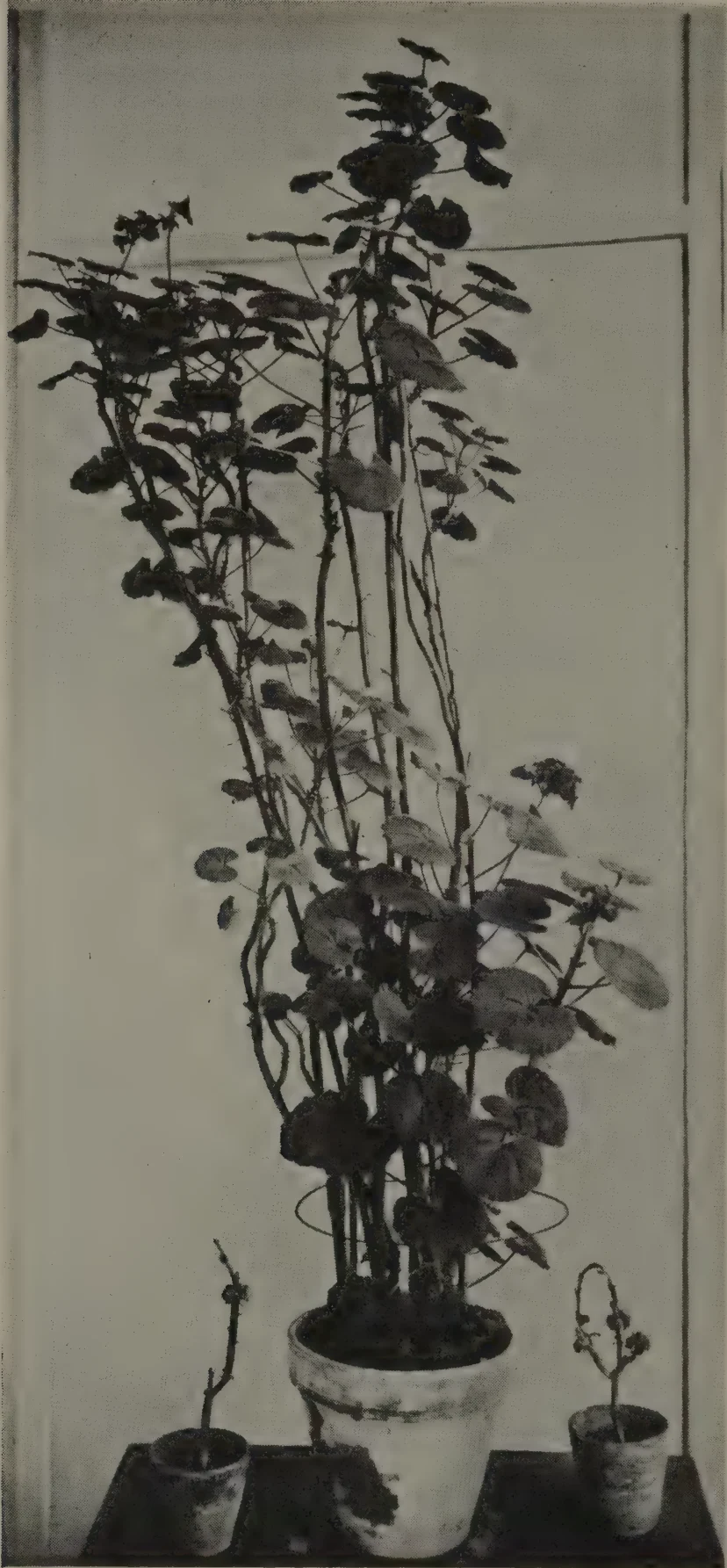
Then he took the machine away. Of a series of geraniums inoculated on 4 December 1924, thirty by his note to the Academie des sciences, he picked one at random a month later and set it inside a copper spiral 30 centimetres across, its ends unjoined and fixed in ebonite. The French text has him leave on a fortnight's journey and come back to stupefaction: the others dead or dried out, the ringed one alive, its tumour gone by the end of February. The copper, he concluded, must have picked up radiations from the atmosphere.
The photograph is in his book. Six pots in a row. A dark stake holds a ring of wire around one tall stem in full leaf, and what is left of the others stands beside it.
In a footnote Lakhovsky gave his ring a natural wavelength near two metres. Spurling's 144 megahertz, worked through, is a wave of 2.08 metres. Two men, two rings, nearly one number, and a coincidence of figures until someone shows more.
If the Hole Is Full
Set aside for a moment whether any of it is true. Ask the larger question. What kind of world is this, if it is?
It would mean, first, that a closed loop of the commonest wire does something no instrument built for electricity can see. The ring would not be an antenna at all. It would be a door, standing open on every table that holds one, and the physics we teach would be the near side of it.
It would mean that the cubit was more than a cubit. If a length on an Egyptian rod is also a tuning, then a unit long read as a builder's convenience would be a piece of physics, carried down the Nile in a ruler, its purpose gone and its number intact. What else in our measures would be an instruction nobody can read? What else did the people who cut those rods know that we took for habit?
It would mean, as Lakhovsky held, that our bodies are receivers. A cell would be a tuned circuit, sickness a tuning gone wrong, and a human being a small station on a band we never learned we were listening to.
And the last consequence is still in front of us. If the ring is what the filing calls it, a source of free energy gathered by a shape, with no fuel and no moving part, then our species has spent its whole industrial life burning things beside a resource that needed only a soldering iron. Why would a finding that large still be sitting in a pot of geraniums?
What a Copper Loop Does
The standard account of a copper loop is old and short. In August 1831 Michael Faraday wound copper wire on opposite sides of an iron ring and got a current for an instant, as a battery was connected. A closed loop answers a changing magnetic flux, and only that. The Earth's steady field through a ring at rest induces nothing. Turn a sacred-length ring over in one second and the arithmetic gives about two millionths of a volt, gone when the turning stops.
Copper is weakly diamagnetic: it pushes faintly against a magnet. The filing's frequencies run against its lengths, the longer Lost Cubit taking the higher figure, where a longer wire rings lower. A closed loop's first resonance falls near one full wavelength, about 573 megahertz for 20.6 inches before the twist is counted. And a tensor, a word Woldemar Voigt gave its modern sense in 1898, is a mathematical object. The electromagnetic field is a tensor field. The phrase describes a field. It does not name a second thing a loop could hold.
Official X opened a scan of Wheeler's Geometrodynamics, dated 1962 in the catalogues, not the filing's 1957. Its rough text search finds one loop of wire, on page 51, in a passage on whether Einstein's equations might yield to a simple algorithm: "Bend a closed loop of wire into some arbitrary shape, dip it into a soap solution." The film is an analogy for a hard piece of mathematics. On that page the loop forms no tensor and nothing glows. One maker's account keeps the soap film and says Spurling and Reid took it for more than mathematics.
Lakhovsky's ring was tested. In 1931 W. Kopaczewski ringed 36 tumour-bearing geraniums in copper, kept controls, and called the results "parfaitement nuls", perfectly null. In 2013 a double-blind trial at the University of York, in PLOS ONE, put 70 people with rheumatoid arthritis in copper bracelets and found nothing beyond placebo.
What Was Looked For
None of that touched the object itself. Kopaczewski's spirals were open, as Lakhovsky's were, and a tensor ring is closed. The York bracelet was a wrist band at no special length. Faraday's physics rules on electric and magnetic fields, and the filing has stepped outside them by its own sentence.
So the search went to the thing. In October 2026 searches of PubMed, Europe PMC and OpenAlex, on the ring's names and on Spurling's, returned no study of the device. Crossref answered in part; Google Scholar, ResearchGate and the thesis databases could not be reached. The nearest item was a seller's 2015 pilot of a copper phone ring, on six people, with no control stated.
No study of the ring. Not a positive one and not a null one.
What exists instead is Spurling's page, which gives Becker's spectroscopy and Bushman's confirmation with no instrument model, no figures and no controls. Becker's ultraviolet is an ordinary, checkable claim, and no attempt to repeat it turned up either way.
The lineage is thinner than the shops suggest, and the two rings disagree on the one point each insists on. Lakhovsky's ends must not join. Spurling's must. Spurling's research page, his reading list, the filing and two makers' guides do not name Lakhovsky, though his talks and Cal Garrison's 2004 book were not read. And the null was not the only word: Lakhovsky reported that Labergerie, at the agricultural school at Montpellier, had the same result in 1927.
Eighteen Thousand of What
The trade has moved on. One maker's guide counts twelve cubits and 64 lengths, some traced to numbers seen in a dream and a dowsing check. Spurling's talks came out as a book in 2026.
The testing could be done on a table. Replicas of the copper tube in the Baghdad jar have been built and put on meters for decades, and a ring can be too. In 1907 a wavelength took two parallel wires and a glowing tube; a hobbyist's network analyser would now draw a ring's resonance curve in an hour, and a four-wire ohmmeter would settle the word superconductor. Coded sets of closed, cut and plastic rings of one size, with water or seedlings in each and a reader who does not know which is which, would test what the shops say a ring does. None of that reaches a field defined as beyond every meter. It reaches everything that field is said to do to something else.
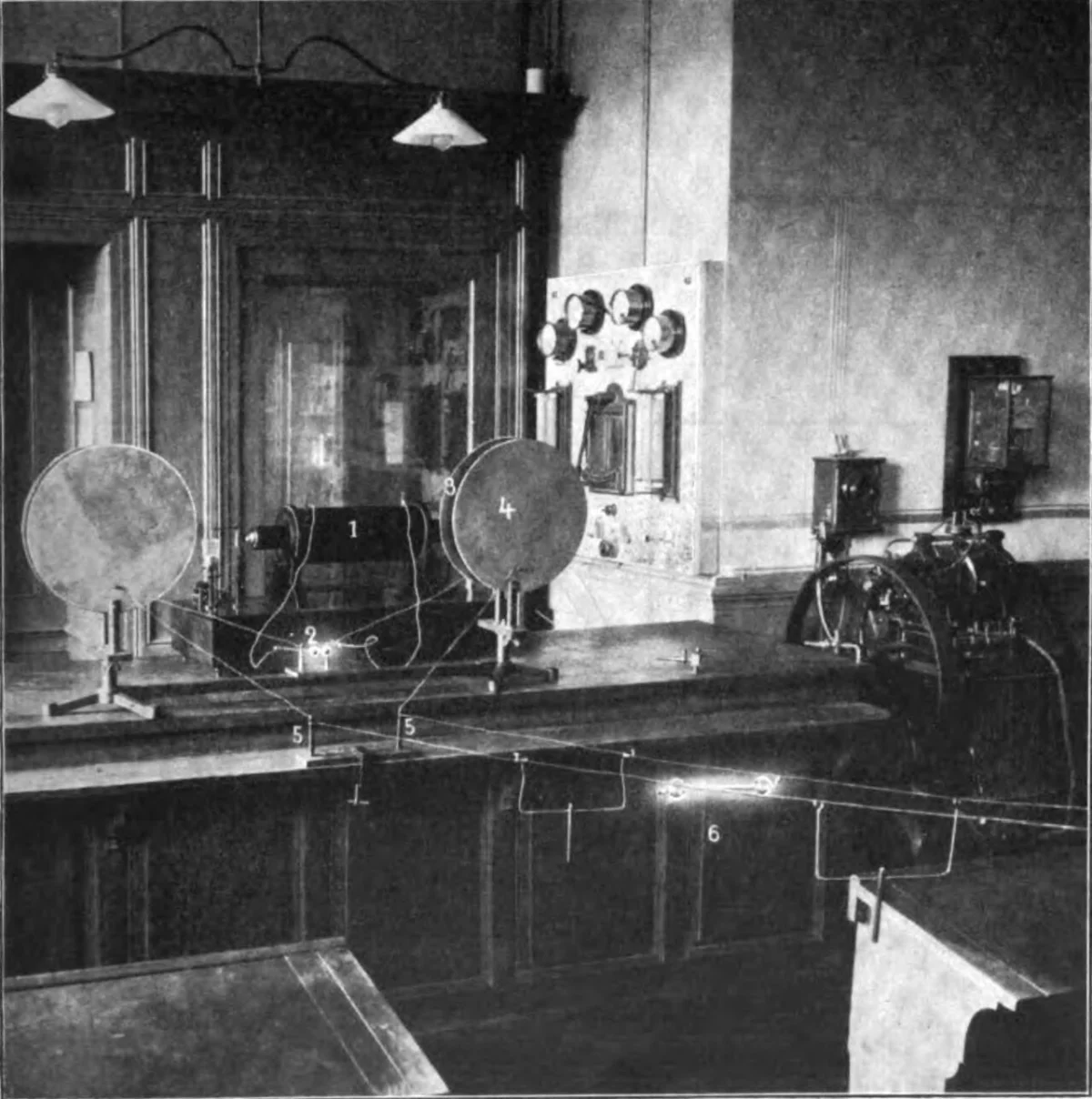
The record as it stands leans to the plain account. A copper ring behaves as a conductor does, the readings reported for it have no published data behind them, and the one controlled test of a passive copper ring on a living thing came back null, on a different ring. Supporting the larger reading would take a result others can repeat, with the method printed. Tesla at Colorado Springs left a reading he could not trace and his own words to argue with. The ring has left less.
What stays open is a number. Callahan and Jackson's 18,000 sits on Spurling's page, six times the highest natural value the page knows, with no unit and no named instrument, dated both December 2000 and 2001. Callahan built his own detector for soils, and the page does not say what gave the figure. His papers are at the National Agricultural Library. The catalogue record says original research materials are not present.
Eighteen thousand. The page does not say of what.
Questions This Leaves You With
Is there anything a person actually does with this?
Nothing in your own life follows from it, and anyone selling a date, a cure or a shield is selling something. The makers' own site says its products are not intended to diagnose, treat, cure or prevent any disease, and Britain's advertising regulator upheld a complaint in 2020 against a copper and crystal pendant sold as protection from EMF. What you can do is smaller. If you own a ring, you can have a friend cut a second one, label a closed and a cut one by a code you do not hold, and see what you can still tell apart. The larger question stays open whatever your own table shows.
Does this sit against a religious account of the world?
It cuts both ways. Some of the people who sell these rings speak of sacred geometry, and for them an energy in empty space sits comfortably beside a world with more in it than matter. Others would say that a holy thing does not need soldering, and that a charm is not a faith. Both have been argued in earnest. Official X will not tell you which way it falls, and neither will the rod in Turin.
Does this change what a human life is?
Hold Lakhovsky's picture for a minute: you as a set of tuned circuits, on a band you have never heard. For some people that makes a life smaller, a radio that can be jammed, a body with a dial on it. For others it makes a life stranger and larger, each cell in touch with the sky, and the plain fact of being alive a kind of reception. Notice which one you felt. Neither depends on a ring, and neither asks you to do anything about it.
What would change your mind, in either direction?
Name it now, before you are committed. Toward the ring: a coded trial, closed against cut, that a second laboratory repeats; Becker's ultraviolet found again on a named spectrometer; a unit and a meter for the 18,000. Against it: the same trials, run well, showing nothing; a resonance curve that falls with length like any other wire's; a cut ring that scores the same 18,000 or better. A field no instrument and no effect can ever reach would change nothing at all, which is worth noticing too.
What was on Hans Becker's instrument?
So much of this story runs through one name. Sellers credit Hans Becker with the 144 megahertz and the Lost Cubit, and call him an astrophysicist and an inventor. Spurling's page credits him with the ultraviolet from water. His spectroscopic system has no model number in anything opened here, his laboratory no address and his results no paper. Spurling's page says he and Bushman compared findings in a three-way talk. If a notebook exists, it has not been published. That is the open problem, and it is an empty space shaped like one man.
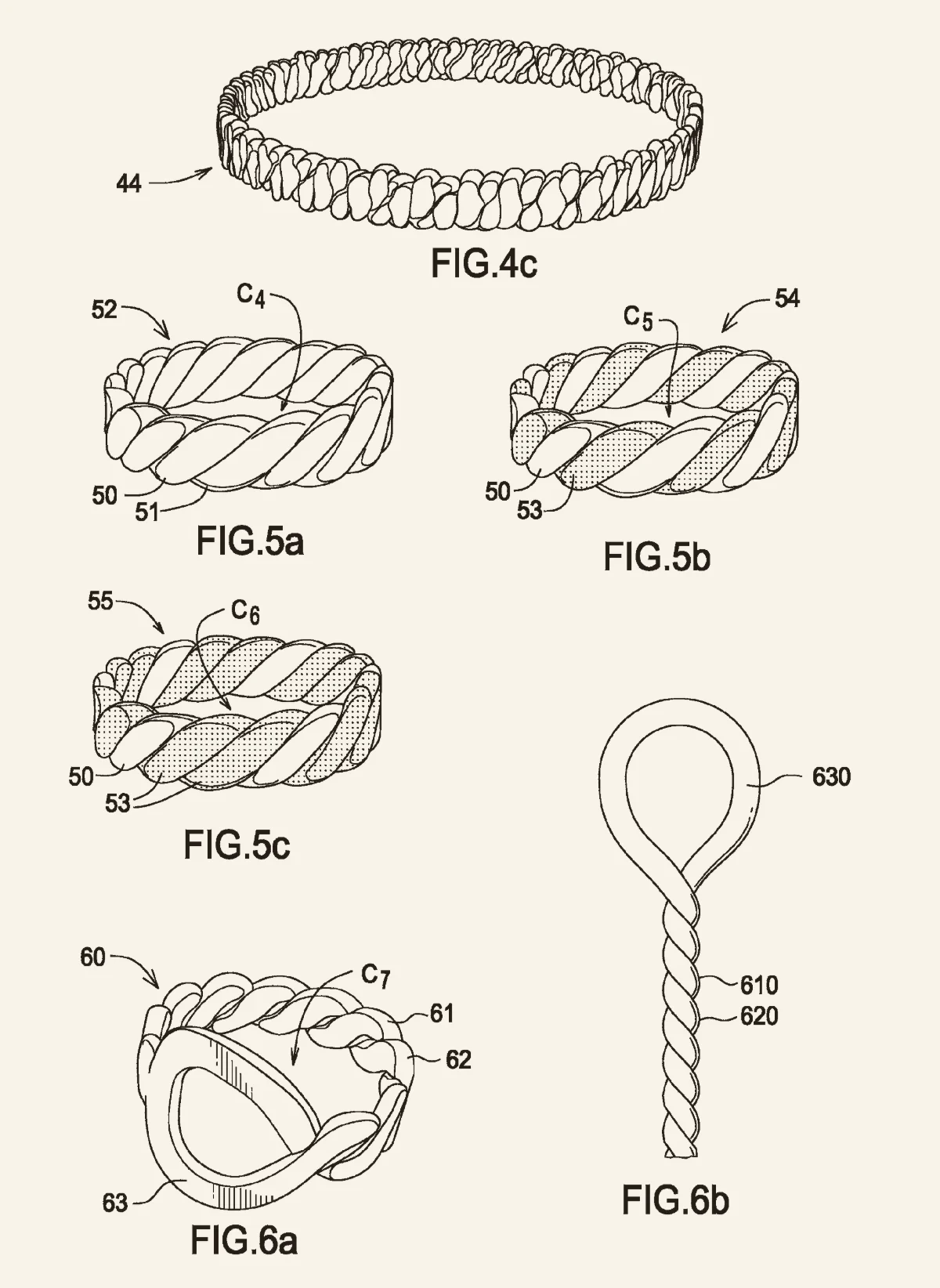
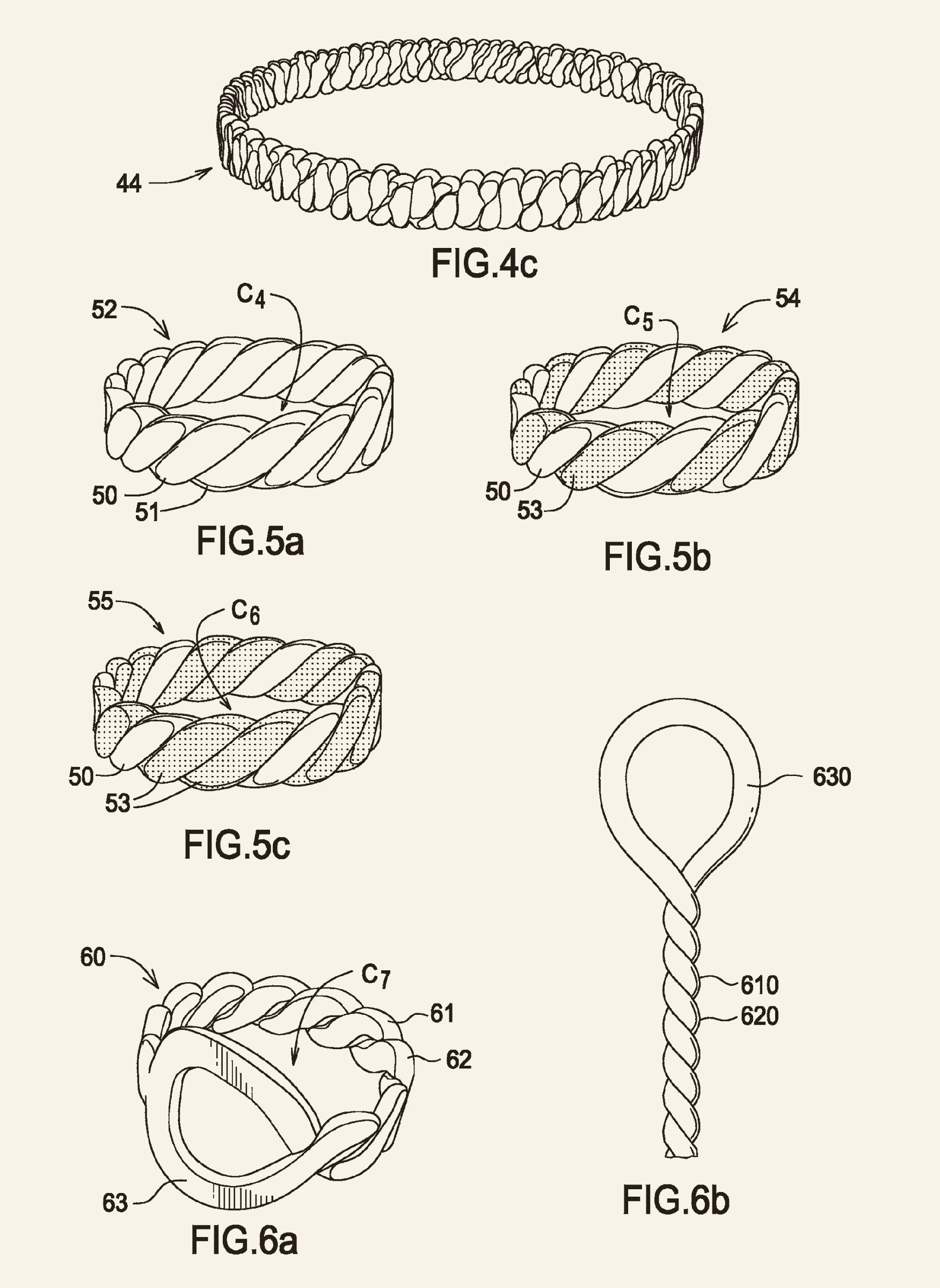
Sheet 3 of the 2009 application: flattened bands and a looped strand, other forms the filing describes. US Patent Application 2009/0040122 A1, sheet 3, 2009. US patent drawing, public domain. Trimmed, toned to paper colour. 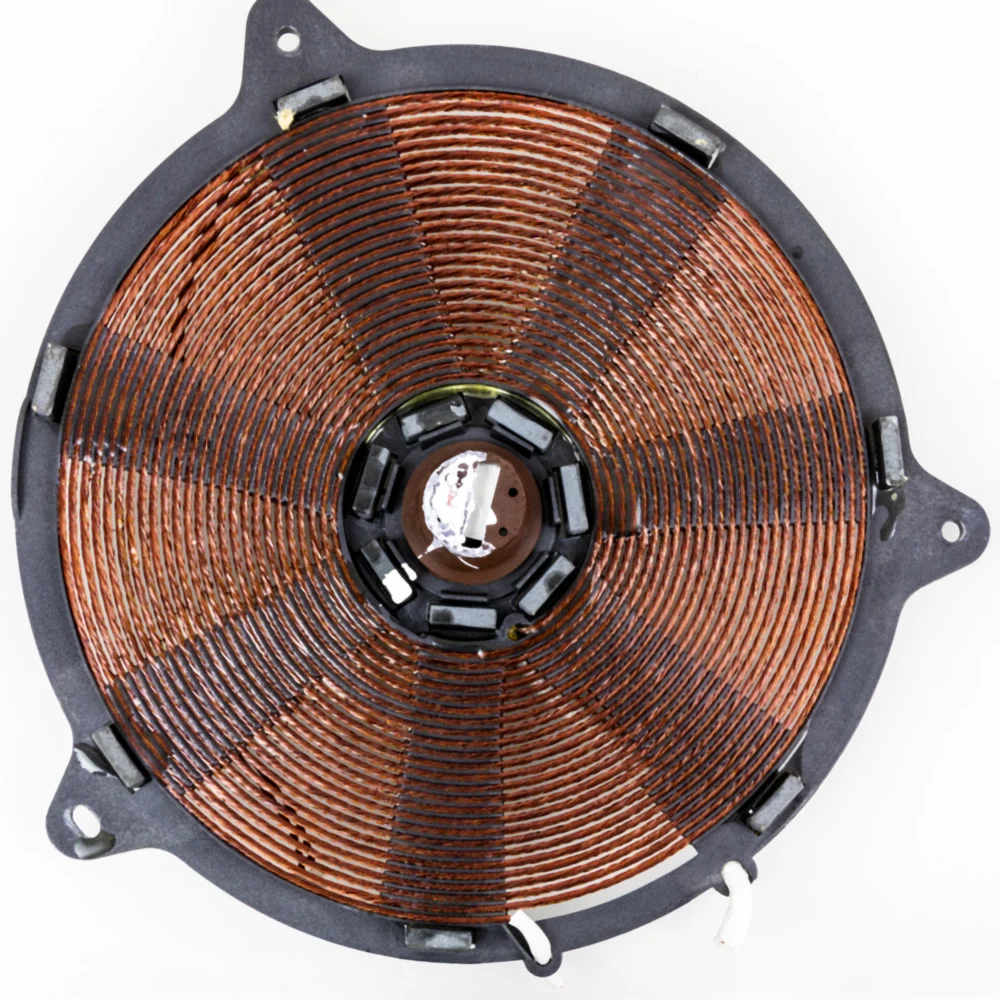
A copper coil from an induction hob: twisted wire with a current driving it, shown for comparison. It is not a tensor ring. Photo: Raimond Spekking, CC BY-SA 4.0 (creativecommons.org/licenses/by-sa/4.0), via Wikimedia Commons. Resized. 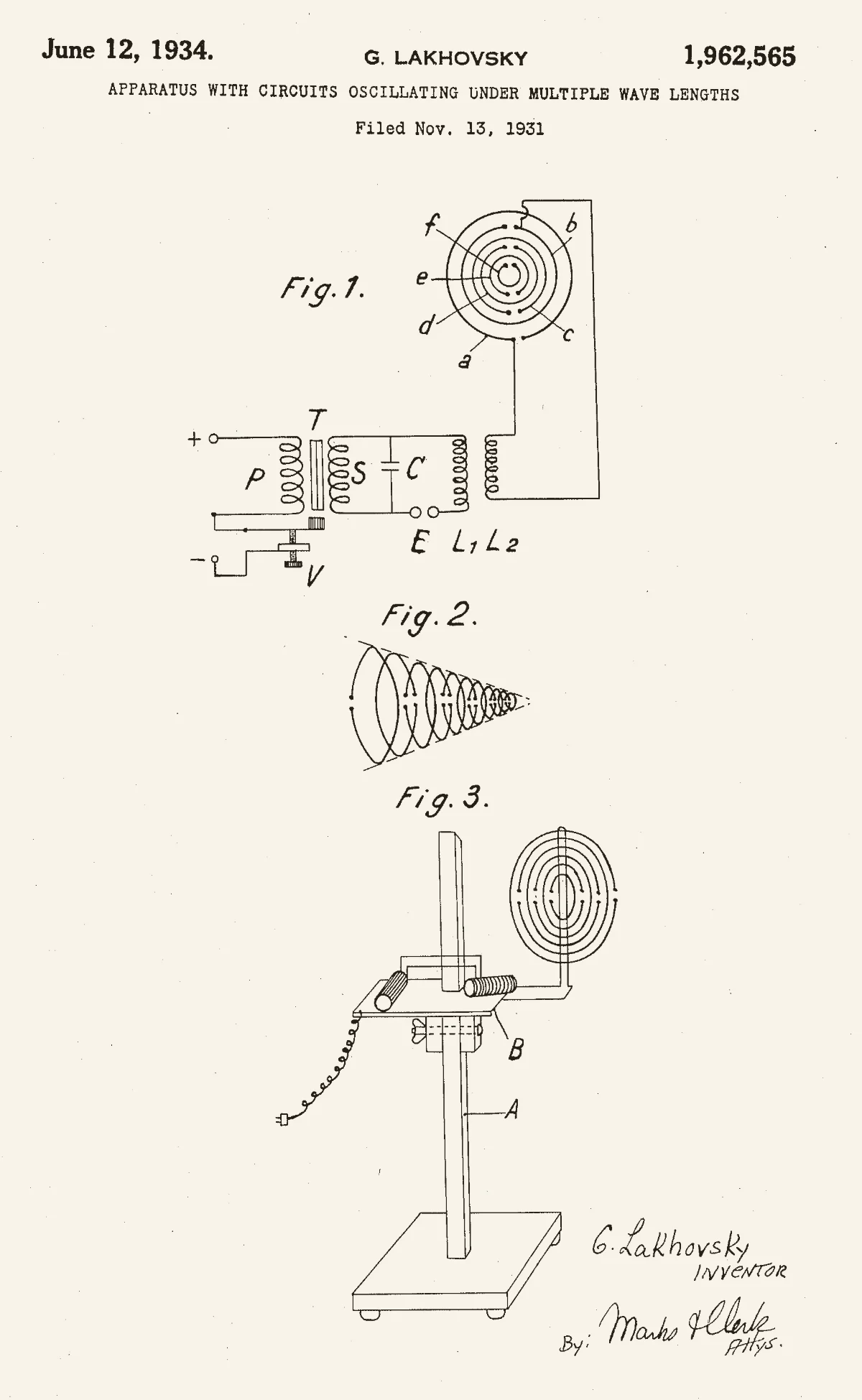
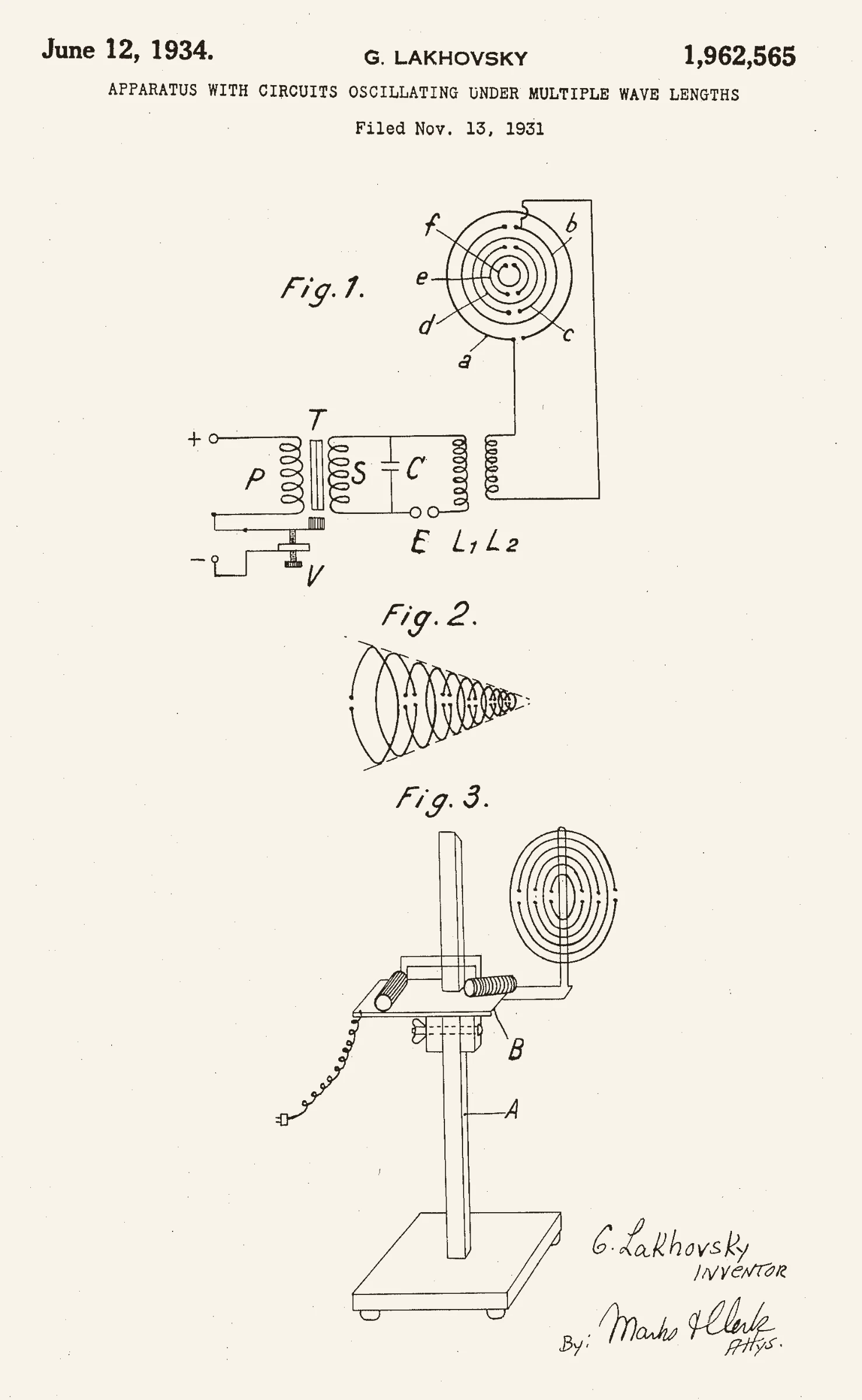
Lakhovsky's Multiple Wave Oscillator, US patent 1,962,565, 1934: concentric split rings fed by a high-frequency circuit, not a passive ring. US Patent 1,962,565, G. Lakhovsky, 1934. US patent drawing, public domain. Trimmed, toned to paper colour.
Sources
- Rings and Harmonizer, US patent application 2009/0040122 A1, 2009 Gary Spurling; Katharina F. Spurling-Kaffl, legal representative; USPTO via Google Patents Primary record
- Research page, Light-Life Technology (Spurling's first-person account) slimspurling.com Primary record
- About Slim Spurling slimspurling.com Study
- Disclaimer slimspurling.com Primary record
- Bibliography slimspurling.com Primary record
- Rings and Tensor Fields Dancing with Water (MJ Pangman, Melanie Evans) Study
- Tensor Ring Science Twistedsage Study
- Tensor Rings, Cubits and How to Use Them Suli Williamson, Photon Orgone Study
- Lakhovsky Copper Energy Resonator Ring Set, shop listing, opened 2026 TensorStore General reference
- John Archibald Wheeler, Geometrodynamics, Academic Press, 1962 Open Library catalogue record Primary record
- Georges Lakhovsky, Le Secret de la Vie: les ondes cosmiques et la radiation vitale, Gauthier-Villars, c1925 (2nd edition with events to 1929), 261 pages HathiTrust catalogue record Primary record
- G. Lakhovsky, L'action sur les etres vivants des circuits oscillants captant les ondes cosmiques, Comptes rendus de l'Academie des sciences 186, 1928, 1019-1021 Academie des sciences; journal run on Gallica Primary record
- J. W. Schereschewsky, Biological Effects of Very High Frequency Electro-magnetic Radiation, Radiology 20(4), 1933 Radiology Study
- W. Kopaczewski, Action des ondes electromagnetiques sur les neoplasmes, Societe de Biologie, 11 July 1931, and L'Univers Medical, September 1931, as extracted in J.-L. Portes, La vie et l'oeuvre de Georges Lakhovsky, medical thesis, Pitie-Salpetriere, Paris, 1984 Journal record (ISSN portal); the originals were not seen Study
- Royal cubit rod of Amenemope, Cat. 6347 Museo Egizio, Turin Primary record
- Monnier, Petit and Tardy, The use of the ceremonial cubit rod as a measuring tool, Journal of Ancient Egyptian Architecture 1, 2016 JAEA Primary record
- Michael Faraday's ring-coil apparatus Royal Institution Primary record
- Faraday's Law HyperPhysics, Georgia State University General reference
- Magnetic Properties of Solids HyperPhysics, Georgia State University General reference
- Earliest Known Uses of Some of the Words of Mathematics: T Jeff Miller, MacTutor, University of St Andrews Study
- Tensor field Wikipedia General reference
- Richmond, Gunadasa, Bland and MacPherson, Copper Bracelets and Magnetic Wrist Straps for Rheumatoid Arthritis, PLOS ONE 8(9), 2013 PLOS ONE Primary record
- ASA ruling on Pheka Agency Co Ltd, 12 August 2020 Advertising Standards Authority Primary record
- The Baghdad Jar, a Copper Tube and an Iron Rod Official X Study
- Philip S. Callahan papers, 1911-2001 National Agricultural Library, record in AGRIS (FAO) Primary record
- Callahan, Philip S. AntWiki General reference
- The Alchemist's Vision: Slim Spurling and the Evolution of Light-Life, Clipston, 2026 Bookseller record General reference
- PubMed search: "tensor ring" copper, run 30 October 2026, 0 results National Library of Medicine Primary record