
The New Chronology is the Russian theory that moves the ancient world into the Middle Ages, and it is the deepest root of the lost empire the internet now calls Great Tartaria. It begins in a prison.
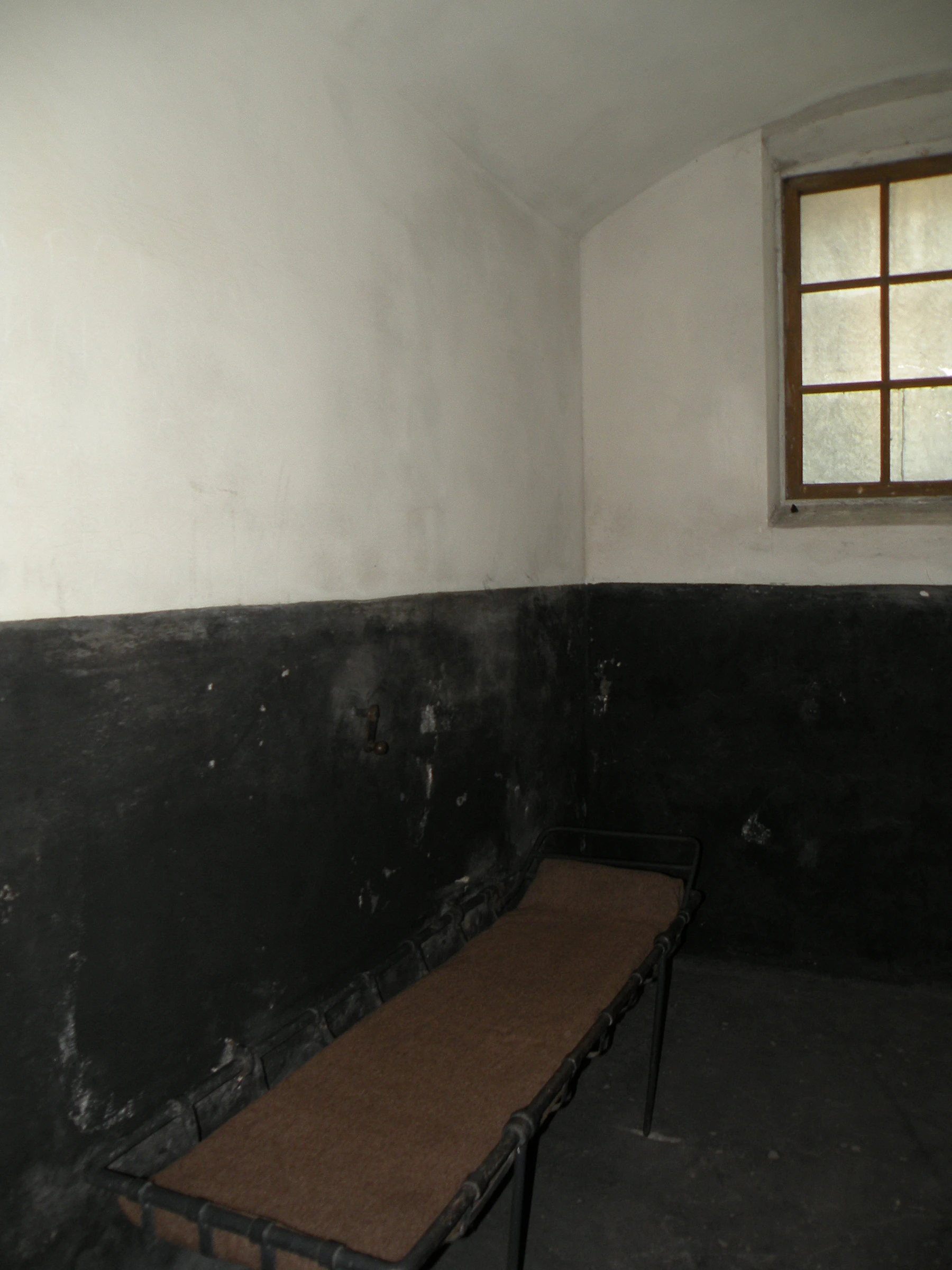
Shlisselburg is a fortress on an island where the Neva leaves Lake Ladoga. Nikolai Morozov, a revolutionary under a life sentence, was brought there in 1884 from the Alexeevsky Ravelin in St Petersburg. In the ravelin scurvy had swollen his legs. Three times a mug of milk cured it, and three times the mug was taken away. Most of the men from his trial died there.
For the first six months there were no books at all. Then religious books came, and only those. He fell on them, and within months, by his own account, had been through a whole faculty of theology.
There was no telescope. There were books, a star atlas, and a window, and through it he could still name the northern constellations by evening.
The prophets on one side. The stars on the other.
He counted twenty-five years of it. What came out of that fortress in 1905 was a man with a plan to date the Book of Revelation by its stars.
And a century later, a country.
The Apocalypse, Dated
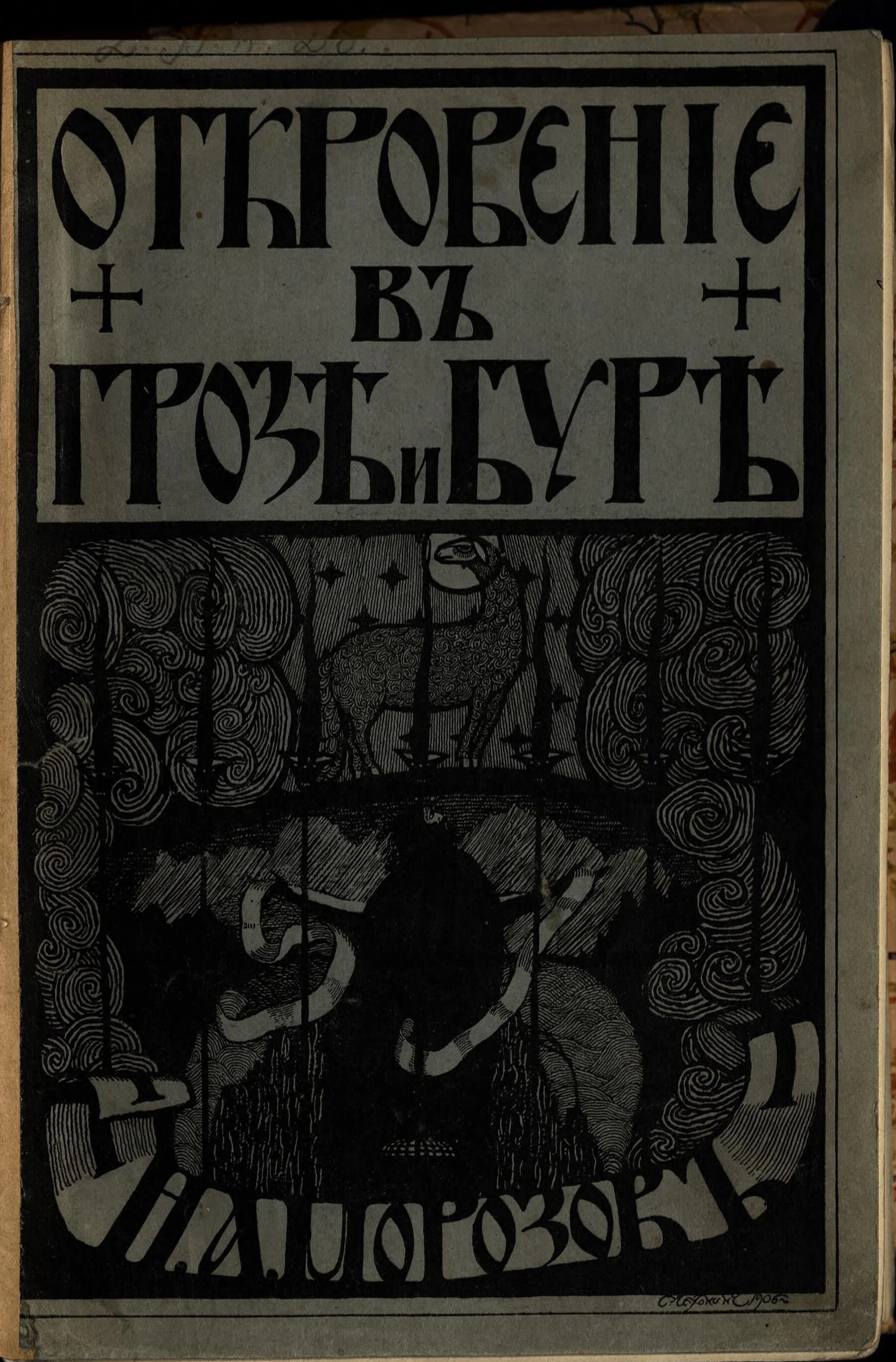
In 1907 the journal Byloe published Morozov's Revelation in Thunder and Storm, with 62 drawings and photographs from old charts at Pulkovo Observatory. On his reading the visions of the Apocalypse are a horoscope seen through storm clouds. The New Chronology's own encyclopedia records the result: the planets fall into place on 30 September 395, which makes the author John Chrysostom. Then came Christ, seven volumes, 1924 to 1932, pressing the same method against the dates of antiquity. Morozov stopped at about the sixth century AD. The Soviet Academy made him an honorary member in 1932, and two Orders of Lenin followed.
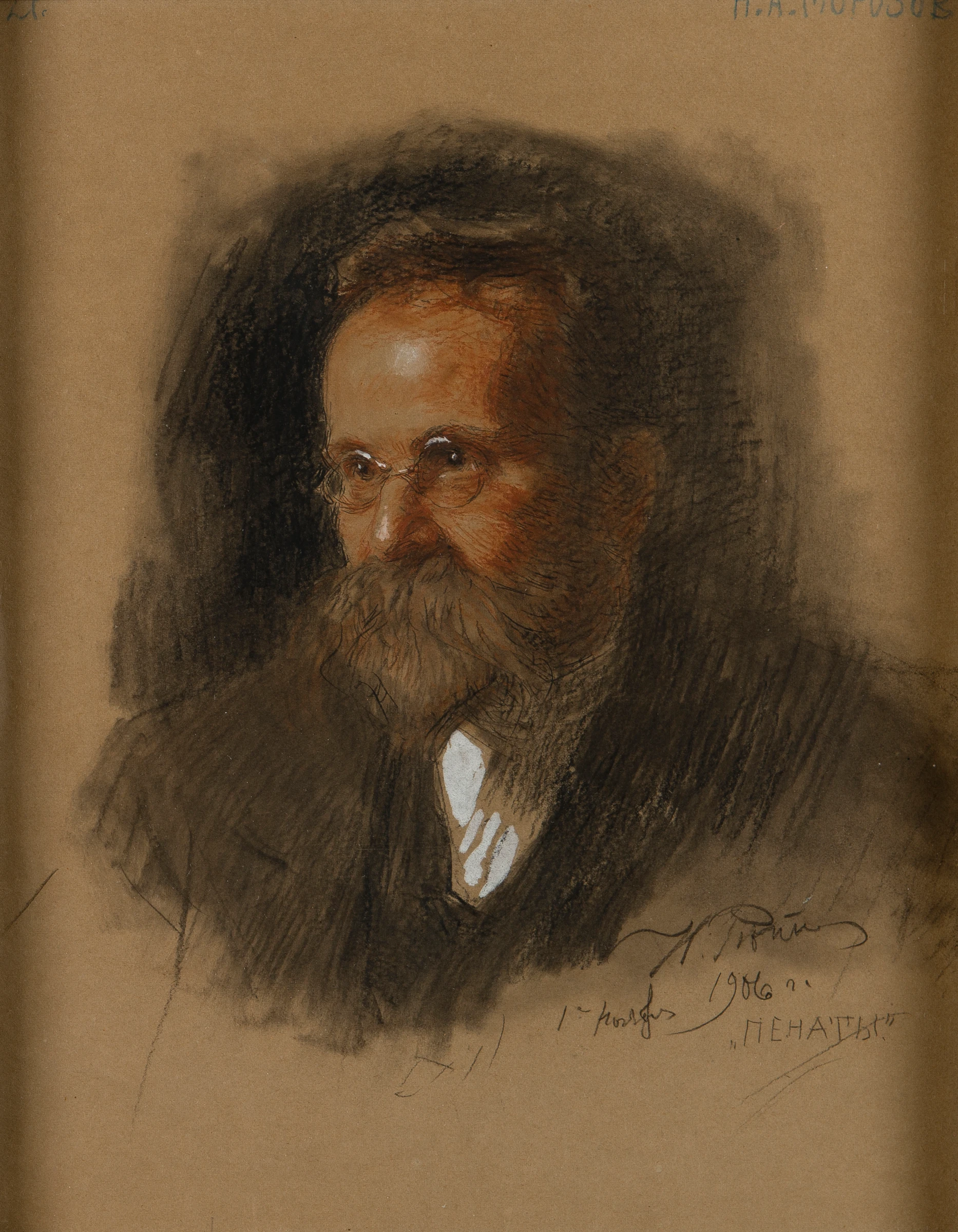
The volumes sat on a few shelves. At the mathematics faculty of Moscow State University, by Fomenko's account, only one man had them: the topologist Mikhail Postnikov.
The story of what happened next comes in two versions. Sergei Novikov, who studied under Postnikov, puts a Postnikov lecture on Morozov's discoveries at Akademgorodok in July 1967. Anatoly Fomenko and Gleb Nosovsky date the start to 1973, when Fomenko, working on celestial mechanics, noticed a strange jump in the Moon's acceleration in a 1972 paper by the American Robert Newton, and to 1974, when he asked Postnikov for five lectures.
Born in 1945, Fomenko took his doctorate at Moscow State University in 1972 on the multidimensional Plateau problem, and he would become a full member of the Russian Academy of Sciences in 1994. In 1981 the Moon paper ran in the journal Celestial Mechanics, and a paper on recognising duplicate texts ran in the Doklady of the Soviet Academy. In 1989 Acta Applicandae Mathematicae printed two more with an editor's preface. Michiel Hazewinkel called the results startling, and said they appeared "practically unassailable".
What they said they had found was a machine for finding repeats. Three shifts, of about 333, 1053 and 1800 years, ran through the timeline built by Joseph Scaliger in the 16th century and Denis Petau after him. The textbook of history, they wrote, had been compiled from four copies of one brief chronicle.
The Horde Was the Army
From 1995 the calendar began to turn into a country. New Chronology and Concept of the Ancient History of Rus, England and Rome came first, then Empire in 1996.
On Fomenko and Nosovsky's reading there was no Mongol conquest of Rus. The yoke was a period of military government inside one Russian empire, and the Horde was its army. Mongol, they argue, means great: from the Russian mnogo or mog, or, as Morozov had it, the Greek megalion. The Romanovs took the throne after a war between dynasties and had the past rewritten. Empire says the Russian state was called Great Tataria on many maps until the middle of the 17th century, "that is, Mongol-Tataria".
Then came a row of type. A chapter of New Chronology of Rus opens on a section that, the authors say, includes "the observations of our readers". It goes to the table at the end of the geography article in the 1771 Britannica: Russia, capital Petersburg, 1,103,485 square miles. Then the row they call Moscow Tartary, capital Tobolsk, 3,050,000. The biggest country in the world, the authors write. The earliest edition that can be confirmed from its contents is a book of 1999.
Which left their question, the one still asked online today. Where did it go?
Their answer is Pugachev. The rising of 1773 to 1775, on their reading, was no peasant revolt but a real war against the last independent Russian-Horde Cossack state. The Urals foundries cast his cannon because they belonged to Moscow Tartary. Suvorov was sent because the Romanovs were fighting an army. After it, they say, the empire's lands in the western half of North America were split with the new United States. The encyclopedia, they note, came out just in time.
It sold. A hostile count in 2000 put the print run at 700,000. Garry Kasparov, the chess champion, wrote a foreword finding "very serious inconsistencies" in accepted history, and in 2001 told the Daily Telegraph he was "part of a team". Later he wrote, "I do not advocate Fomenko and Nosovsky's theory."
The Largest Country in the World
A different man took the Britannica somewhere else. Nikolay Levashov, born in Kislovodsk in 1961, spent about fifteen years in California and came home to lead a movement called Renaissance. Golden Age. In 2004, in an article titled The Hushed-up History of Russia, he wrote that Great Tartaria was the largest country in the world, and told readers to check the 1771 first edition for themselves. Those were the same words Fomenko and Nosovsky used of the table. Levashov quoted the short entry instead. The name, he said, had nothing to do with Turkic tribes. Its people called themselves the children of Tarkh and Tara.
His Russia in Distorted Mirrors of 2007 made it a Slavonic-Aryan Vedic Empire with its capital, Asgard of Iriy, where Omsk stands now. Its last war, 1772 to 1775, was lost to a breakaway province, Moscow Tartaria, under the Romanovs. Then every record was destroyed. The second edition of the encyclopedia, he wrote, does not contain a word about it.
His calendar was not Fomenko's. Levashov's history runs back hundreds of thousands of years; Fomenko's is cut short. He cited Fomenko approvingly and kept the part that mattered, the erased country and the people who erased it.
An English translation of his first volume existed by January 2009. Almost nobody needed it yet. By March 2017 the Russian channel of Philipp Druzhinin carried an English title, The Great Tartaria and the Mud flood of 19th century. That autumn a new forum, r/CulturalLayer, listed Druzhinin and Russian blogs among its resources. On 18 April 2018 KorbenDallas, on stolenhistory.org, wrote that Tartary "was a country", and offered in the same thread a CIA paper of 1957. Within the year, searches for the name had begun to climb.
If the Timeline Is a Copy
Set aside for a moment whether it is true. Ask the larger question. What kind of past are we standing on if it is?
On that reading it would mean, first, that the map of Russia is the least of it. Rome, Athens and the Egypt of the textbooks would be echoes of the Middle Ages, one short story told four times. The Moscow of the tsars would have been the centre of the world, and the rest of the world would have forgotten.
It would mean, next, a forgery with no equal in the human record. Every monastery chronicle, every inscribed stone and every royal list on three continents would have been brought into line by a few scholars and a dynasty, and it would have worked. Which would make the largest thing our species ever built not a wall or a city, but a timeline.
It would mean something closer in. We count ourselves by what came before: so many centuries of law, of letters, of argument. If a thousand years of that were printed rather than lived, then our sense of how long people have been at this would be a story told to us, and we would have to ask who first needed it told.
And one consequence is still in front of us. If an archive can be rewritten that completely, then the records we are making now could be too, and nobody could say what would survive to catch it.
What the Layers Say
The standard account holds that the chronology stands, because it was not built on one line of evidence. The Bureau of the History Department of the Russian Academy of Sciences took the matter up on 22 April 1998, at the request of the Academy's president. Its summing-up, by Alexander Fursenko, called Fomenko's history a picture made by fantasy, contradicted by the documents. Two large collections of replies followed in 2000, Antifomenko and History and Antihistory.
The linguist Andrey Zaliznyak answered the etymologies: the sound changes of Old Russian run in chains that no 17th-century forger could fake across centuries, and a likeness of sounds, with letters dropped at will, proves nothing. Valentin Yanin answered from the ground at Novgorod. There tree rings date the log streets, and the birchbark letters in the layers name the Mishinich family in order: Bartholomew in the early 14th century, his son Luka and grandson Ontsifor in the middle of it, the great-grandson Yuri at its close. The chronicle gives the same men in the same order. Richard Stephenson and his colleagues set eclipse records from Babylon, China and Greece, back to about 720 BC, against the rotation of the Earth in 2016. M. L. Gorodetsky set out a matching pair of reign lists of the kind the method prizes: medieval Navarre and modern Sweden.

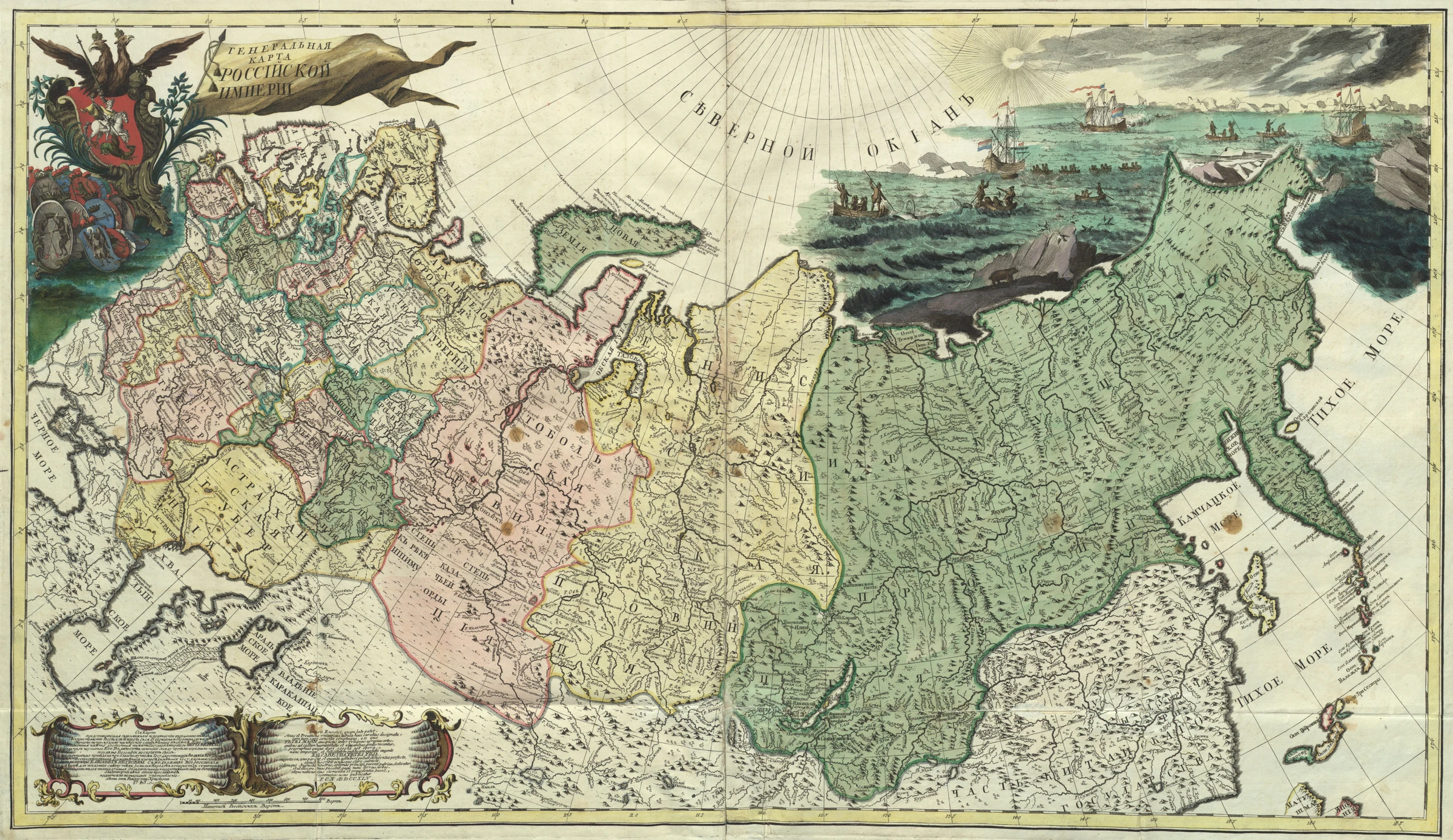
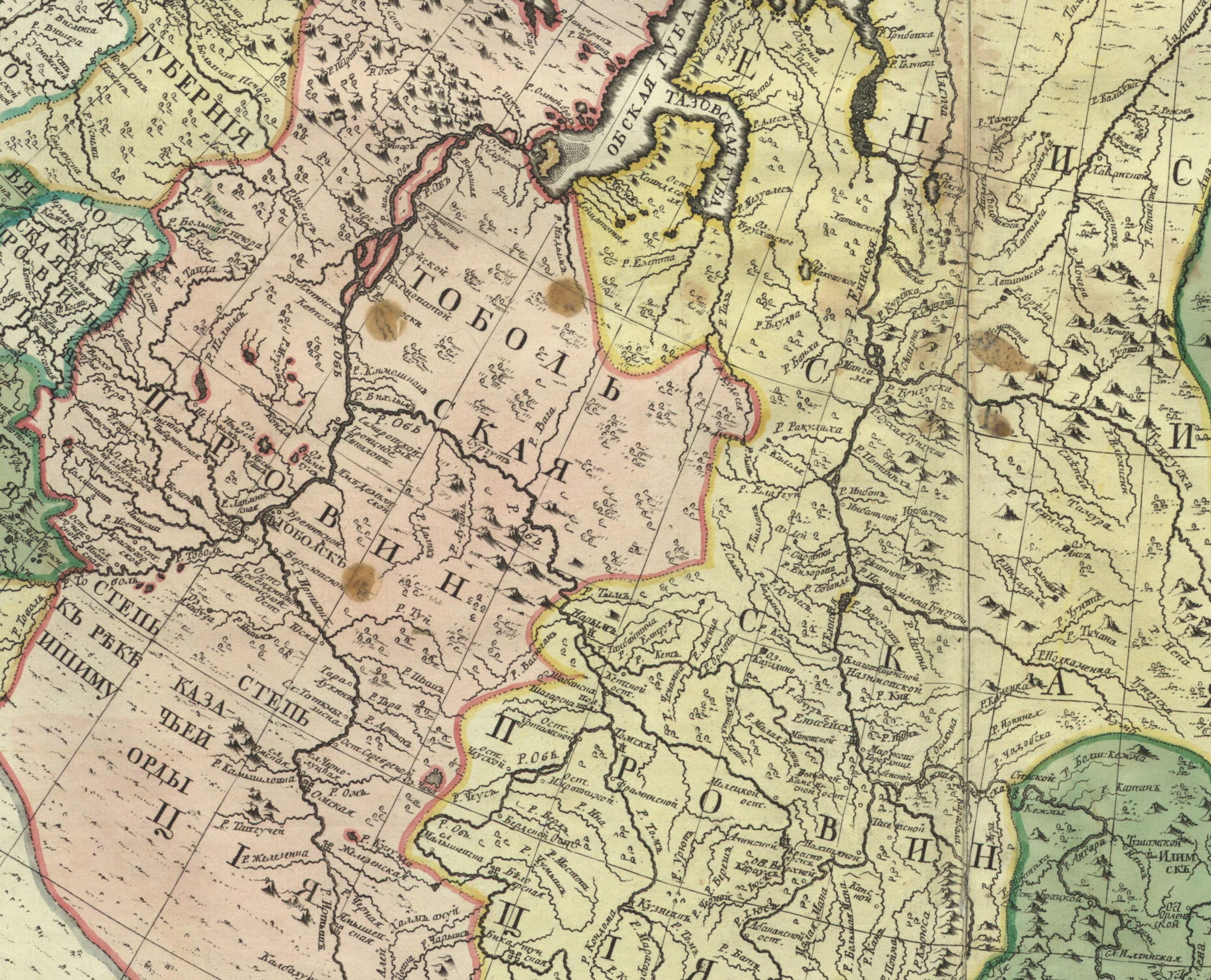
The Tartary row has its own answer. The same 1771 set calls Tobolski the capital of Siberia. The general map in the Russian Academy's own atlas of 1745, on its Russian sheet, draws a Tobolsk province among the empire's others, and no Tartary across Siberia. And the second edition of the Britannica, of 1778 to 1783, does not fall silent. Its TARTARY article runs to some 29,000 characters against 452 in the first, and the name stays through the eighth edition.
Then there is a record that cannot be left out. In Russia in Distorted Mirrors, the fall of Great Tartaria is what frees the Jews, in Levashov's telling, to rewrite history and move on the world. That charge is false, and it is an old one. A court in Obninsk ruled the book extremist in 2010, on an expert finding of enmity toward Jews, and a court in Omsk ruled the same of a collection of his articles in 2013: numbers 809 and 2148 on the Russian Justice Ministry's list. That law is broad, so a ruling proves only a ruling. The text proves itself. In December 2009 two of Russia's own Rodnover pagan bodies had already disowned him, in a statement titled On Pseudo-Paganism.
The English version carries none of it: no Slavs, no Vedas, no plot. In KorbenDallas's thread the erasers are "the official history". Andrew Ward's 2023 thesis at the University of Wales Trinity Saint David describes the split: a Russian ethnonationalist strand, and an English one where the Russian origin fades.
What the Layers Do Not Reach
Fomenko and Nosovsky have a reply to the letters. The paving layers on the Volkhov, they say, are later than Yanin thinks, and nothing in the letters could not have been written in the 19th century. They quote Yanin himself on birch bark still in use: a Siberian tribute book of 1715.
The complaint about old dates has ground under it. Robert Newton's The Crime of Claudius Ptolemy, from Johns Hopkins in 1977, charged the greatest astronomer of antiquity with faking his observations. The date of the Almagest star catalogue is still argued: Dambis and Efremov in 2000 put it near Hipparchus, about 89 BC give or take 122 years, and Dennis Duke answered in 2002 that the method is weaker than it looks. None of them moves it to the 600 to 1300 AD that Fomenko's team gave it. All of them are still arguing.
Forgery in the sources is not a fantasy either. Edward Keenan of Harvard argued in 1971 that the famous letters between Ivan the Terrible and Prince Kurbsky were written in the 17th century. Ruslan Skrynnikov fought him. That is what a forgery dispute looks like: one text, its manuscripts, its named scholars. Yanin himself wrote that the relative reliability of chronicle dates begins only in the second half of the 13th century, when the oldest surviving list was made, and put the loss of earlier ones down to fires.
The road to English has its own hole. KorbenDallas's thread of 2018 names the Britannica, the maps and the flags. It does not name Levashov. Whether anyone on those forums had read him, nobody has shown. The dated captures were searched for the link.
It was not found.
The Readers of the Row
The question stands in two places now. In Russia the books go on, and in 2020 Sergei Glazyev, a member of the Academy, drew on them in print; the Russian Geographical Society answered the Tartaria version the same year. In English it has become a subject for scholars of religion: Moritz Maurer and Thierry Goeckel have published on it in Nova Religio.
What remains, for this story, is the row.
Nobody named on this page is known to have seen it first. Fomenko and Nosovsky say the section includes "our readers", and do not say which of its points were theirs. Levashov has the same phrase by 2004, and one blogger calls him the first to speak of Tartaria in the open; nothing else opened says so. Official X could not open the printed editions of 1995 to 1997, the books that would show whether the row was there from the start.
A great deal has since been stacked on one line of an 18th-century table: the cannon, the American lands, the three million square miles in the forum posts.
Their readers noticed things, the authors wrote, and no name was printed.
Questions This Leaves You With
Is there anything a person actually does with this?
Nothing in your own life turns on it, and anyone selling you the hidden date of anything is selling something. The useful thing is smaller. You can take any old date you care about and ask how many independent kinds of evidence meet at it: tree rings, radiocarbon, an eclipse, a seal, a letter in a dated layer. That habit costs nothing and works on any claim, including the official ones. The larger question stays with you: how much of what a society knows has ever been checked twice.
Does this sit against a religious account of the world?
It cuts in more than one direction. Morozov read the Book of Revelation as a real record of a real sky, which took the text more literally than many theologians would, and he drew the conclusion that it was centuries younger than the church holds. A reader of faith may see a scripture that survives even that attack, or a scripture being handled as a star chart. People have argued all of this seriously. This site will not tell you which way it falls.
Do I need to rethink anything?
Think about how you know the year your grandparents' grandparents were born. Almost nobody has seen that record. You trust a chain of strangers, clerks and printers. One reaction to this story is that a life stands on very thin ice, and that everything you were taught could be somebody's edit. The other is that the chain is astonishing: millions of people who never met, keeping count, so that a birchbark note to a Novgorod landowner still falls in the right layer. You may already know which one you had.
What would change your mind, in either direction?
Name it now, before you are committed, because it is harder later. Toward the New Chronology: a tree-ring sequence from Novgorod that fails against one from another region, a block of Babylonian eclipses that fits only a later date, a dated document from a government called Moscow Tartary. Away from it: a test of the dynasty method on invented kings that its authors accept as fair, or a Russian archive that accounts for the Urals year by year through Pugachev's war. A map alone moves nothing. Neither does a table. Decide what would, and write it down.
Who first read the row?
This is the open problem. The trail runs from a table of 1771 to a book of 1999 to a website of 2004 to a forum of 2018, and at its start stand readers nobody has named. Whether the row was one of their observations, what edition was in hand, and whether it reached Levashov through the books or by some other road, are all unrecorded. The printed editions of the middle 1990s can narrow it. Past them the space is empty, and it may stay that way.
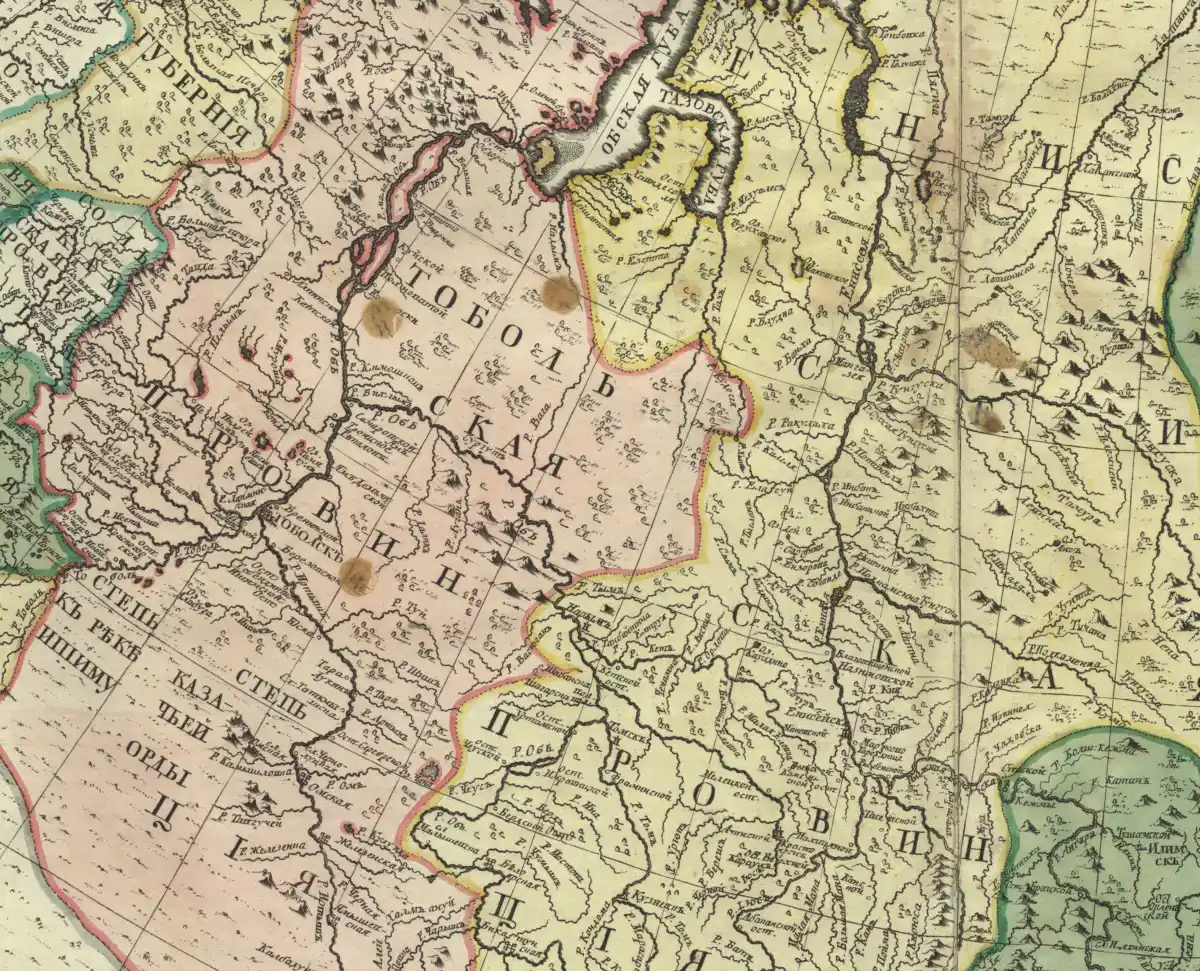
Detail of the same 1745 sheet. Tobolskaya provintsiya, the Tobolsk province, runs from the Ob to the Kazakh steppe, with Tobolsk as its town on the Irtysh. Detail of the General map of the Russian Empire, Atlas Rossiiskoi, Imperial Academy of Sciences, 1745. Russian State Library copy. Public domain, via Wikimedia Commons. Cropped and lightly smoothed. 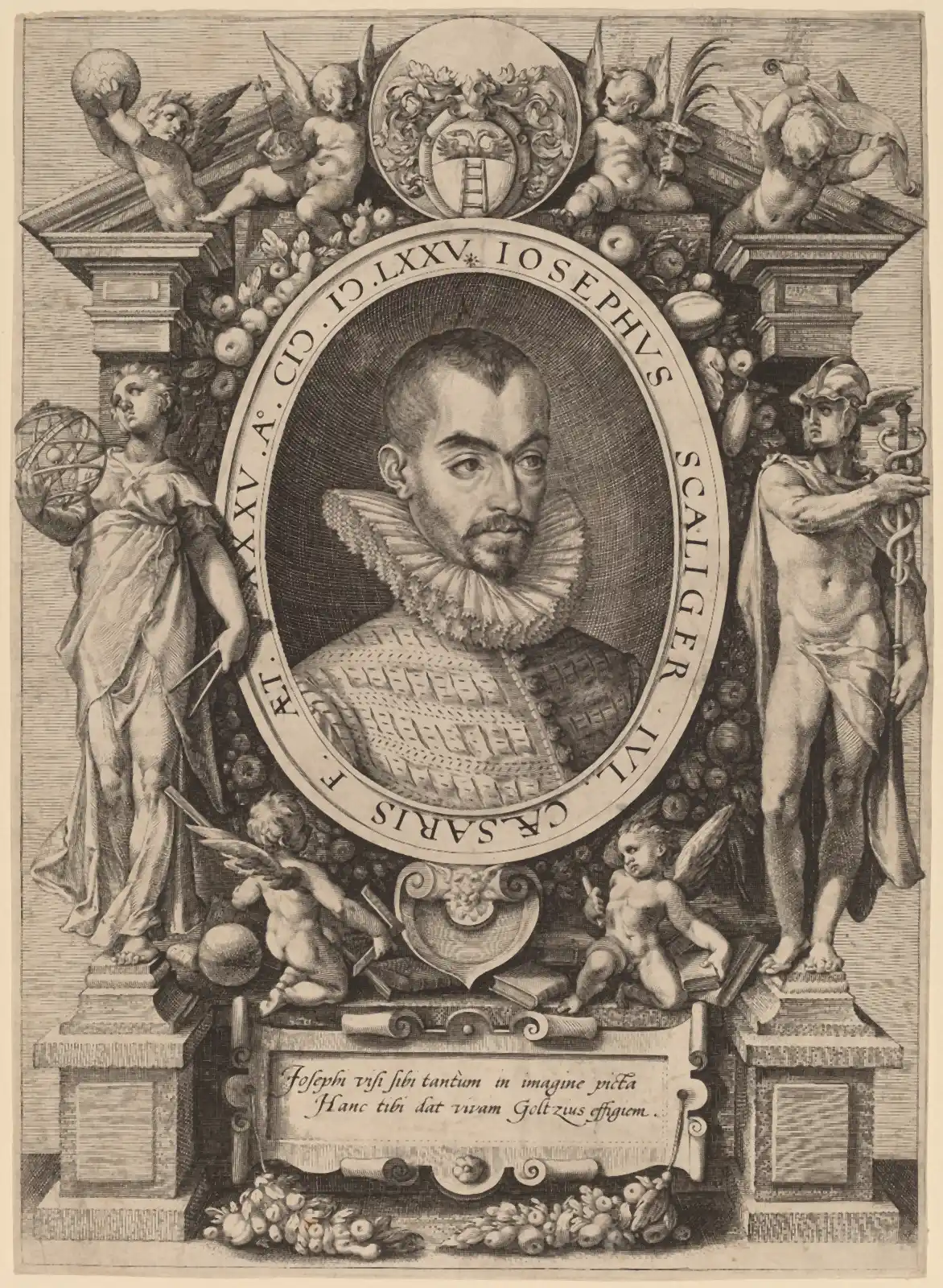
Joseph Scaliger, whose timeline the New Chronology sets out to take apart, engraved by Hendrik Goltzius in 1592. Hendrik Goltzius, Josephus Justus Scaliger, engraving, 1592. National Gallery of Art, Washington. CC0, via Wikimedia Commons. Lightly smoothed. 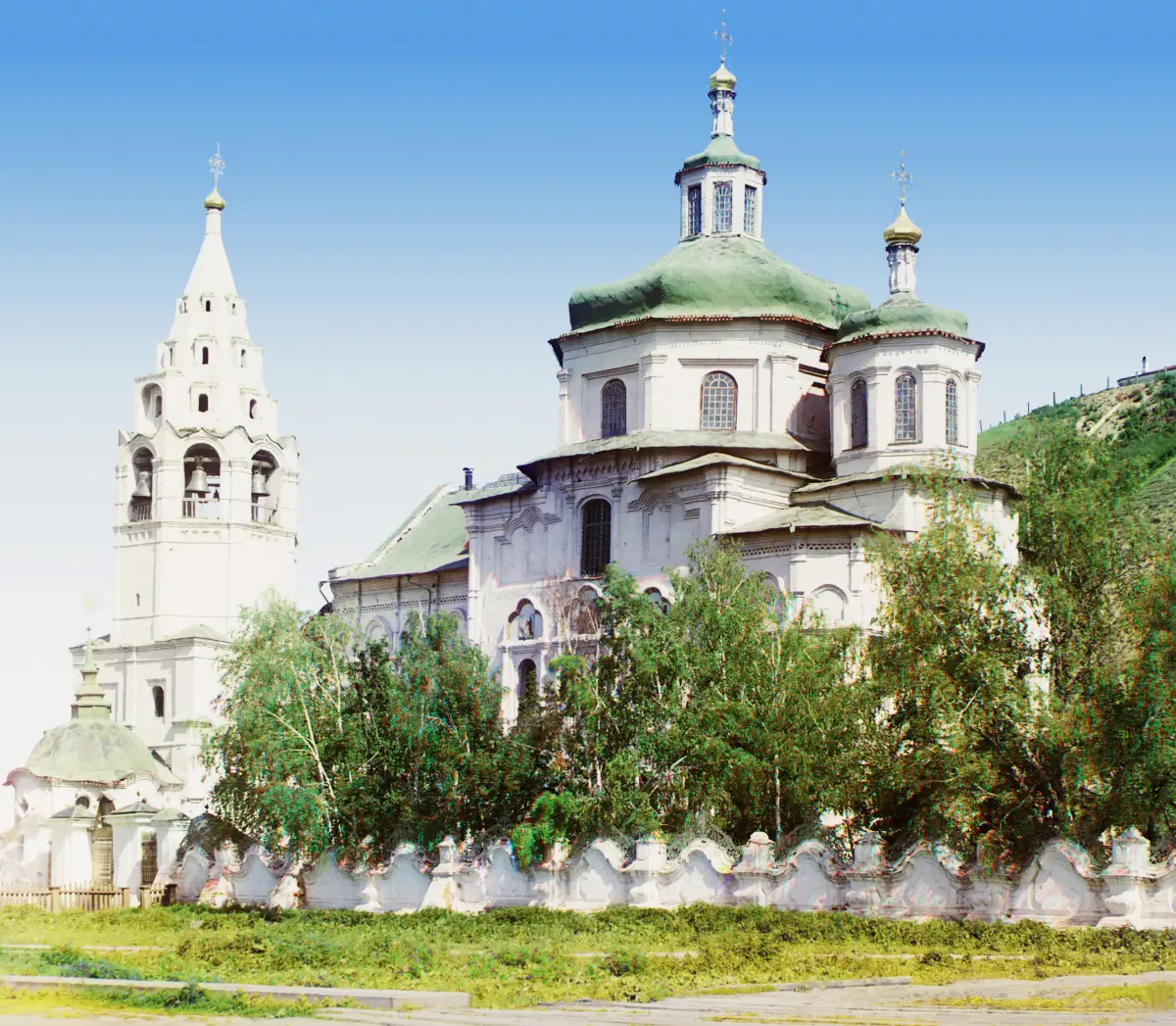
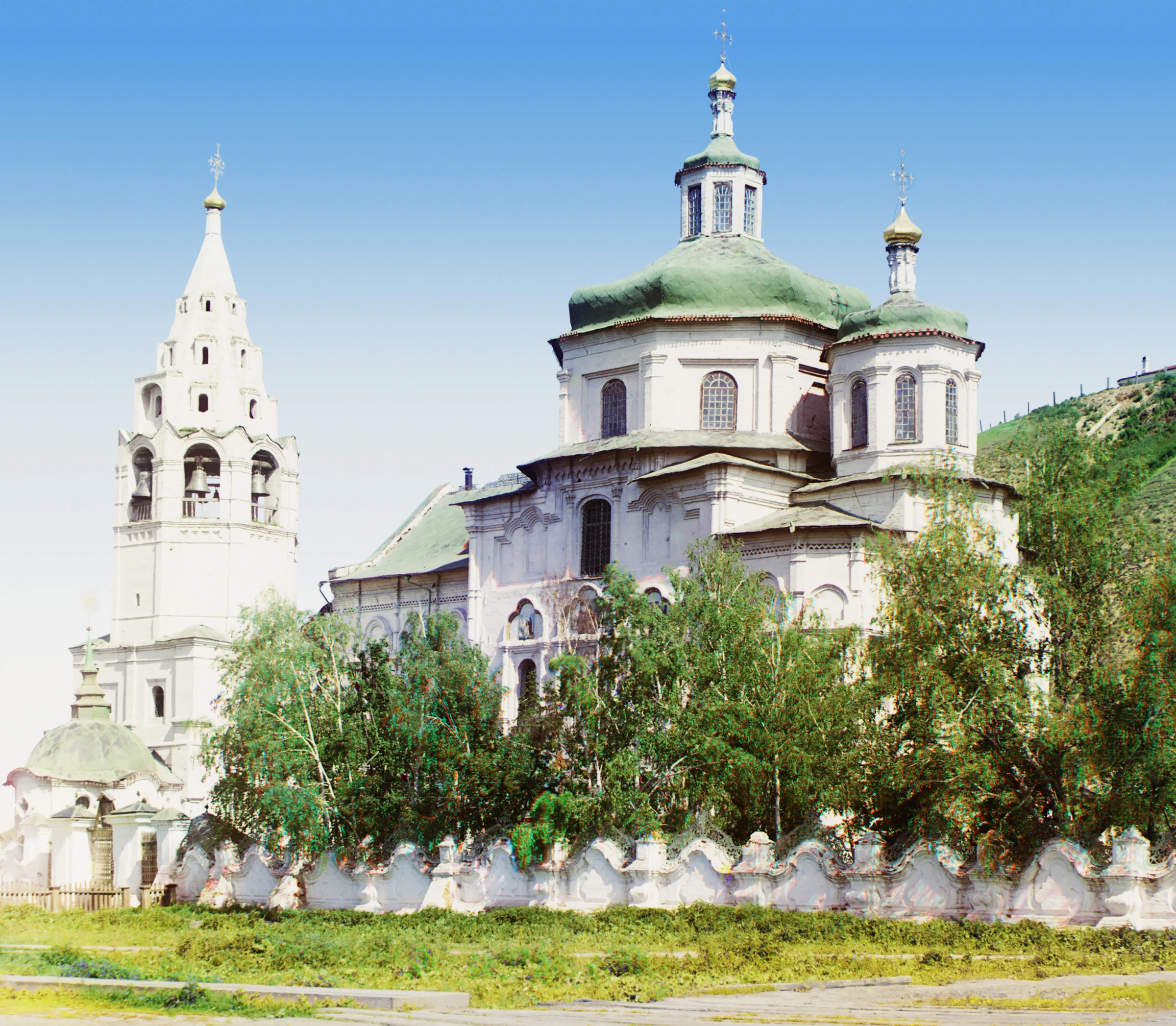
Tobolsk in 1912: the Church of the Holy Mother of God, in a colour photograph by Sergei Prokudin-Gorskii. Sergei Prokudin-Gorskii, Church of the Holy Mother of God, Tobolsk, 1912. Library of Congress. Public domain, via Wikimedia Commons.
Downloads
- Nikolai Morozov, Otkrovenie v groze i bure (Revelation in Thunder and Storm), Byloe, 1907, full book in Russian. Public domain by age; no rights statement on the Internet Archive itemMorozov; copy from the Internet Archive (otkrovenievgrozeibure67)
Sources
- Nikolai Morozov, Autobiography, written 13 February 1926 (Granat encyclopedia vol. 40; reprinted in Povesti vol. 1, 1947) Morozov; online text on chronologia.org Primary record
- Nikolai Morozov, Letters from Shlisselburg Fortress (Povesti vol. 3, USSR Academy of Sciences, 1947) Morozov; online text on chronologia.org Primary record
- Sarah J. Young, Shlisselburg prison post Sarah J. Young, University College London Study
- Oreshek (Shlisselburg), encyclopedia entry Wikipedia General reference
- Nikolai Morozov, Otkrovenie v groze i bure (Revelation in Thunder and Storm), Byloe, 1907, full book in Russian. Public domain by age; no rights statement on the Internet Archive item Morozov; copy from the Internet Archive (otkrovenievgrozeibure67) Primary record
- 30 September 395, ChronoWiki New Chronology encyclopedia Study
- History: Fiction or Science? vol. 1, the history of the question Fomenko and Nosovsky, chronologia.org Primary record
- Sergei Novikov, on Fomenko and the New Chronology, Priroda, 1997, no. 2 Sergei Novikov; author page, Steklov Institute Primary record
- Archive of honorary academician N. A. Morozov Russian Academy of Sciences Study
- Jubilee note on A. T. Fomenko, Chebyshevskii Sbornik XXI:2 (74), 2020 Chebyshevskii Sbornik Study
- New Chronology bibliography Fomenko and Nosovsky, chronologia.org Primary record
- Michiel Hazewinkel, Editor's Preface to the Two Papers on Chronology and Dating, Acta Applicandae Mathematicae 17, 1989, 201-202 CWI repository Primary record
- New Chronology of Rus, ch. 5, section 3 (online text) Fomenko and Nosovsky, chronologia.org Primary record
- New Chronology of Rus, Introduction (online text) Fomenko and Nosovsky, chronologia.org Primary record
- New Chronology of Rus, ch. 8 (online text) Fomenko and Nosovsky, chronologia.org Primary record
- Empire, part 3, ch. 8, section 3, Great Tartaria and China (online text) Fomenko and Nosovsky, chronologia.org Primary record
- New Chronology of Rus, ch. 11, section 1 (online text) Fomenko and Nosovsky, chronologia.org Primary record
- New Chronology of Rus, ch. 11, section 2 (online text) Fomenko and Nosovsky, chronologia.org Primary record
- Antifomenko, Collection of the Russian Historical Society no. 3 (151), Russkaya panorama, 2000 Russian Historical Society; text on azbyka.ru Primary record
- History and Antihistory: A Critique of the New Chronology of Academician A. T. Fomenko, ed. A. D. Koshelev, 2000; 2nd ed. 2001 Yazyki russkoi kultury; text on azbyka.ru Study
- Edward Winter, Garry Kasparov and New Chronology Chess Notes Study
- The fight with dark forces, episode two, 3 December 2013 SOVA Center Study
- Federal List of Extremist Materials, entries 809 and 2148 Ministry of Justice of the Russian Federation Primary record
- Nikolay Levashov, Russia in Distorted Mirrors, vol. 1, 2007, ch. 2.27, pp. 234-235, and The Hushed-up History of Russia, parts 1 and 2, 2004. Read in Russian and English; not linked, because both are on the Federal List Levashov; record at the Russian Ministry of Justice Primary record
- Report on the Kaluga appeal, 30 December 2010 Pravo.ru, from the court press service Study
- Report on the Omsk ruling, 27 November 2013 Rossiiskaya Gazeta Study
- Viktor Shnirelman, Russian Rodnoverie, BBI, 2012 Text on azbyka.ru Study
- Philipp Druzhinin channel, capture of 2 March 2017 Internet Archive Primary record
- r/CulturalLayer, capture of 3 December 2017 Internet Archive Primary record
- KorbenDallas, Tartary - an Empire hidden in history, stolenhistory.org, capture of 19 April 2018 Internet Archive Primary record
- Brian Dunning, Skeptoid 765, 2 February 2021 Skeptoid Study
- Andrew Ward, The World That Was, MA thesis, 2023, pp. 65-66 University of Wales Trinity Saint David Study
- TARTARY, Encyclopaedia Britannica, 2nd ed., 1778-83, vol. 10, p. 8537 (transcription of the National Library of Scotland text) Nineteenth-Century Knowledge project, Jim Clifford Primary record
- TARTARY across eight editions of the Britannica Jim Clifford Study
- Great Tartary and the Name That Filled the Old Maps of Asia Official X Study
- General map of the Russian Empire, Atlas Rossiiskoi, 1745 Imperial Academy of Sciences; Russian State Library copy Primary record
- Stephenson, Morrison and Hohenkerk, Measurement of the Earth's rotation: 720 BC to AD 2015, Proceedings of the Royal Society A, 2016 Royal Society; PMC Primary record
- Dennis Duke, The Measurement Method of the Almagest Stars / proper motion dating, Journal for the History of Astronomy 33, 2002, 45-55 Dennis Duke, Florida State University Primary record
- Robert Russell Newton (1918-1991), authority record museum-digital General reference
- The Stars Bear Witness, preface (online text) Fomenko and Nosovsky, chronologia.org Primary record
- Some Observations on R. G. Skrynnikov's Views Concerning the Kurbskii-Groznyi Apocrypha, Slavic Review Cambridge University Press Study
- New Chronology of Rus, ch. 3, section 12 (online text) Fomenko and Nosovsky, chronologia.org Primary record
- Sergei Glazyev, reply to historians, Voenno-Promyshlennyi Kurier, 20 October 2020 chronologia.org Primary record
- Raisa Khanukaeva, The whole truth about Tartaria, 5 October 2020 Russian Geographical Society Study
- Moritz Maurer and Thierry Goeckel, The Tartarian Empire: Conspirituality, Pop Culture, and the End of the Past, Nova Religio 29(2), 2025 (record; article not read) Academia.edu record Study
- Masterok, blog post of 21 July 2012 Teletype Study