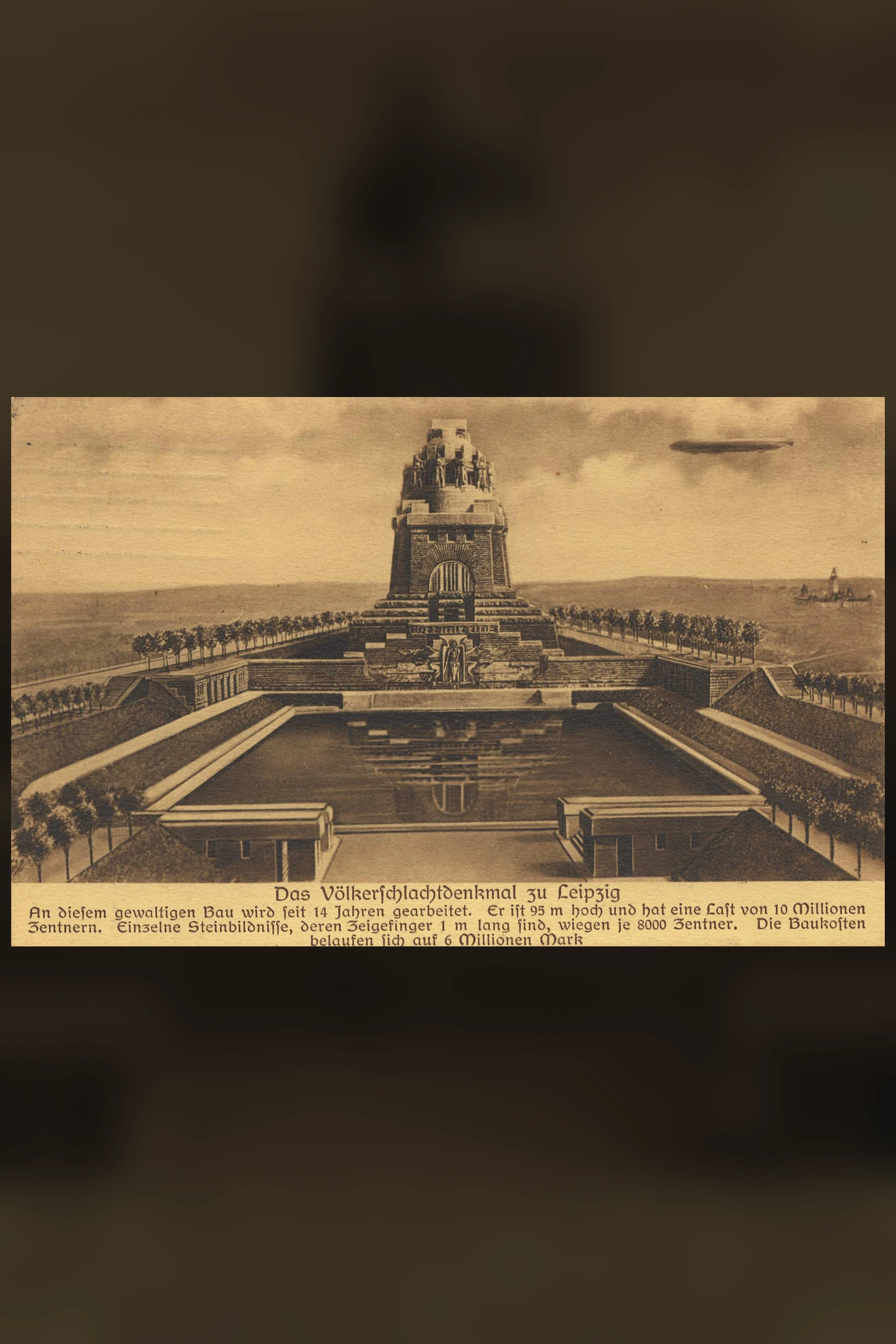
The Monument to the Battle of the Nations stands on the south-east edge of Leipzig, in Germany, and on a postcard stamped in that city on 11 June 1914 it rises vast and brown over a long black pool. To the right of its crown, level with the ring of stone figures, a Zeppelin hangs in the sky.
Pictures like this one are the raw material of a story now told to well over a hundred thousand viewers. A long airship. A colossal stone building. A date before the First World War. In the Tartaria videos, that combination is the last surviving trace of a fleet that raised the old world from the air, then disappeared, and took its builders' name with it.
This card does something those videos do not. It prints the load.
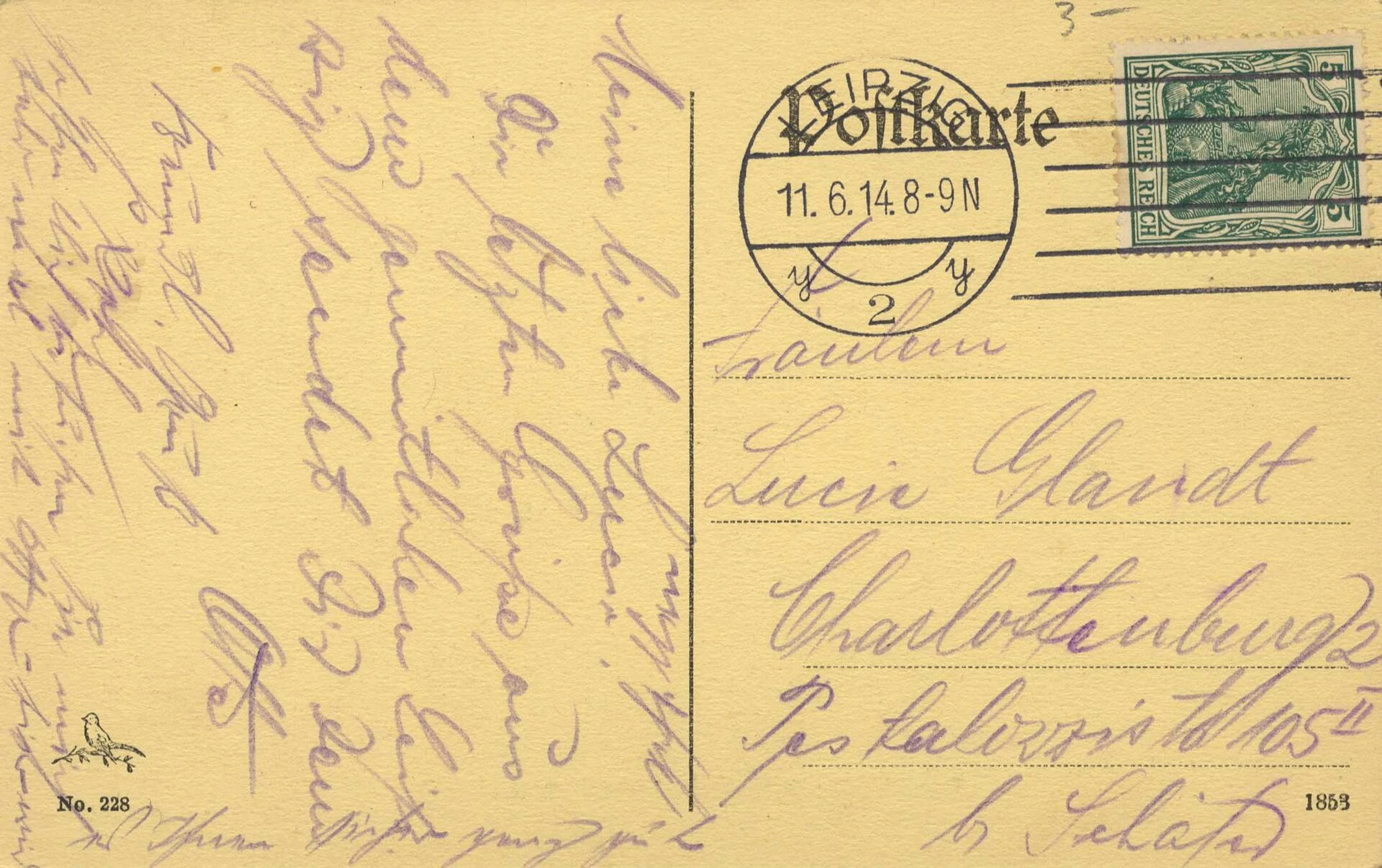
Under the picture, in heavy German type, the caption says that work on this mighty building has gone on for 14 years. It stands 95 metres high. It bears a load of 10 million Zentner. Single stone figures, with index fingers a metre long, weigh 8,000 Zentner each. The stamp on the back is a green five-pfennig Germania.
The airship and the weight are on the same piece of card.
Hundreds of Pictures
On 9 January 2026 a YouTube channel called Tartaria Vault posted a film of just under 22 minutes, Tartaria's Airships That Lifted Buildings Into Place. It has passed 115,000 views. Its narrator describes a Sunday afternoon of reading about dirigibles that stopped being ordinary within hours. Not one photograph. Hundreds, from the 1880s to the early 1900s, of huge craft stationed over unfinished cathedral spires, government buildings and exhibition halls, with cables running down from their gondolas to the roofs.
The film reads out the roll. Chicago, 1893. Berlin, 1889. Melbourne, 1888. St. Petersburg, 1891. Buenos Aires, 1895. San Francisco, 1896. It quotes captions in a clerk's flat voice: installation of dome structure, June 1893. It names the Chicago World's Fair buildings, the Budapest Parliament and the Vienna State Opera. It says the pictures were taken by municipal photographers and filed in city records, the blimps as ordinary as cranes or pulleys.
Other channels arrived the same month. On 10 January Tartarian Geek asked whether airships had been found lifting buildings in 1822, thirty years before the first powered flight on record. On 31 January Tartaria Archive followed with a film of more than an hour.
And within its first seconds the Tartaria Vault film puts a real printed object on the screen: a French postcard of the Place de la Concorde in Paris. An airship hangs over the square. Cables haul the great obelisk out of its base. The line of type across the sky reads, in translation, that to sharpen his great sabre, Guillaume has the obelisk carried off by the Zeppelin K.K.
A monument on a line, in print, more than a century old. Whatever else the idea has, it has that.
A Fleet With No Childhood
Tartaria Vault's argument rests on perfection. The craft are the same size, it says, the rigging the same, the positions the same, from Prague to Philadelphia. Buenos Aires in 1895 uses the method of St. Petersburg in 1891, in an age when, the film points out, the telegraph could not send a technical drawing. The buildings show no half-made walls and no brick-by-brick progress, only whole floors and dome segments arriving finished from above. And the airships have no infancy: no failed models, no slow improvement. On this reading that is because nobody invented them. They were inherited.
From there the case widens. The film reads the great buildings as machines: towers as antennae, domes as resonant chambers, sealed vessels in the basements tuned to the pressure of the air. It is the same dream of power from the atmosphere that hangs around Tesla's tower at Wardenclyffe. The airships, it says, were how the parts were set in place, which is why the precision mattered.
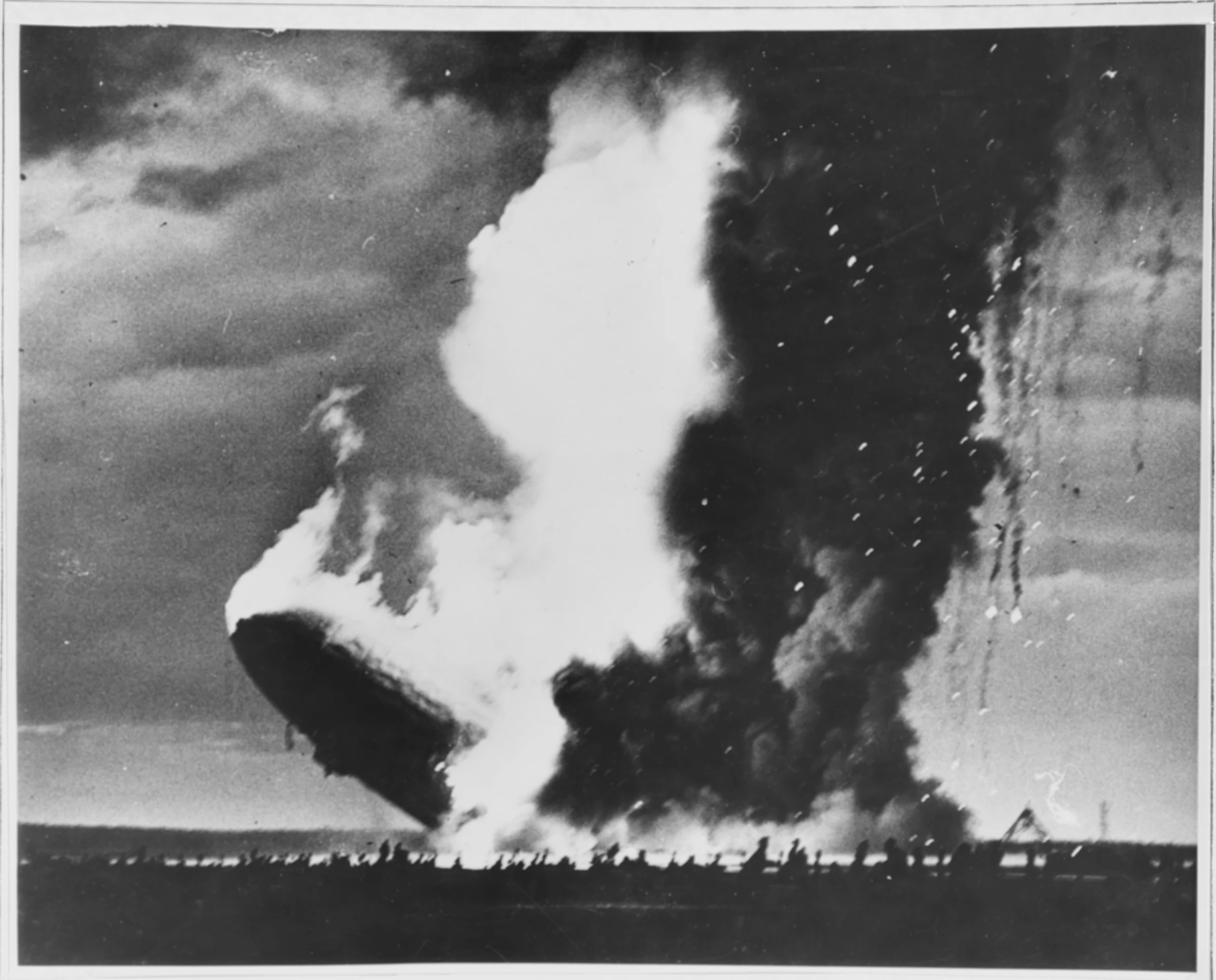
Then the ending. After 1910 the craft leave the photographs. The film reports fragments of city council meetings from 1911 and 1912 ordering aerial construction to stop, patents lost to fire, archive prints with their rigging scratched out. By 1913, it says, the network was dead. The Hindenburg of 1937 came 25 years too late to explain it.
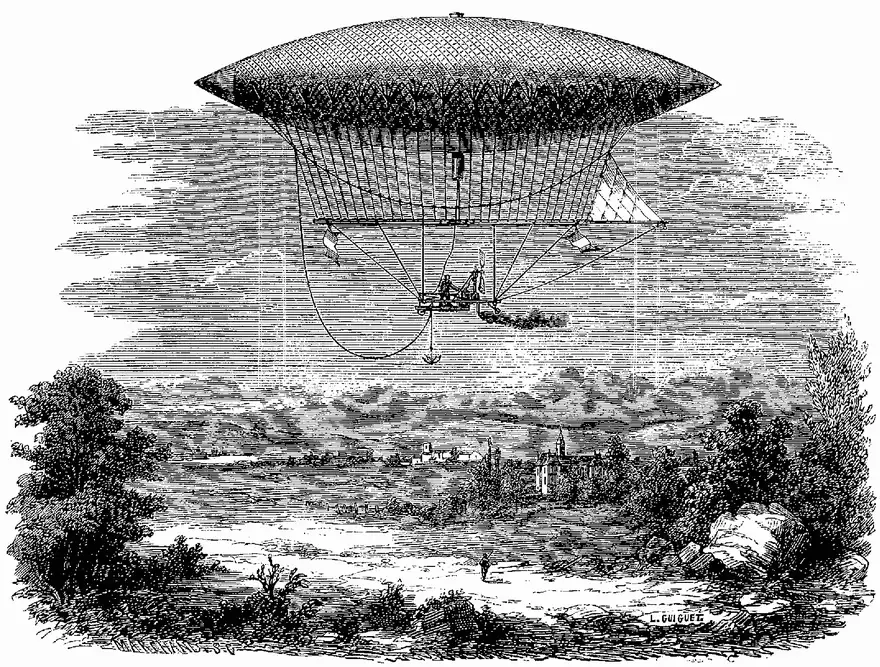
Some of the case stands on real paper. Powered airships did fly before the 1880s. Henri Giffard left the Paris Hippodrome under a 3-horsepower steam engine on 24 September 1852 and came down near Trappes, about 17 miles away.
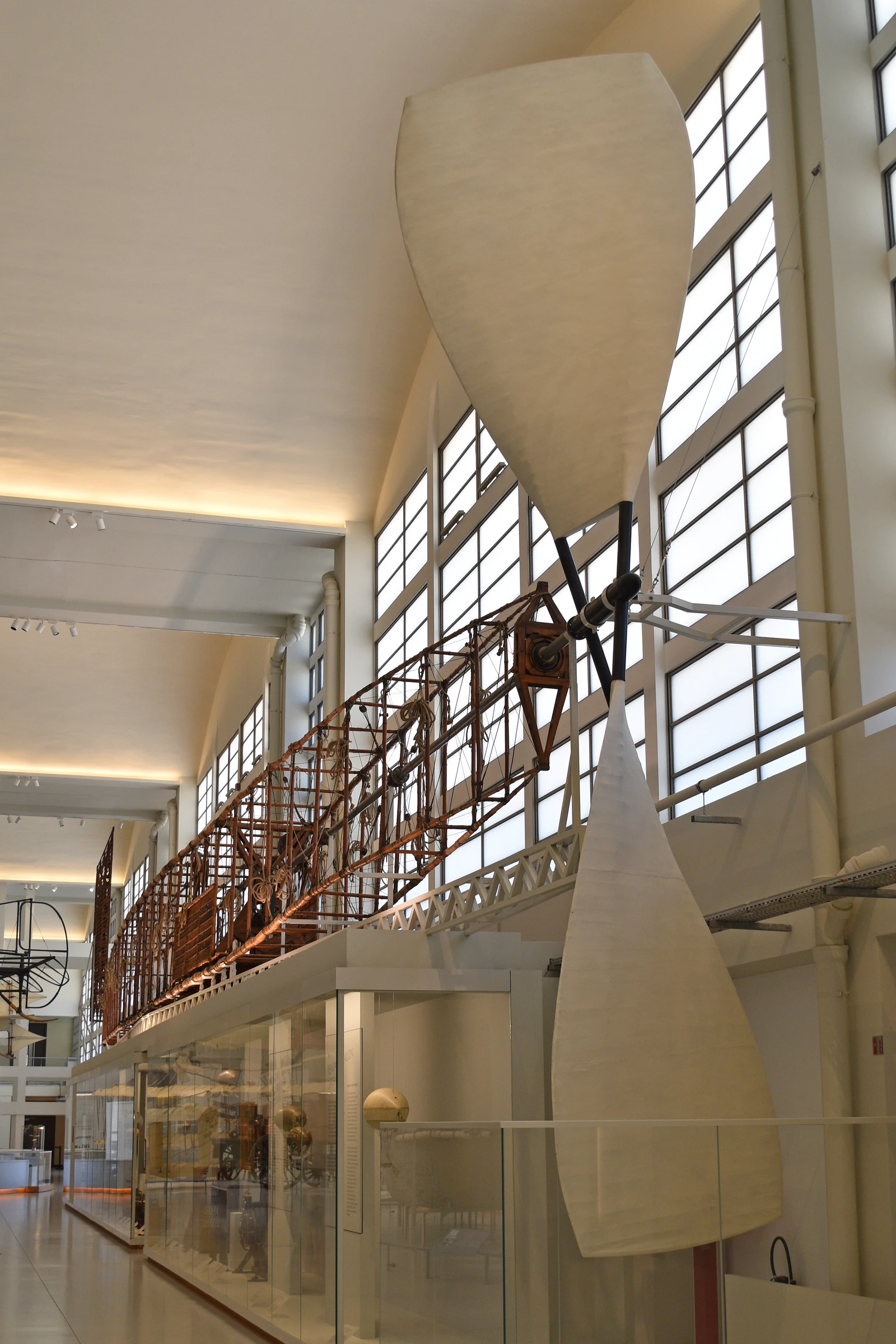
On 9 August 1884 the French army's La France, driven by an 8-horsepower electric motor, flew a 7.6-kilometre loop and came back to where it started. And there is a real 1912: the US Army scrapped its only dirigible that year and bought no other until after the First World War.
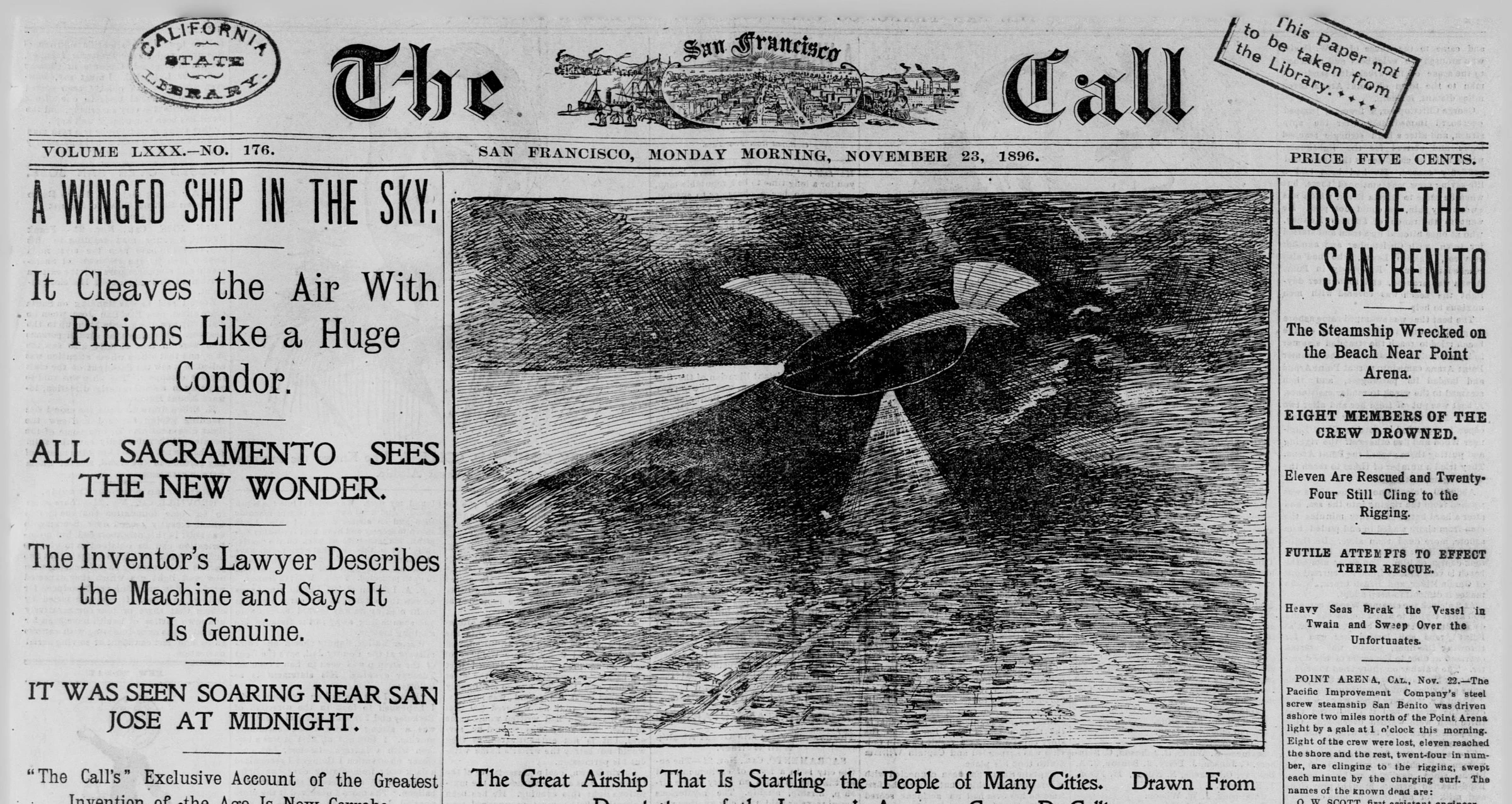
Then there is the autumn of 1896. On the night of 17 November people in Sacramento reported an airship with a searchlight passing over the city. On 23 November the San Francisco Call gave its front page to a huge drawing, made from the descriptions of an attorney, George D. Collins of Alameda, who said a wealthy client was the inventor. Days later W.H.H. Hart, a former attorney general of the state, was speaking for the ship, and the Call had it bound for Havana with bombs. A 2004 book by Michael Busby, by the accounts of it read here, argues that a real craft flew in 1897. In Houston, Charles Dellschau spent his old age painting airships he tied to an aero club of the 1850s.
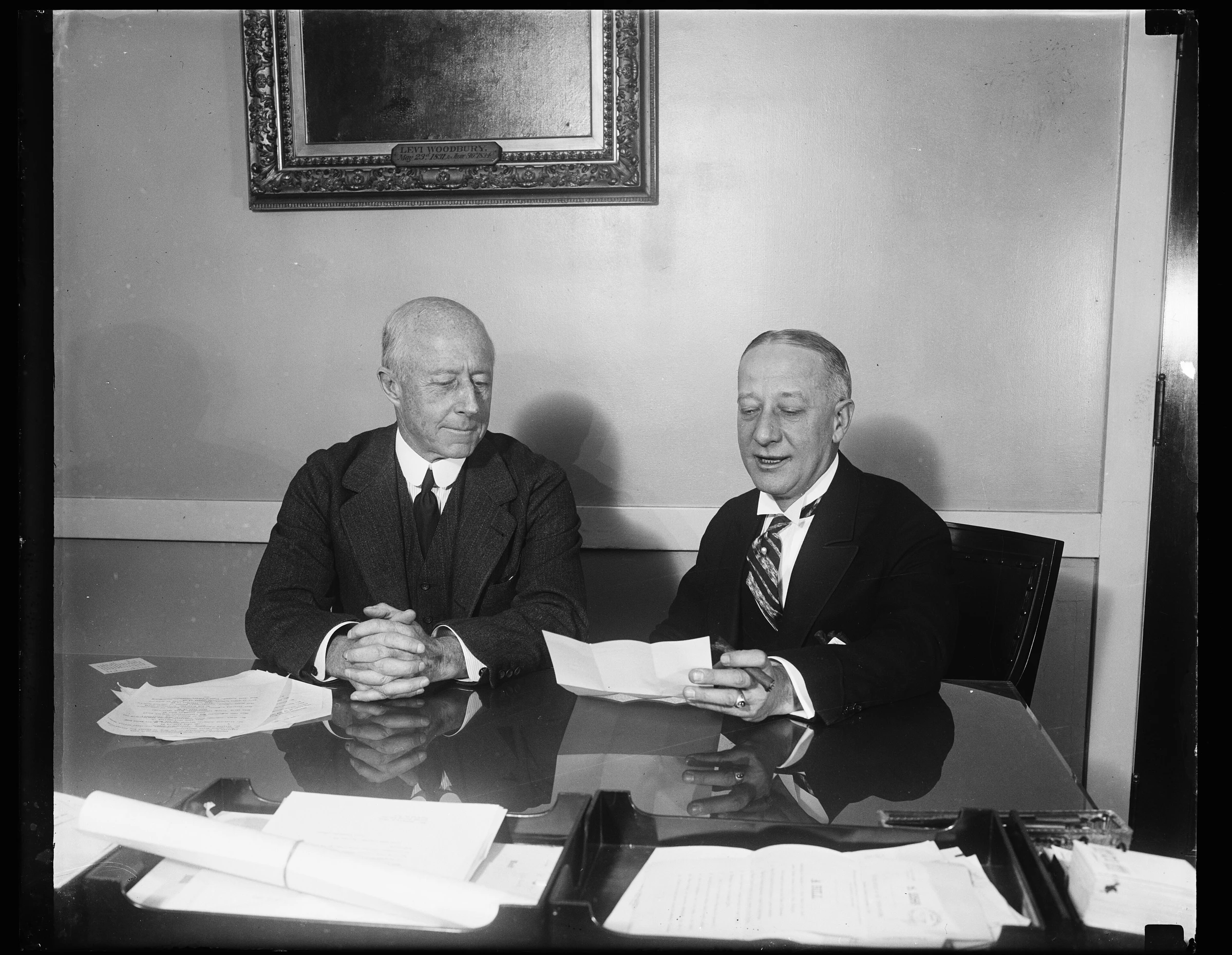
And a skyscraper was once fitted out for them. In December 1929 Alfred E. Smith went to the Secretary of the Navy to ask for Navy engineers to help design a mooring mast for the Empire State Building.
What a Lost Fleet Would Mean
Set aside for a moment whether it is true. Ask the better question. What kind of past are we standing on if it is?
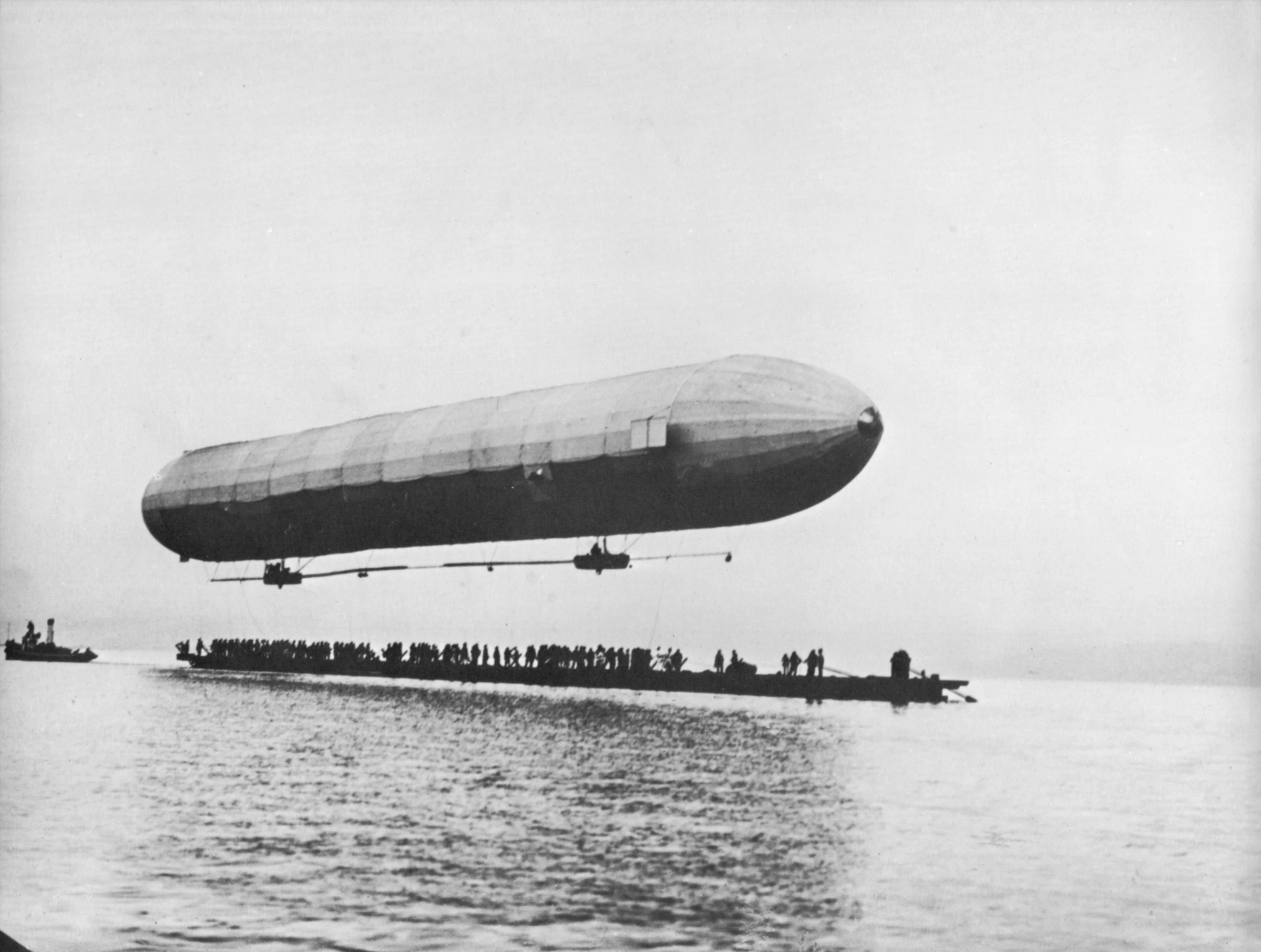
It would mean, first, that the history of flight is a story told backwards. The French captains with their batteries, the crowd on the raft on Lake Constance in July 1900, would not be the beginning of anything. They would be people fumbling towards a thing already at work over Berlin. Every museum gondola would be a copy of something lost.
It would mean that the cities of the late nineteenth century belonged to one system, run to one plan across oceans, in a world we have been taught was split by empire, language and weeks of mail. On that reading the name on the old maps of Asia would not be a name. It would be a management.
It would mean that the buildings around us are unfinished business. Every domed town hall would be an appliance with its cord cut. Every spire would be a part from a machine with no manual, and we would be holding weddings inside it.
It would mean that our species can lose an industry. Not a recipe. Not a book. Factories, hangars, gas works, riggers and crews, thousands of working lives, taken out of memory inside one generation, while the people who had watched it were alive to tell their children. If that can happen, the floor under everything we think we remember is thinner than anyone has supposed.
And it would leave one question still in front of us. If a working technology could be removed from the record in twenty years, what has been removed since, and what would that removal look like from the inside?
What the Lifting Would Take
The standard account starts with the film's own footer, which calls the channel's material imaginative speculation, says its visuals may be made with generative tools, and ends: "The content shared should not be considered factual." In the 20 minutes of it read for this article it names no single archive, photographer, journal or city council. The Vienna State Opera it lists had opened on 25 May 1869.
Then the load. Goodyear Aerospace's 1975 history for NASA gives the Hindenburg a useful lift of 207,076 pounds, about 94 tonnes, with fuel, crew and everything else counted inside it. The sums here are this article's. At the German Zentner of 50 kilograms, one stone figure on the Leipzig card is 400 tonnes, more than four Hindenburgs. The film speaks of ornaments weighing dozens of tons, which a Hindenburg could have carried in 1936. Nothing on record could in the 1880s: La France held 66,000 cubic feet of gas, about two tonnes of lift by NASA's hydrogen figure, ship included.
Leipzig has its own file. The first spade went in on 18 October 1898. The Atelier Hermann Walter photographed the rise: a print of 30 September 1907 records 40 metres, and one of 1912 shows the tower caged in scaffolding from top to bottom. In 2013 the Saxon State Archive bought 51 large building plans, 30 drawings and files from 1895 on, several signed by the architect, Bruno Schmitz. Fourteen years from 1898 puts the card's caption near 1912, when the real tower stood in that cage, which makes the finished monument on the card look like a design drawing and not a photograph of the day.
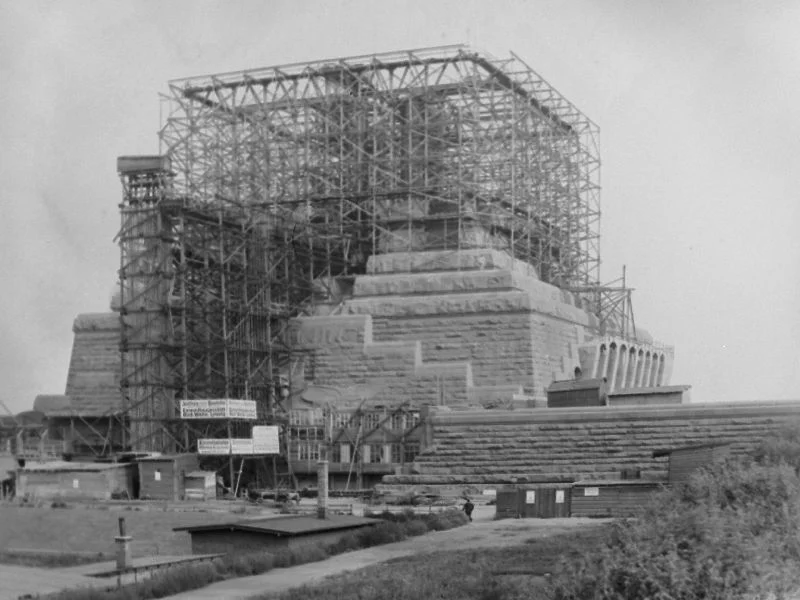
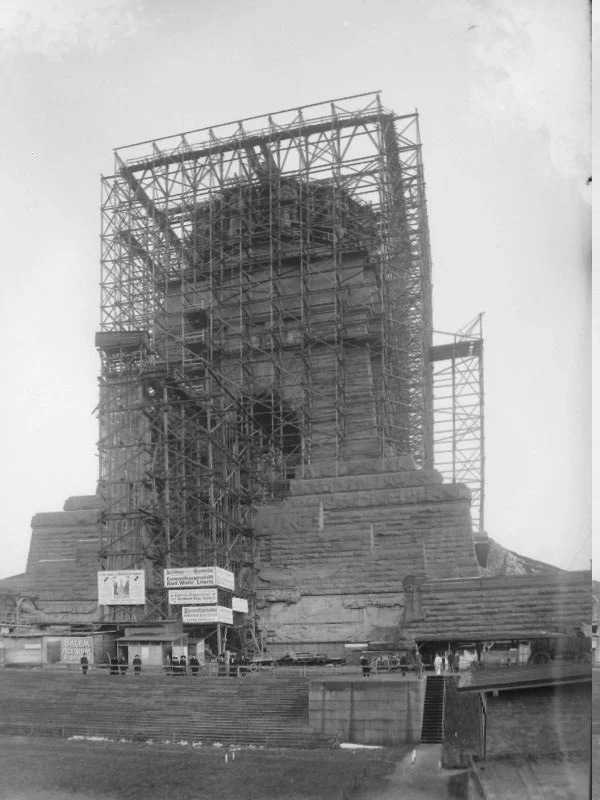
As for the cards, a German museum catalogues one of about 1910 whose airship was probably added to the photograph. The obelisk card's Guillaume is the French form of Wilhelm, the German emperor's name, which makes it read as a joke at his expense.
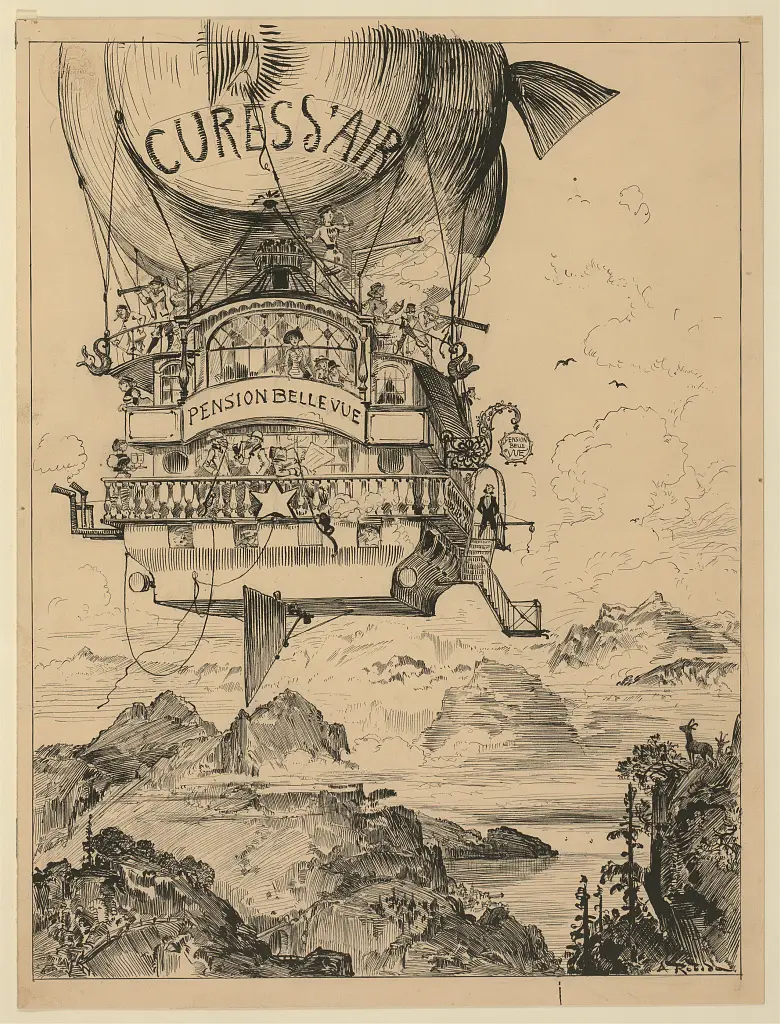
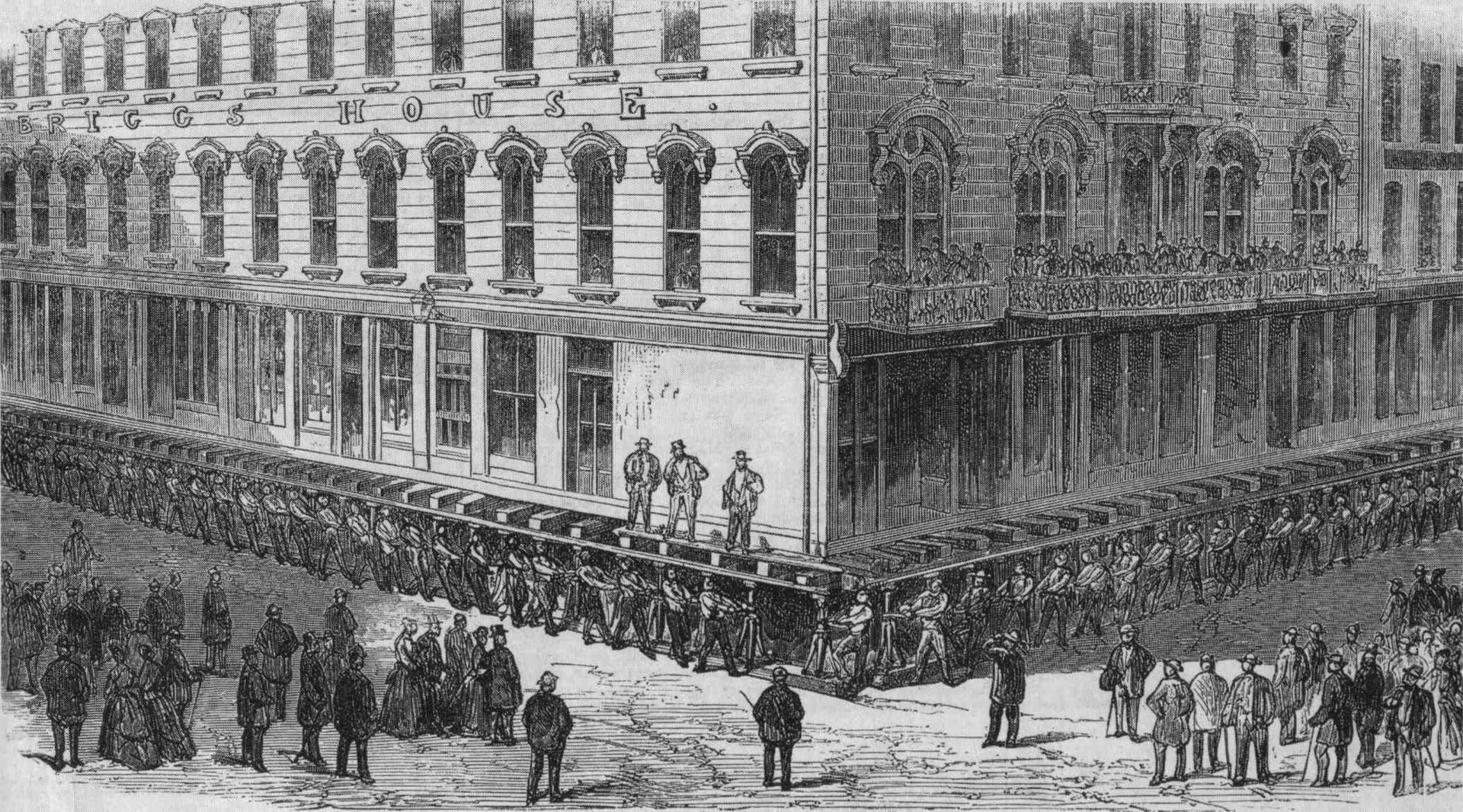
Nor did the airships stop. Goodyear's history counts more than 100 rigid ships built between 1900 and 1918, and the great passenger Zeppelins flew in the decades after that, in public, with names, crews and timetables. In Chicago, meanwhile, buildings really were lifted, from below, by men on screws.
What the Sums Do Not Reach
Those numbers answer one claim, a great weight on a cable under a gas bag. They leave a good deal standing. They assume lifting gas, and the film says its craft worked on different principles entirely. It does not say which, so there is nothing to measure.
They do not reach the film's pictures, because the film does not list them. Official X read its machine captions for about 20 of its 22 minutes and searched for the caption it quotes, and found no such record. The hundreds of images have no catalogue, so nobody has checked them one at a time, and that cuts both ways. The standard account has not audited them either. Viewers under the film are asking for exactly that: which of these are photographs?
The search behind this article looked in English, German, Russian and Chinese for any airship lifting a building, a stone block or a structural member on a construction job, at any date. It did not find one.
They do not reach 1896. History Nebraska records that newspaper editors fabricated a few sightings and that jokers flew box kites. Robert Bartholomew, writing in the Skeptical Inquirer in 1990, read about a thousand press stories as a wave of mass suggestion. The Call itself named Venus and Jupiter. None of that says what Sacramento saw on 17 November. The Call's pages name lawyers. They do not name a builder.
They do not fully reach the retouching either. The museum record says probably. A collector's history of American postcards says retouchers later bought zeppelins as ready-made decals, but no general study of airships added to cards before the First World War turned up, and the Leipzig card's maker is unnamed: number 228 and a small bird, on the back.
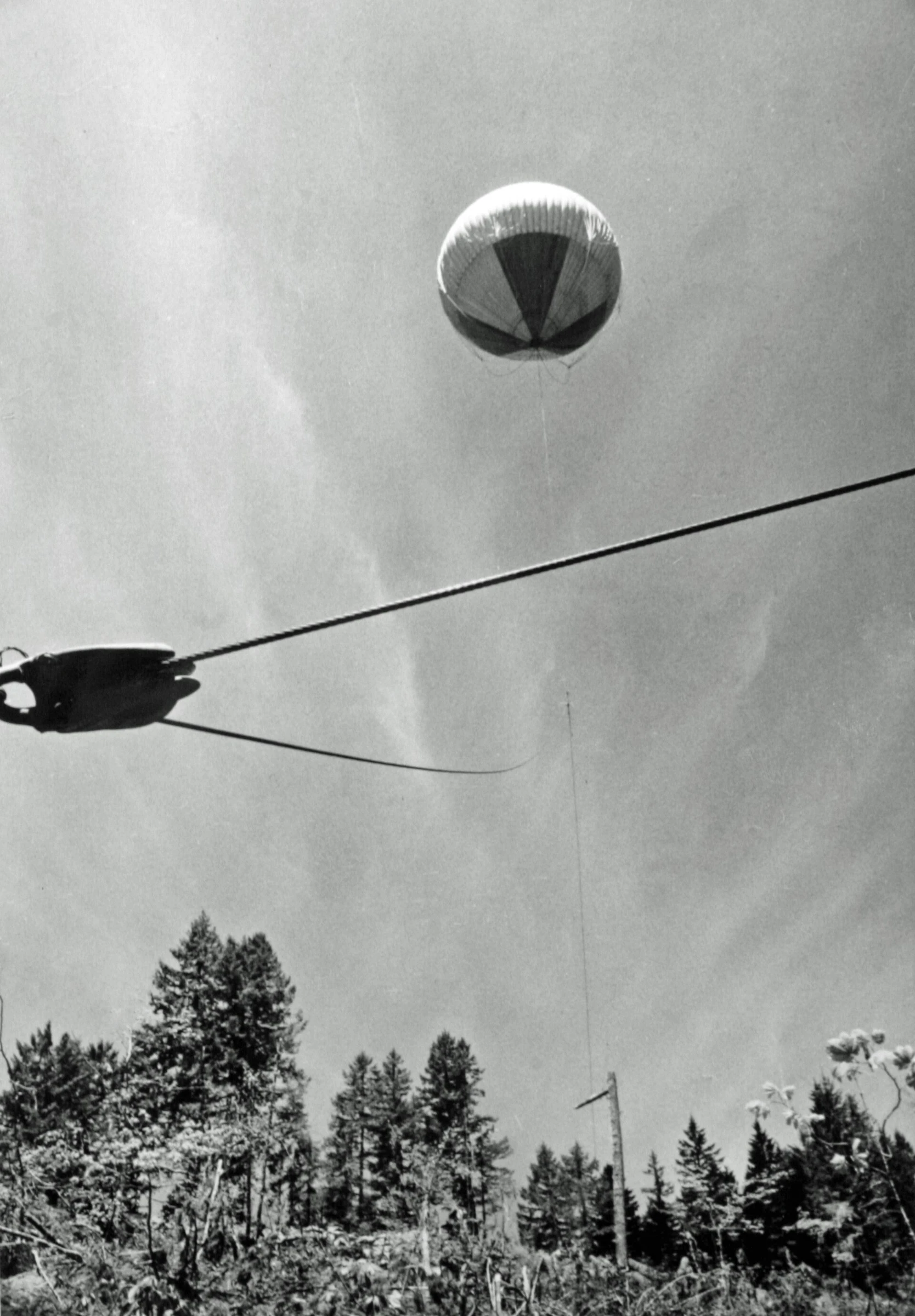
And gas has been set to real lifting. From 1964 loggers in Oregon flew timber out of the forest under balloons; a Forest Service paper gives one balloon 22,500 pounds of net lift. The Heli-Stat, four helicopters bolted to a Navy blimp envelope, broke apart at Lakehurst on 1 July 1986, with one death. CargoLifter in Germany tested load exchange with a 55-tonne tank under a balloon before going insolvent in 2002. A gas bag as a crane is a real idea, tried within living memory.
One Picture
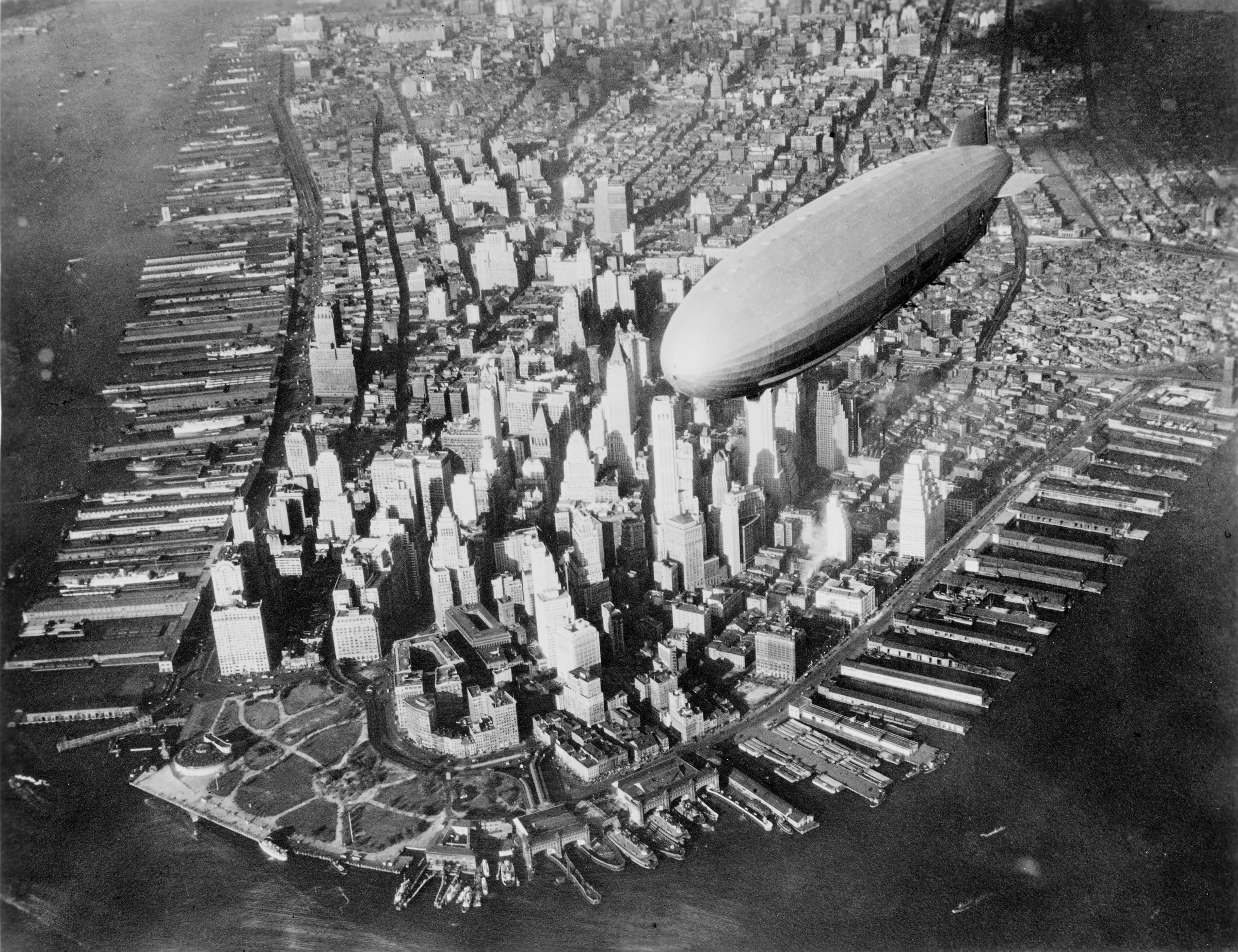
The idea lives on video now, not in journals. Tartaria Vault's channel has more than 220,000 subscribers. Generated pictures of airships over stone cities sit beside real cards, and a viewer scrolling past cannot tell which is which. The same doubt reaches back: in 1930 International News Photos sent out a picture of the Navy's Los Angeles moored at the Empire State mast, and the Metropolitan Museum of Art, which holds a print, says that docking never happened. The nearest thing was a small blimp that held on for about three minutes in September 1931.
So the test is narrow. One image from the hundreds, traced to whoever holds it, with its number, its photographer, its date, and the uncropped print or the negative. Then the same building's own file, the kind Leipzig has, searched for the craft in the plans, the accounts and the dated progress pictures. A load on a line with that chain behind it would be a discovery. It would prove that one job. It would not prove a fleet, an inheritance or a machine, and its absence from one building would not rule out another.
One photograph, with a number on the back.
The search for this article did not find it, and could not read every forum where such a picture might sit. What can be held in the hand today is a card that went off to Charlottenburg in June 1914 with a five-pfennig stamp and a Zeppelin on its face. Nothing on it says who put the airship there, or why.
Questions This Leaves You With
Is there anything a person actually does with this?
Nothing in your own life follows from it, and anyone selling you a date or a secret is selling something. What you can do is small and takes ten minutes. Pick one old picture of an airship over a building and try to find who holds the original. Most will dead-end in a repost, and that is worth knowing too. The larger question is not yours alone: how a whole culture keeps its pictures honest now that an old photograph can be made in seconds.
Does this sit against a religious account of the world?
Barely, and it cuts both ways. A lost age of greater knowledge can read as a story of a fall, the world coming down from something better. The same idea can read the other way, as human ability with nothing above it, a past explained entirely by forgotten engineers. Neither reading needs a fleet to be real, and neither is ruled out if it was not. Which way this one falls for you is yours to decide, and this site will not tell you.
Does this change what a human life is?
Stand your own life beside a card from 1914. If whole industries can vanish from memory, a life looks small, a name in a file that may not last. Or look at the other record: men on scaffolds and jackscrews, each of them doing something real and heavy that somebody drew or photographed. Then a life looks larger, because the work is what the buildings are made of. You may already know which of those you felt first.
What would change your mind, in either direction?
Name it now, while it is easy. Towards the claim: one image with a catalogue number, a dated negative and a load visibly on a line; a city council minute from 1911 that a reader can open; a patent number for aerial construction; a hangar in a city plan. Against it: the film's pictures traced one by one to postcards, retouching or generators; the Budapest and Chicago building files opened and found to hold only cranes and scaffolds. Each of these can be looked for. Which would you accept?
What flew over Sacramento on 17 November 1896?
This is the open problem, and it has nothing to do with Tartaria. The Call wrote of thousands of witnesses. A lawyer said his client built it. Editors invented some of what followed and jokers flew kites. Yet the first night stays where it was, with a light and a crowd and no record of a machine. Nobody has shown what that light was. Nobody has shown a craft. The space between those two sentences has been empty for 130 years.
Downloads
- Feasibility Study of Modern Airships, Phase I, Volume 3: Historical Overview, NASA CR-137692, 1975Goodyear Aerospace for NASA; NTRS 19750023961: Work of the US Gov. Public Use Permitted.
- William S. Hartsog, Balloon Logging in the Idaho Batholith, Research Paper INT-208USDA Forest Service: a US government paper, marked Historic, archived document
Sources
- Das Voelkerschlachtdenkmal zu Leipzig, German postcard no. 228, front Zeno.org Ansichtskarten; Wikimedia Commons Primary record
- The same card, reverse Zeno.org Ansichtskarten; Wikimedia Commons Primary record
- Tartaria's Airships That Lifted Buildings Into Place, 9 January 2026 Tartaria Vault, YouTube Primary record
- 1822: Tartarian Airships FOUND Lifting Buildings For Construction?, 10 January 2026 Tartarian Geek, YouTube Primary record
- Tartaria's Airships and the Lifting of Entire Structures, 31 January 2026 Tartaria Archive, YouTube Primary record
- Pour aiguiser son grand sabre, Guillaume fait enlever l'Obelisque, picture record a900481 Arkivi Bildagentur Study
- The Giffard Airship, model record Science Museum Group Study
- Controllable Balloons: Dirigibles National Museum of the U.S. Air Force Study
- Nacelle du dirigeable La France Musee de l'Air et de l'Espace Primary record
- Feasibility Study of Modern Airships, Phase I, Volume 3: Historical Overview, NASA CR-137692, 1975 Goodyear Aerospace for NASA; NTRS 19750023961: Work of the US Gov. Public Use Permitted. Primary record
- The San Francisco Call, 19 November 1896, p. 1 Library of Congress, Chronicling America Primary record
- The San Francisco Call, 23 November 1896, p. 1 Library of Congress, Chronicling America Primary record
- The San Francisco Call, 25 November 1896, p. 1 Library of Congress, Chronicling America Primary record
- Michael Busby, Solving the 1897 Airship Mystery, 2004, library record Smithsonian Libraries Study
- Charles A.A. Dellschau American Visionary Art Museum Study
- Al Smith call on Secretary of Navy, December 1929 Harris and Ewing; Library of Congress Primary record
- [Dirigible Docked on Empire State Building, New York], 1930, 2011.189 The Metropolitan Museum of Art Primary record
- Rebecca Maksel, Docking on the Empire State Building, Air and Space, 1 April 2013 Smithsonian Study
- Enna Jettick at the Empire State mast, 15 September 1931 Library of Congress Primary record
- History of the Vienna State Opera Wiener Staatsoper Study
- Zentner Wikipedia General reference
- Zum 18. Oktober: Einiges ueber die Entstehung des Voelkerschlachtdenkmals, 2024 Leipziger Zeitung Study
- Bau Voelkerschlachtdenkmal, Gesamteinruestung, 1912, inv. F/2217/2004 Atelier Hermann Walter; Stadtgeschichtliches Museum Leipzig Primary record
- Bau des Voelkerschlachtdenkmals: Aktuelle Hoehe 40 m, 30 September 1907, inv. F/2220/2004 Atelier Hermann Walter; Stadtgeschichtliches Museum Leipzig Primary record
- Saechsisches Staatsarchiv erwirbt Originale zum Bau des Voelkerschlachtdenkmals, 31 October 2013 Leipziger Zeitung Study
- Picture postcard with airship, about 1910-11, inv. III L 1 Museum Schloss Neuenbuerg Primary record
- How Were Vintage Postcards Made?, 2015 National Railroad Postcard Museum blog Study
- Raising of Chicago Wikipedia, citing the Chicago Press and Tribune, 1860 General reference
- Look! Up in the Air...! Ghostly Airships of the 1890s Nebraska State Historical Society Study
- Robert E. Bartholomew, The Airship Hysteria of 1896-97, Skeptical Inquirer 14, 1990 Center for Inquiry Study
- Eben Lehman, balloon logging, 2011 Forest History Society Study
- William S. Hartsog, Balloon Logging in the Idaho Batholith, Research Paper INT-208 USDA Forest Service: a US government paper, marked Historic, archived document Primary record
- Aviation accident report NYC86FHD01, 1 July 1986 National Transportation Safety Board Primary record
- History CargoLifter Study
- Albert Robida, Cures d'air dans la montagne, 1883 Library of Congress Primary record