
Kincaid's Cave is the citadel the Arizona Gazette reported in the wall of the Grand Canyon on April 5, 1909, and on the web it has pictures. A seated figure the height of a house fills a cleft of orange rock. A tunnel runs into the dark with scored walls. A mummy lies in an open coffin, beads across its chest. Tiers of niches glow red along a stone wall.
They arrive in a block, captioned and numbered, often under the words Egyptian artifacts. A search for the cave brings back the same set, site after site. A small figure in red stands at the foot of the statue and gives the scale.
The rock is the right colour. The tool marks are where the story puts them. The idol sits cross-legged, as the Gazette said it did.
Every one of those pictures was taken, or made, by somebody.
Twelve Pictures on a Free English Site
The fullest set sits on one page, "Pictures of Kincaid Cave in Grand Canyon," on a site Duane R. Hurst publishes to help people improve their English. Under the heading: "Egyptian Artifacts Found at the Grand Canyon (854-foot long manmade cave founded circa 1700 BC)." Twelve labels follow. Pharaoh Statue. Seteprene. Anubis. Khyan Artifact. Mummy. Mummies. Inside Cave. Cave Entrance. Cave Map. Area Map. Egyptian Artifacts. Akhenaten/Nefertiti. The Internet Archive first caught the page on July 4, 2019. The page is not their first home: the same pictures run through blogs and video thumbnails for years on either side of that date.
The pictures matter because the Gazette promised some. Its item of March 12, 1909, has the traveller reaching Yuma with "over seven hundred views." Its story of April 5 has him stand a mummy up and photograph it by flashlight. If a picture from inside that hall exists anywhere, it is the most important photograph in North American archaeology.
So on October 31, 2026, Official X put the gallery through TinEye, a reverse image search that lists where else a picture has been seen, then Google Lens and Bing, and held each result beside a free photograph of the place it pointed to. TinEye's date is the day its crawler first met a copy, not the day the picture was made. Every date from it is a latest date.
A Cave in Twelve Frames
Laid beside the 1909 text, the gallery reads like an expedition's plates. The Gazette has a passage cut by hand: Inside Cave shows one. The Gazette has an idol, cross-legged, a lotus in each hand: Seteprene and Khyan Artifact show seated figures in rock cells. The Gazette has a crypt: Mummies shows tier on tier of it, and Mummy puts one body in the frame close enough to count the beads. Cave Map draws the passages fanning out from a central hall. Cave Entrance shows the arched mouth in a red wall over a brown river. Area Map plants a red box marked Kincaid Cave on a park map.
The fit is the argument. A blog called Attainablemind, which described itself as uncovering "the most taboo, unusual, controversial and unbelievable stories on the internet," made it in August 2010, setting pictures under the story's own heads, The Passages and The Shrine. Each frame answers a line of the text.
Television raised the stakes. The review by Jason Colavito of a 2014 episode of Ancient Aliens records a vintage photograph of a man at the canyon set against the name Kinkaid, which Colavito calls a stock image. On America Unearthed in 2013, Jerry Wills showed Scott Wolter video of aircraft near an expedition to the cave, and Wolter, in Colavito's account, suggested the government was trying to scare it off.
The statue carried the story furthest. By the mid-2010s, as far as a crawler can show, it was leading a second tale, an underground city of giants in the canyon, and in 2023 one site was still reporting "the underground town of the most prominent giants of that period." Now the video thumbnails have gone further still: a colossal face above a line of explorers, blue coffins in a row, under titles such as Lost City Beneath Grand Canyon.
On that reading somebody has been in there with a camera.
If One Frame Were Real
Set aside for a moment where these came from. Ask the better question, which is what one true frame would do.
It would end the argument about the Gazette in a single sheet of paper. Text can be invented at a desk. On that reading a silver print of a mummy standing in a hall of cut stone, with a place and a date behind it, would be a thing that happened in front of a lens.
It would rewrite the first page. If a camera stood in that hall, then the people who cut it stood there first, and the crossing of an ocean would stop being a question and become a date to find. Our whole account of how the two halves of the world met would turn on one frame.
It would say something about how we keep our past. A photograph that sat unseen for a century in a drawer or an archive would mean that the most important picture ever taken on this continent can go missing in plain paperwork, and that our record of ourselves is only as strong as the person who last opened the box.
And it would leave a question in front of us. We can now make a convincing picture of a room nobody has stood in. If the true frame surfaced tomorrow, what would we have left to believe it with?
Where Ten of Them Went
Pharaoh Statue is a Buddha. It sits in Cave 3 of the Yungang Grottoes at Datong in northern China, a Buddhist site with 252 caves, its art dated by UNESCO to the 5th and 6th centuries: the same raised hand, the same attendant, checked against a free photograph of the cave.
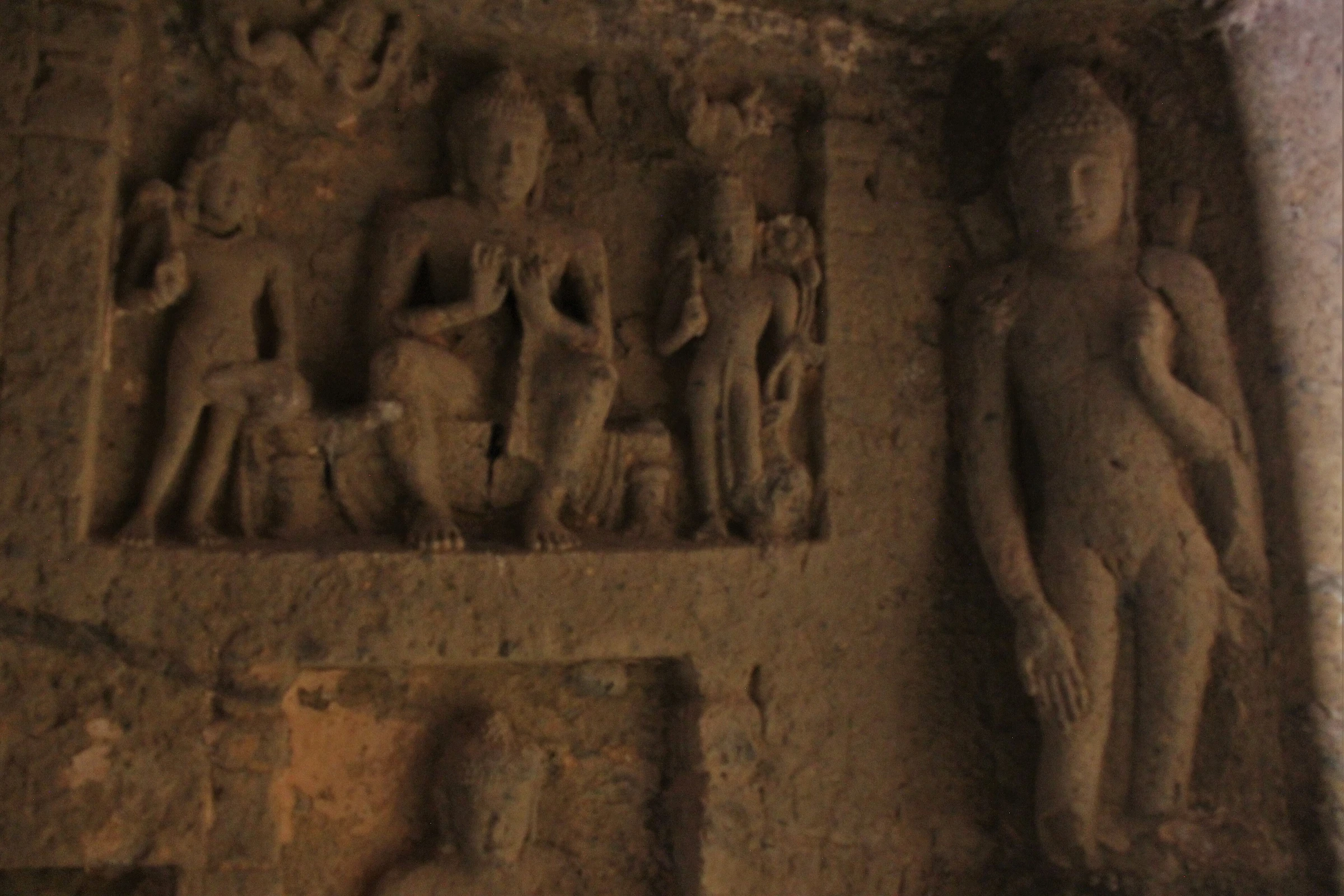
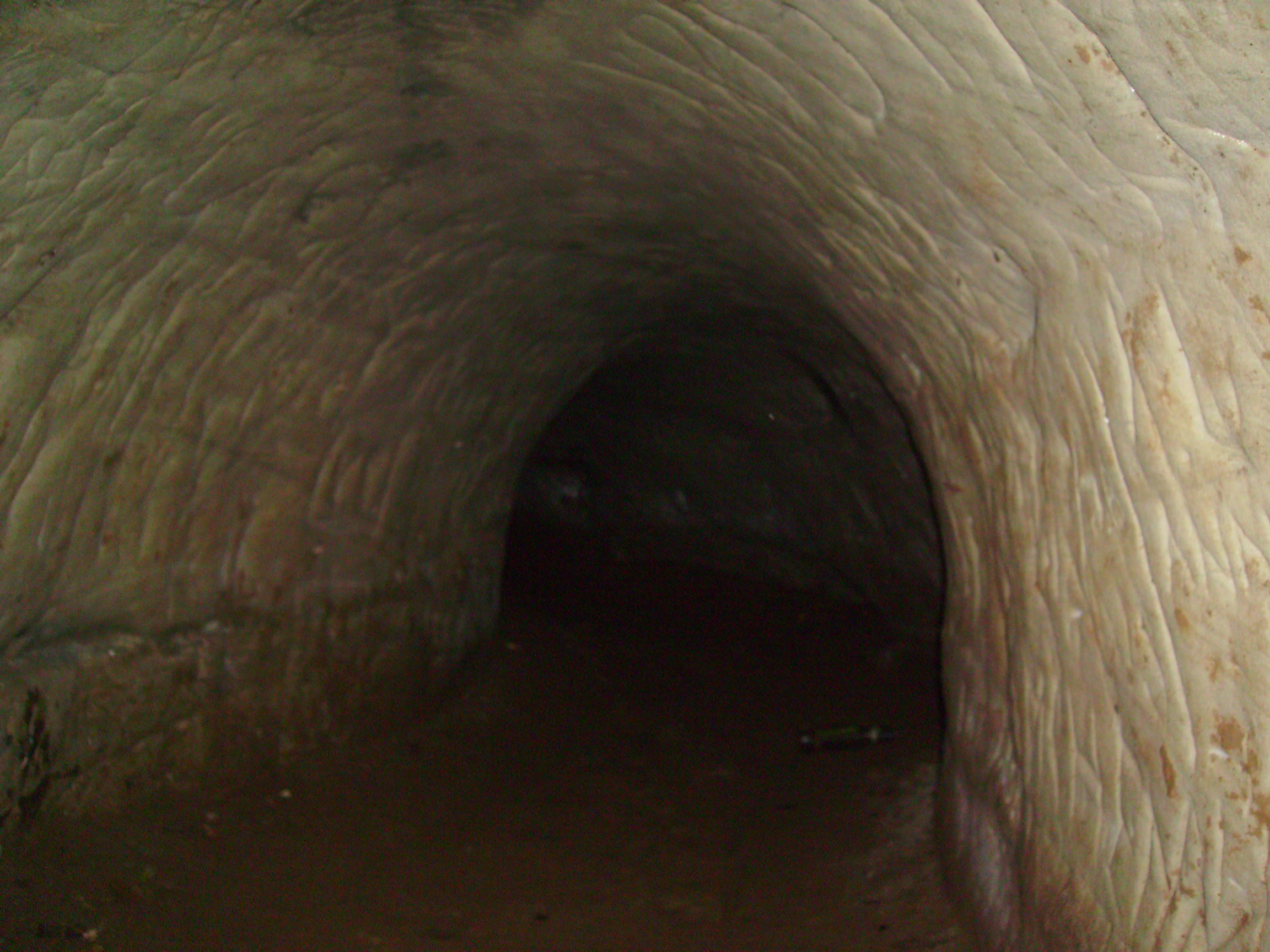
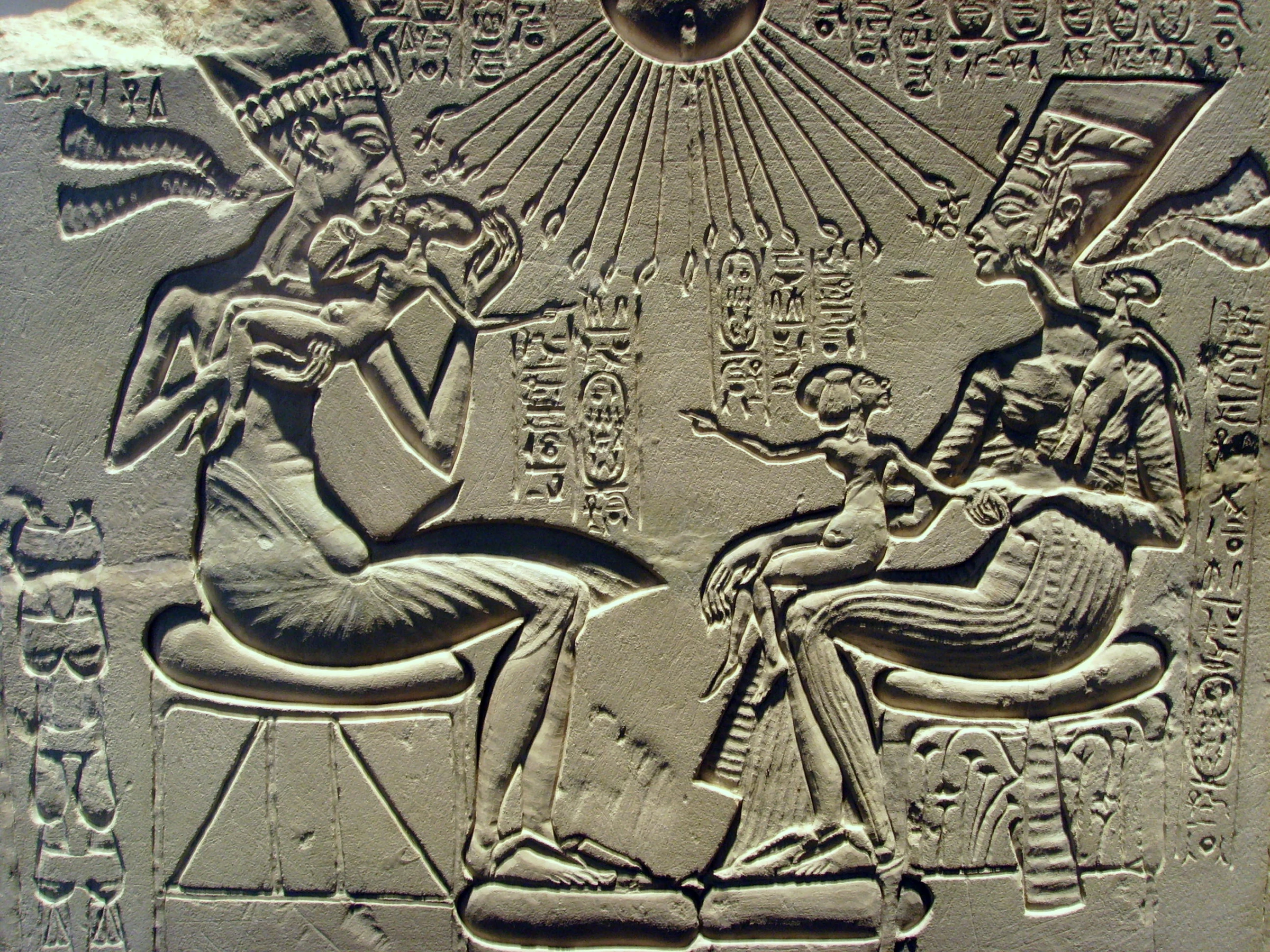
Seteprene leads to a stock photograph captioned Cave 41 at Kanheri in Mumbai, a Buddhist site of 109 caves. Inside Cave is Helme, in Estonia, sandstone caves near a hilltop fortress; on the 2010 blog the file still bore the name helme_cave-tunnel.jpg. Akhenaten/Nefertiti is a house altar from Amarna, about 1351 to 1334 BC, in the Egyptian Museum in Berlin.
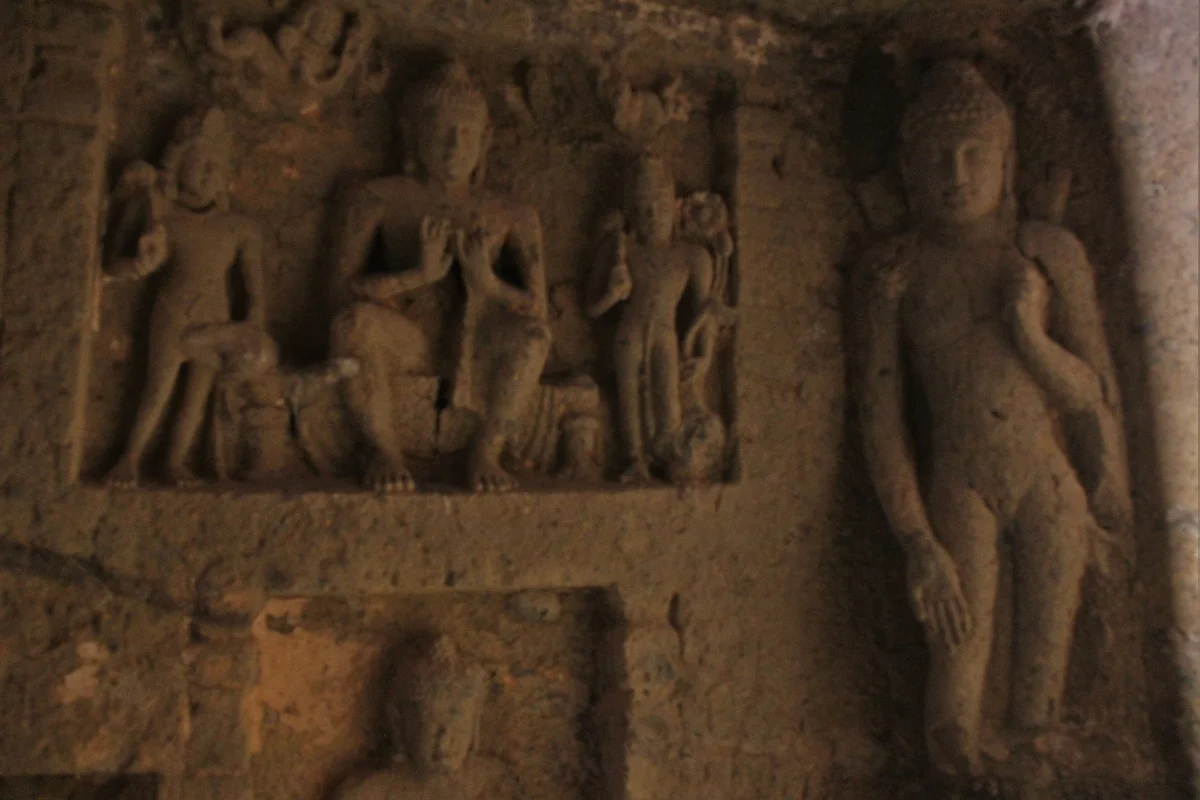
A carved panel in Cave 41 at Kanheri, Mumbai, the cave behind the picture labelled Seteprene. AKS.9955. CC BY-SA 4.0 (creativecommons.org/licenses/by-sa/4.0), via Wikimedia Commons. 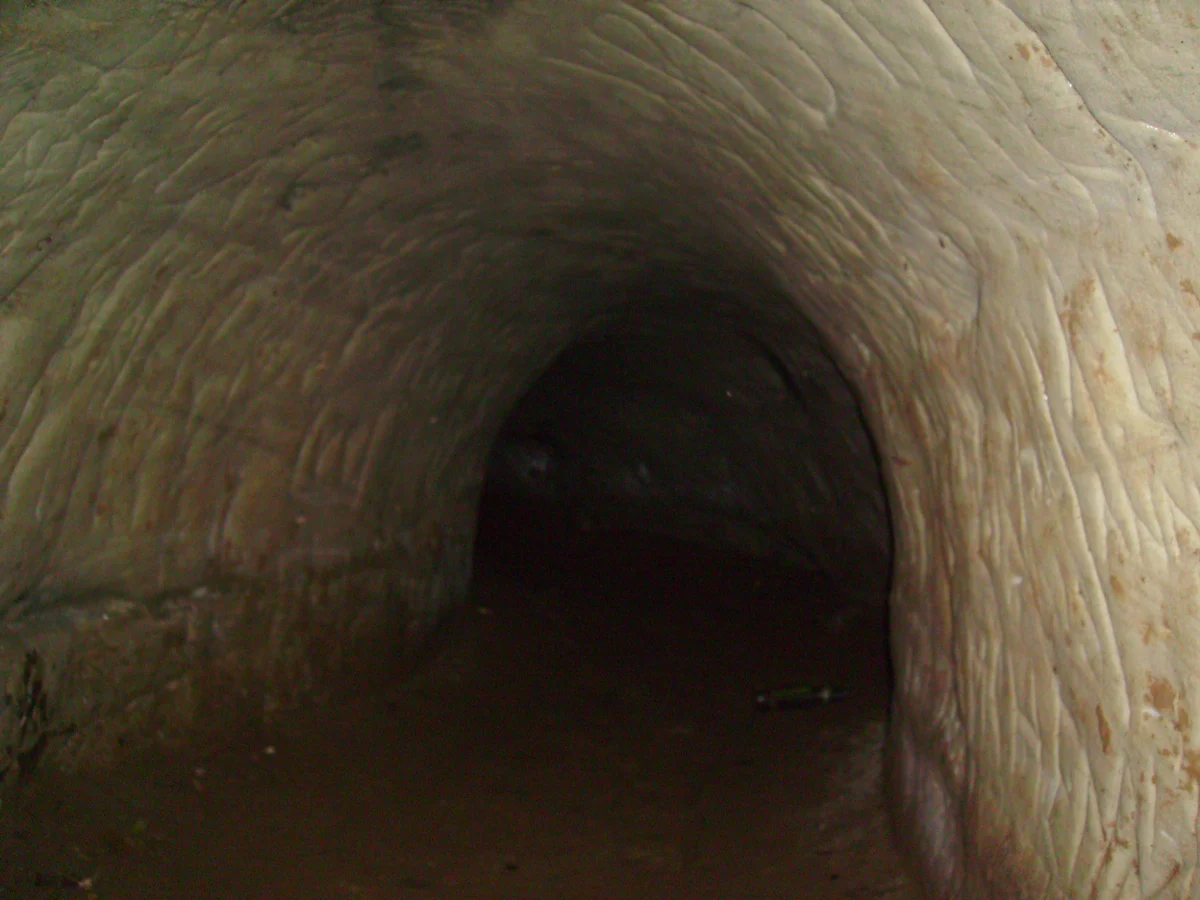
A passage in the Helme caves, Estonia: the kind of hand-worked sandstone tunnel in the picture labelled Inside Cave. MMitt. CC BY-SA 3.0 EE (creativecommons.org/licenses/by-sa/3.0/ee), via Wikimedia Commons. 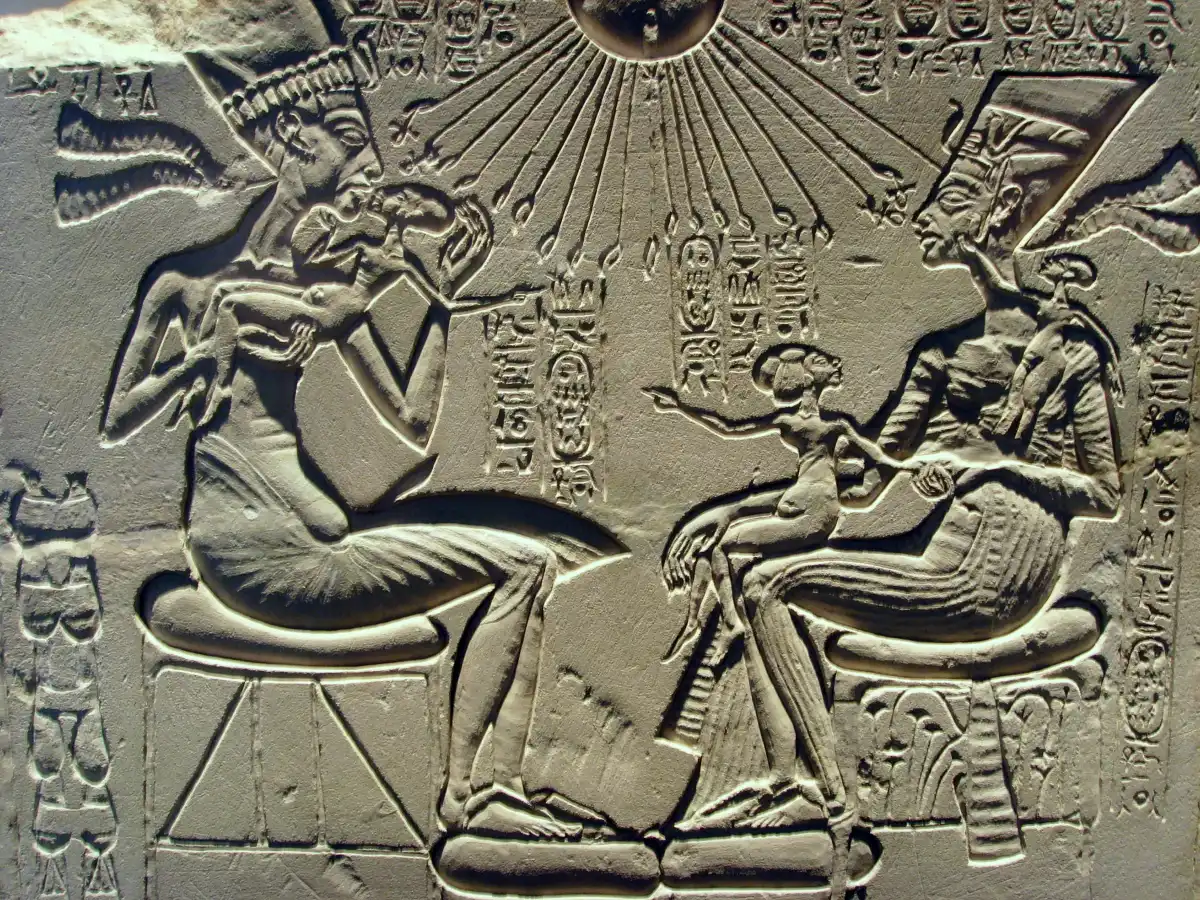
The house altar from Amarna, in Berlin, about 1351 to 1334 BC: the relief in the picture labelled Akhenaten/Nefertiti. Gerbil, Wikimedia Commons, marked public domain.
Mummy is an Associated Press photograph of the coffin shown at Saqqara, south of Cairo, on March 2, 2005, when Zahi Hawass displayed a 26th Dynasty burial found by a team from Macquarie University in Sydney. The same frame ran in a Live Science gallery in 2010, credited to AP.
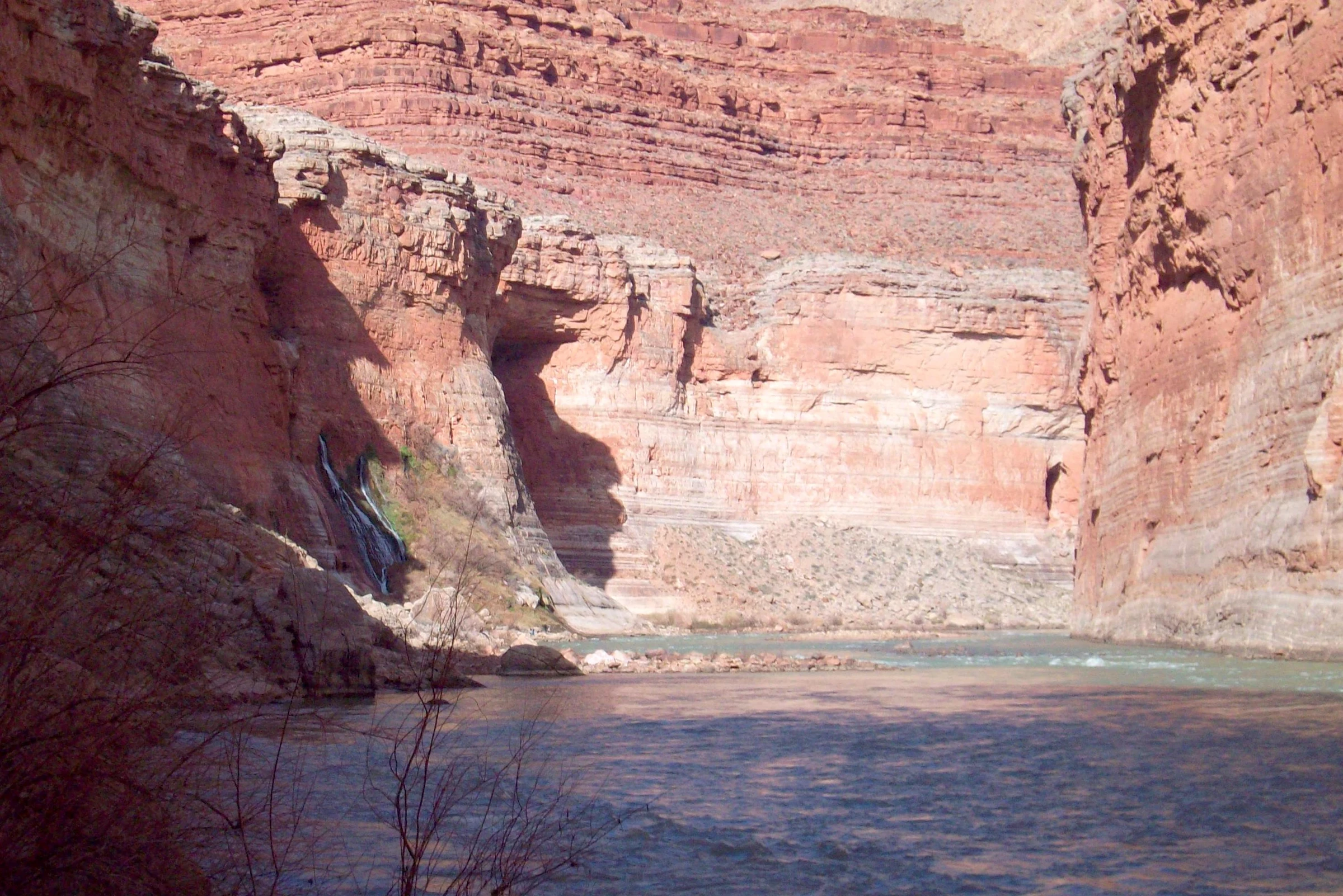
Three more are one artist's. Jack Andrews, whose own site showed his 3D animation, made the idol called Khyan Artifact, the crypt called Mummies, and Cave Map. A web reprint from Stephen Mehler's 2001 book captions the first two "3D computer rendering by Jack Andrews." Cave Map says on its face "Not drawn to scale" and "copyright 2001." Andrews's own version of Area Map has two arrows and no box; somebody later added the red square. Cave Entrance he captioned "Stanton's cave in Marble Canyon," and Bob Ribokas's Grand Canyon Explorer site carries the same frame under that name, with the cave's coordinates.
The Two With No Address
Two pictures did not go home. The Anubis, a jackal-headed statue before camouflage netting, was on a Greek blog by November 2007, and it carries a small credit along its top edge: 2003, Ron Reznick, a California photographer. His archived galleries read for this article do not show it, and nothing says where the statue stood. The gold figurines on a shelf carry no credit, and they turn up as a stock picture of Egypt, from a Vietnamese newspaper in 2015 to a UCLA workshop notice in 2017. They look like modern souvenirs. That is a judgement from the picture, not a result.
Neither has been placed.
The three searches see only what their crawlers reached. Nothing found ties either picture to the canyon. Nothing found says where they were taken. The newest thumbnails have the look of generated images, and that too is an eye's judgement: no test settles it.
The trace cuts in a direction that flatters nobody. Andrews labelled his renderings as renderings. The labels came off downstream, and no record names who first typed Grand Canyon under a Buddha. Astonishing Legends, a podcast, notes that Stanton's Cave is often taken for Kinkaid's, "of which there are no known photos." The door in the gallery is that cave.
And the trace reaches pictures, not rock. A statue that turns out to be in China says nothing about what is or is not in the Redwall. The real gate at Stanton's Cave is its own kind of strange: 8,000 pounds of steel rafted down the river in 1997, about 20 feet tall by 20 feet wide, with gaps for bats and none for people.
Seven Hundred Views
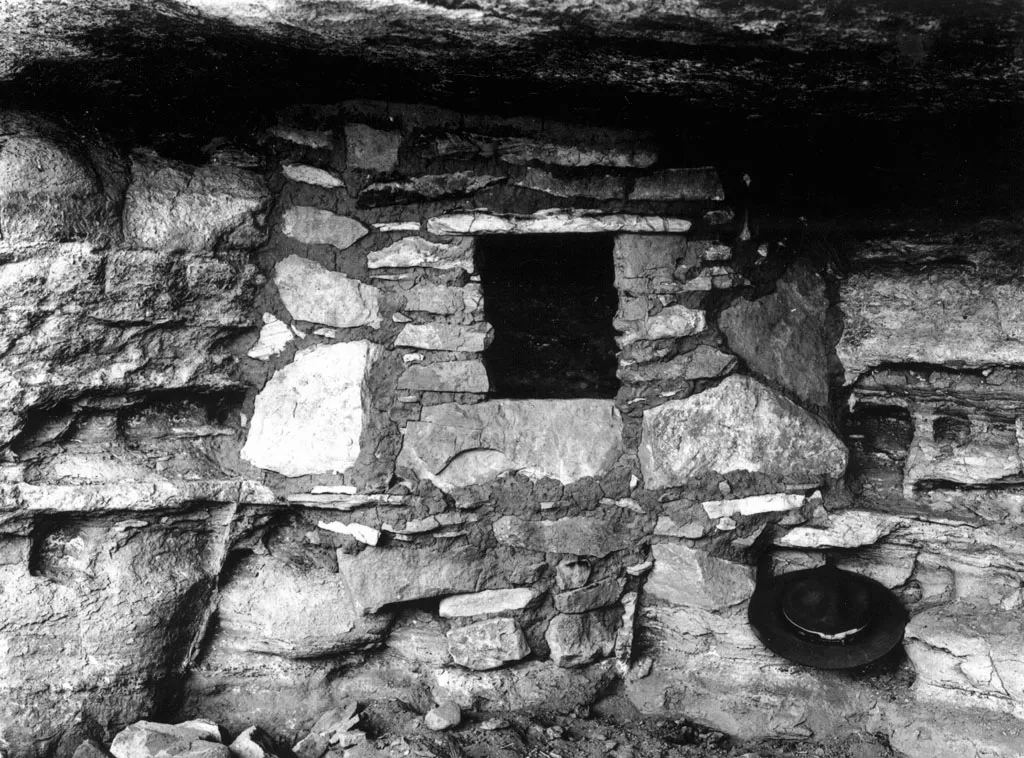
What the canyon's own walls hold is photographed, and the forbidden zone article shows it: rooms, granaries and doorways of laid stone, which the park records as ancestral Puebloan work. Those pictures have needed no new caption.
The gallery stands in for something else, the thing the Gazette promised. Two years after the story, in 1911, Ellsworth and Emery Kolb took this river with three film cameras and two plate cameras, plates sealed in paraffin and stowed in tin-lined hatches, each boat carrying seven hundred pounds. Two working photographers, shipping plates out as they went. Seven hundred views from one traveller were possible, on film. They would have been paper and negatives, things that can outlast a newspaper.
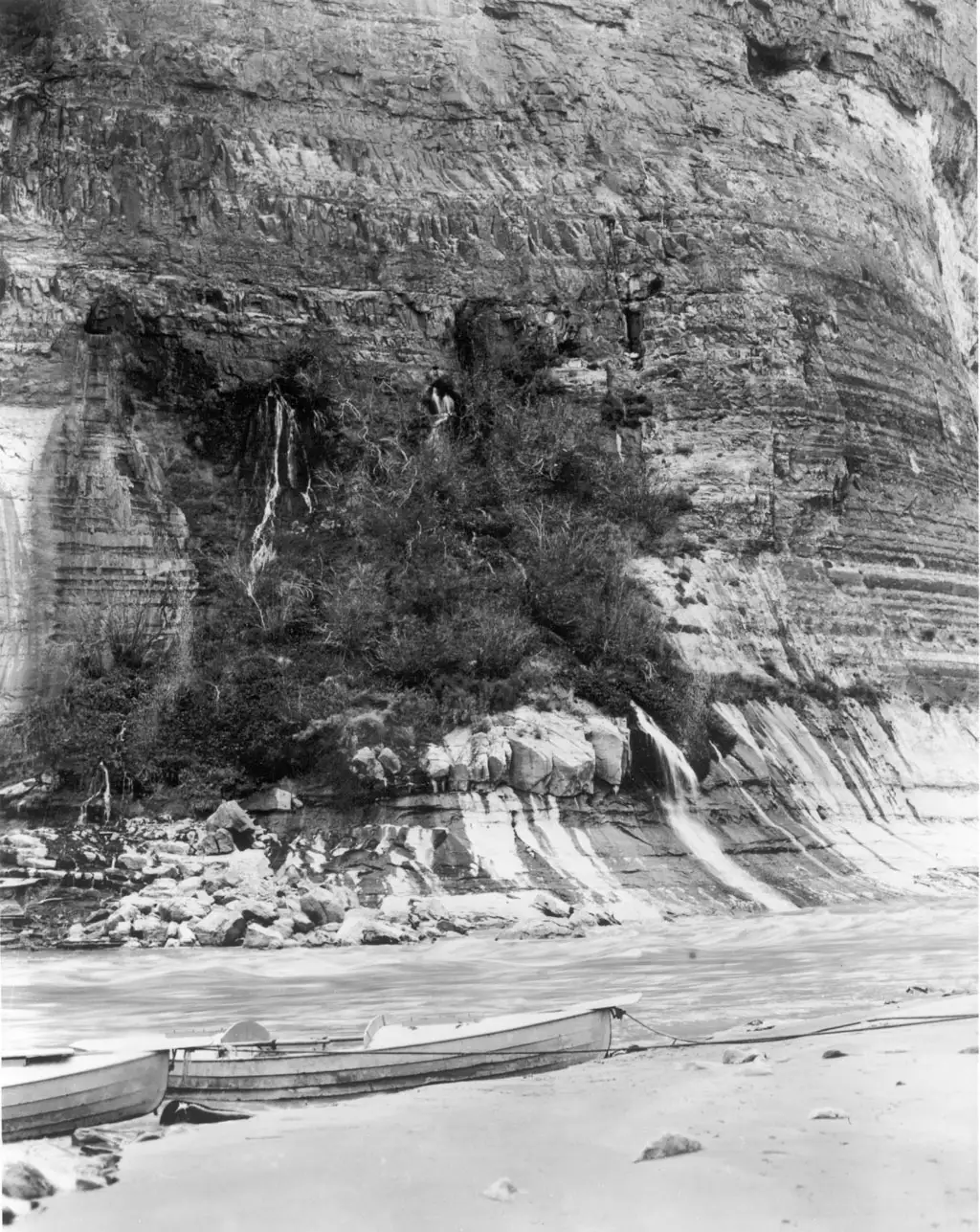
No account read for this article reports one of them, or a verified print of the flashlight mummy, or a verified portrait of the man who said he took it.
Ten pictures in that gallery have an address now, and two have a gap where one should be.
The seven hundred views have neither.
Questions This Leaves You With
Is there anything a person actually does with this?
Yes, and it takes less than a minute. Save the picture, drop it into a reverse image search, and read the oldest hits first. Look at the file name, which people forget to change. Then look for a free photograph of the place the hits name and set the two side by side. Nothing in your own life turns on Kincaid's Cave, and anyone selling you its location is selling something. The larger question belongs to everyone who reads a screen: what a shared record is worth once a caption can be changed by anybody, and nobody has to sign it.
Does this sit against a religious account of the world?
It cuts more than one way. The Buddhas at Yungang and Kanheri were carved as Buddhas, by communities that meant them, and it is fair to ask what is lost when a sacred figure is relabelled a pharaoh on a page about somewhere else. Some readers will see the opposite, that a picture of devotion travels further than any maker planned and still moves people who cannot name it. The Egyptian altar in Berlin was made for a household's own worship, and its picture now sits among pictures of a canyon it never saw. This site will not tell you which way that falls.
Does this change what a human life is?
Think of the small figure in red at the foot of the statue, a visitor, probably, in a photograph that crossed the world without them, read as proof of something they may never have heard of. One reaction is that this makes a life smaller: your own image can be taken and put to any use, and you will not be asked. The other is that it makes one stranger and larger: a moment at a stone Buddha outlives its own meaning. You may already know which one you had.
What would change your mind, in either direction?
Name it now, before you are committed. Toward the cave: a print from 1909 with a provenance that holds, a dated negative in a museum drawer, or an earlier copy of the Anubis picture with a canyon location that survives checking. Away from it: the place the Anubis was photographed, a source for the figurines, a ledger naming who wrote the Gazette story, or the microfilm of the front page, which could at least settle what the paper printed. Watch what each can and cannot do. A trace shows where a picture came from. It cannot show what a wall does not hold.
Who typed the first caption?
This is the open problem. Somebody, on some date, took a travel photograph of a Buddha in China and wrote the words Grand Canyon beside it. Somebody set a picture of a tunnel in Estonia under the heading The Passages. Somebody drew a red box on a map. Each act was small, and each took seconds. Crawlers record when a copy was seen, not who made the change. The early pages are gone, or anonymous, or both. The chain that carried these pictures is public, and its first link is still empty.
Sources
- Pictures of Kincaid Cave in Grand Canyon, page publisher Duane R. Hurst Free English Site Primary record
- Pictures of Kincaid Cave in Grand Canyon, earliest Wayback capture, 4 July 2019 Internet Archive Primary record
- Free English Site, home page Free English Site Primary record
- Arizona Gazette, 5 April 1909 and 12 March 1909, column crops as posted in The Canyons of Madness, 2016 CoastConFan blog; source of the scan unstated Primary record
- What does TinEye first found on mean? TinEye Study
- Attainablemind, August 2010 archive, Wayback capture of 23 August 2010 Internet Archive Primary record
- Review of Ancient Aliens S06E13, 1 February 2014 Jason Colavito Study
- Review of America Unearthed S02E05, 29 December 2013 Jason Colavito Study
- An underground city full of giant skeletons discovered in the Grand Canyon, 15 January 2023 The Archaeologist Primary record
- Yungang Grottoes, World Heritage List 1039 UNESCO Primary record
- Cave 3, Yungang Grottoes, photograph, March 2025 Wikimedia Commons Primary record
- Cave 41: Buddha in Padmasana with 11 headed Avalokiteshvara and chouri bearer on each side, Kanheri Caves Alamy Study
- Kanheri Caves Department of Tourism, Maharashtra Study
- Helme Cave, 2009 Otto de Voogd, 7is7 Primary record
- Helme caves Visit Estonia Study
- Jamie Tarabay, Associated Press, Well-preserved mummy found behind hidden tomb door, 3 March 2005 Lawrence Journal-World Study
- 2,500-year-old tomb discovered by accident, 3 March 2005 Press Democrat Study
- Looked at: House altar featuring Akhenaten, Nefertiti and three of their daughters Staatliche Museen zu Berlin Primary record
- Stephen Mehler, Khemit and the Myth of Atlantis, from The Land of Osiris, Adventures Unlimited Press, 2001, chapter 15, web reprint Biblioteca Pleyades Study
- Jack Andrews, The Location of Kincaid's Cave Revealed, first published 27 June 2001 reposted at Biblioteca Pleyades Study
- Jack Andrews Art, 3D animation page, Wayback capture of 27 December 2007 Internet Archive Primary record
- Ep. 030: Kincaid's Cave in the Grand Canyon, 2017 Astonishing Legends Study
- Mike Quinn and Jim Petterson, A Grand Effort in the Grand Canyon, personal mirror of a 1997 article Geocities mirror Study
- South Canyon notes National Park Service Primary record
- E. L. Kolb, Through the Grand Canyon from Wyoming to Mexico, 1914 Project Gutenberg Primary record
- The Egyptians We Put in the Grand Canyon, 11 October 2026 Moundlore Study
- Lost City Beneath Grand Canyon, video and thumbnail Zohar Ancient History, YouTube Primary record
- Grand Canyon Cover-Up?, video and thumbnail The InBetween, YouTube Primary record
- Image Gallery: Amazing Egyptian Discoveries, 1 May 2010 Live Science Study
- Stanton's Cave, photograph Bob Ribokas, Grand Canyon Explorer Primary record
- Chris's Blog, 29 November 2007, the file anubis_5893.jpg WordPress Primary record
- Digital Images, photography by Ron Reznick, archived gallery page Internet Archive Primary record
- Illustration in an article of 26 April 2015 The Thao & Van Hoa Study
- Speed Dating (Artifacts) In Ancient Egypt, 28 February 2017 UCLA Near Eastern Languages and Cultures Study